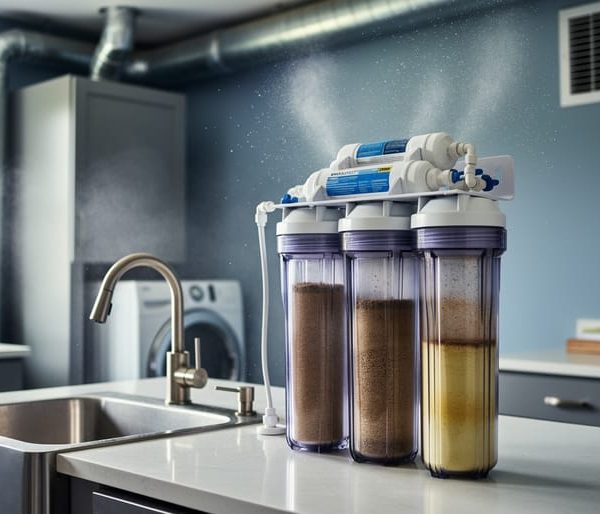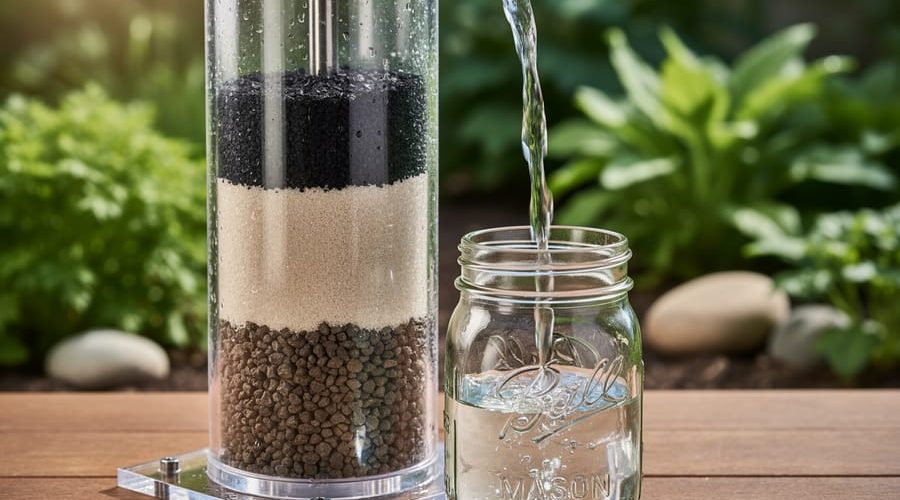
Layer sand, gravel, and activated charcoal in a five-gallon bucket with drainage holes to create a gravity-fed biosand filter that removes up to 99% of bacteria and parasites—a method used successfully in developing countries for decades. Construct a slow sand filter using a plastic barrel filled with fine sand that cultivates beneficial bacteria, naturally eliminating pathogens while maintaining essential minerals that conventional water filters often strip away. Harvest and sterilize biochar from hardwood to create your own activated carbon, which binds heavy metals, chlorine, and organic contaminants through a process called adsorption.
Nature has purified water for millions of years through soil, rock, and wetland ecosystems. These same principles can transform your approach to household water treatment without relying on expensive cartridges or electricity. Natural filtration methods harness the earth’s inherent purification processes—using materials like sand, stone, and plant-based carbon to remove contaminants while preserving beneficial minerals your body needs.
Unlike manufactured systems that require ongoing replacement parts, natural filters utilize readily available materials and biological processes that actually improve over time. The biofilm that develops in slow sand filters becomes more efficient at capturing pathogens, while layered media systems can be refreshed by simply replacing the top layers. These eco-friendly solutions reduce plastic waste, eliminate dependency on commercial products, and put you in control of understanding exactly what’s removing contaminants from your drinking water.
Whether you’re preparing for emergencies, reducing your environmental footprint, or seeking independence from commercial filtration systems, understanding natural water purification empowers you to make informed decisions about your household’s most essential resource.
Why Natural Water Filtration Matters for Your Home
Natural water filtration methods offer compelling advantages that extend far beyond simply cleaning your drinking water. By working with nature’s proven purification processes, you can create a sustainable system that benefits both your household and the environment.
One of the most significant advantages is the dramatic reduction in environmental impact. Traditional water filters depend on manufactured cartridges that need regular replacement, contributing to landfill waste. Natural filtration systems, whether using sand, gravel, activated charcoal, or plant-based materials, eliminate this cycle of disposable components. You’re not purchasing plastic-wrapped cartridges every few months or adding to the growing problem of single-use filter waste.
The financial benefits become apparent over time. While some natural filtration systems require an initial investment in materials, they don’t lock you into ongoing purchases of proprietary replacement parts. A well-maintained sand and gravel filter, for example, can function effectively for years with minimal material replacement. This stands in sharp contrast to commercial systems where replacement cartridges can cost hundreds of dollars annually.
Natural filtration methods also eliminate chemical additives from your purification process. Many conventional systems rely on chemical treatments or release trace amounts of substances into your water. Natural methods use physical filtration, adsorption, and biological processes to clean water without introducing synthetic compounds.
Another practical advantage is the independence from electricity. Natural gravity-fed systems work reliably during power outages, providing continuous access to clean water when you need it most. This self-sufficiency aligns perfectly with sustainable living practices and emergency preparedness.
These systems also offer educational value for families interested in understanding where their water comes from and how it’s purified. By engaging with natural filtration processes, you develop a deeper appreciation for environmental science while taking active control of your household’s water quality. The simplicity and effectiveness of these time-tested methods demonstrate that sustainable solutions often come from observing and replicating nature’s own systems.
Understanding How Nature Purifies Water
Nature has been purifying water for millions of years through three elegant processes that work together like a sophisticated cleaning system. Understanding these mechanisms can help you appreciate why natural filtration methods are both effective and sustainable for home use.
The first principle is mechanical filtration, which works like a physical barrier. As water moves through layers of sand, gravel, and soil, particles get trapped in the tiny spaces between materials. Larger contaminants like sediment, debris, and some bacteria simply cannot squeeze through these microscopic pathways. Think of it like straining pasta – the colander holds back the noodles while water passes through.
Biological purification is nature’s living cleaning crew. Beneficial microorganisms colonize filtration materials and actively consume organic contaminants, harmful bacteria, and other pollutants. These microscopic helpers break down waste into harmless compounds, essentially eating the contamination. This process happens naturally in healthy wetlands and riverbanks, where diverse microbial communities work around the clock to purify water.
The third mechanism, adsorption, involves materials like activated carbon or certain clays that act like molecular magnets. These substances have incredibly porous surfaces with countless tiny pockets that trap and hold contaminants through chemical attraction. Chlorine, pesticides, heavy metals, and unpleasant tastes or odors stick to these surfaces, leaving cleaner water behind.
Together, these three processes can effectively remove sediment, organic matter, many pathogens, certain chemicals, and unpleasant tastes and odors. However, natural methods have limitations – they may not eliminate all viruses, dissolved minerals, or certain modern contaminants like pharmaceuticals. Understanding both their capabilities and limitations helps you make informed decisions about implementing natural filtration in your home while maintaining realistic expectations about water quality improvements.
Sand Filtration: The Ancient Method That Still Works
How Sand Filters Trap Contaminants
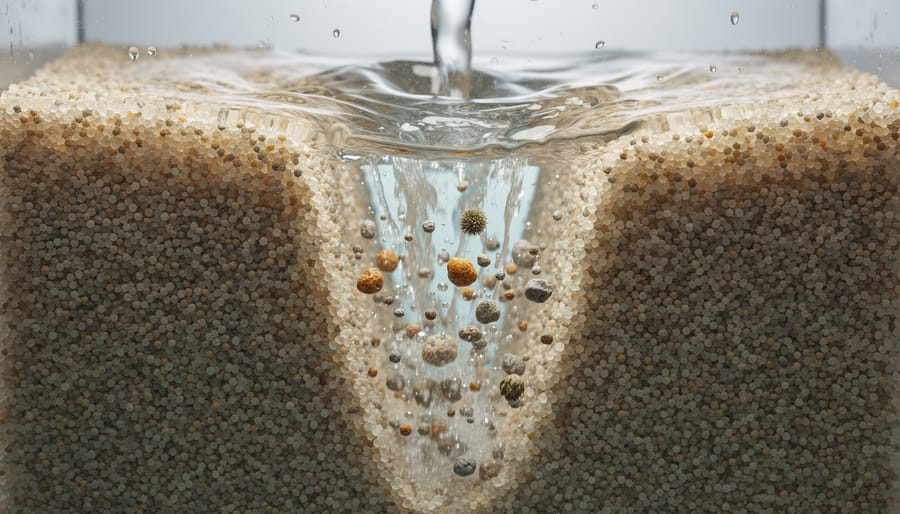
Sand filtration works through a surprisingly elegant process that combines physical trapping with biological purification. As water moves through layers of sand, contaminants are captured in the tiny spaces between sand grains. Think of it like water navigating through an intricate maze where particles gradually get stuck along the way.
The magic happens in stages. First, the sand’s grain size matters tremendously. Effective filters typically use fine sand with particles ranging from 0.15 to 0.35 millimeters. This creates microscopic pathways that physically strain out sediment, suspended solids, bacteria, and even some viruses. Larger particles get trapped near the surface, while smaller contaminants travel deeper before becoming lodged between grains.
What makes sand filtration truly remarkable is the living layer that develops on top called the schmutzdecke, a German term meaning “dirty layer.” This biological film consists of beneficial bacteria, algae, and microorganisms that actively consume organic matter and pathogens in the water. Rather than hindering filtration, this layer becomes your filtration system’s powerhouse, removing up to 99% of harmful microorganisms.
Layering techniques enhance effectiveness further. Many systems use multiple sand grades, starting with coarse sand at the bottom and finer sand on top, sometimes including a gravel layer underneath for support and drainage.
Sand filters effectively remove turbidity, bacteria like E. coli, protozoan cysts, organic compounds, and some heavy metals. However, they don’t eliminate dissolved chemicals or minerals, so understanding your water source remains essential for complete purification.
Building Your Own Sand Filter at Home
Creating a sand filter at home is an accessible way to improve your water quality using nature’s own filtration process. This eco-friendly approach requires just a few basic materials and can serve as an excellent supplement to more comprehensive systems like a whole house water filter.
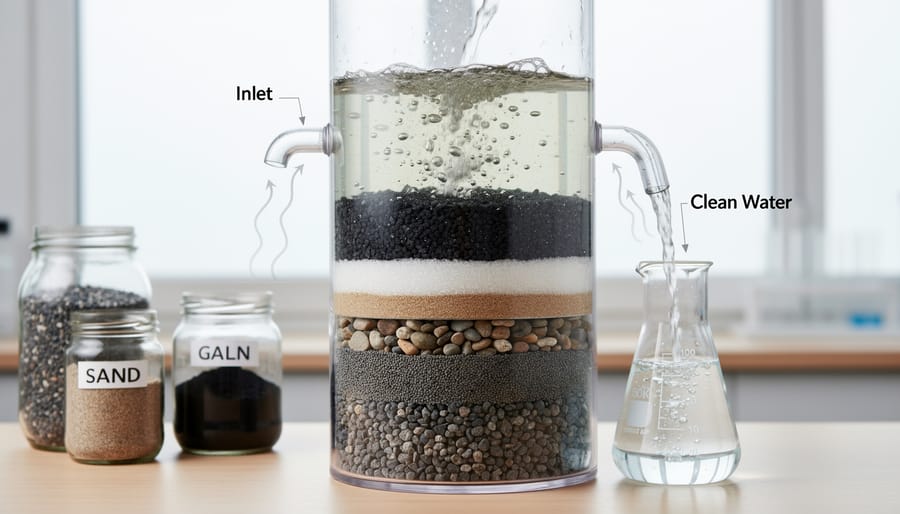
To build your sand filter, you’ll need a large food-grade plastic bucket (5-gallon works well), gravel in three sizes (coarse, medium, and fine), clean sand, activated charcoal, and a spigot for the bottom. Start by drilling a hole near the base of your bucket and installing the spigot. This will be your water collection point.
Layer your materials from bottom to top in this order: First, add 2-3 inches of coarse gravel to prevent sand from escaping through the spigot. Next, place 2 inches of medium gravel, followed by 2 inches of fine gravel. Add a 12-inch layer of fine sand, which does most of the filtration work by trapping sediment and particles. Top with 2-3 inches of activated charcoal to remove chemicals and improve taste.
Pour water slowly into the top, allowing it to percolate through the layers naturally. The process takes time, so patience is essential. Expect the first few batches to appear cloudy as the filter settles.
Maintenance is straightforward but crucial. Every two weeks, remove and rinse the top layer of sand to prevent clogging. Replace the activated charcoal monthly for optimal performance. While this system effectively removes sediment and some contaminants, remember it doesn’t eliminate all bacteria or viruses, so combine it with additional purification methods for drinking water.
Activated Charcoal: Nature’s Purification Powerhouse
What Makes Charcoal Such an Effective Filter
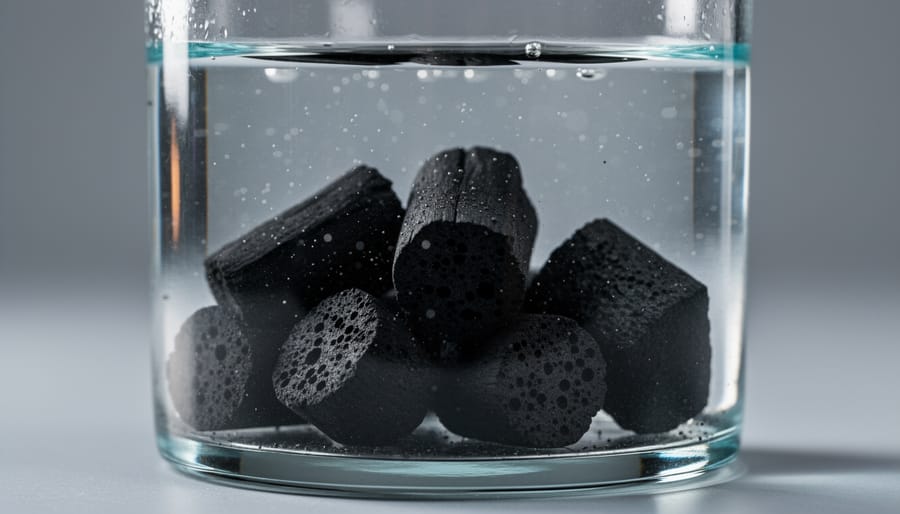
Charcoal’s remarkable filtering ability comes from a process called adsorption, where contaminants stick to the surface of the charcoal rather than being absorbed into it. Think of it like a magnet attracting particles from the water as it flows through.
The secret lies in charcoal’s incredibly porous structure. Each piece contains millions of tiny holes and crevices that create an enormous surface area—just one gram of activated charcoal can have a surface area exceeding 3,000 square meters. These microscopic pores trap impurities as water passes through, effectively removing chlorine, volatile organic compounds, pesticides, and various chemicals that cause unpleasant tastes and odors.
It’s important to understand the difference between regular charcoal and activated charcoal. While both come from burning organic materials like wood or coconut shells, activated charcoal undergoes an additional treatment process using steam or chemicals at high temperatures. This activation creates the extensive network of pores that makes it so effective for filtration. Regular charcoal from your barbecue grill won’t provide the same purification benefits.
Activated charcoal excels at removing chemical contaminants and improving water’s taste and smell, making it a cornerstone of many natural filtration systems. However, it’s worth noting that charcoal doesn’t effectively remove minerals, salts, or certain microorganisms, which is why combining it with other natural filtration methods creates a more comprehensive purification approach for your home.
DIY Charcoal Filtration Systems
Creating your own charcoal filtration system is surprisingly straightforward and offers an eco-friendly way to improve water quality at home. Activated charcoal, the key ingredient, works by trapping impurities in its porous surface, removing chlorine, sediment, and many organic compounds.
To source activated charcoal, you can purchase food-grade activated carbon online or at health stores. Alternatively, make your own by burning hardwood or coconut shells in a low-oxygen environment, then activating it by soaking in a calcium chloride solution before heating. However, store-bought versions ensure consistent quality and safety.
For a basic DIY filter, you’ll need a two-bucket system. Drill small holes in the bottom of one bucket and place it inside another. Layer your filtration materials starting from the bottom: gravel, sand, and activated charcoal on top. Pour water through this system, and the charcoal layer will capture contaminants as water passes through.
The effectiveness of your filter depends on proper maintenance. Replace activated charcoal every two to three months with regular use, or sooner if you notice changes in water taste or odor. Sand and gravel layers can be cleaned and reused by rinsing thoroughly with clean water.
To test your filter’s performance, compare filtered water against unfiltered samples by observing clarity, smell, and taste. For more thorough testing, home water testing kits can measure chlorine levels and pH balance. Remember that while charcoal filters excel at removing many contaminants, they don’t eliminate all bacteria or viruses, so only use them with water that’s already microbiologically safe or combine them with additional purification methods.
Plant-Based Filtration: Living Water Purifiers
Constructed Wetlands for Home Use
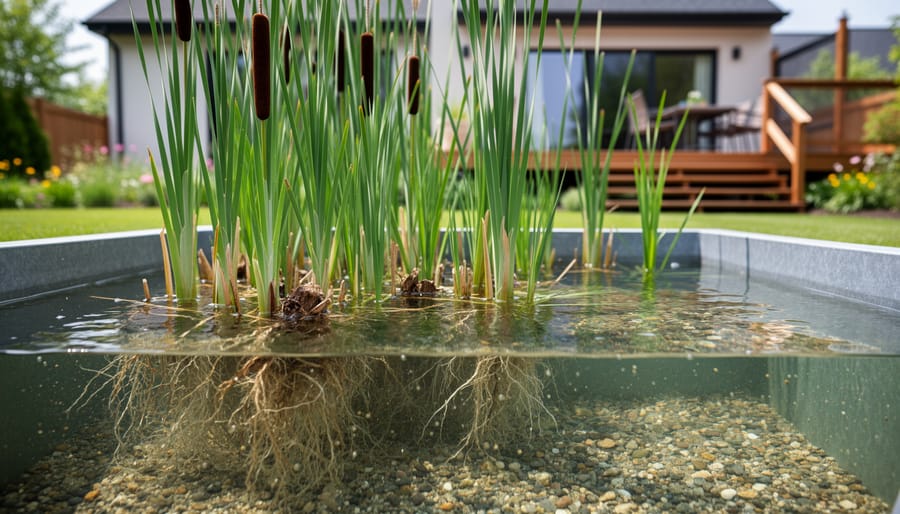
Constructed wetlands bring nature’s filtration power right to your backyard. These small-scale systems mimic natural wetlands by using plants and beneficial bacteria to clean water through biological processes. Think of them as living filters that work 24/7 without electricity or chemicals.
The system typically consists of a shallow basin filled with gravel or soil where water flows slowly through plant roots. As water moves through this ecosystem, plants absorb nutrients while bacteria living on their roots break down organic matter and harmful substances. This partnership removes common contaminants including nitrogen, phosphorus, suspended solids, and even some heavy metals.
Choosing the right plants is crucial for effective filtration. Cattails are excellent all-around performers, removing excess nutrients and filtering sediment while tolerating various water conditions. Common reeds grow rapidly and excel at breaking down organic pollutants through their extensive root systems. Water hyacinth, though requiring warmer climates, absorbs heavy metals and excess nutrients with remarkable efficiency. For colder regions, bulrush and water iris provide reliable year-round filtration.
These systems work best for greywater treatment from sinks, showers, and laundry, transforming it into water suitable for irrigation. While constructed wetlands require space (typically 50-100 square feet for a family home) and take several months to establish, they offer a sustainable, low-maintenance solution that actually enhances your property’s ecosystem. The result is cleaner water and a thriving habitat for beneficial insects and birds.
Moringa and Other Plant Coagulants
Nature provides remarkable water-clarifying agents that work through a process called coagulation. When certain crushed seeds are added to cloudy water, they release proteins that bind to suspended particles, causing them to clump together and sink to the bottom. This ancient technique offers an eco-friendly solution for households looking to pre-treat turbid water before filtering.
Moringa oleifera seeds stand out as the most effective natural coagulant. These seeds from the “miracle tree” contain positively charged proteins that attract negatively charged dirt particles, bacteria, and sediment. To use them, remove the seed coats and crush 1-2 seeds into a fine powder for every liter of water. Mix the powder into a small amount of water to create a paste, then stir this solution into your cloudy water for 5 minutes. Let it sit undisturbed for 30-60 minutes while particles settle to the bottom, then carefully pour off the clear water from the top.
Other plant coagulants include nirmali seeds (Strychnos potatorum) used in India and certain types of cactus. While these natural coagulants significantly reduce turbidity and some bacteria, they have important limitations. They work best on moderately cloudy water and don’t remove chemical contaminants, dissolved metals, or viruses. The clarified water still requires additional filtration or boiling for complete purification. These methods shine as sustainable pre-treatment steps that reduce strain on your primary filtration system while honoring traditional water purification wisdom.
Ceramic and Clay Filters: Traditional Solutions for Modern Homes
Ceramic and clay filters represent one of humanity’s oldest water purification methods, now reimagined for contemporary households seeking sustainable solutions. These elegant systems work through a surprisingly simple principle: microscopic pores in compressed clay create a physical barrier that traps contaminants while allowing clean water to pass through.
The magic happens at the microscopic level. Quality ceramic filters feature pores typically measuring 0.2 to 0.5 microns in diameter, small enough to capture bacteria, protozoa, and sediment particles. Think of it like an ultra-fine mesh strainer that catches harmful microorganisms while water molecules slip through easily. This mechanical filtration process requires no electricity or chemicals, making it an ideal eco-friendly choice for modern homes.
Many ceramic filters incorporate colloidal silver into the clay mixture during manufacturing. Silver acts as a natural antimicrobial agent, preventing bacteria growth on the filter surface and providing an extra layer of protection. This innovation extends filter lifespan and enhances effectiveness against waterborne pathogens.
For homeowners interested in these systems, several options exist. Ready-made ceramic filter systems are available from reputable manufacturers, typically consisting of a ceramic candle filter housed in a gravity-fed container. These units work excellently for countertop use and require minimal setup. While creating your own ceramic filter from scratch demands specialized knowledge and equipment, you can assemble a functional system by purchasing pre-made ceramic elements and housing them in food-grade containers.
Maintenance remains straightforward but essential. Clean your ceramic filter regularly by gently scrubbing the outer surface with a soft brush under running water to remove accumulated sediment. Avoid soap or detergents, as ceramic pores can absorb these substances. Most ceramic filters last six months to two years depending on water quality and usage frequency. Replace filters when water flow slows significantly despite cleaning, or according to manufacturer guidelines. With proper care, ceramic filters offer reliable, sustainable water purification that aligns perfectly with environmentally-conscious living.
Combining Natural Methods for Maximum Effectiveness
The most effective natural water filtration happens when you combine multiple methods into a multi-stage system. By layering different filtration materials, you create a comprehensive purification process that addresses various contaminants while maintaining sustainability. Think of it as building a team where each player has a specific strength.
A basic three-stage system works exceptionally well for household needs. Start with a sand pre-filter to remove larger particles like sediment, dirt, and debris. This protects your subsequent filters from clogging too quickly. Next, add an activated charcoal layer to tackle chemical contaminants, chlorine, and unpleasant tastes or odors. Finally, incorporate a ceramic filter or additional fine sand layer to capture remaining bacteria and microscopic particles. This configuration mirrors how water naturally purifies itself as it moves through different earth layers.
For a typical household gravity-fed system serving a family of four, you’ll want a container holding at least five gallons. The sand layer should be approximately four to six inches thick, followed by three to four inches of crushed activated charcoal, and topped with another two inches of fine sand or gravel. This arrangement allows gravity to pull water through each stage at roughly one to two gallons per hour, which balances purification effectiveness with practical daily usage.
Understanding flow rates helps you size your system appropriately. Slower filtration means more thorough purification, but you need enough treated water for cooking, drinking, and basic needs. Building two parallel systems or using larger containers ensures you always have filtered water available while one system processes a new batch.
The beauty of these DIY water filtration methods lies in their adaptability. You can adjust layer thickness based on your water quality, add extra charcoal if you notice chemical tastes, or increase sand depth for particularly murky water. Monitor your system’s performance by observing clarity and taste, and replace materials every three to six months depending on usage. This layered approach combines ancient wisdom with practical engineering, giving you reliable, sustainable water purification that reduces dependence on manufactured filters while protecting your family’s health.
What Natural Filters Can and Cannot Remove
Natural filtration methods offer impressive capabilities, but understanding their limitations is essential for protecting your family’s health. These eco-friendly systems excel at removing visible sediment, larger particles, and many bacteria through mechanical and biological processes. Sand filters, constructed wetlands, and biochar systems effectively reduce turbidity and organic matter, making water clearer and more palatable.
However, natural filters have notable gaps in their protective capabilities. Most concerning is their limited effectiveness against viruses, which are significantly smaller than bacteria and can slip through natural filtering media. Heavy metals like lead, mercury, and arsenic often remain in water after natural filtration, as these contaminants require specialized removal methods. Similarly, dissolved chemical pollutants including pesticides, pharmaceuticals, and industrial chemicals may pass through unaffected.
For households relying on wells or springs in agricultural areas, natural filtration alone may not provide adequate protection against nitrates and modern contaminants. If your water source sits near industrial sites, farmland, or older infrastructure with lead pipes, supplementing natural methods becomes crucial rather than optional.
The good news is that combining approaches maximizes both sustainability and safety. Natural pre-filtration can significantly reduce the workload on conventional systems, extending their lifespan and reducing replacement costs. A biochar or sand filter followed by reverse osmosis systems or UV sterilization creates comprehensive protection while maintaining environmental benefits.
Before implementing any filtration strategy, test your water source to identify specific contaminants. This information determines whether natural methods suffice or require backup systems. Municipal water users with minimal contamination concerns might find natural filters perfectly adequate for taste and odor improvement. Rural homeowners drawing from untested sources should prioritize multi-barrier approaches that combine natural and conventional technologies for complete peace of mind.
Testing Your Filtered Water for Safety
Once you’ve set up your natural water filtration system, regular testing ensures it’s working effectively and keeping your water safe to drink. While natural filters can remove many contaminants, monitoring their performance gives you peace of mind and helps you know when maintenance is needed.
At-home test kits offer an accessible starting point for testing water quality. These affordable kits typically check for common concerns like pH levels, chlorine, hardness, bacteria, lead, and nitrates. Look for comprehensive kits that test multiple parameters at once, which you can find at hardware stores or online for around $20-40. Basic strip tests provide quick results within minutes, while more detailed kits may require sending samples to a lab.
Focus on monitoring these key parameters: pH should fall between 6.5 and 8.5 for drinking water, while bacterial tests should show zero presence of coliform bacteria. Also check for any unusual changes in turbidity, which indicates suspended particles your filter should be removing.
Test your filtered water weekly during the first month after installation to establish a baseline. Once your system proves reliable, monthly testing usually suffices for routine monitoring. However, test immediately if you notice changes in taste, odor, or appearance, or after heavy rainfall that might impact your water source.
Keep a simple log recording test dates, results, and any maintenance performed. This helps you spot trends and identify when filter media needs replacing.
For comprehensive analysis, consider professional laboratory testing annually or when at-home results raise concerns. Professional tests detect a wider range of contaminants including heavy metals, pesticides, and volatile organic compounds that basic kits might miss.
Natural water filtration methods offer an accessible, environmentally friendly starting point for improving your household water quality. While these techniques shouldn’t completely replace modern filtration systems, they provide valuable benefits when used as part of a comprehensive water treatment strategy. Simple approaches like sand filtration, activated charcoal, and plant-based purification can effectively reduce sediment, improve taste, and remove certain contaminants without relying on electricity or producing plastic waste.
The cost savings and environmental advantages make natural filtration particularly appealing for eco-conscious homeowners. However, it’s essential to understand the limitations. Natural methods may not eliminate all harmful bacteria, viruses, or chemical pollutants, especially in areas with compromised water sources. Regular testing remains crucial to ensure your water meets safety standards.
Start small by experimenting with basic techniques like charcoal filtration for drinking water or rain barrel systems for garden use. As you gain confidence and knowledge, you can expand your approach while maintaining appropriate backup filtration for complete protection.
Ready to embrace sustainable water solutions? Explore natural filtration as an innovative component of your home water treatment plan, combining traditional wisdom with modern safety practices for cleaner, healthier water that benefits both your family and the planet.