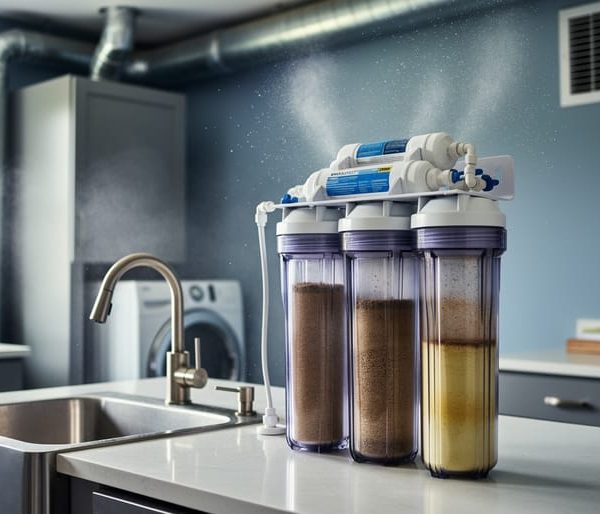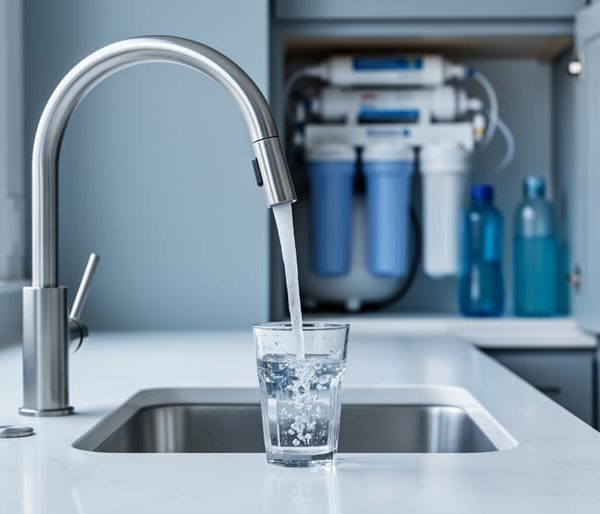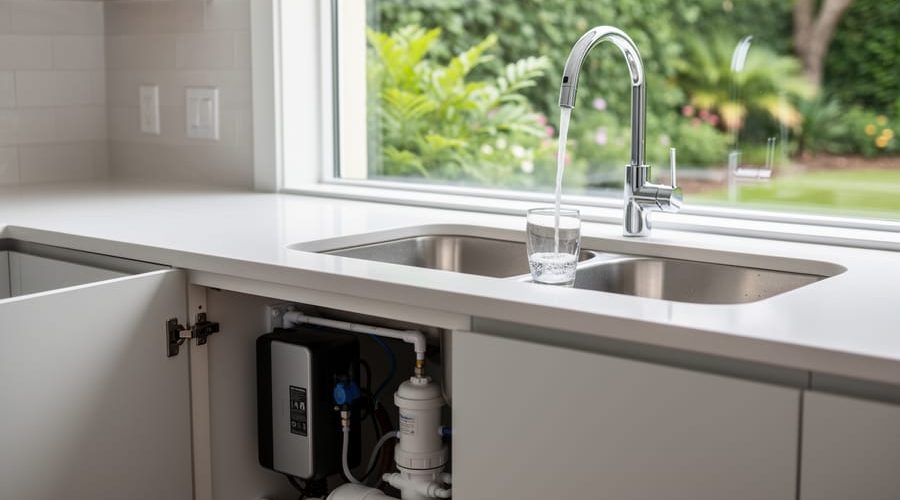
Understand that every gallon of purified water your reverse osmosis system produces sends 3-4 gallons down the drain—but this doesn’t make RO wasteful when you consider the alternatives. The reverse osmosis process uses pressure to force water through a semi-permeable membrane, leaving contaminants behind in a concentrated brine that must be flushed away to prevent membrane damage and maintain filtration efficiency.
Redirect your RO reject water to outdoor plants, lawns, or gardens since it contains only slightly elevated mineral levels that won’t harm most vegetation. Install a permeate pump on your existing system to reduce waste ratios from 4:1 down to 1:1 while simultaneously boosting water pressure and extending membrane life. Switch to a tankless RO system with remineralization, which typically operates at more efficient ratios and eliminates the stagnant water concerns of traditional storage tanks.
The environmental reality is nuanced: while RO systems do use more water than standard filters, they eliminate bottled water consumption that generates plastic waste and transportation emissions. A typical household RO unit wastes about 20 gallons daily, but replaces roughly 2,000 plastic bottles annually. Your local water source matters too—municipal water costs pennies per gallon, making the extra usage negligible compared to the health benefits of removing lead, arsenic, fluoride, and hundreds of other contaminants that simple carbon filters miss. Modern innovations continue improving efficiency ratios, and strategic wastewater reuse transforms what seems like loss into an integrated home water management approach.
How Reverse Osmosis Creates Wastewater
The Science Behind the Waste
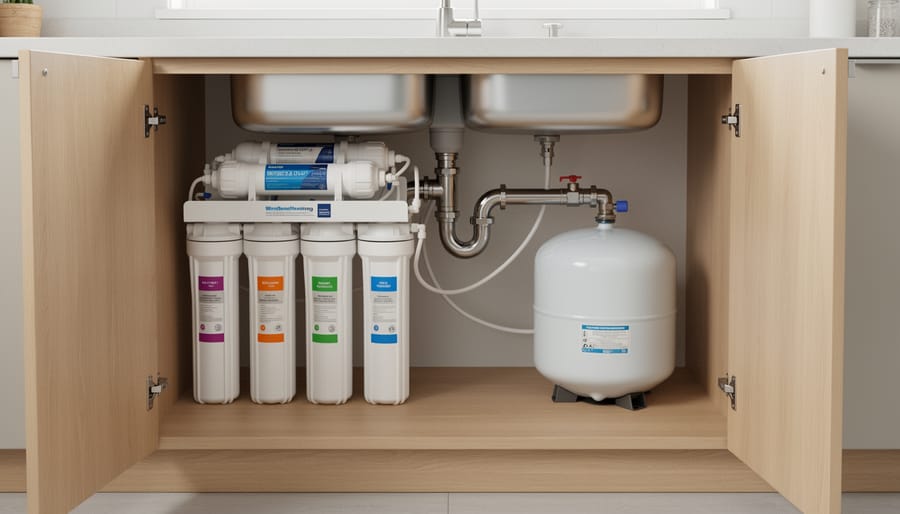
Understanding why reverse osmosis systems produce wastewater starts with how the technology actually works. At the heart of your RO system is a semi-permeable membrane, essentially a molecular-scale filter with microscopic pores. These tiny openings are just large enough to allow individual water molecules to squeeze through, but they block larger contaminants like dissolved salts, heavy metals, chemicals, and bacteria.
Here’s where the waste comes in: as your tap water flows across this membrane under pressure, the clean water passes through to your drinking glass. However, the contaminants don’t simply disappear. They accumulate on the membrane’s surface, and without constant flushing, they’d quickly clog the system and make it unusable. That’s why RO systems continuously send a stream of water flowing across the membrane to carry away rejected contaminants down your drain. Think of it like rinsing a coffee filter while you’re brewing.
The ratio of wastewater to purified water varies by system efficiency. Older or basic models often operate at a 4:1 or even 5:1 ratio, meaning four gallons go down the drain for every gallon of clean water produced. More efficient modern systems have improved to 3:1 or even 2:1 ratios. High-efficiency models with permeate pumps or other innovations can achieve 1:1 ratios, cutting waste in half compared to standard systems. This trade-off between thorough filtration and water conservation is central to understanding RO technology.
What’s Actually in RO Wastewater
Despite its name, reverse osmosis “wastewater” isn’t actually dirty water. It’s simply water that couldn’t pass through the RO membrane and carries away the minerals and contaminants your system filtered out.
This reject water contains concentrated dissolved solids like calcium, magnesium, sodium, chlorine, and other substances that were in your tap water to begin with. The exact composition depends on your local water supply, but typically includes naturally occurring minerals and trace amounts of contaminants that the membrane blocks.
Here’s an important perspective: RO wastewater is often cleaner than many natural water sources people use daily. It’s comparable to your original tap water, just with higher mineral concentration. Think of it as leftover water that did its job carrying away unwanted substances, rather than contaminated waste requiring special disposal.
The term “waste” can be misleading because this water hasn’t been polluted by the filtration process. It simply didn’t meet the ultra-pure standards your RO system achieves. Understanding this distinction opens possibilities for productive reuse throughout your home, transforming perceived waste into a valuable resource for eco-conscious households looking to minimize their environmental footprint.
The Environmental Impact of RO Wastewater
Is Your RO System Really That Wasteful?
Let’s put those waste concerns into perspective. A typical residential RO system wastes between 3 to 24 gallons of water per day, depending on its efficiency ratio. Older systems often operate at a 4:1 ratio, meaning for every gallon of purified water, four gallons go down the drain. That translates to roughly 12-20 gallons of waste daily for an average household, or 360-600 gallons monthly.
How does this compare to other household water use? Your lawn sprinkler uses about 600 gallons per hour, a washing machine consumes 15-40 gallons per load, and toilets account for nearly 27 gallons per person daily. In context, RO waste is relatively modest, comprising only 5-10% of total household water consumption for most families.
Modern RO systems have dramatically improved efficiency, with newer models achieving 1:1 ratios. If you’re running an older system, that monthly waste might seem concerning, but it’s comparable to taking two extra showers per week. The real opportunity lies not in abandoning RO technology, but in capturing and repurposing that reject water for tasks like watering plants, cleaning outdoor spaces, or flushing toilets.
When Water Waste Matters Most
While reverse osmosis systems produce wastewater in any situation, the impact varies dramatically depending on your water source and local conditions. Understanding when RO waste matters most can help you make informed decisions about your home water treatment.
For well water users, every drop counts differently than municipal water customers. If you rely on a private well with limited recharge rates, sending several gallons down the drain for every gallon purified can strain your water supply, especially during dry seasons. Your well’s recovery rate becomes a crucial factor in determining whether an RO system fits your household needs.
Drought-prone regions face similar challenges. Areas experiencing water restrictions or chronic shortages make RO waste particularly concerning. States like California, Arizona, and Nevada have seen communities implement conservation measures where residential water waste comes under scrutiny. In these environments, the four-to-one waste ratio of standard RO systems conflicts directly with sustainability goals and may even face regulatory limitations.
High water costs amplify the financial impact. In municipalities where water and sewer rates climb steadily, that reject water translates to real money flowing away. Combined utility bills can make the operational cost of RO systems surprisingly expensive over time, potentially offsetting the health benefits and convenience they provide.
Smart Ways to Reuse RO Reject Water
Garden and Lawn Irrigation
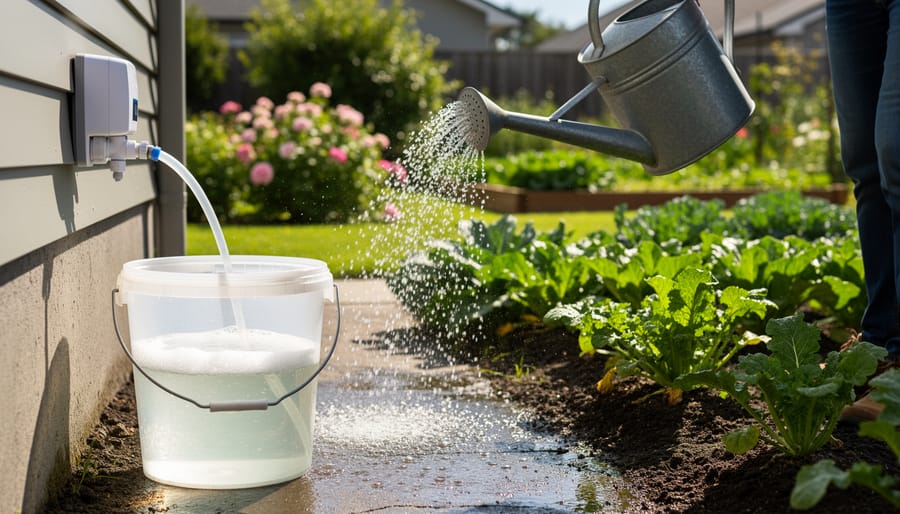
Your garden and lawn can benefit greatly from RO reject water, offering a practical way to eliminate waste from your home system. This water typically contains slightly higher concentrations of minerals that were filtered out, but it’s generally safe for most outdoor plants and grass.
Before setting up a collection system, test your reject water’s total dissolved solids (TDS) level using an inexpensive meter. Most plants tolerate TDS levels up to 2,000 parts per million, though salt-sensitive species like azaleas and blueberries may struggle if levels exceed 1,000 ppm. If your source water already has high mineral content, diluting reject water with rainwater creates a safer irrigation solution.
Collection is surprisingly simple. Route your RO system’s drain line into a five-gallon bucket or rain barrel instead of letting it flow down the sink. A standard household system produces enough reject water to maintain a small garden or several potted plants. For convenience, place collection containers near your system and transfer water during your regular watering schedule.
Rotating between reject water and regular irrigation prevents salt buildup in soil. Monitor your plants for signs of stress like yellowing leaves or stunted growth, which may indicate excessive mineral accumulation. This straightforward reuse strategy transforms potential waste into a valuable resource while supporting your eco-friendly lifestyle goals.
Household Cleaning and Non-Potable Uses
Your reverse osmosis reject water is perfectly suited for numerous household tasks that don’t require drinking-quality water. Instead of sending this water down the drain, you can easily collect it in clean containers and put it to work around your home.
Mopping floors is an ideal use for RO wastewater since you’re essentially washing surfaces with water that’s already cleaner than what comes from your garden hose. Similarly, toilet flushing represents one of the biggest water consumption activities in most households, making it a smart target for using reject water. Simply pour collected wastewater into the toilet bowl to manually flush, or set up a collection system that feeds into your toilet tank.
Car washing, outdoor window cleaning, and rinsing off driveways or patios are other excellent applications. The wastewater contains slightly elevated mineral content compared to purified water, but this poses no issues for these purposes. You can also use it for pre-rinsing heavily soiled dishes before loading your dishwasher, though avoid using it for final rinses.
By repurposing reject water for these non-potable applications, many homeowners successfully offset a significant portion of their RO system’s water consumption, transforming perceived waste into a practical resource that supports more sustainable household water management.
Aquarium and Pet Water Applications
Reverse osmosis reject water can work well for certain aquarium and pet applications, though you’ll need to consider a few important factors first. For freshwater fish tanks, RO waste water may actually be beneficial since it contains higher mineral content than the purified water, creating conditions closer to natural habitats. The dissolved minerals that your RO system removed from drinking water often mirror what fish need for healthy gill function and overall wellbeing.
However, always test the reject water before adding it to your aquarium. Check pH levels, total dissolved solids, and specific contaminants that might harm aquatic life. If your source water contains chlorine, fluoride, or heavy metals, these concentrate in the reject stream and could stress or harm fish. A simple water testing kit helps you determine safety.
For pet bowls, RO waste water generally works fine for dogs and cats, provided your tap water meets basic safety standards. The minerals present won’t harm most pets and may even support their hydration needs better than completely purified water. Just avoid using reject water if you know your municipal supply has contamination issues, since those pollutants become more concentrated in the waste stream.
How to Reduce Wastewater from Your RO System
Choose a High-Efficiency RO System
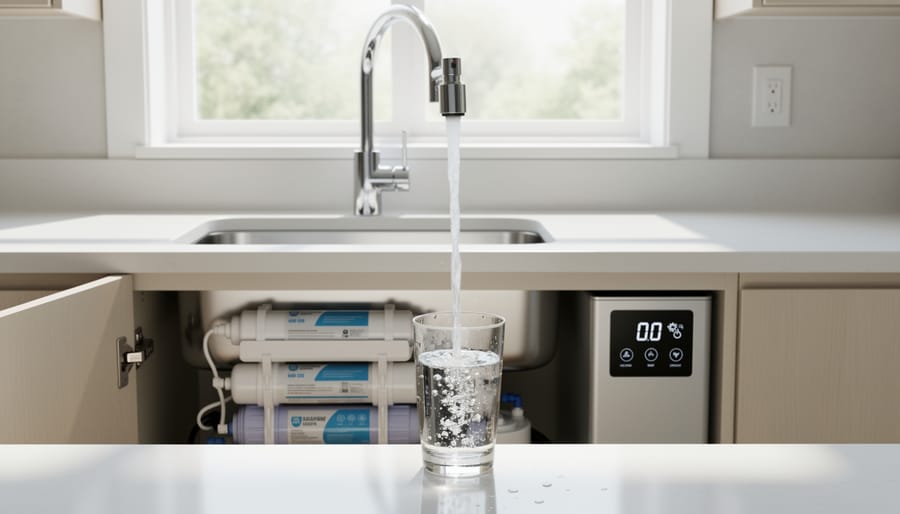
Not all reverse osmosis systems are created equal when it comes to water efficiency. Traditional RO units often waste three to five gallons for every gallon of purified water produced, but modern technology has dramatically improved these ratios. When shopping for a new system or upgrading your current one, look for high-efficiency models that advertise waste ratios of 1:1 or even better. Some cutting-edge systems now achieve ratios as low as 1:0.5, meaning they produce two gallons of clean water for every gallon sent to drain.
The secret behind these impressive improvements often lies in permeate pump technology. Unlike standard systems that rely solely on water pressure, permeate pumps use the energy from wastewater (reject water) to boost the cleaned water through the membrane more efficiently. This simple innovation reduces the amount of water needed to flush contaminants away while maintaining excellent filtration quality. The result is significantly less waste without compromising the purity you expect from reverse osmosis.
When evaluating RO systems, check the manufacturer’s specifications for the recovery rate or waste ratio. Look for certifications from organizations like WQA (Water Quality Association) or NSF International, which verify performance claims. While high-efficiency models may cost slightly more upfront, they pay for themselves through reduced water bills and align with sustainable living principles. Additionally, consider systems with automatic shut-off valves that prevent water from running unnecessarily when your storage tank is full, further minimizing waste in your daily water purification routine.
Optimize Your Current System
Simple maintenance habits can dramatically reduce wastewater and boost your reverse osmosis system’s efficiency. Start by replacing your RO membrane according to the manufacturer’s schedule, typically every 2-3 years. A worn membrane works harder and produces more waste while delivering lower quality water.
Check your water pressure regularly, as RO systems perform best between 40-80 PSI. Low pressure forces the system to run longer and waste more water, while excessive pressure can damage components. Install a pressure gauge to monitor this easily.
Make monitoring TDS levels part of your monthly routine using an inexpensive TDS meter. Rising numbers indicate declining membrane performance, signaling it’s time for replacement before efficiency drops further. Target levels should stay below 50 PPM for optimal drinking water.
Don’t overlook your flow restrictor, the small component that controls wastewater production. Over time, these can clog with mineral deposits, throwing off the waste-to-pure water ratio. Cleaning or replacing it annually ensures your system maintains its designed efficiency ratio, preventing unnecessary water loss while keeping your eco-friendly home running smoothly.
Install a Wastewater Recirculation System
One of the most effective ways to reduce reverse osmosis waste is installing a recirculation system that puts reject water back to work. These add-on systems redirect the concentrated brine water instead of sending it straight down the drain, giving you a second chance to extract pure water from it.
Permeate pump systems are popular options that automatically loop reject water back to your RO system’s inlet. By recirculating this water, you essentially give your membrane another opportunity to filter it, significantly improving your overall water recovery rate. Some systems can boost efficiency from the typical 25% to over 50%, cutting your waste output in half.
Alternatively, you can install a simple collection tank setup that captures reject water for household reuse. This low-tech solution lets you repurpose the concentrate for activities like watering plants, washing cars, or cleaning outdoor areas. While this water contains higher mineral concentrations than your tap water, it’s perfectly safe for non-drinking purposes.
These recirculation systems represent practical, cutting-edge water innovations that align with eco-living principles without requiring you to sacrifice water quality or convenience.
Alternatives to Traditional RO Treatment
When You Might Not Need RO
Not every household needs the intensive filtration that reverse osmosis provides. If your main water concerns involve chlorine taste, minor sediment, or common contaminants, a carbon filter system might solve your problems without producing wastewater. These filters are excellent for improving taste and removing chlorine, volatile organic compounds, and many chemical pollutants.
For homes with microbiologically safe but hard water, a traditional water softener addresses mineral buildup without waste. These ion exchange systems regenerate with salt brine but use significantly less water than RO systems during their cleaning cycles.
If bacteria and viruses are your primary concern but dissolved solids aren’t problematic, UV treatment alternatives provide chemical-free disinfection without generating any wastewater. UV systems use light energy to neutralize microorganisms while preserving beneficial minerals in your water.
Testing your water quality is the essential first step. Many homeowners discover their water needs simpler solutions than reverse osmosis. Municipal water already treated to safety standards often requires only taste and odor improvement, making less resource-intensive options both environmentally friendlier and more cost-effective for your situation.
Hybrid Filtration Approaches
Smart homeowners are discovering that you don’t need to filter all your water to the same high standard. A hybrid approach can dramatically reduce waste while still protecting your health. Consider installing a whole-house sediment filter and carbon filter before your RO system. These pre-filters remove larger particles, chlorine, and organic compounds, reducing the workload on your RO membrane. When your RO system doesn’t have to work as hard, it operates more efficiently and produces less wastewater.
Another innovative strategy is point-of-use filtration, where you install RO systems only at drinking water taps while using simpler filtration methods for showers, laundry, and toilets. This targeted approach makes practical sense since you typically consume less than one gallon of drinking water daily per person, but household water use averages 80-100 gallons. By reserving high-efficiency RO filtration for consumption and cooking, you’ll substantially decrease overall wastewater production while maintaining pristine drinking water quality. This eco-conscious solution balances water conservation with health protection.
Choosing a reverse osmosis system for your home means weighing the undeniable benefits of pure, safe drinking water against the environmental reality of water waste. There’s no perfect solution, but understanding the trade-offs empowers you to make choices that align with both your health priorities and environmental values.
The good news is that you don’t have to choose between water quality and sustainability. Modern RO systems offer significant efficiency improvements over older models, and simple steps like capturing wastewater for household reuse can dramatically reduce your environmental footprint. Whether you’re watering your garden, cleaning floors, or flushing toilets with reclaimed water, every gallon reused makes a difference.
Before investing in any water treatment solution, take time to assess your specific situation. Test your water quality to understand what contaminants you’re actually dealing with. If your water concerns are minimal, alternatives like carbon filters might meet your needs without generating waste. For those facing serious contamination issues, a high-efficiency RO system with wastewater reuse strategies represents a balanced approach.
Remember that informed decisions create the best outcomes. By understanding how reverse osmosis works, recognizing its limitations, and implementing practical waste-reduction measures, you can enjoy crystal-clear drinking water while minimizing environmental impact. Sustainable living isn’t about perfection; it’s about making thoughtful choices that protect both your family’s health and our shared water resources for generations to come.