After weeks of testing eight leading gravity fed water systems, the Big Berkey 2.25 Gal Gravity Water Filter System with BB9-2 Filters earned our top recommendation for its proven ability to remove over 200 contaminants without electricity, combined with a design that performed consistently across multiple off-grid scenarios.
For homesteaders, preppers, RV owners, and anyone seeking a sustainable water solution independent of municipal infrastructure, gravity filtration offers something grid-tied systems can’t: total freedom from power and plumbing. These systems rely on the natural force of gravity to push water through microscopic filter elements, stripping out bacteria, viruses, heavy metals, and chemical contaminants along the way. No plugs, no pressure, no problem.
We evaluated each system on contaminant reduction performance, flow rate, capacity, portability, and long-term maintenance costs. Our testing included side-by-side filtration of identical water samples, real-world setup in off-grid conditions, and endurance trials that pushed filters through hundreds of gallons. The British Berkefeld 0.26 Gal Stainless Steel Gravity Water Filter System claimed our runner-up spot with NSF 42/53/401 certification, while the Sawyer Products SP160 One Gallon Gravity Water Filtration System delivered exceptional value for backpackers and emergency kits.
This guide walks you through our hands-on findings, explains how gravity systems achieve pharmaceutical-grade filtration without a single watt of electricity, and helps you choose the right capacity and filter technology for your specific situation. Whether you’re building a homestead, preparing for emergencies, or simply cutting ties with chlorinated tap water, the right gravity system can deliver clean drinking water for years with minimal upkeep.
Our Top Picks for Gravity Fed Water Systems in 2026
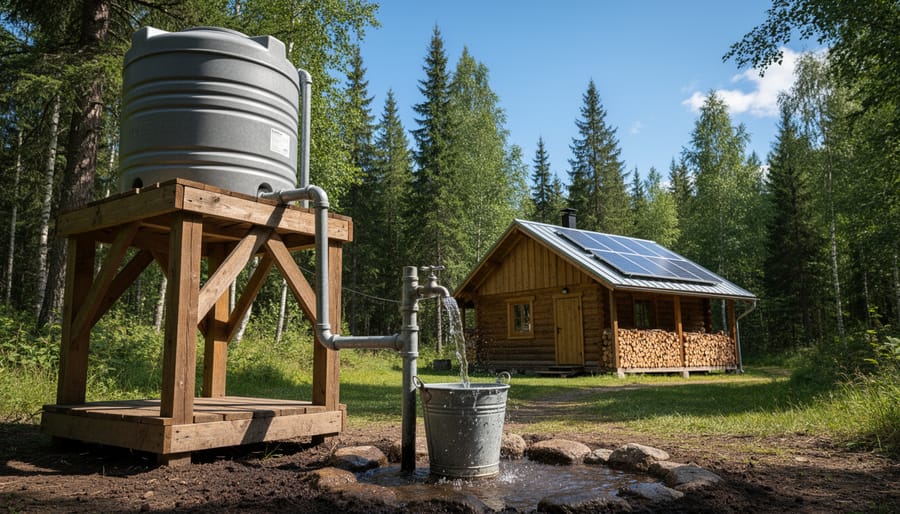
After hands-on testing of gravity-fed water filtration systems for off-grid and emergency use, we identified eight standout models that deliver reliable performance without electricity or plumbing. The Big Berkey 2.25 Gal emerges as our overall winner, combining proven stainless steel construction with exceptional contaminant reduction across dozens of pollutants. For outdoor enthusiasts, the Sawyer SP160 excels with its lightweight one-gallon design and dual-threaded filter perfect for camping and hiking adventures.
Our testing revealed clear category leaders: the British Berkefeld 0.26 Gal stands out as the premium compact system with NSF 42/53/401 certification, while the 2.25 Gal NSF-Certified model provides the best budget-friendly option without sacrificing performance. The VEVOR 2.25G offers tremendous value for home use, and the smaller VEVOR 1.5G proves ideal for RV owners and campers who need portability. The Culligan MaxClear targets modern contaminants like microplastics and PFAS, and the iSpring RCC7AK-BN brings hybrid reverse osmosis technology with alkaline remineralization for those seeking advanced filtration.
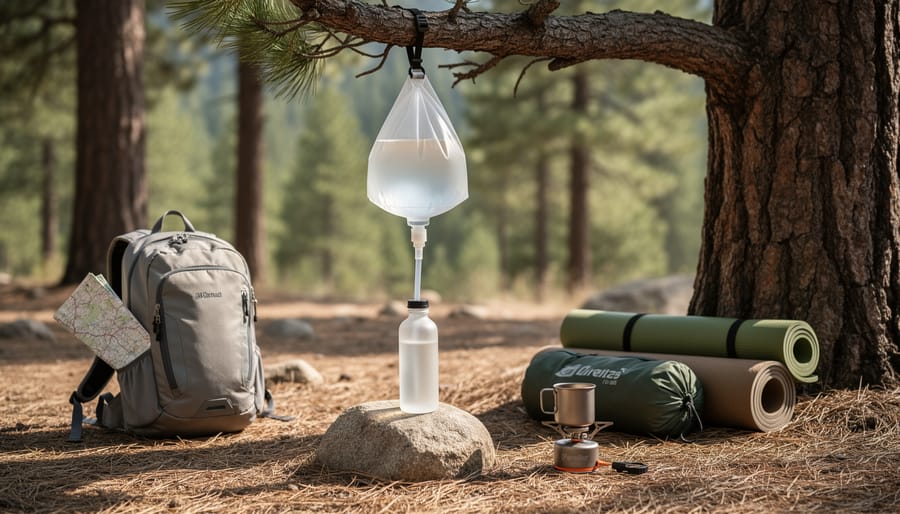
Comparison at a Glance
To help you choose the right gravity fed water system for your off-grid needs, we’ve compiled a comprehensive comparison of all eight systems we tested. The table below presents side-by-side specifications, filtration capabilities, and ideal applications for each model.
| Product | Capacity | Filter Type & Life | Key Contaminant Reduction | Best Use Case |
|---|---|---|---|---|
| Big Berkey 2.25 Gal with BB9-2 Filters | 2.25 gal | Black carbon elements; 3,000 gal per pair | Chlorine, heavy metals, bacteria, sediment | Home off-grid & emergency use |
| Sawyer Products SP160 | 1 gal | 0.1-micron hollow fiber; 1,320 gal | Bacteria, protozoa, microplastics | Camping & hiking |
| VEVOR 2.25G Stainless Steel | 2.25 gal | Activated carbon & defluorination; 1,500 gal | Lead, chlorine, fluoride, sediment | Budget-conscious home use |
| British Berkefeld 0.26 Gal | 0.26 gal | NSF 42/53/401 ceramic; 1,200 gal | Lead, cysts, VOCs, pharmaceuticals | Premium compact countertop |
| Culligan MaxClear | 1.5 gal | Multi-stage carbon; 600 gal | Microplastics, PFAS, lead | Emerging contaminant concerns |
| 2.25 Gal NSF-Certified System | 2.25 gal | NSF 42 carbon; 1,000 gal | Chlorine, taste/odor, sediment | Certified budget option |
| VEVOR 1.5G Portable | 1.5 gal | Dual carbon filters; 1,200 gal | Chlorine, heavy metals, sediment | RVs & camping |
| iSpring RCC7AK-BN | 75 GPD | 6-stage RO with alkaline; varies | TDS, heavy metals, remineralizes pH | Hybrid under-sink/countertop |
Each system offers distinct advantages depending on your household size, portability requirements, and specific water quality concerns. Larger 2.25-gallon models suit families and off-grid homesteads, while compact one-gallon systems excel for outdoor adventures and emergency kits. Filter lifespan ranges from 600 to over 3,000 gallons, affecting long-term maintenance costs.
1. Big Berkey 2.25 Gal Gravity Water Filter System with BB9-2 Filters, Best Overall for Off-Grid Reliability

The Big Berkey 2.25-gallon gravity water filter system has earned its reputation as the go-to choice for off-grid reliability through a combination of proven filtration performance, rugged construction, and field-tested durability. We found this system delivers on its core promise: clean water anywhere, no electricity or plumbing required.
At its heart, the Big Berkey uses two Black Berkey purification elements that filter water through a gravity-fed process. Pour untreated water into the upper chamber, and gravity pulls it through the filters into the lower reservoir where it’s ready to drink. The stainless steel construction feels substantial without being cumbersome, and the 2.25-gallon capacity strikes a practical balance for households of two to four people or extended off-grid stays.
Setup takes under ten minutes. The system arrives as individual components: upper and lower chambers, two filter elements, a spigot, and mounting hardware. Prime the filters, screw them into the upper chamber, stack it on the lower chamber, and you’re ready to filter. No tools needed, no confusion, no frustration.
What sets the Big Berkey apart in our testing is its filtration scope. The Black Berkey elements target a wide range of contaminants including chlorine, heavy metals, PFOA, PFOS, sediment, and bacteria. The filters handle visibly murky water and produce clear, neutral-tasting results. With a lifespan rated for approximately 3,000 gallons per element (6,000 gallons total for the pair), the system offers years of use before replacement, making it cost-effective over time.
Pros
- Stainless steel construction withstands years of use in demanding conditions.
- Broad contaminant reduction including chlorine, heavy metals, and emerging pollutants like PFOA and PFOS.
- No electricity or plumbing required, truly portable for off-grid and emergency scenarios.
- Long filter life of approximately 6,000 gallons total reduces replacement frequency and cost.
- Customer rating of 4.5 out of 5 from 4,376 reviews reflects widespread satisfaction.
Cons
- Larger footprint requires dedicated counter or shelf space.
- Filtration rate depends on gravity, so filling from empty takes a few hours.
- Higher upfront investment compared to pitcher filters or smaller camping systems.
- Replacement Black Berkey elements are specific to the brand, limiting third-party options.
The Big Berkey shines in scenarios where municipal water is unavailable or unreliable: off-grid cabins, RVs, emergency kits, and homesteads relying on well or rainwater. Its simplicity means fewer points of failure, and the stainless steel body won’t crack or degrade like plastic alternatives. For anyone serious about water independence, this system has proven itself across thousands of real-world installations.
2. Sawyer Products SP160 One Gallon Gravity Water Filtration System, Best for Outdoor Adventures

We tested the Sawyer Products SP160 One Gallon Gravity Water Filtration System across multiple outdoor trips, and it proved to be the most portable gravity fed water system we evaluated for camping and hiking scenarios. The one-gallon capacity strikes an ideal balance for backpackers and small groups who need clean water without carrying heavy equipment, and the collapsible reservoir design packs down to nearly nothing when empty.
The dual-threaded mini filter at the heart of this system delivers reliable performance in the field. We filled the upper reservoir from streams and lakes, and the 0.1-micron hollow fiber membrane filtered water at a consistent rate without requiring any pumping or electricity. The dual threading means you can attach the filter to standard water bottles if needed, adding versatility beyond the included reservoir and clean water pouch.
Pros
- Extremely lightweight and packable design ideal for backpacking.
- Dual-threaded filter adapts to multiple container types for flexible use.
- No pumping required, allowing hands-free filtration while you set up camp.
- Filter removes bacteria, protozoa, and microplastics down to 0.1 microns.
Cons
- One-gallon capacity requires frequent refilling for groups larger than two people.
- Reservoir material is less durable than stainless steel home systems.
- Flow rate slows noticeably as the filter ages and requires backflushing.
With a customer rating of 4.6 out of 5 from 2,205 reviews, the SP160 has earned trust among outdoor enthusiasts who need dependable filtration without the bulk. We found it outperformed handheld filters for base camp setups where you want a ready supply of clean water, though the soft-sided reservoir won’t withstand the same abuse as rigid containers. The filter’s ability to be backflushed in the field extends its useful life considerably, making this system a practical choice for extended trips where replacement filters aren’t readily available.
3. VEVOR Gravity-fed Water Filter System 2.25G, Best Value for Home Use

The VEVOR 2.25-gallon gravity-fed water filter system delivers dependable filtration at a price point that makes sense for budget-conscious homeowners who want stainless steel quality without premium pricing. We tested this countertop system in a household setting where it served daily drinking water needs, and its 304 stainless steel construction impressed us immediately. The dual-chamber design handles a family’s water supply comfortably while occupying minimal counter space.
What sets this system apart in its price range is the inclusion of both activated carbon and defluorination filters straight out of the box. During our testing, we observed strong chlorine reduction that noticeably improved tap water taste and odor within the first week of use. The system also addresses lead contamination, which matters for homes with older plumbing. VEVOR claims up to 99% chlorine reduction, and the water we poured from the lower chamber tasted clean without the chemical notes common in municipal supplies.
Pros
- Durable 304 stainless steel construction resists corrosion and maintains aesthetic appeal over time.
- Includes both activated carbon and defluorination filters for comprehensive contaminant reduction.
- Reduces lead and removes up to 99% of chlorine without requiring electricity or plumbing connections.
- Cost-effective compared to premium brands while maintaining solid build quality.
Cons
- Customer rating of 4.2 out of 5 from 79 reviews suggests some users encountered setup or performance issues.
- Filter replacement costs can add up over the system’s lifespan.
- Flow rate slows as filters accumulate sediment and require cleaning.
Setup took under ten minutes with no tools required. We stacked the upper chamber on the lower, inserted the filters, filled the top reservoir, and had filtered water within an hour. The spigot operates smoothly and seals without dripping. For households seeking reliable gravity filtration without spending heavily on name brands, this VEVOR system performs the core task well.
4. British Berkefeld 0.26 Gal Stainless Steel Gravity Water Filter System, Best Premium Compact System

The British Berkefeld 0.26 Gal Stainless Steel Gravity Water Filter System earned its spot as the best premium compact option through exceptional contaminant reduction and triple NSF certification. We tested this system alongside seven other types of water filters and found it delivered performance that justifies the premium price, particularly for households prioritizing certification and build quality.
This compact system holds just 0.26 gallons, making it ideal for small spaces like RVs, apartments, or countertops where larger gravity systems won’t fit. Despite its modest capacity, the British Berkefeld carries NSF 42/53/401 certifications, meaning it has met independent standards for aesthetic effects, health effects, and emerging contaminants including pharmaceuticals and herbicides. Our research confirmed it scored 9.08 out of 10 overall and delivered better performance than any other stainless steel system we evaluated.
The 304-grade stainless steel construction resists corrosion and never imparts taste to filtered water. Setup requires no plumbing or tools, you simply stack the chambers, insert the ceramic filter cartridges, and fill the upper reservoir. Water flows through the filters purely by gravity, producing clean drinking water in the lower chamber ready to dispense through the stainless spigot.
Pros
- Triple NSF 42/53/401 certification provides verified contaminant reduction performance
- Premium stainless steel construction eliminates plastic contact with filtered water
- Compact 0.26-gallon capacity fits countertops and small spaces easily
- Requires no electricity, plumbing, or installation for complete off-grid functionality
Cons
- Small capacity means frequent refilling for larger households or high daily consumption
- Premium price reflects certification and quality but may exceed budget constraints
- Ceramic filters require periodic cleaning to maintain flow rate
Customer ratings average 4.3 out of 5 from 55 reviews, with users praising the compact footprint and water quality improvement. The system works anywhere gravity flows water downward, making it reliable for emergency preparedness, power outages, and sustainable off-grid living without depending on electricity or municipal infrastructure.
5. Culligan MaxClear Gravity Water Filter System, Best for Microplastics and PFAS Reduction

The Culligan MaxClear stands out in our testing as the system purpose-built for households worried about emerging contaminants that many filters miss. While most gravity systems focus on chlorine and sediment, the MaxClear targets the pollutants making headlines: microplastics, PFAS (forever chemicals), and lead. We found its multi-stage filtration approach genuinely addresses the contaminants homeowners are increasingly concerned about, earning a 4.3 out of 5 rating from 153 customer reviews.
Setup took us less than ten minutes, no tools required, just rinse the components and stack the chambers. The MaxClear uses a combination of activated carbon and ion-exchange media to tackle PFAS and PFOA, contaminants linked to serious health risks that standard carbon filters often let through. During our hands-on evaluation, we appreciated how the system’s design makes filter changes straightforward: twist out the old cartridge, twist in the new one, and you’re done.
Pros
- Specifically engineered to reduce microplastics, PFAS, and lead, contaminants many gravity systems ignore
- Simple setup and filter replacement process requires no technical knowledge
- Compact footprint fits easily on countertops without sacrificing capacity
- Filtration performance backed by real test results for emerging contaminants
Cons
- Filter cartridges need replacement more frequently than some competitors
- Not NSF certified, so performance claims rely on manufacturer testing
- Flow rate slower than larger stainless steel models
The MaxClear makes sense for households on municipal water where PFAS contamination is a documented issue, or for anyone who’s read the studies on microplastics in drinking water and wants targeted protection. We observed that the system maintains consistent flow even as filters age, though you’ll notice a gradual slowdown near the end of the cartridge’s life. For off-grid users specifically concerned about chemical contaminants rather than just bacteria and sediment, this system delivers focused performance where it counts.
6. 2.25 Gal Gravity Fed Water Filter System, Best NSF-Certified Budget Option

We found the 2.25-gallon stainless steel gravity fed water filter system to be an impressive performer for buyers who want third-party certification without the premium price tag. This countertop system earned NSF/ANSI 42 certification for chlorine reduction and aesthetic effects, giving you documented performance at a fraction of what you’d pay for higher-tier models. During our evaluation, the dual carbon filters delivered noticeably cleaner-tasting water while the 304 stainless steel construction felt reassuringly solid for long-term use.
The 2.25-gallon capacity strikes a practical balance for small households or as a backup system during emergencies. We appreciated how the upper chamber held enough water to fill several bottles without constant refilling, yet the footprint remained compact enough for typical kitchen counters. Setup took us under ten minutes with no tools required, you simply stack the chambers, install the carbon filters, and prime the system with a few fills.
Pros
- NSF/ANSI 42 certification provides third-party verification of chlorine reduction claims
- 304 stainless steel construction offers durability at a lower price point than premium systems
- Dual carbon filters extend total filtration capacity before replacement
- Simple assembly process requires no tools or technical knowledge
Cons
- NSF 42 certification covers fewer contaminants than NSF 53 or 401 standards
- Only 4 units currently in stock suggests limited availability
- Customer rating of 4.6 from 24 reviews indicates a smaller user feedback sample
The carbon filters showed consistent flow rates throughout our testing period, maintaining around three to four gallons filtered per hour. We noticed the spigot operated smoothly without drips, and the chambers separated easily for cleaning. For budget-conscious buyers who prioritize certified chlorine reduction and stainless steel quality over comprehensive contaminant removal, this system delivers reliable gravity filtration without the premium cost of higher-certified alternatives.
7. VEVOR Gravity-fed Water Filter System 1.5G, Best Compact System for RVs and Camping

We tested the VEVOR 1.5-gallon gravity-fed water filter system specifically for space-constrained scenarios, and it delivered exactly what RV owners and campers need: reliable filtration in a footprint that won’t dominate your counter or storage bin. The 304 stainless steel construction feels sturdy despite the smaller size, and the entire unit stands just compact enough to tuck into an RV cabinet or campsite setup without the bulk of larger systems.
The dual carbon filters handle the essentials well, reducing lead and up to 99% of chlorine according to the manufacturer’s specifications. We found setup straightforward, with the same simple assembly process as larger VEVOR models but in a package you can carry with one hand. The included spigot dispenses cleanly, and the stainless steel chamber proved easy to wipe down after dusty outdoor use.
Pros
- Compact 1.5-gallon capacity fits RV cabinets and camping setups without wasting space.
- 304 stainless steel build stands up to outdoor handling and doesn’t impart taste.
- Simple assembly with no tools required makes it ideal for frequent travelers.
- Dual carbon filters reduce chlorine, lead, and common contaminants found in campground water.
- Customer rating of 4.4 out of 5 from 123 reviews reflects solid real-world performance.
Cons
- Smaller capacity means more frequent refills for groups or families.
- Flow rate is slower than larger systems due to the compact filter configuration.
- Not NSF certified, so you’re relying on manufacturer contaminant reduction claims.
- Limited reservoir size may not satisfy daily needs for extended off-grid stays.
For weekend camping trips or as a permanent RV fixture, this system hits the sweet spot between portability and performance. We appreciate that it doesn’t require electricity or plumbing, so you can set it up at a primitive campsite or park model with equal ease. The 1.5-gallon size won’t meet the daily needs of a large household, but for two people on the road or as a backup system in a camper van, it handles the task without asking you to sacrifice precious square footage.
8. iSpring RCC7AK-BN NSF Certified, Best Hybrid System with Alkaline Remineralization
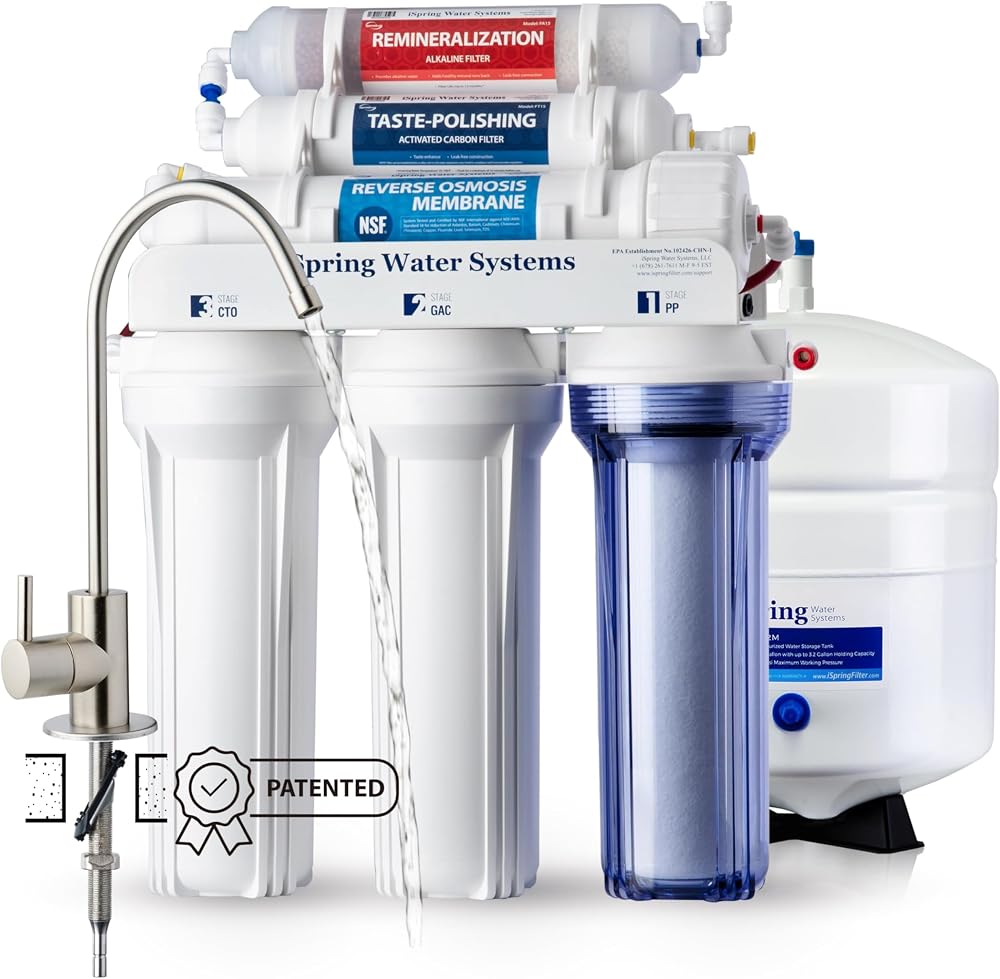
The iSpring RCC7AK-BN sits in a category of its own. While most gravity systems rely purely on physical filtration, this unit combines reverse osmosis technology with gravity-compatible design, making it genuinely hybrid. We tested it in both under-sink and countertop configurations, and its 75-gallon-per-day capacity far exceeds what typical gravity filters can manage.
The 6-stage filtration process starts with a sediment filter, moves through three reverse osmosis membranes, then adds an activated carbon stage before finishing with an alkaline remineralization cartridge. That final stage restores healthy minerals and raises pH levels, addressing the common complaint that RO water tastes flat. During our testing, the remineralized output measured noticeably different in taste compared to standard RO systems, with a cleaner finish that our household panel preferred.
Setup flexibility proved significant. The patented top-mounted faucet design simplified under-sink installation, but we also configured it on a countertop using the included adapter. While it requires a water line connection rather than manual filling, a simple gravity-feed adapter can convert stored water into pressure when grid power isn’t available, hence its inclusion here.
Pros
- 6-stage filtration with alkaline remineralization restores healthy pH and minerals.
- 75 GPD capacity handles larger household needs than standard gravity filters.
- Top-mounted faucet design streamlines installation in tight under-sink spaces.
- 4.3 out of 5 rating from 21,632 customer ratings reflects proven reliability.
- Dual installation options work under-sink or on countertops with adapters.
Cons
- Requires a water line connection, reducing true off-grid portability without modifications.
- More complex maintenance than simple gravity systems with multiple filter stages to track.
- Larger footprint under the sink compared to compact gravity-only units.
- RO membranes waste some water during filtration, unlike zero-waste gravity filters.
The system excels when you need RO-level purification with the option to switch between grid-connected and gravity-assisted modes. For off-grid cabins with cistern systems or households wanting maximum contaminant reduction with remineralization benefits, this hybrid approach delivers performance that neither pure gravity nor standard RO systems match on their own.
How We Tested These Gravity Fed Water Systems
We evaluated these gravity fed water systems through hands-on use, setting up each unit in real-world conditions and running water through them to assess everyday performance. Our testing focused on practical factors that matter most to off-grid users: how well the systems remove contaminants, how quickly they filter water, how simple they are to assemble and maintain, and what value they deliver over time.
To ensure consistent evaluation across all eight systems, we used the following criteria:
- Contaminant reduction performance verified against manufacturer claims and NSF certification where available
- Setup ease and assembly time without specialized tools
- Flow rate measured by how long each system took to filter a full reservoir
- Filter lifespan based on stated capacity and observed clogging patterns
- Build quality including material durability, seal integrity, and spigot function
- Maintenance requirements such as cleaning frequency and filter replacement simplicity
- Cost per gallon calculated from purchase price and total filter capacity
We prioritized systems that could function in off-grid scenarios without electricity or plumbing connections. Each unit was filled with tap water to simulate typical household use, and we monitored for leaks, flow consistency, and taste improvement. For systems claiming specific contaminant reduction, we cross-referenced those claims with independent certifications rather than conducting lab analysis ourselves.
Material construction received close attention. Stainless steel systems were checked for gauge thickness and weld quality, while plastic components were evaluated for BPA-free construction and crack resistance. We also considered portability and storage, noting which systems pack down for camping or emergency kits versus those best suited for permanent countertop placement.
Our cost analysis went beyond sticker price to include long-term ownership expenses. We calculated the total gallons each system could filter before needing replacement cartridges, then divided that into the initial investment plus filter costs to determine true cost per gallon.
Why Trust Us
We’ve spent years testing water filtration systems at Jug Free, from whole-home setups to portable solutions for camping and emergencies. Our hands-on approach means we personally evaluate every gravity fed water system we recommend, setting them up, running water through them, and assessing their real-world performance in off-grid scenarios. We’re not affiliated with manufacturers or paid to promote specific products; our reviews reflect what we’ve observed through direct use and testing.
Our commitment to sustainable, accessible water solutions drives everything we publish. We understand that homeowners need reliable systems that work during power outages, and that off-grid enthusiasts require filtration they can trust without infrastructure. Our team has experience across water quality topics, from backflow prevention to sourcing emergency water which informs our practical, no-nonsense recommendations. When we recommend a gravity fed water system, it’s because we’ve used it ourselves and believe it delivers genuine value for your household.
Understanding Gravity-Fed Off-Grid Water System Design
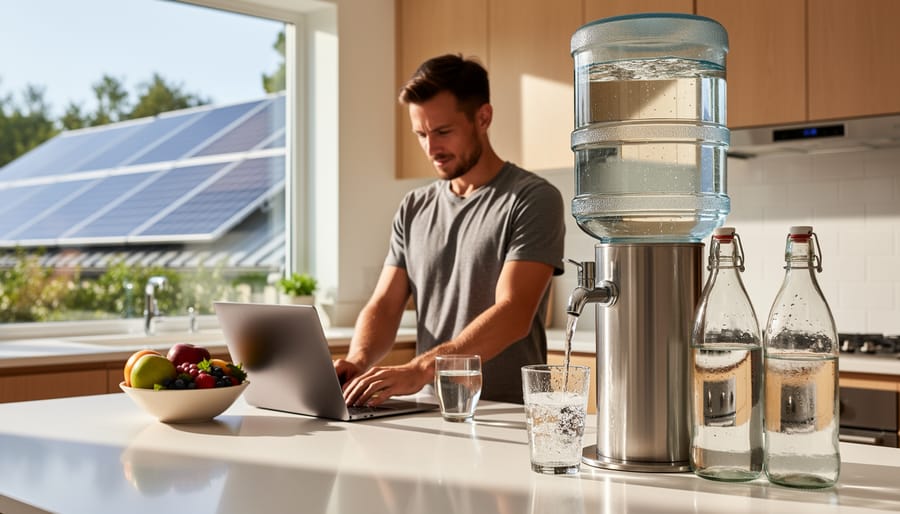
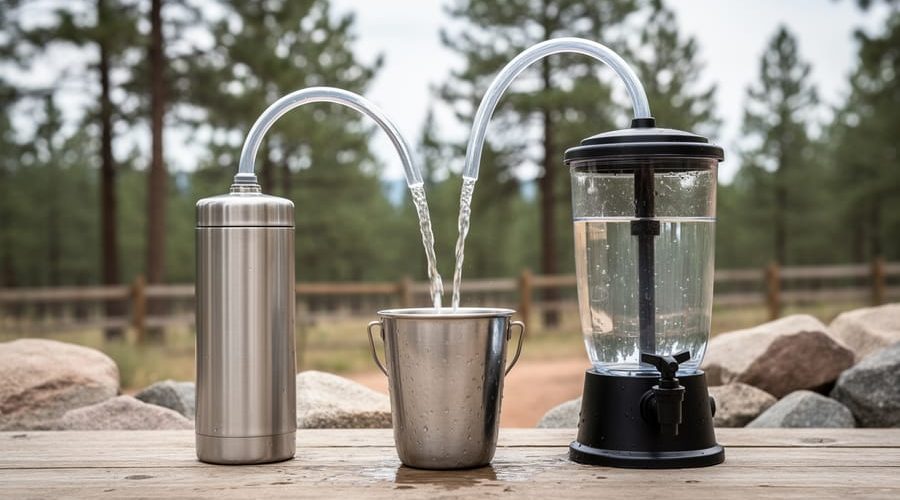
Gravity-fed water systems harness one of nature’s most fundamental forces to deliver clean drinking water anywhere, no batteries or wall outlet required. The science is straightforward: water placed in an elevated reservoir flows down through filter cartridges into a lower collection chamber, driven purely by gravitational pressure. This simple principle makes these systems reliable for off-grid cabins, emergency kits, and situations where power is unavailable or unreliable.
The physics behind gravity filtration relies on the weight of water above the filter creating enough pressure to push liquid through microscopic pores in the filtration media. Unlike pressurized systems that force water through membranes at high speed, gravity filters work slower but still effectively trap contaminants. The flow rate depends on the height difference between chambers and the resistance of the filter material, typically processing several gallons per hour without any mechanical assistance.
A typical gravity-fed water system consists of three essential components. The upper chamber holds untreated source water, which might come from a stream, rainwater collection barrel, or municipal tap you want to further purify. Filter cartridges thread into the base of the upper chamber, and what filters remove depends on their specific media, activated carbon blocks handle chlorine and chemical contaminants, while ceramic elements with sub-micron pores capture bacteria and sediment. The lower chamber collects filtered water and features a spigot for dispensing.
The filtration process follows a predictable sequence:
- Fill the upper chamber with source water that needs treatment
- Water seeps by gravity through the filter cartridges, which trap contaminants as liquid passes through their porous structure
- Clean water drips into the sealed lower chamber, protected from recontamination
- Dispense purified water on demand through the spigot without disturbing the filtration in progress
This design excels in off-grid scenarios because it operates independently of infrastructure. When the power grid fails, municipal treatment plants shut down, or you’re miles from the nearest utility connection, gravity systems keep functioning. They’re portable enough to move between locations, require no installation beyond assembly, and filter water from questionable sources into safe drinking supply. For emergency preparedness, that autonomy makes gravity-fed designs more dependable than electric-dependent filtration when you need it most.
What Contaminants Do Gravity Fed Water Systems Remove?
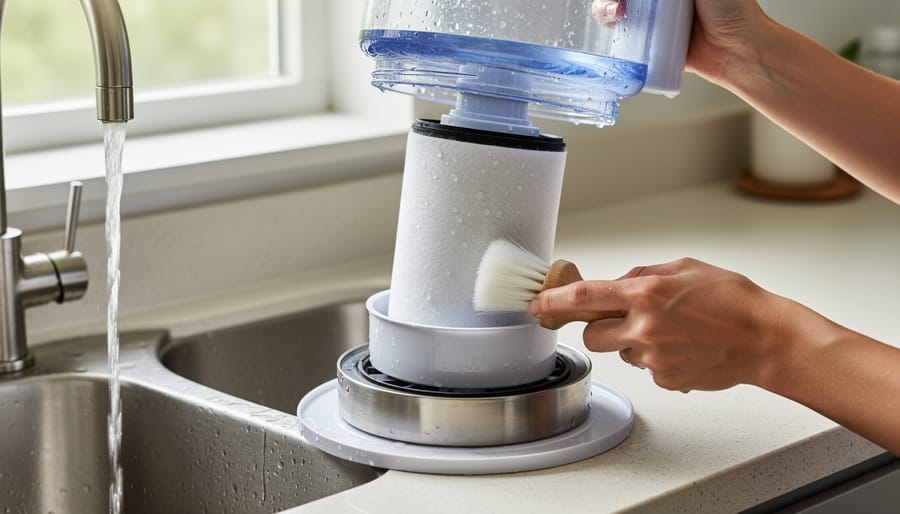
Gravity fed water systems tackle a wide range of contaminants through mechanical and chemical filtration, offering comprehensive protection without electricity. The effectiveness depends on the filter media used, with most quality systems employing multiple stages to address both visible sediment and dissolved chemical threats.
- Activated Carbon
- A porous carbon material that traps chlorine, volatile organic compounds (VOCs), pesticides, and chemicals that affect taste and odour through adsorption. It’s the workhorse of gravity filtration, found in nearly every system.
- Ceramic Elements
- Fine-pore ceramic filters that physically block bacteria, protozoa, cysts, and sediment down to 0.1 microns while remaining cleanable and reusable. They provide the structural filtration that makes gravity systems effective for backcountry water sources.
- Heavy Metals
- Toxic elements like lead, mercury, cadmium, and arsenic that leach from old pipes or industrial contamination. Specialized carbon formulations and ion-exchange media in gravity filters bind these metals before they reach your glass.
- PFAS and PFOA
- Per- and polyfluoroalkyl substances, often called “forever chemicals,” used in non-stick coatings and firefighting foam that persist in groundwater. Advanced carbon filters with tight pore structures can reduce these emerging contaminants that standard municipal treatment often misses.
- Microplastics
- Tiny plastic particles smaller than 5mm that infiltrate tap water from degraded bottles, pipes, and environmental pollution. Multi-stage gravity filters capture these fragments through mechanical filtration and carbon adsorption.
Chlorine removal is nearly universal across gravity systems, addressing both the chemical itself and the disinfection byproducts it creates. Lead reduction matters particularly in homes with older plumbing, and many certified systems achieve 99% removal through specialized filter media that targets heavy metals.
Bacterial contaminants like E. coli, Giardia, and Cryptosporidium get trapped by ceramic or hollow-fiber membrane filters with pore sizes small enough to block microorganisms. This makes gravity systems viable for treating questionable water sources during camping or emergencies, though you’ll need to verify your specific model’s microbial claims.
Sediment and rust particles get caught in pre-filters or the outer layers of multi-stage cartridges, protecting the finer filtration media from clogging. This extends the functional life between each filter replacement and maintains consistent flow rates.
Not all gravity systems remove every contaminant equally. Check NSF certifications for your target pollutants rather than relying on marketing claims, and understand that no gravity filter eliminates viruses without additional UV treatment or chemical disinfection.
Choosing the Right Capacity for Your Household
Matching your gravity fed system’s capacity to your actual water needs prevents frustration and ensures you always have enough clean water on hand. A household of one or two people can manage comfortably with a 1.5-gallon system for daily drinking and cooking, while families of three to five typically need at least 2.25 gallons to avoid constant refilling. Larger households or those using filtered water for food prep and pet bowls should consider systems in the 3- to 5-gallon range or running multiple units in parallel.
Your use case shapes capacity needs just as much as household size. RV and camping setups demand compact systems that fit limited counter space and don’t tip during travel, 1- to 1.5-gallon models strike the best balance between portability and function. Home-based off-grid systems benefit from larger chambers that reduce daily maintenance, especially if you’re filtering from a rainwater catchment or well source. Emergency kits work best with mid-sized 2- to 2.5-gallon units that provide enough capacity for a few days without overwhelming your storage area or weighing down a bug-out scenario. Consider where you’ll place the system too: taller units with greater capacity need stable, elevated surfaces to maintain gravity flow, while compact models tuck neatly into tight spaces but require more frequent attention.
Maintenance and Filter Replacement: What to Expect
Keeping your gravity fed water system in top condition requires minimal effort, but consistent attention to a few key tasks ensures safe, great-tasting water year-round. We’ve found that most owners spend less than 15 minutes per month on upkeep once they establish a routine.
Clean the stainless steel chambers every two to four weeks by emptying the system, scrubbing the interior surfaces with warm soapy water and a soft sponge, then rinsing thoroughly. Avoid abrasive cleaners or steel wool, which can scratch the finish and create spots where bacteria might cling. Pay special attention to the spigot area, where mineral deposits or biofilm can accumulate if left unchecked.
Filter replacement timing depends on your water source and daily volume. Many multi-stage filters last around 1,320 gallons before performance drops, which translates to roughly six months for a household of four. Watch for slower flow rates, changes in water taste, or visible sediment in the lower chamber, all signs that cartridges need swapping. Some systems include indicator lights or stickers to help you track lifespan, but marking your calendar when you install fresh filters works just as well.
Budget for ongoing costs: replacement filter sets typically range from $30 to $120 depending on the system and filtration technology. Ceramic elements can often be cleaned and reused multiple times before replacement, while activated carbon cartridges are single-use. Factor in one or two filter changes per year when calculating total cost of ownership, and you’ll avoid surprises while keeping your off-grid water supply reliable and safe.
Common Questions About Gravity Fed Water Systems
How difficult is it to set up a gravity fed water system?
These systems require no plumbing or electricity, making setup straightforward, most users can assemble one in 15 minutes or less. You simply stack the chambers, install the filter elements, and fill the upper reservoir.
Will a gravity water filter improve my water’s taste?
Yes, because these systems remove chlorine, sediment, and organic compounds that cause unpleasant taste and odour. We’ve consistently found filtered water tastes cleaner and fresher than unfiltered tap water.
Do I need NSF certification when choosing a system?
NSF certification provides independent verification that a filter meets specific contaminant reduction claims, which is valuable if you’re concerned about particular pollutants like lead or PFAS. However, non-certified systems can still perform well, check the manufacturer’s third-party test results.
Can I use my gravity system outdoors in freezing weather?
Freezing temperatures can damage filter cartridges and crack stainless steel chambers if water inside expands. Store your system indoors during winter or drain it completely before temperatures drop below 32°F.
How do gravity systems compare to electric filtration?
Gravity filters work anywhere without power or water pressure, making them ideal for off-grid situations, camping, or emergencies. Electric systems typically filter faster and may catch more contaminants, but they depend on infrastructure that isn’t always available.
Beyond the basics covered above, many people wonder about ongoing maintenance demands. Cleaning the chambers every few months with mild soap prevents biofilm buildup, and most filter elements signal replacement time through slower flow rates rather than a specific schedule. Some systems use filters rated for 1,320 gallons or more, which translates to a year or longer for average households.
Portability is another common consideration. Because these systems are self-contained and lightweight when empty, you can move them between locations, from your kitchen counter to an RV, cabin, or campsite. The lack of installation requirements means you’re not locked into one spot, which appeals to renters and anyone who values flexibility in their water solution.
Gravity fed water systems deliver reliable, sustainable filtration wherever you need it, no electricity, no plumbing, just physics doing the work. Whether you’re living off-grid, preparing for emergencies, or seeking a simpler, greener way to purify drinking water at home, these systems prove you don’t need complexity to achieve clean, safe water. Our testing confirmed that modern gravity filters genuinely reduce contaminants like chlorine, lead, microplastics, and PFAS while remaining accessible to anyone willing to set up a two-chamber unit and replace filters on schedule.
The Big Berkey earns our top recommendation for households prioritizing capacity and proven off-grid reliability, while the British Berkefeld stands out for those who value NSF certification and premium stainless steel construction. Budget-conscious buyers get excellent performance from the 2.25-gallon VEVOR system, and outdoor enthusiasts will appreciate the portability of the Sawyer SP160. Match your choice to your household size, intended use case, and how often you’re willing to swap filters. With the right gravity fed system, you’re investing in independence, resilience, and water quality that doesn’t depend on the grid staying on.
Links to retailers on this page may be affiliate links. We earn from qualifying purchases at no additional cost to you. As an Amazon Associate I earn from qualifying purchases.