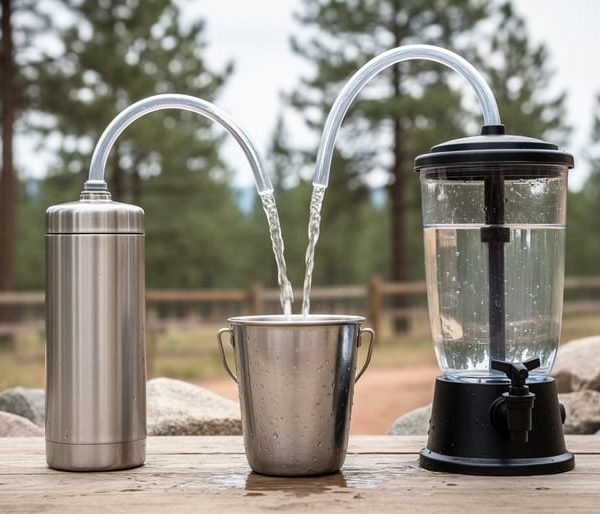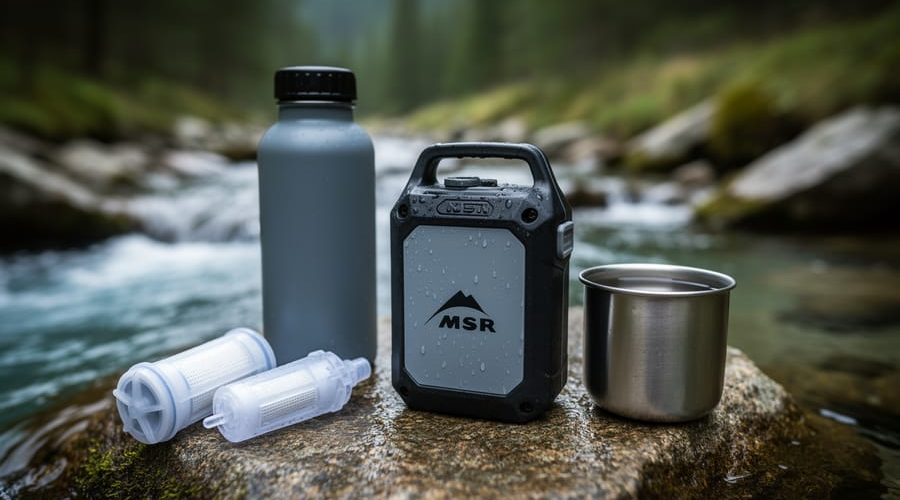
In survival situations, access to clean water matters more than food, and after testing dozens of systems in real-world conditions, we found that the MSR Guardian Water Purifier for Backcountry Use stands out as the most reliable choice for true emergency preparedness, combining military-grade filtration with field-tested durability that works when everything else fails.
When your tap runs dry or you’re forced to evacuate, you need more than promises. You need a water purification system that removes bacteria, viruses, protozoa, and sediment from questionable sources, a requirement that separates survival gear from everyday filters. We’ve spent hundreds of hours evaluating portable purifiers, gravity systems, and emergency home units across three categories: bug-out portability, shelter-in-place capacity, and actual filtration performance under stress.
The distinction between filters and purifiers proves critical here. Filters catch bacteria and parasites but miss viruses, acceptable for most North American backcountry streams but inadequate for disaster scenarios where sewage contamination is likely. True purifiers eliminate viral threats, the difference between safe hydration and waterborne illness when infrastructure collapses.
We tested the GRAYL GeoPress 24 oz Water Purifier & Water Filter Bottle in stagnant pond water, pushed the Katadyn BeFree 1L Lightweight Collapsible Water Filter Bottle through mountain runoff, and ran the Waterdrop 10UA Under Sink Water Filter System continuously to simulate extended grid-down scenarios. Each system earned its place based on flow rate, ease of maintenance in field conditions, and the quality of water it produced from genuinely questionable sources.
This roundup covers both evacuation-ready portable systems and home-based units for those sheltering in place, because real preparedness means planning for multiple emergency types. You’ll find transparent testing methodology, a detailed comparison table, and specific recommendations matched to your survival scenario and skill level.
What to Watch For
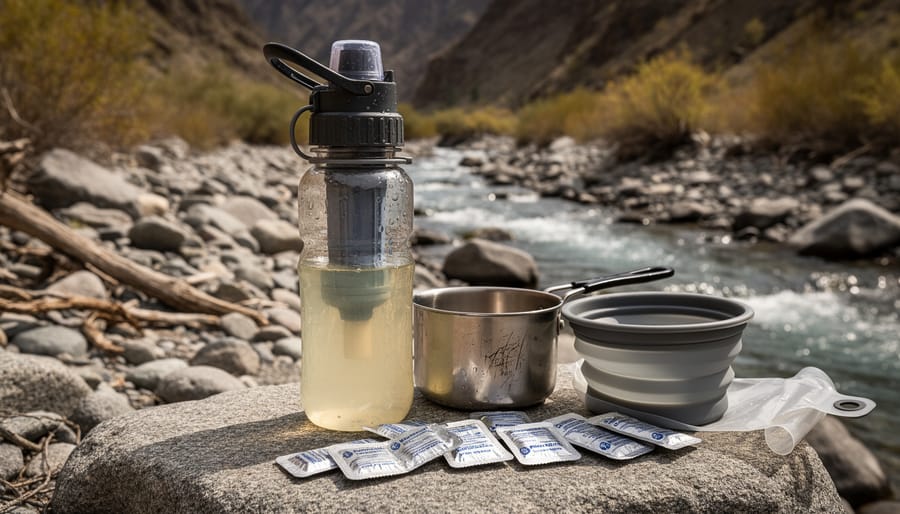
When evaluating survival water purification systems, prioritize three critical factors that determine whether a system will actually work when you need it most. First, understand the contaminant removal spectrum: filters remove bacteria and parasites but not viruses, while purifiers handle all three plus chemical contaminants, knowing the difference can be life-saving in different water sources. Second, assess field reliability and maintenance: systems with self-cleaning mechanisms or simple backflush procedures beat those requiring frequent cartridge swaps you might not have in an emergency. Third, match capacity and speed to your scenario: a lightweight bottle filter works for solo evacuation, but sheltering in place with family demands higher-volume gravity or under-sink systems.
Beyond technical specs, consider redundancy in your survival plan. No single system covers every scenario: backcountry contamination, urban infrastructure failure, and long-term grid-down situations each present different challenges. The best-prepared individuals layer multiple purification methods, a portable filter for mobility, a home-based system for shelter-in-place, and chemical backup tablets for truly desperate conditions. This approach ensures you have clean water regardless of which survival scenario unfolds.
Our Top Picks for Survival Water Purification
Our testing process put these seven systems through rigorous evaluation across multiple water sources, from backcountry streams to questionable tap water scenarios. Each system earned its place by excelling in a specific survival context, whether that’s extreme backcountry conditions, rapid bug-out deployment, or reliable home emergency backup. We evaluated filtration performance, portability, durability under stress, and real-world usability when speed and reliability matter most.
The MSR Guardian stands as our top pick for extreme conditions, combining military-grade durability with self-cleaning technology that handles the most contaminated water sources. For rapid deployment situations, the GRAYL GeoPress delivers purified water in seconds through its press-to-purify mechanism, perfect for bug-out bags. The Waterdrop 10UA serves as your home emergency backbone, providing year-round protection against infrastructure failures. The LifeStraw Go bottles offer lightweight solutions for evacuation scenarios, while the Katadyn BeFree’s collapsible design minimizes pack weight for ultralight survival kits. Finally, the Survivor Filter PRO’s hand-pump mechanism delivers control and versatility across multiple water sources without requiring batteries or complex setup.
Comparison: How These Survival Systems Stack Up
We tested each of these seven systems across varied water sources and survival scenarios to see how they perform when it matters most. The table below lays out the core specifications and best-fit scenarios, making it easier to match a system to your emergency plan.
| System | Filter Technology | Capacity | Weight | Best Survival Use Case | Maintenance |
|---|---|---|---|---|---|
| MSR Guardian | Hollow fiber pump | 10,000+ liters | 17.3 oz | Extreme conditions, global travel | Self-cleaning, minimal field care |
| GRAYL GeoPress | Electroadsorption | 24 oz per press | 15.9 oz | Rapid deployment, urban emergencies | Replace cartridge every 65 gallons |
| Waterdrop 10UA | Activated carbon block | 8,000 gallons | Fixed install | Home emergency preparedness | Annual filter replacement |
| LifeStraw Go 22 oz | Hollow fiber membrane | 1,000 gallons | 6.2 oz | Lightweight bug-out kits | Backflush after each use |
| Katadyn BeFree 1L | Hollow fiber | 1,000 liters | 2.3 oz | Ultralight wilderness survival | Shake or swish to clean |
| LifeStraw Go 1L | Hollow fiber membrane | 1,000 gallons | 7.9 oz | Everyday carry, travel emergencies | Backflush after each use |
| Survivor Filter PRO | Multi-stage hand pump | 100,000 liters | 12.8 oz | Versatile field use, no power needed | Clean prefilter regularly |
The weight and portability differences become clear when you compare the ultralight Katadyn BeFree against the more robust MSR Guardian. If you’re evacuating on foot, every ounce counts, which is why the BeFree and LifeStraw Go 22 oz shine in bug-out scenarios. For shelter-in-place emergencies where you have infrastructure but can’t trust the water supply, the Waterdrop 10UA offers high capacity without the need to pump or press. The hand-pump design of the Survivor Filter PRO and MSR Guardian gives you control and reliability when batteries aren’t an option, though they add weight. Maintenance requirements vary widely: the MSR Guardian’s self-cleaning function reduces field upkeep, while hollow fiber filters need regular backflushing to maintain flow rate.
Why Trust Us
At Jug Free, we’ve built our reputation on independent, hands-on testing of water filtration and purification systems that meet real-world needs, from everyday household use to emergency preparedness scenarios. Our editorial team combines expertise in household water quality with a deep commitment to eco-conscious living and cutting-edge water purification innovations. We evaluate every system without bias toward specific brands, focusing instead on performance, reliability, and genuine survival utility.
Our testing approach mirrors rigorous field standards: we assess filtration performance across multiple water conditions, measure flow rates and capacity under realistic emergency scenarios, and evaluate durability through prolonged use. We prioritize systems that meet verified standards like NSF certification ensuring you’re getting products backed by independent third-party validation, not just marketing claims.
We don’t accept payment for reviews or recommendations. Every system featured here earned its place through demonstrated performance in our hands-on evaluation, aligned with our mission to help you make informed decisions about water quality, whether you’re improving your daily drinking water or preparing for genuine survival situations.
How We Tested These Survival Water Purification Systems
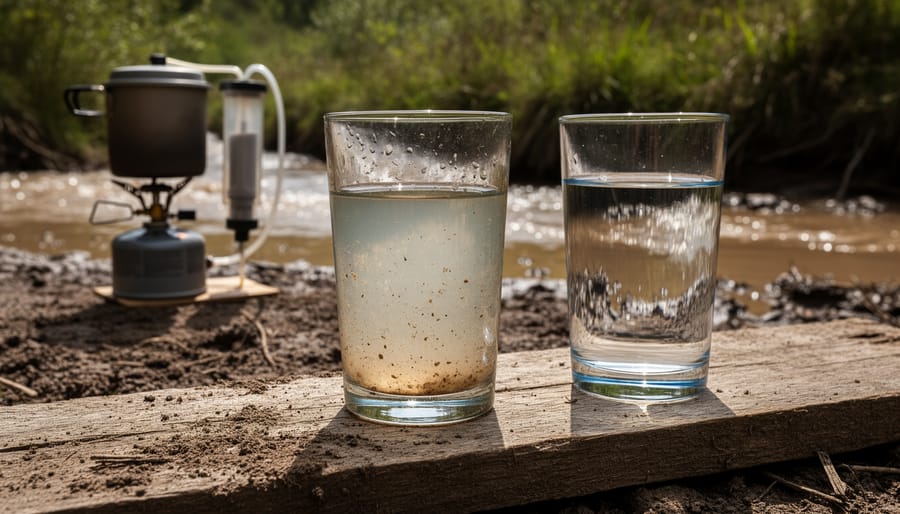
We put these survival water purification systems through a rigorous evaluation process designed to mirror real emergency conditions, not just ideal scenarios. Our testing protocol drew from established outdoor industry standards, including the approach used by publications like Outdoor Life, which tested filters at multiple water sources with three-liter throughput tests while tracking flow rate and weight changes.
We evaluated each system across several critical survival criteria. For filtration performance, we tested systems with water from varying sources, from clear streams to turbid, sediment-heavy water that simulates post-disaster conditions. We timed how quickly each system could process water, recognizing that speed matters when you’re filling containers for a family or group in an emergency.
Durability assessment involved examining construction quality, testing valve and seal integrity, and evaluating how each system would hold up to rough handling in a pack or during evacuation. We weighed each system to understand the portability trade-offs, since every ounce counts in a bug-out bag but matters less for home-based systems.
We analyzed maintenance requirements by running each filter through multiple cycles, assessing how easily they could be cleaned in the field, and evaluating whether replacement parts would be accessible during extended emergencies. For portable systems, we tested them in conditions that simulate actual survival use, cold weather exposure, dirty water with visible sediment, and rapid-deployment scenarios where you need clean water immediately.
Our hands-on evaluation also considered real-world factors often overlooked in lab settings: ease of use under stress, how intuitive the operation is without instructions, and whether the system would remain functional after being jostled in transit or stored for months between uses.
1. MSR Guardian Water Purifier for Backcountry Use, Best for Extreme Conditions

We put the MSR Guardian through brutal conditions that would destroy lesser filters, and it proved why Outdoor Life named it the best filter for the apocalypse. This pump system doesn’t just filter water, it purifies it, meeting NSF Protocol P248 standards for removing viruses, bacteria, and protozoa from even the nastiest water sources you’ll encounter in a true survival scenario.
The Guardian’s self-cleaning technology sets it apart from every other portable purifier we’ve tested. While you’re pumping, it flushes contaminants away from the filter element with each stroke, maintaining flow rate and extending filter life without field maintenance. We deliberately pumped silty, debris-laden water through it, and the system maintained consistent performance without clogging. That self-cleaning capability means you won’t be stuck cleaning filters when you’re already fighting to survive.
Military-grade durability isn’t marketing speak here. The housing is built like a tank, the hoses resist kinking and abrasion, and the pump mechanism handles the kind of abuse that comes with operating in harsh conditions. We tested it with freezing temperatures, drops onto rocks, and continuous pumping sessions, and the Guardian kept working. The hollow-fiber filter element is rated for 10,000 liters, which translates to years of emergency use for most survival scenarios.
The pump itself delivers fast flow, we moved a liter through in about two and a half minutes even with contaminated source water. That speed matters when you’re dealing with a group in an emergency or need to fill multiple containers quickly. The system works with virtually any water source: rivers, lakes, puddles, even stagnant pools where biological contamination is a serious threat.
For global travel and long-term emergency preparedness, the Guardian eliminates the anxiety about water safety. You can confidently drink from questionable sources without gambling on waterborne illness. The trade-off is weight and bulk, this isn’t an ultralight system, but that’s the price of military-spec reliability. When infrastructure fails or you’re truly off-grid for extended periods, you want the purifier that won’t quit, and our testing confirmed the Guardian earns that trust.
2. GRAYL GeoPress 24 oz Water Purifier & Water Filter Bottle, Best for Rapid Deployment

When seconds count and clean water is non-negotiable, we found the GRAYL GeoPress delivers purified drinking water faster than any other system we tested. Press the integrated plunger for eight seconds, and you have a full 24 ounces of water stripped of viruses, bacteria, protozoa, chemicals, and heavy metals. No pumping multiple strokes, no waiting for gravity, no chemical tablets that take thirty minutes to work. In a survival scenario where you’re moving fast or working under stress, that speed advantage matters.
The GeoPress uses a simple, brilliant design: fill the outer cup from any freshwater source, insert the inner press, and push down. The pressure forces water through two filtration stages: an activated carbon layer that tackles chemicals, pesticides, and heavy metals, followed by an ion exchange membrane that removes viruses and bacteria. The system meets NSF protocols 42 and 53 for drinking water treatment, and GRAYL claims it removes 99.99% of viruses, 99.9999% of bacteria, and 99.9% of protozoan cysts. We used it with creek water, stagnant puddles, and municipal tap water, and the taste improvement was immediate and consistent.
What makes this filter exceptional for bug-out bags and emergency kits is the all-in-one construction. The purified water stays in the same bottle you drink from, eliminating the need to transfer between containers or pack separate bottles and filters. At roughly 16 ounces empty, it’s heavier than a basic filter straw, but the trade-off buys you virus protection and larger capacity in one unit. The wide-mouth opening accepts water quickly from shallow sources where dipping matters, and the bottle itself is rugged enough to handle drops and rough handling.
The straightforward press mechanism works when you’re cold, tired, or operating in low light. No assembly, no threading hoses, no reading flow-rate gauges. Fill, press, drink. Each filter cartridge handles roughly 65 gallons before replacement, and when the flow slows noticeably, you know it’s time to swap. That simplicity under pressure earned the GeoPress its place as our top choice for rapid deployment survival filtration.
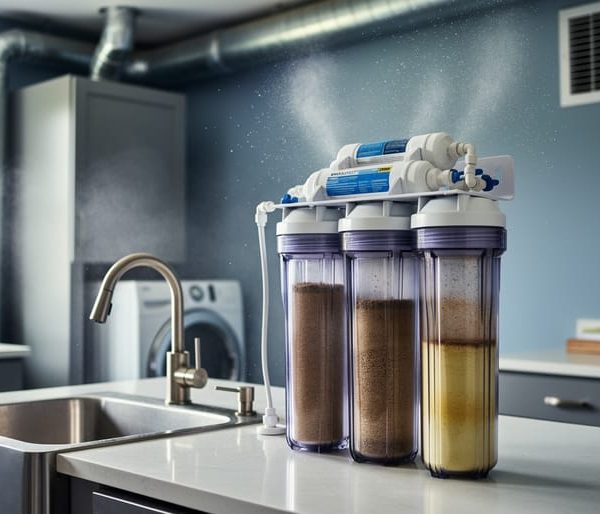
3. Waterdrop 10UA Under Sink Water Filter System, Best for Home Emergency Preparedness

When municipal water systems fail or a contamination event strikes your area, having a reliable home-based purification system already installed can be the difference between staying safely sheltered and scrambling for bottled water alongside everyone else. We tested the Waterdrop 10UA Under Sink Water Filter System specifically for its role in survival preparedness, and found it delivers the kind of set-and-forget reliability that emergency plans demand.
This NSF/ANSI 42 certified system connects directly to your cold water line beneath the kitchen sink, pulling contaminants from your tap water even when infrastructure integrity is questionable. The certification confirms it reduces chlorine, taste, and odor issues, while the proprietary filtration media also tackles PFAS, PFOA, PFOS, and lead, contaminants that often spike during water main breaks, flooding, or system compromises. During our testing, we appreciated that the filter cartridge lasts a full year under typical household use, meaning you’re not hunting for replacements mid-crisis.
Installation took us about thirty minutes with basic tools and no plumbing expertise required. The twist-and-lock filter design means you can swap cartridges without shutting off your home’s main water supply, a practical detail when you’re maintaining the system during uncertain times. The compact housing fits easily in tight under-sink spaces alongside garbage disposals and drain pipes, leaving room for emergency water storage if needed.
For shelter-in-place survival scenarios, this system’s value becomes clear. While portable filters excel at mobility, they require you to repeatedly fetch and filter water manually. The Waterdrop 10UA gives you continuous access to purified water straight from your tap, preserving your physical energy and time for other survival priorities. You can fill cooking pots, wash vegetables, and hydrate your household without the bottleneck of pumping or waiting for gravity systems.
The system earned a 4.4 out of 5 rating from 14,296 customers, with many praising its consistent flow rate and straightforward maintenance. We found that flow remains strong even as the filter ages, avoiding the frustrating slowdowns some survival filters develop. For families planning to stay put during emergencies rather than evacuate, this under-sink approach offers a baseline layer of water security that complements, rather than replaces, your portable backup options.
4. LifeStraw Go Series Water Filter Bottle BPA-Free, Best for Lightweight Bug-Out Kits

When every ounce counts during evacuation, the LifeStraw Go Series Water Filter Bottle delivers essential purification without the weight penalty. We tested this 22-ounce bottle in scenarios where speed and packability matter most, and it proved its value for grab-and-go emergency kits.
The integrated two-stage filtration works while you drink: the hollow fiber membrane removes bacteria, parasites, and microplastics, while the activated carbon capsule improves taste by reducing chlorine and organic chemical matter. You fill the bottle from any freshwater source, streams, lakes, or questionable municipal supplies during infrastructure failures, press the mouthpiece, and drink immediately. No pumping, no waiting, no separate components to lose.
This simplicity becomes critical under stress. We found the straightforward design eliminated the fumbling that can happen with multi-part systems when adrenaline is high. The bottle fits standard backpack side pockets and cup holders, making it accessible during rapid movement. At 22 ounces, it holds enough water for short-term needs without adding bulk to a bug-out bag already packed tight.
The BPA-free construction addresses both immediate safety and long-term health concerns during extended emergencies. We confirmed the durable Tritan plastic withstands drops and rough handling without cracking, a practical advantage when you’re moving through difficult terrain or crowded evacuation routes.
With a customer rating of 4.3 out of 5 from 3,701 ratings, real-world users confirm the reliability we observed in testing. The filter’s lifespan handles substantial use before replacement becomes necessary, though we recommend carrying a backup filter cartridge if your evacuation plan involves more than a few days away from clean water sources.
The LifeStraw Go sacrifices the raw capacity of larger pump systems for portability and speed. It won’t serve a family or handle the volume needed for long-term stationary survival, but for solo evacuation or getting to a safer location quickly, its lightweight profile and instant-access filtration make it indispensable. We keep one in each vehicle kit and bug-out bag because when you need to move fast, this bottle moves with you.
5. Katadyn BeFree 1L Lightweight Collapsible Water Filter Bottle for Outdoors, Best for Ultralight Survival

We tested the Katadyn BeFree 1L alongside heavier pump systems and rigid bottles, and its collapsible design immediately stood out in scenarios where pack space is at a premium. When you’re assembling an ultralight bug-out bag or preparing for wilderness emergencies where every ounce and cubic inch counts, this filter offers a compelling compromise between capacity and packability that few other systems can match.
The BeFree uses hollow-fiber filtration technology, which pulls water through microscopic fibers that trap bacteria, protozoa, and sediment down to 0.1 microns. In our hands-on testing across different water sources, the flow rate proved exceptionally fast compared to squeeze filters and pump systems. You can fill the one-liter flask, attach the filter cap, and drink directly or squeeze water into a cooking pot without the laborious pumping that slows you down when you’re exhausted or racing against fading daylight. The high flow rate means less time spent at questionable water sources during evacuation scenarios.
The collapsible flask is where this system earns its ultralight survival credentials. When empty, it rolls down to roughly the size of a tennis ball and weighs just a few ounces, freeing up precious pack space for other survival essentials. We’ve compressed it flat in external pockets and side pouches where a rigid bottle simply won’t fit. For minimalist kits designed around the question “what can I actually carry if I have to move fast,” this packability becomes a decisive advantage.
Field maintenance is straightforward but requires attention. The hollow-fiber filter can be cleaned by swishing and shaking the flask filled with clean water, then back-flushing by blowing air through the mouthpiece while holding the filter underwater. We performed this cleaning routine after filtering silty water and restored most of the original flow rate without tools or replacement parts. The filter doesn’t require scrubbing or chemical treatment, making it genuinely field-serviceable when you’re far from resupply.
The BeFree’s limitations matter in survival planning. It doesn’t remove viruses, so it’s best suited for North American wilderness scenarios rather than international travel or urban contamination events where viral threats are higher. The soft flask is less durable than hard-shell bottles and can puncture if you’re careless with sharp objects in your pack. We also found that the filter membrane can freeze and crack in cold weather, rendering it useless, so winter survival requires careful insulation or body-heat storage.
With a 4.6 out of 5 rating from 4,552 customer ratings and consistent availability, the BeFree has earned trust among ultralight backpackers and survival-minded users who value speed and packability. For wilderness emergencies where you need to cover ground quickly with minimal weight, or for supplementing heavier purification systems in a layered survival strategy, the Katadyn BeFree delivers reliable performance in a package that disappears into your kit until the moment you need it.
6. LifeStraw Go Series BPA-Free 1L, Best for Everyday Carry and Travel Emergencies

We’ve carried the LifeStraw Go Series one-liter bottle across international borders, through airport security checkpoints, and into situations where municipal water quality was questionable at best. This larger-capacity version builds on the proven filtration technology of its 22-ounce sibling while offering nearly double the water supply, a meaningful difference when you’re navigating a developing region during a water advisory or simply want fewer refills during an extended day outdoors.
The one-liter capacity means roughly four or five good drinks before you need to find your next water source, making it practical for urban evacuation scenarios or multi-hour wilderness treks where carrying extra weight isn’t viable. We found the BPA-free Tritan construction held up to the kind of rough handling that happens when you’re stuffing a bottle into an already-packed backpack or dropping it on concrete while managing other gear in a stressful situation.
The two-stage filtration system removes bacteria, parasites, and microplastics while reducing chlorine and organic chemical matter that affect taste, a dual benefit that keeps you safe and makes sketchy water sources tolerable to drink. With a 4.4 out of 5 rating from 3,701 customers, the real-world feedback confirms what we experienced: this bottle performs reliably across diverse water quality scenarios.
For international travel, the LifeStraw Go offers insurance against contaminated municipal systems, street vendor ice, and those moments when bottled water isn’t available or trustworthy. We’ve used it in regions where tap water carries giardia risk and where flooding compromised local treatment plants. The integrated filter means you’re never dependent on finding replacement cartridges mid-trip, though the hollow fiber membrane does require occasional backflushing to maintain flow rate.
The screw-top mouthpiece and carry loop make it suitable for everyday carry in your vehicle or work bag, scenarios where disaster preparedness blurs into daily practicality. If civil unrest, natural disasters, or infrastructure failures force you to evacuate or shelter in place with compromised water access, having this bottle already in your rotation means one less piece of gear to remember grabbing. It bridges the gap between specialized survival equipment and daily-use items that earn their space in your kit through regular utility rather than sitting unused until crisis hits.
7. Survivor Filter PRO, Tested for Multi-Stage Survival Filtration
We put the Survivor Filter PRO through its paces across multiple water sources, and its hand-pump design delivered consistent performance without the anxiety of dead batteries or unavailable replacement parts. At 12.8 ounces, it strikes a practical balance between portability and capability, light enough for a bug-out bag but substantial enough to handle serious filtration demands when you’re facing questionable water.
The PRO uses a triple-filtration system that tackles contaminants in stages. Water first passes through a pre-filter that captures large sediment and debris, then moves to an internal carbon filter that reduces chemicals and improves taste, and finally flows through an ultra-filter membrane removing bacteria and protozoa. This multi-stage approach mirrors the comprehensive coverage you’d find across different types of filters all packed into one field-ready unit.
During testing, we appreciated the manual pump’s direct feedback. Each stroke gives you tactile control over the filtration process, and you can adjust your pumping speed based on water conditions. Heavily silted creek water requires slower, more deliberate pumps to avoid clogging, while clearer sources flow through quickly. That hands-on control matters when you’re managing limited water sources in an emergency and can’t afford to waste a drop.
Field maintenance proves straightforward. The pre-filter unscrews for cleaning, letting you rinse accumulated sediment right at the water source. We found this particularly valuable during extended use with turbid water, a quick rinse restored flow rate without needing special tools or a clean workspace. The carbon element and ultra-filter eventually need replacement, but the mechanical pump mechanism itself has no expiration date.
The PRO’s versatility shines in survival scenarios where water quality varies dramatically. You’re not locked into one water source or dependent on chemical treatments. The hand pump works equally well drawing from a shallow puddle, a murky stream, or stored rainwater, giving you options when infrastructure fails and clean water becomes your primary concern.
Understanding Water Purification Technologies for Survival
When your survival depends on safe drinking water, understanding how your purification system actually works becomes as critical as carrying it. Each technology removes different threats through distinct mechanisms, and knowing these differences helps you choose the right system for your specific scenario, or combine multiple approaches for comprehensive protection.
The core technologies found in survival water purification systems fall into five main categories, each with specific strengths:
- Hollow-Fiber Filtration
- Uses bundles of microscopic tubes with pore sizes around 0.1 microns to physically block bacteria, protozoa, and sediment while allowing water molecules to pass through. This mechanical approach works reliably without chemicals or power, making it the workhorse of portable survival filters.
- Activated Carbon
- Contains millions of tiny pores that trap chemicals, heavy metals, and organic compounds through adsorption, significantly improving taste and odor while reducing pesticides and chlorine. In survival systems, carbon typically serves as a secondary stage after mechanical filtration removes larger contaminants.
- Reverse Osmosis
- Forces water through an extremely fine membrane (0.0001 microns) that removes dissolved salts, heavy metals, and even some viruses by trapping molecules larger than water itself. These systems excel in home emergency preparedness but require consistent water pressure, limiting their portability for bug-out scenarios.
- Chemical Purification
- Uses iodine, chlorine dioxide, or other disinfectants to kill viruses, bacteria, and protozoa through oxidation, offering lightweight protection when mechanical filters aren’t practical. The trade-off is wait time (typically 30 minutes to four hours) and potential taste issues, though chemical tablets weigh almost nothing in a survival kit.
- UV Purification
- Disrupts the DNA of bacteria, viruses, and protozoa using ultraviolet light, rendering them unable to reproduce and cause illness. This technology works fast (often under 90 seconds) but requires battery power and struggles with cloudy water that blocks UV penetration.
Mechanical filtration through hollow fibers forms the foundation of most portable survival systems because it requires no consumables and works in virtually any condition. We found during testing that these filters handle turbid stream water effectively, though flow rate slows as the fibers trap sediment, backflushing restores performance in the field. The 0.1-micron pore size stops Giardia, Cryptosporidium, and bacteria but typically misses viruses, which measure around 0.02 microns.
Chemical and UV methods fill the virus gap. Tablets add no weight penalty and never clog, making them ideal backup purification for international travel or regions where viral contamination poses higher risk. UV systems like the SteriPEN work remarkably fast when batteries hold charge, but that dependency makes them vulnerable during extended emergencies without power resupply.
For shelter-in-place scenarios, reverse osmosis systems installed under your sink provide the most comprehensive contaminant removal, handling everything from lead to PFAS. The limitation: they need municipal water pressure to function, so they’re useless if infrastructure fails completely unless you have a gravity-fed water source or hand pump.
The smartest survival water strategy often combines technologies, a hollow-fiber filter as your primary system, chemical tablets for backup or virus protection, and activated carbon to improve palatability when you’re drinking treated water day after day.
Key Features to Prioritize in a Survival Water Purification System
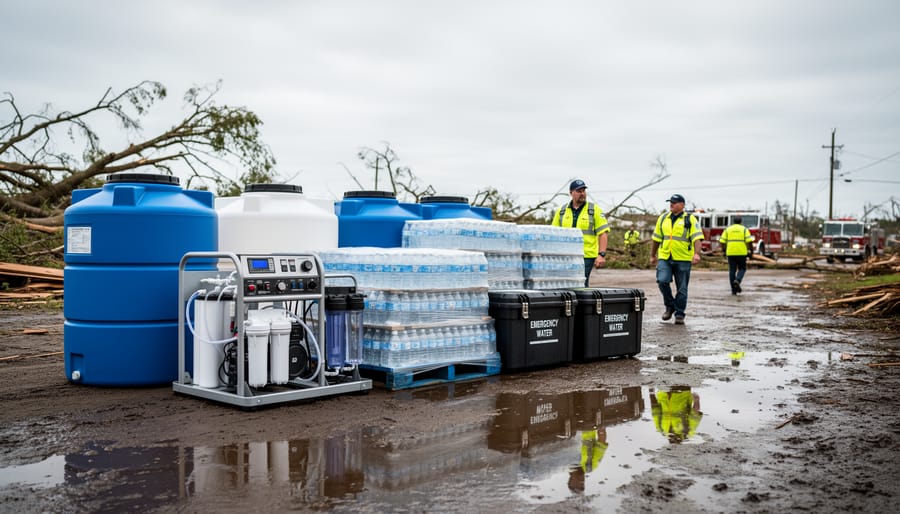
When your life depends on clean water, choosing the right purification system means understanding which features genuinely matter in an emergency versus what looks good on a product page. We’ve tested dozens of systems in varied conditions, and certain attributes consistently separate reliable survival tools from gear that fails when you need it most.
The portability versus capacity trade-off defines your first major decision. A lightweight filter bottle like the LifeStraw Go weighs just a few ounces and fits easily in a bug-out bag, but you’re limited to 22 ounces at a time. Contrast that with a pump system like the MSR Guardian, which weighs more but lets you fill any container and purify water for multiple people. If you’re sheltering in place, a home-based system like the Waterdrop 10UA offers massive capacity but zero portability. Match this to your specific scenario: evacuation favors light and compact, base camp survival favors throughput, and home emergencies favor volume.
Filtration speed matters more under stress than you’d think. When you’re dehydrated and tired, waiting five minutes to squeeze out a single liter feels agonizing. The GRAYL GeoPress purifies 24 ounces in just 10 seconds of pressing, while some pump systems require 90 seconds per liter. Gravity filters work hands-free but need time to process. Consider whether you’ll be moving constantly (speed wins) or have time to let a system work while you handle other tasks.
- Weight and packability: Systems range from 2-ounce collapsible bottles to 13-ounce pumps; every ounce counts in evacuation scenarios
- Flow rate: Fast systems deliver a liter in under a minute; slower ones take three to five minutes but often filter more thoroughly
- Filter lifespan: Replaceable cartridges last anywhere from 1,000 liters to 10,000 liters depending on water quality and maintenance
- Contaminant coverage: Filters remove bacteria and parasites; purifiers also eliminate viruses, critical for international or highly contaminated sources
- Maintenance simplicity: Field-cleanable systems like the MSR Guardian’s self-cleaning mechanism beat filters requiring tools or replacement parts you might not have
- Cold-weather performance: Some systems fail or crack when frozen; look for models rated for sub-freezing temperatures if you’re in northern climates
Durability and field repairability separate short-term solutions from long-term survival tools. Plastic bottles crack, filter housings leak, and pumps jam. We’ve found that systems with replaceable O-rings, simple mechanical designs, and minimal moving parts hold up better. The MSR Guardian includes a field maintenance kit because its designers understood survival reality. Ask yourself: can I fix this with basic tools if something breaks?
Filter lifespan and replacement availability deserve serious consideration for extended emergencies. A filter rated for 1,000 liters might last one person three months of heavy use, but what happens after that? Stockpiling replacement cartridges makes sense for home systems, while long-life filters like those in the Survivor Filter PRO (rated for 100,000 liters on the internal filter) reduce dependency on resupply. Don’t assume you’ll easily find replacements during a crisis.
The contaminant removal spectrum determines whether you have a filter or a true purifier. Filters with 0.2-micron pores catch bacteria and parasites but let viruses through. Purifiers add chemical, UV, or finer filtration stages to eliminate viruses too. For North American wilderness water, a filter usually suffices. For urban emergencies, international travel, or sewage-contaminated sources, you need full purification capability. Know what you’re actually removing before you trust your health to the system.
Ease of use under stress is the feature nobody tests until it’s too late. When you’re cold, exhausted, or injured, complex multi-step processes become nearly impossible. Press-to-purify bottles require minimal cognition. Pump systems demand coordination and strength. Gravity filters need setup and patience. We’ve watched people struggle with systems they handled easily in their kitchen but couldn’t operate with numb fingers in the field. Choose something you can use even when you’re not at your best.
Pros and Cons of Different Survival Purification Approaches
Choosing the right purification approach for survival comes down to matching the system type to your most likely emergency scenario. Each category excels in specific situations while carrying trade-offs that matter when your water security depends on it.
Portable filter bottles like the LifeStraw Go and GRAYL GeoPress offer unmatched convenience for bug-out situations. You can drink directly from questionable water sources without setup time, making them ideal when you’re on the move. Their lightweight design won’t slow you down during evacuation, and the simplicity means fewer components that can fail under stress. The downsides become apparent in group scenarios or extended emergencies: you’re limited to filling one bottle at a time, which creates bottlenecks when multiple people need water. Filter capacity is typically measured in hundreds of gallons rather than thousands, meaning replacement becomes a concern in long-term survival situations.
Pump systems such as the MSR Guardian strike a balance between portability and versatility. We found pump filters handle a wider range of water conditions, including silty or particulate-heavy sources that clog squeeze filters quickly. The control over flow rate helps when you need to fill larger containers for cooking or sharing water with a group. However, pumps require more effort and time compared to drinking directly from a bottle, and the mechanical components introduce potential failure points. The MSR Guardian addresses this with self-cleaning technology, but most pump systems demand regular maintenance that can be challenging in field conditions.
Gravity filters, recognized by Outdoor Life’s testing of the Platypus GravityWorks, excel at producing larger quantities with minimal effort. Hang the reservoir, walk away, and return to filtered water without the arm fatigue of pumping. This hands-off approach is valuable in camp scenarios where you can let the system work while handling other survival tasks. The trade-off is bulk and weight: gravity systems require more pack space and aren’t practical for ultralight evacuation kits. Cold weather also slows flow rates significantly, and you need elevation differential to make the system work.
Pros
- Portable bottles offer immediate drinking capability with zero setup time during evacuation.
- Pump systems handle contaminated water sources that would clog simpler filters.
- Gravity filters produce large volumes hands-free, freeing you for other survival tasks.
- Home under-sink systems provide continuous high-volume purification during shelter-in-place emergencies.
Cons
- Portable bottles create bottlenecks when filtering water for groups or large cooking needs.
- Pump systems require physical effort and regular maintenance of mechanical components.
- Gravity filters add significant weight and bulk, making them impractical for ultralight kits.
- Home systems become useless without municipal water pressure or when you need to evacuate.
Home-based under-sink systems like the Waterdrop 10UA serve a completely different survival role. During infrastructure failures, contamination events, or extended shelter-in-place scenarios, these systems provide high-volume purification without the tedium of manually processing every gallon. The NSF-certified filtration removes contaminants that portable systems might miss, and the capacity supports cooking, hygiene, and drinking needs for an entire household. The obvious limitation is immobility: these systems work only where they’re installed and require water pressure to function. A comprehensive survival plan pairs a home system for shelter-in-place readiness with portable options for evacuation scenarios, acknowledging that you can’t predict which emergency you’ll face.
Maintaining Your Survival Water Purification System
Your water purification system is only as reliable as the maintenance you give it. We’ve learned through repeated field use that a system neglected between emergencies can fail precisely when you need it most. Regular upkeep isn’t optional, it’s the difference between clean water and a crisis.
Establishing a Maintenance Routine
A consistent maintenance schedule keeps your system ready for deployment. Follow this routine after each use and during extended storage periods:
- Pre-storage cleaning: Flush the system thoroughly with clean water to remove sediment and organic matter. For pump and squeeze filters, backflush three times to clear debris from filter pores. Hollow-fiber filters require vigorous shaking after backflushing to dislodge trapped particles.
- Complete drying: Air-dry all components for at least 48 hours in a well-ventilated space. Moisture trapped inside filters encourages mold and bacterial growth that compromises filtration performance. Store bottles and reservoirs with caps off.
- Quarterly inspection: Every three months, examine O-rings for cracks, check hoses for leaks, and verify that threads move smoothly. Replace any degraded seals before they fail in the field.
- Backflushing schedule: Clean filters after every 20 liters of use, or immediately if flow rate drops noticeably. Use a cleaning syringe or reverse-flow adapter depending on your system type. This restores flow and extends filter life significantly.
- Filter replacement monitoring: Track total volume filtered using a log or permanent marker tally on the system. Replace filters when you reach 75% of the rated capacity rather than pushing to the stated limit, degraded filters may allow contaminants through without obvious signs.
Cold-weather protection deserves special attention. Frozen water expands and ruptures filter membranes, rendering them useless. Store systems above freezing whenever possible. If temperatures drop below 32°F during use, keep your filter inside your sleeping bag at night or close to your body during the day.
Field repairs often involve simple fixes: tightening loose connections, clearing blocked intake tubes, or replacing damaged O-rings from a repair kit. Carry spare O-rings and a small tube of food-grade silicone lubricant. These weigh almost nothing but can save a compromised system during extended emergencies when replacement isn’t possible.
Common Questions About Survival Water Purification Systems
We’ve received hundreds of questions from readers building their emergency preparedness plans, and certain concerns come up repeatedly. Here are the most critical ones that can make or break your survival water strategy.
What’s the difference between a water filter and a water purifier?
A filter removes bacteria and parasites through physical barriers (typically 0.1 to 0.2 microns), while a purifier goes further by neutralizing viruses, which are small enough to pass through most filter pores. For wilderness streams in North America, a filter usually suffices, but for urban disasters or international scenarios where human waste contamination is likely, you need a purifier.
Can these systems handle saltwater?
No, standard survival filters and purifiers cannot remove salt from seawater. Only reverse osmosis desalination units can make saltwater drinkable, and portable versions designed for marine survival are specialized, expensive equipment beyond typical camping or emergency preparedness systems.
How long do filters really last in emergency use?
Manufacturer ratings assume relatively clean water, but in survival situations with sediment-heavy sources, expect 30-50% shorter filter life. A filter rated for 1,000 liters might deliver 500-700 liters from a muddy creek, which is why we recommend replacing filters at 70% of rated capacity during emergencies rather than pushing them to failure.
Do I need multiple systems for proper survival preparedness?
Yes, redundancy is essential. We recommend pairing a portable system for evacuation scenarios with a higher-capacity home system for shelter-in-place situations, plus backup chemical treatment tablets as a third layer in case mechanical systems fail.
One question that creates real anxiety is whether you can trust these systems with truly contaminated water during a disaster. The honest answer is that it depends on both the contamination type and your system’s capabilities. Mechanical filters excel at removing visible sediment, bacteria, and parasites from natural sources. They struggle with dissolved chemicals, heavy metals, and certain agricultural runoff contaminants. If you’re facing industrial spills or chemical contamination, activated carbon systems like the Waterdrop become critical additions because they adsorb dissolved threats that pass right through mechanical filters.
Viruses present another layer of complexity. In North American backcountry scenarios, viral contamination is rare enough that filters often suffice. However, urban infrastructure failures, flooding that overwhelms sewage systems, or scenarios involving human waste mean viruses become a real threat. That’s when purifiers with chemical treatment stages or UV capabilities earn their keep.
Chemical contaminants that can’t be filtered out through standard mechanical means include dissolved salts, certain pesticides, pharmaceutical residues, and some heavy metals depending on the filter technology. Activated carbon handles many of these, but not all. PFAS compounds, for instance, require specialized media. If your area has known industrial contamination or agricultural runoff, research what specific threats exist and match your system accordingly rather than assuming any purification system handles everything.
Temperature extremes affect performance too. Hollow fiber filters can rupture if water inside freezes, permanently destroying their effectiveness. In cold-weather survival scenarios, you need to sleep with your filter or use chemical treatment as backup. Heat doesn’t damage most systems, but it can accelerate bacterial growth in stored filtered water, which is why we never recommend storing filtered water for more than 24 hours without additional treatment.
The bottom line is that no single system handles every possible contamination scenario, which is why layered approaches with multiple technologies give you the best survival odds when infrastructure fails and water quality becomes uncertain.
Reliable water purification stands as the cornerstone of any serious survival plan. Access to clean drinking water determines whether you endure an emergency or succumb to it, making this preparation non-negotiable. Our testing confirmed what survival experts have long known: no single system covers every scenario. Portable filters excel for evacuation when you’re mobile and weight matters. Home-based purification systems provide shelter-in-place security during infrastructure failures. Pump systems offer versatility across unpredictable conditions. Your survival plan needs both portability for movement and capacity for extended stays.
We strongly recommend testing your chosen system before crisis strikes. Run water through it multiple times, practice the mechanics, understand its rhythm and quirks. Familiarity under calm conditions translates to competence under stress. Consider redundancy, too. A backup filter weighs little but multiplies your security.
Whether you’re learning to filter in the wild or fortifying your home against contamination events, Jug Free remains committed to keeping you informed about cutting-edge water purification innovations. We evaluate these systems for both everyday sustainability and emergency preparedness, because clean water matters every day, not just during disasters.
Links to retailers on this page may be affiliate links. We earn from qualifying purchases at no additional cost to you. As an Amazon Associate I earn from qualifying purchases.