Test your water hardness using an inexpensive home kit or check your municipal water report online to identify if mineral content is sabotaging your laundry results. Hard water contains dissolved calcium and magnesium that bind with detergent, creating soap scum that dulls fabrics, leaves residue, and prevents proper cleaning. Install a whole-house water softener to eliminate mineral buildup at the source, or add a water softening agent directly to each wash cycle for immediate improvement without major installation.
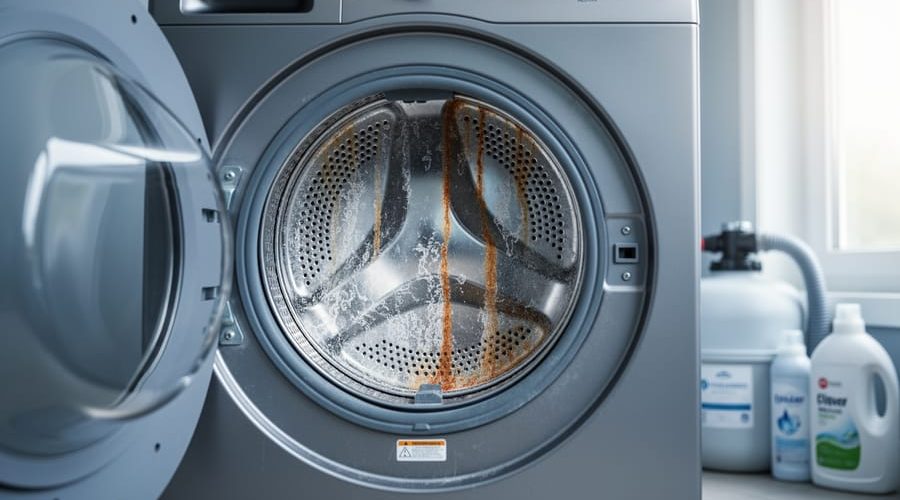
Examine your washing machine’s interior for rust-colored stains or metallic odors that signal iron contamination, a common culprit behind yellowed whites and orange-tinted laundry. Run a monthly maintenance cycle with citric acid or a specialized cleaner to dissolve mineral deposits accumulating in hoses, drums, and dispensers. Switch to liquid detergents formulated for hard water conditions, which contain chelating agents that counteract mineral interference and boost cleaning power.
Monitor water temperature fluctuations that affect dissolving detergent and activating cleaning enzymes, particularly in homes with inconsistent hot water supply or outdated water heaters. Consider point-of-use filtration systems that remove chlorine, sediment, and heavy metals before water enters your machine, protecting both fabric longevity and appliance components. Adjust detergent quantities based on water hardness levels, using significantly more in hard water areas to compensate for reduced effectiveness.
Understanding the connection between water quality and laundry performance transforms frustrating wash-day disappointments into consistently clean, fresh-smelling results while extending the life of both your clothes and washing machine.
How Water Quality Affects Your Laundry Results
Hard Water: The Silent Fabric Destroyer
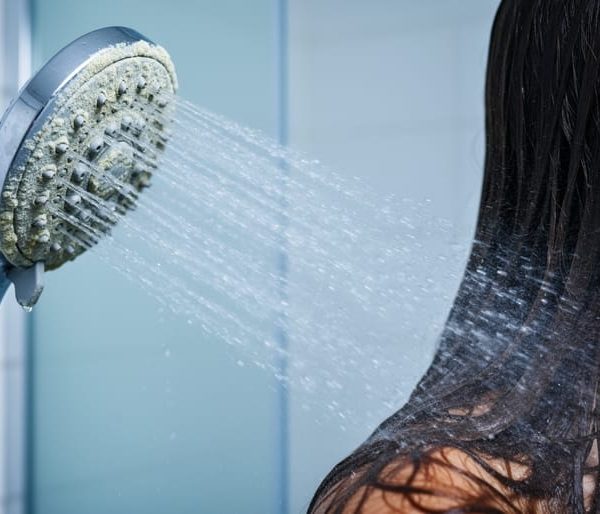
Hard water contains high levels of dissolved minerals, primarily calcium and magnesium, that can wreak havoc on your laundry in ways you might not immediately recognize. Just as hard water damages hair, these same minerals create problems for your fabrics during every wash cycle.
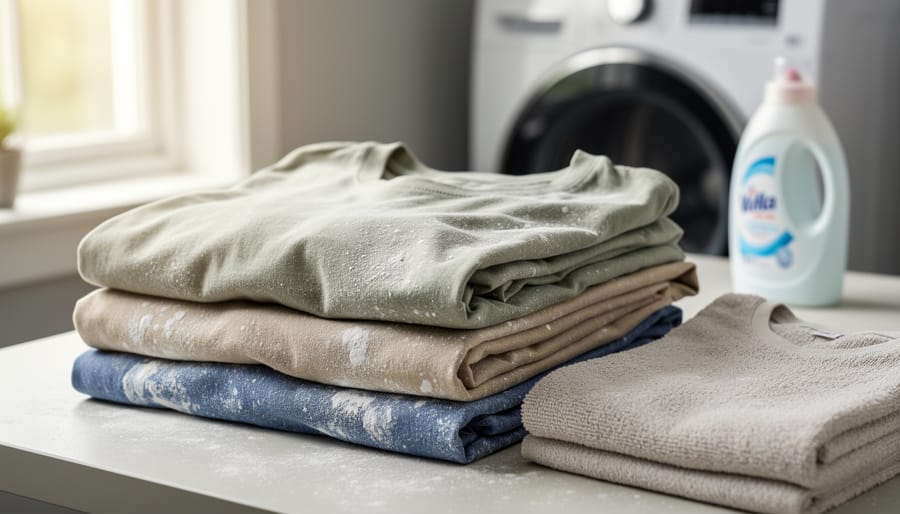
When hard water mixes with laundry detergent, the minerals bind with the cleaning agents, forming an insoluble substance that doesn’t rinse away properly. This chemical reaction significantly reduces your detergent’s cleaning power, meaning you’re using more product but getting worse results. The soap scum and mineral deposits then settle onto your clothes, creating a dull, grayish film that dulls colors and makes whites appear dingy.
Over time, this mineral buildup accumulates in fabric fibers, causing clothes to feel rough, stiff, and scratchy against your skin. The residue acts like tiny particles embedded in the weave, making even your softest cotton shirts feel less comfortable. You might also notice that towels lose their absorbency as the mineral coating creates a barrier on the fibers.
The environmental impact is worth considering too. When detergent becomes less effective due to hard water, many people simply add more soap to compensate, which wastes money and introduces unnecessary chemicals into the water system. Understanding this silent fabric destroyer is the first step toward protecting your wardrobe investment and achieving truly clean laundry.
Chlorine and Chemical Contaminants in Wash Water
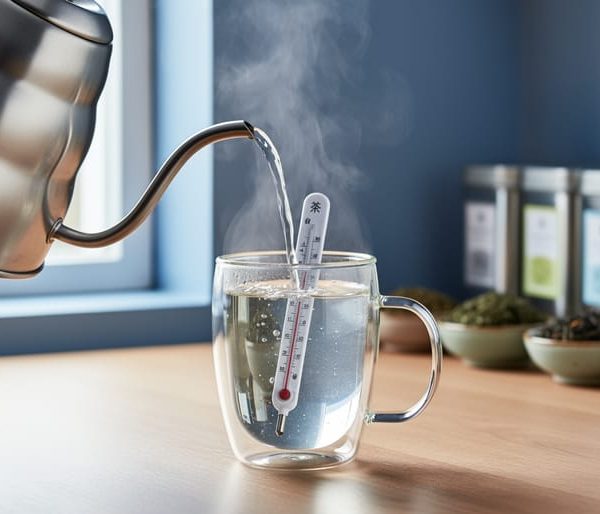
Municipal water treatment facilities add chlorine and other chemicals to keep our tap water safe from harmful bacteria, but these same substances can wreak havoc on your laundry. Just as chlorine and minerals affect the taste of your beverages, they also impact how your clothes look and feel after washing.
Chlorine is particularly harsh on fabric dyes, causing colors to fade prematurely, especially in reds, blues, and darker shades. Over time, repeated exposure to chlorinated water can break down fabric fibers, making your clothes feel thin and worn. You might notice towels losing their softness or favorite garments developing a dull, lifeless appearance faster than expected.
Beyond fabric damage, chemical residues from wash water can cling to clothing and trigger skin reactions in sensitive individuals. If you or your family members experience unexplained itching, rashes, or irritation after wearing freshly laundered clothes, chlorine and other treatment chemicals could be the culprits. Children and people with eczema or sensitive skin are particularly vulnerable to these irritants.
The good news is that understanding this connection empowers you to take action. Installing a whole-house water filter or adding a specialized laundry filter can significantly reduce chemical exposure. Some eco-conscious homeowners also use vitamin C tablets or dechlorinating balls in their wash cycles as a more sustainable alternative to combat these issues while protecting both their wardrobe and their family’s comfort.
Signs Your Washing Machine Water Needs Treatment
Visible Clues on Your Clothes
Your clothes can tell you a lot about the quality of water flowing through your washing machine. Start by examining your freshly washed laundry for these telltale signs of water quality issues.
White residue or chalky deposits on darker fabrics indicate hard water, which contains high levels of calcium and magnesium. These minerals don’t rinse away completely, leaving a filmy coating that builds up over time. You might notice towels feeling stiff or scratchy rather than soft and fluffy, even when using fabric softener.
Faded or dingy colors suggest your water isn’t effectively activating detergent or rinsing properly. Whites may develop a grayish or yellowish tint instead of staying bright. This yellowing often results from iron in your water supply, which can also leave rust-colored spots on lighter garments.
Soap scum that clings to clothing fibers is another clear indicator. Hard water prevents detergent from dissolving completely, creating a sticky residue that traps dirt and odors in the fabric. This makes your clothes look dull and feel grimy, even straight from the wash.
If you’re experiencing multiple symptoms from this checklist, your water quality likely needs attention. The good news is that identifying these patterns helps you pinpoint the right solution for cleaner, fresher laundry while extending the life of your clothes and washing machine.
Warning Signs in Your Machine
Your washing machine often sends clear signals when water quality issues are taking their toll. Learning to recognize these warning signs helps you address problems before they damage your appliance or ruin your favorite clothes.
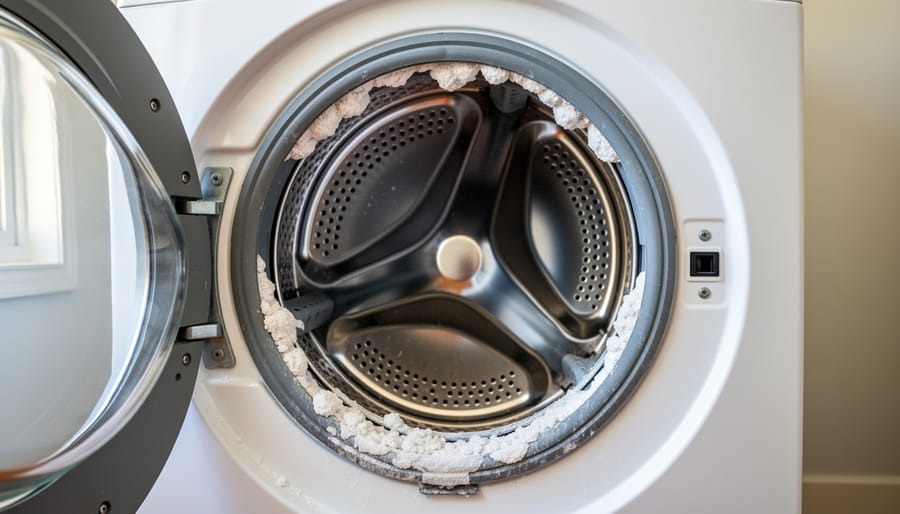
White, chalky residue around the detergent dispenser or inside the drum is one of the most obvious indicators of hard water. These mineral deposits, primarily calcium and magnesium, accumulate over time and can eventually clog water lines and reduce your machine’s efficiency. You might also notice a gritty texture on the rubber door seal or a crusty buildup on internal components.
Unpleasant odors are another telltale sign. When minerals combine with detergent residue and fabric fibers, they create a breeding ground for bacteria and mildew. This musty smell transfers to your clothes, defeating the entire purpose of washing them.
Performance issues frequently accompany water quality problems. If your machine takes longer to complete cycles, struggles to rinse properly, or leaves soap residue on clothes, minerals may be interfering with detergent activation and water flow. Higher energy bills can also result, as your machine works harder to heat mineral-laden water.
Finally, if you’re using more detergent than recommended but still getting disappointing results, your water quality is likely the culprit. Hard water prevents soap from lathering effectively, prompting many homeowners to add excessive amounts that only worsen residue problems.
Testing Your Washing Machine Water Quality
DIY Water Testing Options
Testing your water quality doesn’t require expensive lab analysis. Affordable DIY options make it easy to understand what’s flowing into your washing machine and affecting your laundry results.
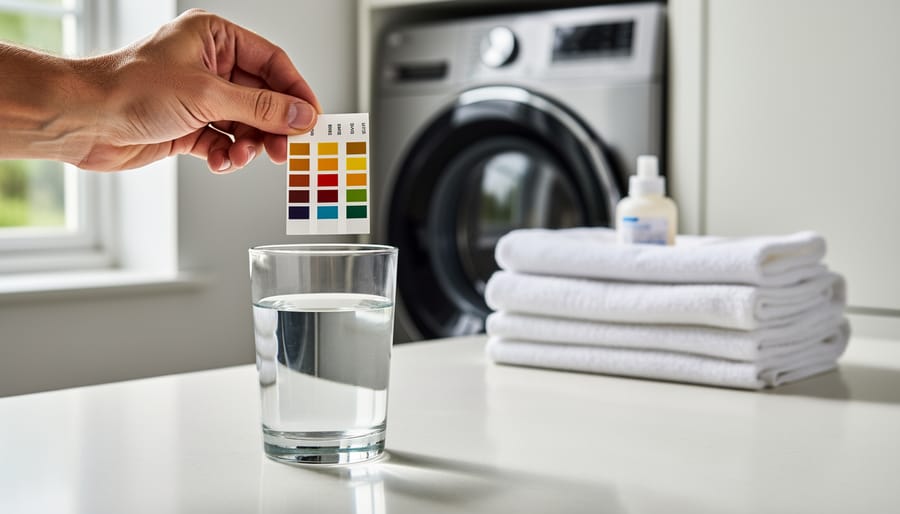
Test strips are the most budget-friendly choice, typically costing $10-$25 for multiple tests. These simple strips measure key parameters including water hardness (measured in grains per gallon or parts per million), pH levels, chlorine, iron, and total dissolved solids. Simply dip the strip in water from your machine’s fill hose, wait the specified time, and compare the color changes to the provided chart.
For more comprehensive analysis, home testing kits ranging from $20-$50 offer detailed measurements with liquid reagents and color comparators. These provide more accurate readings than basic strips.
When interpreting results, focus on hardness first. Water above 7 grains per gallon is considered hard and will likely cause laundry issues. A pH between 6.5-8.5 is ideal, while high chlorine levels above 4 ppm may fade colors. Elevated iron (above 0.3 ppm) causes rust stains on whites.
Keep a record of your results to track seasonal variations and determine which water treatment solutions will deliver the best improvements for your specific situation.
When to Consider Professional Water Analysis
If your home test strips reveal unusual readings, if you’ve recently moved to a new area with unknown water characteristics, or if you’re experiencing persistent laundry problems despite basic treatment, professional water analysis becomes worthwhile. Laboratory testing can detect contaminants that simple home tests miss, including specific heavy metals like lead, copper, and mercury that may damage fabrics or pose health concerns. Professional analysis also measures total dissolved solids, identifies bacterial contamination, and detects agricultural runoff chemicals like nitrates and pesticides that home kits can’t catch.
Consider professional testing if you rely on well water, live near industrial areas or farms, or notice metallic tastes or unusual odors in your water supply. These comprehensive tests typically cost between $150-$300 but provide detailed reports showing exactly which treatment solutions will work for your situation. Many laboratories also test for emerging contaminants like PFAS (forever chemicals) and pharmaceutical residues, which represent cutting-edge concerns in water quality science. This investment proves especially valuable when persistent laundry issues suggest complex water chemistry problems requiring targeted treatment approaches rather than trial-and-error solutions.
Water Treatment Solutions for Better Laundry
Water Softeners: The Foundation for Quality Wash Water
If you’re frustrated by stiff towels, faded colors, and clothes that never quite feel clean, hard water minerals are likely the culprit. Water softeners offer a comprehensive solution by removing calcium and magnesium ions that interfere with your laundry results.
These systems work through a process called ion exchange, where hard water passes through a resin bed that captures mineral ions and replaces them with sodium or potassium ions. The result is softened water that transforms your entire laundry experience. You’ll immediately notice that detergents lather better and rinse away completely, meaning you can use up to 50% less detergent per load—a win for both your wallet and the environment.
The benefits extend far beyond cost savings. Soft water allows fabric fibers to relax and remain supple, resulting in noticeably softer towels and clothing without chemical fabric softeners. Colors stay vibrant longer because minerals aren’t embedding themselves in fabric weaves, and whites remain brighter without the dingy gray film that hard water creates. Your washing machine also benefits, as scale buildup in pipes and heating elements decreases dramatically, extending appliance lifespan.
Installation considerations vary depending on your home’s setup. Whole-house water softeners require professional installation and connect to your main water line, typically costing between $1,500 and $3,000 including equipment. They need periodic maintenance, primarily refilling salt every few months. For renters or those wanting a smaller commitment, portable exchange tank services offer softened water without permanent installation. While the upfront investment may seem significant, most homeowners find that reduced detergent costs, fewer appliance repairs, and superior laundry results provide a return on investment within three to five years.
Whole House Filters for Comprehensive Protection
Installing whole house filters represents the most comprehensive approach to protecting your washing machine and improving your laundry results. These systems treat all the water entering your home, ensuring every tap and appliance receives cleaner, filtered water.
Carbon filters excel at removing chlorine, which can fade colors and weaken fabric fibers over time. They also eliminate unpleasant odors and tastes that might transfer to your laundry. Meanwhile, sediment filters capture particles like rust, sand, and dirt before they enter your washing machine, preventing buildup in hoses and valves that can shorten appliance lifespan.
The beauty of whole house filtration lies in its convenience—once installed, you don’t need to worry about maintaining individual filters on each appliance. Your washing machine, dishwasher, and every faucet benefits simultaneously. This approach is particularly valuable for homes with older plumbing that may leach sediment or rust into the water supply.
For environmentally-conscious homeowners, this solution reduces the need for harsh detergents since cleaner water naturally enhances cleaning performance. You’ll likely notice brighter whites, softer fabrics, and less detergent residue on clothes. Plus, protecting your washing machine from contaminant buildup means fewer repairs and a longer appliance lifespan, reducing waste and supporting sustainable living practices. While the upfront investment is higher than point-of-use filters, the comprehensive protection and long-term savings make it worthwhile for many households.
Point-of-Use Inline Filters for Washing Machines
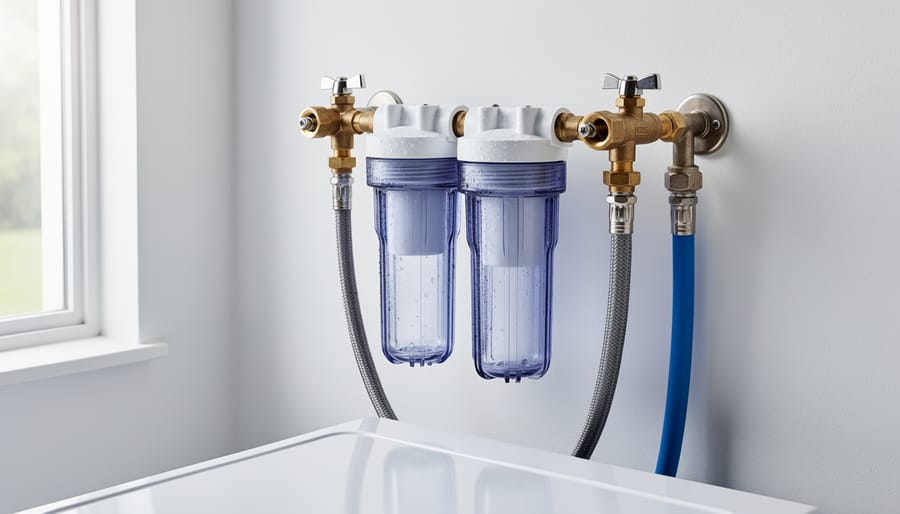
For renters or homeowners seeking a budget-friendly solution without permanent installation, point-of-use inline filters offer an excellent entry point into water treatment. These compact units connect directly to your washing machine’s supply hoses, typically between the wall outlet and the machine itself, requiring no plumbing modifications or landlord approval.
Most inline filters feature standard threaded connections that attach in minutes using basic hand-tightening. They effectively address common issues like sediment, rust particles, and chlorine that can damage fabrics and contribute to dingy laundry. Basic sediment filters start around $20-40, while models incorporating activated carbon for chlorine removal range from $40-80.
The main advantage is portability—you can take these filters with you when moving. They’re also ideal for targeting specific laundry concerns without treating your entire household water supply, making them an eco-conscious choice that treats water only where needed.
Consider replacement costs when evaluating options. Most cartridges require changing every 3-6 months depending on water quality and usage, typically costing $10-30 per replacement. While not as comprehensive as whole-house systems, inline filters provide meaningful improvement for everyday laundry challenges. They’re particularly effective for protecting delicate fabrics and extending the lifespan of your washing machine by preventing mineral buildup in internal components.
Optimizing Laundry Practices for Your Water Type
Choosing the Right Detergent for Your Water
Selecting the right detergent makes a significant difference when dealing with varying water quality. If you’ve identified hard water in your home, look for detergents specifically labeled for hard water use. These formulations contain extra water softeners and chelating agents that help the cleaning ingredients work effectively despite mineral interference.
For hard water situations, you’ll typically need to use slightly more detergent than the package recommends for soft water. However, avoid the temptation to drastically increase the amount, as excess detergent can leave residue on clothes and inside your machine. Start with the manufacturer’s hard water guidelines and adjust based on your results.
If you’ve installed a water softening system, you can actually reduce detergent usage by 25-50 percent. Softened water allows cleaning agents to activate more efficiently, meaning less product achieves better results. This not only saves money but also reduces chemical discharge into wastewater systems.
Eco-conscious homeowners should explore plant-based detergents designed to work in various water conditions. Many innovative brands now offer concentrated formulas that minimize packaging waste while delivering powerful cleaning. Look for products certified by environmental organizations and free from phosphates, which can harm aquatic ecosystems.
Remember that powder detergents generally perform better in hard water than liquids, as they often contain built-in water softening compounds. Whatever you choose, proper dosing matters more than brand loyalty for achieving clean, fresh-smelling laundry.
Temperature and Cycle Adjustments
Your water quality directly impacts which wash settings will give you the best results. Hard water, which contains high levels of calcium and magnesium, requires warmer temperatures to activate detergents effectively. If you have hard water, you may need to wash at 140°F (60°C) or higher for heavily soiled items, whereas soft water users can achieve excellent cleaning at cooler temperatures like 80-90°F (27-32°C).
This temperature difference matters for both your wallet and the environment. Heating water accounts for about 90% of your washing machine’s energy use, so using cooler cycles with soft water can significantly reduce your carbon footprint and utility bills.
Hard water also benefits from longer wash cycles with extra rinse settings to prevent mineral buildup on fabrics. The extended agitation time helps break down mineral deposits that can make clothes feel stiff or appear dingy. Conversely, soft water requires shorter cycles since detergents dissolve and rinse away easily.
For eco-conscious households, treating hard water at the source allows you to use cold-water wash cycles more effectively. Modern cold-water detergents work beautifully with properly treated water, delivering clean clothes while consuming 75% less energy than hot water cycles. This combination represents the sweet spot of sustainable laundry practices.
The Environmental Impact of Laundry Water Quality
Reducing Chemical Waste Through Better Water
When your water quality improves, you can dramatically reduce the amount of detergent and chemical additives needed for each load. Here’s why: hard water minerals interfere with detergent effectiveness, forcing you to use more product to achieve decent cleaning results. By treating your water, you’re actually allowing the detergent to work as originally formulated.
Soft or conditioned water requires up to 50% less detergent than hard water for the same cleaning power. This means fewer phosphates, surfactants, and synthetic fragrances flowing into municipal wastewater systems and eventually into rivers and streams. Many homeowners also find they can eliminate fabric softeners entirely, as soft water naturally prevents the stiff, scratchy feel that hard water creates.
The environmental benefits extend beyond your property line. Wastewater treatment facilities struggle to remove certain laundry chemicals completely, and reducing chemical load at the source helps protect aquatic ecosystems. You’ll also save money on detergent purchases while achieving cleaner clothes, creating a win-win situation for your household budget and the environment. This represents one of the most practical applications of cutting-edge water innovations in everyday life, turning a simple water quality improvement into meaningful environmental action.
Extended Appliance Lifespan and Sustainability
Protecting your washing machine from hard water damage isn’t just about better laundry results—it’s a meaningful step toward sustainable living. When scale buildup shortens your machine’s lifespan, the environmental cost extends far beyond your laundry room. Manufacturing a single washing machine requires significant energy, raw materials like steel and plastic, and water resources. When hard water forces premature replacement, typically years before a well-maintained machine would fail, we’re contributing to unnecessary manufacturing demand and landfill waste.
By addressing water quality issues proactively, you can extend your washing machine’s functional life by 3-5 years or more. This reduction in replacement frequency means fewer appliances manufactured, transported, and eventually discarded. Water softeners and filtration systems represent a one-time investment that protects not just your washing machine but your entire plumbing system, making them an eco-smart choice. Additionally, machines free from scale buildup operate more efficiently, using less energy to heat water and complete cycles. This dual benefit of reduced energy consumption and extended appliance lifespan makes water treatment one of the most overlooked yet impactful sustainability practices available to homeowners today.
The quality of water flowing into your washing machine plays a more significant role in your laundry outcomes than most people realize. From the brightness of your whites to the lifespan of your appliance, water quality touches every aspect of the washing process. Hard water minerals, chlorine, iron, and other contaminants don’t just affect how clean your clothes get—they impact your household budget through increased detergent use, higher energy costs, and premature appliance replacement.
The good news is that addressing water quality issues doesn’t have to be overwhelming or expensive. Simple steps like testing your water, adjusting your detergent choice, or installing a basic filter can yield immediate improvements in your laundry results. For those facing more challenging water conditions, solutions ranging from water softeners to whole-home filtration systems offer long-term benefits that extend far beyond the laundry room.
Taking the time to assess your water situation is an investment in cleaner clothes, a more efficient home, and a lighter environmental footprint. Whether you start with a basic water test kit or consult with a water treatment professional, understanding what’s in your water empowers you to make informed decisions. Small improvements today can lead to significant savings tomorrow—in detergent costs, energy bills, and appliance longevity. Your washing machine will perform better, your clothes will last longer, and you’ll contribute to more sustainable household practices that benefit both your family and the planet.