Yes, water is a nutrient. In fact, it’s classed as an essential nutrient, meaning your body can’t make enough of it on its own and has to take it in from outside sources every day. Water carries other nutrients through your blood, helps regulate body temperature, cushions joints, and flushes waste through your kidneys. Skip it for even a few days and the consequences get serious fast, which is more than you can say for most vitamins.
That makes water consumption and health a single conversation, and it’s one worth having at home, not just in the doctor’s office. The water coming out of your tap is your most frequent dietary input, so what’s in it matters. Minerals, contaminants, and treatment methods all shape what you’re actually drinking.
Below, we cover what water does in the body, where you get it (more sources than you’d guess), and how much most people need. We’ll also look at how smarter, more sustainable water habits at home can make every glass count.
What It Means for Water to Be a Nutrient
A nutrient is any substance your body needs to work properly but can’t make in large enough amounts on its own. Water fits that description squarely. Your cells can produce a small amount through normal chemical reactions, but nowhere near enough to cover what you lose every day through urine, sweat, and breath. The rest has to come from what you drink and eat.
Here’s the part that trips people up. Water has no calories, so it doesn’t fuel you the way carbohydrates, fats, or protein do. But being a nutrient has never been about energy alone. It’s about whether your body can function without it, and with water, it can’t, not for more than a few days.
A few terms are worth getting straight:
- Nutrient
- A substance your body uses to grow, repair itself, and keep running, which it must take in from outside.
- Essential nutrient
- A nutrient the body can’t make at all, or can’t make enough of, so it has to come from food and drink.
- Macronutrient
- A nutrient needed in large amounts, such as carbohydrates, fats, and protein, which supply energy.
- Micronutrient
- A nutrient needed in tiny amounts, like vitamins and minerals, which support processes rather than supply fuel.
- Hydration
- Having enough water in your body to keep its systems working smoothly.
Because water is needed in large quantities, you might expect it to count as a macronutrient. Some sources do list it that way. Many nutrition scientists, though, give it a category of its own, since it doesn’t supply energy like the other macronutrients and it isn’t a vitamin or mineral either.
This is where water consumption and health connect at the most basic level. If water is a true nutrient, then drinking enough of it isn’t a wellness trend. It’s a baseline requirement, as fundamental as eating enough protein or getting your vitamins.
How Water Works Inside Your Body
Water’s Everyday Jobs: Temperature, Transport, and Cushioning
Think of water as the body’s all-purpose worker. It doesn’t deliver calories, but almost nothing else in your body runs without it. Here are its main jobs:
- Temperature control: when you heat up, you sweat, and the evaporating moisture carries heat away from your skin.
- Transport: water makes up most of your blood, so it moves nutrients, oxygen, and hormones to where they’re needed.
- Digestion: it helps break down food and move it through your gut, and it keeps things regular.
- Waste removal: your kidneys use water to flush out byproducts through urine.
- Cushioning: it pads your joints, protects your spinal cord, and helps shield organs from everyday knocks.
None of these roles can be filled by another substance, which is a big part of why water counts as an essential nutrient. Your body loses water all day through sweat, breathing, and bathroom trips, so the supply needs steady topping up. A body running low on fluids still performs these jobs, just less efficiently, and that’s often when you notice tiredness, stiffness, or a dull headache.
What Happens When You Don’t Get Enough
Your body responds to falling short on fluids in stages. First comes thirst, a signal that your fluid balance has already dipped slightly. Urine often turns darker and you may pass less of it, because your kidneys hold onto water.
With mild shortfalls, you might notice a dry mouth, tiredness, trouble concentrating, or a headache. Research shows that mild dehydration impairs mood so a short temper or sluggish afternoon can sometimes trace back to your water bottle.
As the gap widens, dizziness, a fast heartbeat, muscle cramps, and confusion can follow. Severe dehydration is a medical emergency, especially for young children and older adults, whose thirst signals and fluid reserves work differently.
Needs vary a lot from person to person. Heat, exercise, illness, pregnancy, and certain medications all change how much fluid you lose. If you have ongoing symptoms or a health condition that affects fluid balance, talk with a healthcare professional rather than guessing.
Where Your Water Comes From: Drinks, Food, and Your Tap
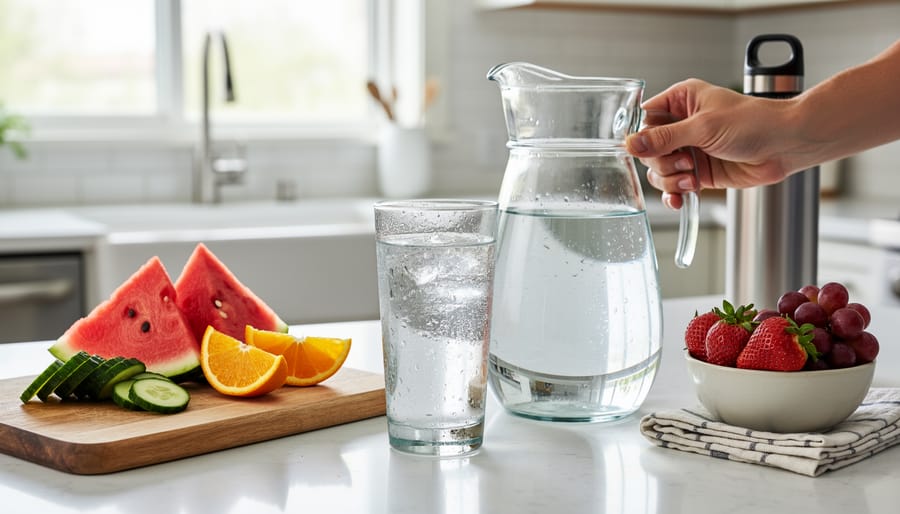
Tap, Filtered, and Bottled: How Water Quality Shapes the Benefits
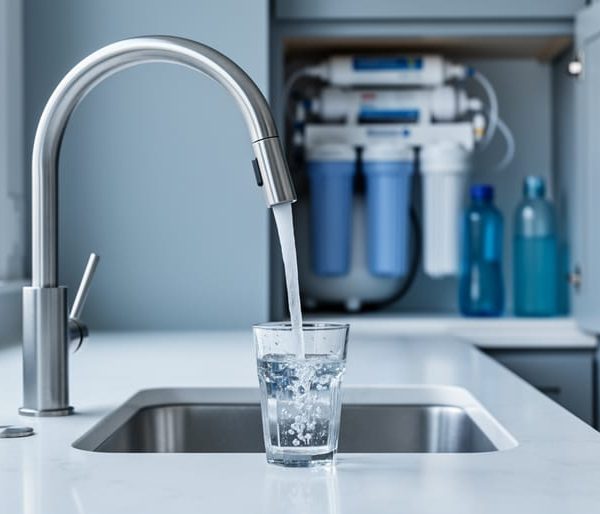
Where your water comes from changes what ends up in the glass. Tap water often carries naturally occurring minerals like calcium and magnesium, which can shape taste and add small amounts of dietary minerals. It may also carry trace contaminants, such as chlorine byproducts, sediment, or lead from older pipes, depending on your local supply and plumbing. Bottled water varies widely by brand and source, and it comes with its own plastic waste.
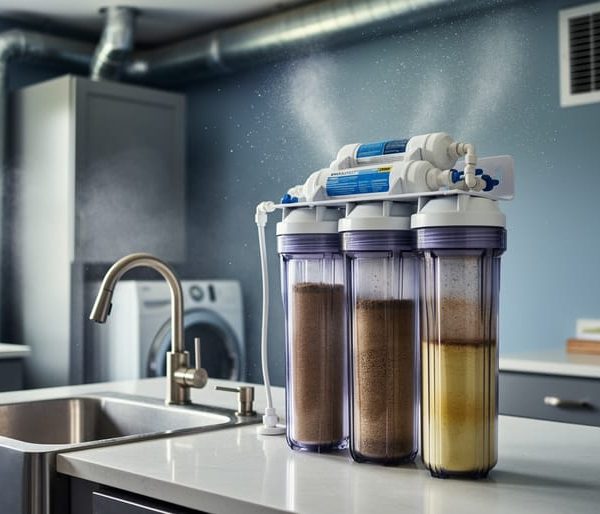
Taste is usually the first thing people notice, but it isn’t the whole story. A chlorine smell is a flavor problem, while lead or bacteria can be invisible and odorless. That’s why many households choose filtration: to cut unwanted tastes, reduce specific contaminants, and feel more confident about safe drinking water at the tap. Which filter makes sense depends on what’s actually in your water, so reading your local water quality report or testing your home supply is a sensible first step.
Eco-Friendly Ways to Stay Hydrated
Staying hydrated doesn’t have to mean a trail of plastic bottles. A sturdy reusable bottle, filled at home, replaces hundreds of single-use bottles a year and keeps water within easy reach all day. Pairing it with a home filter means you can improve taste and reduce contaminants without hauling cases of bottled water.
Newer low-waste dispensers and refillable filter systems take this further, cutting packaging and shipping while giving you cold, filtered water on demand. When comparing options, look at how often cartridges need replacing and whether parts can be recycled or refilled.
Small habits add up too: keep a bottle at your desk, carry one in the car, and refill rather than reach for a throwaway cup. Better water at home makes the sustainable choice the easy one.
How Much Water Do You Actually Need?
Your daily water needs depend on several things: your age, how active you are, the climate you live in, and your overall health. A person training for a marathon in summer heat needs far more than someone working at a desk in a cool office. Pregnancy, breastfeeding, illness, and certain medications also change the picture.
Health authorities do publish general guidelines for total daily fluid intake, and these cover water from drinks and food combined. They’re useful starting points, but they’re averages, not prescriptions. Treat any single number as a rough reference rather than a magic target.
A better day-to-day guide is your body itself. Signs you’re well hydrated include:
– Pale yellow urine
– Rarely feeling thirsty
– Steady energy and focus through the day
– Moist lips and mouth
Dark yellow urine, a dry mouth, headaches, or unusual fatigue can hint that you need more fluids. Thirst is a reliable cue for most healthy adults, so sip regularly rather than waiting until you’re parched.
It’s also possible to overdo it. Drinking very large amounts in a short time can dilute the sodium in your blood, a condition called hyponatremia. It’s rare in everyday life, but it can happen during extreme endurance events or with certain medical conditions. Steady sipping beats chugging.
What’s in your glass matters too. If you filter at home, it helps to know how your system treats the water. For example, if you’re curious about how RO removes minerals, that can inform how you think about taste and mineral content. And if your water leaves scale on fixtures, it may be worth learning how to test water hardness so you can match your setup to your actual supply.
For personal advice, especially if you have a kidney, heart, or other medical condition, check with your doctor.
Types of Is Water Considered a Nutrient

Not all of your water comes from the same place, and it helps to sort it into a few clear categories. Nutrition scientists generally look at three kinds of water intake.
– Plain drinking water: Tap, filtered, spring, and sparkling water all count here, and for most people this is the largest and most direct source.
– Water in other beverages: Tea, coffee, milk, and juice are mostly water, so they contribute to your daily fluid total even though they bring other ingredients along with them.
– Water in food: Fruits, vegetables, soups, and even cooked grains hold a surprising amount. Items like cucumbers, melons, and lettuce are well over 90 percent water.
There is also a smaller, less obvious category: metabolic water. Your body produces a little of it internally when it breaks down food for energy, though it covers only a fraction of what you need.
Seeing water as a mix of these sources explains why your total intake is bigger than what fills your glass.
Common Questions About Water and Nutrition
Does water have calories, vitamins, or minerals?
Plain water has no calories and no vitamins. Depending on its source, it can carry small amounts of minerals like calcium and magnesium, though that varies widely between tap, filtered, and bottled water.
Do coffee, tea, and other drinks count toward hydration?
Yes. Coffee, tea, milk, and juice all contribute to your total fluid intake, even if water is the simplest choice without added sugar or caffeine.
Does sparkling water count the same as still water?
Plain sparkling water hydrates just as well as still water. The bubbles come from dissolved carbon dioxide and don’t change how your body uses the water.
Can you drink too much water?
It’s rare, but possible. Drinking very large amounts in a short time can dilute sodium levels in the blood, so listen to your thirst and talk to a doctor if you have a medical condition.
Most of these questions come down to one idea: water is the one nutrient you take in from many places at once. A glass of tap water, a cup of tea, and a bowl of watermelon all add to the same daily total. What changes from one source to the next is what comes along with it, whether that’s sugar, caffeine, or trace minerals. Since water quality shapes how pleasant it is to drink, it’s worth knowing what’s in your own supply so every glass is one you actually want to finish.
Water earns its place as a true essential nutrient. Your body can’t make enough of it, and nearly every system depends on it. How much you drink matters, but so does what’s in the glass, which is why quality deserves as much attention as quantity.
Take a small step this week: test your tap water, then choose a filter that fits what you find. A reusable bottle and clean home water keep every glass safe and sustainable.