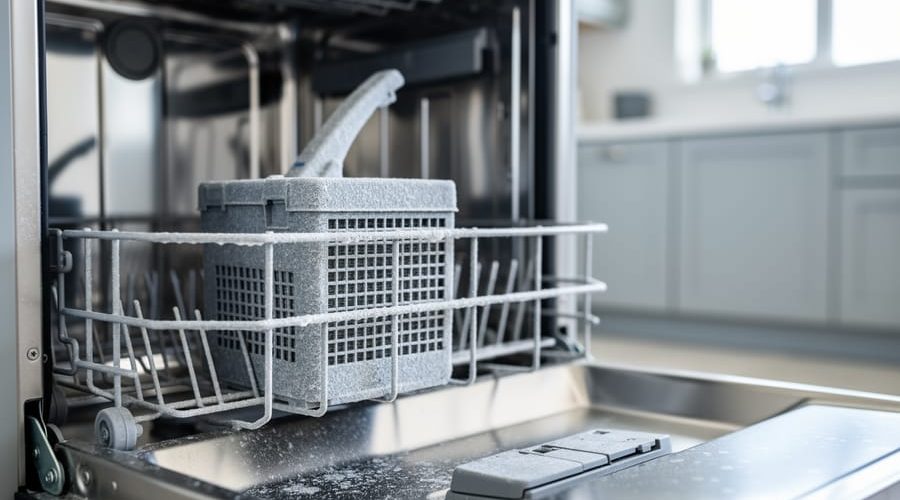
Dishwasher salt directly combats hard water mineral buildup by regenerating your machine’s built-in ion exchange resin, swapping calcium and magnesium ions for sodium before they form scale. If you’ve noticed cloudy glassware, white film on dishes, or reduced spray arm pressure, your dishwasher’s softening system likely needs attention. The fix takes about five minutes: locate the salt reservoir (usually under the lower rack), pour in coarse dishwasher salt until full, and let the machine’s automatic cycle do the rest.
Hard water contains dissolved minerals that leave behind stubborn deposits when heated. These deposits don’t just affect your dishes. They clog spray jets, coat heating elements, and gradually destroy pump seals, turning a minor maintenance task into an expensive repair. While many homeowners assume detergent alone handles cleaning, dishwasher salt serves a completely different purpose. It recharges the resin beads inside your softener compartment, ensuring minerals never reach the wash chamber in the first place.
Understanding how salt softening works protects both your investment and the environment. Proper regeneration reduces the need for harsh rinse aids and prevents the energy waste that comes with scaled heating elements. Most manufacturers recommend checking salt levels monthly, but your specific frequency depends on local water hardness and how often you run cycles.
Understanding Hard Water Mineral Buildup in Dishwashers
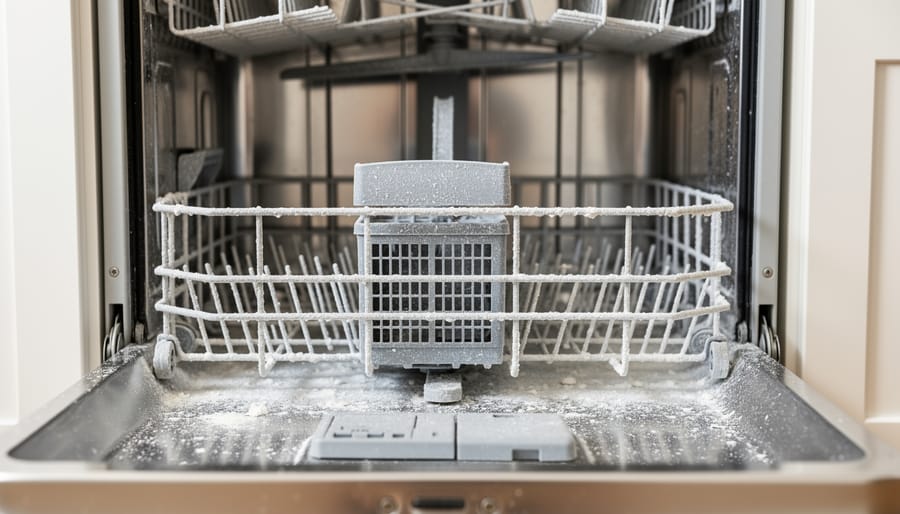
Hard water contains elevated levels of dissolved minerals, primarily calcium and magnesium, which cause significant problems in dishwashers. The distinction between hard vs soft water becomes critically important when understanding appliance performance, as hard water deposits minerals throughout your dishwasher’s internal systems. These minerals don’t simply rinse away; they crystallize when heated, forming stubborn scale deposits that accumulate over time.
The buildup process targets specific dishwasher components where water sits or heats up. Heating elements bear the brunt of mineral accumulation because heat accelerates crystallization, creating thick white or gray crusty layers that insulate the element and force it to work harder. Spray arms develop clogged nozzles as calcium carbonate deposits block the tiny holes that distribute water, reducing water pressure and coverage. Internal pipes, valves, and the salt reservoir itself can also become coated with scale, restricting water flow and compromising the entire wash system. Following a guide to using dishwasher salt properly addresses these issues by preventing mineral deposits before they form.
Key Takeaway: Hard water minerals crystallize on heating elements, spray arms, and internal components, creating scale buildup that reduces cleaning power, increases energy consumption, and shortens your dishwasher’s lifespan. Regular salt softening maintenance prevents these deposits from forming in the first place.
You’ll notice several visible signs when mineral buildup has taken hold. Dishes and glassware emerge with a cloudy white film or spotting that won’t wipe off, even after a complete cycle. Cleaning performance deteriorates noticeably, with food residue remaining on plates and utensils that would previously come out spotless. The dishwasher may run louder as pumps strain against restricted water flow, and cycles may take longer to complete as scaled heating elements struggle to reach target temperatures. Over time, you might also notice a chalky residue inside the dishwasher door and around the detergent dispenser.
What You’ll Need for Salt Softening Maintenance
Before you begin salt softening maintenance, gather these essential items. Having everything ready makes the process smoother and helps you avoid mistakes that could damage your dishwasher’s softening system.
- Dishwasher salt: Only use coarse, granular salt specifically designed for dishwashers. The best dishwasher salt dissolves slowly and contains no anti-caking agents that could clog the system. Never substitute table salt, which includes additives that damage the ion-exchange resin.
- Soft brush or cloth: You’ll need this to clean around the reservoir opening and wipe away any spilled salt that could interfere with the cap seal.
- Funnel (optional but recommended): A plastic funnel prevents salt from spilling into the dishwasher interior and makes filling faster, especially for first-time users.
- Your dishwasher’s user manual: The manual contains your specific model’s hardness settings, reservoir capacity, and any unique instructions. Keep it handy for reference during setup.
- Water hardness test kit (optional): These inexpensive strips measure your water’s mineral content in grains per gallon or parts per million, helping you set the correct hardness level on your dishwasher.
Most of these items cost under ten dollars combined, and you’ll reuse the funnel and brush for every refill. The manual is crucial because dishwasher models vary in reservoir size and hardness adjustment methods. If you’ve lost your manual, most manufacturers offer downloadable versions on their websites.
Safety Precautions and When Not to Proceed
Before you start adding salt to your dishwasher, take a moment to understand what can go wrong. Using the wrong materials or proceeding when your system is already damaged can turn a simple maintenance task into an expensive repair.
The difference matters because table salt contains anti-caking agents and iodine that leave residue in the softening unit, eventually blocking the resin beads from doing their job. Rock salt carries impurities that achieve the same damaging result. Stick with the coarse, pure sodium chloride sold specifically for dishwashers.
Inspect the salt reservoir before you fill it. If you spot cracks in the compartment, a damaged cap seal, or water pooling where it shouldn’t be, stop and call a technician. Adding salt to a compromised reservoir can leak brine into areas that will corrode electrical components or damage the lower spray arm assembly.
You should also call a professional if you’ve refilled the salt correctly, adjusted the hardness setting according to your manual, and still see no improvement after a week of regular use. This suggests the softening unit itself has failed, which requires diagnostic testing and likely replacement parts.
On the environmental side, dishwasher salt softening does discharge small amounts of brine during regeneration cycles. However, this is far less wasteful than replacing a dishwasher prematurely due to scale damage, and it eliminates the need for chemical descaling agents. Most municipal water treatment systems handle this household brine without issue, but if you’re on a septic system in an ecologically sensitive area, consult local guidelines first.
How to Add and Maintain Dishwasher Salt: Step-by-Step
Locating and Accessing the Salt Reservoir
Before you can add salt to your dishwasher’s softening system, you need to find the reservoir. Pull out the dishwasher’s lower rack completely and set it aside, this gives you clear access to the bottom of the tub. Look for a round or square cap, usually in the center or along the side of the tub floor. It’s typically 3-4 inches in diameter and may be labeled “salt” or marked with an ‘S’.
Unscrew the cap counterclockwise. Some models have a simple twist-off design, while others require a quarter-turn before lifting. If it’s stuck, check your manual, a few dishwashers use a pull-tab release instead of a screw thread. Once open, you’ll see the reservoir chamber below, which is where the salt goes.
Filling the Reservoir Properly
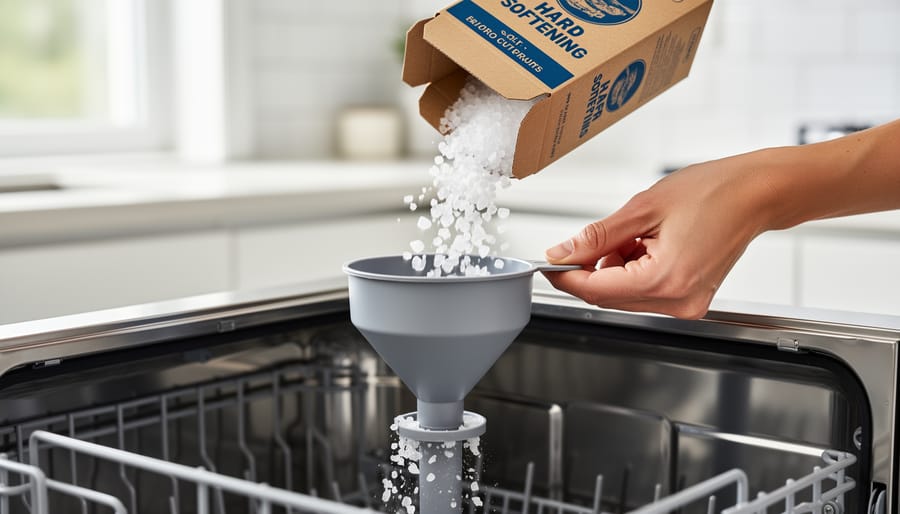
Once you’ve located and opened the salt reservoir, the filling process differs slightly depending on whether this is your first time or a routine refill. For initial setup, fill the reservoir with water before adding any salt. Pour approximately one liter of water into the compartment until it reaches near the top. This step matters because the water creates the brine solution needed for the ion exchange process to begin working immediately.
Next, position a funnel over the reservoir opening to avoid spilling salt into the dishwasher tub. Pour coarse dishwasher salt slowly into the funnel, allowing it to settle. The salt will displace the water, which will overflow into the dishwasher base, this is normal and expected. Continue adding salt until the reservoir won’t accept any more, typically 1 to 2 kilograms depending on your dishwasher model. Check your user manual for the exact capacity, as some units hold less.
Stop when you see salt remaining visible at the top of the opening or when your manual’s fill line is reached. Overfilling wastes salt and creates unnecessary mess. Remove the funnel and use a damp cloth to wipe away any salt crystals from the threads of the cap and the surrounding area. Salt left on these surfaces can corrode components or prevent a proper seal.
For subsequent refills, you won’t need to add water first since residual brine remains in the system. Simply add salt until full, then seal and clean as before.
Adjusting Water Hardness Settings
Before you can optimize your dishwasher’s salt softening system, you need to know your water’s mineral content. Most municipal water suppliers include hardness information on their annual water quality reports, available online or by calling customer service. If you prefer direct testing, you can test water hardness at home using inexpensive test strips from hardware stores, dip the strip in tap water, wait for the color change, and compare against the provided chart. Hardness is measured in grains per gallon (gpg) or parts per million (ppm), typically ranging from soft (0-3 gpg) to very hard (over 10 gpg).
Once you know your hardness level, locate your dishwasher’s adjustment control. On older models, you’ll find a physical dial near the salt reservoir, often marked with numbers from 0 to 5 or H1 to H5. Rotate it to match your water hardness, your user manual contains a conversion table linking test results to dial settings. Newer 2026 dishwashers feature digital menus: press the settings button on the control panel, navigate to water hardness (sometimes labeled as regeneration or salt settings), and input the numeric value.
Setting this correctly ensures the softener regenerates at the right frequency, too low wastes salt and allows breakthrough hardness, while too high uses excess salt and may over-soften, affecting rinse aid performance.
How Salt Softening Actually Prevents Mineral Buildup
The salt softening system in your dishwasher works through a chemical process called ion exchange, which stops minerals from building up before they ever have a chance to form scale.
Inside your dishwasher’s softening unit sits a chamber filled with thousands of tiny resin beads. These beads are covered with sodium ions from the salt you add. When hard water flows through this chamber, the calcium and magnesium ions in the water cling to the resin beads while the sodium ions release into the water. It’s essentially a swap: hard minerals out, harmless sodium in.
This exchange happens because calcium and magnesium have a stronger attraction to the resin than sodium does. The beads prefer to hold onto the harder minerals, letting the sodium go. What comes out the other side is softened water that won’t leave crusty deposits on your heating elements or spray arms.
Here’s why this matters for preventing buildup: calcium and magnesium create scale when water evaporates and the minerals crystallize. Once you remove these minerals before they enter your dishwasher’s working components, there’s nothing left to form that white, chalky crust. The water can still clean effectively, but it won’t leave behind the residue that clogs jets and coats dishes.
Over time, those resin beads fill up with captured calcium and magnesium. They need refreshing to keep working. That’s where your regular salt additions come in. When you refill the reservoir, the high concentration of sodium basically reverses the process, flushing out the accumulated hard minerals and reloading the beads with sodium ions. This regeneration cycle keeps the system running indefinitely.
Beyond cleaner dishes, this prevention extends your dishwasher’s lifespan significantly. Heating elements encrusted with scale require more energy to reach proper temperatures and eventually fail altogether. By stopping mineral accumulation at the source, you’re reducing energy consumption and avoiding premature appliance replacement, a win for both your utility bills and the environment.
Verifying Your Dishwasher’s Softening System Is Working
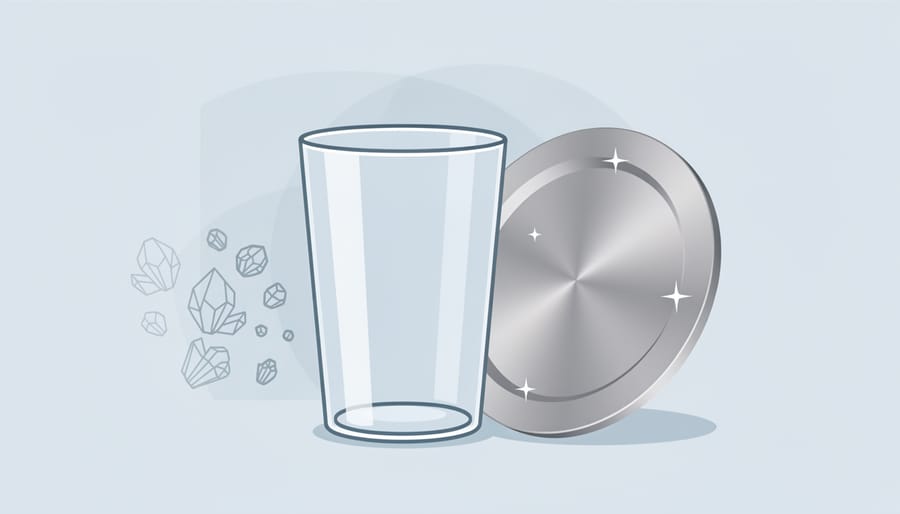
After you’ve added dishwasher salt and adjusted your hardness settings, you’ll want to confirm the system is actually working. The good news is that verification is straightforward, and you should see clear signs within just a few wash cycles.
Start by checking your dishwasher’s salt refill indicator light. This small dashboard signal, usually located near the control panel, should turn off once you’ve properly filled the reservoir. If it stays on after refilling and running a cycle, you may not have added enough salt or the float mechanism inside the reservoir could be stuck.
Within two to three wash cycles, inspect your dishes closely. Hold a glass up to the light and look for the telltale white spots or cloudy film that hard water leaves behind. If the salt softening is working, you should notice these marks fading or disappearing entirely. Your glassware will look clearer, and stainless steel items will have fewer water spots.
For a more thorough check, use these verification points:
- Salt indicator light has turned off and stays off between refills
- Dishes emerge spot-free or with significantly reduced white residue
- Glassware appears clearer without cloudy streaks or film
- Heating element shows no new chalky white buildup after several cycles
- Spray arms rotate freely without mineral obstruction
- Overall wash performance improves with cleaner dishes and less rewashing needed
If you’re still seeing heavy spotting or buildup after a week of normal use, your water may be harder than your current setting accounts for. Try increasing the hardness level by one or two notches and monitor the results over the next few cycles. You can also open the dishwasher mid-cycle to feel whether the water is slippery, which indicates the softening process is actively working, softened water has a distinctly different texture than hard water.
Ongoing Maintenance and Refill Schedule
Most dishwashers need salt replenished every one to three months, but your exact schedule depends on water hardness and how often you run the machine. If you have very hard water (above 180 ppm) and use your dishwasher daily, plan on monthly refills. Moderate hardness (120-180 ppm) with regular use typically means refilling every six to eight weeks, while soft to moderately hard water (below 120 ppm) can stretch to quarterly top-ups.
The salt indicator light is your most reliable signal. When it illuminates, you have roughly two to four wash cycles before the reservoir runs empty. Don’t ignore it, running without salt forces your dishwasher to work with hard water again, allowing mineral deposits to form on heating elements and spray arms.
If you do run out completely, refill as soon as possible and run an empty hot cycle to flush any accumulated minerals. Check that your salt won’t dissolve issue isn’t caused by clumping or blockage in the reservoir.
Seasonal factors matter too. Summer heat can increase water usage and evaporation, potentially requiring more frequent refills. Winter may see less dishwasher use in some households, extending the interval.
Some 2026 smart dishwasher models now include automatic salt monitoring through built-in sensors that track consumption rates and send mobile alerts before levels drop critically low. These systems adjust softening intensity based on detected water hardness, optimizing both salt usage and cleaning performance without manual intervention.
Common Questions About Dishwasher Salt Softening
Can I use table salt instead of dishwasher salt?
No, table salt contains anti-caking agents and additives that can clog the softening unit and damage the ion exchange resin. Dishwasher salt is specifically formulated as pure, coarse sodium chloride that dissolves slowly and won’t harm the system.
What if my area has very hard water?
Set your dishwasher’s hardness level to the highest setting and check the salt reservoir more frequently, potentially every two to three weeks. You may also want to consider a whole-home water softener for broader protection of all your appliances.
Do I still need rinse aid if I’m using salt?
Yes, these serve different purposes. Salt softens the water to prevent mineral buildup, while rinse aid helps water sheet off dishes to prevent spotting and improve drying.
Can salt softening damage my dishwasher?
When used correctly, no. The softening system is designed for salt regeneration. Only use proper dishwasher salt, don’t run out of salt for extended periods, and follow your manufacturer’s guidelines to keep the system working as intended.
The environmental impact of dishwasher salt deserves consideration. Salt softening is generally more sustainable than repeatedly purchasing plastic bottles of rinse agents or descaling products. A single bag of dishwasher salt lasts months and prevents the mineral buildup that forces your heating element to work harder, wasting energy. The brine discharge is minimal compared to the chemicals and packaging waste from alternative hard water treatments. By maintaining your softening system properly, you’re extending your appliance’s lifespan and reducing the need for premature replacement, which aligns with eco-conscious household management.
Hard water mineral buildup doesn’t have to shorten your dishwasher’s lifespan or leave your dishes spotty and dull. By maintaining your dishwasher’s salt softening system, you’re preventing calcium and magnesium from crystallizing on heating elements, spray arms, and internal components before damage occurs. The process takes just minutes every few weeks, but it protects a major household appliance and keeps your dishes genuinely clean.
Start your preventive maintenance routine today. Check your salt reservoir, adjust your hardness settings to match your local water, and mark your calendar for regular refills. You’ll notice clearer glasses and better cleaning performance within two or three wash cycles, and you’ll extend your dishwasher’s working life by years.
If hard water affects your dishwasher, it’s impacting your entire home. Consider exploring whole-house water filtration systems that address mineral content at the source, protecting all your appliances and plumbing simultaneously. Effective water quality management isn’t just about convenience, it’s about sustainable living, reducing waste from premature appliance replacement, and making informed choices about the resources flowing through your home every day.