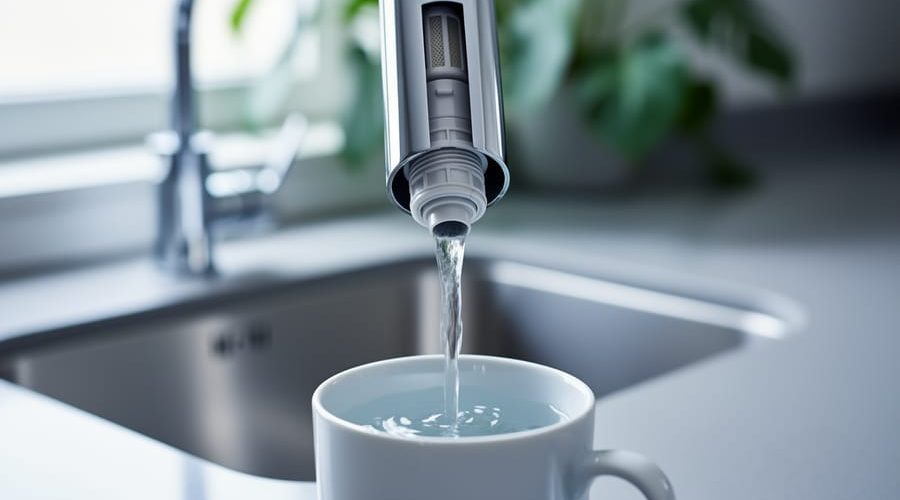
Faucet water filters deliver cleaner drinking water by threading directly onto your kitchen tap, removing chlorine, lead, sediment, and other common contaminants in real time. They’re more affordable than under-sink systems (most cost between $20 and $80), easier to install (no plumber required), and more sustainable than relying on bottled water or even a water filter pitcher you need to refill constantly. The trade-off? Filter lifespans are typically shorter, flow rates can slow to a trickle on some models, and they won’t tackle the full spectrum of contaminants that more robust systems handle.
If you’re tired of buying plastic bottles or waiting for your pitcher to drip through another gallon, a faucet filter offers an immediate upgrade without breaking your budget or requiring countertop space. But choosing the right one means understanding filter media types (activated carbon, ion exchange, or multi-stage blends), flow performance, certification standards, and how often you’ll actually swap cartridges. The market in 2026 is crowded with options that look identical but perform very differently.
This guide walks you through the key factors that separate effective models from decorative plumbing accessories, compares faucet filters to competing solutions, recommends top categories for different household needs, and flags the most common buying mistakes that leave homeowners disappointed. Whether your priority is taste, safety, or eco-conscious living, you’ll finish with a clear roadmap to the right faucet filter for your home.
What Makes In-Faucet Filters Different from Other Faucet-Mounted Options
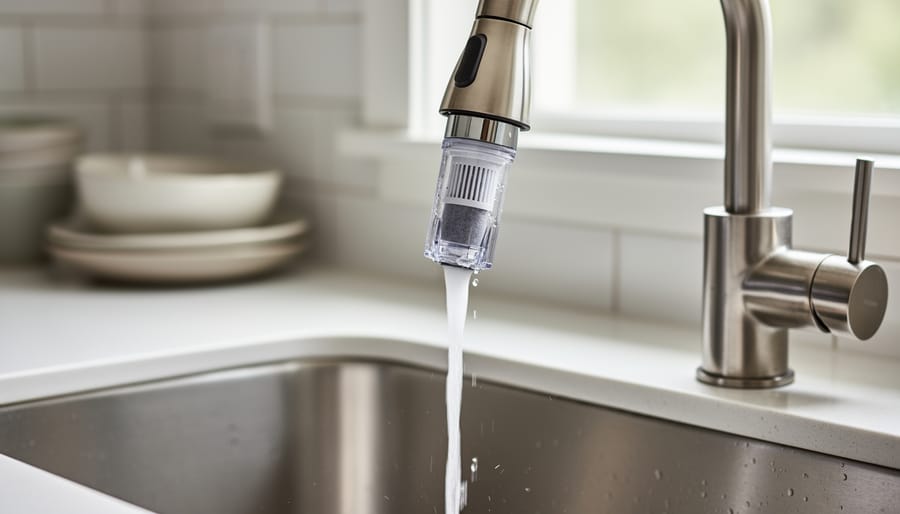
In-faucet filters integrate directly into your faucet’s spout assembly, hidden from view once installed. This sets them apart from countertop-mounted filters that sit beside your sink or traditional faucet-mounted units that attach to the outside of your spout. The internal placement means the filter cartridge sits inside the aerator housing or spout itself, processing water before it exits your tap.
The primary advantage is aesthetics. Unlike bulky external attachments that can make your faucet look cluttered or dated, in-faucet filters preserve your kitchen’s clean lines. You won’t have any visible hardware disrupting your sink area, which matters if you’ve invested in modern fixtures or limited counter space. This invisibility also means no protruding units to bump when washing large pots or filling containers.
However, this compact design comes with tradeoffs. Installation typically requires removing your existing aerator and replacing it with the filter-integrated unit, which may demand specific thread types or spout diameters. Not every faucet accommodates in-faucet filters, particularly older models or those with non-standard threading. You’ll need to verify compatibility before purchasing.
Filter capacity also differs. Because in-faucet units must fit within the confined space of a spout or aerator, their cartridges are generally smaller than those in countertop or under-sink systems. This means they filter fewer gallons before replacement and may reduce water flow slightly more than external alternatives. The compact size also makes cartridge replacement less straightforward since you’re working inside the faucet assembly rather than simply twisting off an external housing.
Types of In-Faucet Water Filtration Systems Compared
Understanding the three main types of in-faucet filters helps you match the right technology to your household needs and budget. Each design offers distinct advantages depending on your water quality concerns, usage patterns, and maintenance preferences.
Cartridge-based systems represent the most common in-faucet design. These filters house replaceable cartridges directly within the faucet spout or base, using activated carbon, ion exchange resins, or multi-stage media to trap contaminants as water flows through. They excel at removing chlorine, sediment, and some heavy metals, with capacities typically ranging from 100 to 300 gallons before replacement. Most cartridge systems work well for standard municipal water that needs taste and odor improvement but doesn’t have severe contamination issues. Installation is straightforward since the cartridge slots into the existing faucet structure, though mineral buildup from hard water damage can shorten filter life in some regions.
Aerator-integrated filters combine water filtration with the faucet’s aerator component, creating an ultra-compact solution that fits entirely within the spout tip. These micro-filters use fine mesh screens and compressed carbon blocks to filter water at the point of exit. While convenient and nearly invisible, aerator-integrated options generally offer lower filtration capacity, often 50 to 100 gallons, and may not remove as wide a range of contaminants as cartridge systems. They suit renters or anyone wanting a minimal footprint with basic chlorine and sediment reduction.
Smart in-faucet filters entered the market as monitoring technology became more affordable. These systems include digital sensors that track water volume, measure flow rates, and alert you when cartridge replacement is due via smartphone apps or LED indicators on the faucet. Some advanced models can detect filter saturation in real time rather than relying on volume estimates alone. They use similar filtration media to cartridge-based systems but add convenience through automated tracking. Best suited for tech-comfortable households that want to optimize filter replacement timing and avoid guesswork, smart filters typically cost more upfront but may reduce waste from premature cartridge changes.
| Filter Type | Filtration Method | Typical Lifespan | Best Use Case |
|---|---|---|---|
| Cartridge-Based | Activated carbon, ion exchange | 100-300 gallons | Municipal water needing taste/odor improvement |
| Aerator-Integrated | Mesh screens, compressed carbon | 50-100 gallons | Renters, minimal footprint needs |
| Smart In-Faucet | Carbon/ion exchange with sensors | 100-300 gallons | Tech users wanting automated monitoring |
The choice between these systems hinges on your priorities. Cartridge-based filters deliver the best balance of performance and value for most households. Aerator-integrated options make sense when space and visibility matter more than filtration depth. Smart filters appeal to those who value data-driven maintenance and want to eliminate replacement guesswork, though you’ll pay a premium for that convenience.
Key Factors to Consider When Buying an In-Faucet Filter
Faucet Compatibility and Installation Requirements
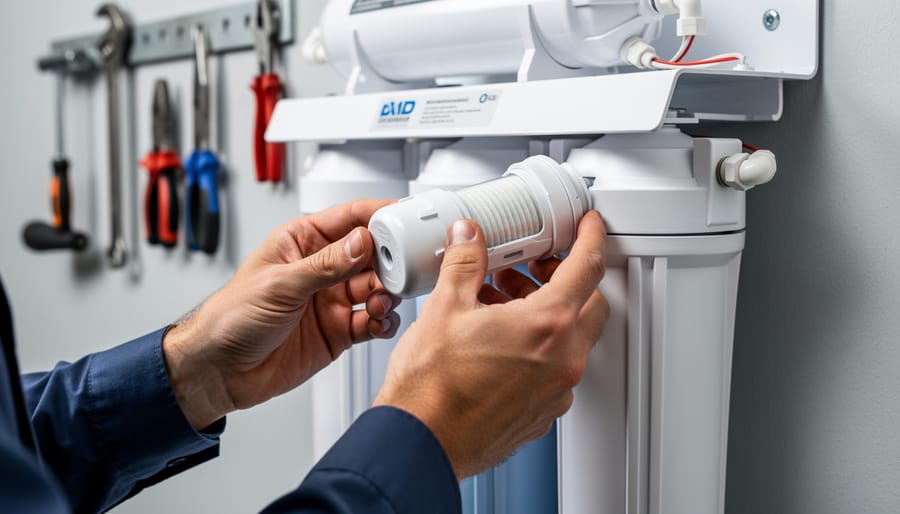
Before purchasing any in-faucet filter, measure your faucet’s internal spout diameter and check the threading type. Most residential kitchen faucets in North America use either a male or female 15/16-inch (24mm) or 55/64-inch (22mm) threaded aerator, but variations exist. You’ll need to unscrew your current aerator to verify the thread size and gender, bring it to the hardware store if you’re uncertain, or use a thread gauge for precise measurement.
Spout configuration matters significantly. Gooseneck and high-arc faucets generally accommodate in-faucet filters well, while low-profile or specialty faucets may not provide adequate clearance. Check that the filter housing won’t extend so far down that it interferes with sink use or pot-filling. Some manufacturers list minimum spout clearance requirements, typically around 2-3 inches from the aerator to the sink bottom.
DIY installation works for most homeowners if the faucet is compatible. You’ll unscrew the existing aerator, clean the threads, and hand-tighten the filter unit, usually without tools. Professional installation becomes necessary when the faucet lacks standard threading, requires modification to accommodate the filter, or if you’re uncomfortable working with plumbing fixtures. Expect to pay $75-150 for professional installation, though this is rarely needed for straightforward replacements on standard faucets.
Filtration Performance and Contaminant Removal
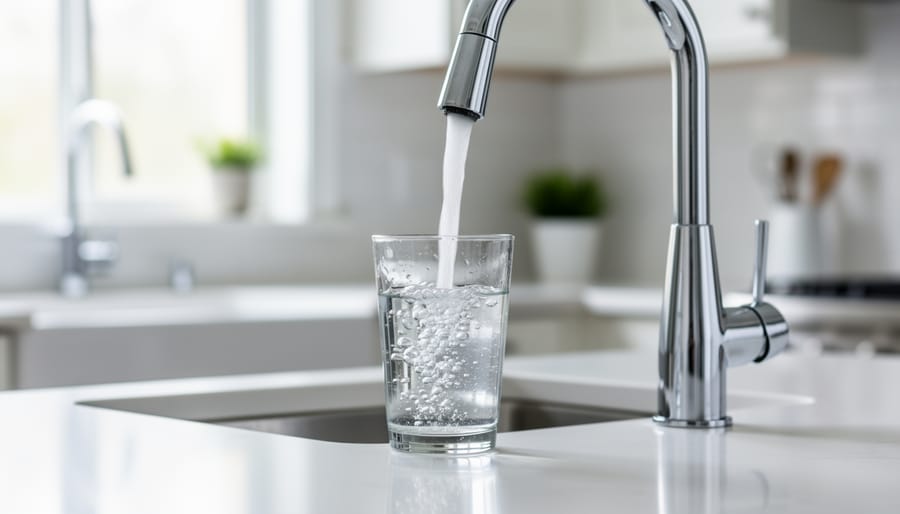
Start by checking what’s actually in your water before you buy. Request your local water quality report or use a home testing kit to identify specific contaminants. This tells you which filter capabilities matter and which you can ignore.
Look for NSF/ANSI certification marks. These independent standards verify a filter removes what the manufacturer claims. NSF/ANSI Standard 42 covers aesthetic concerns like chlorine taste and odor. Standard 53 addresses health-related contaminants including lead, mercury, and certain pesticides. Standard 401 tackles emerging contaminants such as PFAS (per- and polyfluoroalkyl substances), pharmaceuticals, and herbicides. A quality in-faucet filter will clearly list which standards it meets and which specific contaminants it reduces.
Different filter media target different problems. Activated carbon excels at removing chlorine, improving taste and smell, and capturing organic compounds. It’s effective against many volatile organic compounds (VOCs) but won’t remove minerals or fluoride. For lead reduction, you need filters specifically certified for heavy metal removal, typically using a combination of carbon and ion exchange media. Sediment filters catch rust, dirt, and particles but don’t address chemical contaminants.
PFAS removal requires advanced filtration technology. While 4-stage reverse osmosis systems offer comprehensive PFAS reduction, in-faucet filters with NSF 401 certification can capture many PFAS compounds, though at lower removal rates than under-sink systems.
Match the filter’s certified contaminant list to your water test results. A filter that removes 99% of lead matters if you have lead pipes; it’s irrelevant if your concern is chlorine taste. Check the certification documentation, not just marketing claims. The performance data sheet shows reduction percentages and flow rates at which those reductions were tested.
Filter Lifespan and Replacement Costs

Filter cartridges typically last between 100 and 300 gallons, translating to roughly two to six months for an average household using one gallon of filtered water daily for drinking and cooking. The variation depends on your water quality, sediment-heavy tap water clogs filters faster than cleaner municipal supplies.
Calculate total annual cost by multiplying replacement frequency by cartridge price. A $40 filter replaced every three months costs $160 yearly, while a $60 unit with six-month cartridges runs $120 annually. The cheaper upfront option isn’t always the better value.
Track your actual usage to avoid premature replacements. Most in-faucet filters include gallons-used indicators or time-based reminders, but heavy users will hit capacity limits before the calendar suggests change time. Installing a filter that’s undersized for your household means constantly buying replacements.
Consider subscription services that auto-ship cartridges at discounted rates, they typically save 10-15% versus individual purchases and prevent the inconvenience of running out. Some manufacturers also accept used cartridges for recycling, adding environmental value.
Budget-conscious buyers should prioritize longer-lasting cartridges over rock-bottom initial prices. A filter costing twice as much but lasting three times longer delivers better economics and less frequent maintenance hassle.
Flow Rate and Water Pressure Impact
In-faucet filters inevitably reduce water flow because water must pass through filtration media before exiting your tap. Most quality filters decrease flow rate by 20-30% compared to an unfiltered faucet. For context, an unrestricted kitchen faucet typically flows at 2.2 gallons per minute (GPM), while a filtered faucet might deliver 1.5-1.8 GPM.
This reduction usually goes unnoticed during drinking water tasks, filling a glass takes just seconds longer. However, it becomes more apparent when filling large pots for cooking or cleaning tasks requiring high volume. If your household already has low water pressure (below 40 PSI), adding an in-faucet filter may create frustrating delays during dishwashing or food prep.
Before purchasing, check your current flow rate by timing how long it takes to fill a gallon container. If it already exceeds 30 seconds, choose a filter specifically designed for low-pressure situations or consider whether the convenience tradeoff works for your kitchen habits.
Eco-Friendly Features and Sustainability
Choosing an in-faucet filter with sustainability in mind can amplify your environmental impact beyond simply reducing bottled water consumption. Look for systems with recyclable or biodegradable filter cartridges, several manufacturers now offer mail-back programs where spent cartridges are processed into new materials rather than ending landfills. The carbon footprint comparison is stark: a single filter cartridge typically replaces 300-500 plastic bottles over its lifespan.
In 2026, innovations include filters made from plant-based activated carbon derived from coconut shells instead of coal, and housing materials incorporating post-consumer recycled plastics. Some newer models feature longer-lasting filter media that reduces replacement frequency, cutting both waste and ongoing costs. Check product specifications for third-party sustainability certifications and transparent end-of-life disposal instructions. The most eco-conscious choice combines effective filtration with minimal packaging, reusable components, and a manufacturer committed to circular economy principles rather than single-use disposables.
Top In-Faucet Water Filter Recommendations for Different Needs
When choosing an in-faucet filter, matching the system to your specific situation ensures you get the performance you need without overpaying for features you won’t use. Different households face different priorities, and understanding which filter characteristics matter most for your circumstances will guide you toward the right purchase.
For budget-conscious buyers who want cleaner water without breaking the bank, prioritize filters with high-capacity cartridges that extend replacement intervals. Look for models offering basic chlorine and sediment removal certified to NSF/ANSI 42 standards. These filters typically cost less upfront and use widely available generic replacement cartridges. While they won’t remove as many contaminants as premium systems, they significantly improve taste and reduce common impurities. Avoid filters with proprietary cartridges that lock you into expensive replacements. If your primary goal is removing chlorine taste and odor plus basic sediment, a straightforward cartridge system will serve you well without the price tag of multi-stage filtration.
Families concerned about lead contamination should focus exclusively on NSF/ANSI 53 certified filters proven to reduce lead to safe levels. Verify the filter is certified specifically for lead reduction, not just general contaminant removal. These systems use activated carbon block technology rather than granular carbon, providing more thorough contact time between water and filter media. Check the certification details for the percentage of lead removal and flow rate specifications. If testing reveals significant lead levels in your water, or you live in a home built before 1986 with original plumbing, this certification is non-negotiable. Some households with severe lead concerns may need to consider a whole-house water filter instead, but certified in-faucet systems effectively protect drinking and cooking water.
- Budget buyers: High-capacity cartridges, NSF 42 certification, generic replacement availability
- Lead removal focus: NSF 53 certification, activated carbon block technology, verified lead reduction percentage
- Eco-conscious users: Recyclable cartridge materials, long-life filters (500+ gallons), minimal packaging waste
- Installation-wary homeowners: Tool-free mounting, universal thread adapters, clear visual installation guides
Eco-focused consumers should seek filters made with recyclable materials and packaging that minimizes plastic waste. Look for extended cartridge life rated for 500 gallons or more, reducing replacement frequency and waste generation. Some 2026 models feature plant-based filter media and take-back programs where manufacturers recycle used cartridges. These features cost slightly more initially but align with sustainable household practices while still delivering effective filtration.
For those uncomfortable with installation tasks, choose systems advertising tool-free mounting and universal compatibility. These filters include multiple adapter fittings and require only hand-tightening. Visual installation guides with photo steps work better than text-heavy manuals. Some models feature color-coded components that make correct assembly obvious even for first-timers.
Common Mistakes to Avoid When Choosing an In-Faucet Filter
Buyers often rush into purchasing an in-faucet filter based on price or appearance without understanding their actual water quality challenges. Testing your municipal or well water first reveals which contaminants you’re dealing with, lead, chlorine, PFAS, sediment, or bacteria, and ensures you select a filter certified to remove those specific threats. Skipping this step means you might install a filter that excels at chlorine removal when your real problem is lead contamination, leaving your family exposed despite the sense of security a new filter provides.
Another common error is overlooking certification standards entirely. NSF/ANSI certifications (such as NSF 42 for taste and odor, NSF 53 for health-related contaminants, and NSF 401 for emerging contaminants) verify that a filter performs as advertised through independent testing. Choosing an uncertified product because it’s cheaper leaves you with no guarantee of actual filtration effectiveness, essentially turning your purchase into a gamble with your health.
Ignoring replacement costs creates sticker shock down the road. A $30 filter cartridge that lasts three months costs $120 annually, while a $60 filter lasting six months costs the same, but the upfront price difference misleads buyers into choosing the cheaper option. Calculate the cost per gallon filtered and factor in replacement frequency before purchasing to understand true ownership costs.
Faucet compatibility failures waste time and money. Many buyers assume their faucet will accommodate any in-faucet filter, only to discover incompatible thread sizes, insufficient spout diameter, or proprietary aerator designs that prevent installation. Check your faucet’s specifications (often 55/64-inch or 13/16-inch threads are standard) and verify compatibility with the manufacturer before ordering, or you’ll face return shipping costs and installation delays.
Choosing based solely on price ignores the quality spectrum. The cheapest filters typically use basic activated carbon that clogs quickly and removes fewer contaminant types, while mid-range options often deliver better performance at marginal cost increases. Balance initial expense against filtration capacity, certification breadth, and durability rather than defaulting to the lowest price point.
Installation and Maintenance Best Practices
Installing an in-faucet filter is usually straightforward, but following proper techniques prevents common headaches. Most systems require no tools beyond your hands and maybe a pair of pliers with a cloth wrap to avoid scratching the finish.
Start by turning off the water supply under the sink. Unscrew your existing aerator by twisting counterclockwise, if it’s stuck, wrap it with a rubber grip pad or cloth before applying gentle plier pressure. Check the threading inside your faucet spout; in-faucet filters typically require standard male threads, so verify compatibility before proceeding. Insert the filter housing according to the manufacturer’s direction indicators (usually marked with arrows). Hand-tighten firmly, then add a quarter turn with pliers if needed. Turn the water back on slowly and check for leaks around the connection point.
If water seeps from the threads, the issue is often a missing or misaligned washer. Remove the filter, inspect the rubber gasket, and reinstall with even pressure. Reduced flow after installation may mean the filter wasn’t fully seated or debris caught in the screen during installation, flush the system for thirty seconds.
Maintenance keeps your filter working efficiently. Replace cartridges according to manufacturer specs, typically every three to six months or after filtering the rated gallon capacity. Many systems have indicator lights or stickers to track this, but if flow slows noticeably or water tastes different, change it earlier. Once monthly, remove the filter housing and rinse the aerator screen under running water to clear mineral buildup. Use a soft brush for stubborn deposits. This simple habit extends filter life and maintains steady water pressure throughout the replacement cycle.
Frequently Asked Questions About In-Faucet Water Filters
Do in-faucet filters remove fluoride?
Most standard in-faucet filters do not remove fluoride, as their carbon-based media targets chlorine, sediment, and some metals but lacks the specialized technology needed for fluoride reduction. If fluoride removal is your priority, you’ll need a system using reverse osmosis or activated alumina, which typically aren’t available in compact in-faucet designs.
Can in-faucet filters fit pull-down or pull-out faucets?
Pull-down and pull-out faucets usually lack the internal space and threading required for in-faucet filter installation, as their flexible hoses and spray mechanisms occupy the spout area. These faucets work better with external mounted filters or under-sink systems rather than filters designed to sit inside the spout itself.
How do you know when to change the filter cartridge?
Many in-faucet filters include indicator lights or timers that signal when replacement is due based on gallons filtered or elapsed time, typically every two to three months for average households. Even without an indicator, you’ll notice reduced flow rate, off-taste in water, or reaching the manufacturer’s stated capacity as clear signs that a fresh cartridge is needed.
Are in-faucet filters effective for well water?
In-faucet filters can address some well water issues like sediment and chlorine taste if you chlorinate your well, but they’re generally insufficient for the complex contamination profile often found in untreated well water, including bacteria, nitrates, and heavy metals. Well water typically requires more robust point-of-entry filtration or multi-stage treatment rather than the limited capacity of a faucet-installed filter.
Do in-faucet filters waste water like reverse osmosis systems?
No, in-faucet filters operate without wastewater, unlike reverse osmosis systems or 5-stage pitchers that may have rinse cycles. All water that enters the filter passes through and comes out your tap, making them highly efficient for basic contaminant reduction without the drain discharge associated with membrane-based filtration technologies.
These questions reflect the practical concerns homeowners raise when researching in-faucet filters. Understanding these limitations and capabilities helps you set realistic expectations and choose the right filtration approach for your specific water quality challenges.
Choosing an in-faucet water filter comes down to matching the right technology to your household’s specific water quality needs. By testing your water first, you’ll know exactly which contaminants require attention, whether that’s chlorine, lead, sediment, or emerging concerns like PFAS. From there, prioritize certified filtration performance over marketing claims, verify compatibility with your existing faucet, and calculate the true cost of ownership including replacement cartridges.
The beauty of in-faucet systems lies in their seamless integration into your kitchen without sacrificing counter space or aesthetics. They represent a practical middle ground between pitcher filters and whole-house systems, delivering cleaner drinking water exactly where you need it most. When you factor in reduced reliance on bottled water, you’re not just improving your family’s health, you’re making a choice that lightens your environmental footprint.
Start with your water test results, assess your installation comfort level, and choose a filter that meets NSF/ANSI standards for the contaminants you face. That simple framework turns what seems like an overwhelming decision into a straightforward path toward better tap water. Your kitchen faucet can deliver clean, safe water for years to come with the right filter and a consistent replacement schedule.