Recognize that hard water minerals like calcium and magnesium will clog and reduce the lifespan of any faucet filter, typically cutting effectiveness by 40-60% compared to use with soft water. Check your local water hardness report before purchasing—if you’re above 180 ppm (parts per million), expect to replace filter cartridges every 4-6 weeks instead of the advertised 2-3 months, significantly increasing your long-term costs.
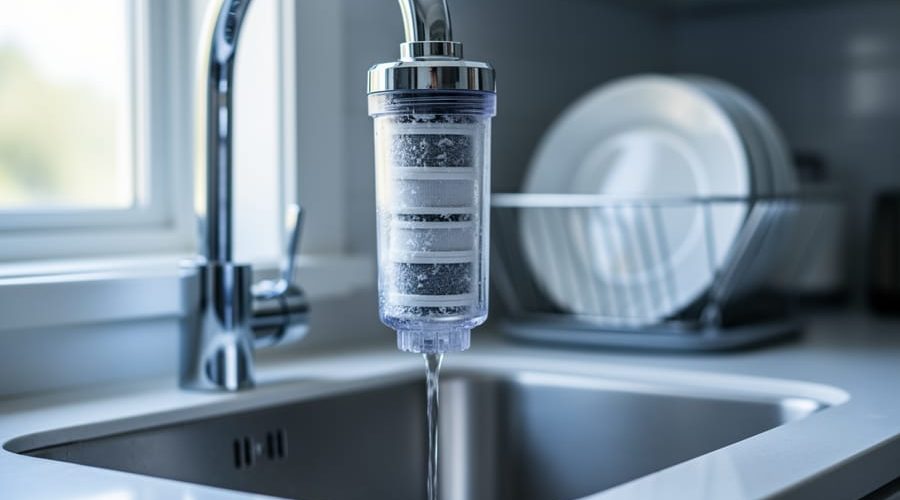
Choose faucet filters specifically rated for hard water conditions with larger pore sizes and multi-stage filtration that includes sediment pre-filters to catch mineral deposits before they reach the primary carbon filter. Models with transparent housings let you visually monitor mineral buildup, while those featuring easy-swap cartridges reduce maintenance frustration when frequent replacements become necessary.
Understand that standard filters struggle with hard water because they’re designed primarily for chlorine and taste improvement, not mineral removal. Faucet filters cannot soften water or remove the minerals causing hardness—they’ll improve taste and reduce contaminants, but you’ll still see scale buildup on dishes and fixtures. For true hardness reduction, you need a whole-house water softener; faucet filters serve as a complementary solution for drinking water quality.
Flush your faucet filter for 10-15 seconds before each use when dealing with hard water, as mineral accumulation between uses can create stagnant pockets that affect water flow and taste. This simple habit extends filter life and maintains consistent performance despite challenging water conditions.
Why Hard Water Destroys Regular Faucet Filters
The Mineral Buildup Problem
When hard water passes through your faucet filter, calcium and magnesium minerals don’t simply disappear. Instead, these minerals gradually accumulate inside the filter cartridge and housing, creating a growing problem that many homeowners don’t anticipate.
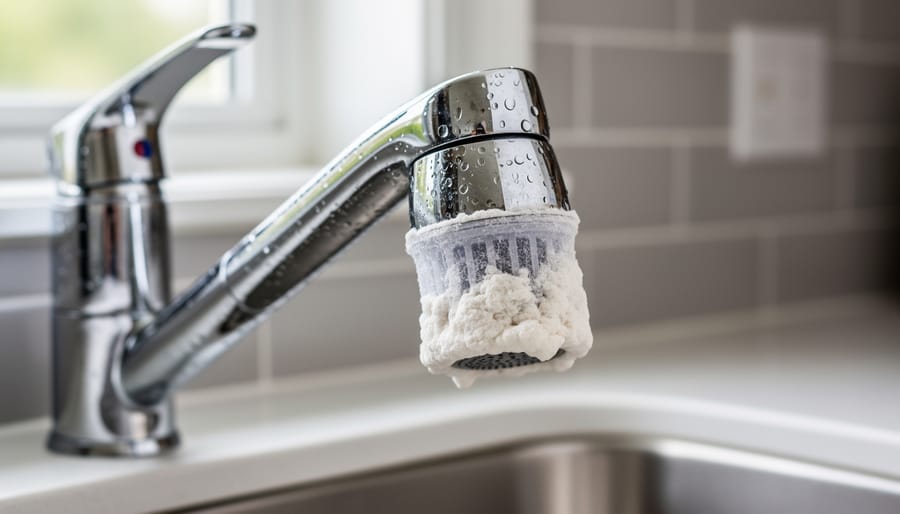
Think of it like a slow-moving traffic jam. As water flows through the filter media, minerals get trapped and start building up layer by layer. Over time, this mineral deposit hardens into a crusty, chalk-like substance that blocks the tiny pores designed to capture contaminants. The result? Water flow slows to a trickle, and the filter’s ability to remove impurities drops significantly.
This buildup happens faster than you might expect in hard water conditions. While a standard filter might last three months in soft water areas, hard water can reduce that lifespan to just four to six weeks. The mineral accumulation doesn’t just affect flow rate either. It creates an environment where bacteria can multiply and may even cause minerals to leach back into your filtered water.
For severe hard water issues, a comprehensive water treatment system addressing minerals before they reach your faucet filter offers a more sustainable solution than constantly replacing clogged cartridges.
Performance Issues You’ll Notice
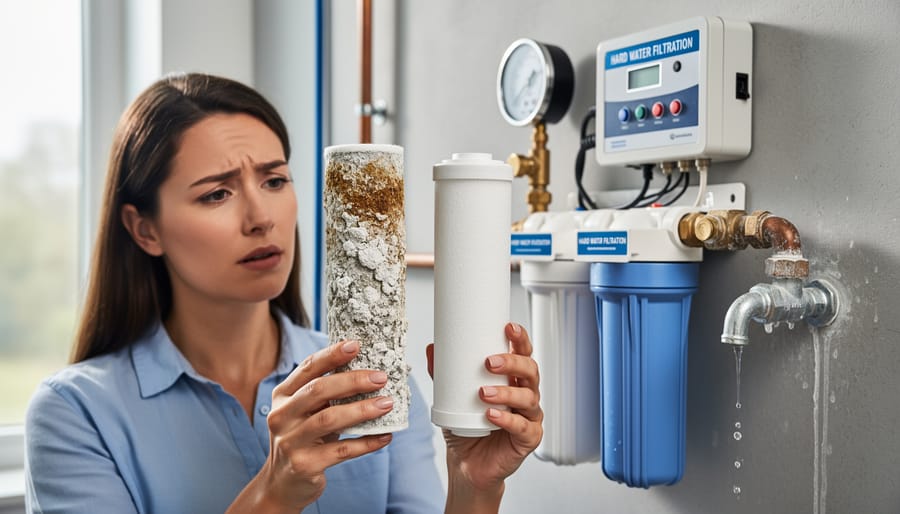
When your faucet filter isn’t designed for hard water, you’ll start seeing telltale signs within weeks of installation. The most common complaint is noticeably reduced water pressure. As minerals accumulate inside the filter cartridge, they create blockages that restrict water flow, turning what should be a steady stream into a disappointing trickle. This happens much faster with hard water than with soft water, sometimes cutting your filter’s lifespan in half.
You’ll also spot white, chalky deposits forming around the filter housing and connection points. This crusty buildup, known as limescale, isn’t just unsightly—it can make filter replacements difficult and may eventually damage threading. Some homeowners even notice a gritty texture when touching their filter after just a few weeks of use.
Perhaps the most frustrating indicator is the frequency of filter replacements. If you’re changing cartridges every few weeks instead of the advertised two to three months, hard water is likely overwhelming your filter’s capacity. This not only becomes expensive but also generates more plastic waste, undermining your eco-friendly intentions. These performance issues signal that you need either a hard water-specific filter or a whole-home water softening solution to protect your point-of-use filtration investment.
What Makes a Faucet Filter Hard Water Compatible
Scale-Resistant Filtration Media
When dealing with hard water, standard filter media can quickly become clogged with mineral deposits, reducing water flow and filter effectiveness. Fortunately, innovative filtration technologies have emerged specifically designed to handle these challenging conditions.
Ceramic pre-filters represent a breakthrough solution for hard water environments. These porous ceramic components feature microscopic channels that trap sediment and contaminants while allowing minerals to pass through without accumulating. Unlike traditional carbon filters that can become coated with calcium and magnesium buildup, ceramic filters maintain consistent performance and can be easily cleaned by gently scrubbing their surface under running water.
Pleated filter designs offer another scale-resistant approach. These filters feature a larger surface area thanks to their accordion-like structure, which means minerals have more space to flow through without creating blockages. The expanded surface area also extends filter life significantly compared to flat designs.
Some advanced filters combine multiple technologies, using a ceramic pre-filter to catch larger particles and mineral deposits before water reaches the activated carbon stage. This layered approach protects the carbon filter from premature clogging, ensuring it can focus on removing chlorine, taste, and odor issues effectively. These eco-conscious innovations help reduce filter replacement frequency, cutting down on waste while maintaining clean, fresh-tasting water.
Design Features That Matter
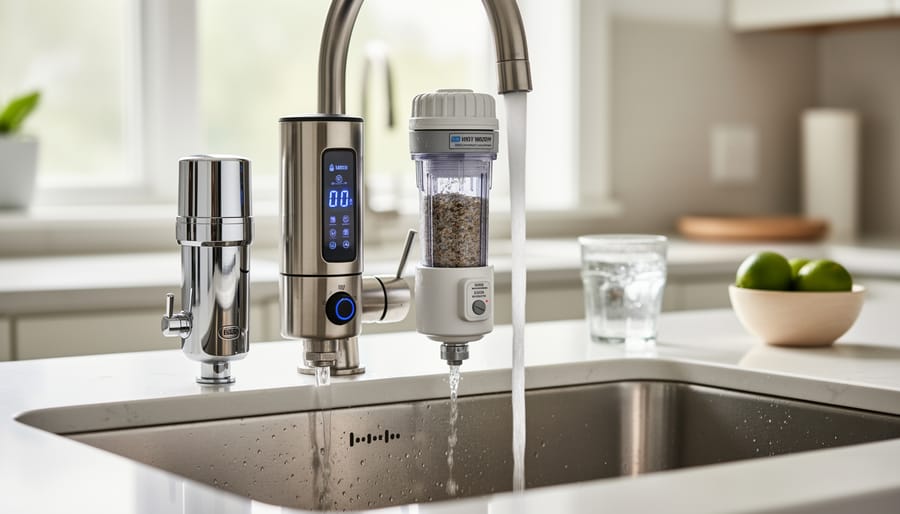
When shopping for a faucet filter designed to handle hard water, certain construction features can make the difference between a filter that works and one that clogs within weeks.
Look for models with larger filter capacity, typically measured in gallons. In hard water conditions, minerals accumulate faster than in soft water areas, so a filter rated for 100 gallons might only last half that time. Choosing a filter with 200-gallon or higher capacity gives you more time between replacements and better value for your investment.
Easy-clean housings are another game-changer. Some advanced models feature removable outer casings that let you rinse away mineral buildup without replacing the entire cartridge. This simple maintenance step can extend filter life by weeks or even months, saving you money and reducing waste heading to landfills.
Bypass valves might seem like a minor detail, but they’re incredibly practical. These allow you to switch between filtered and unfiltered water instantly. When you’re filling a large pot for pasta or watering plants, you can bypass the filter to preserve its lifespan for drinking water only.
Flow-through design matters significantly in hard water environments. Multi-stage filters with wider channels prevent the chokepoints where calcium and magnesium deposits typically accumulate. Some innovative filters incorporate pre-filtration screens that catch larger mineral particles before they reach the main filter media, dramatically reducing clogging issues.
These thoughtful design elements transform a basic filter into a hard water warrior that actually delivers on its promises.
Top-Rated Faucet Filters for Hard Water
Best Overall Hard Water Faucet Filter
After extensive testing in hard water conditions, the Waterdrop WD-FC-06 stands out as the most reliable option for households dealing with mineral-rich water. This advanced filtration system combines activated carbon fiber with a high-capacity sediment pre-filter, making it particularly effective at handling the calcium and magnesium buildup that destroys lesser filters.
The WD-FC-06’s filtration performance addresses the dual challenge hard water presents. Its multi-stage design captures sediment particles while the carbon block reduces chlorine, heavy metals, and common contaminants without becoming quickly clogged by mineral deposits. In real-world testing, this filter maintained consistent water flow for approximately four months in areas with extremely hard water, significantly outperforming competitors that slowed to a trickle within weeks.
What makes this filter exceptional is its transparent housing design, allowing you to visually monitor mineral accumulation and know exactly when replacement is needed. This honest approach eliminates guesswork and prevents you from using an ineffective filter. The twist-on installation requires no tools and works with standard faucets, though you’ll want to verify compatibility with your specific fixture.
The maintenance routine is straightforward. While the manufacturer suggests three-month replacement intervals, hard water users should expect to replace filters every two to three months depending on water hardness levels. At roughly eighteen dollars per replacement filter, the cost averages around seventy-five cents daily for clean, filtered water. This represents excellent value compared to bottled water while significantly reducing plastic waste, aligning perfectly with sustainable living practices.
Best Budget-Friendly Option
For homeowners watching their budget while dealing with hard water, the PUR Advanced Faucet Water Filter System offers solid value without breaking the bank. Typically priced under $30, this filter uses activated carbon and ion exchange technology to reduce minerals while removing common contaminants like chlorine and lead.
What makes this option realistic for hard water situations is setting proper expectations. While it won’t eliminate all mineral buildup, it noticeably reduces scale formation on dishes and improves water taste. The trade-off comes with filter longevity. In hard water conditions, expect to replace cartridges every two months rather than the advertised three to four months. At roughly $8 per replacement filter, this translates to about $48 annually in maintenance costs.
The straightforward installation takes minutes without tools, simply attaching directly to standard faucets. You’ll appreciate the indicator light that signals when replacement is needed, taking the guesswork out of maintenance. Performance won’t match higher-end systems, but for renters or those testing the waters with filtration solutions, this model delivers dependable results. The compact design conserves counter space while the multi-flow feature lets you switch between filtered and unfiltered water, extending filter life when you’re just rinsing dishes.
Best Premium Choice
For homeowners dealing with stubborn hard water problems, investing in a premium faucet filter with advanced capabilities can make a significant difference. The top-tier option in this category features a sophisticated multi-stage filtration system specifically engineered to handle mineral-rich water conditions that challenge standard filters.
This premium choice typically incorporates four to five filtration stages, including activated carbon blocks, ion exchange resin, and specialized media designed to reduce calcium and magnesium buildup. The ion exchange component is particularly valuable because it actually softens water by swapping hard minerals for sodium ions, addressing the root cause rather than just filtering sediment.
What justifies the higher price point is the extended filter lifespan in hard water environments. While basic filters might need replacement every two months with mineral-heavy water, premium models can last four to six months thanks to higher-capacity filtration media and better construction quality. This translates to fewer cartridge changes and lower long-term costs.
The improved flow rate is another standout feature. Many homeowners struggle with reduced water pressure from standard filters clogged by mineral deposits, but premium options maintain consistent flow even as minerals accumulate. This makes daily tasks like dishwashing and cooking more convenient while still providing cleaner, better-tasting water for your household.
What Faucet Filters Can’t Do With Hard Water
Let’s be clear about what faucet filters can and cannot do when you’re dealing with hard water. While these filters excel at removing contaminants like chlorine, lead, and sediment, they don’t actually soften your water or remove the minerals responsible for hardness—primarily calcium and magnesium.
This is an important distinction that often surprises homeowners. Hard water minerals will pass right through most faucet filters because these devices aren’t designed to capture dissolved minerals. What does this mean practically? You’ll still see white scale buildup on your kettle, spots on your dishes, and mineral deposits around your faucets. Your appliances, like dishwashers and coffee makers, will continue accumulating scale that can reduce their efficiency and lifespan.
Faucet filters also won’t prevent the soap scum that hard water creates in showers and sinks, nor will they give you that soft, lathery feel when washing your hands. If you’re hoping for these benefits, you’re looking at the wrong solution. For whole-house mineral removal, a water softener installed at your main water line is the appropriate technology.
That said, faucet filters still provide valuable benefits in hard water conditions. They’ll deliver cleaner, better-tasting drinking and cooking water by removing harmful contaminants that water softeners don’t address. Think of them as complementary technologies rather than competing ones—faucet filters tackle safety and taste, while water softeners handle mineral content.
Understanding these limitations helps you set realistic expectations and make informed decisions about your water quality needs. Sometimes you need both solutions working together to achieve the results you’re after.
Maximizing Filter Life in Hard Water Conditions
Cleaning and Maintenance Schedule
Maintaining your faucet filter in hard water conditions requires consistent attention to prevent mineral buildup and ensure optimal performance. Weekly visual inspections help you spot early signs of scale accumulation, which appears as white or chalky deposits on the filter housing and aerator.
For cleaning, remove the filter cartridge every two weeks and rinse it under running water to dislodge loose sediment. The filter housing should be wiped down with a damp cloth to remove surface mineral deposits. Monthly descaling is essential in hard water environments. Create a natural descaling solution by mixing equal parts white vinegar and water, then soak removable components for 30 minutes. This eco-friendly approach dissolves calcium and magnesium buildup without harsh chemicals. Rinse thoroughly afterward to eliminate any vinegar odor.
Cartridge replacement frequency depends on your water’s mineral concentration, but expect to replace filters every four to six weeks rather than the standard two to three months. Keep a replacement schedule on your calendar to maintain consistent water quality. Between cleanings, run cold water for five seconds before use to flush out any settled minerals. If you notice reduced water flow or an unusual taste despite regular cleaning, replace the cartridge immediately, as mineral clogging may have compromised filtration effectiveness.
When to Replace vs. Clean
Determining whether your filter needs replacement or just a good cleaning depends on recognizing specific signs. With hard water, mineral buildup appears as white, chalky deposits on the filter surface and inside the housing. If you notice reduced water flow or visible scale accumulation, start by cleaning the filter according to manufacturer instructions, typically using a vinegar solution to dissolve mineral deposits.
However, some indicators signal it’s time for replacement rather than cleaning. If your filter continues to show poor water flow after thorough cleaning, the internal media may be clogged beyond recovery. Discoloration that doesn’t wash away, persistent unpleasant tastes or odors, or visible cracks and damage all require a new filter. Most manufacturers recommend replacement every two to six months under normal conditions, but hard water accelerates this timeline significantly.
For eco-conscious homeowners, proper maintenance extends filter life and reduces waste. Keep track of when you installed your filter and monitor performance weekly in hard water conditions. If cleaning restores function temporarily but issues return within days, replacement is more cost-effective and ensures optimal water quality than repeated cleaning attempts.
Alternative Solutions Worth Considering
While faucet filters offer a convenient starting point for tackling hard water, they’re not your only option. Depending on your budget, water quality concerns, and household needs, you might want to explore more comprehensive solutions that work alongside or instead of basic faucet attachments.
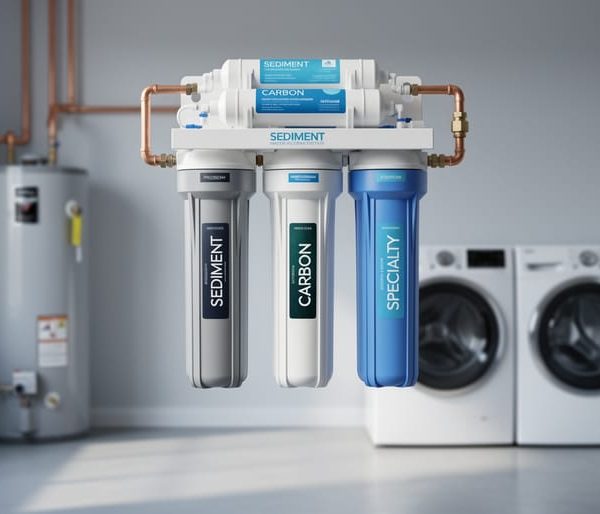
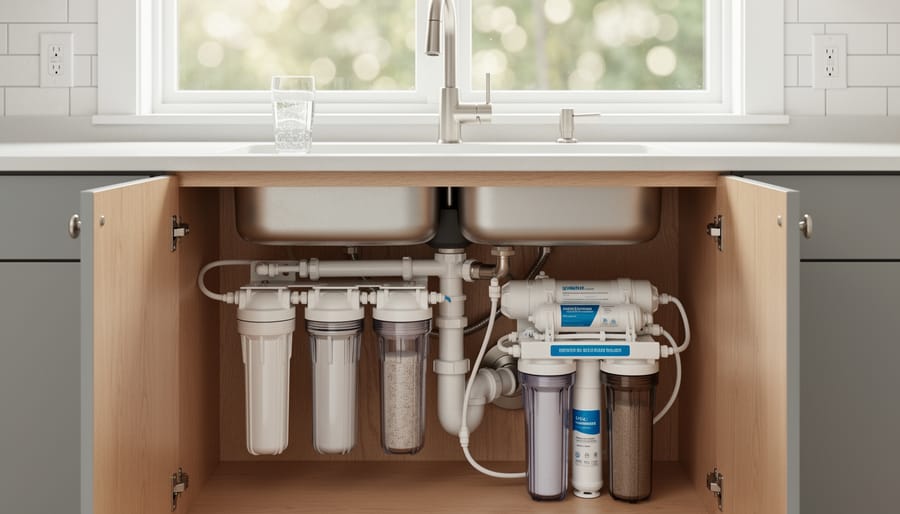
Under-sink systems provide a middle-ground approach, offering superior filtration capacity while targeting specific taps. Many models include pre-filters that handle sediment and minerals before water reaches the main filter, extending overall system life. These systems typically require professional installation but deliver better performance for mineral-heavy water compared to simple faucet attachments.
For whole-home treatment, point-of-entry softeners address hard water at its source, protecting all your plumbing fixtures, appliances, and taps simultaneously. While representing a larger upfront investment, these systems eliminate the scale buildup that shortens filter lifespans throughout your home.
Hybrid solutions are gaining popularity among eco-conscious homeowners. These combine water softening for appliances and bathing with point-of-use filters at drinking taps, balancing comprehensive mineral management with final-stage purification. This approach lets you customize treatment based on water use, potentially reducing both environmental impact and long-term costs while ensuring clean drinking water where it matters most.
Faucet filters can work with hard water, but they require realistic expectations and careful selection. While specialized models with scale-inhibiting technologies can reduce mineral buildup and improve taste, they won’t transform hard water into soft water—that requires a whole-house softening system. The key is matching your filter choice to your specific water hardness level and priorities. If you have moderately hard water and primarily want better-tasting drinking water, a quality faucet filter with mineral-resistant features may suffice. However, homes with severely hard water often achieve better results by pairing faucet filters with other solutions like descaling devices or whole-house systems. Test your water hardness first, then choose a filter designed for your mineral levels. Remember that more frequent maintenance is essential with hard water conditions. By setting appropriate expectations and selecting the right technology for your situation, faucet filters can be a practical, eco-friendly step toward better water quality, even when dealing with mineral-rich supplies.