Your home’s indoor air quality depends on more than just the air you breathe. It relies on the water running through your pipes, the filtration systems removing contaminants, and even the ventilation networks like your dryer ducts working in harmony. When water filters become clogged with sediment, minerals, and organic matter, they create a breeding ground for bacteria and mold that eventually circulates through your entire home. This contamination doesn’t stay confined to your water supply. It affects humidity levels, contributes to musty odors, and compromises the efficiency of every connected system in your house.
Most homeowners focus solely on changing HVAC filters or scheduling annual furnace inspections, completely overlooking the critical role water filtration plays in maintaining healthy indoor environments. A neglected whole-house water filter can reduce water pressure by up to 40%, forcing appliances to work harder and generating excess heat and moisture. That excess moisture becomes the perfect catalyst for airborne mold spores, dust mites, and volatile organic compounds that degrade air quality throughout your living spaces.
The connection runs deeper than many realize. Sediment buildup in water heaters releases particles into the air when hot water creates steam during showers and dishwashing. Reverse osmosis membranes fouled with biofilm can harbor legionella bacteria. Point-of-use filters past their replacement date leak unfiltered water that corrodes pipes, releasing metallic particles into both your water and air supply.
This guide examines the often-ignored relationship between water filtration maintenance and indoor air quality, providing specific maintenance schedules, diagnostic warning signs, and insights into 2026 filtration innovations that address both water and air concerns simultaneously. Just as you wouldn’t ignore dryer vent repair when lint buildup threatens your home’s safety, water filter maintenance deserves the same attention for protecting the air your family breathes every day.
The Hidden Link Between Water Systems and Indoor Air
How Stagnant Water Becomes Airborne
When water sits unmaintained in filtration systems, it creates an ideal breeding ground for microorganisms that don’t stay confined to the liquid. Within days, stagnant water develops biofilm, a slimy layer of bacteria, fungi, and algae that coats filter housings, cartridges, and reservoir tanks. These colonies multiply rapidly in the dark, damp environment, producing spores and releasing metabolic byproducts.
The transition from water to air happens through two primary mechanisms. First, evaporation carries microscopic water droplets containing dissolved contaminants and microorganisms into the surrounding air. This process accelerates in warmer homes or when filtration systems are located near heat sources. Second, and more concerning, is when water can aerosolize indoors through pressure changes, splashing during filter changes, or even the normal operation of pumps and valves. These aerosols create a fine mist invisible to the naked eye but packed with whatever contaminants have been accumulating in your neglected system.
The result is a continuous release of airborne pathogens, mold spores, and bacterial fragments that circulate through your home via natural air currents and HVAC systems. People with respiratory sensitivities often notice symptoms first, unexplained coughing, throat irritation, or allergy-like reactions that persist despite clean HVAC filters. The longer a water system remains unmaintained, the more established these microbial communities become and the greater the volume of contaminants they shed into your breathing space.
VOCs and Chemical Off-Gassing from Old Filters
Old water filters don’t just stop working, they actively pollute your air. As filter media breaks down past its recommended lifespan, the carbon particles, resin beads, and synthetic binding materials begin releasing volatile organic compounds directly into your home environment.
Carbon filters present a particular concern. When saturated beyond capacity, activated carbon reverses its function. Instead of trapping contaminants, it releases previously captured chemicals back into passing water and air. Chlorine, pesticides, and industrial solvents accumulated over months suddenly off-gas into your kitchen or basement. These VOCs vaporize at room temperature, meaning you’re breathing them without realizing the source.
Synthetic filter housings compound the problem. Polypropylene and other plastics degrade when exposed to warm, chlorinated water over time. This degradation creates formaldehyde and benzene emissions, the same compounds that trigger headaches, respiratory irritation, and long-term health concerns. UV exposure accelerates this process in any filter receiving natural light.
The concentration intensifies in enclosed spaces. Basement water treatment systems without adequate ventilation can create VOC pockets that migrate upward through your home’s air circulation. Replace carbon filters every six months and synthetic components annually, regardless of flow rate indicators.
Critical Maintenance Tasks for Clean Air and Water
Whole House Filter Maintenance
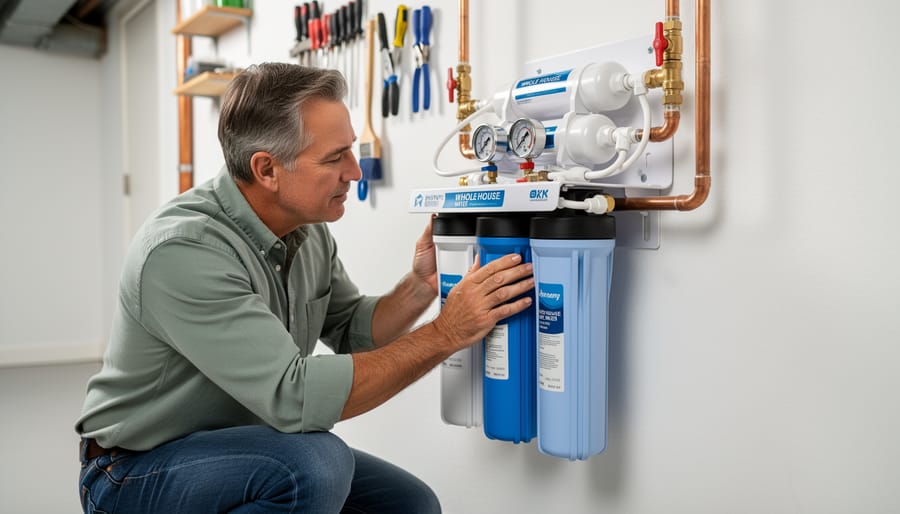
Whole house filtration systems demand systematic care to protect both water quality and the air circulating through your home. These comprehensive units process every drop entering your residence, making their maintenance crucial for preventing contamination from spreading into your indoor environment.
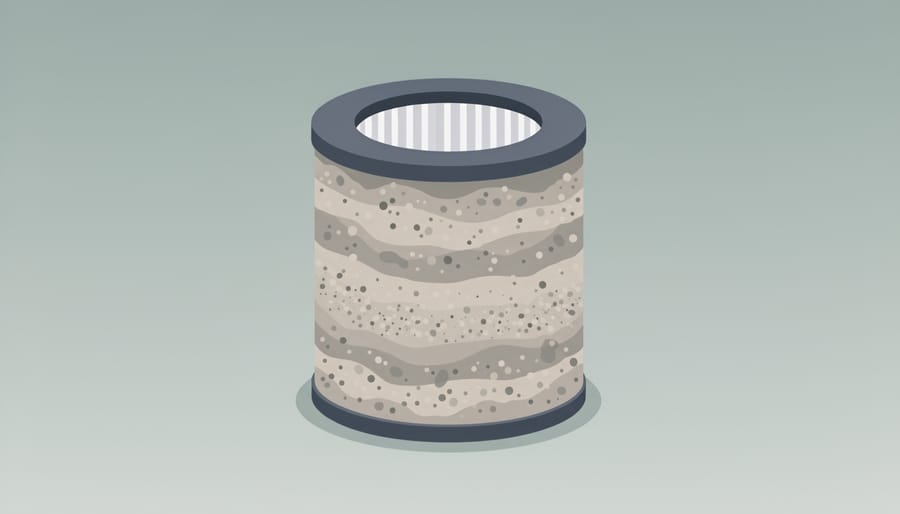
**Sediment filters** require inspection every three months and replacement every six to twelve months, depending on your water’s turbidity. When these pre-filters clog with dirt and debris, pressure builds up, creating moisture pockets where mold spores thrive. Check the filter housing for condensation or dark spots, telltale signs that contamination has begun. Always sanitize the housing with a chlorine solution when changing cartridges to eliminate any bacterial colonies.
**Carbon filters** typically last six to twelve months but degrade faster in homes with high chlorine levels or organic contaminants. As activated carbon becomes saturated, it stops adsorbing chemicals and can actually release previously captured contaminants back into your water and, through evaporation, into your air. Mark your calendar for bi-annual replacements and monitor for musty odors near the system, which indicate bacterial growth on exhausted carbon media.
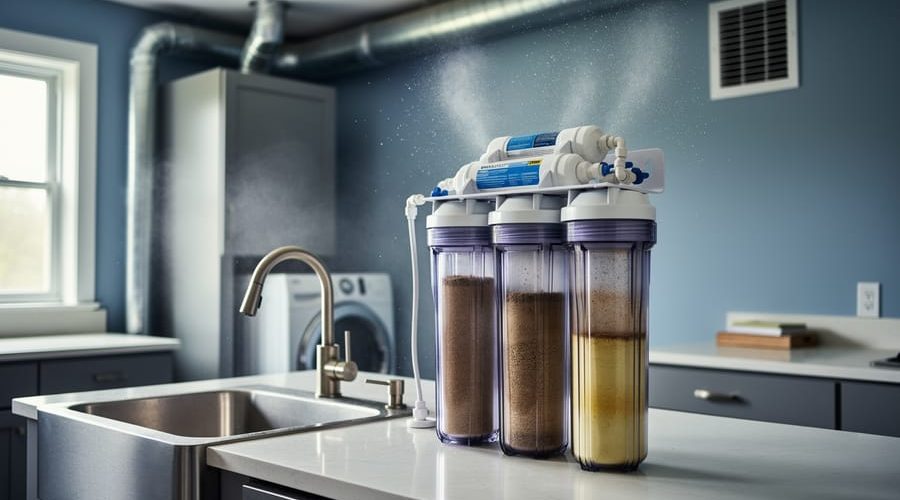
**Reverse osmosis units** need membrane replacement every two to three years, but their pre-filters and post-filters require more frequent attention, every six months minimum. Failed RO membranes allow bacteria and dissolved solids to pass through, while stagnant water in the storage tank creates ideal conditions for biofilm formation that can volatilize into surrounding air.
Learning how to clean a whole house filter properly prevents these contamination pathways. Always depressurize systems before opening housings, wear gloves when handling used filters, and never reuse disposable cartridges regardless of their appearance.
Water Softener System Care
Water softeners require monthly brine tank inspections to prevent the stagnant water conditions that breed bacteria and create musty odors spreading through your home. Check salt levels and break up any crusted bridges blocking proper dissolution, these blockages force the system to overwork, generating excess humidity that compromises air quality in utility rooms and adjacent spaces.
Every three to four months, you should clean your water softener brine tank completely. Empty the tank, scrub away sediment and biofilm with a diluted bleach solution (one cup per three gallons of water), then rinse thoroughly. This prevents the bacterial colonies that release volatile compounds into your indoor environment.
Watch for salt mushing at the tank bottom, a sludgy layer that clogs the system and creates perfect breeding grounds for microorganisms. If present, dissolve it during cleaning or hire a professional for removal. Keep the area around your softener dry and well-ventilated; persistent dampness signals leaks or improper drainage that directly degrades nearby air quality. Replace resin beds every ten years, as exhausted media loses effectiveness and harbors contaminants that affect both water purity and respiratory health.
Under-Sink and Point-of-Use Systems
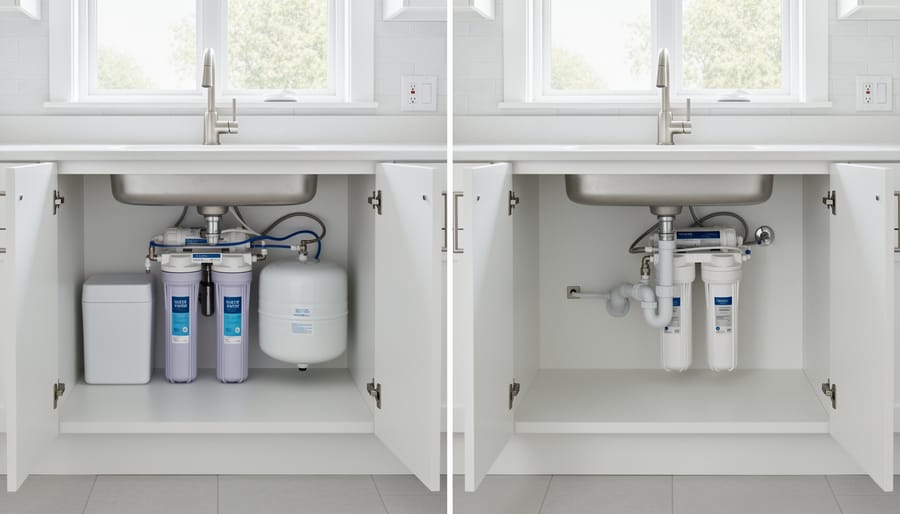
Under-sink filtration systems create surprisingly localized air quality risks because they’re tucked away where moisture accumulates and ventilation is poor. When these compact units aren’t maintained properly, they become breeding grounds for mold that releases spores directly into the confined cabinet space, then into your kitchen or bathroom every time you open the door.
Replace cartridges every six months for carbon filters and annually for reverse osmosis membranes, even if water flow seems normal. Flow rate isn’t a reliable indicator; filters can harbor bacteria and develop biofilm weeks before you notice reduced pressure. Check under-sink filters monthly for visible mold on housings and connections, wiping down exterior surfaces with diluted vinegar.
The drip tray beneath your system deserves attention too. Empty and clean it every three months to prevent standing water that creates humid microclimates perfect for mold growth. If you spot condensation on cold water lines, add foam insulation, that moisture contributes to cabinet dampness and eventual air quality problems.
Don’t ignore slow leaks around O-rings and fittings. Even minor drips saturate cabinet interiors over time, creating conditions where airborne mold spores thrive and spread throughout your home.
Warning Signs Your Water System Is Compromising Your Air
Your body often signals problems before testing equipment does. If family members develop unexplained headaches, respiratory irritation, or persistent fatigue that improves when away from home, your water system might be releasing contaminants into the air. These symptoms frequently coincide with neglected filter maintenance, particularly when whole-house systems run months past their replacement dates.
Musty or chemical odors near water fixtures indicate serious filtration issues. A moldy smell around your whole-house filter housing suggests bacterial colonization inside the cartridges, where stagnant water creates ideal conditions for microorganism growth. These pathogens don’t stay contained, they release spores and metabolic byproducts that circulate through your home. Similarly, plastic or chemical odors signal degraded filter media releasing VOCs. If you notice these smells intensifying when running water, the filter is actively contaminating your air supply.
Visible moisture or condensation around filter housings reveals system failures that directly compromise air quality. Water pooled beneath your filtration unit or persistent dampness on the housing exterior often stems from seal degradation or internal pressure issues. This moisture creates localized humidity spikes that promote mold growth on nearby surfaces, walls, baseboards, stored items, expanding the contamination beyond the immediate filter area. Understanding pressure drop causes helps diagnose whether internal clogging is forcing water through compromised seals.
Unexplained increases in household humidity warrant investigation of your water systems. When whole-house filters or water softeners malfunction, they can introduce excess moisture into your indoor environment. Check your hygrometer readings in rooms with water filtration equipment, levels consistently above sixty percent suggest system problems. This elevated humidity doesn’t just feel uncomfortable; it accelerates mold proliferation throughout your home and increases dust mite populations.
Reduced water flow throughout your house signals filter saturation that affects air quality. When filters clog completely, they either force water through microscopic cracks in the housing or cause system bypasses that eliminate filtration entirely. Both scenarios release contaminants that would otherwise be captured. Notice whether your water pressure has gradually declined over months, this progressive reduction indicates filters working far beyond their capacity, likely harboring substantial bacterial colonies and degraded media that off-gas into surrounding air.
Black or green staining on fixtures near filtration equipment confirms microbial contamination that’s entering your breathing space. These biofilms don’t remain confined to water contact surfaces, they release airborne particles with every water use.
The Whole-Home Approach: Integrating Water and Air Quality Systems
Your home’s environmental health isn’t managed by isolated systems working independently, it’s an interconnected network where water filtration, HVAC, dryer vents, and dehumidifiers all influence each other. When you treat these systems as separate maintenance tasks rather than components of one ecosystem, you miss critical connections that can undermine your efforts.
Consider what happens when your water softener experiences bacterial growth in its brine tank. The excess moisture it releases doesn’t just stay localized. That humidity migrates through your home, forcing your dehumidifier to work harder while simultaneously creating conditions where your HVAC system circulates damp air. Meanwhile, if your dryer vent is partially clogged, it’s adding even more moisture to the equation. Each neglected component creates a cascade that affects the others.
The most effective maintenance strategy addresses these relationships directly. Schedule your water filter replacements, HVAC filter changes, and dryer vent cleanings on a coordinated calendar rather than handling them as they come to mind. This approach reveals patterns, you might notice that moisture buildup spikes in winter months when your whole house humidifier runs alongside your water systems, signaling a need for adjusted maintenance frequency.
Smart home integration in 2026 makes this coordination simpler. Modern water filtration systems can communicate with HVAC controllers and air quality monitors, creating automatic adjustments when one system detects changes. If your water system’s pressure sensor indicates a filter is clogging and releasing contaminants, your air purification can automatically increase its cycle rate until you complete the replacement.
The key is viewing maintenance through a systems lens. Your quarterly water filter replacement isn’t just about water quality, it’s preventing the humidity fluctuations that stress your HVAC and the bacterial growth that compromises your air. When you clean your dryer vent, you’re reducing the moisture load that your dehumidifier and water systems must manage together. This integrated thinking transforms routine maintenance from a series of chores into a comprehensive health strategy for your entire home.
2026 Innovations Making Maintenance Easier and More Effective
Modern water filtration systems have evolved dramatically, making maintenance less burdensome and more precise than ever before. AI-powered filter monitoring now tracks usage patterns, water quality metrics, and filter degradation in real-time, sending smartphone alerts when replacement is needed rather than relying on guesswork or generic timelines. These systems analyze flow rate changes, pressure differentials, and even subtle shifts in water chemistry to predict filter exhaustion before it compromises either water purity or indoor air quality.
Smart water monitoring platforms integrate with whole-home environmental sensors, creating a unified dashboard that shows how water system performance affects humidity levels, airborne particle counts, and VOC concentrations throughout your living spaces. Some 2026 models feature auto-ordering capabilities that ship replacement filters directly to your door based on actual usage data, eliminating the risk of running degraded filters longer than safe.
Self-cleaning pre-filters use reverse-flush technology to extend service intervals by automatically purging accumulated sediment into drain lines, reducing maintenance frequency from monthly to quarterly in many households. Antimicrobial filter housings now incorporate copper-infused materials and UV-C sterilization chambers that continuously suppress bacterial and mold growth between servicing, addressing one of the primary pathways through which water systems degrade air quality.
Perhaps most promising are the emerging biosensor technologies that detect specific contaminants like legionella bacteria or mold spores before they reach concentrations that threaten air quality, giving homeowners early warnings to address problems while they’re still minor maintenance issues rather than full-blown health hazards.
Your water filtration system does more than purify what you drink, it shapes the air you breathe every day. Neglecting filter changes and system maintenance creates a cascade of problems, from mold spores and bacteria to VOCs that silently degrade your indoor environment. The connection is real, measurable, and entirely within your control.
Start with a simple maintenance calendar. Mark filter replacement dates, schedule quarterly system checks, and watch for early warning signs like musty odors or reduced flow. If you want to take it further, explore the smart monitoring systems now available in 2026 that remove guesswork and send alerts before problems develop.
Healthy air begins with clean water systems. Make maintenance a priority, and you’ll protect both.