Assess your household water quality by obtaining a free water quality report from your municipal supplier or conducting an independent test to identify specific contaminants like lead, chlorine, bacteria, or sediment. This baseline understanding determines which filtration technology you actually need rather than purchasing unnecessary features.
Compare the four primary filtration technologies based on your test results: activated carbon filters excel at removing chlorine, volatile organic compounds, and improving taste; reverse osmosis systems eliminate up to 99% of dissolved solids including heavy metals and fluoride; UV purifiers destroy bacteria and viruses without chemicals; and whole-house sediment filters protect plumbing while removing rust and dirt particles before water reaches your taps.
Calculate total ownership costs beyond the initial purchase price by factoring in filter replacement schedules, which range from every 2-6 months for pitcher filters to annually for whole-house systems. A $30 faucet-mount filter requiring monthly cartridges at $15 each costs $210 yearly, while a $400 under-sink system with annual $80 filter changes averages just $160 after the first year.
Match filtration capacity to your household consumption patterns since a family of four using 300 gallons daily needs different solutions than a single-person household consuming 80 gallons. Point-of-use filters work efficiently for drinking and cooking water only, while whole-house systems treat every faucet but require higher flow rates and more frequent maintenance to handle total household demand.
What Makes Household Water Filtration Units Different from Other Solutions
Understanding what qualifies as a household water filtration unit helps you make informed decisions about improving your water quality. These systems occupy a middle ground between simple countertop solutions and comprehensive whole-house installations, offering targeted filtration where you need it most.
Household water filtration units typically refer to point-of-use systems installed at specific water outlets, such as under-sink filters, countertop units, or faucet-mounted devices. Unlike pitcher filters that require manual filling and offer limited capacity, these units connect directly to your plumbing and provide filtered water on demand. They’re designed to treat water at the point where you’ll actually use it, usually in your kitchen for drinking and cooking.
What sets these units apart from whole-house filtration systems is their scope and installation complexity. Whole-house filters treat all water entering your home, including water for showers, laundry, and outdoor use. Household units focus exclusively on consumption points, making them more affordable and easier to install while still delivering high-quality filtered water where it matters most.
These systems can effectively remove contaminants like chlorine, lead, sediment, and certain bacteria depending on the filtration technology used. However, it’s important to understand their limitations. Most household units won’t soften hard water or address every possible contaminant without specialized filters. They also require periodic filter replacements to maintain effectiveness.
The eco-friendly advantage of household filtration units lies in their ability to reduce plastic bottle waste while using fewer resources than treating all household water. They represent a practical, sustainable choice for environmentally-conscious homeowners who want cleaner drinking water without the environmental footprint of bottled water or the expense of whole-house systems.
Types of Household Water Filtration Units You Can Install Today
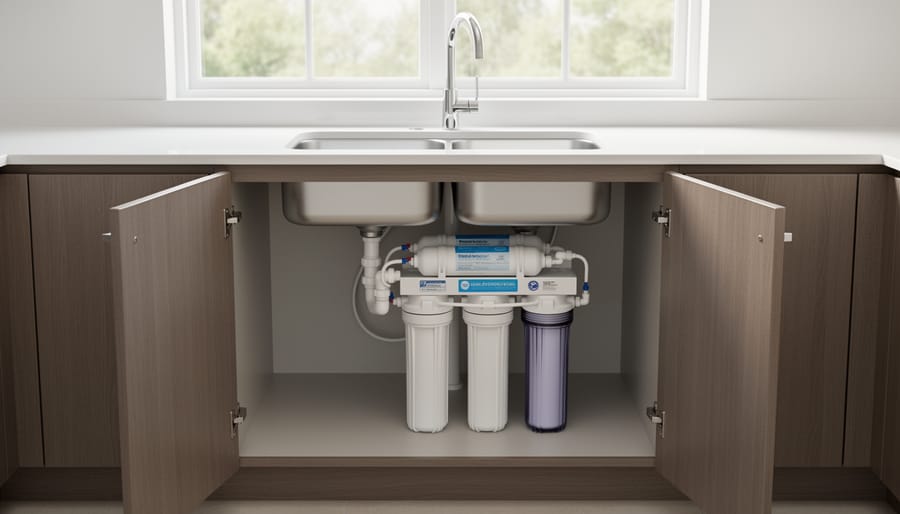
Under-Sink Filtration Systems
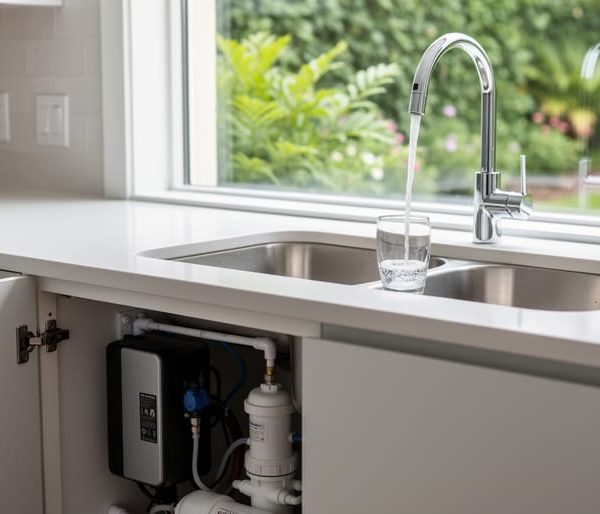
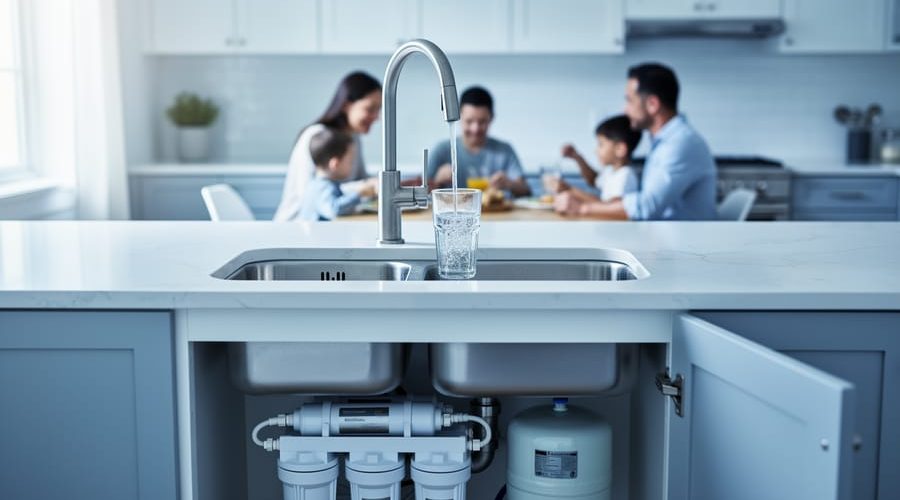
Under-sink filtration systems offer a discreet, high-performance solution for whole-kitchen water purification without taking up valuable counter space. These units install directly beneath your kitchen sink, connecting to your cold water line and delivering filtered water through either your existing faucet or a dedicated secondary tap.
Most under-sink systems use multi-stage filtration, combining sediment filters, activated carbon blocks, and sometimes reverse osmosis membranes to remove contaminants like chlorine, lead, pesticides, and heavy metals. This comprehensive approach makes them particularly effective for families concerned about drinking water safety and taste. Filtration capacity typically ranges from 500 to 1,500 gallons before filter replacement is needed, translating to six months to a year for average households.
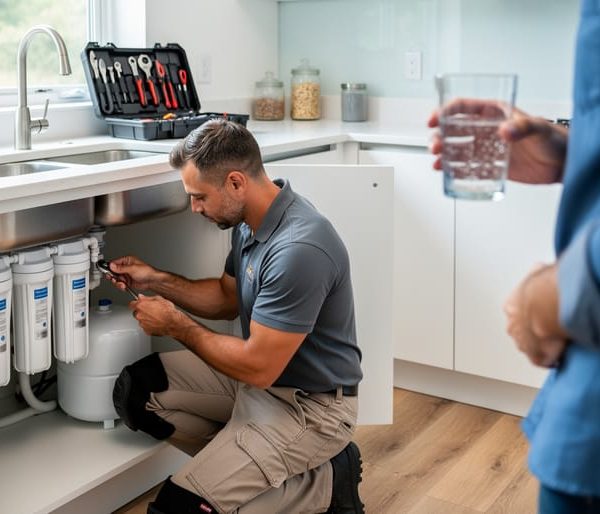
Installation usually requires basic plumbing skills and takes one to three hours, though professional installation is recommended if you’re uncomfortable working with water lines. You’ll need adequate space under your sink to accommodate the filter housing and storage tank if choosing a reverse osmosis model.
These systems represent an eco-friendly investment for families seeking restaurant-quality water at home while reducing plastic bottle waste. Initial costs range from $150 to $600 depending on filtration technology, with annual filter replacement costs between $50 and $150.
Countertop Water Filters
Countertop water filters offer an accessible entry point into home water filtration without requiring installation or modifications to your plumbing. These portable units sit conveniently on your kitchen counter and connect directly to your existing faucet through a diverter valve, allowing you to switch between filtered and unfiltered water as needed.
Most countertop models use a combination of filtration methods, including activated carbon filters to remove chlorine, sediment, and organic compounds, along with ceramic or multi-stage filters that address bacteria and heavy metals. Some innovative models now incorporate advanced technologies like carbon block filtration or mineral addition to enhance both purity and taste.
These systems work exceptionally well for renters who cannot make permanent modifications, small households seeking an affordable filtration solution, or anyone wanting to test water filtration before committing to a more permanent system. They typically filter between 500 and 1,000 gallons before requiring filter replacement, making them both economical and environmentally friendly by reducing reliance on single-use plastic bottles.
The main trade-off is counter space—these units do occupy valuable kitchen real estate. However, their portability means you can take them with you when moving, and maintenance involves simple filter cartridge changes every few months, making them one of the most user-friendly filtration options available.
Faucet-Mounted Filters
Faucet-mounted filters offer one of the simplest entry points into home water filtration. These compact devices attach directly to your existing kitchen faucet, requiring no special tools or plumbing expertise—most homeowners can install them in under five minutes. You simply unscrew your faucet’s aerator and screw on the filter unit.
These filters typically use activated carbon to reduce common contaminants like chlorine, lead, and certain pesticides, noticeably improving taste and odor. Most models feature a switch that lets you toggle between filtered and unfiltered water, helping you conserve the filter for drinking and cooking while using regular tap water for dishes.
However, faucet filters have limitations worth considering. Their small size means reduced filtration capacity compared to larger systems, so filter cartridges need replacement every two to three months depending on usage. They’re less effective against certain contaminants like fluoride or heavy metals, and they won’t fit all faucet types, particularly pull-out or spray models.
For environmentally-conscious households, faucet filters represent a sustainable alternative to bottled water, eliminating single-use plastic waste while providing cleaner drinking water. They’re an affordable, low-commitment option for renters or those wanting to test water filtration before investing in more comprehensive systems.
Reverse Osmosis Units for Point-of-Use
Point-of-use reverse osmosis systems represent cutting-edge water innovations for homeowners seeking the highest level of filtration. These compact units typically install under your kitchen sink, using a multi-stage process that removes up to 99% of contaminants including lead, fluoride, chlorine, and microscopic particles that other filters miss.
The technology works by forcing water through an extremely fine membrane, creating exceptionally pure drinking water. However, there’s an important environmental consideration: traditional RO systems waste 3-4 gallons of water for every gallon purified. This happens because rejected contaminants must be flushed away to prevent membrane clogging.
For eco-conscious homeowners, newer models now offer improved efficiency ratios of 1:1 or 2:1, significantly reducing water waste. While this still means some water goes down the drain, many users capture this “reject water” for plants or cleaning, making the system more sustainable.
Installation typically requires professional help and costs between $200-500, with annual filter replacements running $50-150. The superior filtration quality makes RO ideal for households with compromised immune systems, infants, or areas with severe water contamination, though the water waste factor requires thoughtful consideration in drought-prone regions.
How to Choose the Right Filtration Unit for Your Home’s Water Problems
Testing Your Water First (Why This Matters)
Before investing in a filtration system, it’s essential to test your water to identify specific contaminants present in your household supply. Without testing, you might purchase a unit that doesn’t address your actual water quality issues—like buying a basic carbon filter when you actually need something that removes heavy metals or bacteria.
Municipal water suppliers provide annual water quality reports, but contaminants can enter your water through your home’s plumbing system. For well water users, testing is even more critical since you’re responsible for monitoring your own supply.
Simple home testing kits available at hardware stores can screen for common issues like chlorine, lead, and pH levels. For comprehensive analysis, consider sending samples to certified laboratories, which typically cost between $50-$200 and reveal detailed information about minerals, metals, bacteria, and chemical contaminants.
Understanding your water’s unique profile ensures you select the right filtration technology, potentially saving hundreds of dollars while effectively protecting your family’s health and supporting your eco-conscious lifestyle goals.
Matching Filter Types to Common Contaminants
Understanding which filter tackles which contaminant helps you choose the right system for your water concerns. Let’s break down the most effective matches between filter types and common water quality issues.
Activated carbon filters excel at removing chlorine, the chemical responsible for that swimming pool smell and taste in municipal water. They also effectively capture volatile organic compounds (VOCs), pesticides, and herbicides. These filters work through adsorption, where contaminants stick to the carbon’s porous surface. However, they don’t remove minerals or heavy metals like lead.
For lead removal, you need reverse osmosis systems or specialized carbon block filters certified for lead reduction. Reverse osmosis pushes water through an extremely fine membrane that blocks lead particles, along with arsenic, fluoride, and nitrates. This technology also removes beneficial minerals, though some newer eco-friendly models include remineralization stages to add healthy minerals back.
Bacteria, viruses, and parasites require UV purification or reverse osmosis. UV systems use ultraviolet light to destroy microorganisms’ DNA, making them unable to reproduce. This approach is chemical-free and environmentally friendly, requiring only a small amount of electricity.
Ceramic filters effectively remove bacteria and sediment through their tiny pores, making them excellent sustainable options with long lifespans. For hard water minerals like calcium and magnesium, ion exchange systems (water softeners) swap these minerals for sodium or potassium ions.
Many households benefit from combining technologies. For example, pairing activated carbon with reverse osmosis addresses both chemical contaminants and heavy metals, providing comprehensive protection tailored to your specific water quality needs.
Calculating Your Household’s Daily Water Needs
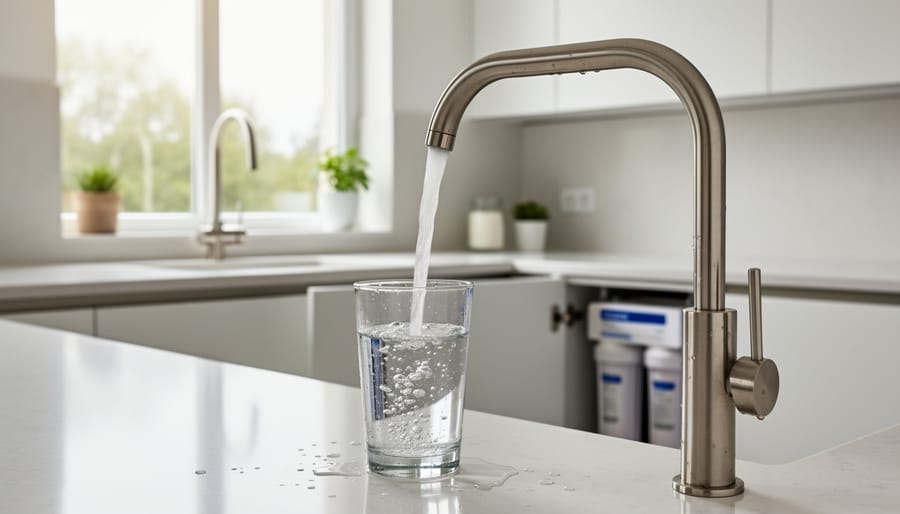
Understanding your household’s daily water consumption helps you select a filtration system with adequate capacity. The average person uses 80-100 gallons of water daily, though only about 8-10 glasses are for drinking and cooking. For filtration purposes, focus on your drinking water needs first. A family of four typically requires 1-2 gallons per person daily for consumption, totaling 4-8 gallons. However, if you plan to filter water for cooking, pet bowls, or filling reusable bottles, add another 2-4 gallons. Consider peak usage times too—larger families might need systems that produce 10-15 gallons daily to avoid running out during busy mornings. Point-of-use systems like pitcher or faucet filters suit smaller households, while whole-house systems accommodate higher volumes. Calculate your baseline needs, then add 25% buffer capacity for guests and increased summer consumption.
The Real Cost of Household Water Filtration (Beyond the Price Tag)
Understanding the true financial picture of household water filtration requires looking beyond the initial sticker price. Most filtration systems involve three distinct cost categories: upfront investment, ongoing maintenance, and filter replacements.
The upfront investment varies dramatically by system type. Simple pitcher filters start around $20-40, faucet-mounted units range from $25-100, while countertop systems typically cost $50-300. Under-sink filtration systems run $100-500 for standard models, and whole-house systems represent the largest initial investment at $1,000-4,000 including professional installation.
Filter replacement represents the most significant ongoing expense and often catches homeowners off-guard. Pitcher filters need replacing every 2-3 months at $10-20 each, totaling roughly $60-100 annually. Faucet and countertop units require new filters every 3-6 months, costing $30-50 per replacement. Under-sink systems typically need annual filter changes ranging from $50-150, while whole-house filters may last 6-12 months at $100-300 per replacement.
Additional maintenance costs include occasional membrane replacements for reverse osmosis systems every 2-3 years ($75-150) and potential UV bulb changes for systems using ultraviolet purification ($50-100 annually).
However, these expenses pale in comparison to bottled water costs. A family of four drinking the recommended daily water intake through bottled water spends approximately $1,200-2,000 annually. Even premium filtration systems typically pay for themselves within 1-2 years while delivering comparable or superior water quality.
The sustainability factor adds immeasurable value. Filtration systems dramatically reduce plastic waste, with a single system potentially eliminating thousands of plastic bottles from landfills over its lifetime. For environmentally-conscious households, this represents savings that extend far beyond personal finances, contributing to broader ecological preservation efforts while improving daily water quality and convenience.
Installation and Maintenance: What Homeowners Actually Need to Know
Understanding installation requirements and maintenance needs upfront helps you make a realistic choice for your household. Here’s what you actually need to know about keeping your water filtration system running smoothly.
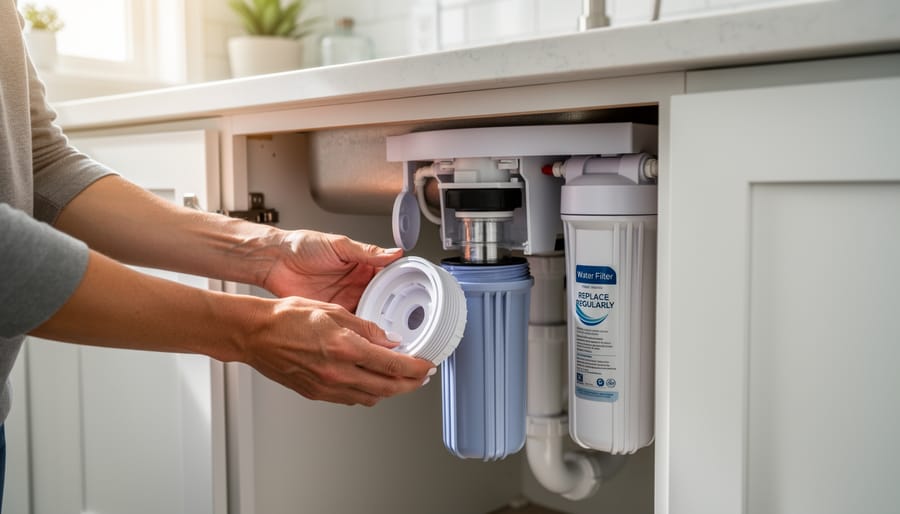
Installation difficulty varies significantly by system type. Pitcher and faucet-mounted filters are genuinely DIY-friendly—you can have them running in minutes without any tools. Countertop units require slightly more effort but typically just involve connecting to your existing faucet with included adapters. Under-sink systems present a moderate challenge for handy homeowners comfortable with basic plumbing, though many people prefer professional installation to ensure proper connections and avoid leaks. Whole-house filtration systems almost always require professional installation due to the complexity of integrating with your main water line and ensuring adequate water pressure throughout your home.
Cost considerations matter beyond the initial purchase. Professional installation for under-sink units typically ranges from $150 to $400, while whole-house systems can cost $500 to $2,000 for installation alone. However, proper professional installation often prevents costly water damage from installation errors.
Maintenance requirements directly impact long-term convenience and cost. Pitcher filters need replacement every two months, while faucet-mounted and under-sink cartridges typically last three to six months. Countertop units offer similar timelines. Whole-house systems require less frequent filter changes—often annually—but filters cost more. Following proper filter replacement schedules ensures your system continues removing contaminants effectively.
Beyond filter changes, most systems need minimal maintenance. Periodically cleaning pitcher reservoirs prevents bacterial growth, while checking connections on installed units helps catch potential leaks early. Many modern units include indicator lights signaling when replacement is needed, removing the guesswork from maintenance scheduling and helping you maintain optimal water quality consistently.
Environmental Impact: How Your Filtration Choice Affects the Planet
Choosing a household water filtration system isn’t just about water quality—it’s also about your environmental footprint. Understanding the ecological impact of different filtration options helps you make decisions that benefit both your family and the planet.
One of the most significant environmental advantages of home filtration is reducing plastic waste. Americans purchase approximately 50 billion plastic water bottles annually, with only about 30% being recycled. By filtering tap water at home, a typical family can eliminate hundreds of single-use bottles each year, keeping them out of landfills and oceans.
However, not all filtration systems have equal environmental credentials. Pitcher and faucet-mounted filters require regular cartridge replacements, typically every two to six months. These cartridges, often made from mixed plastics and activated carbon, present disposal challenges. While some manufacturers now offer recycling programs for used filters, many still end up in landfills.
Reverse osmosis systems, though highly effective, do raise water conservation concerns. These systems flush away contaminants by sending several gallons of water down the drain for every gallon filtered. Newer models have improved efficiency ratios, but this wastewater remains a consideration in drought-prone areas.
The good news? The filtration industry is embracing sustainability innovations. Look for systems with longer-lasting filters, biodegradable components, or those made from recycled materials. Some companies now produce plant-based filter housings and offer take-back programs to properly recycle old cartridges.
When evaluating filtration options, consider the complete lifecycle: filter longevity, replacement frequency, disposal methods, and water efficiency. These factors together determine your system’s true environmental impact.
Choosing the right water filtration system for your home is more than a simple purchase decision—it’s an investment in your family’s health and a meaningful step toward sustainable living. By understanding the various filtration technologies available, from activated carbon filters to reverse osmosis systems, you’re now equipped to match a solution to your household’s unique water quality challenges.
Before making your final choice, take the essential step of testing your water. Knowing exactly what contaminants you’re dealing with eliminates guesswork and ensures you select a system that addresses your specific needs rather than paying for unnecessary features. Many local health departments offer free or low-cost testing, making this crucial information accessible to everyone.
Remember that every filtered glass of water represents a dual victory: you’re protecting your loved ones from potential contaminants while reducing reliance on single-use plastic bottles. This combination of health protection and environmental responsibility makes household water filtration one of the most impactful improvements you can make to your home. With the knowledge you’ve gained, you’re ready to take action and enjoy cleaner, safer water while contributing to a more sustainable future.