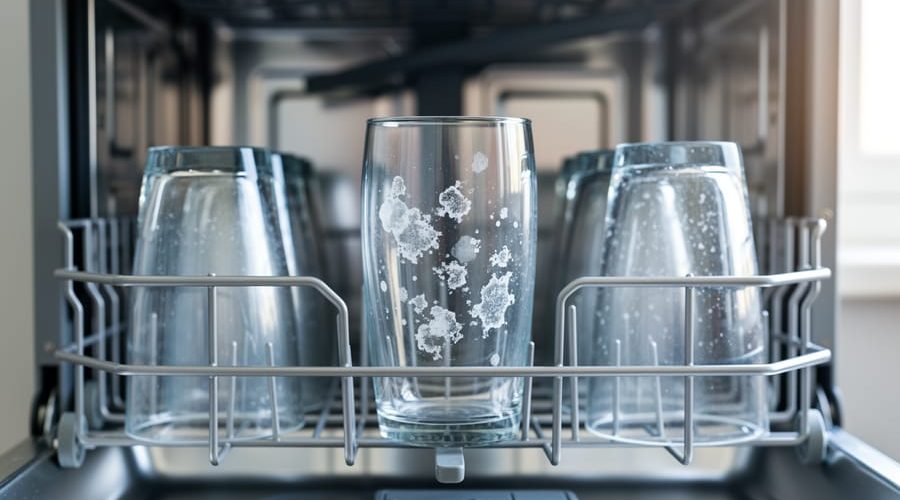
Check your glassware right now for cloudy film, white spots, or a chalky residue—these are telltale signs that hard water is sabotaging your dishwasher’s performance. Fill a spray bottle with equal parts white vinegar and water, spray affected dishes, and watch the mineral deposits dissolve within minutes. Run an empty dishwasher cycle with two cups of vinegar placed in a dishwasher-safe container on the top rack to flush mineral buildup from your machine’s interior components. Switch to a dishwasher detergent specifically formulated for hard water, which contains extra chelating agents that bind to calcium and magnesium before they can form deposits.
Hard water affects nearly 85% of American homes, and your dishwasher bears the brunt of this mineral-laden water. When water contains high concentrations of dissolved minerals—primarily calcium and magnesium—it interferes with detergent effectiveness, leaves stubborn deposits on dishes, and gradually damages your appliance’s heating elements and spray arms. The same mineral buildup that creates rings around your faucets and water quality affects laundry results is quietly reducing your dishwasher’s efficiency and lifespan.
Understanding the hard water-dishwasher connection empowers you to protect your investment, achieve sparkling dishes every cycle, and make informed decisions about sustainable water treatment solutions. Whether you’re dealing with mild spotting or severe limescale accumulation, practical remedies exist that address both immediate frustrations and long-term appliance health.
What Hard Water Actually Does to Your Dishwasher
The White Film Problem
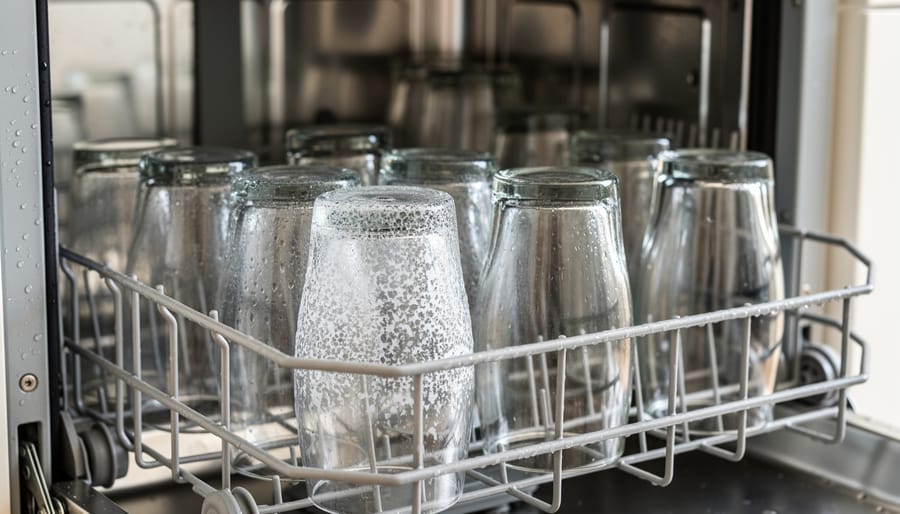
If you’ve noticed a cloudy, white film coating your supposedly clean dishes and glassware after running the dishwasher, you’re likely dealing with hard water deposits. This frustrating residue isn’t leftover food or soap—it’s actually mineral buildup, primarily calcium and magnesium, that remains after the water evaporates during the drying cycle.
Hard water contains high concentrations of dissolved minerals picked up as groundwater flows through limestone and other mineral-rich rock formations. When your dishwasher heats this water, the minerals become even less soluble and stick to dish surfaces. The hotter the water and the longer the cycle, the more pronounced this white film becomes. Glassware shows it most dramatically because the smooth, transparent surface makes every speck visible.
This chalky residue is more than just unsightly—it’s a clear indicator that your household water has elevated mineral content. While these minerals aren’t harmful to consume, their presence signals that hard water is likely affecting other appliances and fixtures throughout your home, potentially shortening their lifespan and reducing efficiency. Understanding this connection helps you address not just the cosmetic issue, but the underlying water quality challenge.
Hidden Damage Inside Your Machine
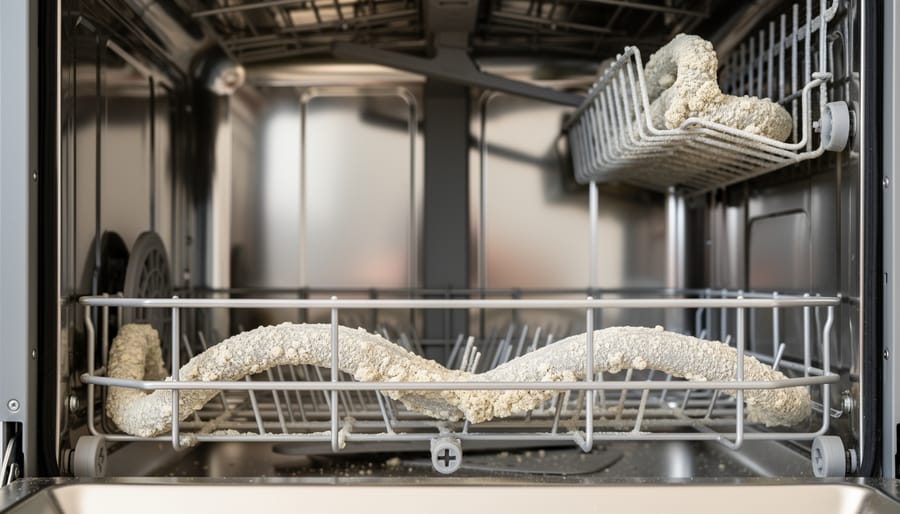
While you can see the white residue and spots on your dishes, the real problem is what’s happening where you can’t see it. Hard water mineral buildup accumulates silently inside your dishwasher’s critical components, gradually choking its performance and shortening its lifespan.
The heating element bears the brunt of this damage. As hard water evaporates during the drying cycle, calcium and magnesium deposits form a crusty coating that insulates the element, forcing it to work harder and consume more energy to reach the same temperature. This not only drives up your electricity bills but can eventually cause the element to fail completely.
Spray arms suffer too. Those tiny holes that jet water onto your dishes become clogged with mineral deposits, reducing water pressure and creating uneven cleaning patterns. You might notice some dishes come out sparkling while others remain dirty, even in the same load.
Filters and pumps also collect scale buildup, restricting water flow and forcing your dishwasher’s pump to strain harder with each cycle. This accelerated wear means you’ll face costly repairs or premature replacement far sooner than the manufacturer intended.
Signs Your Dishwasher Is Battling Hard Water
If you’ve noticed your dishwasher isn’t performing like it used to, hard water minerals might be the culprit. Here’s a practical checklist to help you identify if hard water is affecting your appliance.
The most obvious sign is cloudy or spotted glassware. When hard water evaporates during the drying cycle, it leaves behind calcium and magnesium deposits that create a white, filmy coating on dishes, glasses, and silverware. You might notice this residue is particularly stubborn and doesn’t come off with a simple rinse.
Check inside your dishwasher for white, chalky buildup around the heating element, spray arms, and door edges. This limescale accumulation is a telltale indicator of hard water battling your machine. If left unchecked, these deposits can clog spray nozzles and reduce water flow, leading to poor cleaning performance.
You may find yourself using more detergent than the manufacturer recommends, yet still seeing disappointing results. Hard water interferes with detergent’s ability to form suds and clean effectively, creating a frustrating cycle of adding more product without better outcomes.
Longer wash cycles are another red flag. When mineral deposits restrict water flow or coat dishes with residue, your dishwasher may need to run extra rinse cycles to compensate, increasing both water consumption and energy use.
Finally, pay attention to an overall decline in cleaning quality. Food particles that previously disappeared might now cling to plates, or you might need to pre-rinse dishes more thoroughly than before. These symptoms collectively suggest that hard water minerals are creating barriers between your dishes and a truly clean result, impacting both your appliance’s efficiency and your household’s sustainability goals.
How Hard Water Affects Hand Dishwashing Too
Hard water doesn’t discriminate between your dishwasher and your kitchen sink. When you wash dishes by hand, those same mineral deposits that plague your appliance are working against you too.
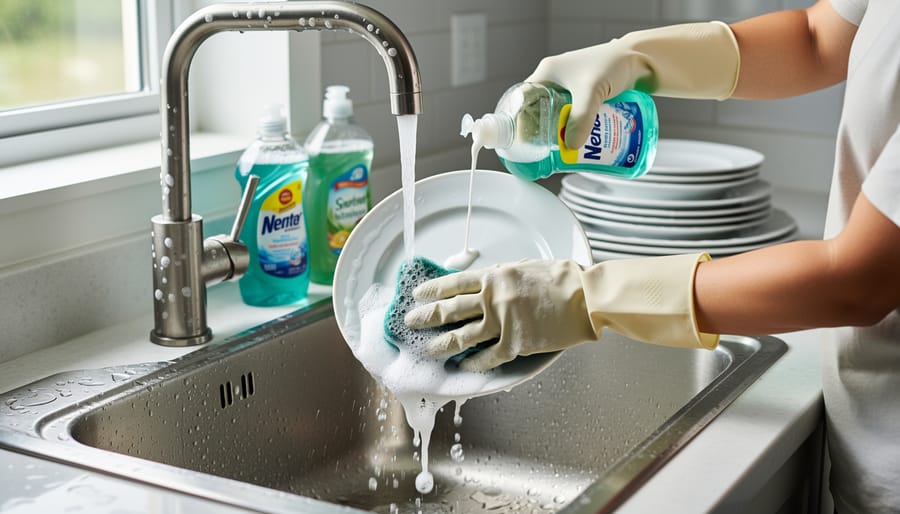
The minerals in hard water interfere with soap chemistry, preventing proper lathering and reducing cleaning power. You’ve probably noticed this if you need to squeeze extra dish soap into your basin to get those satisfying suds. That’s hard water at work. The calcium and magnesium ions bind with soap molecules, creating an insoluble residue instead of the cleaning foam you’re after. This means you’re using more detergent than necessary, which impacts both your wallet and the environment.
Even after scrubbing, hand-washed dishes in hard water often show the same frustrating spotting and film you see coming out of your dishwasher. Glasses lose their sparkle, silverware appears dull, and plates may feel slightly gritty to the touch. These aren’t signs of poor washing technique but rather the mineral deposits left behind as water evaporates.
The good news? Solutions that address hard water for your dishwasher typically benefit hand dishwashing too. A whole-home water softening system treats water before it reaches any faucet, improving results across all your cleaning tasks. Even without a full softening system, understanding your water quality helps you adjust your approach, whether you’re using vinegar rinses for hand-washed glassware or selecting appropriate dishwasher detergents. Recognizing that water quality affects every dishwashing method empowers you to make informed choices for cleaner dishes and a more sustainable home.
Testing Your Water Hardness at Home
Before you can tackle hard water problems in your dishwasher, you need to know what you’re dealing with. Testing your water hardness is straightforward and gives you the information needed to choose the right solution.
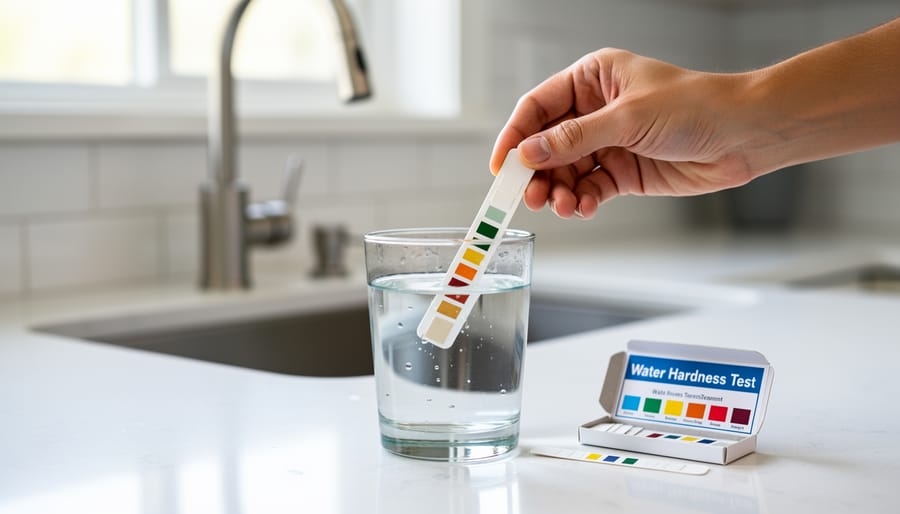
The simplest method is using water hardness test strips, available at hardware stores, pet supply shops, or online for around $10-15. Simply dip a strip into a glass of tap water for a few seconds, then compare the color change to the chart provided. Results appear within minutes, showing your hardness level in grains per gallon (gpg) or parts per million (ppm). This DIY approach is perfect for getting quick, reliable results at home.
If you prefer not to test yourself, contact your local water utility. Most municipalities provide annual water quality reports that include hardness levels. These reports are typically available on their website or by calling customer service. This option costs nothing and gives you professionally verified data about your community’s water supply.
Understanding your results is key. Water measuring 0-3.5 gpg (0-60 ppm) is considered soft and shouldn’t cause dishwasher issues. Moderately hard water falls between 3.5-7 gpg (61-120 ppm) and may start leaving minor deposits. Hard water ranges from 7-10.5 gpg (121-180 ppm), while anything above 10.5 gpg (180 ppm) is very hard and will definitely impact your dishwasher’s performance.
Action becomes necessary around 7 gpg. At this level, you’ll notice spotting on glassware and reduced cleaning efficiency. If your test shows numbers in this range or higher, implementing water softening solutions will protect your dishwasher investment and improve cleaning results. For eco-conscious homeowners, knowing these numbers also helps you choose the most sustainable treatment approach for your specific situation.
Immediate Solutions You Can Try Today
Rinse Aids and Specialty Detergents
Rinse aids play a crucial role in fighting hard water problems by reducing surface tension, allowing water to sheet off dishes rather than forming droplets that leave mineral deposits behind. These products work during the final rinse cycle, creating an invisible barrier that prevents calcium and magnesium from bonding to your glassware and dishes. This explains why dishes treated with rinse aid emerge streak-free even in hard water conditions.
When selecting detergents for hard water situations, look for formulations specifically labeled as “hard water” or “mineral defense” varieties. These specialty detergents contain water softening agents like citric acid or chelating compounds that bind to minerals before they can interfere with cleaning or leave residue. Powder and gel detergents often include higher concentrations of these helpful ingredients compared to standard pods.
For environmentally-conscious households, several eco-friendly brands now offer plant-based rinse aids and detergents with biodegradable water-softening components. White vinegar serves as a natural, sustainable rinse aid alternative, though it may be less effective than commercial products in extremely hard water. Combining the right detergent formulation with regular rinse aid use creates a powerful defense against hard water challenges while maintaining your commitment to sustainable living.
Vinegar and Citric Acid Treatments
Natural cleaning solutions offer an effective, eco-friendly approach to tackling hard water buildup in your dishwasher without harsh chemicals. Two household staples—white vinegar and citric acid—work by dissolving the calcium and magnesium compounds that create stubborn scale.
For a vinegar treatment, place a dishwasher-safe cup filled with two cups of white vinegar on the top rack of your empty dishwasher. Run a complete hot water cycle without detergent. The acidity breaks down mineral deposits in appliances throughout the spray arms, filters, and interior surfaces. Repeat this process monthly for maintenance or more frequently if you have severely hard water.
Citric acid provides an even more potent descaling option. Add three to four tablespoons of food-grade citric acid powder to the detergent dispenser and run an empty hot cycle. This method is particularly effective for heavy buildup and can restore optimal performance to neglected dishwashers.
For best results, clean the filter and inspect spray arm holes before treatment, removing any visible debris. These natural methods not only remove existing scale but also help prevent future accumulation when used regularly. They’re safe for septic systems and won’t damage your dishwasher’s components, making them ideal for environmentally-conscious homeowners seeking sustainable maintenance solutions. Consider alternating between vinegar and citric acid treatments every two weeks if you live in an area with particularly hard water.
Long-Term Water Softening Solutions
Whole House Water Softeners
If hard water is affecting your dishwasher, you’re likely dealing with the same issue throughout your entire home. Whole house water softeners offer a comprehensive solution by treating water at the point where it enters your home, ensuring every faucet, appliance, and fixture receives softened water.
These systems work through a process called ion exchange. As hard water flows through a tank filled with resin beads, calcium and magnesium ions attach to the beads while sodium ions are released into the water. The result is softened water that prevents scale buildup in your dishwasher, extends appliance lifespan, and improves cleaning performance across your entire household.
Beyond your dishwasher, you’ll notice softer laundry, cleaner showers, and reduced soap usage throughout your home. The system regenerates automatically, typically at night, flushing accumulated minerals down the drain and recharging the resin beads with sodium from a salt reservoir.
For environmentally-conscious homeowners, modern innovations offer greener alternatives. Salt-free conditioners use template-assisted crystallization to prevent scale without adding sodium to wastewater. Demand-initiated regeneration systems only clean the resin when needed, reducing water and salt waste. Some cutting-edge models even monitor water usage patterns to optimize efficiency. While traditional salt-based softeners remain highly effective, exploring eco-friendly options helps balance household needs with environmental responsibility.
Point-of-Use Dishwasher Softeners
If you’re not ready to invest in a whole-house water softener, point-of-use solutions offer a practical middle ground. These targeted treatments work specifically for your dishwasher, making them both budget-friendly and effective for tackling hard water issues.
Many modern dishwashers now include built-in water softening systems. These appliances feature a small reservoir where you add special dishwasher salt, which regenerates ion-exchange resin to soften incoming water before it reaches your dishes. You’ll typically find these features in European-manufactured models, though they’re becoming more common in North American appliances too. The softener adjusts water hardness automatically based on your local conditions, ensuring optimal cleaning performance while using less detergent.
For older dishwashers without built-in softening, inline water softeners provide an eco-friendly retrofit option. These compact devices connect directly to your dishwasher’s water supply line and use similar ion-exchange technology on a smaller scale. Installation is straightforward enough for DIY enthusiasts, though professional help ensures proper setup.
Another approach involves using rinse aid products specifically formulated to combat hard water minerals. While not true softeners, these additives help prevent spotting and filming by breaking surface tension and encouraging water to sheet off dishes rather than forming droplets that leave mineral deposits.
Point-of-use solutions shine because they address the problem right where it occurs without the complexity or cost of treating all household water. They’re particularly appealing for renters or homeowners seeking targeted, sustainable improvements to their dishwashing routine.
The Environmental Impact of Hard Water Solutions
When choosing a hard water solution for your dishwasher, understanding the environmental impact of different approaches helps you make choices that align with sustainable living practices.
Traditional salt-based water softeners are highly effective but come with ecological considerations. These systems discharge sodium-rich wastewater during their regeneration cycles, which can impact local water treatment facilities and potentially harm soil and vegetation if the water enters the environment. A typical household softener uses between 40 to 80 pounds of salt annually, and the brine solution created during regeneration adds extra burden to water treatment processes. However, softeners do reduce overall detergent consumption and energy use by allowing your dishwasher to operate more efficiently with less hot water.
Salt-free alternatives, including electronic descalers and template-assisted crystallization systems, offer a more environmentally friendly approach since they require no chemicals, produce no wastewater, and use minimal electricity. These systems change the structure of minerals rather than removing them, preventing scale buildup without adding sodium to your water supply. While they may not be as effective in extremely hard water conditions, they represent a sustainable middle ground for many households.
The hidden environmental cost of leaving hard water untreated deserves attention too. When hard water interferes with your dishwasher’s performance, you likely use significantly more detergent than necessary, run additional wash cycles, and eventually replace your appliance sooner due to mineral damage. These phosphate-laden detergents and shortened appliance lifespans contribute to chemical runoff and increased manufacturing demands.
For eco-conscious homeowners, the most sustainable approach often involves combining a targeted solution matched to your water hardness level with efficient dishwashing practices, ultimately reducing your household’s overall environmental footprint while maintaining clean dishes.
Maintaining Your Dishwasher in Hard Water Areas
Regular maintenance is your dishwasher’s best defense against hard water damage. By following a consistent care schedule, you can prevent mineral buildup, extend your appliance’s lifespan, and maintain optimal cleaning performance.
Start with a monthly deep clean using a dishwasher cleaner specifically designed to tackle limescale and mineral deposits. Run an empty cycle with either a commercial descaling product or a cup of white vinegar placed on the top rack. This simple step dissolves accumulated minerals from internal components, spray arms, and heating elements before they cause permanent damage.
Check and clean your dishwasher filter every two to four weeks in hard water areas. This small mesh component traps food particles and mineral sediment, but when clogged, it reduces water circulation and cleaning effectiveness. Remove the filter according to your manufacturer’s instructions, rinse it thoroughly under warm water, and use a soft brush to remove stubborn debris.
Inspect spray arms monthly for blocked holes where mineral deposits commonly accumulate. Remove the arms and use a toothpick or wire to clear any clogged nozzles, ensuring even water distribution during wash cycles.
Wipe down door seals and gaskets weekly with a damp cloth to prevent mineral buildup in these vulnerable areas. Hard water residue here can compromise the seal and lead to leaks over time.
Consider using a rinse aid regularly, even if you have a water softener. This eco-friendly addition helps water sheet off dishes more effectively, reducing spots and film while improving drying performance. These preventative practices protect your investment while maintaining sparkling clean dishes despite challenging water conditions.
Hard water affects both machine and hand dishwashing in significant ways, from leaving unsightly spots and film on your dishes to reducing the effectiveness of detergents and potentially shortening your appliance’s lifespan. Understanding this connection empowers you to take control of your household water quality and improve daily results.
The good news is that solutions exist for every budget and situation. Start by testing your water to confirm hardness levels—this simple step reveals whether you need to adjust detergent amounts, add rinse aids, or consider a water softening system. Even small changes like switching to liquid detergents or installing an under-sink filter can make a noticeable difference.
Beyond cleaner dishes, addressing hard water contributes to a more sustainable home. Softened water requires less detergent, reduces energy consumption from rewashing, and extends appliance longevity—all positive steps for both your wallet and the environment. Take action today by testing your water and implementing solutions that align with your household needs and eco-conscious values.


