GenX contamination in your drinking water isn’t something you can ignore—this newer-generation PFAS chemical has already infiltrated water supplies across multiple states, and standard pitcher filters won’t remove it. Unlike older PFAS compounds that regulators have studied for decades, GenX was designed as a “safer” replacement for chemicals like PFOA, yet emerging research suggests it carries its own health risks, from liver damage to developmental problems. The challenge homeowners face is straightforward: GenX molecules are exceptionally small and stubborn, requiring specific filtration technologies that many household systems simply don’t provide.
Understanding which treatment methods actually work against GenX means looking beyond marketing claims to examine the science. Reverse osmosis systems consistently demonstrate removal rates exceeding 90% in independent testing, while activated carbon filters show mixed results depending on their specific design and contact time. Ion exchange resins offer another proven approach, though they require careful maintenance to remain effective. The complication is that GenX behaves differently than its PFAS predecessors—it’s more water-soluble and less likely to bind to traditional carbon media, which explains why your neighbor’s standard under-sink filter might fail where a properly designed system succeeds.
This guide cuts through the confusion by examining each major home treatment technology through the lens of GenX-specific effectiveness. You’ll learn which filtration methods remove this contaminant reliably, what performance certifications actually matter, and how to match your household’s water quality situation with the right solution. Whether you’re responding to a water utility notice or taking preventive action, you’ll finish with the knowledge to protect your family’s water supply without wasting money on ineffective equipment.
What Makes GenX Different from Traditional PFAS
Why GenX Slips Past Some Filters
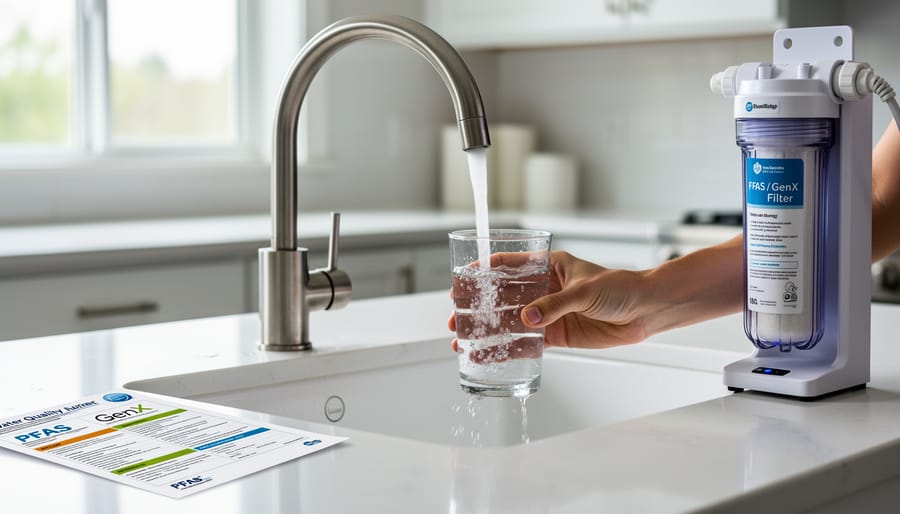
GenX’s ability to slip past many standard water filters comes down to its molecular structure—think of it like the difference between catching basketballs versus marbles in a net. Traditional PFAS compounds like PFOA have longer molecular chains, making them bulkier and easier for activated carbon filters to grab onto. GenX, however, has a shorter chemical chain with a unique branched structure that makes it more slippery and compact.
Imagine trying to catch fish with a net. Older PFAS compounds are like larger fish that get tangled easily, while GenX is more like a small, streamlined minnow that can dart through the openings. This smaller molecular size means GenX molecules can pass through the pores of standard filters that would normally trap their larger PFAS cousins.
Additionally, GenX carries different electrical properties on its molecular surface. While traditional PFAS have characteristics that make them stick to carbon filter media through a process called adsorption, GenX’s modified structure reduces this stickiness. It’s somewhat like comparing Velcro to a smooth plastic surface—one grabs and holds, while the other slides right past.
The compound’s high water solubility also plays a role. GenX dissolves readily in water and doesn’t want to leave it, making the filtration process even more challenging. This is why many homeowners discover that their existing pitcher filters or basic faucet attachments, which might reduce some contaminants effectively, simply aren’t designed to handle GenX’s unique molecular behavior.
Reverse Osmosis: Your Most Reliable Defense Against GenX
How RO Captures What Others Miss
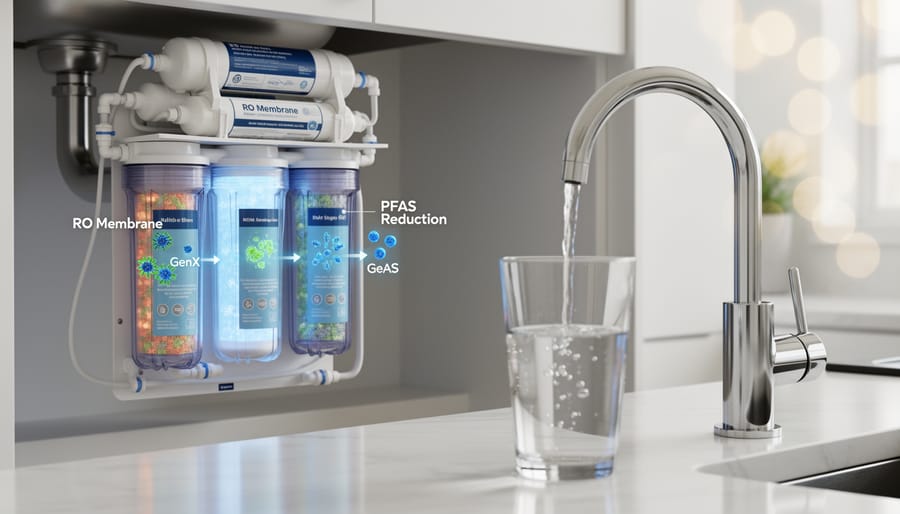
Reverse osmosis works like an extremely fine sieve that catches contaminants your eyes can’t see. The system uses a semi-permeable membrane with pores measuring about 0.0001 microns—incredibly tiny openings that allow water molecules to pass through while blocking larger contaminants. To put this in perspective, those pores are roughly 5,000 times smaller than a human hair.
GenX molecules, despite being small chemical compounds, are still significantly larger than water molecules. When water pressure pushes your tap water against the RO membrane, the pure water squeezes through these microscopic openings while GenX and other PFAS compounds get left behind and flushed away with wastewater. Think of it like trying to push marbles through a screen door—the air passes through easily, but the marbles bounce off.
This size-based filtration is exactly why RO systems excel at removing GenX when other methods struggle. Studies have shown that quality RO systems can remove 90-95% or more of GenX from drinking water, making them one of the most reliable home treatment options available. The membrane doesn’t rely on chemical reactions or absorption—it simply provides a physical barrier that’s too small for these persistent pollutants to cross.
For homeowners dealing with GenX contamination, this proven effectiveness offers genuine peace of mind, turning your tap into a reliable source of cleaner drinking water.
Real-World Performance and Limitations
Reverse osmosis systems can achieve impressive GenX removal rates, typically eliminating 90-98% of these contaminants when properly maintained. However, real-world performance depends heavily on several practical factors that homeowners should understand before investing.
Maintenance requirements are more demanding than simpler filtration methods. RO membranes need replacement every 2-3 years, while pre-filters require changes every 6-12 months. Neglecting these schedules significantly reduces GenX removal effectiveness and can lead to mineral buildup concerns that damage the system. Budget around $150-300 annually for filter replacements, depending on your water quality and household usage.
Water waste remains a significant drawback. Traditional RO systems discard 3-4 gallons of water for every gallon purified, which feels counterintuitive for environmentally-conscious households. Newer efficient models reduce this ratio to 1:1, but they cost considerably more upfront. For families in drought-prone areas or those committed to water conservation, this trade-off deserves serious consideration.
RO makes the most sense when you face confirmed GenX contamination above EPA health advisory levels and need comprehensive protection. It’s particularly worthwhile if your water contains multiple contaminants since RO addresses various pollutants simultaneously. However, if GenX is your only concern and levels are relatively low, activated carbon filters might provide adequate protection with less complexity and waste.
Consider your household size, water consumption patterns, and budget when deciding. A family of four drinking contaminated water daily justifies the investment more readily than occasional use. Testing your water before and after installation confirms your system is performing as expected and protecting your family effectively.
Granular Activated Carbon: A Partial Solution
Why GAC Struggles with GenX
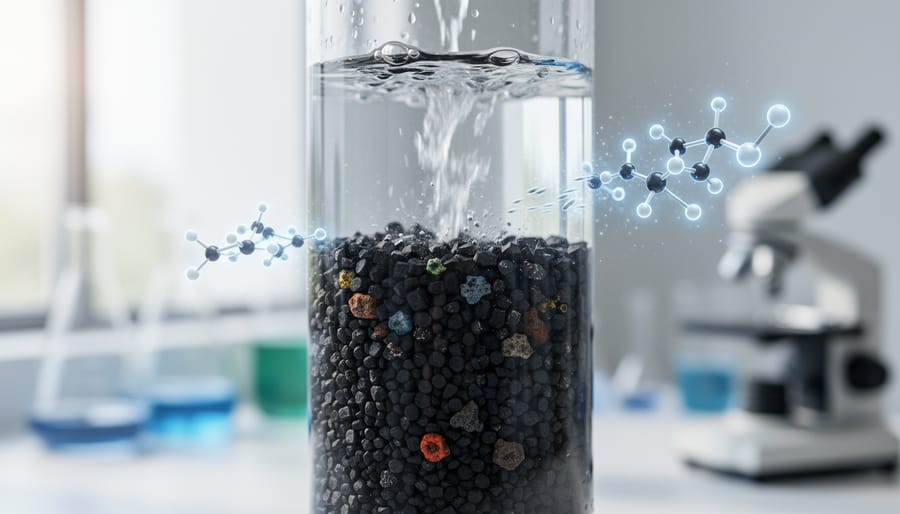
Granular activated carbon filters work through a process called adsorption, where contaminants stick to the surface of carbon particles as water flows through. Think of it like a sponge with microscopic pores that trap unwanted chemicals. The larger the molecule and the more carbon atoms it contains, the better it typically adheres to the carbon surface.
Here’s where GenX becomes problematic. Traditional PFAS chemicals like PFOA and PFOS have longer carbon chains, giving them more surface area to grab onto the carbon filter. GenX, however, was specifically engineered with a shorter molecular structure. This compact design means there’s less material for the carbon to latch onto, making it slip through filters more easily than its predecessors.
Additionally, GenX molecules contain ether linkages in their structure, which make them more water-soluble than older PFAS compounds. Because they dissolve so readily in water, they’re less inclined to leave the water phase and attach to solid carbon surfaces. It’s similar to trying to catch oil with a net versus trying to catch sugar dissolved in water—one is far more challenging.
Standard granular activated carbon systems can remove some GenX from your water, but their efficiency drops significantly compared to treating longer-chain PFAS. Studies show removal rates varying widely depending on contact time, water chemistry, and how saturated the carbon already is with other contaminants. This variability explains why homeowners dealing with GenX contamination need more targeted solutions beyond basic carbon filtration.
Making GAC Work Harder
Getting the most from your GAC filter means understanding a few key factors that directly impact how well it removes GenX and other PFAS compounds.
First, contact time matters significantly. The longer contaminated water touches the activated carbon, the better the removal. This is why pitcher filters, which have very short contact times, aren’t as effective as under-sink systems where water flows more slowly through larger carbon beds. Look for systems that allow at least 10-15 seconds of contact time for optimal GenX reduction.
Carbon type makes a difference too. Not all activated carbon is created equal. Catalytic carbon and specially treated carbons designed for PFAS removal outperform standard granular activated carbon. When shopping, specifically ask whether the carbon has been optimized for short-chain PFAS like GenX, not just the longer-chain varieties.
Replacement schedules shouldn’t be taken lightly. Unlike scale buildup issues that you can see, PFAS saturation happens invisibly. Replace cartridges according to manufacturer recommendations based on your water volume, or even sooner if you have high contamination levels. Some advanced systems include indicators that alert you when replacement is needed.
Finally, consider combining GAC with other methods. Pairing GAC with reverse osmosis creates a powerful one-two punch, since RO catches what carbon misses and carbon protects the RO membrane. Some homeowners also use whole-house carbon filters for general PFAS reduction, then add point-of-use RO at drinking water taps for maximum protection.
Ion Exchange: The Emerging Contender
How Ion Exchange Targets PFAS Molecules
Ion exchange works like a molecular swap meet in your water filter. The system contains specially designed resin beads loaded with harmless ions, typically chloride or hydroxide. As contaminated water flows through, GenX molecules—which carry a negative electrical charge—stick to these beads while the harmless ions are released into the water. Think of it as trading something harmful for something safe.
This technology shows particular promise for GenX removal because GenX molecules behave similarly to other PFAS compounds that ion exchange systems already capture effectively. The negatively charged “head” of GenX molecules makes them attracted to the positively charged sites on the resin beads. Unlike activated carbon, which struggles with GenX’s shorter molecular structure, ion exchange specifically targets the electrical properties of these contaminants.
The key advantage is consistency. While carbon filters can miss GenX molecules due to their size and shape, ion exchange systems don’t rely on physical trapping. They work through chemical attraction, making them more reliable for this specific contaminant. However, these systems do require periodic regeneration or resin replacement to maintain effectiveness, which is an important consideration for homeowners evaluating long-term costs and maintenance requirements.
Availability and Cost Considerations
Ion exchange systems designed to remove GenX and PFAS compounds from drinking water are becoming more widely available to homeowners, though they represent a significant investment compared to basic filtration methods. Professional-grade residential systems typically range from $1,500 to $4,000 for initial installation, depending on capacity and whether you choose a whole-house system or a point-of-use filter for drinking water only.
The upfront cost reflects the specialized resin needed to capture these persistent chemicals. Unlike standard water softeners, PFAS-specific ion exchange systems use anion exchange resins engineered to target negatively charged contaminants like GenX. Some manufacturers now offer certified PFAS removal systems with independent testing verification, giving homeowners confidence in their effectiveness.
Beyond the initial purchase, regular maintenance requirements include resin replacement every 6 to 18 months, depending on your water’s contamination levels and usage volume. Annual maintenance costs typically range from $300 to $800, which includes resin regeneration or replacement and system checks. Some systems require professional servicing, while others allow homeowner-managed cartridge changes.
When evaluating costs, consider requesting a water quality test first to determine your GenX concentration levels. This helps you select an appropriately sized system and avoid over-investing in treatment capacity you don’t need. Many water treatment companies now offer consultation services specifically for PFAS concerns, helping you balance effectiveness with budget considerations while ensuring your family’s water safety.
Choosing the Right System for Your GenX Problem
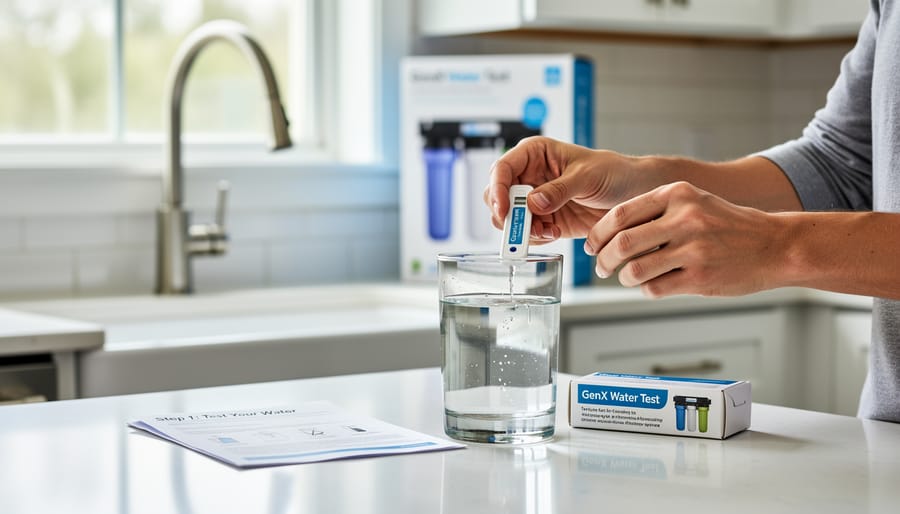
Before investing in a treatment system for GenX contamination, you need to understand what you’re dealing with. Start by getting your water tested by a certified laboratory that specifically analyzes for GenX and related compounds. While standard water quality tests won’t detect these emerging contaminants, specialized PFAS testing typically costs between $200-400 and provides the baseline information necessary for making an informed decision.
When interpreting your results, focus on two key numbers: the actual concentration of GenX in parts per trillion (ppt) and your state’s health advisory level. North Carolina, for example, has set a health advisory of 140 ppt for GenX in drinking water. If your results show contamination above advisory levels, immediate action is warranted. Even levels below the advisory may concern families with young children or pregnant women, who are more vulnerable to chemical exposure.
Your contamination level directly influences which system makes sense. For moderate contamination under 500 ppt, a quality reverse osmosis system installed at your kitchen sink provides excellent protection for drinking and cooking water at a reasonable cost of $200-600. This point-of-use approach addresses the 80-20 rule, since most GenX exposure comes through consumption rather than showering or washing.
Higher contamination levels exceeding 1,000 ppt may justify whole-house solutions, particularly if you’re concerned about all exposure routes or have significant water quality problems beyond GenX. Budget becomes critical here, as whole-house systems start around $1,500 plus installation and maintenance costs.
Household size and water usage patterns matter too. A family of four using 300 gallons daily will face higher filter replacement costs than a couple using 100 gallons. Calculate your monthly maintenance expenses before committing. Reverse osmosis systems typically need filter changes every 6-12 months, while carbon systems may require quarterly replacements depending on contamination levels and water volume.
Consider your timeline as well. If you’re in an affected area and drinking bottled water while deciding, that ongoing cost often justifies faster investment in permanent filtration. Meanwhile, renters should focus on portable reverse osmosis units that can move with them.
Finally, verify that any system you choose is certified by NSF International or the Water Quality Association specifically for PFAS reduction. Generic marketing claims aren’t enough when protecting your family from GenX contamination. Request independent test data showing removal rates for GenX specifically, not just general PFAS compounds.
Beyond Filtration: What Homeowners Need to Know
Protecting your home from GenX and PFAS contamination extends beyond simply installing a filter. Understanding the complete picture helps you make sustainable, effective choices that align with eco-conscious living.
Testing should occur regularly, ideally every six months after installing a treatment system, to verify continued effectiveness. Many homeowners make the mistake of testing once and assuming their system works indefinitely. However, filter saturation happens gradually, and GenX can break through compromised filters without any noticeable change in water taste or appearance. Consider working with certified laboratories that specifically test for GenX, as standard water quality tests often miss these compounds.
Proper filtration system maintenance is essential but raises an important environmental question: what happens to used filter materials? Activated carbon and reverse osmosis membranes concentrate PFAS rather than destroying them. When disposed of in landfills, these contaminants can potentially leach back into groundwater. Some manufacturers now offer take-back programs that ensure proper disposal or incineration at facilities capable of breaking down PFAS compounds. Ask about these programs when purchasing your system.
Regulatory developments continue evolving rapidly. The EPA recently proposed strict limits for GenX in drinking water, which may affect municipal treatment requirements and home testing recommendations. Stay informed about your local water utility’s PFAS monitoring results, as this information can help you adjust your home treatment strategy.
From an environmental perspective, reverse osmosis systems waste considerable water during the filtration process, typically discarding three to five gallons for every gallon purified. If you choose RO, consider capturing wastewater for outdoor irrigation or other non-drinking purposes. Activated carbon systems generally offer a more water-efficient solution, though they require more frequent replacement.
The most sustainable approach combines informed product selection, diligent monitoring, responsible disposal practices, and staying current with emerging treatment technologies that promise both effectiveness and environmental responsibility.
Protecting your home from GenX contamination starts with understanding what’s actually in your water. While several treatment methods can reduce PFAS chemicals, reverse osmosis stands out as the gold standard for GenX removal, consistently eliminating 90% or more of these persistent contaminants. Activated carbon filters offer moderate effectiveness as a more budget-friendly option, though they require diligent cartridge replacement to maintain performance.
The most important step you can take today is testing your water supply. Without knowing your baseline contamination levels, you’re essentially working in the dark. Many local health departments offer free or low-cost testing, and certified laboratories can provide detailed analyses that identify specific PFAS compounds, including GenX.
Once you know what you’re dealing with, you can make an informed decision about treatment. For homes with confirmed GenX contamination, investing in a quality reverse osmosis system provides the most reliable long-term protection. If you’re in a lower-risk area, activated carbon filtration might meet your needs while fitting a tighter budget.
Remember that no single solution works for everyone. Your water chemistry, contamination levels, household size, and budget all play important roles in determining the right approach. The key is taking that first step: get your water tested, understand your results, and choose a treatment method backed by solid science. Your family’s health is worth the investment in clean, safe drinking water.