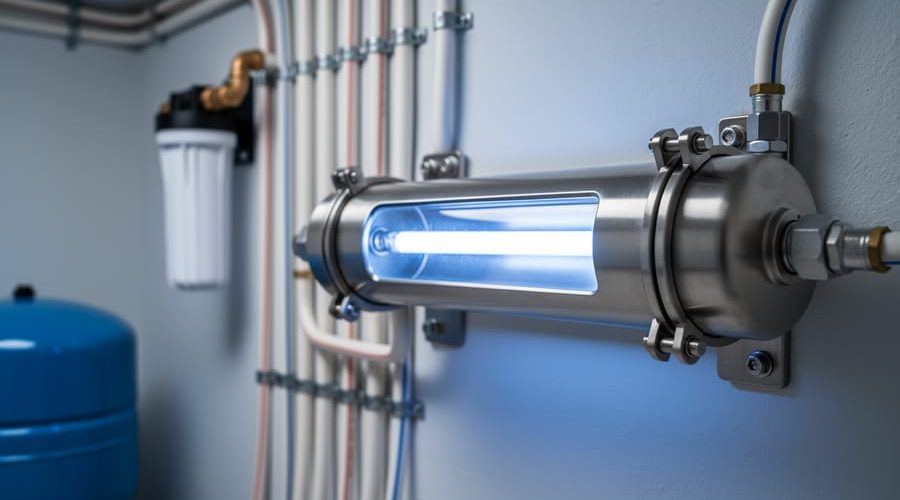
Calculate your household’s required UV-C dose by multiplying your peak water flow rate (in gallons per minute) by the recommended 40 millijoules per square centimeter—a system rated below this threshold won’t effectively neutralize bacteria and viruses, regardless of brand promises. Match your UV system size to your home’s actual demand: a family of four typically needs 12-15 GPM capacity, while smaller households can function with 6-8 GPM units, but undersizing forces the water to move too quickly through the UV chamber for adequate exposure.
Replace your UV-C lamp every 9,000 operating hours or annually, whichever comes first, because these bulbs lose germicidal effectiveness long before they visibly burn out—a glowing lamp doesn’t guarantee disinfection. Clean the quartz sleeve surrounding your bulb every three months by gently removing mineral deposits with white vinegar, since even a thin film blocks up to 50% of the UV light from reaching your water.
The gap between UV-C technology’s promise and real-world performance in homes almost always traces back to three preventable mistakes: choosing systems based on price rather than flow rate specifications, neglecting the invisible decline in lamp output over time, and allowing mineral buildup to create a barrier between the light and water. Understanding these critical factors transforms UV-C disinfection from an expensive disappointment into a reliable, chemical-free safeguard for your family’s water supply—one that works silently in your basement while you focus on other aspects of sustainable living.
What UV-C Disinfection Actually Does to Your Water
The Science Made Simple
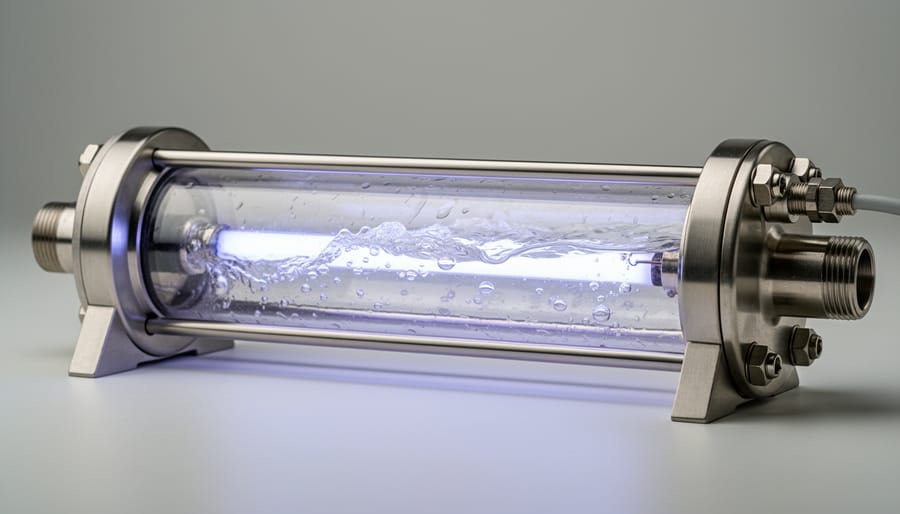
Think of UV-C light as nature’s reset button for microorganisms. Just like how sunlight can fade your favorite curtains over time, UV-C light works similarly on harmful bacteria, viruses, and parasites in your water, but much more intensely and at a specific wavelength.
Here’s what happens: UV-C light operates at 254 nanometers, a wavelength that targets the genetic material inside microorganisms. When water flows through a UV-C chamber, the light penetrates the cells of these unwanted guests and scrambles their DNA, much like shuffling a deck of cards so thoroughly that the original order becomes unrecoverable. This prevents them from reproducing or causing illness.
The beauty of this process is its simplicity and eco-friendliness. Unlike chemical disinfection methods, UV-C adds nothing to your water and removes nothing except the ability of pathogens to harm you. There’s no taste change, no waiting period, and no chemical byproducts entering your home or the environment. The microorganisms remain in the water but become harmless, unable to multiply or infect. It’s an elegant solution that harnesses the same germicidal power the sun uses naturally, concentrated into a targeted household application.
What UV-C Won’t Fix in Your Water
UV-C technology is incredibly effective at neutralizing microorganisms, but it’s important to understand what it doesn’t address in your water supply. Think of UV-C as a specialized tool rather than a complete solution.
First, UV-C cannot remove dissolved minerals like calcium, magnesium, or iron. If you have hard water leaving spots on dishes or causing scale buildup, UV-C won’t help with that. Similarly, it doesn’t eliminate sediment, sand, or rust particles that might cloud your water or damage appliances.
Chemical contaminants present another limitation. UV-C doesn’t filter out chlorine, heavy metals, pesticides, or emerging pollutants like PFAS. For these concerns, you’ll need dedicated chemical filtration systems such as activated carbon filters or reverse osmosis units.
Taste and odor issues typically stem from minerals or chemicals, not living organisms, so UV-C won’t improve these aspects either. Many homeowners find success by pairing UV-C disinfection with pre-filtration systems that handle sediment and chemicals first, creating a comprehensive water treatment approach that addresses both biological and non-biological contaminants effectively.
Sizing Your UV-C System: The Most Critical Decision
Calculating Your Peak Flow Rate
Understanding your household’s peak flow rate is essential for selecting a UV-C system that can effectively disinfect all the water you use simultaneously. An undersized system won’t have adequate contact time with the UV light, allowing potentially harmful microorganisms to pass through untreated.
Start by identifying your home’s simultaneous water usage patterns. Think about your busiest water consumption moments, like weekday mornings when someone showers while the dishwasher runs and coffee brews. Each fixture has a standard flow rate: showers typically use 2-2.5 gallons per minute (GPM), dishwashers about 2-3 GPM, washing machines 3-4 GPM, and kitchen faucets around 2 GPM.
To calculate your peak flow, list the fixtures that might run simultaneously and add their flow rates. For example, if your morning routine involves a shower (2.5 GPM), dishwasher (2.5 GPM), and kitchen faucet (2 GPM), your peak flow equals 7 GPM. Always round up to the nearest whole number for safety.
For most households, peak flow ranges between 8-15 GPM. Single-person homes might need only 6-8 GPM, while larger families with multiple bathrooms could require 15-20 GPM during morning rushes or evening activities.
Once you’ve determined your peak flow, select a UV-C system rated at least 20 percent higher than this number. This buffer ensures effective disinfection even during maximum demand and accounts for potential pressure variations in your home’s plumbing system.
Matching GPM to UV System Capacity
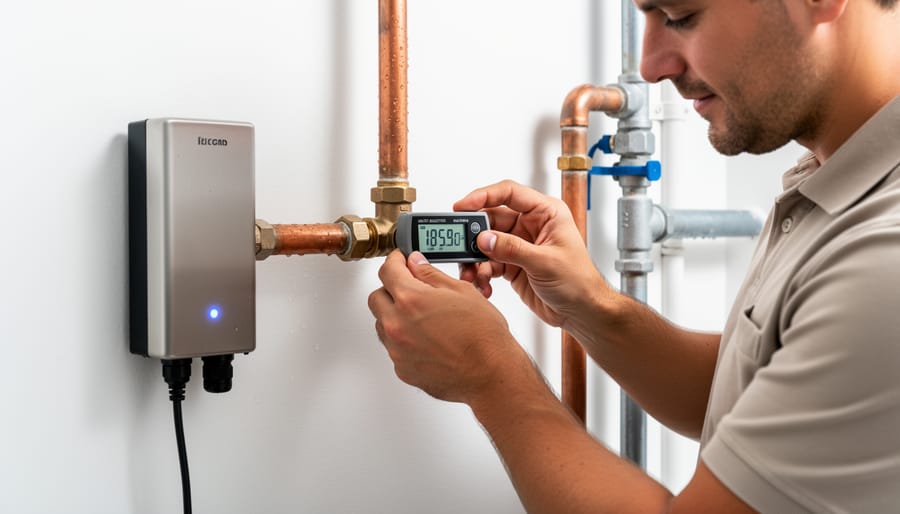
Understanding your water flow rate is essential for choosing a UV-C system that actually works. The GPM (gallons per minute) rating tells you how much water can flow through the system while still receiving adequate UV exposure to neutralize contaminants. If water rushes through too quickly, microorganisms won’t get the contact time needed for effective disinfection.
Most UV manufacturers provide GPM ratings based on specific UV dose requirements. For residential whole-house applications, here’s a practical sizing guide:
For smaller homes (1-2 bedrooms, 1-2 bathrooms): A system rated at 6-9 GPM typically handles normal usage, including simultaneous showering and dishwashing.
For average homes (3 bedrooms, 2 bathrooms): Look for systems rated 9-12 GPM to accommodate multiple water fixtures running concurrently.
For larger homes (4+ bedrooms, 3+ bathrooms): Choose systems rated 12-15 GPM or higher, especially if you have irrigation systems or high-capacity appliances.
Here’s the critical principle: always size up rather than down. Undersized systems force water through too quickly, dramatically reducing UV exposure time and compromising disinfection effectiveness. The extra cost of a larger unit is minimal compared to the health risks of inadequate treatment.
Consider peak demand scenarios when sizing your system. If family members shower simultaneously while the washing machine runs, your instantaneous flow rate spikes considerably. A properly sized UV system maintains effective disinfection even during these high-demand periods, ensuring your water remains safe regardless of household activity levels. This eco-conscious approach protects both your family’s health and your investment in sustainable water treatment technology.
Pre-Filtration Requirements That Affect Sizing
UV-C light works best when water is crystal clear. Think of it like trying to see through fog—turbidity and sediment particles create shadows where harmful microorganisms can hide from the UV rays. If your water contains visible particles or has a cloudy appearance, you’ll need a larger UV system to compensate, which means higher upfront costs and more energy consumption.
Most UV manufacturers recommend water clarity below 5 NTU (Nephelometric Turbidity Units) for optimal performance. Beyond this threshold, disinfection becomes unreliable regardless of UV dose. Additionally, minerals like iron and manganese, along with scale deposits, can cloud the quartz sleeve protecting the UV lamp, dramatically reducing effectiveness over time.
For eco-conscious homeowners, the solution often involves adding pre-filtration stages—typically sediment filters rated at 5 microns or less—before water reaches your UV unit. While this adds an extra component to maintain, it ensures your UV system operates at peak efficiency, protecting both your family’s health and your investment in sustainable water treatment technology.
Understanding UV Dose: The Missing Piece
What Is UV Dose and Why 40 mJ/cm² Matters
UV dose is the measurement that determines whether your UV-C disinfection system actually works to protect your family. Think of it like the difference between waving a sanitizing wand quickly over a surface versus holding it there long enough to do the job. UV dose measures both the intensity of the UV light and how long water is exposed to it, expressed in millijoules per square centimeter (mJ/cm²).
The magic number you need to know is 40 mJ/cm². This is the minimum UV dose that the NSF and EPA require for Class A water treatment systems, which are designed to disinfect your drinking water and eliminate harmful microorganisms. At this dose, UV-C light effectively destroys the DNA of bacteria, viruses, and protozoan cysts like Cryptosporidium and Giardia, rendering them unable to reproduce or cause illness.
Why does 40 mJ/cm² matter specifically? Research shows this level achieves at least a 99.99 percent reduction in most waterborne pathogens. It’s the sweet spot where effectiveness meets practical system design for residential use. Systems delivering lower doses might seem cheaper initially, but they won’t provide adequate protection, especially against more resistant microorganisms.
When shopping for a UV system, verify it meets this Class A standard. This ensures you’re getting a system that delivers genuine disinfection rather than just basic treatment. Remember, this dose requirement assumes your system is properly sized for your home’s water flow and maintained according to manufacturer specifications. Without all three elements working together, even the highest-rated system won’t perform as intended.
Factors That Reduce Effective Dose
Even the most powerful UV-C system won’t work effectively if certain factors interfere with light penetration. Understanding what reduces your system’s actual disinfection dose helps you maintain peak performance.
Water clarity is perhaps the most critical factor. Turbidity, or cloudiness in your water, blocks UV light from reaching pathogens. Particles, sediments, and dissolved organic matter act like tiny umbrellas, shielding microorganisms from exposure. For home systems to work properly, water should have less than 1 NTU (Nephelometric Turbidity Units). If your water appears cloudy, you’ll need pre-filtration before UV treatment.
UV transmittance (UVT) measures how much UV light actually passes through your water. While crystal-clear water might have 95% UVT or higher, dissolved minerals like iron and tannins can significantly reduce this number even when water looks clear. Most residential UV systems require at least 75% UVT to function correctly.
Flow rate matters too. Water moving too quickly through the chamber doesn’t receive adequate exposure time. That’s why proper system sizing based on your household’s peak flow is essential.
Finally, maintenance issues directly impact dose. As UV lamps age beyond their 9,000-hour lifespan, they produce weaker output. Meanwhile, mineral buildup on the protective quartz sleeve blocks light transmission. Regular cleaning and timely lamp replacement keep your effective dose where it needs to be.
Testing Your Water’s UV Transmittance
Before investing in a UV-C system, test your water’s UV transmittance (UVT) to ensure the technology will work effectively. UVT measures how much UV light passes through your water, with higher percentages indicating clearer water that allows better disinfection.
Most UV systems require a UVT of 75% or higher to function properly. Water with lower transmittance contains too many dissolved minerals, organic matter, or suspended particles that block UV rays from reaching pathogens. If your water comes from a well, lake, or has visible discoloration, testing becomes especially important.
You have several testing options. Professional water testing labs provide the most accurate UVT measurements, typically costing $50-150. Some UV system manufacturers offer free water testing when you’re considering their products. For a preliminary assessment, home water test kits can identify common issues like high iron or turbidity that reduce UVT, though they won’t give you an exact percentage.
If your UVT falls below 75%, consider installing pre-filtration like sediment filters or carbon systems to remove particles and improve water clarity before it reaches your UV unit.
The Maintenance Schedule That Actually Works
Annual Lamp Replacement: Non-Negotiable
Here’s a reality check that surprises many homeowners: your UV-C lamp doesn’t just burn out like a regular light bulb. Instead, it gradually loses its disinfection power while still appearing to work perfectly. After approximately 9,000 to 12,000 hours of operation (roughly one year of continuous use), UV lamps degrade to the point where they can no longer deliver the pathogen-killing UV dose your water needs.
This degradation happens because the special coating inside UV-C lamps breaks down over time. Think of it like sunscreen losing its protective qualities after sitting in your cabinet for years. The lamp might still glow with that familiar blue light, creating a false sense of security, but it’s no longer producing enough UV-C radiation at the critical 254-nanometer wavelength needed for effective disinfection.
To stay on top of replacements, mark your calendar when you install a new lamp and set a reminder for 12 months later. Many modern UV systems include built-in hour meters or timers that track lamp life automatically. Some homeowners simply write the installation date directly on the lamp sleeve with a permanent marker as a visual reminder.
Skipping lamp replacement is a gamble with your family’s health. Bacteria, viruses, and parasites that should be neutralized might pass through untreated, potentially causing gastrointestinal illness or other waterborne diseases. For a system that costs just pennies per day to operate, annual lamp replacement is essential maintenance, not optional upkeep. Budget around 50 to 150 dollars annually for replacement lamps depending on your system’s specifications.
Quartz Sleeve Cleaning: Monthly to Quarterly
Your UV-C system’s quartz sleeve is the transparent barrier that protects the UV lamp while allowing disinfecting light to reach your water. Over time, this sleeve accumulates deposits that block UV rays, dramatically reducing your system’s effectiveness. Here’s how to keep it crystal clear.
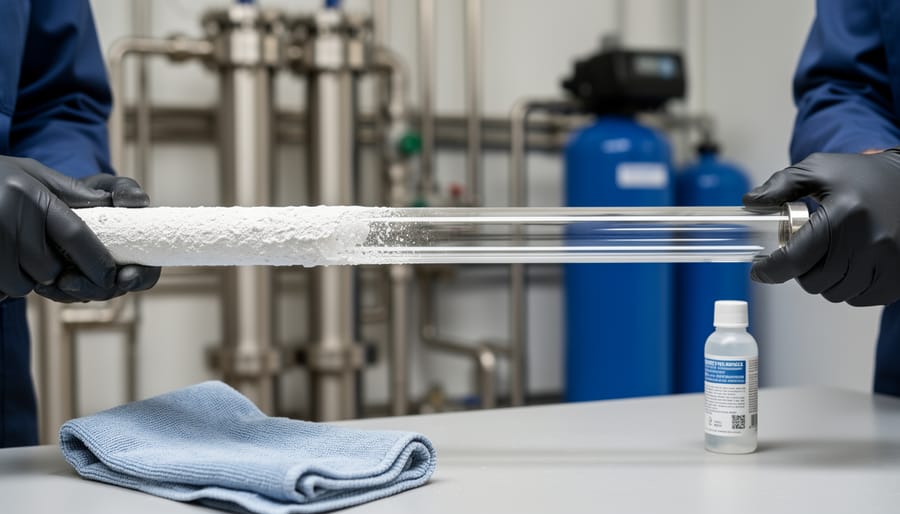
Check your quartz sleeve monthly for visible signs it needs cleaning. Hold a flashlight to the chamber—if the light appears dimmer than usual or you notice white, yellow, or brown deposits on the glass surface, it’s time for maintenance. Mineral buildup is especially common in homes with hard water and can reduce UV transmission by 50 percent or more.
To clean safely, first turn off the UV system and unplug it. Wait 10 minutes for the lamp to cool completely—quartz sleeves are fragile when hot. Close the water supply valves and carefully remove the sleeve according to your manufacturer’s instructions.
For routine cleaning, use white vinegar or a citric acid solution specifically designed for quartz sleeves. Avoid abrasive cleaners or rough cloths that can scratch the surface. Soak the sleeve for 15-20 minutes, then gently wipe with a soft, lint-free cloth. Rinse thoroughly with distilled water before reinstalling.
Inspect the O-rings during each cleaning and replace them if they show wear. These seals prevent leaks and maintain proper system pressure. Most homeowners find quarterly cleaning sufficient, though hard water conditions may require monthly attention for optimal UV transmission.
System Monitoring and Warning Signs
Your UV-C system works quietly in the background, but staying alert to warning signs ensures it continues protecting your family’s water supply effectively. Most modern systems include visual or audible alarm indicators that signal when the UV lamp needs replacement or when flow rates exceed recommended levels. Pay attention to these alerts, as they’re designed to catch problems before water quality is compromised.
Beyond electronic warnings, your senses provide valuable clues. Reduced water pressure throughout your home may indicate pre-filter blockages that restrict flow to the UV chamber. Visible sediment in drinking water or cloudy, discolored tap water suggests your pre-filtration system isn’t adequately removing particles before they reach the UV unit, reducing disinfection effectiveness.
Check the quartz sleeve monthly for mineral buildup or cloudiness, which blocks UV light penetration. If you notice persistent fouling despite regular cleaning, or if your system frequently triggers alarms, contact a certified water treatment professional. Similarly, unexpected changes in water taste, odor, or appearance warrant immediate professional assessment. An annual inspection by a qualified technician ensures your system operates at peak performance, catching subtle issues before they escalate. Remember, proactive monitoring protects both your investment and your family’s health while supporting sustainable home water management.
Common UV-C System Mistakes Homeowners Make
Even the most advanced UV-C disinfection systems can fail when homeowners overlook critical installation and maintenance factors. Understanding these common pitfalls will help you maximize your system’s effectiveness and protect your family’s health.
One of the most frequent mistakes is running water too quickly through the UV chamber. When water flows at excessive rates, microorganisms don’t receive adequate exposure time to the UV light. Think of it like trying to tan through a car window while speeding down the highway—you need sufficient contact time for the UV rays to work. Always match your flow rate to your system’s specifications to ensure proper disinfection.
Many homeowners also skip pre-filtration, expecting UV light alone to handle all water quality issues. However, UV-C systems work by disrupting DNA and cannot remove sediment, chemicals, or dissolved minerals. Particles in water create shadows that shield bacteria and viruses from UV exposure, dramatically reducing effectiveness. Installing a sediment filter before your UV system is essential for optimal performance.
Lamp replacement negligence ranks among the costliest mistakes. UV-C lamps gradually lose intensity over time, even while still producing visible light. Most lamps need replacement annually, regardless of appearance. Continuing to use degraded lamps gives you a false sense of security while your water remains inadequately treated.
Installation location matters more than most realize. Placing UV systems in areas with extreme temperatures—like unheated garages or direct sunlight—compromises lamp efficiency and shortens equipment lifespan. These systems perform best in temperature-controlled environments between 40-100°F.
Finally, some homeowners expect UV-C to solve every water quality concern. While excellent for eliminating biological contaminants, UV systems don’t address chemical pollutants, heavy metals, or taste and odor issues. They’re one component of comprehensive water treatment, not a universal solution. Understanding this limitation helps you build an effective, multi-stage filtration approach that truly protects your household’s water quality and supports sustainable, eco-conscious living.
Integrating UV-C Into Your Whole-House Water Strategy
The Ideal Multi-Stage Setup
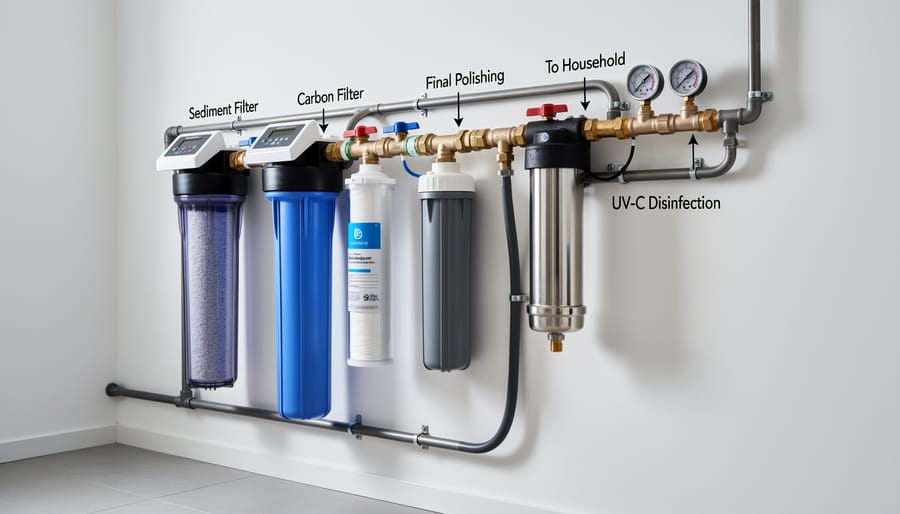
Think of UV-C as the final gatekeeper in your water purification lineup, not a solo performer. The most effective home systems follow a strategic three-stage approach that ensures UV light can work at peak efficiency.
Start with sediment filtration to remove particles larger than 5 microns—dirt, rust, and debris that would otherwise create shadows where microorganisms can hide from UV exposure. This pre-filter protects your UV system and extends its lifespan.
Next, install a carbon filter to eliminate chlorine, organic compounds, and discoloration. Clear water is essential because UV penetration drops dramatically in tinted or cloudy water. If you’re dealing with hard water minerals, consider adding a softener before the carbon stage to prevent scale buildup on your UV lamp sleeve.
Finally, position your UV-C unit as the last defense immediately before water enters your home’s distribution system. This sequence ensures microorganisms encounter UV light only after physical barriers and chemical contaminants are removed, maximizing disinfection effectiveness. The result is safer, cleaner water flowing from every tap in your home—a cutting-edge solution that works with nature’s own purification methods.
UV-C vs. Chemical Disinfection: Making the Eco-Choice
Traditional chemical disinfection methods like chlorine have protected water supplies for decades, but they come with environmental tradeoffs. Chlorination produces disinfection byproducts (DBPs) such as trihalomethanes, which can pose health concerns and accumulate in ecosystems. Chemical treatments also require ongoing purchases, storage of hazardous materials, and proper disposal procedures.
UV-C disinfection offers a cleaner alternative with zero chemical byproducts. The process uses light energy to inactivate microorganisms without adding or removing anything from your water. There’s no residual taste, no harmful byproducts entering wastewater systems, and no plastic bottles accumulating in landfills. For eco-conscious homeowners, this means protecting your family’s health while minimizing your environmental footprint.
The sustainability advantages extend beyond the water itself. UV systems require only electricity to operate, and modern LED-based units consume minimal energy. Unlike chemical methods that demand continuous resupply, a properly maintained UV system provides years of service with just annual lamp replacements. This represents a meaningful step toward sustainable living without compromising water safety.
UV-C disinfection doesn’t have to be a gamble with your family’s health. When you understand the three pillars of effective UV treatment—proper sizing, adequate dosing, and consistent maintenance—this technology transforms from uncertain to remarkably reliable. You now have the knowledge to ensure your system delivers safe, chemical-free water protection every single day.
The beauty of UV-C technology lies in its simplicity and eco-friendly approach. Unlike chemical treatments that leave residues and require ongoing purchases, a well-maintained UV system provides sustainable water safety with minimal environmental impact. This cutting-edge solution aligns perfectly with conscious living while protecting what matters most.
Take action today by evaluating your current UV system against the standards we’ve discussed. Calculate whether your flow rate matches your unit’s capacity, verify you’re achieving the recommended 40 mJ/cm² dose, and establish a maintenance schedule that includes annual lamp replacement and regular sleeve cleaning. If you’re considering a new purchase, use these principles as your buying guide rather than simply choosing the cheapest option.
Your water quality is too important to leave to chance. Armed with this understanding, you can confidently harness UV-C disinfection’s full potential and enjoy truly safe drinking water for years to come.