Every time you turn on your tap, water flows through an intricate network that brings fresh, treated water directly to your home—this is your municipal water supply. This publicly managed system collects water from natural sources like rivers, lakes, or underground aquifers, treats it to meet strict safety standards, and delivers it through miles of underground pipes to millions of households and businesses. Understanding how this system works empowers you to make informed decisions about your water usage, costs, and quality.
Municipal water suppliers operate as regulated utilities, meaning they must follow federal and state guidelines for water safety while balancing operational costs with community affordability. Your water bill funds the treatment processes that remove contaminants, the infrastructure maintenance that prevents service disruptions, and the testing protocols that ensure what reaches your glass meets Environmental Protection Agency standards. When you know what you’re paying for, you can better evaluate your consumption habits, identify potential savings through conservation, and access assistance programs if bills become unmanageable. This knowledge also helps you recognize when water quality issues arise and understand your rights as a customer within this essential public service system.
What Is a Municipal Water Supply?
The Journey of Your Tap Water
Your municipal water supply follows a carefully orchestrated journey before flowing from your kitchen faucet. Understanding this process helps you appreciate the infrastructure that delivers roughly 100 gallons of water to your home daily.
The journey begins at the source, typically a river, lake, reservoir, or underground aquifer. Your municipality draws raw water from these natural sources through intake structures designed to minimize environmental impact while ensuring consistent supply.
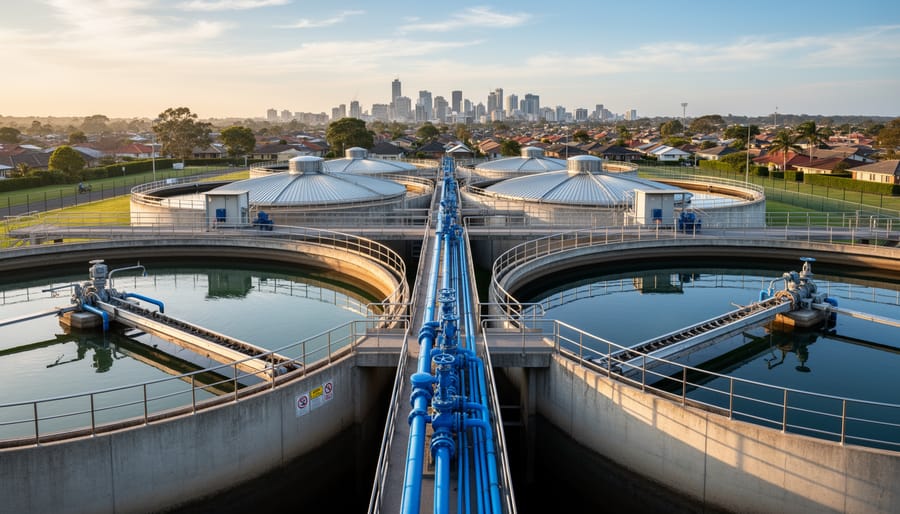
Once collected, water travels to treatment facilities where it undergoes multiple purification stages. First, large debris is filtered out through screening. The water then moves through sedimentation tanks where particles settle to the bottom. Next, filtration systems remove smaller contaminants using sand, gravel, or modern membrane technologies. Finally, disinfection occurs through chlorination or advanced methods like ultraviolet light treatment, eliminating harmful bacteria and viruses.
After treatment, clean water enters the distribution network—an extensive system of underground pipes, pumping stations, and storage tanks. Water towers provide consistent pressure and serve as emergency reserves. This infrastructure can span hundreds of miles in larger communities, requiring continuous maintenance and monitoring.
The distribution system delivers water directly to your property line, where your home’s internal plumbing takes over. Throughout this entire journey, municipalities regularly test water quality at multiple checkpoints, ensuring it meets strict safety standards before reaching your tap. This complex system operates around the clock, making safe water instantly available whenever you need it.
Who Controls Your Water?
Your municipal water supply is typically controlled by local government entities, though the exact structure varies by location. Most commonly, city or county governments own the water infrastructure and manage operations through dedicated water utilities or public works departments. These agencies are accountable to elected officials and, ultimately, to you as a taxpayer and resident.
In many communities, water utilities operate as independent public authorities with their own boards and operational budgets, though they still answer to municipal oversight. This structure allows specialized management while maintaining public ownership of this essential resource.
However, some municipalities contract with private companies to operate their water systems. Under this model, the infrastructure remains publicly owned, but a private corporation handles day-to-day operations, maintenance, and customer service. Fully privatized systems, where private companies own the entire infrastructure, are less common but do exist in certain areas.
Understanding who controls your water matters because it affects your rates, service quality, and your voice in decision-making. Public systems typically allow residents to attend board meetings, review budgets, and influence policy through local elections. Private operators, while potentially bringing operational efficiencies, may limit public input on rate increases and infrastructure priorities. Knowing your system’s governance structure helps you navigate billing concerns, access assistance programs, and advocate for sustainable water management practices.
The Real Cost Behind Your Water Bill
Why Water Costs Keep Climbing
If you’ve noticed your water bill creeping upward year after year, you’re not alone. Municipal water rates have been rising steadily across the country, and understanding why can help you make sense of those increasing charges.
The primary culprit is aging infrastructure. Many American cities rely on water pipes and treatment facilities built 50 to 100 years ago. These systems are literally crumbling beneath our streets, with water mains breaking at alarming rates and leading to costly emergency repairs. Replacing and modernizing this infrastructure requires massive investment, which utilities pass along to customers through higher rates.
Stricter water quality standards also contribute to rising costs. As we learn more about contaminants like PFAS chemicals, lead, and emerging pollutants, regulations evolve to protect public health. Meeting these higher standards means upgrading treatment technology and implementing more sophisticated testing protocols, all of which demand significant funding.
Climate change adds another layer of complexity. Droughts force utilities to develop alternative water sources or build expensive desalination plants. Flooding damages infrastructure and contaminates water supplies. These climate-related challenges require costly adaptations that ultimately appear on your bill.
Here’s the paradox: conservation efforts, while environmentally beneficial, can actually drive up per-unit costs. When residents use less water—which is exactly what we should be doing for sustainability—utilities still face the same fixed costs for maintaining pipes, treatment plants, and staff. With less water sold, those costs must be spread across fewer gallons, resulting in higher rates per unit.
Understanding these factors doesn’t make bills easier to pay, but it does explain the economic realities behind municipal water pricing. The good news is that assistance programs and conservation strategies can help manage these costs while supporting system sustainability.
Water Affordability: When Bills Become Unmanageable
Who’s Most at Risk?
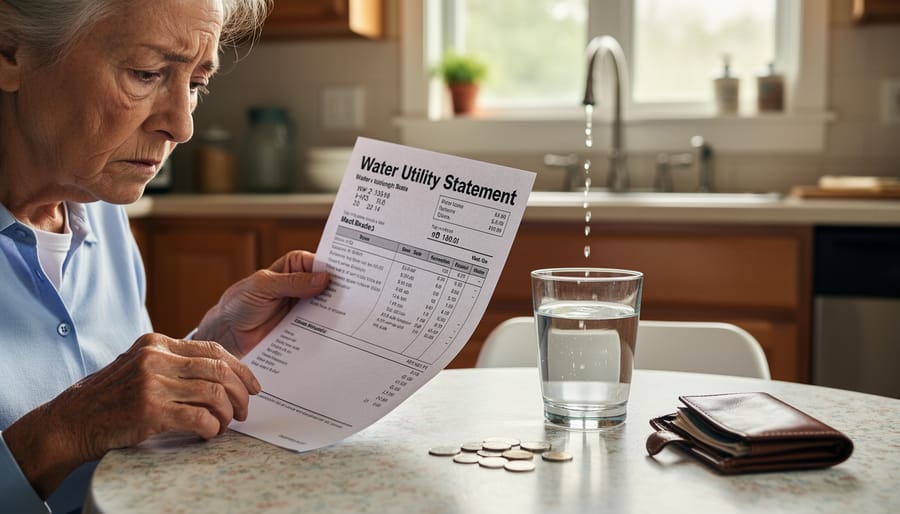
Water affordability challenges don’t impact everyone equally. Low-income families are particularly vulnerable, often spending a disproportionate percentage of their household budget on water and sewer services—sometimes exceeding the recommended affordability threshold of 4.5% of income. When utility costs climb, these families face impossible choices between paying water bills and covering other essentials like groceries or medical care.
Fixed-income seniors represent another at-risk group. Living on limited retirement savings or social security, they struggle to absorb rate increases that often outpace inflation. Many seniors remain in older homes with outdated plumbing that can drive up consumption, compounding their financial burden.
Communities facing combined economic and infrastructure challenges experience the most severe impacts. Older industrial cities or rural areas with aging water systems often need expensive upgrades, leading to dramatic rate hikes precisely where residents can least afford them. These communities may also deal with water quality issues requiring additional household filtration investments.
Renters deserve special mention, as they’re sometimes excluded from assistance programs designed for property owners, despite bearing water costs through their rent or direct billing. Understanding these vulnerabilities helps us recognize that water access isn’t just an infrastructure issue—it’s a matter of environmental justice and community sustainability.
Understanding Water Shutoff Policies
Your Rights as a Water Customer
As a municipal water customer, you’re entitled to important protections that safeguard your access to this essential resource. Understanding these rights can help you navigate billing issues, service interruptions, and disputes with your water provider.
Most states require water utilities to provide advance notice before shutting off service, typically ranging from 7 to 30 days depending on your location. During this period, you have the right to dispute incorrect charges, request payment plans, or apply for assistance programs. Many municipalities prohibit water shutoffs during extreme weather conditions or for households with vulnerable residents, such as young children or elderly individuals with medical conditions.
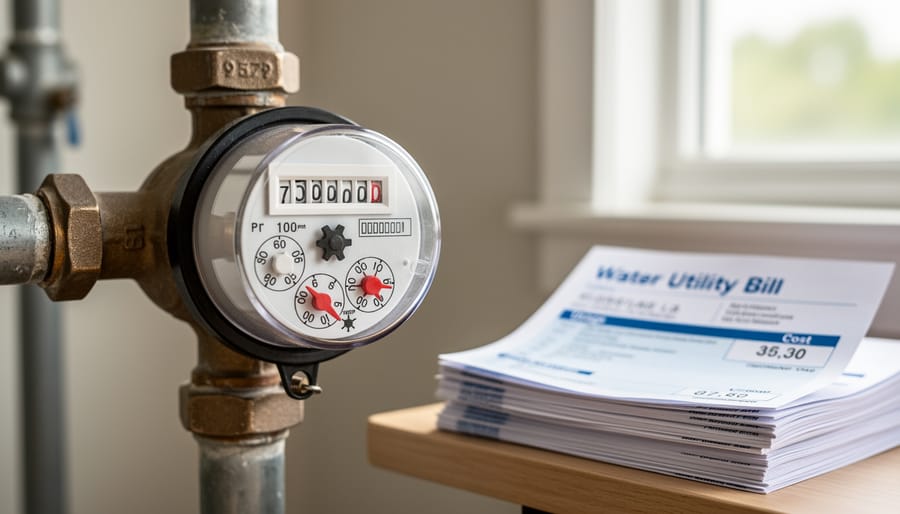
You’re entitled to receive clear, understandable bills that itemize charges and explain rate increases. If your bill seems unusually high, you have the right to request a meter test to verify accuracy. Water providers must also maintain reasonable customer service standards, including accessible complaint procedures and timely responses to service issues.
State-by-state regulations vary significantly. Some states, like California and Massachusetts, have enacted strong consumer protections including mandatory payment plan options and restrictions on shutoffs for low-income households. Others provide minimal protections beyond basic notice requirements. Check your state’s Public Utility Commission website to understand specific protections available in your area.
If you’re facing financial hardship, don’t wait until service is threatened. Contact your water utility immediately to discuss payment arrangements, inquire about assistance programs, or explore whether you qualify for reduced rates based on household income. Many utilities offer forgiveness programs and flexible payment options that can help you maintain continuous access to safe drinking water.
The Health and Safety Concerns
When municipal water systems disconnect service due to unpaid bills, the consequences extend far beyond inconvenience. Water shutoffs create serious public health risks that impact entire communities, particularly vulnerable populations including children, elderly residents, and those with compromised immune systems.
Without running water, basic sanitation becomes nearly impossible. Families struggle to maintain proper hygiene, wash hands effectively, or flush toilets—conditions that can rapidly spread infectious diseases. During disease outbreaks, these shutoffs become even more dangerous, as proper handwashing is critical for preventing transmission of illnesses like COVID-19, influenza, and gastrointestinal infections.
The environmental justice dimension of water shutoffs is significant. Lower-income neighborhoods and communities of color disproportionately face service disconnections, creating a troubling pattern where those least able to afford healthcare are most exposed to preventable health hazards. This reality contradicts the fundamental principle that clean water is a basic human right, not a luxury item.
Beyond disease risks, families without water often resort to unsafe alternatives, such as collecting water from contaminated sources or using bottled water exclusively—an expensive and environmentally unsustainable solution. Children may miss school due to inability to bathe or wash clothes, while adults face difficult choices between paying water bills and affording other necessities like food or medication.
Assistance Programs You Might Qualify For
How to Apply Before It’s Too Late
If you’re struggling with water bills or facing service disconnection, act quickly to access available assistance programs. Start by contacting your municipal water utility directly—most have customer service departments specifically dedicated to helping residents navigate financial hardship options. Ask about payment plans, low-income discount programs, and temporary relief options before your situation becomes urgent.
Gather essential documentation before applying, including recent water bills, proof of income like pay stubs or tax returns, identification documents, and verification of household size. Many programs also accept unemployment benefits statements or Social Security award letters as income proof.
Check both local and state-level resources simultaneously. Your city or county may offer emergency utility assistance through social services departments, while state programs often provide seasonal support. Community action agencies and nonprofit organizations like the Low Income Home Energy Assistance Program sometimes extend help to water bills too.
Timing matters significantly. Apply as soon as you anticipate difficulty paying rather than waiting until shutoff notices arrive. Most assistance programs have limited annual funding that depletes quickly, with application windows often opening at specific times throughout the year. Create a reminder to reapply annually if you qualify for ongoing assistance, and always respond promptly to any requests for additional information to avoid processing delays.
Reducing Your Water Consumption (And Your Bill)
Smart Water Filtration and Conservation
While municipal water undergoes treatment to meet safety standards, many homeowners are discovering that point-of-use filtration systems offer an effective way to enhance water quality while supporting both environmental and financial goals. Installing home water filtration systems eliminates the need for bottled water, which reduces plastic waste and saves money over time—a single reusable filter can replace thousands of plastic bottles annually.
Beyond environmental benefits, modern filtration technology helps conserve water in surprising ways. Traditional whole-house systems can waste significant amounts during backwashing cycles, but newer point-of-use filters installed at specific taps provide purified water without the runoff. This targeted approach means you’re only filtering the water you actually drink and cook with, rather than treating every gallon that enters your home.
For households concerned about municipal water bills, combining strategic filtration with conservation practices creates a sustainable approach to water management. Understanding where your municipal water comes from and how it’s treated helps you make informed decisions about additional filtration needs, ultimately leading to better water quality, reduced waste, and lower costs for your family.
Understanding your municipal water supply isn’t just about knowing where your water comes from—it’s about taking control of your household’s most essential resource. By learning how these systems work, you’re better equipped to spot inefficiencies, advocate for fair pricing, and make informed decisions about your water use.
Start by reviewing your water bill carefully each month to catch unusual charges or consumption spikes early. Familiarize yourself with your local water utility’s assistance programs, payment plans, and conservation rebates that could significantly reduce costs. Many municipalities offer free water audits or low-flow fixture upgrades that put money back in your pocket while supporting sustainability.
Don’t hesitate to attend public utility meetings or contact your water provider with questions about rates, water quality reports, or infrastructure investments. Your voice matters in shaping policies that affect affordability and service quality. Consider implementing rainwater harvesting or greywater systems where permitted to reduce dependence on municipal supplies.
Remember, knowledge is power when it comes to water access. By staying informed and proactive, you protect both your family’s water security and your financial wellbeing while contributing to a more sustainable community water future.