Calculate your daily hydration needs by dividing your body weight in pounds by two to determine how many ounces you should drink, recognizing that the traditional “8 cups of water” guideline serves as a baseline minimum rather than a universal requirement. Track your actual consumption by filling a reusable 64-ounce container each morning and finishing it by bedtime, adjusting upward if you exercise heavily, live in hot climates, or notice signs of dehydration like dark urine or fatigue.
Compare your household water sources systematically by testing tap water quality first, since municipal supplies often match or exceed bottled water standards while costing pennies per gallon and eliminating plastic waste. Evaluate whether a filtration system addresses specific contaminants in your local water supply, understanding that carbon filters remove chlorine and improve taste while reverse osmosis systems tackle heavier metals and chemicals but waste significant water in the process.
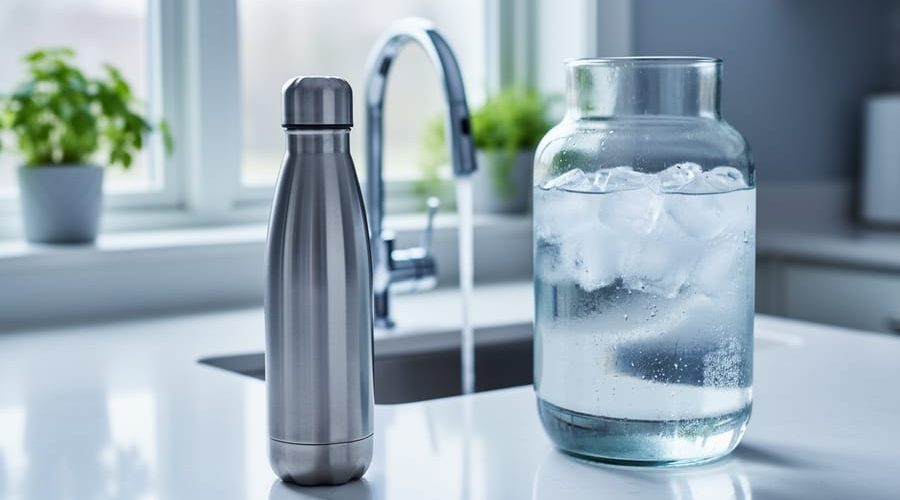
Choose sustainable drinking practices by investing in insulated stainless steel bottles that keep water cold for 24 hours, eliminating the convenience excuse for buying disposable bottles. Install a countertop or under-sink filtration system to create an unlimited supply of clean drinking water at home, reducing both environmental impact and long-term costs while ensuring your family consistently meets their hydration goals without compromising on quality or taste.
Understanding the 8 Cups Rule: What It Really Means
You’ve probably heard it countless times: drink eight cups of water daily. But where does this recommendation actually come from, and what does it mean for your household’s hydration habits?
The 8-cup rule traces back to a 1945 Food and Nutrition Board recommendation suggesting adults consume about 2.5 liters of water daily. Over time, this evolved into the simplified “8×8 rule” – eight 8-ounce cups, totaling 64 ounces or roughly half a gallon. It’s important to note that a standard cup in this context equals 8 fluid ounces, not your favorite oversized coffee mug or decorative kitchen cup.
While this guideline provides a helpful starting point, it’s not a one-size-fits-all solution. The original recommendation actually included water from all sources, including food. Many people don’t realize that fruits, vegetables, soups, and other beverages contribute significantly to daily hydration. Your body gets roughly 20% of its water from food alone.
Your individual water needs depend on several factors that make the 8-cup rule more of a baseline than a prescription. If you live in a hot climate, your body loses more water through perspiration. Active individuals engaging in exercise or physical labor require additional hydration to replace fluids lost through sweat. Health conditions, medications, pregnancy, and breastfeeding also influence how much water you need.
Understanding these variables helps homeowners make smarter choices about their water sources. Whether you’re considering the environmental impact of bottled water, investing in filtration systems, or evaluating your tap water quality, knowing your household’s actual hydration needs ensures you’re choosing sustainable solutions that truly serve your family’s health and lifestyle.
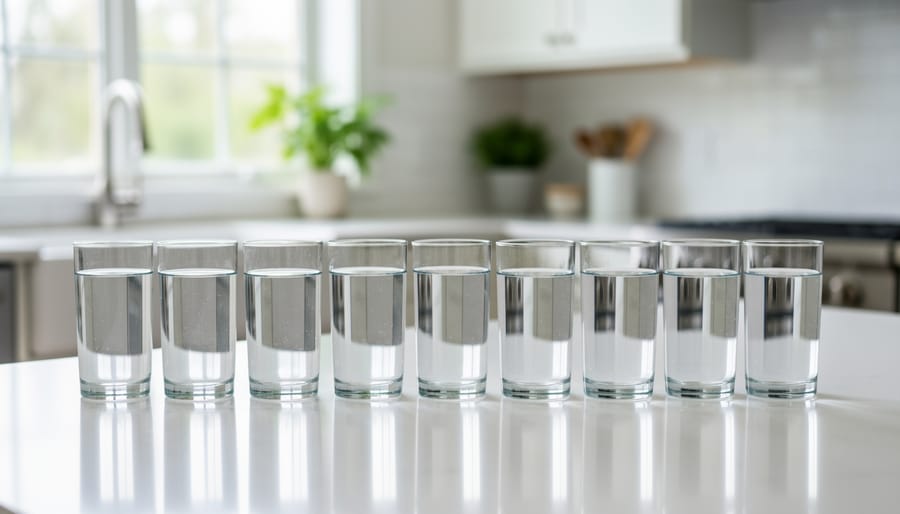
Comparing Water Drinking Options for Your Daily 8 Cups
Tap Water: The Baseline Option
For most homeowners, municipal tap water represents the most straightforward way to meet your daily 8-cup hydration goal. It flows directly from your faucet, costs mere pennies per gallon, and comes with environmental advantages that bottled alternatives simply can’t match.
The quality of tap water varies by location, but it’s generally safe to drink. In the United States, the Environmental Protection Agency regulates public water systems, requiring regular testing for over 90 contaminants including bacteria, lead, and chemical pollutants. Most municipalities publish annual water quality reports, which you can request or find online to understand exactly what’s in your local supply.
That said, tap water isn’t perfect. Aging infrastructure can introduce issues like lead from old pipes, while treatment processes may leave trace amounts of chlorine or fluoride that affect taste. Some regions face challenges with naturally occurring minerals or agricultural runoff. The good news is these concerns are typically manageable and don’t necessarily require switching to bottled water.
From a cost perspective, tap water is unbeatable. You’ll pay roughly $0.004 per gallon compared to $1-3 for bottled water, making it the most budget-friendly option for consistent daily hydration. Environmentally, choosing tap over bottled eliminates plastic waste and the carbon footprint associated with manufacturing and transportation.
For most households, tap water provides a reliable, economical baseline for meeting hydration needs. If taste or specific contaminants concern you, simple filtration solutions can address these issues while maintaining tap water’s core advantages of affordability and sustainability.
Filtered Tap Water: Enhanced Quality Without the Waste
Filtering your tap water offers the ideal middle ground—delivering enhanced quality without generating plastic waste. This approach addresses taste and safety concerns while maintaining the convenience and sustainability of tap water.
Water filter pitchers represent the most accessible entry point into filtration. These affordable devices sit in your refrigerator, removing chlorine, lead, and other common contaminants through activated carbon filters. They’re perfect for renters or those wanting to test filtration before committing to permanent installations. Most pitchers cost between $20-$40, with replacement filters needed every two months.
Faucet-mounted filters provide instant access to filtered water without refrigerator space requirements. These compact units attach directly to your existing faucet, allowing you to switch between filtered and unfiltered water as needed. They typically remove more contaminants than pitcher filters and require less frequent cartridge changes—usually every three to four months.
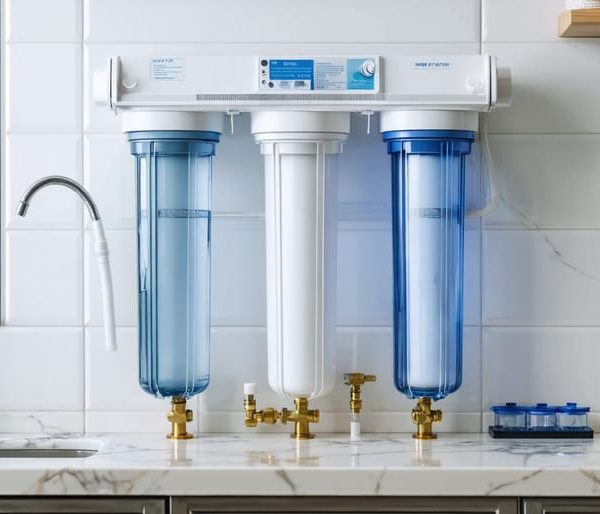
Under-sink systems deliver the most comprehensive filtration while keeping countertops clear. Though they require professional installation and higher upfront costs, these systems can remove a wider spectrum of contaminants, including pharmaceuticals and heavy metals. They’re ideal for homeowners committed to long-term water quality improvement.
The psychology of filtration matters too. When water tastes better, you naturally drink more of it. Studies show people consume significantly more water when they trust its quality and enjoy its taste. By removing the metallic or chemical flavors sometimes present in municipal water, filtration systems help you effortlessly reach that daily 8-cup goal while reducing reliance on bottled water.
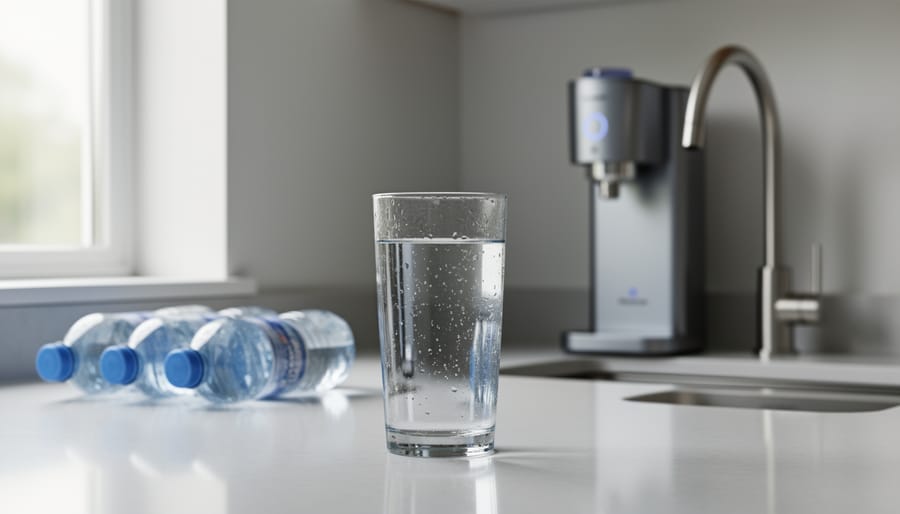
Bottled Water: Convenience vs. Environmental Cost
Bottled water offers undeniable convenience—it’s portable, readily available, and requires zero preparation. For busy homeowners on the go, grabbing a bottle seems like the easiest way to stay hydrated. However, this convenience comes with substantial hidden costs that conflict with eco-living principles.
The environmental impact is staggering. Plastic bottles require petroleum for production, and only about 9% actually get recycled. The remaining waste ends up in landfills or oceans, where it takes up to 450 years to decompose. Manufacturing and transporting bottled water also generates significant carbon emissions, contributing to climate change.
From a financial perspective, bottled water costs roughly 2,000 times more than tap water. A household spending $5 weekly on bottled water pays over $260 annually—money that could fund a quality home filtration system instead. When comparing bottled versus filtered water, the long-term savings become even more apparent.
Quality concerns add another layer. Bottled water isn’t necessarily purer than tap water, and plastic chemicals can leach into the water, especially when bottles are exposed to heat or sunlight. Many brands simply bottle municipal tap water after minimal processing.
For environmentally-conscious homeowners seeking sustainable hydration solutions, bottled water represents the least eco-friendly choice available.
Water Dispensers and Coolers: Office-Style Hydration at Home
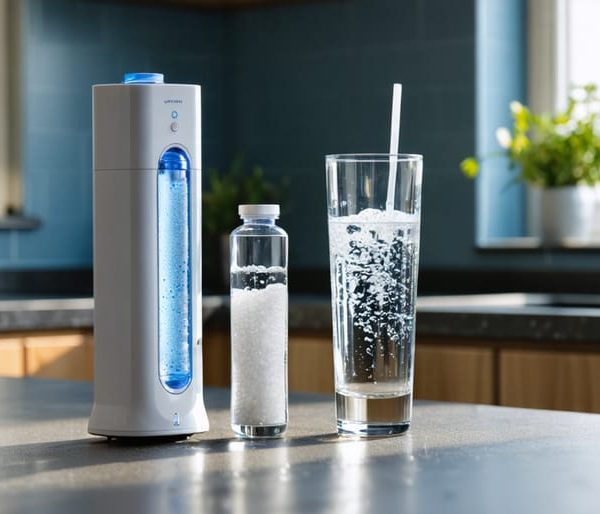
Water dispensers bring the convenience of office-style hydration into your home, offering a practical solution for meeting your daily 8-cup water intake. These systems come in two main varieties: bottled dispensers that use 5-gallon jugs and bottleless models that connect directly to your home’s water line.
Bottled dispensers are portable and require no installation, but they involve recurring delivery costs or the physical effort of transporting heavy jugs yourself. The average 5-gallon jug costs $6-$10 and provides roughly 40 cups of water. While convenient, this option generates plastic waste from jugs, even when returned for refilling.
Bottleless water dispenser options eliminate jug-handling entirely by tapping into your existing water supply. They typically include built-in filtration systems that remove contaminants while keeping beneficial minerals intact. Initial costs range from $200-$800, but you’ll save money long-term by avoiding delivery fees and jug purchases.
Both types offer hot and cold water on demand, making it easier to fill your reusable bottle throughout the day. From an eco-conscious perspective, bottleless dispensers paired with proper filtration represent the most sustainable choice, reducing plastic waste while ensuring quality hydration. Consider your household size, budget, and environmental priorities when choosing between these systems.
Whole House Filtration Systems: Premium Water Everywhere
For homeowners committed to meeting their daily 8 cups water goal while ensuring exceptional quality throughout their entire home, whole house filtration systems offer a comprehensive solution. These innovative systems install at your main water line, treating every drop that enters your home—from kitchen faucets to bathroom taps and showers.
The upfront investment typically ranges from $1,500 to $4,500 depending on your home’s size and filtration needs, which may seem substantial initially. However, the long-term value becomes apparent when you consider eliminating bottled water purchases, reducing plumbing maintenance from sediment buildup, and increasing your property value. Most systems last 10-15 years with minimal maintenance, usually just annual filter replacements.
The water quality benefits are remarkable. These systems remove chlorine, sediment, heavy metals, and various contaminants, delivering consistently clean water from every tap. This convenience naturally encourages better hydration habits since you can confidently fill your glass anywhere in your home without hesitation.
For eco-conscious homeowners, whole house filtration represents a sustainable choice that dramatically reduces plastic waste while ensuring your family has access to premium water quality for drinking, cooking, and daily living.
Making Your Choice: Which Option Best Supports Your 8-Cup Goal?
Meeting your 8-cup daily hydration goal becomes much easier when you select the water source that truly fits your life. Here’s a practical framework to guide your decision.
Start by assessing your household size. A family of four drinking 8 cups daily needs 32 cups, or two gallons of water each day. For larger households, the cost difference between tap water (pennies) and bottled water (potentially $200+ monthly) becomes substantial. Filtered tap systems shine here, offering convenience without ongoing bottle purchases.
Next, consider your local water quality. If your tap water tastes unpleasant or you have concerns about contaminants, testing your water is the essential first step. Simple carbon filters handle chlorine taste and odor, while reverse osmosis systems address heavy metals and other contaminants. However, if your municipal water already meets high standards, you might only need a basic filter for taste improvement.
Budget plays a crucial role. Initial investments vary: pitcher filters start around $30, faucet-mounted systems range from $40-80, and under-sink filters run $100-300. Compare this to bottled water’s ongoing expense. Calculate your annual costs to see which option provides the best long-term value.
Environmental values matter too. If sustainability is important to you, eliminating single-use plastic bottles makes filtered tap water the clear winner. Reusable bottles paired with home filtration can save hundreds of plastic bottles annually from landfills.
Lifestyle factors complete the picture. Frequent travelers might keep a portable filter bottle handy. Busy families benefit from pitcher filters requiring minimal setup. Those renovating kitchens could install sophisticated under-sink systems.
Quick reference guide: Choose tap water if it tastes good and you want maximum savings. Select pitcher or faucet filters for moderate budgets and improved taste. Opt for under-sink systems when addressing specific contaminants. Reserve bottled water for emergencies only, given the environmental and financial costs.
The right choice supports both your hydration goals and your values, making those 8 cups a sustainable daily habit rather than a compromise.
Tracking and Tips: Actually Drinking Those 8 Cups Daily
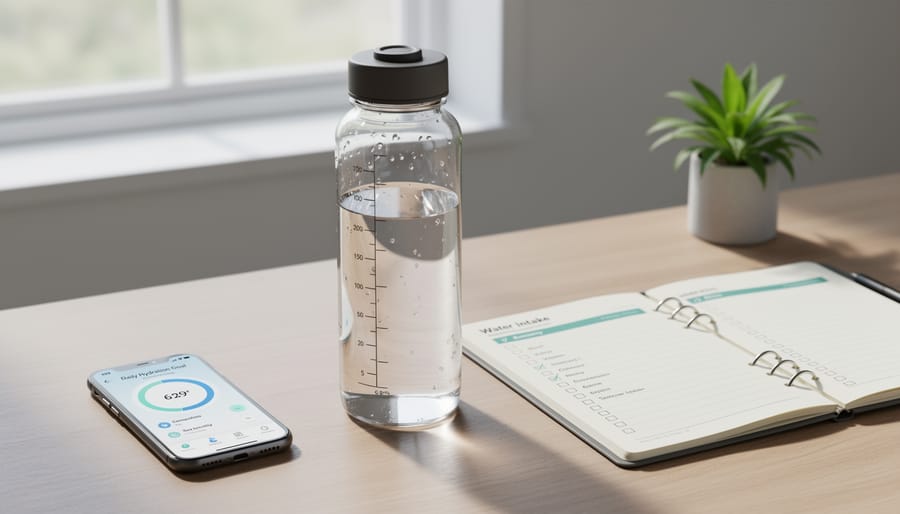
Meeting your daily hydration goal becomes much easier with the right strategies, regardless of which water source you choose. Start by finding a tracking method that fits your lifestyle. Reusable water bottles with measurement markings take the guesswork out of monitoring intake, while smartphone apps can send helpful reminders throughout the day. Some people prefer the simplicity of filling a half-gallon pitcher each morning and ensuring it’s empty by bedtime.
Timing matters when it comes to consistent hydration. Begin each day with a full glass before your morning coffee, drink a cup before each meal, and keep water accessible at your desk or favorite sitting spots. This approach naturally distributes your intake without overwhelming your system at once.
If plain water feels boring, there are eco-friendly ways to make it more appealing. Add slices of cucumber, lemon, or fresh herbs like mint to your reusable pitcher. Frozen fruit cubes work beautifully as flavor enhancers and ice alternatives. For those who prefer bubbles, a home carbonation system offers the fizz of bottled water without the waste.
Common barriers often derail good intentions. Forgetting to drink is easily solved by creating visual cues like keeping your water bottle in high-traffic areas. If you dislike your tap water’s taste, a quality filtration system can transform it into something you’ll actually enjoy drinking. Cold temperatures also make water more palatable for many people, so keeping filtered water chilled in glass containers encourages consistent consumption while reducing reliance on single-use plastics.
Meeting your daily hydration needs doesn’t require a one-size-fits-all approach. The best choice for consuming your 8 cups of water is simply the one you’ll stick with consistently. Whether that’s filtered tap water, a reusable bottle filled at home, or another sustainable option depends on your unique circumstances, including your local water quality, budget, and lifestyle preferences.
Take time to honestly assess what matters most to you. If environmental impact is a priority, reducing single-use plastic bottles makes a significant difference. If water quality concerns you, investing in a filtration system may provide peace of mind while still being eco-friendly. The key is making an informed decision that balances your health requirements with your values around sustainability.
Remember, the healthiest water is the water you actually drink. Choose the option that removes barriers to staying hydrated and aligns with your commitment to responsible living, and you’ll serve both your well-being and the planet.