Every day, millions of American families unknowingly consume nitrates in their tap water, one of the most common yet overlooked invisible contaminants threatening household health. While your water may look crystal clear and taste perfectly normal, elevated nitrate levels—primarily from agricultural runoff and aging infrastructure—can pose serious health risks, especially for infants, pregnant women, and vulnerable populations.
Nitrates convert to nitrites in the body, reducing blood’s ability to carry oxygen and potentially causing a dangerous condition called methemoglobinemia, or “blue baby syndrome,” in infants under six months. Long-term exposure has been linked to thyroid problems, increased cancer risk, and developmental issues during pregnancy. The challenge is that unlike chlorine or sulfur, you cannot see, smell, or taste nitrates, making testing the only reliable detection method.
Understanding these risks doesn’t mean you need to panic about your family’s water supply. The EPA sets the maximum contaminant level at 10 parts per million for drinking water, and effective solutions exist once you identify a problem. Whether your water comes from a private well or municipal system, knowing your nitrate levels empowers you to take control of your household’s health. This guide will walk you through the science behind nitrate contamination, realistic health implications, accurate testing methods, and proven treatment options that fit your home and budget.
What Are Nitrates and How Do They Get Into Your Water?
Understanding Nitrates vs. Nitrites
Before diving into health effects and solutions, it’s helpful to understand what you’re actually dealing with in your water. Nitrates and nitrites are closely related nitrogen compounds, but they behave differently in your body and environment.
Nitrates consist of one nitrogen atom bonded to three oxygen atoms. They occur naturally in soil and water, and also come from fertilizers, septic systems, and animal waste. While nitrates themselves are relatively stable in water, they’re the form most commonly found in contaminated wells and municipal supplies.
Nitrites contain one nitrogen atom and two oxygen atoms. They’re less common in drinking water because they typically convert to nitrates in oxygen-rich environments. However, this conversion can reverse inside your body through a process involving bacteria in your digestive system, which is where health concerns arise.
Think of nitrates as the traveling form and nitrites as the active form that creates potential health risks. Both matter for water safety because testing for nitrates helps identify contamination sources, while understanding the nitrate-to-nitrite conversion explains why certain groups, especially infants, face greater vulnerability. Modern water testing innovations now make detecting both compounds easier for homeowners committed to protecting their household water quality.
Common Sources of Nitrate Contamination
Understanding where nitrates come from helps you protect your drinking water at home. These contaminants don’t appear out of nowhere—they typically enter groundwater and surface water through specific pathways that are often connected to human activities.
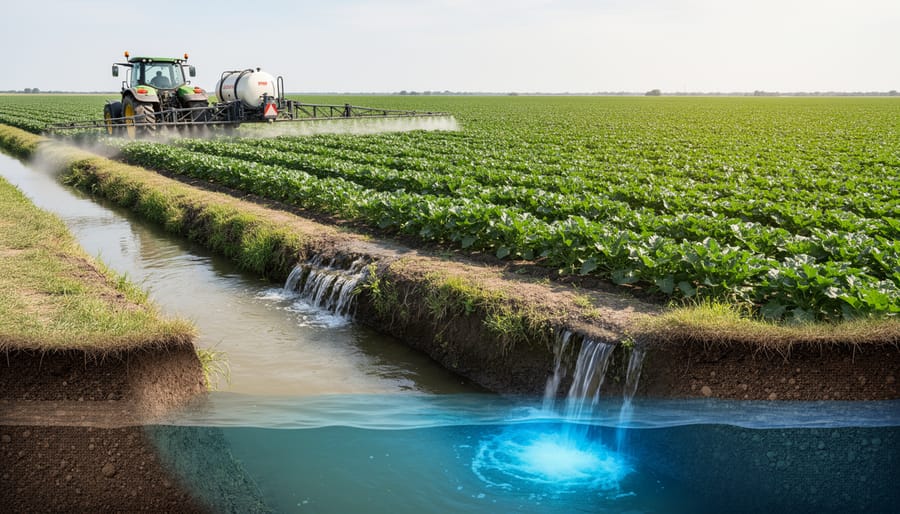
Agricultural runoff stands as the leading contributor to nitrate contamination. When farmers apply nitrogen-based fertilizers to crops, rain and irrigation wash excess nutrients into nearby streams, rivers, and underground aquifers. Even organic farms using manure for soil enrichment can inadvertently introduce nitrates into water systems if not properly managed.
Your own backyard might be contributing to the problem too. Residential lawns treated with fertilizers release nitrates that seep into the ground, especially after heavy rainfall. If you have a septic system, it’s another potential source. Aging or poorly maintained septic tanks can leak nitrogen compounds directly into the groundwater that feeds your well.
Animal waste from livestock operations represents a significant contamination source in rural areas. Large-scale farming facilities generate enormous amounts of manure, and when storage or land application isn’t handled correctly, nitrates migrate into drinking water supplies.
Industrial pollution, though less common, also plays a role. Food processing plants, wastewater treatment facilities, and certain manufacturing operations discharge nitrogen compounds that eventually reach water sources.
The good news? Recognizing these sources empowers you to take preventive action, whether that means testing your well water regularly, maintaining your septic system, or choosing eco-friendly lawn care practices that protect both your family and the environment.
Why Your Well Water Is at Higher Risk
Private well owners face uniquely elevated nitrate risks compared to those connected to municipal water systems. Unlike city water supplies, which undergo regular testing and treatment, private wells remain the homeowner’s responsibility—often with testing happening infrequently or not at all. Wells located in agricultural regions are particularly vulnerable, as fertilizer runoff and livestock waste seep through soil layers into groundwater aquifers over time. Shallow wells under 50 feet deep face even greater contamination risk since nitrates don’t have to travel far to reach your water supply. Rural septic systems, when improperly maintained or too close to wells, create another contamination pathway. Without the protective oversight and advanced filtration that municipal systems provide, well water can accumulate dangerous nitrate levels silently, making regular testing essential for your family’s safety.
The Health Risks Nobody Warned You About

Blue Baby Syndrome: The Most Urgent Threat
Among all the health concerns linked to nitrates in drinking water, methemoglobinemia—commonly called “blue baby syndrome”—stands as the most urgent threat, particularly for families with infants under six months old.
This dangerous condition occurs when nitrates in water interfere with your baby’s ability to carry oxygen throughout their body. When infants consume nitrate-contaminated water (either directly or through formula mixed with contaminated water), their digestive system converts nitrates into nitrites. These nitrites then bind to hemoglobin in the blood, creating methemoglobin—a form of hemoglobin that cannot effectively transport oxygen to tissues and organs.
Babies under six months are especially vulnerable for several reasons. Their stomach acid is less acidic than adults, creating an environment where bacteria more easily convert nitrates to nitrites. Additionally, infants have lower levels of the enzyme needed to convert methemoglobin back to normal hemoglobin, making them less able to reverse the condition naturally.
Watch for these warning signs: a bluish or grayish tint to the skin, particularly around the mouth, hands, and feet; unusual lethargy or sleepiness; difficulty breathing; and poor feeding habits. These symptoms can appear within hours to days of exposure and require immediate medical attention.
The good news is that methemoglobinemia is entirely preventable. Never use water containing nitrates above 10 parts per million (the EPA’s maximum contaminant level) for preparing infant formula or baby food. Testing your water is the only way to know if nitrates pose a risk to your little one.
Cancer Risks and Long-Term Exposure
Long-term exposure to nitrates in drinking water has raised concerns among health researchers, particularly regarding potential cancer risks. While the connection isn’t as immediate as methemoglobinemia, understanding these risks is important for protecting your family’s long-term health.
When you consume nitrates, your body can convert them into compounds called nitrosamines through a natural digestive process. This formation of harmful compounds happens when nitrates interact with proteins in your stomach, especially in the presence of certain conditions. Think of it like an unwanted chemical reaction happening inside your body.
Research has linked nitrosamine exposure to several types of cancer. Colorectal cancer shows the strongest association, as these compounds directly contact the digestive tract lining over years of exposure. Studies have also identified potential connections to thyroid cancer and bladder cancer, though researchers continue investigating the strength of these relationships.
The risk level depends on multiple factors, including nitrate concentration in your water, how much water you drink daily, and your overall diet. People who consume high amounts of processed meats alongside nitrate-contaminated water may face elevated risks, as processed meats also contribute to nitrosamine formation.
It’s important to note that cancer risk from nitrates develops over years or decades of exposure, not overnight. However, this gradual timeline makes prevention through water testing and treatment particularly valuable. By addressing nitrate contamination now, you’re taking a proactive step toward protecting your household’s long-term wellness.
Thyroid Function and Reproductive Health
Nitrates in your drinking water can interfere with thyroid function, a critical concern since your thyroid regulates metabolism, energy, and overall hormonal balance. When nitrates enter your body, they can reduce iodine uptake—an essential mineral your thyroid needs to produce hormones properly. This disruption is particularly worrying because nitrates join other thyroid-disrupting chemicals commonly found in household water supplies.
Pregnant women face heightened risks from nitrate exposure. Studies link elevated nitrate levels to pregnancy complications including preterm birth, low birth weight, and potential birth defects. The developing fetus is especially vulnerable during critical growth periods when even minor hormonal imbalances can have lasting effects.
Beyond pregnancy, nitrates may impact reproductive health more broadly. Research suggests connections between nitrate exposure and reduced fertility in both men and women, though scientists continue investigating these relationships. For families planning to conceive or currently expecting, testing your home’s water becomes especially important. Modern water filtration systems, including reverse osmosis and ion exchange technologies, effectively remove nitrates and provide peace of mind for households prioritizing reproductive health and family wellness.
Other Health Concerns for Your Family
While infants face the most immediate danger from nitrate exposure, other family members aren’t immune to health concerns. Research suggests links between long-term nitrate consumption and cardiovascular problems, including increased blood pressure and potential heart disease risks. The compound may interfere with your body’s ability to transport oxygen efficiently, affecting overall cardiovascular function.
Pregnant women represent another vulnerable group, as nitrate exposure during pregnancy could impact fetal development and increase miscarriage risk in some studies. The developing fetus relies entirely on the mother’s oxygen supply, making any interference with oxygen transport particularly concerning.
Elderly individuals and those with compromised immune systems may also experience heightened sensitivity to nitrates. Their bodies often process contaminants less efficiently, making even moderate exposure potentially problematic. Additionally, people with existing thyroid conditions should monitor their nitrate intake, as these compounds can interfere with iodine absorption and thyroid hormone production, essential for regulating metabolism and energy levels throughout your household.
How Much Nitrate Is Too Much?
EPA Limits and What They Mean for You
The Environmental Protection Agency set the Maximum Contaminant Level (MCL) for nitrates at 10 milligrams per liter (mg/L), also expressed as 10 parts per million (ppm). This standard was established in the 1960s based primarily on preventing methemoglobinemia, or “blue baby syndrome,” in infants—the most immediate and visible health threat from nitrate exposure.
Scientists determined this threshold by studying cases where infants became sick from nitrate-contaminated water. When levels exceed 10 mg/L, the risk of acute health effects increases significantly, particularly for babies under six months old whose digestive systems cannot properly process nitrates.
However, it’s important to understand that this limit represents a regulatory ceiling, not a health guarantee. Many water quality experts now suggest that even levels below 10 mg/L may pose long-term health concerns, especially with continuous exposure. Recent research has linked chronic consumption of water with nitrate levels between 5-10 mg/L to certain cancers and thyroid issues.
For your household, the takeaway is clear: the EPA standard provides a baseline for safety, but lower nitrate levels are always better. Regular testing helps you stay informed about what’s actually flowing from your tap.
Why Some Experts Say These Limits Aren’t Enough
While the EPA’s current 10 ppm limit provides a baseline standard, growing scientific evidence suggests this threshold might not fully protect everyone, particularly with long-term exposure. Recent studies have identified potential health concerns at concentrations below the federal maximum, raising important questions for homeowners focused on their family’s wellbeing.
Research published in environmental health journals indicates that chronic exposure to nitrate levels as low as 5 ppm may increase certain health risks, especially for vulnerable populations including infants, pregnant women, and individuals with compromised immune systems. Some scientists point to European countries that have adopted stricter standards, with limits as low as 2-3 ppm in some regions.
The concern centers on cumulative exposure over years or decades. Even moderate nitrate levels, when consumed daily through drinking water and combined with dietary sources, may contribute to thyroid disruption and other subtle health effects that don’t appear immediately. Additionally, emerging research on nitrate metabolism suggests individual variations in how our bodies process these compounds, meaning the same concentration might affect different people differently.
For environmentally-conscious homeowners, this evolving science underscores the importance of testing your water regularly and considering treatment solutions even if levels fall below regulatory limits, particularly if you’re using well water or live in agricultural areas.
Testing Your Water for Nitrates
When and How Often You Should Test
If you rely on a private well, test your water annually for nitrates as a baseline practice. Well water isn’t regulated like municipal supplies, making regular testing essential for catching contamination early. New homeowners should test immediately after moving in, regardless of water source, to establish a safety baseline for their family.
Consider more frequent testing if you live near agricultural areas, industrial sites, or septic systems. Pregnant women and families with infants should test every six months in these high-risk zones, as nitrate levels can fluctuate seasonally with rainfall and fertilizer application cycles.
Spring testing captures peak runoff from winter precipitation and early fertilization, while fall testing reveals impacts from summer agricultural activities. This twice-yearly approach provides the most comprehensive picture of your water quality throughout changing seasons.
Home test kits offer quick preliminary results, though laboratory analysis provides more accurate measurements. Many local health departments offer free or low-cost testing services, making professional analysis accessible for most homeowners seeking reliable nitrate level data.
Home Testing vs. Professional Lab Analysis
When it comes to testing your water for nitrates, you have two main options: home test kits or professional laboratory analysis.
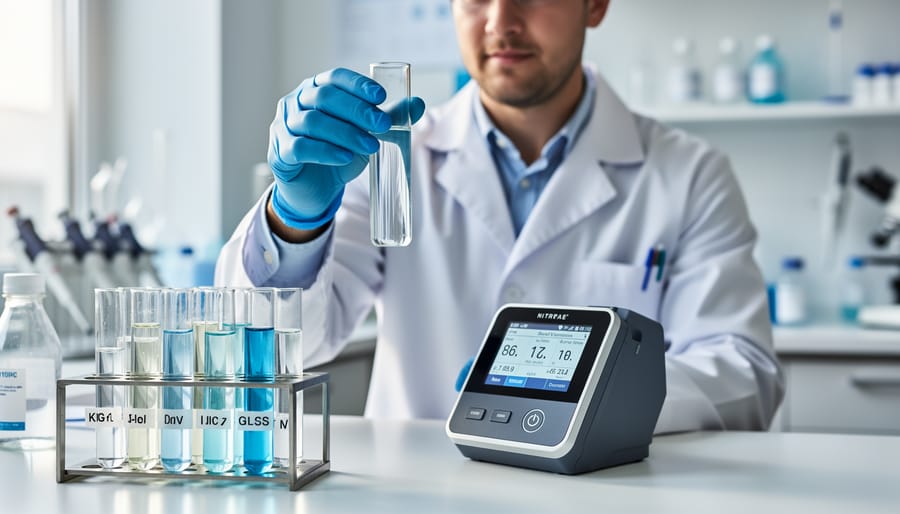
Home test kits offer convenience and immediate results, typically costing between $10 and $30. These strips or digital meters work well for quick screening and are ideal if you’re monitoring nitrate levels regularly. However, they provide less precise measurements and may not detect nitrates at very low concentrations.
Professional lab testing delivers certified, highly accurate results, usually ranging from $30 to $100 per sample. Labs use advanced equipment that can detect nitrate levels down to parts per billion, and results include detailed reports suitable for real estate transactions or official documentation.
Choose home testing if you want quick, regular monitoring or initial screening for peace of mind. Opt for professional analysis when you need precise measurements, have vulnerable family members like infants or pregnant women, suspect contamination, or require documentation for property sales. For the most comprehensive approach, use home kits for routine checks and confirm any concerning readings with certified lab testing.
Understanding Your Test Results
Reading your nitrate test results is straightforward. In the United States, the EPA sets the maximum contaminant level for nitrates at 10 parts per million (ppm), also written as 10 mg/L. This is your critical threshold for safe drinking water.
If your test shows levels below 5 ppm, your water is considered safe with minimal concern. Levels between 5-10 ppm warrant attention—while still within legal limits, it’s wise to retest regularly and consider treatment options, especially for households with infants or pregnant women. Any reading above 10 ppm requires immediate action: switch to bottled water for drinking and cooking, and install a treatment system like reverse osmosis or ion exchange filters that effectively remove nitrates.
Keep in mind that seasonal variations can affect nitrate levels, particularly in spring after fertilizer application or heavy rainfall. Testing twice yearly gives you a more complete picture of your water quality and helps you make informed decisions about protecting your family’s health.
Removing Nitrates: Your Water Treatment Options
Reverse Osmosis: The Most Effective Solution
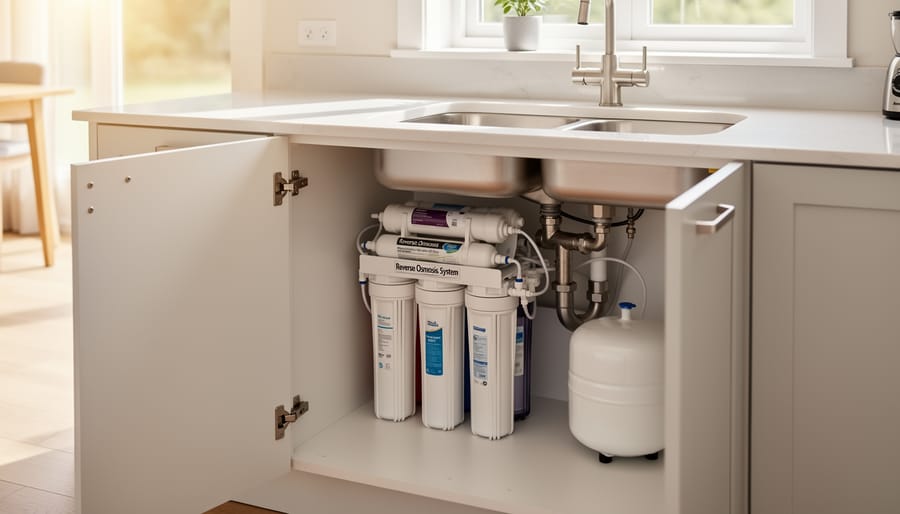
Reverse osmosis stands out as the gold standard for removing nitrates from your drinking water, with effectiveness rates reaching 85-95%. This advanced filtration technology works by forcing water through an ultra-fine membrane that captures nitrate molecules while allowing clean water to pass through. Think of it as an incredibly precise strainer that catches contaminants your eye can’t even see.
When choosing an RO system, you’ll need to decide between point-of-use and whole-house options. Point-of-use systems install under your kitchen sink and treat water at a single tap—perfect for drinking and cooking. They’re more affordable upfront and easier to maintain. Whole-house systems filter water throughout your entire home, providing nitrate-free water from every faucet, but come with higher installation costs and larger maintenance requirements.
For most families concerned about nitrate exposure through drinking water, a point-of-use system offers the best balance of effectiveness and practicality. Modern RO units represent cutting-edge water innovations, featuring smart monitoring and eco-friendly designs that minimize water waste. When selecting a system, look for NSF-certified models specifically rated for nitrate reduction. This certification ensures your investment delivers the protection your family needs while supporting sustainable water management in your home.
Ion Exchange Systems
Ion exchange systems tackle nitrate contamination by swapping harmful nitrate ions for harmless chloride ions as water flows through a specialized resin bed. Think of it like a microscopic trading post—the resin grabs onto nitrates and releases safe chloride in return, effectively cleaning your water at the molecular level.
These systems excel at removing nitrates consistently, making them ideal for households with moderate to high contamination levels. They’re particularly effective when nitrate concentrations exceed 5 mg/L, offering reliable protection for your family’s drinking water.
However, ion exchange units require regular maintenance to perform optimally. The resin bed needs periodic regeneration with salt brine—similar to softener systems—which flushes captured nitrates and recharges the resin. You’ll also need to monitor salt levels and schedule professional servicing annually.
This solution works best for homeowners committed to routine upkeep who want comprehensive nitrate removal without bottled water dependency. While the initial investment and ongoing maintenance costs are higher than point-of-use filters, ion exchange provides whole-home protection and represents a sustainable, long-term approach to safeguarding your water quality.
What Doesn’t Work (And Why)
Many homeowners reach for familiar solutions when they discover nitrates in their water, but understanding what doesn’t work can save you time and money. Boiling water actually concentrates nitrates by evaporating water while leaving contaminants behind, making the problem worse. Standard pitcher filters and refrigerator filters with activated carbon effectively remove chlorine and improve taste, but they’re not designed to capture dissolved nitrate molecules. Similarly, basic sediment filters only trap particles like sand and rust, allowing nitrates to pass through unchanged. Ultraviolet light systems kill bacteria and viruses but don’t affect chemical contaminants. Water softeners exchange minerals that cause hardness but leave nitrates untouched. These methods work wonderfully for their intended purposes, but nitrate removal requires specialized treatment systems like reverse osmosis or ion exchange units specifically designed to target these dissolved compounds.
Choosing the Right System for Your Home
Selecting the right nitrate reduction system depends on several key factors unique to your household. Start by testing your water to determine actual nitrate levels—this helps you choose an appropriately sized system and avoid overspending on unnecessary treatment capacity.
Consider your household size and daily water usage patterns. Larger families need systems with higher flow rates and greater capacity to maintain consistent water availability. Your budget matters too, but remember to factor in long-term costs like filter replacements and maintenance, not just the initial purchase price.
Evaluate which fixtures need treatment. Whole-house systems protect all water sources, while point-of-use filters installed at kitchen taps offer a more affordable solution if you primarily need safe drinking and cooking water. If nitrate levels are moderately elevated, reverse osmosis systems excel at removal, though they produce some wastewater. For those committed to eco-friendly living, ion exchange systems offer efficient treatment with less waste. Don’t forget about future-proofing—choose systems that can adapt if your water quality changes or if innovative filtration technologies emerge that better serve your household’s evolving needs.
Preventing Nitrate Contamination at the Source
Protecting Your Well Water
If you rely on a private well, proactive protection is your best defense against nitrate contamination. Start by maintaining proper setback distances—position your well at least 50 feet from septic systems, livestock areas, and fertilized gardens, though 100 feet is ideal for sensitive water quality concerns. Regular wellhead inspections matter too. Ensure your well cap is intact and sealed to prevent surface runoff from entering. Consider innovative wellhead protection strategies like installing a concrete or clay barrier around the well casing to redirect contaminated surface water. Schedule annual well maintenance checks and test your water twice yearly, especially after heavy rains or nearby land use changes. Creating a vegetation buffer zone around your well using deep-rooted native plants can naturally filter contaminants before they reach groundwater, combining eco-friendly landscaping with practical water protection.
Sustainable Lawn and Garden Practices
Your lawn and garden practices play a surprisingly significant role in protecting your drinking water from nitrate contamination. When you apply synthetic fertilizers to your yard, excess nutrients can easily wash into groundwater during rain or irrigation, eventually reaching your tap.
Start by rethinking your fertilizer routine. Most lawns don’t need as much fertilizer as we typically apply. Consider testing your soil first to understand what nutrients it actually needs—this prevents over-application and saves money. When you do fertilize, choose slow-release or organic options like compost, which break down gradually and reduce the risk of runoff.
Timing and technique matter too. Apply fertilizers during dry weather when rain isn’t forecast for at least 48 hours, giving nutrients time to absorb into the soil. Keep fertilizers off hard surfaces like driveways and sidewalks where they’ll wash away immediately. Create a buffer zone by leaving a fertilizer-free strip along any water features or drainage areas on your property.
Embrace natural alternatives like grass clipping mulching, which returns nitrogen to your lawn naturally. Plant native species that require fewer inputs, and consider reducing your overall lawn size in favor of ground covers or garden beds. These simple shifts protect both your water supply and the broader ecosystem.
Understanding the risks of nitrates in your drinking water is the first step toward protecting your family’s health. The good news? With today’s accessible testing methods and proven treatment solutions, achieving clean, safe water is entirely within your reach.
Start by testing your water, especially if you rely on a private well or live in an agricultural area. Simple home test kits provide quick results, while laboratory analysis offers comprehensive insights into your water quality. Regular testing—at least annually—ensures you catch any changes before they become health concerns.
If elevated nitrate levels are detected, don’t panic. Effective treatment options exist for every budget and household size. Reverse osmosis systems remain the gold standard for nitrate removal, while innovative water filtration technologies continue to emerge, making safe water more affordable and sustainable than ever. Even if you’re renting or can’t install a whole-house system, point-of-use filters can protect your drinking and cooking water.
Prevention is equally important. Support sustainable farming practices in your community, maintain your septic system properly, and minimize fertilizer use on your lawn. These small actions contribute to cleaner groundwater for everyone.
Remember, clean drinking water isn’t a luxury—it’s a fundamental right. Armed with the right knowledge and tools, you can make informed decisions about your water quality. Whether you’re testing for the first time or upgrading your current system, taking action today means investing in your family’s long-term health and well-being.