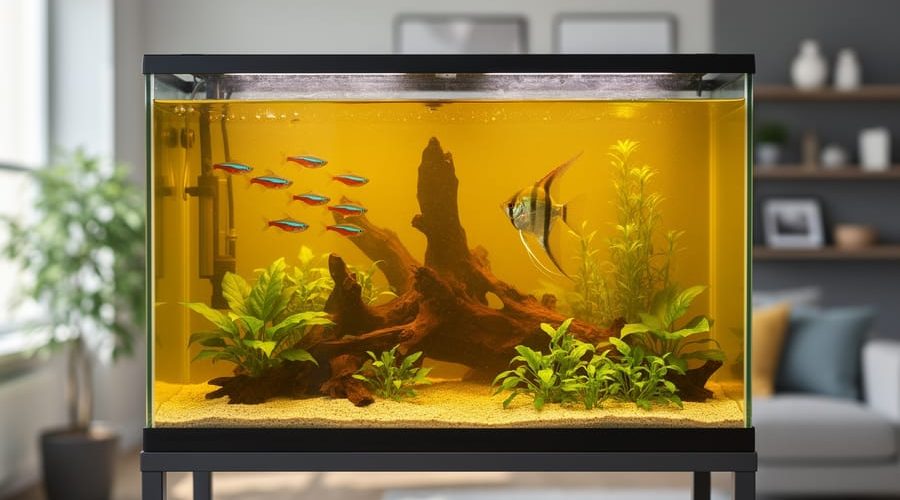
Identify the cause by examining your maintenance routine: yellow or amber-tinted aquarium water typically signals excess tannins from driftwood, accumulated dissolved organic compounds from infrequent water changes, or degrading filter media. Test your water parameters first—if ammonia, nitrites, and nitrates remain within safe ranges, the discoloration is usually harmless, though aesthetically unpleasing.
Remove tannins naturally by soaking new driftwood in a separate container for 1-2 weeks before adding it to your tank, changing the soaking water daily. For existing setups, perform 25-30% water changes twice weekly until clarity improves, ensuring you’re using dechlorinated water that matches your tank’s temperature.
Upgrade your filtration system with activated carbon or a combination of mechanical and chemical media to absorb dissolved organics and tannins. Replace carbon monthly for optimal performance, as saturated media loses effectiveness and can release trapped compounds back into your aquarium.
Prevent future yellowing by establishing a consistent maintenance schedule: vacuum substrate during water changes to remove decaying matter, avoid overfeeding fish, and clean filter components regularly without disrupting beneficial bacteria colonies. Understanding water quality fundamentals helps you maintain a crystal-clear, healthy aquatic environment while reducing the need for frequent interventions.
What Causes Aquarium Water to Turn Yellow
Natural Tannins: The Most Common Culprit
If you’ve noticed your aquarium water taking on a yellowish or tea-colored tint, natural tannins are likely the reason. Tannins are organic compounds released when wood and plant materials break down in water. Think of it like brewing tea—driftwood, oak leaves, almond leaves, and seed pods act just like tea bags in your tank, slowly releasing these natural substances into the water.
This process happens because water gradually breaks down the lignin and cellulose in these materials. New driftwood releases tannins most actively, which is why many experienced aquarium keepers recommend pre-soaking wood before adding it to their tanks.
Here’s the good news: tannins are generally beneficial rather than harmful. They naturally lower pH levels and create softer water conditions that many tropical fish species actually prefer in their native habitats. Tannins also possess mild antibacterial and antifungal properties that can support fish health.
However, the aesthetic impact might not appeal to everyone. While the water remains safe and even advantageous for certain fish like tetras and bettas, some aquarium owners prefer crystal-clear water. The yellow tint can also make it harder to observe your fish clearly and may obscure the vibrant colors of your aquatic plants. Understanding this natural process helps you make informed decisions about managing your tank’s appearance while maintaining optimal water quality for your aquatic inhabitants.
Organic Waste and Overfeeding
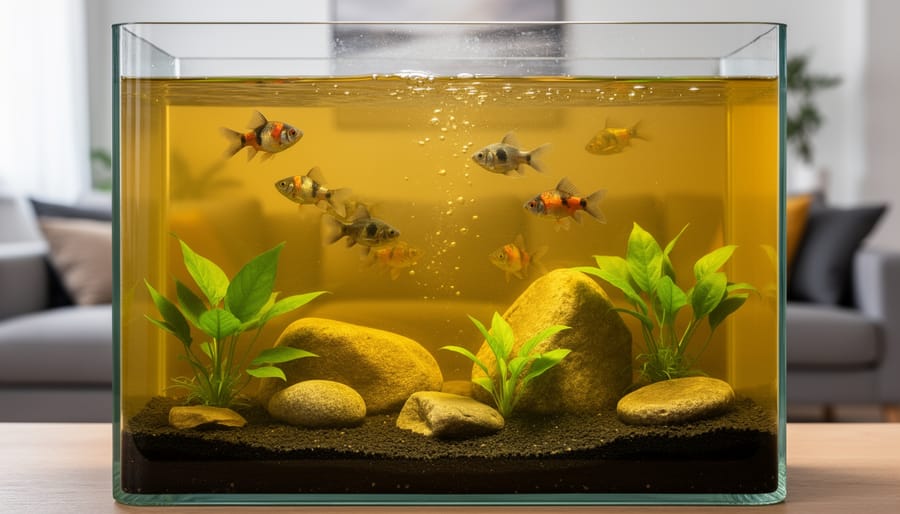
Organic waste is one of the most common culprits behind yellow aquarium water. When uneaten fish food settles at the bottom of your tank, it begins breaking down, releasing organic compounds that discolor the water. Similarly, fish waste accumulates over time, and as beneficial bacteria decompose it, they produce tannins and other dissolved organic matter that tint the water yellow or amber.
Overfeeding accelerates this problem significantly. Many aquarium owners inadvertently give their fish more food than they can consume within a few minutes, leading to excess debris that decays in the tank environment. This decomposing matter doesn’t just affect water clarity—it also depletes oxygen levels and releases ammonia, which can stress or harm your fish.
Decaying plant material adds to the issue as well. Dead leaves, rotting stems, and algae breakdowns contribute additional organic compounds to the water column. The yellowing effect intensifies as these materials accumulate, creating an unhealthy ecosystem if left unaddressed.
The good news is that organic waste-related yellowing is preventable through proper aquarium maintenance. Feed your fish only what they can consume in two to three minutes, remove visible debris promptly, and trim dying plant matter regularly. Regular partial water changes—typically 10-25% weekly—help dilute accumulated organic compounds before they compromise water quality.
Old or Inadequate Filtration Systems
Your aquarium filter works hard to keep water clean, but over time, the filtration system itself can become a source of yellowing. Filter media, particularly activated carbon and mechanical sponges, naturally breaks down after weeks or months of use. When carbon becomes saturated, it can no longer remove dissolved organic compounds that cause yellow tints. Even worse, exhausted filter media may begin releasing trapped contaminants back into your tank.
Insufficient filtration capacity presents another common problem. If your filter is undersized for your tank volume or fish population, it simply cannot process waste efficiently enough. Think of it like using a household water pitcher filter well past its recommended lifespan—the water quality gradually declines. Most aquarium experts recommend filters rated for at least 1.5 times your tank’s volume. Regular maintenance matters too. Clogged filter components reduce water flow and filtration effectiveness, allowing organic material to accumulate. Replace carbon monthly, rinse mechanical media weekly in old tank water, and consider upgrading to a more robust filtration system if yellowing persists despite maintenance efforts.
Is Yellow Water Dangerous for Your Fish?
The good news is that yellow aquarium water is often harmless to your fish, but understanding the difference between safe discoloration and dangerous water conditions is essential for maintaining a healthy tank environment.
When yellow water comes from natural tannins released by driftwood, Indian almond leaves, or peat filtration, it’s generally safe for your fish. In fact, many species like bettas, tetras, and discus thrive in tannin-rich water that mimics their natural habitats. These organic compounds can actually provide benefits by creating a slightly acidic environment and possessing mild antibacterial properties. The pH may drop gradually from neutral (7.0) to slightly acidic levels (6.0-6.5), which suits many tropical fish species perfectly.
However, yellow water becomes dangerous when it signals poor water quality. If the discoloration appears suddenly alongside cloudy or murky water, it could indicate a bacterial bloom, excess organic waste, or dangerous ammonia buildup. Unlike the tea-colored appearance of tannins, harmful yellowing often has a murky, opaque quality similar to green aquarium water but with different causes.
Warning signs that yellow water poses a threat include fish gasping at the surface (indicating low oxygen levels), lethargy, loss of appetite, or visible stress behaviors. Decomposing plant matter, uneaten food, and inadequate filtration can create toxic compounds like ammonia and nitrites, which may cause yellowing as organic materials break down. These substances are invisible killers that directly damage fish gills and organs.
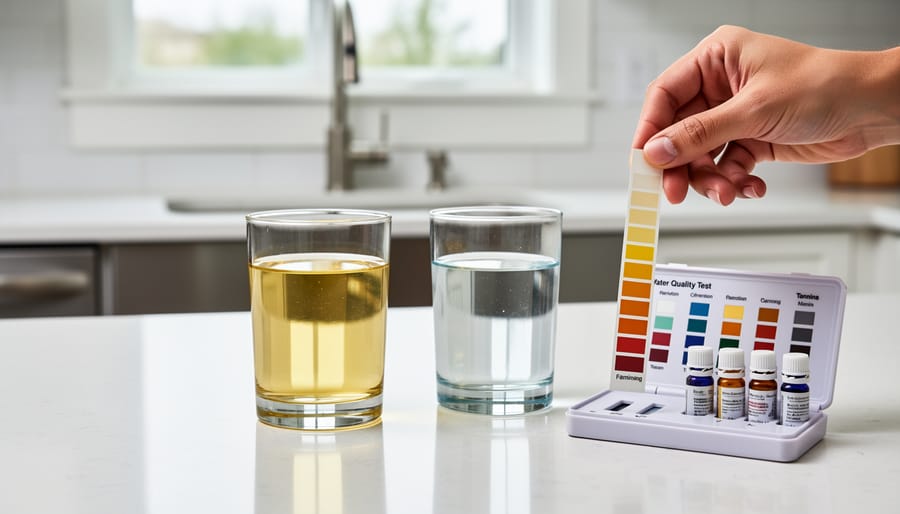
Test your water parameters immediately if you notice sudden yellowing. Use a reliable aquarium test kit to check ammonia, nitrite, nitrate, and pH levels. Safe tannin-induced yellowing occurs gradually over weeks and maintains stable, safe parameters. Dangerous yellowing happens quickly, often within days, and coincides with elevated ammonia or nitrite readings above zero, which require immediate action through water changes and improved filtration to protect your fish from serious harm or death.
Testing Your Water: What You Need to Know
When your aquarium water turns yellow, testing the water chemistry is essential to determine whether you’re dealing with a cosmetic issue or a more serious problem affecting your fish’s health. While yellow water from natural tannins is generally harmless, it can sometimes mask deteriorating water conditions that need immediate attention.
Start by checking four critical parameters: pH, ammonia, nitrites, and nitrates. These measurements tell you whether your tank’s biological balance is stable or spiraling toward dangerous levels. You can test your aquarium water using liquid test kits, which provide more accurate readings than test strips. Liquid kits like the API Master Test Kit are widely available at pet stores and online, typically costing between twenty and thirty dollars.
For pH testing, freshwater aquariums should maintain levels between 6.5 and 7.5, though this varies by species. Ammonia and nitrite levels should always read zero in an established tank—any detectable amount indicates a problem with your biological filtration. Nitrates are less toxic but should stay below 40 parts per million, with weekly water changes keeping them in check.
When interpreting results, yellow water itself won’t affect these readings. However, if your yellow water coincides with elevated ammonia or nitrites, you likely have a failing filter or overstocking issue that needs immediate correction through water changes and reduced feeding. High nitrates suggest insufficient maintenance rather than a tannin problem.
Test your water weekly as part of your regular aquarium maintenance routine. Keeping a simple log helps you spot trends before they become emergencies. Remember, healthy water chemistry matters more than crystal-clear aesthetics—many thriving aquariums maintain a light tea color while supporting vibrant, healthy fish populations.
How to Clear Yellow Aquarium Water
Water Changes: Your First Line of Defense
Regular partial water changes are your most powerful tool for clearing yellow aquarium water and preventing its return. This simple maintenance practice removes dissolved organic compounds, tannins, and waste products that contribute to discoloration while restoring water clarity naturally.
For tanks experiencing yellowing, perform 25-30% water changes twice weekly until the water clears. Once clarity improves, transition to a maintenance schedule of 15-25% weekly changes, adjusting based on your tank’s bioload and filtration capacity. Smaller, more frequent changes are gentler on fish than large, infrequent ones, as they prevent dramatic shifts in water chemistry.
The quality of your replacement water matters significantly. Always match the temperature of new water to your tank temperature within two degrees to avoid shocking your fish. When treating replacement water, use a dechlorinator to neutralize chlorine and chloramines present in municipal water supplies. If your tap water contains heavy metals or excessive minerals, consider using a water filtration system before adding it to your aquarium.
During water changes, gently vacuum the substrate to remove accumulated debris and uneaten food, primary contributors to yellowing. Target areas around decorations and beneath plants where waste tends to collect. Avoid disturbing beneficial bacteria colonies in your filter media during the same week as deep substrate cleaning.
Document your water change schedule and water test results to identify patterns and optimize your routine. This eco-conscious approach minimizes water waste while maintaining a healthy, crystal-clear aquatic environment.
Activated Carbon Filtration
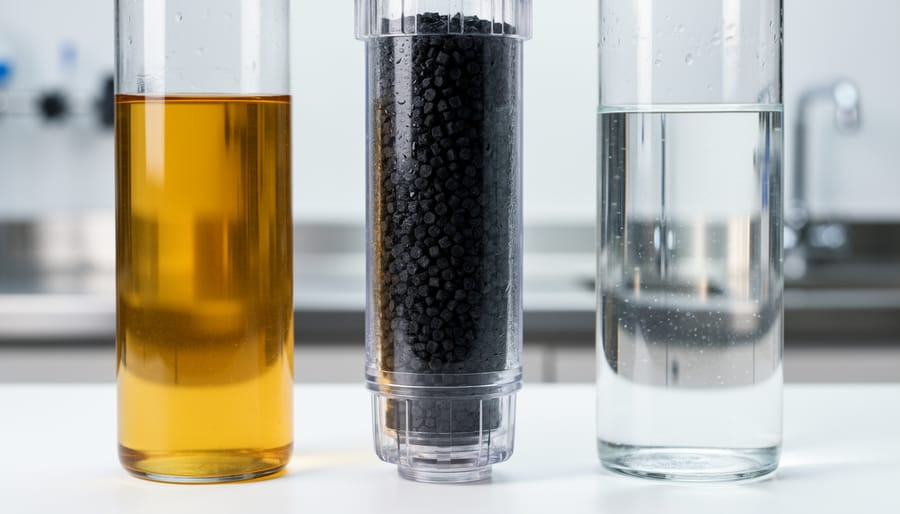
Activated carbon filtration stands as one of the most effective solutions for clearing yellow aquarium water. This powerful filtration method works through a process called adsorption, where tannins and dissolved organic compounds physically bind to the carbon’s porous surface. Think of activated carbon as a microscopic sponge with millions of tiny holes that trap discolored particles while allowing clean water to pass through.
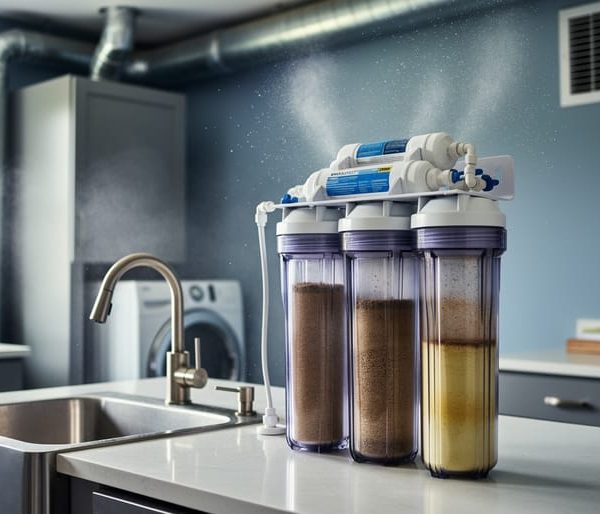
When selecting from the various types of water filters available, activated carbon filters excel at removing the organic compounds responsible for water yellowing. These filters can be integrated into your existing filtration system as cartridges, filter bags, or loose media placed in a filter compartment. For optimal results, position the carbon filter after mechanical filtration to prevent clogging from larger debris.
Installation is straightforward. Simply rinse the carbon briefly under clean water to remove dust, then place it in your filter according to the manufacturer’s instructions. Water should flow through the carbon at a moderate pace for maximum contact time and effectiveness.
Replacement timing is crucial for maintaining crystal-clear water. Most activated carbon loses its effectiveness after four to six weeks, depending on your tank’s bioload and water conditions. Mark your calendar when installing new carbon, and watch for returning yellow tints as a signal that replacement is needed. This sustainable approach keeps your aquarium pristine while reducing waste.
Cleaning and Upgrading Your Filter System
Regular filter maintenance is your first line of defense against yellow water. Start by turning off your filter and removing the media cartridges or sponges. Rinse mechanical filter media (sponges and pads) in old aquarium water you’ve removed during a water change, never tap water, as chlorine kills beneficial bacteria essential for healthy water chemistry. Replace mechanical media every 4-6 weeks or when visibly degraded.
Chemical filtration media like activated carbon becomes saturated and ineffective after about a month. Fresh carbon excels at removing tannins and dissolved organic compounds responsible for yellowing. Replace carbon regularly to maintain crystal-clear water and optimal performance.
Inspect your filter’s impeller, tubing, and seals for wear. Cracks or buildup reduce efficiency, allowing dissolved waste to accumulate. Clean these components monthly with a small brush and replace damaged parts promptly.
If yellowing persists despite diligent maintenance, your filter may be undersized. Aquarium filters should process the tank’s entire volume 3-5 times per hour. Calculate your current flow rate and compare it to your tank size. Upgrading to a more powerful system or adding a secondary filter provides better mechanical and chemical filtration, ensuring clearer, healthier water for your aquatic environment. Consider models with multi-stage filtration for superior results and reduced maintenance frequency.
Reducing Organic Waste
Preventing yellow aquarium water starts with managing the organic waste that fuels discoloration. The most effective approach is controlling what goes into your tank in the first place.
Feed your fish only what they can consume within two to three minutes, once or twice daily. Overfeeding is the leading cause of excess organic matter breaking down in your water. Uneaten food sinks to the bottom, decomposing and releasing tannins and other compounds that yellow your water. If you notice leftover food after feeding, you’re adding too much.
Regular substrate maintenance is equally important. Use a gravel vacuum during weekly water changes to remove trapped debris, fish waste, and decaying plant matter from the tank bottom. This simple practice prevents organic buildup before it can break down and discolor your water.
Remove dead or dying plant leaves promptly using aquarium scissors or tweezers. Decaying vegetation releases significant amounts of organic compounds that contribute to yellowing. Inspect plants weekly and trim away any brown or deteriorating portions.
Consider adding beneficial bacteria supplements to help break down waste more efficiently. These microscopic helpers convert harmful organic compounds into less problematic substances, maintaining clearer water naturally. This eco-friendly approach supports your tank’s biological balance while reducing the chemical load that causes discoloration, creating a healthier environment for your aquatic pets.
Prevention Strategies for Crystal-Clear Water
Preventing yellow aquarium water starts with establishing a consistent maintenance routine that supports your tank’s natural ecosystem. Test your water parameters weekly using a reliable freshwater test kit, checking for ammonia, nitrites, nitrates, and pH levels. These regular assessments help you catch issues before they escalate into visible water discoloration.
Stock your aquarium responsibly by following the general guideline of one inch of fish per gallon of water, though this varies by species. Overstocking creates excess waste that overwhelms your filtration system and accelerates water yellowing. Research each fish’s bioload requirements to maintain a balanced, sustainable environment.
Incorporate beneficial bacteria supplements during water changes to strengthen your biological filtration. These eco-friendly microorganisms break down organic waste more efficiently, reducing the accumulation of tannins and dissolved organics that cause yellowing. Think of them as your aquarium’s natural cleaning crew, working continuously to maintain clarity.
Choose aquarium decorations and substrates wisely to minimize discoloration. If you love the natural look of driftwood, pre-soak pieces for several weeks before adding them to your tank, changing the water daily until it runs clear. Alternatively, select Malaysian driftwood or mopani wood, which release fewer tannins than other varieties.
Perform partial water changes of 15-25% weekly rather than large, infrequent changes. This gentle approach to maintaining water quality prevents stress on your fish while consistently removing dissolved organics before they accumulate. Use dechlorinated water at the same temperature as your tank to avoid shocking your aquatic inhabitants.
Finally, replace mechanical filter media monthly and chemical filtration like activated carbon every 4-6 weeks. Clean filter components in used tank water rather than tap water to preserve beneficial bacteria colonies, supporting your aquarium’s long-term health and clarity.
Maintaining crystal-clear aquarium water doesn’t have to be a mystery. As we’ve explored, yellow aquarium water typically results from natural processes like tannin release, excess organic waste, or inadequate filtration. The good news is that most causes are harmless and entirely manageable with the right approach.
By understanding what’s happening in your tank ecosystem, you can make informed decisions about water changes, filtration upgrades, and maintenance schedules. Regular testing, proper feeding habits, and quality filtration systems work together to keep your aquatic environment healthy and visually appealing. Remember, patience and consistency are your best tools—sudden changes can stress fish more than slightly tinted water ever will.
Your attention to aquarium water quality reflects a broader awareness of water’s importance in your home and environment. Whether you’re monitoring your fish tank, considering whole-house water filtration, or exploring ways to reduce bottled water waste, every step toward better water management supports both your household and our planet. Clean, healthy water in your aquarium is absolutely achievable, and the habits you develop maintaining it contribute to more sustainable, eco-conscious living overall.