Your drinking water may contain invisible chemicals that have been linked to cancer, thyroid disease, and developmental problems in children. PFAS—per- and polyfluoroalkyl substances—are synthetic compounds once celebrated for making products nonstick and water-resistant, but they’ve now contaminated water supplies across the country. These “forever chemicals” don’t break down naturally, accumulating in your body and the environment for decades.
Recent EPA testing reveals that PFAS contamination affects millions of American households, often without residents knowing. Unlike the chlorine smell or metallic taste that alerts you to other water quality issues, PFAS remain completely undetectable to human senses. You could be drinking contaminated water right now and have no idea. Understanding what’s in your tap water has never been more crucial for protecting your family’s health.
The challenge facing homeowners today isn’t whether PFAS contamination exists—it’s determining if your specific water source is affected and what you can do about it. Manufacturing facilities, military bases, firefighting training sites, and industrial areas have released these chemicals into groundwater for decades. Even homes far from these sources face risk through interconnected water systems.
This article cuts through the confusion surrounding PFAS contamination. You’ll learn how to test your water accurately, interpret results against current safety standards, and implement proven filtration solutions that actually remove these persistent chemicals. We’ll also explore the latest innovations in water treatment technology designed specifically for PFAS removal, giving you practical steps to safeguard your household water supply today while understanding the broader implications for your community’s long-term water security.
What Are PFAS and Why Should You Care?
PFAS, or per- and polyfluoroalkyl substances, represent a family of thousands of synthetic chemicals that have become one of the most concerning water quality issues facing American households today. These human-made compounds have been manufactured since the 1940s and found their way into countless everyday products, from non-stick cookware and water-resistant clothing to food packaging and stain-resistant carpets.
The primary sources of PFAS contamination in our water systems include industrial manufacturing facilities, military bases and airports that use firefighting foam (known as AFFF), and landfills where PFAS-containing products break down over time. When these chemicals enter the environment through industrial discharge, product disposal, or firefighting training exercises, they eventually migrate into groundwater, rivers, and drinking water supplies.
What makes PFAS particularly troubling is their nickname: forever chemicals. This term isn’t an exaggeration. PFAS contain incredibly strong carbon-fluorine bonds that resist natural breakdown processes. Unlike other contaminants that eventually degrade, PFAS persist in the environment indefinitely and accumulate in our bodies over time. Once you’re exposed, these chemicals can remain in your bloodstream for years.
The scope of PFAS contamination is staggering. Recent studies have detected PFAS in the drinking water of an estimated 200 million Americans, affecting both municipal water systems and private wells. No region is immune—these chemicals have been found in water supplies from coast to coast, in rural communities and major cities alike.
Understanding PFAS matters because knowledge empowers action. While the widespread presence of these chemicals in our water might seem overwhelming, recognizing the problem is the first step toward protecting your family. The good news is that effective solutions exist for homeowners concerned about PFAS exposure, from testing your water to installing appropriate filtration systems designed to capture these persistent contaminants before they reach your tap.
The Real Health Risks Behind PFAS Contamination
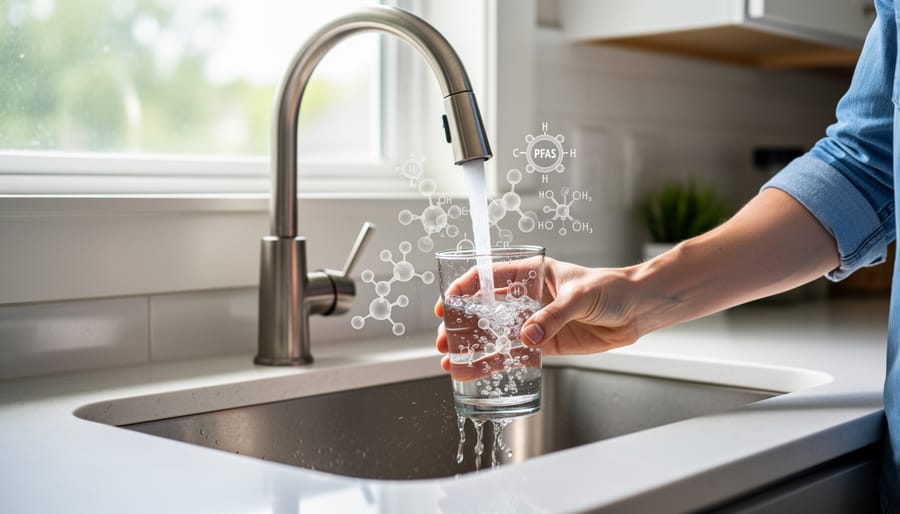
The health implications of PFAS exposure have become increasingly clear through scientific research, and the findings are concerning for families across the country. These persistent chemicals don’t just pass through our bodies—they accumulate over time, which is why understanding the risks is essential for protecting your household.
Research has linked PFAS exposure to several serious health conditions. Studies show increased risks of certain cancers, particularly kidney and testicular cancer. The evidence has become strong enough that major health organizations now recognize this connection. Beyond cancer, PFAS exposure affects multiple body systems in ways that can impact your daily quality of life.
Your thyroid gland, which regulates metabolism and energy levels, is particularly vulnerable to PFAS contamination. These chemicals can interfere with thyroid hormone production, potentially leading to conditions like hypothyroidism. This can result in fatigue, weight changes, and other metabolic issues that many people might not immediately connect to their water supply.
The immune system also takes a hit from PFAS exposure. Research indicates that these chemicals can reduce vaccine effectiveness in children, meaning your family might not receive full protection from immunizations. This immune suppression can also make both children and adults more susceptible to infections and illnesses.
Reproductive health concerns represent another significant area of risk. PFAS exposure has been associated with decreased fertility in both women and men, pregnancy complications including preeclampsia, and lower birth weights in newborns. For families planning to have children or currently pregnant, these risks make PFAS contamination particularly worrying.
Children face additional vulnerabilities because their bodies are still developing. Exposure during critical growth periods may lead to developmental delays and long-term health impacts that extend into adulthood.
In response to mounting evidence, the EPA recently updated its safety standards, setting enforceable limits for several PFAS compounds at 4 parts per trillion—an incredibly small amount that reflects just how toxic these substances are. This new standard, finalized in 2024, represents the strictest drinking water regulation in decades and requires public water systems to monitor and reduce PFAS levels.
For your family, these updated standards mean greater protection if you’re connected to municipal water, but they also highlight the importance of taking proactive steps to ensure your household water meets these stringent safety thresholds, especially if you rely on private well water.
How PFAS Gets Into Your Local Water Supply
Industrial and Military Sources
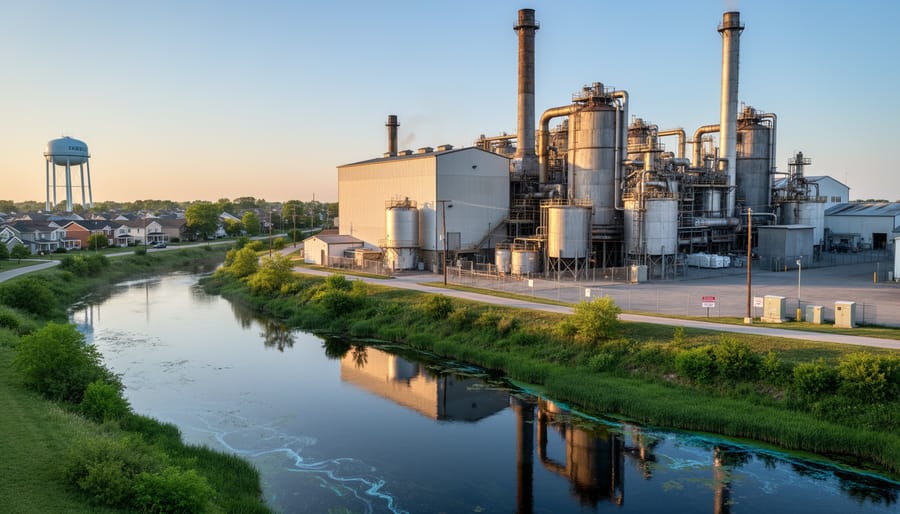
Manufacturing facilities that produce or use PFAS-containing products represent some of the most significant contamination sources affecting communities nationwide. These industrial sites include factories making non-stick cookware, waterproof fabrics, food packaging materials, and specialized chemicals. When these facilities discharge wastewater or experience spills, PFAS chemicals can seep into nearby groundwater and surface water sources that eventually supply residential areas.
Military bases present another major concern for homeowners living in surrounding communities. For decades, firefighters at these installations used aqueous film-forming foam (AFFF) containing high concentrations of PFAS during training exercises and emergency responses. This foam was incredibly effective at extinguishing fuel fires, but the chemicals have now contaminated soil and groundwater at hundreds of military sites across the country. Communities near current or former military installations, particularly those with airfields, face elevated risk of PFAS exposure in their drinking water.
The challenge for homeowners is that contamination from these sources often spreads far beyond the immediate facility boundaries. PFAS chemicals travel through underground aquifers and can impact wells and water systems miles away. Understanding whether you live near potential industrial or military contamination sources is an important first step in assessing your household’s risk and determining if water testing is necessary.
Everyday Products That Contribute to the Problem
PFAS contamination isn’t limited to industrial sites—it starts right in our homes through everyday products we use without a second thought. These “forever chemicals” are valued by manufacturers for their ability to repel water, grease, and stains, making them common ingredients in numerous household items.
Your kitchen is a primary source. Non-stick cookware, fast-food wrappers, microwave popcorn bags, and grease-resistant food packaging all typically contain PFAS compounds. When these materials are manufactured, used, or discarded, PFAS chemicals can leach into our water systems.
Throughout your home, stain-resistant carpets and upholstery, waterproof outdoor gear, and water-repellent clothing contribute to the problem. Even personal care products like dental floss, certain cosmetics, and shampoos may contain these persistent chemicals.
When you wash PFAS-treated fabrics or dispose of contaminated packaging, these chemicals enter wastewater treatment plants that aren’t designed to remove them. They eventually make their way into rivers, lakes, and groundwater supplies—the same sources that provide your drinking water.
The widespread use of these products has created a cycle of contamination that affects communities nationwide, making household water filtration and awareness increasingly important for protecting your family’s health.
Finding Out If Your Water Contains PFAS
Reading Your Water Quality Report
Your community water supplier is required to provide you with an annual water quality report, also called a Consumer Confidence Report (CCR). This document contains valuable information about what’s flowing through your taps, including potential PFAS contamination.
Start by locating your most recent report. You can typically find it on your water utility’s website, request a paper copy by phone, or access it through the EPA’s database of local water quality reports. Once you have it in hand, look for the section listing detected contaminants.
PFAS may be listed under various names including PFOA, PFOS, or “per- and polyfluoroalkyl substances.” Check both the detected contaminants table and any additional notes about emerging contaminants. Pay attention to the concentration levels, measured in parts per trillion (ppt). The EPA’s health advisory level is currently 70 ppt for PFOA and PFOS combined, though many states have set stricter standards.
If PFAS isn’t mentioned at all, this doesn’t guarantee your water is clean. Testing requirements vary by location, and some utilities may not regularly screen for these chemicals. Contact your water supplier directly to ask when they last tested for PFAS and whether they plan future testing. This proactive approach helps you make informed decisions about additional home filtration or testing needs.
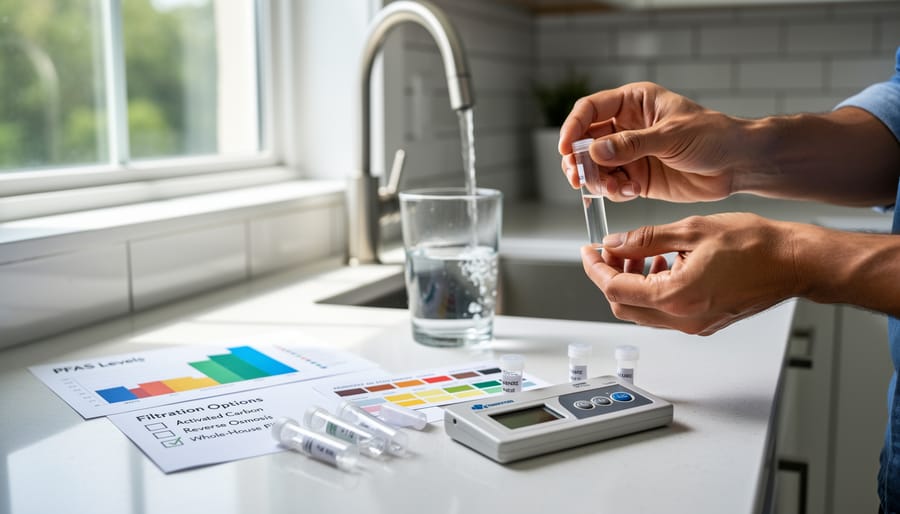
At-Home Testing Options
Testing your tap water for PFAS is an essential first step in protecting your household from these persistent chemicals. While municipal water reports provide general information, they may not reflect the specific conditions at your tap, making at-home testing a valuable tool for concerned homeowners.
Several reputable laboratory services now offer mail-in testing kits specifically designed for PFAS detection. These kits typically cost between $150 and $300 and can identify various PFAS compounds at parts-per-trillion levels. Leading options include SimpleLab’s Tap Score PFAS Advanced Test, which screens for multiple PFAS variants, and certified environmental laboratories like Eurofins and TestAmerica that provide comprehensive analysis with detailed reports.
When selecting a testing service, look for laboratories certified under EPA Method 537.1 or similar standards, ensuring accurate and reliable results. The testing process is straightforward: you’ll receive a collection container, fill it with water from your tap following specific instructions, and mail it back for analysis. Results typically arrive within two to three weeks.
Keep in mind that PFAS testing represents a snapshot of your water quality at a specific moment. If you’re in an area with known contamination or near potential PFAS sources like airports, military bases, or manufacturing facilities, testing becomes even more crucial. Once you receive your results, you’ll have concrete data to determine whether filtration solutions are necessary for your home, empowering you to make informed decisions about your family’s water safety.
Effective Ways to Remove PFAS From Your Drinking Water
Reverse Osmosis: The Gold Standard
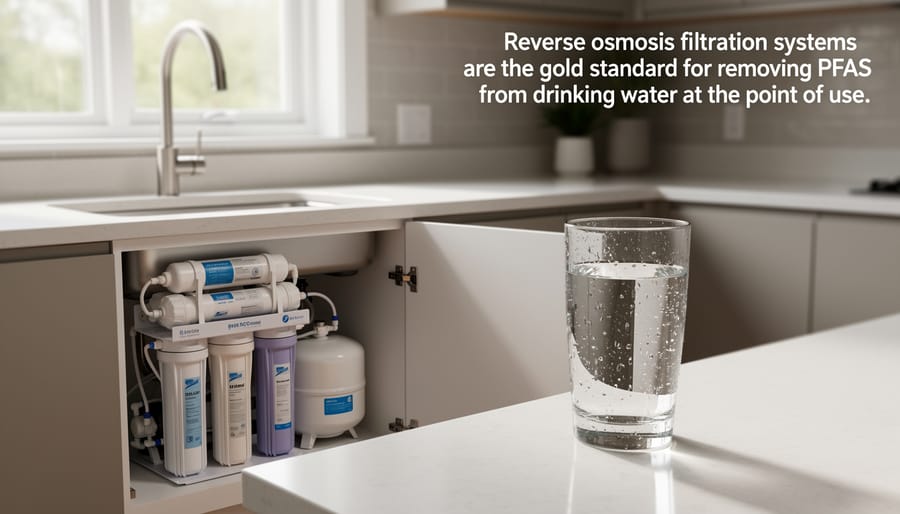
Reverse osmosis has emerged as the most effective technology for removing PFAS from drinking water, earning its reputation as the gold standard. These systems work by pushing water through an extremely fine semipermeable membrane with pores small enough to block PFAS molecules while allowing pure water to pass through. Think of it as an incredibly sophisticated filter that catches contaminants at the molecular level, removing up to 99% of PFAS compounds.
When deciding between systems, you’ll encounter two main options: point-of-use and whole-house configurations. Point-of-use systems, typically installed under your kitchen sink, treat water at a single tap where you drink and cook. These are more affordable, ranging from $200 to $500, and easier to install, making them an excellent starting point for most homeowners concerned about PFAS exposure.
Whole-house systems treat all water entering your home, protecting every faucet, shower, and appliance. While they offer comprehensive protection and cost between $2,000 and $6,000 installed, they’re generally unnecessary for PFAS specifically. Since PFAS primarily pose health risks through ingestion rather than skin contact or inhalation, focusing treatment on drinking and cooking water makes practical and economic sense for most families.
Keep in mind that RO systems do produce wastewater during the filtration process, typically using 3-4 gallons to produce one gallon of purified water. However, newer eco-friendly models have significantly improved this ratio, aligning with sustainable living practices while delivering the thorough PFAS protection your family needs.
Activated Carbon and Advanced Filters
When it comes to removing PFAS from your drinking water, not all filters are created equal. Activated carbon filters can be effective, but you’ll need to choose the right type and look for specific certifications to ensure protection.
The most effective options are granular activated carbon (GAC) systems and reverse osmosis (RO) units that incorporate carbon filtration. Standard pitcher filters and basic faucet attachments typically don’t provide adequate PFAS removal. You’ll want to invest in either a point-of-use system (installed at a specific tap) or a whole-house filtration system, depending on your needs and budget.
The key is looking for products certified under NSF/ANSI Standard 53 or the newer NSF/ANSI Standard 401, which specifically addresses emerging contaminants including certain PFAS compounds. These certifications mean the filter has been independently tested and verified to reduce PFAS to safe levels. Don’t rely on general marketing claims – always check for the NSF certification mark and verify which specific contaminants the filter is certified to remove.
Keep in mind that carbon filters require regular replacement to maintain effectiveness. As PFAS accumulates on the carbon surface, the filter’s capacity diminishes. Follow manufacturer guidelines closely, and consider replacing cartridges more frequently if you know your water has high PFAS levels.
For maximum protection, reverse osmosis systems combined with activated carbon pre-filters offer the most comprehensive PFAS removal, typically reducing concentrations by 90% or more when properly maintained.
What Doesn’t Work
Unfortunately, many common water treatment methods don’t eliminate PFAS from your drinking water. Standard pitcher filters, while excellent for improving taste and removing chlorine, aren’t designed to capture these stubborn chemicals. The carbon filters in most basic pitchers simply can’t trap PFAS molecules effectively. Similarly, boiling water won’t help—in fact, it can actually concentrate PFAS levels as water evaporates. These “forever chemicals” remain stable at high temperatures, which is precisely why they persist so tenaciously in our environment. Even some basic under-sink filters may not adequately address PFAS contamination unless specifically certified for this purpose. Understanding these limitations is crucial for homeowners who want to protect their families, as relying on ineffective methods provides a false sense of security while exposure continues.
Beyond PFAS: Other Emerging Contaminants in Your Water
While PFAS rightfully deserves attention, it’s just one piece of a larger water quality puzzle. Your tap water may contain several emerging contaminants that scientists and regulators are increasingly concerned about.
Microplastics have become ubiquitous in water systems worldwide. These tiny plastic particles, smaller than a grain of rice, shed from everyday items like clothing, packaging, and personal care products. Recent studies have detected microplastics in up to 83% of tap water samples globally. While research into their health effects is ongoing, these particles can carry other pollutants and potentially accumulate in our bodies over time.
Pharmaceutical residues represent another growing concern. Trace amounts of medications, including antibiotics, hormones, and antidepressants, enter water supplies through human waste and improper medication disposal. Conventional water treatment plants weren’t designed to remove these compounds, meaning they can persist in finished drinking water at low concentrations.
Perchlorate, a chemical used in rocket fuel and fireworks, has contaminated groundwater near military bases and industrial sites across the country. It interferes with thyroid function and can affect child development, prompting the EPA to finally establish drinking water limits in recent years.
These emerging contaminants often coexist with other contaminants like lead and traditional pollutants, creating a complex mixture in your water. Understanding this broader contamination landscape helps you make informed decisions about water testing and filtration. Comprehensive water quality awareness isn’t about fear—it’s about empowerment. Knowing what’s potentially in your water enables you to take appropriate action to protect your household’s health.
Taking Action: Protecting Your Home and Community
The good news is that you have meaningful options to reduce PFAS exposure in your home while contributing to broader protective efforts in your community.
Installing the right water filtration system is your most immediate defense. Activated carbon filters and reverse osmosis systems are proven to remove PFAS from drinking water effectively. When shopping for filters, look for products certified by NSF International specifically for PFAS reduction—certification standards NSF/ANSI 53 and NSF/ANSI 58 indicate effective PFAS removal. While whole-house systems offer comprehensive protection, point-of-use filters on your kitchen tap can significantly reduce exposure where you consume water most. Remember to replace filter cartridges according to manufacturer guidelines, as saturated filters lose their effectiveness.
Beyond your home, consider becoming an advocate for cleaner water in your community. Attend local water board meetings to ask questions about PFAS testing and treatment plans. Municipal water systems often respond to public pressure, and your voice can accelerate investments in advanced treatment technologies. Share information with neighbors who may not yet understand the issue, creating collective momentum for change.
Support legislative efforts aimed at stricter PFAS regulations. Contact your state and federal representatives to express support for bills that limit PFAS manufacturing, require comprehensive water testing, and hold polluters accountable for cleanup costs. Many environmental organizations offer simple templates that make reaching out to legislators straightforward and quick.
On a daily basis, reduce PFAS in your household by making conscious purchasing decisions. Choose PFAS-free alternatives when buying nonstick cookware, food packaging, stain-resistant furniture, and waterproof clothing. Look for products labeled as free from PFCs or PFOA. Properly dispose of PFAS-containing items rather than allowing them to leach into local water systems through landfills.
These combined actions create a protective shield around your family while contributing to the broader solution. Individual choices, when multiplied across communities, drive market changes and policy reforms that benefit everyone’s water quality for generations to come.
Understanding your local water profile is no longer optional—it’s an essential step in protecting your family’s health. PFAS contamination affects communities across the country, from major metropolitan areas to small rural towns, making it a concern that transcends geography and socioeconomic boundaries. While the prevalence of these “forever chemicals” in our water supply might seem overwhelming, the good news is that PFAS contamination is highly manageable with the right approach and tools.
The first step is knowledge. By testing your water and understanding what contaminants may be present, you move from uncertainty to informed action. Once you know your water’s specific profile, you can select appropriate filtration solutions tailored to your household’s needs. Modern filtration technologies, particularly those using activated carbon and reverse osmosis systems, have proven highly effective at removing PFAS compounds from drinking water.
Taking proactive steps doesn’t require extensive technical knowledge or a massive investment. Simple actions like having your water tested, researching certified filtration systems, and staying informed about local water quality reports can make a meaningful difference in reducing your family’s exposure to harmful contaminants.
Remember, every informed decision you make about your household water quality is an investment in your family’s long-term health and well-being. You have the power to create a safer home environment, starting with the water flowing from your taps. By understanding the challenges and embracing practical solutions, you’re not just reacting to a problem—you’re actively safeguarding what matters most.