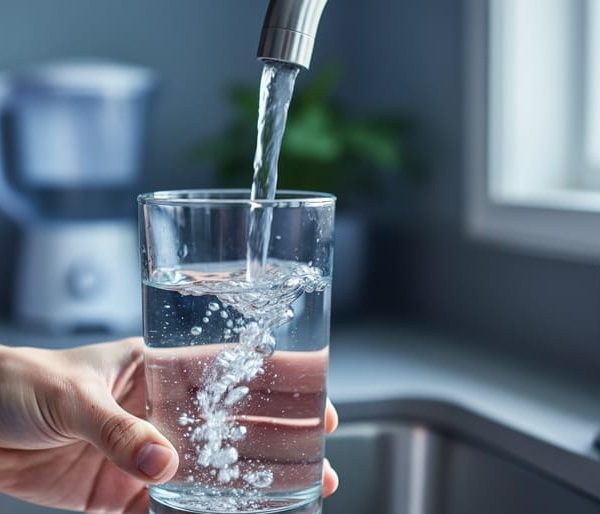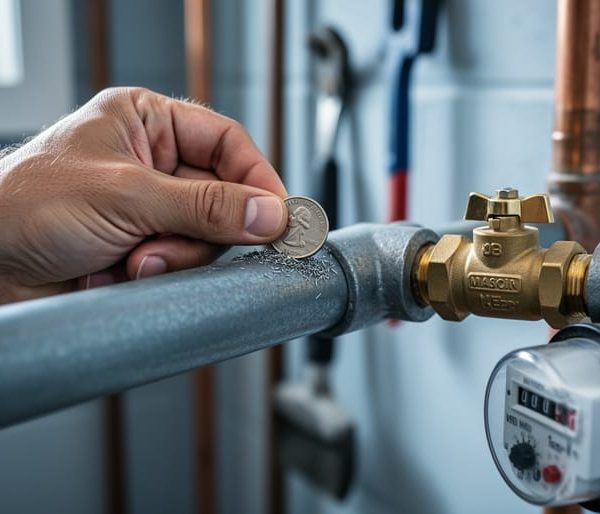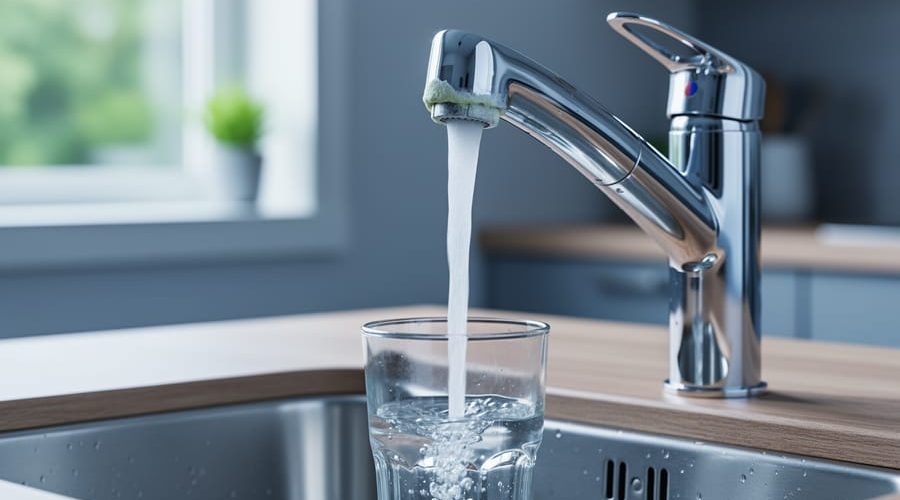
Enter your zip code into your water utility’s online portal to access your official Consumer Confidence Report, which lists mineral content and hardness measurements for your specific service area. Most municipal water suppliers publish these annual reports at no cost, giving you definitive data about calcium and magnesium levels flowing through your pipes. Contact your local water department directly if online records aren’t available—they’re required by federal law to provide this information within three business days.
Understanding what’s in your tap water starts with knowing your hardness number, measured in grains per gallon (gpg) or parts per million (ppm). Water under 3.5 gpg is considered soft, while readings above 10.5 gpg indicate very hard water that causes crusty buildup on faucets, reduces soap effectiveness, and shortens appliance lifespan by up to 30 percent. These minerals aren’t harmful to drink, but they create expensive household problems that homeowners typically discover after noticing white scale on showerheads or cloudy glassware.
Your zip code determines your water source—whether it’s groundwater rich in dissolved limestone or surface water from rivers and reservoirs. This geographic distinction explains why neighbors just miles apart experience dramatically different water quality. Armed with your specific hardness data, you can make informed decisions about water treatment systems, choose appropriate cleaning products, and protect your home’s plumbing infrastructure from preventable mineral damage. The solution starts with knowing your number.
Understanding Water Hardness: What Those Numbers Really Mean
Water hardness refers to the concentration of dissolved minerals in your water supply—specifically calcium and magnesium. When rainwater travels through soil and rock, it picks up these minerals naturally. While hard water isn’t harmful to drink, it creates those stubborn white spots on dishes, reduces soap lather, and causes the chalky buildup you might notice on faucets and showerheads.
Understanding how hardness is measured helps you interpret what those numbers actually mean for your home. Water hardness appears in three common measurement units: grains per gallon (GPG), parts per million (PPM), and milligrams per liter (mg/L). The good news is that PPM and mg/L are identical, so you only need to learn two systems. One GPG equals approximately 17.1 PPM.
The Water Quality Association classifies water hardness into five categories. Soft water measures less than 1 GPG (or under 17.1 PPM)—think of rainwater or melted snow. Slightly hard water ranges from 1 to 3.5 GPG (17.1 to 60 PPM), which most people barely notice. Moderately hard water sits between 3.5 to 7 GPG (60 to 120 PPM), where you might start seeing mineral deposits forming. Hard water spans 7 to 10.5 GPG (120 to 180 PPM), leading to noticeable scale buildup and reduced appliance efficiency. Very hard water exceeds 10.5 GPG (over 180 PPM), creating significant challenges for homeowners.
To put this in perspective, water at 3 GPG might leave occasional spots on glassware, while water at 15 GPG creates crusty buildup inside your water heater and coffee maker, potentially shortening their lifespan by years. Knowing your specific hardness level by zip code empowers you to make informed decisions about whether your home needs water treatment and which eco-friendly solutions match your water conditions.
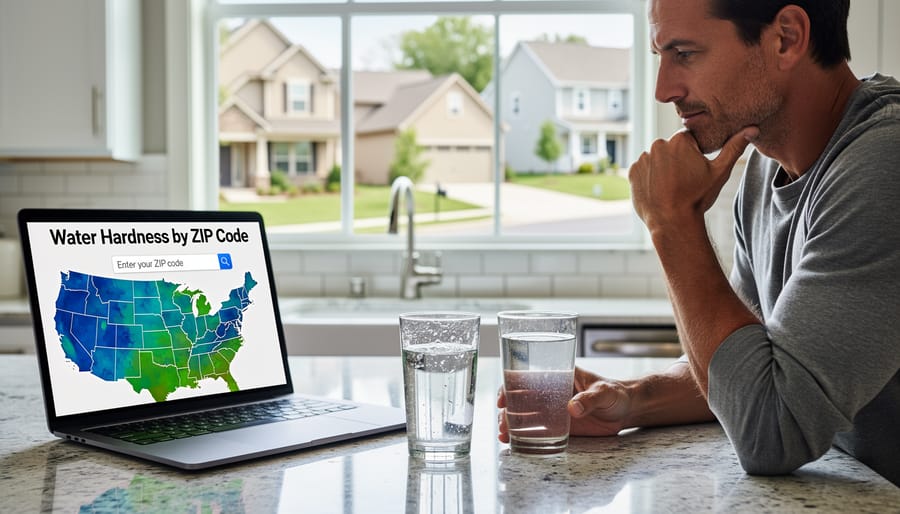
How to Find Your Zip Code’s Water Hardness Level
Check Your Local Water Quality Report
Every municipal water provider in the United States is required by federal law to publish an annual Consumer Confidence Report (CCR), also called a Water Quality Report. This free document is your most reliable source for understanding what’s actually in your tap water, including hardness levels.
To access your CCR, start by visiting your local water utility website, where reports are typically posted in a dedicated water quality section. You can also call your water provider directly to request a printed copy. The Environmental Protection Agency maintains a database of water systems at epa.gov/ccr, making it easy to locate your provider if you’re unsure who serves your area.
Once you have your report, look for sections labeled “hardness,” “calcium,” or “total dissolved solids.” Hardness is usually expressed in parts per million (ppm) or grains per gallon (gpg). The report may list a range representing measurements taken throughout the year. Water under 60 ppm is considered soft, 60-120 ppm is moderately hard, 120-180 ppm is hard, and anything above 180 ppm is very hard.
Pay attention to the source water information as well. Groundwater from wells typically contains higher mineral content than surface water from rivers or lakes, which helps explain regional hardness variations. Some reports also include seasonal variations, showing how hardness levels fluctuate throughout the year based on rainfall and water sources used.
Online Water Hardness Databases and Maps
Finding water hardness data for your specific location is easier than you might think, thanks to several free online resources. These databases compile information from municipal water systems and geological surveys, allowing you to search by zip code or city.
The USGS Water Quality Portal is one of the most comprehensive resources available. This database aggregates water quality data from multiple sources, including state agencies and federal programs. Simply visit the portal, enter your zip code, and filter results to show hardness measurements. The interface may seem complex at first, but focusing on “calcium” and “magnesium” parameters will give you the information you need.
For a visual perspective, the USGS National Water Information System offers interactive maps showing water hardness across different regions. These color-coded maps help you understand whether your area falls into soft, moderate, or hard water categories based on mineral content.
Many local utilities also provide digital water quality reports searchable by address or zip code. The EPA’s Consumer Confidence Report database connects you directly to your water provider’s annual testing results, which typically include hardness levels measured in grains per gallon or parts per million.
When using these tools, note that data may vary by season and source. Municipal systems often blend water from different sources, so readings represent averages. For the most accurate assessment of your home’s specific water hardness, these databases provide an excellent starting point before considering professional testing or sustainable treatment solutions.
Contact Your Water Utility Directly
For the most reliable and current information about your local water hardness, reaching out to your municipal water provider is the best approach. You can typically find their contact information on your monthly water bill or by searching “[your city name] water department” online. Most utilities publish annual water quality reports, called Consumer Confidence Reports, which include hardness measurements specific to your service area. These reports are usually available on their websites or by request.
When you contact them, ask for the hardness level measured in grains per gallon (gpg) or parts per million (ppm) for your specific neighborhood, as levels can vary within the same zip code depending on the water source. Many progressive utilities now offer online portals where you can access real-time water quality data. This direct approach gives you precise, laboratory-tested information rather than generalized estimates, helping you make informed decisions about whether you need a water treatment solution for your home.
Test Your Water at Home
While zip code data provides a helpful starting point, testing your water at home remains the most accurate way to determine your specific water hardness. Municipal water quality can vary significantly even within the same zip code due to differences in treatment facilities, distribution infrastructure, and the age of your plumbing system.
Home testing is particularly important if you rely on well water, as these private sources aren’t covered by municipal reports. You have several accessible options for testing: simple test strips provide quick results within minutes and cost just a few dollars, while more comprehensive liquid test kits offer laboratory-grade accuracy. Many hardware stores and online retailers sell these testing kits designed specifically for homeowners.
For the most precise measurements, consider sending a water sample to a certified laboratory. This professional analysis identifies exact hardness levels along with other minerals and contaminants that might affect your water quality. Understanding your home’s unique water profile helps you make informed decisions about treatment solutions that actually match your needs, preventing unnecessary expenses on oversized systems or ineffective products.
Regional Water Hardness Patterns Across America
Water hardness varies dramatically across the United States, creating distinct regional patterns that directly affect your home’s plumbing, appliances, and daily cleaning routines. Understanding these geographical differences helps you anticipate potential water quality challenges in your area.
The Southwest and Mountain West regions consistently report the hardest water in the nation. States like Arizona, New Mexico, Nevada, and Utah frequently measure hardness levels exceeding 180 parts per million (ppm), with some areas topping 400 ppm. This extreme hardness results from ancient limestone bedrock and mineral-rich aquifers that dissolve calcium and magnesium into groundwater supplies. Cities like Phoenix, Las Vegas, and Albuquerque are notorious for scale buildup that shortens appliance lifespans and creates stubborn soap scum on fixtures.
The Midwest presents a mixed picture, with significant hardness throughout Kansas, Nebraska, Iowa, and parts of Illinois and Wisconsin. Groundwater drawn from limestone and dolomite formations typically registers between 120-250 ppm. Indianapolis, Kansas City, and Milwaukee residents often struggle with the telltale signs of hard water, including spotty glassware and reduced soap efficiency.
Moving eastward, the Southeast shows more variability. Florida’s hardness depends heavily on location, with central regions drawing from limestone aquifers experiencing moderate to hard water (150-200 ppm), while coastal areas may have softer supplies. Georgia and the Carolinas display similar regional variations based on underlying geology.
The Northeast and Pacific Northwest enjoy notably softer water. New England states, upstate New York, and the Pacific coastal regions typically measure below 60 ppm, thanks to granite bedrock and surface water sources that contain fewer dissolved minerals. Seattle, Portland, and Boston residents rarely need water softening systems.
The Great Lakes region benefits from these massive freshwater bodies, providing naturally soft water to surrounding communities. However, nearby areas dependent on well water may still experience hardness issues depending on local aquifer composition.
These regional patterns aren’t absolute, as municipal water treatment, well depth, and specific geological features create neighborhood-level variations. That’s why checking your specific zip code provides the most accurate picture of your home’s water hardness and helps you make informed decisions about water treatment solutions.
The Full Picture: Mineral Content Beyond Hardness
Beneficial Minerals in Your Water
While hard water often gets a bad reputation for causing scale buildup, it’s important to recognize that it carries beneficial minerals that contribute to your daily nutritional intake. Calcium and magnesium, the primary components of water hardness, support bone health and cardiovascular function. Your tap water may also contain trace amounts of potassium, zinc, copper, and manganese—all essential minerals your body needs in small quantities.
The key is understanding the balance. Moderately hard water (around 60-120 mg/L) provides mineral benefits without causing significant scaling issues in most homes. Very hard water (over 180 mg/L) delivers more minerals but creates the appliance damage and cleaning headaches you’re likely trying to avoid.
If you’re considering water softening solutions to address hardness problems, think about systems that remove excess calcium and magnesium while preserving beneficial trace minerals. Some modern filtration technologies selectively reduce hardness-causing compounds without completely demineralizing your water. This approach gives you the best of both worlds: protection for your appliances and plumbing, while maintaining the nutritional advantages of mineral-rich water. Remember, you can always supplement minerals through diet, but finding the right water treatment balance supports both your home infrastructure and wellness goals.
Problem Minerals to Watch For
While calcium and magnesium define water hardness, your zip code’s water profile may contain other problem minerals that create distinct household headaches. Understanding these additional contaminants helps you choose the right treatment approach for your specific location.
Iron frequently appears in groundwater supplies, leaving reddish-brown stains on fixtures, laundry, and dishes. Even at concentrations above 0.3 parts per million, iron creates noticeable discoloration. Some zip codes experience particularly high iron levels due to local geology, making this a priority concern beyond basic hardness.
Manganese causes similar staining issues but produces black or purple marks instead. This mineral often accompanies iron in well water and can give your water an unpleasant metallic taste. Concentrations above 0.05 ppm typically require treatment.
Sulfur compounds create that distinctive “rotten egg” smell in some water supplies. While not harmful at typical concentrations, hydrogen sulfide makes water unpleasant to drink and can corrode plumbing fixtures over time.
When researching your zip code’s water quality report, look beyond the hardness number to identify these secondary minerals. Many water treatment systems address multiple issues simultaneously, combining hardness reduction with iron filtration or sulfur removal. Knowing your complete water profile ensures you select a solution that tackles all your specific challenges, not just scaling problems.
Total Dissolved Solids (TDS) in Your Area
Total Dissolved Solids (TDS) represents the complete concentration of dissolved minerals, salts, and metals in your water—not just the calcium and magnesium that create hardness. Think of TDS as the big picture of water purity, measuring everything from sodium and potassium to trace amounts of other substances. While water hardness focuses specifically on mineral content causing scale buildup, TDS gives you a broader understanding of what’s actually in your water.
These measurements relate closely because hard water typically has higher TDS levels, though not all TDS contributes to hardness. For homeowners concerned about water quality, TDS matters because elevated levels can affect taste, potentially impact appliance efficiency, and indicate the overall mineral load your household systems encounter daily. Most drinking water falls between 50-500 parts per million, with levels above 1,000 ppm suggesting the need for treatment. Understanding both TDS and hardness together helps you make informed decisions about filtration systems that address your specific water quality challenges sustainably.
Scaling: The Hidden Cost of Hard Water
How Scale Forms in Your Plumbing and Appliances
When hard water heats up, a fascinating chemical transformation occurs in your home’s plumbing system. The dissolved minerals in your water—primarily calcium and magnesium—become less soluble at higher temperatures. As water heats, these minerals crystallize and form a chalky, rock-like substance called scale that clings to surfaces.
Your water heater bears the brunt of this process. Inside the tank, heating elements become encrusted with thick mineral deposits that act as insulation, forcing the appliance to work harder and consume more energy. This buildup reduces efficiency by up to 25% and can shorten your water heater’s lifespan by years.
Pipes are another vulnerable target. Scale gradually accumulates along pipe walls, narrowing the diameter and restricting water flow. Over time, this creates pressure problems throughout your home and can lead to costly repairs.
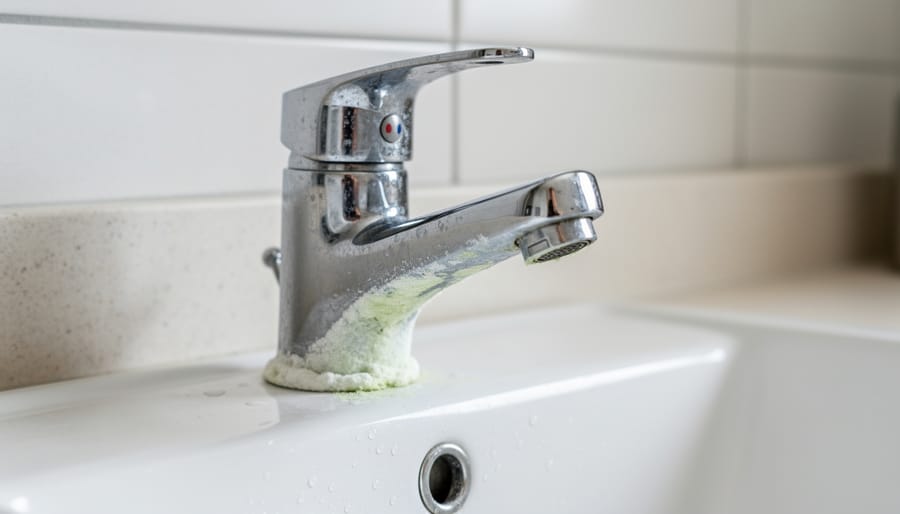
Faucets and showerheads display visible signs of scale as white, crusty deposits around openings and aerators. These mineral buildups reduce water pressure and create uneven spray patterns, making simple tasks like washing dishes or showering less effective. The good news? Understanding where scale forms helps you target prevention efforts and choose the right water treatment solutions for your specific needs.
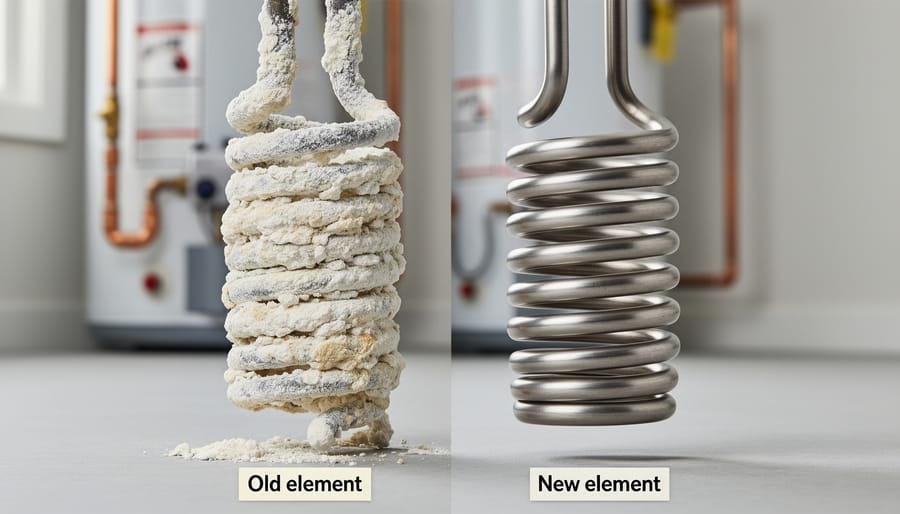
The Real Impact on Your Home and Wallet
Hard water doesn’t just leave spots on your glassware—it creates a cascading financial burden that most homeowners significantly underestimate. Let’s break down the real costs hiding in your utility bills and appliance replacement expenses.
Your water heater takes the hardest hit. When mineral deposits accumulate inside the tank, your heater works 20-30% harder to warm the same amount of water. For the average household, that translates to an extra $200-400 annually in energy costs. Even worse, hard water can cut your water heater’s lifespan in half—from 13 years down to just 6 or 7 years. Replacing a water heater costs between $1,200 and $3,500, making this perhaps your biggest hidden expense.
Dishwashers, washing machines, and coffee makers face similar fates. Research shows these appliances lose 30-50% of their expected lifespan in areas with very hard water (above 10 grains per gallon). A dishwasher that should last 10 years might need replacement after just 5.
Your plumbing system suffers too. Scale buildup restricts water flow, leading to increased pressure that stresses pipes and fixtures. Homeowners in hard water areas spend an estimated $800-1,200 more on plumbing repairs over a decade compared to those with soft water.
Don’t forget the everyday costs—you’ll use 50-75% more detergent, shampoo, and soap just to overcome mineral interference. For a family of four, that’s roughly $100-150 extra per year on cleaning products alone.
Visible Signs You Have a Scaling Problem
Hard water leaves telltale signs throughout your home that are hard to miss once you know what to look for. The most obvious indicator is white, chalky deposits around faucets, showerheads, and inside your kettle—that crusty buildup is concentrated calcium and magnesium minerals. You might also notice stubborn soap scum clinging to shower doors and bathtubs that resists regular cleaning efforts.
Check your glassware after running the dishwasher. If dishes come out looking cloudy or spotted despite thorough washing, that’s mineral residue from hard water. In the shower, you may experience difficulty creating a good lather with soap and shampoo, leaving a filmy feeling on your skin and hair.
Pay attention to water pressure too. Scale accumulation inside pipes gradually restricts water flow, leading to noticeably weaker pressure over time. Your water-using appliances might also show signs of strain—water heaters, washing machines, and dishwashers working harder and consuming more energy as mineral deposits interfere with their heating elements and internal components. These efficiency losses translate directly to higher utility bills and shortened appliance lifespans.
Matching Solutions to Your Local Water Profile
When You Need a Water Softener
If your zip code reveals water hardness above 7 grains per gallon (GPG) or 120 milligrams per liter (mg/L), you’re dealing with hard water that can benefit from treatment. At this threshold, mineral buildup starts affecting your daily life—leaving spots on dishes, creating soap scum, and gradually reducing appliance efficiency.
For moderately hard water (7-10 GPG), you’ll notice these issues occasionally but may manage with targeted solutions like descaling agents. However, once hardness exceeds 10 GPG, you’ve entered “hard” to “very hard” territory where a water softener becomes a practical investment. These systems work by exchanging calcium and magnesium ions for sodium or potassium, preventing scale formation throughout your plumbing.
Two main softener types dominate the market: salt-based ion exchange systems and salt-free conditioners. Traditional salt-based softeners effectively remove hardness minerals and work reliably for most households. Salt-free alternatives don’t actually remove minerals but rather condition them to reduce scaling—an eco-friendlier option that’s particularly appealing for environmentally-conscious homeowners, though less effective in extremely hard water situations.
If your area registers above 15 GPG, you’re in very hard water territory requiring robust treatment. Consider these factors: household size (determines regeneration frequency), available space for equipment, ongoing maintenance costs, and local water regulations regarding brine discharge. Some communities restrict salt-based systems due to environmental concerns about sodium entering wastewater streams.
Modern innovations now include smart softeners that learn your usage patterns and optimize salt consumption, reducing environmental impact while maintaining effectiveness. Understanding your specific hardness level helps you choose the right-sized system, avoiding over-treatment and unnecessary resource use.
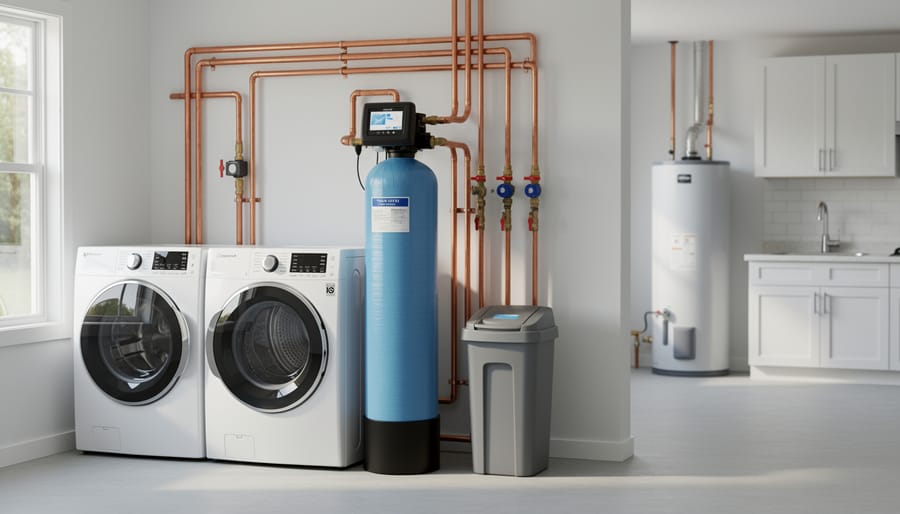
Alternative Solutions for Moderate Hardness
If your water hardness falls in the moderate range (3.5-7 grains per gallon), you have several effective alternatives to traditional salt-based softeners. These eco-friendly solutions address mineral buildup without adding sodium to your water or requiring ongoing chemical purchases.
Salt-free water conditioners use Template Assisted Crystallization (TAC) technology to transform minerals into microscopic crystals that won’t stick to pipes and appliances. While they don’t remove minerals like softeners do, they prevent scale formation effectively. These systems require no electricity, produce no wastewater, and need minimal maintenance—making them ideal for environmentally-conscious homeowners.
Electronic descalers offer another innovative approach by using electromagnetic waves to alter mineral behavior. These compact devices attach to your main water line and typically cost less than full softening systems while using negligible energy.
For targeted improvement, whole-house filtration systems with carbon and sediment filters can remove chlorine, sediment, and other contaminants while leaving beneficial minerals intact. Many models combine multiple technologies for comprehensive water treatment.
These alternatives work best in areas with moderate hardness where preventing scale matters more than achieving completely soft water. They preserve the natural mineral content that contributes to drinking water’s taste and nutritional value while protecting your plumbing investment sustainably.
Whole House vs. Point-of-Use Treatment
Once you’ve identified your water hardness level, choosing between whole house and point-of-use treatment depends on your specific situation. Whole house systems treat water at the main entry point, providing softened water throughout your entire home. This comprehensive approach protects all appliances, fixtures, and pipes from scale buildup while delivering soft water to every tap. It’s ideal if your hardness exceeds 7 grains per gallon or if multiple household members experience skin irritation from hard water.
Point-of-use systems target specific locations like kitchen sinks or showers, offering a budget-friendly alternative for moderate hardness levels. These compact filters work well when only drinking water quality concerns you, or when you’re renting and cannot install permanent systems. They also appeal to environmentally-conscious homeowners who want to reduce water waste from regeneration cycles common in traditional softeners.
Consider your household size, budget, and primary concerns. Families experiencing widespread appliance issues and high energy costs from scale buildup typically benefit from whole house solutions. Meanwhile, singles or couples in apartments with moderately hard water might find point-of-use treatment perfectly adequate for their drinking and cooking needs.
Special Considerations for Well Water Users
If you rely on well water, understanding that zip code averages tell only part of your story is essential. Unlike municipal water systems that draw from consistent sources and undergo regular testing, well water hardness can vary dramatically from property to property—even between neighbors on the same street. Your water’s mineral content depends on the specific geological formations your well taps into, which can differ significantly within a few hundred feet.
This makes private testing absolutely critical for well owners. The general hardness data for your zip code provides a helpful baseline, but only direct testing of your specific well reveals the true mineral levels affecting your home. Consider scheduling professional water testing at least once annually, or more frequently if you notice changes in water taste, appearance, or how your soap and detergents perform.
Well water users should also pay attention to how water supply changes seasonally. During periods of heavy rainfall, groundwater dilution may temporarily reduce hardness levels. Conversely, drought conditions often concentrate minerals as water tables drop. These seasonal variations mean your water treatment needs might shift throughout the year.
For eco-conscious homeowners, this variability presents both challenges and opportunities. More frequent monitoring helps you optimize water softening systems for efficiency, preventing unnecessary salt or chemical use during periods when your water naturally runs softer. Understanding your well’s unique characteristics empowers you to make informed decisions about sustainable water treatment that matches your actual needs rather than zip code generalizations.
Understanding your zip code’s water hardness level is an essential first step, but it shouldn’t be your last. Municipal water reports provide helpful baseline data, yet your home’s specific water quality can differ due to local plumbing, well sources, or seasonal variations. That’s why testing your actual tap water gives you the most accurate picture of what you’re working with.
Armed with this knowledge, you can make informed decisions that suit your household’s unique needs. Whether you’re dealing with stubborn soap scum, protecting expensive appliances, or concerned about mineral intake, the right water treatment solution should address your priorities without creating unnecessary waste or expense. Consider sustainable options that minimize environmental impact while effectively managing hardness issues.
Your water quality directly affects your daily comfort, home maintenance costs, and long-term appliance performance. Don’t leave it to chance. Take control today by testing your water, evaluating your household’s specific challenges, and choosing a treatment approach that balances health benefits, home protection, and environmental responsibility. The investment you make now in understanding and addressing your water hardness will pay dividends for years to come.