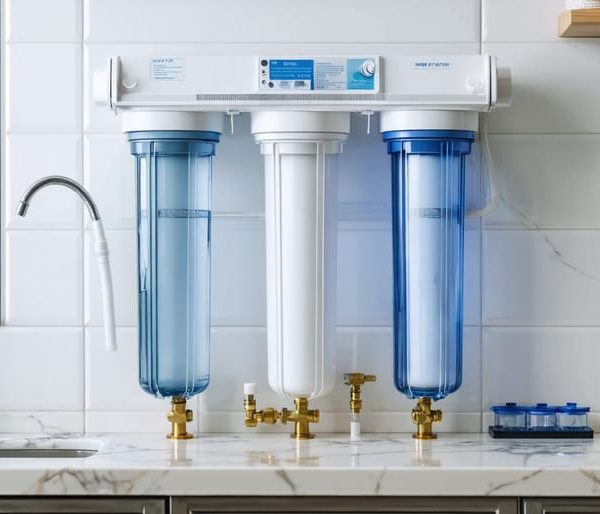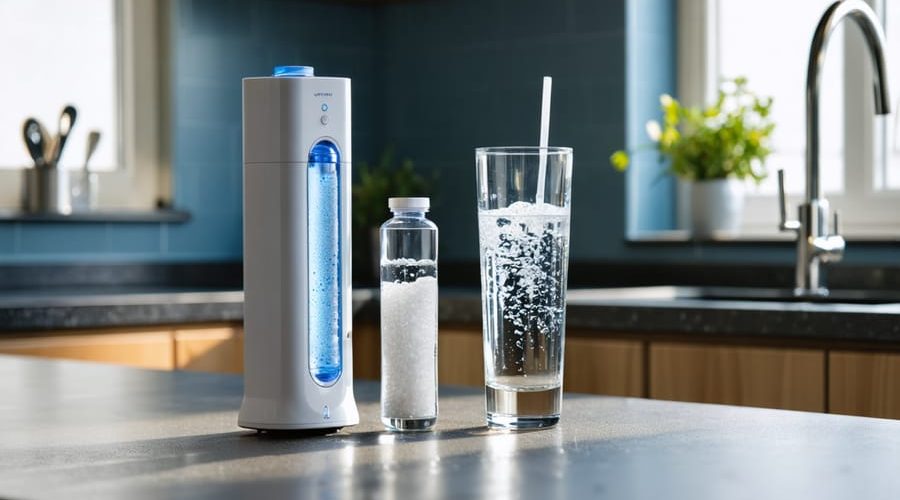
Fluoride removal requires specific filtration technologies—most standard water filters, including basic carbon filters and sediment filters, won’t eliminate this persistent compound from your drinking water. Understanding which systems actually work can save you from ineffective purchases and ensure your family receives the fluoride-free water you’re seeking.
Three proven technologies effectively remove fluoride: reverse osmosis systems (removing 85-95% of fluoride), activated alumina filters (targeting fluoride specifically while maintaining beneficial minerals), and bone char carbon filters (offering 90%+ removal rates through natural media). Each technology operates differently, affecting factors like water waste, filter lifespan, installation complexity, and ongoing costs that range from $200 for countertop units to $500+ for whole-house systems.
The challenge extends beyond simply choosing any fluoride-removal system. You’ll need to match the technology to your household size, water consumption patterns, existing plumbing setup, and budget constraints. A family of four with high daily water usage faces different requirements than a single person seeking filtered drinking water only. Installation considerations matter too—some systems require professional plumbing modifications, while others connect directly to your existing faucet.
Environmental factors also play a role in this decision. Reverse osmosis systems waste 3-4 gallons per gallon filtered, raising sustainability concerns for eco-conscious households, while activated alumina and bone char options conserve water but require periodic media replacement. This guide breaks down each technology’s mechanics, real-world performance, total ownership costs, and environmental impact, empowering you to select the fluoride-removal system that aligns with both your health goals and values.
Understanding Fluoride in Your Tap Water
How Much Fluoride Is Actually in Your Water?
Understanding your water’s fluoride content is the first step in deciding whether you need a specialized filtration system. Most U.S. municipal water systems add fluoride at levels between 0.7 and 1.2 parts per million (ppm), following public health recommendations. This amount is carefully controlled and monitored, but many homeowners prefer to manage fluoride intake themselves.
Finding your local fluoride levels is straightforward. Your municipal water provider publishes an annual Consumer Confidence Report, typically available on their website or by request. Simply search for your city’s name plus “water quality report” to access current fluoride measurements and other water quality data.
For those using private wells, the situation differs. Natural fluoride can occur in groundwater at varying concentrations depending on local geology. Some areas have naturally high fluoride levels exceeding 4 ppm, while others contain virtually none. The key difference between well water versus municipal sources is that well owners are responsible for testing their own water. The EPA recommends testing private wells for fluoride at least once, especially in regions with fluoride-bearing rock formations. Local health departments often provide low-cost testing services to help homeowners understand their baseline water quality.
Why Some Homeowners Choose to Remove It
Homeowners consider fluoride removal systems for various personal and practical reasons. While municipal water fluoridation is intended to support dental health, some individuals prefer controlling their fluoride intake through other means, such as toothpaste and dental treatments, rather than through drinking water.
Health considerations play a role in this decision for certain households. Parents of infants may want to avoid mixing baby formula with fluoridated water, as pediatric guidelines sometimes recommend using low-fluoride water for this purpose. Others following specific dietary protocols or managing particular health conditions may choose to minimize their fluoride consumption based on guidance from their healthcare providers.
Taste and water quality preferences also influence this choice. Some people detect a chemical taste in heavily fluoridated water and find that removing it improves their drinking experience. Additionally, environmentally-conscious homeowners often appreciate having complete control over what enters their water supply, aligning with broader sustainable living values.
It’s worth noting that choosing a fluoride removal system is a personal household decision. These systems simply provide an option for those who prefer to customize their home water quality based on individual needs and preferences.
Filtration Methods That Remove Fluoride (And Those That Don’t)
What Doesn’t Work: Common Misconceptions
One of the biggest misconceptions about fluoride removal is assuming that popular, everyday water filters handle this contaminant. Unfortunately, that’s not the case, and understanding why can save you money and frustration.
Most standard pitcher filters, including well-known brands like Brita and PUR, use activated carbon as their primary filtration method. While activated carbon excels at removing chlorine, improving taste and odor, and capturing some organic compounds, it simply cannot trap fluoride molecules. The reason comes down to chemistry: fluoride ions are extremely small and carry an electrical charge that carbon filters aren’t designed to attract or hold.
Similarly, basic sediment filters—those designed to catch rust, dirt, and larger particles—won’t touch fluoride either. These filters work mechanically, blocking physical debris while allowing dissolved minerals and chemicals like fluoride to pass right through.
Even some whole-house filtration systems that rely solely on carbon filtration won’t remove fluoride, despite their impressive size and cost. The filtration method matters far more than the system’s price tag or physical dimensions.
To effectively remove fluoride from your drinking water, you need specific technologies: reverse osmosis, activated alumina, or bone char carbon filters. Each uses different mechanisms specifically capable of capturing those tiny fluoride molecules that standard filters miss. Understanding this distinction helps you invest in a system that actually delivers the fluoride-free water you’re seeking.
Reverse Osmosis: The Gold Standard
Reverse osmosis stands as the most reliable technology for fluoride removal in home water systems. Understanding how RO removes fluoride helps explain why these systems consistently eliminate 85-95% of this compound from your drinking water.
RO systems work by forcing water through an ultra-fine semi-permeable membrane with pores measuring just 0.0001 microns. Since fluoride molecules are larger than water molecules, they get trapped and flushed away while clean water passes through. This physical filtration process doesn’t rely on chemical reactions, making it both effective and environmentally friendly.
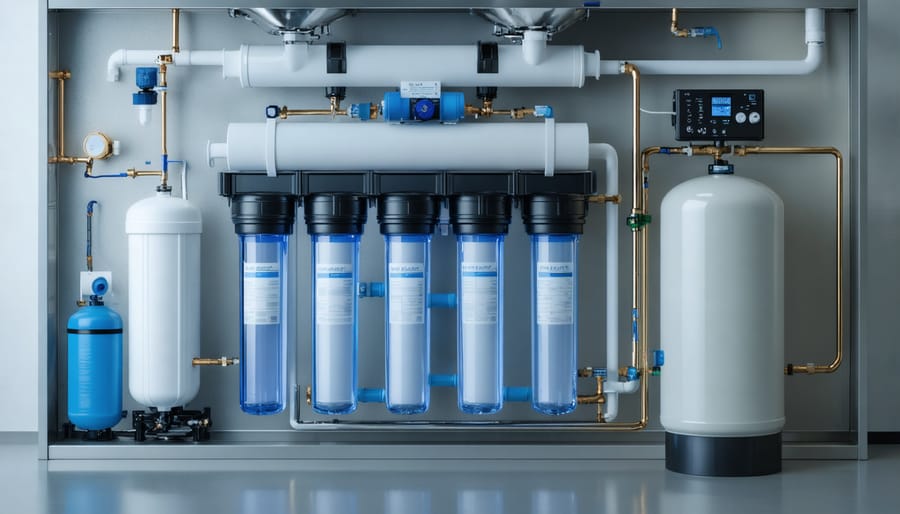
A typical home RO setup includes several components working together. Pre-filters remove sediment and chlorine that could damage the membrane. The RO membrane handles fluoride and other dissolved contaminants. Post-filters polish the water for taste. A storage tank holds filtered water for on-demand use, and a dedicated faucet provides access to your purified water.
These systems do require space under your sink and a connection to your cold water line and drain. Water pressure above 40 PSI ensures optimal performance, though pressure-boosting pumps can help homes with lower pressure.
The effectiveness comes from the membrane’s incredibly tight filtration barrier. While other filters trap larger particles, RO systems target dissolved solids at the molecular level. This makes them ideal for removing fluoride alongside other common contaminants like lead, arsenic, and nitrates, giving you comprehensive water purification in one system.
Activated Alumina Filters
Activated alumina is a specialized porous media made from aluminum oxide that effectively targets fluoride molecules through a process called adsorption. As water passes through these granules, fluoride ions bind to the surface, resulting in removal rates exceeding 90% when properly maintained. This makes it one of the most reliable options for fluoride reduction in home settings.
The filter’s effectiveness depends on several factors, including your water’s pH level (works best between 5.5-6.5), contact time with the media, and fluoride concentration. Most systems require periodic regeneration using a sodium hydroxide solution to restore the media’s adsorption capacity, though replacement is eventually necessary after multiple regeneration cycles.
Activated alumina filters work best as dedicated fluoride removal systems rather than all-purpose filters. They’re ideal for households specifically concerned about fluoride content and willing to perform regular maintenance. Expected media lifespan ranges from 2-5 years depending on water quality and usage. This technology represents a proven, eco-conscious solution that reduces reliance on bottled water while delivering consistent fluoride reduction for health-minded homeowners.
Bone Char Carbon Filters
Bone char carbon filters use charcoal made from animal bones, traditionally cattle bones, heated at high temperatures. This porous material effectively removes fluoride through a process called adsorption, where fluoride ions bind to the calcium phosphate structure within the bone char. These filters can remove up to 90% of fluoride from drinking water, making them one of the more effective natural filtration options available.
For environmentally-conscious homeowners, bone char presents an interesting consideration. While it utilizes a byproduct from the meat industry that would otherwise go to waste, some find it ethically challenging due to its animal origin. Vegan and vegetarian households may prefer synthetic alternatives like activated alumina instead.
Bone char filters are available as standalone units or replacement cartridges for existing systems. They require periodic replacement, typically every six months to a year depending on water usage and fluoride levels. When shopping, look for filters specifically labeled as bone char, as regular activated carbon alone won’t remove fluoride effectively.
Choosing the Right System for Your Home
Point-of-Use vs. Whole House Systems
When deciding between point-of-use and whole-house fluoride removal systems, your choice depends on budget, fluoride exposure concerns, and household needs.
Point-of-use systems, typically under-sink reverse osmosis units, are the most practical option for most homeowners. These systems focus on treating drinking and cooking water at a single faucet, which makes sense since fluoride exposure primarily comes from consumption. An under-sink RO system costs between $200-600 for quality units, with annual filter replacement running $50-150. The reverse osmosis process effectively removes 85-95% of fluoride at the point where you need it most. Installation is straightforward, often DIY-friendly, and water waste is minimized since you’re only treating what you drink.
Whole-house fluoride removal systems treat all water entering your home, including showers, laundry, and toilets. While comprehensive, these systems require substantial investment—typically $1,500-4,000 for installation, plus $300-600 annually for media replacement. They demand professional installation and larger storage tanks. The reality is fluoride absorption through skin during bathing is minimal compared to ingestion, making whole-house systems excessive for most families.
Whole-house systems make sense only in specific situations: homes with private wells showing extremely high fluoride levels (above 4 ppm), households with members who have severe fluoride sensitivities, or those seeking complete fluoride elimination for medical reasons. For the average household concerned about fluoride in drinking water, a quality point-of-use system provides effective, affordable protection without unnecessary complexity or environmental impact from treating water unnecessarily.
Flow Rate and Household Size Considerations
Before choosing a fluoride removal system, calculate your household’s daily water consumption to ensure adequate supply. The average person uses 2-4 gallons of drinking and cooking water daily, so a family of four typically needs 8-16 gallons per day.
Reverse osmosis systems, while highly effective at fluoride removal, produce filtered water slowly—typically 50-75 gallons per day for residential units. This gradual production happens because water must pass through multiple filtration stages under pressure. To compensate for this limitation, RO systems include storage tanks that collect filtered water when you’re not using it, ensuring immediate availability when you turn on the tap.
Most home RO systems come with 2-4 gallon storage tanks, which adequately serve average households. However, larger families or those who frequently host guests may benefit from upgraded 10-15 gallon tanks to prevent running out during peak usage times.
Consider your water pressure too—RO systems require at least 40 PSI to function efficiently. Lower pressure means slower production and potentially inadequate supply. If you’re uncertain about your home’s pressure, a simple gauge test can help determine whether you’ll need a booster pump to maintain consistent filtered water availability for your household’s needs.
Installation: DIY or Professional?
Your installation approach largely depends on which fluoride removal system you choose. Countertop filters and pitcher-style units are genuinely DIY-friendly—they require no plumbing skills and connect directly to your faucet or sit in your refrigerator. You can have them running within minutes of unboxing.
Under-sink reverse osmosis systems fall into a gray area. If you’re comfortable with basic plumbing tasks like connecting water lines and drilling a small hole for the dedicated faucet, you can tackle this yourself in 2-4 hours. Most manufacturers provide detailed instructions and customer support. However, if you’ve never worked with plumbing connections or feel uncertain about potential leaks, professional installation ($150-$300) offers peace of mind and typically includes a warranty on the work.
Whole-house filtration systems almost always warrant professional installation. These require modifications to your main water line, pressure considerations, proper valve placement, and often electrical connections for UV components. A licensed plumber ensures code compliance and optimal system performance, preventing costly mistakes that could affect your entire home’s water supply.
Consider professional help if you rent your home, have complex plumbing, or lack the necessary tools. The upfront cost often prevents expensive repairs from improper installation.
The Real Costs: Initial Investment and Ongoing Maintenance
Upfront Equipment Costs
Understanding the upfront investment helps you budget appropriately for fluoride removal. Reverse osmosis systems remain the most popular choice, with countertop or under-sink models typically ranging from $200 to $600 depending on brand reputation and included features. These systems offer excellent fluoride reduction at a manageable price point for most households.
Activated alumina filters present an alternative, generally priced between $150 and $400 for point-of-use systems. While effective, these require more frequent media replacement than RO systems, which affects long-term costs.
For comprehensive fluoride removal throughout your entire home, whole-house systems represent a significant investment starting around $1,000 and easily exceeding $3,000 for premium installations. These larger systems suit families concerned about fluoride exposure from showers and baths, not just drinking water.
Distillation units offer another option, ranging from $100 for basic countertop models to $500 for more advanced units. However, these consume considerable electricity and work slowly compared to RO systems.
When evaluating costs, consider installation expenses if you’re not handy with plumbing. Professional installation adds $100 to $500 depending on system complexity, though many under-sink and countertop models allow straightforward DIY setup with basic tools.
Filter Replacement and Annual Maintenance
Maintaining your fluoride-removal system is essential for ensuring consistent performance and protecting your household’s water quality. Different filtration technologies require varying maintenance approaches, and understanding these needs helps you budget appropriately.
Reverse osmosis systems typically need membrane replacements every 2-3 years, costing $50-$100, while pre-filters and carbon filters require changes every 6-12 months at $15-40 each. Activated alumina filters generally last 6-12 months depending on your water usage and fluoride concentration, with replacement cartridges ranging from $40-$80. Bone char filters offer similar lifespans but may cost slightly more. Following proper filter replacement schedules ensures optimal fluoride removal and prevents contaminant breakthrough.
Annual maintenance costs for RO systems typically range from $60-$200, covering all necessary filter changes. Activated alumina and bone char systems generally fall within the $80-160 range annually. These costs represent a small investment compared to bottled water expenses, which can exceed $500 yearly for a family.
Neglecting maintenance has serious consequences. Exhausted filters lose their fluoride-removal capacity, allowing contaminants to pass through while giving you false confidence in your water quality. Clogged pre-filters reduce water flow and strain your system, potentially causing leaks or component failure. Bacterial growth can develop in unmaintained systems, introducing new health concerns.
Set calendar reminders for filter changes and monitor your system’s flow rate. Most modern systems include indicator lights or gauges showing when replacements are needed. This proactive approach protects both your health and your filtration investment while supporting sustainable home water management.
Environmental Considerations for Eco-Conscious Homeowners
Water Waste from Reverse Osmosis
One significant consideration with reverse osmosis systems is their water consumption. Standard RO units typically use a 3:1 or 4:1 wastewater ratio, meaning for every gallon of filtered water produced, three to four gallons go down the drain. This happens because the system flushes away contaminants, including fluoride, through a drain line to prevent membrane clogging.
For environmentally-conscious homeowners, this can feel wasteful. The good news is that newer, more efficient RO models have improved these ratios significantly. Some cutting-edge systems now achieve 1:1 or even better ratios, cutting water waste by up to 75 percent compared to older units.
If you’re concerned about the environmental impact, consider repurposing your RO drain water rather than letting it disappear unused. This wastewater isn’t contaminated in the traditional sense; it simply contains higher concentrations of the minerals and contaminants filtered out. You can collect it for watering outdoor plants, washing cars, mopping floors, or flushing toilets. Some households even connect their drain line directly to gardens or greywater systems, making the most of every drop while still enjoying fluoride-free drinking water.
Filter Disposal and Sustainable Alternatives
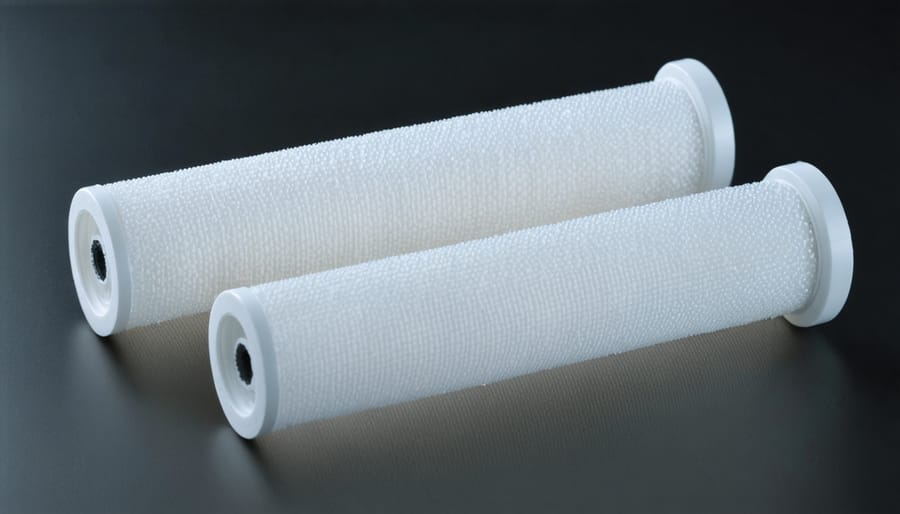
Proper disposal of fluoride filtration media deserves attention from environmentally-conscious homeowners. Spent activated alumina and bone char filters typically cannot be recycled through standard programs and should be disposed of as household waste. However, reverse osmosis membranes may qualify for manufacturer take-back programs, so check with your system provider before discarding. Some companies now offer filter recycling initiatives specifically for water purification components.
To minimize environmental impact, consider systems with longer-lasting filters that reduce replacement frequency. Activated alumina cartridges often last 6-12 months, while bone char filters may function effectively for up to a year depending on usage and fluoride levels. Calculate your household’s actual consumption to avoid premature replacements.
Emerging sustainable alternatives include regenerable activated alumina systems, where the media can be chemically restored multiple times before disposal, significantly extending its useful life. While initial costs run higher, the long-term reduction in waste makes these options increasingly attractive. Some manufacturers also use recyclable housing materials and minimize plastic packaging. When selecting your fluoride removal system, inquire about end-of-life options and company sustainability commitments to align your water quality goals with environmental responsibility.
Testing Your Water: Before and After
Home Test Kits vs. Lab Testing
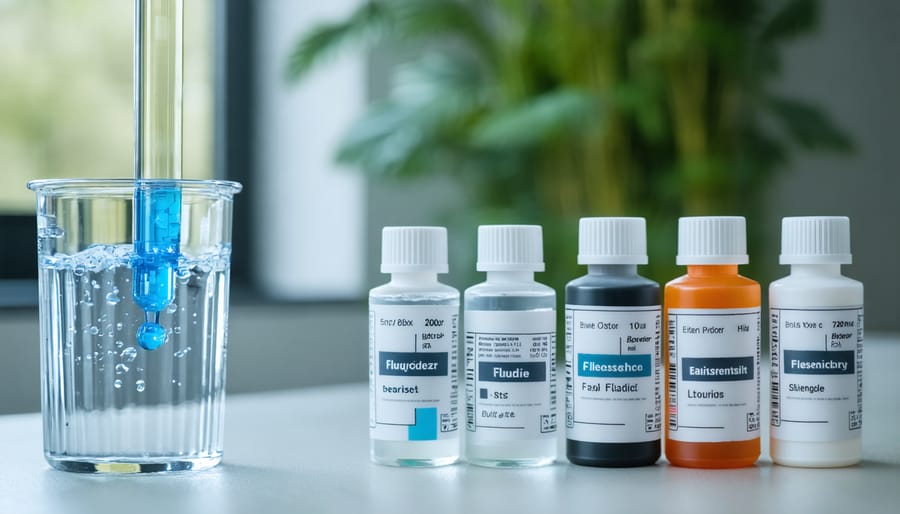
When testing your water for fluoride, you’ll need to choose between home test kits and professional laboratory analysis. Home test kits typically cost between $15 and $50 and provide results within minutes. These kits use color-matching strips or digital meters to measure fluoride levels, making them convenient for quick baseline readings and monitoring your filtration system’s ongoing performance.
Laboratory testing offers greater precision and costs between $50 and $150. Labs use advanced equipment to detect fluoride concentrations as low as 0.01 parts per million, providing detailed reports that include other contaminants you might not have considered testing for.
For most homeowners, starting with a home test kit makes practical sense. Use one before installing your filtration system to confirm fluoride is actually present, then periodically retest to verify your filter is working effectively. However, consider professional lab testing if you’re on a private well, suspect multiple contaminants, need documentation for health purposes, or want the most accurate baseline measurement before investing in a filtration system. Lab results also help you make informed decisions about which filter technology best suits your specific water chemistry and fluoride concentration levels.
Monitoring Filter Performance Over Time
Knowing when your fluoride filter needs replacement is essential for maintaining effective water treatment. Most manufacturers recommend replacing filters based on time intervals (typically 6-12 months) or gallons processed (commonly 1,000-3,000 gallons), but actual performance depends on your water’s fluoride concentration and usage patterns.
Watch for these telltale signs of declining filter effectiveness: a noticeable change in water taste or odor, decreased water flow rate indicating saturation, or visible discoloration of the filter media. For reverse osmosis systems, a sudden increase in wastewater production can signal membrane degradation. The most reliable approach is testing your filtered water every few months with an at-home fluoride test kit or sending samples to a certified laboratory. These tests provide concrete data showing when fluoride removal drops below acceptable levels. Keep a simple maintenance log noting installation dates and test results to establish your system’s actual lifespan under your specific conditions. This proactive monitoring prevents you from unknowingly consuming fluoride after your filter loses effectiveness, while also helping you avoid premature replacements that waste money and resources.
Choosing a home water filtration system to remove fluoride doesn’t have to be overwhelming once you understand the basics. The key takeaway is simple: standard carbon filters and basic pitcher filters won’t remove fluoride. If this is your priority, you’ll need to invest in reverse osmosis, activated alumina, or bone char filtration systems that are specifically designed for fluoride removal.
Budget considerations vary significantly. Reverse osmosis systems typically range from $200 to $600 for initial installation, with annual filter replacements costing $50 to $200. Activated alumina and bone char systems have similar price points but may require more frequent maintenance depending on your water’s fluoride levels and household usage. Factor in these ongoing costs when making your decision, as the lowest upfront price doesn’t always mean the best long-term value.
Maintenance requirements are manageable for most homeowners. Expect to change filters every six to twelve months and occasionally sanitize your system. Keep track of filter replacement schedules to maintain optimal performance and water quality.
Ultimately, the right choice depends on your household’s unique needs, water quality, budget, and values. Test your water first to understand current fluoride levels, then select a system that aligns with your filtration goals and environmental considerations. Making an informed decision means weighing effectiveness, cost, maintenance commitments, and sustainability factors together. Whatever system you choose, you’re taking a proactive step toward controlling your household water quality.