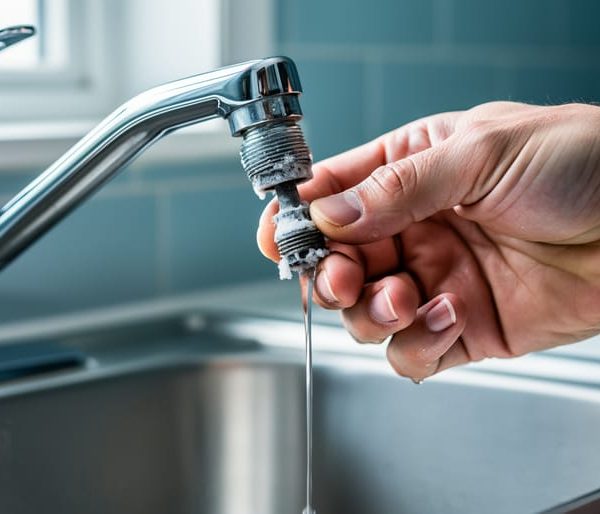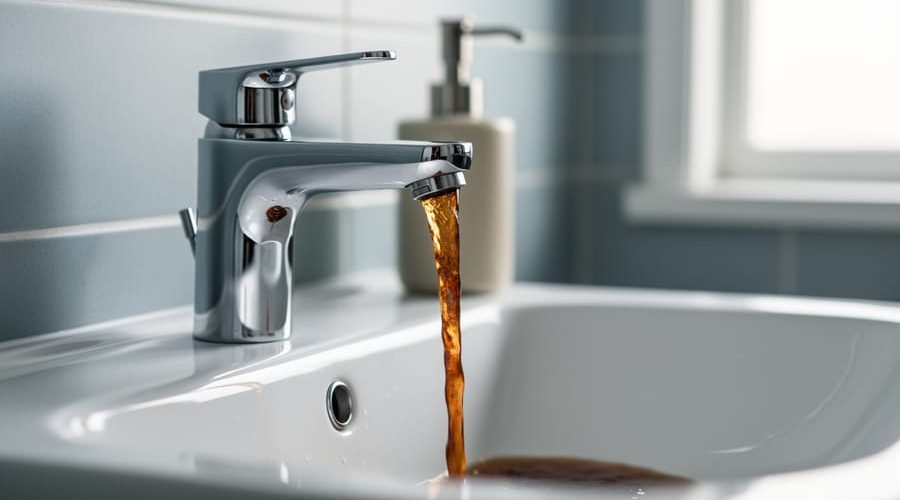
Turn on your cold water tap and let it run for two minutes—if the discoloration clears, the issue likely originates in your home’s pipes rather than the municipal supply. Check with neighbors to determine whether brown water affects multiple households, which indicates a broader infrastructure problem requiring utility company intervention. Inspect your water heater for sediment buildup by draining a bucket from the bottom valve; rusty-brown water here signals accumulated minerals that need flushing.
Brown water flowing from your taps ranks among the most alarming household water problems you’ll encounter, but it’s rarely dangerous and almost always fixable. This discoloration typically stems from iron, manganese, or sediment disturbances in aging pipes—either within your home’s plumbing system or in municipal water lines following maintenance work or pressure changes. While the appearance understandably causes concern, understanding the root cause empowers you to implement the right solution, whether that’s a simple pipe flush, water heater maintenance, or installing a whole-home filtration system. This guide walks you through identifying your specific issue, assessing safety risks, and choosing both immediate fixes and long-term prevention strategies that protect your family’s water quality and your home’s plumbing infrastructure.
What’s Actually in Your Brown Tap Water
Iron and Rust: The Most Common Culprits
When your tap water runs brown, iron is often the primary suspect behind this unsettling sight. Understanding the different forms iron takes in your water system helps you identify and address the root cause of this common issue.
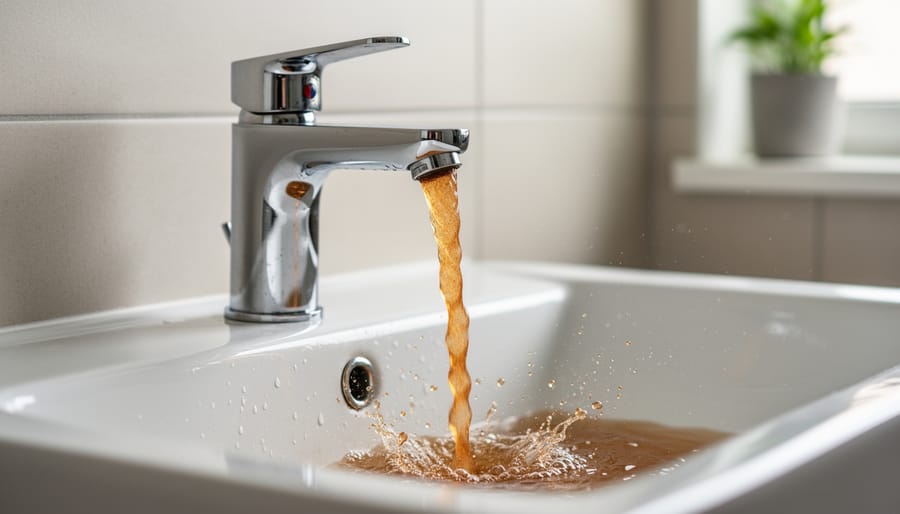
Dissolved iron enters your water supply naturally from underground sources or corroding pipes. This iron remains invisible until it contacts oxygen, triggering oxidation that transforms clear water into rusty brown liquid. You’ll typically notice this after water sits idle in pipes overnight or when you first turn on the tap.
Iron bacteria present a different challenge. These naturally occurring microorganisms feed on iron in your water, creating a reddish-brown slime that can accumulate in pipes and water heaters. Unlike chemical oxidation, iron bacteria produce a distinctive musty odor and leave behind slimy deposits.
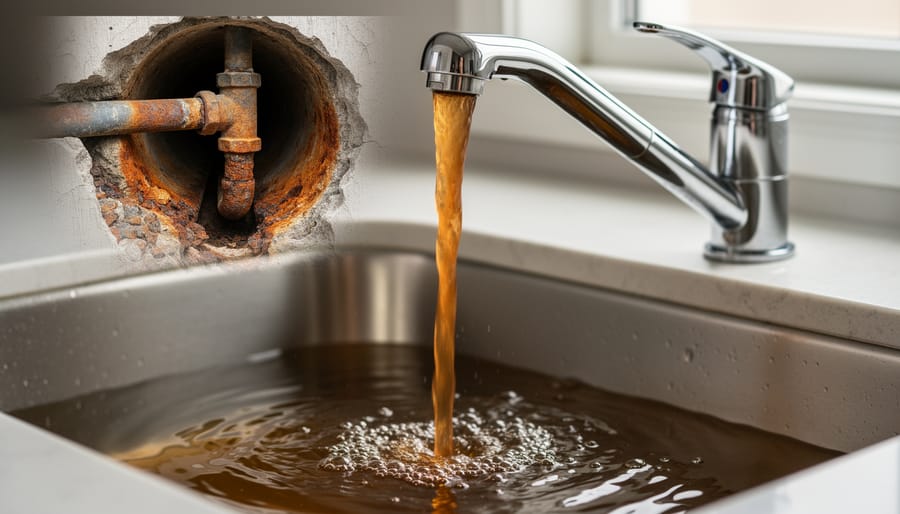
Rust particles from aging galvanized or iron pipes create the most visible brown water. As protective zinc coatings deteriorate over decades, exposed iron corrodes, releasing rust flakes directly into your water stream. This type of water quality issues typically worsens during periods of high water pressure or when nearby utility work disturbs sediment buildup.
Modern filtration systems can effectively remove these iron-based contaminants, restoring clear, safe water throughout your home.
When the Problem Starts at the Street
Sometimes the source of your brown water isn’t inside your home at all. Municipal water system disruptions commonly cause temporary discoloration affecting entire neighborhoods simultaneously.
Water main breaks are among the most frequent culprits. When pipes rupture underground, sediment and rust particles get stirred up and flow through the distribution system. The repair process itself can introduce additional debris into the water supply, though the discoloration typically clears within a few hours once the system stabilizes.
Scheduled hydrant flushing is another common cause. Municipal water departments periodically open fire hydrants to flush sediment from water mains, maintaining system performance and preventing buildup. This essential maintenance temporarily stirs up accumulated minerals and rust, causing brown water throughout affected areas. Most municipalities provide advance notice of flushing schedules through local websites or community notifications.
Sudden pressure changes can also mobilize sediment. Activities like construction work, emergency repairs, or even high-demand periods can alter water pressure in the distribution system. These fluctuations dislodge particles that have settled along pipe walls, creating temporary discoloration.
If multiple neighbors report brown water simultaneously, the issue almost certainly originates from the municipal system rather than your home’s plumbing. Contact your water utility to confirm maintenance activities and get estimated clearance times.
Is Brown Water Safe to Drink?
The safety of brown water depends largely on what’s causing the discoloration. In most cases, brown water results from rusty pipes or sediment disturbance during municipal maintenance work, making it more of a cosmetic nuisance than an immediate health threat. However, you shouldn’t simply assume it’s harmless without taking proper precautions.
When your tap water turns brown suddenly after your local water utility flushes hydrants or performs repairs, the discoloration typically comes from iron oxide particles stirred up in the distribution system. While iron itself isn’t toxic at these levels, drinking large amounts of sediment-laden water can cause stomach upset. The good news is this type of brown water usually clears within a few hours.
More concerning situations arise when brown water appears without obvious explanation or persists for extended periods. This could indicate corrosion within your home’s plumbing, potential contamination from aging infrastructure, or problems with your private well system. If you notice brown water accompanied by unusual odors, metallic taste, or it doesn’t clear after running taps for several minutes, take immediate action.
For short-term safety, avoid drinking or cooking with discolored water until it runs clear. Let cold water taps run for several minutes, checking periodically for improvement. If brown water persists beyond 24 hours or recurs frequently, contact your water provider for testing or arrange independent water quality analysis.
Consider using bottled water temporarily for drinking and food preparation. While sediment filters can remove visible particles, they won’t address potential heavy metal contamination or bacterial issues that might accompany persistent discoloration. Professional testing provides the definitive answer about whether your brown water poses genuine health risks or simply needs filtration improvements.
Quick Fixes: What to Try Right Now
The Proper Flushing Technique
If sediment buildup is causing your brown water, a simple flushing procedure can often restore clarity within minutes. Start by turning off your water heater to prevent sediment from entering the hot water system during the flush. Next, locate the cold water tap farthest from your main water line—typically an outdoor spigot or bathroom faucet on an upper floor.
Open this tap fully and let water run for 10-15 minutes, watching as the color gradually clears from dark brown to light amber and finally to clear. Work your way back toward the main line, flushing each tap for 5-10 minutes. Always start with cold water only, as hot water takes longer to clear and wastes energy.
Place a bucket underneath to catch initial discharge, which you can use for watering plants rather than wasting it down the drain—an eco-friendly approach to this necessary task. Once water runs clear at all taps, turn your water heater back on and flush hot water taps briefly to ensure the entire system is clean.
Identifying Whether It’s Your House or the Municipality
Before investing in repairs or water filtration solutions, it’s essential to pinpoint where the problem originates. Start by checking with your immediate neighbors to see if they’re experiencing similar discoloration. If multiple households report brown water, the issue likely stems from the municipal supply, often due to maintenance work, pipe flushing, or aging infrastructure in your area.
Next, isolate which fixtures are affected. Turn on both hot and cold taps throughout your home. If only hot water appears brown, your water heater may be accumulating sediment and requires flushing or maintenance. If both hot and cold water run brown from all taps, the problem exists in your main water line or the municipal system.
Contact your water utility to ask about recent work or complaints in your neighborhood. Most municipalities maintain service alert systems that report planned maintenance or known issues. This simple step can save you unnecessary concern and help determine whether you need to address internal plumbing or wait for municipal repairs to resolve the situation.
Long-Term Solutions for Persistent Brown Water
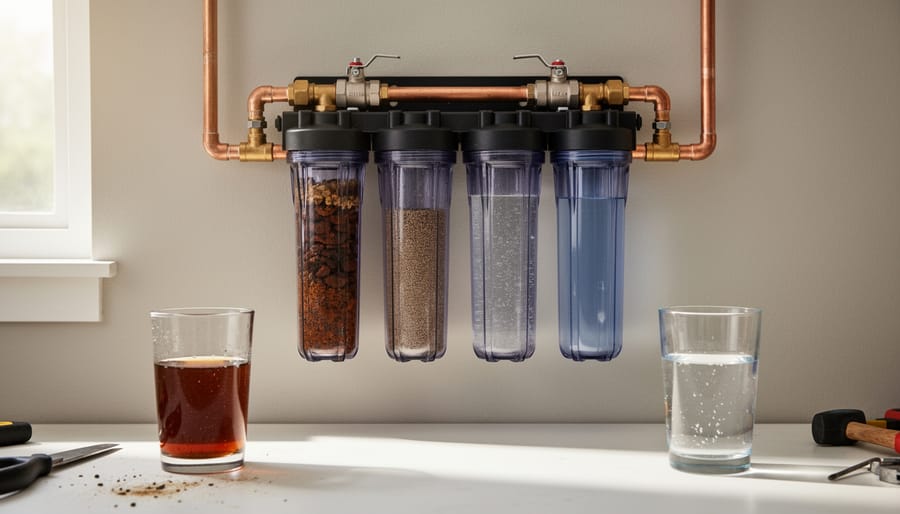
Whole House Filtration Systems That Target Iron and Sediment
When brown water becomes a recurring issue, whole-house filtration systems offer comprehensive protection for every tap in your home. These systems tackle the problem at its source, treating all incoming water before it reaches your faucets, showers, and appliances.
Iron filters are specifically designed to remove dissolved and oxidized iron that causes rusty discoloration. These systems typically use a process called oxidation-filtration, where iron particles are converted into a form that can be trapped and removed. Modern catalytic media like manganese dioxide effectively captures iron without harsh chemicals, making them an eco-friendly choice for families concerned about sustainability.
Sediment pre-filters serve as your first line of defense against particulate matter, including rust flakes, sand, and silt. These filters use layered media or pleated cartridges to capture particles before they enter your plumbing system. For best results, look for systems with 5-micron or finer filtration capabilities.
Oxidizing systems represent cutting-edge technology in water treatment. These innovative solutions use air injection or natural oxidation processes to convert dissolved minerals into filterable particles without adding chemicals to your water supply. They’re particularly effective for moderate to severe iron problems and align perfectly with green living principles.
When selecting a system, consider flow rate requirements for your household size and the specific contaminants present in your water. Many homeowners find that combining a sediment pre-filter with an iron-specific system provides optimal results while maximizing filter longevity and minimizing maintenance needs.
When You Need to Replace Your Pipes
Sometimes brown water persists despite your best efforts, indicating your pipes have reached the end of their lifespan. If you notice recurring discoloration, multiple leaks, or other plumbing warning signs, replacement becomes necessary. Homes built before 1970 often contain galvanized steel pipes prone to severe corrosion, while properties from the 1970s-1990s may have aging copper that’s deteriorating.
Modern replacement options prioritize both performance and sustainability. Cross-linked polyethylene (PEX) offers excellent durability and corrosion resistance at moderate costs, typically ranging from $4,000-$15,000 for whole-house repiping depending on home size. Copper remains a reliable choice for environmentally-conscious homeowners, as it’s fully recyclable and doesn’t leach harmful chemicals. CPVC provides an economical middle ground.
While expensive upfront, pipe replacement eliminates recurring brown water issues, reduces water waste from leaks, and increases property value. Many municipalities offer rebates for upgrading to water-efficient plumbing systems. Consult licensed plumbers for detailed assessments and quotes, ensuring they understand your priorities regarding eco-friendly materials and long-term water quality improvements for your household.
Water Softeners vs. Iron Filters: Choosing the Right System
Understanding the difference between water softeners and iron filters helps you tackle brown water effectively. Water softeners primarily remove hardness minerals like calcium and magnesium through ion exchange, and while they can handle small amounts of dissolved iron (typically under 3 parts per million), they’re not designed as iron removal systems. If your brown water stems from high iron content, a dedicated iron filter is your best solution. These specialized systems use oxidation and filtration to remove both dissolved and particulate iron, preventing that rusty discoloration. For homes with both hard water and iron issues, you’ll likely need both systems working in tandem. Iron filters should be installed first to protect your softener from iron buildup that can damage its resin beads. Consider testing your water to determine iron levels and hardness before investing in treatment systems, ensuring you choose the right technology for your specific water quality challenges.
Testing Your Water: What You Need to Know
Understanding what’s actually in your brown water is essential for choosing the right solution. While visual clues provide initial hints, testing confirms exactly what contaminants you’re dealing with.
For quick, preliminary checks, home testing kits offer a convenient starting point. These affordable kits, available at hardware stores or online, can detect common culprits like iron, manganese, and general mineral content. They typically use color-changing test strips or liquid reagents that you add to water samples. While not laboratory-precise, they’re excellent for identifying obvious issues and cost between $15 to $50.
For comprehensive analysis, professional lab testing provides definitive answers. Contact your local health department for certified testing facilities, or use EPA-approved mail-in services. Professional tests examine multiple parameters including iron levels, manganese, total dissolved solids, bacteria, and potentially harmful contaminants like lead. These tests typically cost $100 to $300 but deliver detailed reports explaining what’s present and at what concentrations.
If your brown water appeared suddenly after municipal work, contact your water utility first—they often provide free testing or can explain temporary disturbances. For well water users, annual testing becomes even more critical since you’re responsible for monitoring quality.
When collecting samples, run cold water for several minutes, then fill clean containers according to testing instructions. Some tests require specific collection times or methods for accurate results.
This testing investment pays dividends by preventing unnecessary treatment purchases and ensuring your solution actually addresses the problem. Plus, knowing your water composition helps you make informed decisions about filtration systems and sustainable water management for your home.
Preventing Brown Water From Returning
Once you’ve addressed brown water issues, keeping it from coming back requires a proactive approach to your home’s plumbing system. Think of it as preventive care for your water quality, much like regular maintenance keeps your car running smoothly.
Start with a consistent filter replacement schedule. Whether you have whole-house filtration, under-sink units, or pitcher filters, mark calendar reminders to change cartridges according to manufacturer recommendations. Old filters can become breeding grounds for sediment and bacteria, potentially worsening water quality rather than improving it.
Regular pipe inspections are equally important, especially in older homes. Professional plumbers can use camera technology to identify corrosion, mineral buildup, or deteriorating pipe sections before they become major problems. If you have galvanized pipes installed before 1960, consider scheduling biannual checks.
Don’t overlook your water heater. Sediment accumulation at the tank bottom is a primary cause of brown hot water. Annual water heater maintenance including flushing and anode rod replacement can extend your heater’s life while maintaining water clarity. This simple task prevents rust particles from circulating through your hot water lines.
Stay connected with your municipal water department. Sign up for service alerts to receive notifications about planned maintenance, hydrant flushing, or infrastructure repairs in your area. When you know work is scheduled, you can take precautions like avoiding water use during peak disturbance times or running taps afterward to clear temporary sediment.
Consider installing a whole-house sediment filter as your first line of defense. These eco-friendly solutions trap particles before they reach your fixtures, reducing strain on smaller filters and protecting your plumbing investment while ensuring consistently clear water throughout your home.
Brown water flowing from your taps might seem alarming at first, but the good news is that this issue is almost always fixable with the right approach. Whether you’re dealing with sediment buildup, rusty pipes, or temporary municipal work disruptions, understanding the root cause empowers you to take swift, effective action. Remember that brown water rarely poses serious health risks, though it’s always wise to avoid drinking it until you’ve identified and resolved the underlying problem.
By implementing the solutions outlined in this guide—from simple flushing techniques to installing modern filtration systems—you can restore crystal-clear water to your home while embracing sustainable practices. Choosing eco-friendly filtration options not only protects your family’s health but also reduces plastic waste from bottled water alternatives. Modern water treatment innovations make it easier than ever to achieve pure, safe drinking water without environmental compromise.
Don’t let brown water persist as an ongoing concern. Take proactive steps today by assessing your situation, contacting your utility provider if needed, and investing in preventive measures that safeguard your water quality long-term. With confidence and the right resources, you can ensure clean, refreshing water flows through every tap in your home.