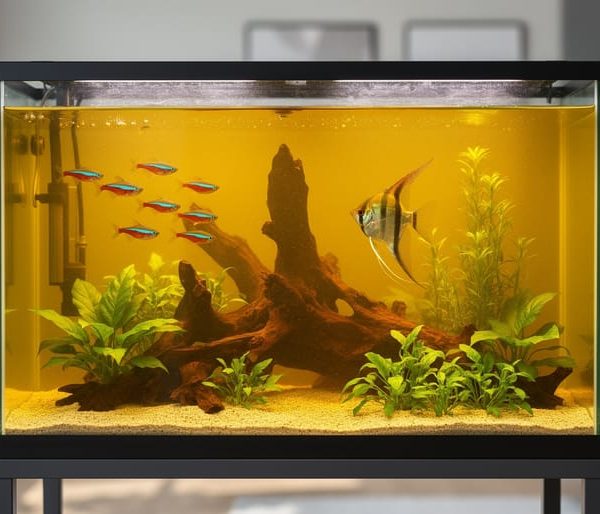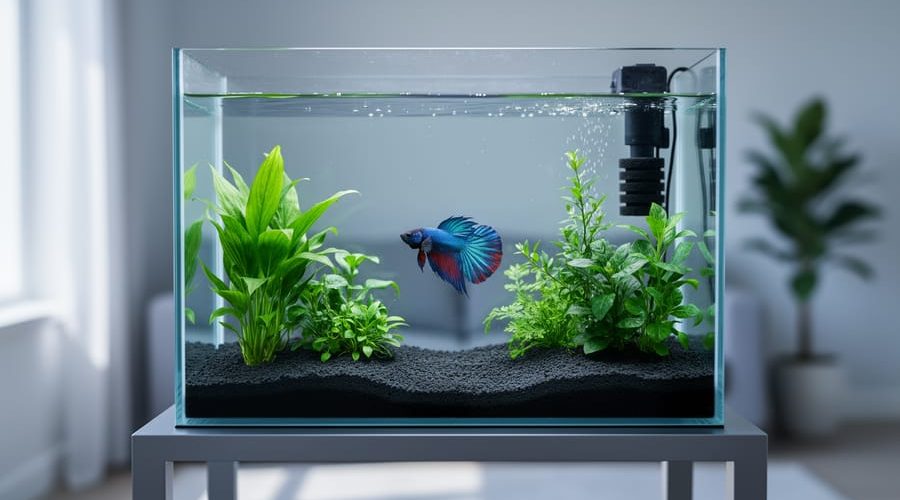
Position your 5-gallon tank away from direct sunlight and temperature fluctuations to prevent algae blooms and unstable water conditions that stress fish. Choose a sturdy, level surface that can support at least 60 pounds when fully equipped with water, substrate, and decorations.
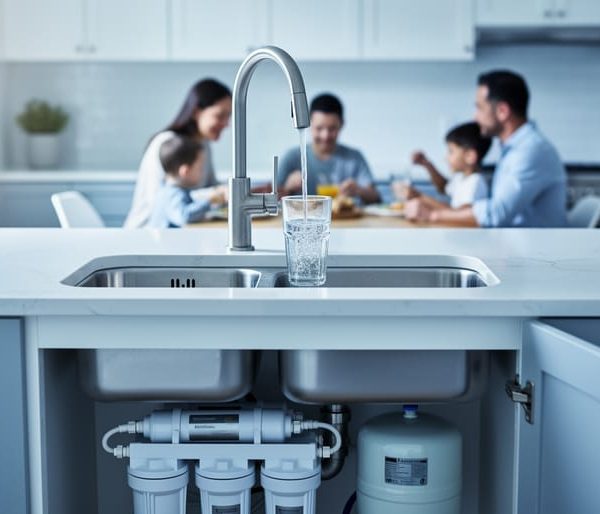
Install a filter rated for 5-10 gallons that cycles the tank volume 3-5 times per hour, ensuring mechanical and biological filtration to remove waste while cultivating beneficial bacteria that convert toxic ammonia into less harmful compounds. The filtration system mirrors the same water purification principles used in household water treatment, breaking down contaminants through natural biological processes.
Add 1-2 inches of aquarium substrate, then fill the tank with dechlorinated water. Municipal tap water contains chlorine and chloramines that protect human health but kill beneficial aquarium bacteria and harm fish. Let the water sit for 24 hours with added dechlorinator, or use a quality water conditioner that neutralizes these chemicals instantly.
Cycle your tank for 4-6 weeks before adding fish, allowing beneficial bacteria colonies to establish in your filter media and substrate. This nitrogen cycle creates a self-sustaining ecosystem where waste products transform into plant nutrients, reducing the need for frequent water changes and chemical interventions. Test water parameters weekly during cycling, watching for ammonia and nitrite levels to spike and then drop to zero, signaling a mature, stable environment ready for aquatic life.
Understanding Water Quality in Small Aquariums
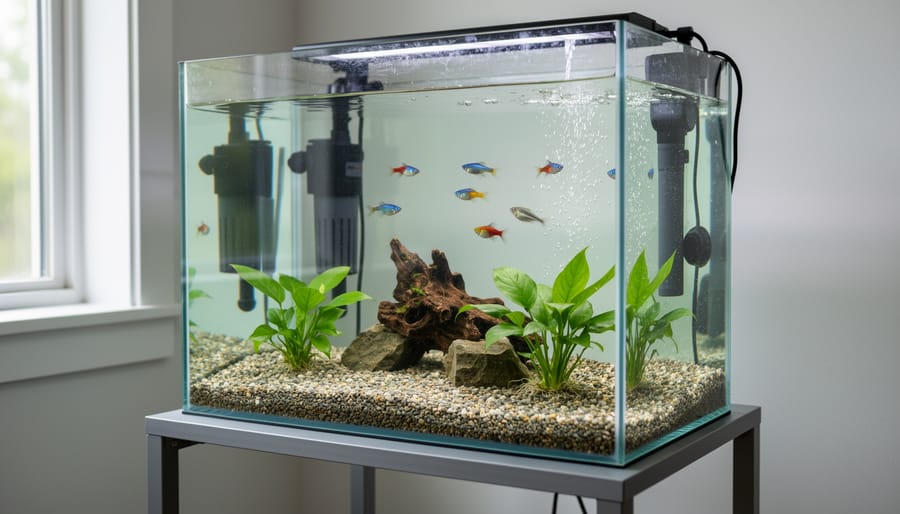
The Chemistry Behind a Healthy Tank
Understanding your tank’s chemistry is essential for keeping fish healthy in a compact 5-gallon environment. Think of it as maintaining a tiny ecosystem where waste management matters more than in larger tanks.
The process begins with fish waste and uneaten food producing ammonia, a toxic substance deadly to aquatic life even in small amounts. Beneficial bacteria then convert ammonia into nitrite, which is equally harmful. Finally, different bacteria transform nitrite into nitrate, the least toxic form. This natural progression is called the nitrogen cycle, and it takes 4-6 weeks to establish in new aquariums.
Regular testing prevents disasters by catching problems early. You’ll want to monitor ammonia and nitrite levels weekly during the first month, ensuring both read zero. Nitrate should stay below 20 parts per million through weekly water changes. Temperature, pH, and total dissolved solids also impact fish health. If readings seem off, you can learn how to lower TDS in aquarium water using simple techniques.
Test kits are inexpensive insurance policies. Liquid tests provide more accurate readings than strips, making them worth the small investment for maintaining this delicate balance in your compact aquatic environment.
Common Water Problems in Compact Tanks
Small aquariums present unique water quality challenges that can quickly become problematic for inexperienced fish keepers. The limited water volume in a 5-gallon tank means there’s little buffer against environmental changes, making stability difficult to maintain.
Temperature fluctuations rank among the most common issues. With less water to absorb and distribute heat, even small changes in room temperature can cause significant swings in your tank. A heater positioned too close to the thermometer or direct sunlight can create dangerous hot spots that stress or harm your fish within hours.
pH swings occur rapidly in compact tanks because there’s minimal water volume to dilute acids produced by fish waste and decaying organic matter. Without proper buffering, your tank’s pH can shift dramatically between water changes, creating an unstable environment that weakens your fish’s immune systems.
Waste concentration builds up much faster than in larger tanks. Ammonia and nitrite from fish waste, uneaten food, and decomposing plant material reach toxic levels quickly. In a 5-gallon system, missing even one water change can create hazardous conditions. This smaller ecosystem offers less margin for error, requiring vigilant monitoring and consistent maintenance to keep water parameters within safe ranges for aquatic life.
Essential Equipment for Your 5 Gallon Setup
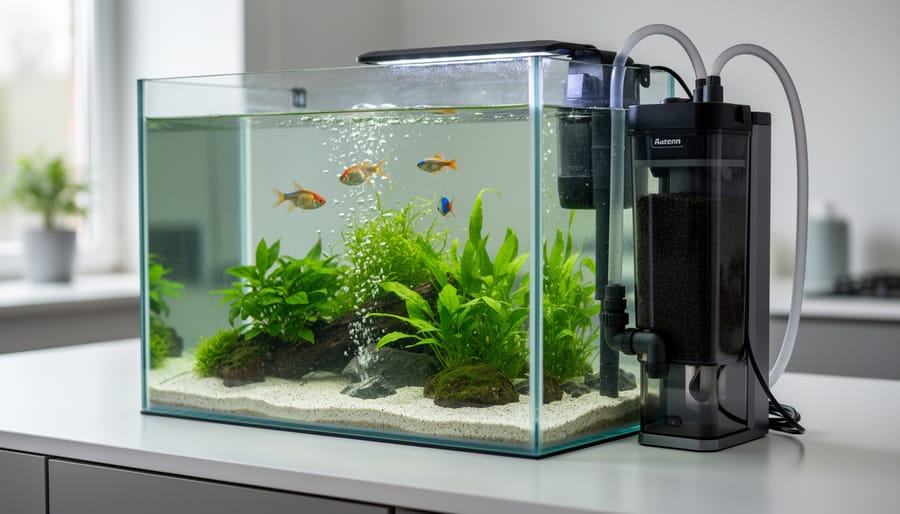
Choosing the Right Filtration System
Selecting the right filtration system for your 5-gallon aquarium is crucial for maintaining healthy water conditions, much like choosing an appropriate water filter for your home drinking supply. The filter serves three essential functions: mechanical removal of debris, chemical absorption of harmful substances, and biological breakdown of waste compounds.
For small tanks, three primary options work well. Sponge filters are the most economical and beginner-friendly choice. These simple devices use air pumps to draw water through porous foam, where beneficial bacteria colonize and break down ammonia and nitrites into less harmful nitrates. Think of it as a natural composting system for fish waste. The downside is their visible presence in the tank and limited mechanical filtration capacity.
Hang-on-back filters offer more robust filtration by combining all three filtration types in replaceable cartridges. They’re easy to maintain and keep equipment outside the tank, preserving swimming space. However, they can create strong currents that stress small fish and may be oversized for 5-gallon setups.
Internal filters mount inside the tank and provide moderate filtration efficiency. They’re compact and adjustable but take up valuable aquarium space.
Regardless of type, biological filtration matters most. Just as household water treatment systems rely on multiple stages to remove contaminants, aquarium filters need time to establish beneficial bacterial colonies that convert toxic ammonia into safer compounds. This cycling process typically takes 4-6 weeks, so patience is essential. Choose a filter rated for at least 5 gallons, prioritizing gentle water flow to protect delicate fish while maintaining water clarity and quality.
Heaters, Lighting, and Substrate
Selecting the right equipment creates a healthy environment for your aquatic ecosystem. For a 5 gallon tank, choose a 25-watt adjustable heater to maintain stable temperatures between 76-78°F for tropical fish. Position the heater near your filter output to distribute warmth evenly throughout the water column, preventing temperature fluctuations that stress fish and disrupt beneficial bacteria.
Lighting serves dual purposes in your small aquarium. If you plan to grow live plants, opt for full-spectrum LED fixtures providing 1-2 watts per gallon, running 6-8 hours daily to support photosynthesis without encouraging excessive algae growth. LEDs consume less energy than traditional bulbs, aligning with sustainable household practices while reducing your electricity costs.
Substrate choice significantly impacts water chemistry and overall tank health. Gravel remains inert and works well for beginners, while sand creates a natural appearance and benefits bottom-dwelling fish. If you’re keeping plants, consider nutrient-rich aquarium soil that releases beneficial minerals gradually. Avoid substrates containing calcium carbonate, which can raise water hardness and pH levels unexpectedly. Rinse any substrate thoroughly before adding it to your tank to remove dust and particles that cloud water. A 1-2 inch layer provides adequate depth for most setups while maintaining proper water volume in your compact aquarium.
Water Testing and Monitoring Tools
Maintaining healthy water conditions in your 5-gallon aquarium requires regular monitoring, much like household water quality management. Essential testing kits measure critical parameters including pH (acidity/alkalinity), ammonia, nitrite, and nitrate levels. For beginners, liquid test kits provide more accurate readings than test strips, though both work similarly to home water testing systems.
A reliable aquarium thermometer is crucial since small tanks experience rapid temperature fluctuations. Digital thermometers offer precise readings, while traditional glass thermometers provide budget-friendly alternatives. Keep water temperature stable between 76-78°F for most tropical fish.
Test your water weekly during the first month, then bi-weekly once the tank stabilizes. New aquariums require daily ammonia and nitrite checks during the cycling process. Experienced aquarists also benefit from testing water quality using observation methods between formal tests.
Consider a basic testing schedule: pH and temperature daily, ammonia and nitrite weekly (or daily when cycling), and nitrate every two weeks. This monitoring approach ensures your aquatic environment remains healthy while helping you understand the biological filtration system at work in your miniature ecosystem.
Step-by-Step Setup Process
Preparing Your Water
Your tap water needs proper preparation before adding fish to your 5-gallon aquarium. Start by understanding your source water quality, as municipal and well water contain different contaminants that affect fish health.
Treating tap water involves removing chlorine and chloramine, chemicals that harm beneficial bacteria and fish. Use a quality water conditioner following package directions, typically adding drops per gallon. These products neutralize chlorine instantly and bind heavy metals.
Test your water before filling the tank using an aquarium test kit. Check pH, ammonia, nitrite, and nitrate levels. Most community fish thrive in pH 6.5-7.5, but knowing your baseline helps you maintain stability.
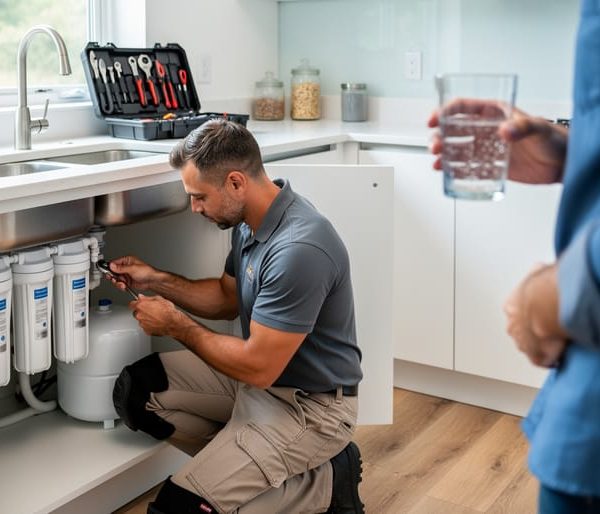
If your home uses a reverse osmosis system or whole-house filter, your water may already be partially treated. However, these systems remove beneficial minerals fish need, so you might need to remineralize the water. Standard carbon filters remove chlorine but not chloramine or heavy metals.
For consistent results, fill a clean bucket with tap water, add conditioner, let it sit 15 minutes, then test. This simple routine ensures safe water every time you perform maintenance or top-offs due to evaporation.
Cycling Your Tank Before Adding Fish
Before introducing fish to your 5-gallon aquarium, you’ll need to establish beneficial bacteria through a process called cycling. This critical 4-6 week period creates a natural ecosystem that converts toxic fish waste into safer compounds, protecting your future aquatic inhabitants from sudden death or chronic stress.
During cycling, beneficial bacteria colonize your filter media and substrate. These microscopic helpers break down ammonia from decomposing matter into nitrite, then further into less harmful nitrate. Think of it as building a natural water treatment system inside your tank. Without this biological foundation, ammonia and nitrite levels spike when you add fish, causing what’s known as “new tank syndrome” where fish die within days despite your best efforts.
To cycle your tank without fish, add a pinch of fish food daily or use pure ammonia from the hardware store. Test your water every few days using a liquid test kit. You’ll know cycling is complete when ammonia and nitrite readings consistently reach zero, while nitrate appears. This patience-testing period is essential for creating a stable, healthy environment where your fish can actually thrive rather than merely survive.
Adding Inhabitants Responsibly
A 5-gallon tank has limited bioload capacity, meaning it can only support a small number of inhabitants without overwhelming your filtration system. Think of bioload as the total waste production from all living creatures—each fish produces ammonia through waste and respiration, which must be processed by beneficial bacteria in your filter.
For a 5-gallon setup, consider keeping just one betta fish, which thrives in smaller spaces, or a small group of 4-6 nano fish like ember tetras or chili rasboras. Alternatively, you might stock 6-8 small shrimp like cherry shrimp or a single dwarf frog. Avoid goldfish entirely—they require much larger tanks and produce excessive waste that quickly degrades water quality in confined spaces.
Overstocking directly impacts water parameters by accelerating ammonia and nitrate buildup, making it harder to maintain stable, healthy conditions. In a small volume of water, these harmful compounds concentrate quickly, stressing inhabitants and potentially causing fatal water quality crashes. Start with fewer animals than you think the tank can handle, and always research adult sizes before purchasing—many fish sold as juveniles grow too large for 5-gallon environments. Patience with stocking protects both your aquatic friends and the delicate ecosystem you’ve carefully established.
Ongoing Maintenance and Water Management
Water Change Schedule and Techniques
Small aquariums require more frequent water changes than larger tanks because waste and harmful substances accumulate faster in limited water volumes. For a 5 gallon setup, plan to change 25-30% of the water weekly to maintain healthy conditions for your fish.
Before starting, prepare fresh water at room temperature and add a quality water conditioner to remove chlorine, chloramines, and heavy metals. Let the water sit for at least 30 minutes to match your tank’s temperature, preventing thermal shock to your fish. Using a thermometer ensures the replacement water stays within 2 degrees of your aquarium’s current temperature.
To perform the change, use a small aquarium siphon or gravel vacuum to remove water while cleaning debris from the substrate. Work slowly and avoid disturbing your fish too much. Never remove your fish during routine water changes, as this causes unnecessary stress. After removing the old water, gently pour the conditioned replacement water into the tank, directing the flow against decorations or the tank wall to minimize disruption.
Here’s an eco-friendly tip that aligns with sustainable living practices: don’t pour that old aquarium water down the drain. The nutrient-rich water makes excellent fertilizer for houseplants and gardens. Fish waste contains nitrogen, phosphorus, and potassium that plants love, turning what seems like waste into a valuable resource. Simply collect the removed water in a bucket and use it to water your indoor or outdoor plants within a day or two. This simple practice reduces water waste while supporting your home’s green ecosystem, demonstrating how small sustainable choices create meaningful environmental impact.
Filter Maintenance Without Disrupting Beneficial Bacteria
Your filter houses the beneficial bacteria that keep your small aquarium ecosystem balanced, so maintenance requires a gentle approach. The golden rule is to never clean everything at once or use tap water, which contains chlorine that kills these helpful microorganisms.
When cleaning your filter, rinse media in old tank water removed during water changes. This preserves the bacterial colonies while removing debris that restricts water flow. Clean your filter monthly or when flow noticeably decreases, but only address one component at a time. If you have sponge and ceramic media, clean the sponge one week and the ceramic a few weeks later.
Replace mechanical filtration media like filter floss every 2-4 weeks, but keep biological media like ceramic rings or sponges for months or even years until they physically break down. The biological media is where your nitrogen cycle happens, converting harmful ammonia into safer compounds.
Common mistakes include replacing all media simultaneously, rinsing under tap water, or over-cleaning. These actions eliminate the bacterial population that took weeks to establish, causing dangerous ammonia and nitrite spikes that stress or kill fish. If you must replace biological media, add new media alongside old for several weeks before removing the original, allowing bacteria to colonize the fresh surface.
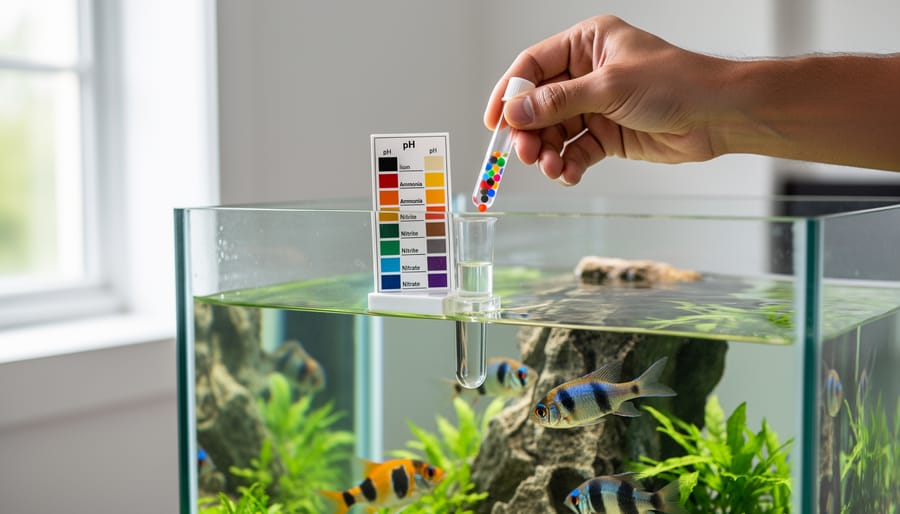
Monitoring and Adjusting Water Parameters
Test your aquarium water weekly using simple test strips or liquid kits that measure pH, ammonia, nitrite, and nitrate levels. For a 5-gallon tank, ideal parameters include a pH between 6.5-7.5, zero ammonia and nitrite, and nitrates below 20 ppm. Keep a logbook to track trends over time, which helps you spot problems before they harm your fish.
If adjustments are needed, make changes gradually over several days. To lower pH, add small amounts of driftwood or use aquarium-safe peat. To raise pH, incorporate crushed coral or limestone. Never adjust more than 0.2 pH points per day, as sudden swings stress fish more than slightly imperfect water.
Watch for warning signs like cloudy water, which indicates bacterial blooms from overfeeding or inadequate filtration. A strong ammonia smell signals dangerous waste buildup requiring immediate partial water changes. Green-tinted water suggests excess light and nutrients feeding algae growth. Brown or yellow water often means organic matter is breaking down faster than your beneficial bacteria can process it. Address these issues promptly through water changes, reduced feeding, and improved filtration to maintain a healthy aquatic environment for your small tank inhabitants.
Sustainable Aquarium Keeping
Energy-Efficient Equipment Choices
Choosing energy-efficient equipment for your 5 gallon aquarium reduces both your environmental footprint and monthly utility bills. LED lighting is the clear winner for small tanks, using up to 80% less electricity than traditional fluorescent bulbs while producing minimal heat that won’t destabilize water temperature. Modern LED fixtures last 50,000 hours or more, eliminating frequent replacements.
For filtration, select models specifically rated for 5 gallon tanks to avoid excessive power consumption. Sponge filters paired with small air pumps consume just 2-4 watts, making them exceptionally economical while providing gentle filtration ideal for small fish. If you need a heater, look for adjustable models with automatic shut-off features that maintain consistent temperatures without running continuously.
Over a year, energy-efficient equipment can save $20-40 in electricity costs compared to conventional options. Beyond financial savings, these choices mean less energy demand from power grids and reduced waste from replacing short-lived components. This sustainable approach aligns perfectly with creating a thriving aquatic environment while being a responsible steward of household resources.
Reducing Water Waste
Your 5-gallon aquarium provides an unexpected opportunity to conserve water while benefiting your home ecosystem. Every time you perform routine water changes, you’re handling nutrient-rich water that shouldn’t go down the drain.
The best way to minimize water waste starts with understanding your tank’s actual needs. During weekly maintenance, measure exactly how much water you remove—typically 20-25% for a 5-gallon setup, which equals just over one gallon. This precision prevents unnecessary waste from changing too much water at once.
To repurpose old aquarium water, collect it in a clean container and use it to water houseplants or garden beds. Fish waste contains nitrogen and other nutrients that act as gentle, organic fertilizer, giving your plants a growth boost while reducing your overall household water consumption.
Reducing evaporation is equally important for conservation. Keep your tank covered with a proper lid, which can cut evaporation by up to 80%. This means less frequent top-offs and more stable water parameters for your fish. In drier climates, a simple glass cover makes a significant difference in how much replacement water you’ll need over time, supporting both your sustainability goals and your aquarium’s health.
Your 5-gallon aquarium represents more than a beautiful display—it’s a hands-on classroom for understanding water quality and ecosystem balance. The skills you’ve developed monitoring pH levels, managing nitrogen cycles, and maintaining proper filtration directly translate to broader environmental awareness. Every water test you perform builds your understanding of water chemistry that extends beyond your tank to household water conservation and quality consciousness.
Think of your aquarium as a microcosm that teaches sustainable resource management. The careful attention you give to removing chlorine, balancing minerals, and preventing contamination mirrors the same principles needed for protecting our larger water systems. By mastering these fundamentals in your small tank, you’re developing environmental stewardship that influences how you view water usage throughout your home.
Start applying this knowledge today by examining your household water practices with the same care you give your aquarium. Your journey as an aquarium keeper has equipped you with valuable insights into one of our most precious resources—clean water.