Reddish-brown stains streaking your sinks, an unpleasant metallic taste in your drinking water, or laundry that emerges dingy despite fresh detergent—these frustrating signs point to elevated iron and manganese levels in your water supply. These naturally occurring minerals seep into groundwater from soil and rock formations, affecting an estimated 25% of American households relying on well water. While not typically harmful at low concentrations, iron levels above 0.3 parts per million and manganese exceeding 0.05 ppm create noticeable quality issues that degrade your home’s plumbing fixtures, appliances, and overall water experience.
Understanding how to effectively remove these minerals transforms your water from problematic to pristine. Modern treatment solutions range from oxidation filtration systems that convert dissolved metals into filterable particles, to innovative catalytic media that provides chemical-free removal, to water softeners for addressing low-level contamination. The right approach depends on your specific water chemistry, household size, and environmental priorities.
This comprehensive guide walks you through selecting appropriate treatment technology, navigating the installation process with confidence, and establishing maintenance routines that ensure long-term performance. Whether you’re ready to tackle installation yourself or working with a professional, you’ll gain the practical knowledge needed to eliminate iron and manganese issues while embracing sustainable water treatment practices that protect both your home and the environment. Clean, clear water isn’t just possible—it’s achievable with the right information and approach.
Why Iron and Manganese Show Up in Your Water
The Tell-Tale Signs You Have a Problem
If you’ve noticed something unusual about your household water lately, you’re not imagining things. Iron and manganese contamination creates distinct warning signs that are hard to miss once you know what to look for.
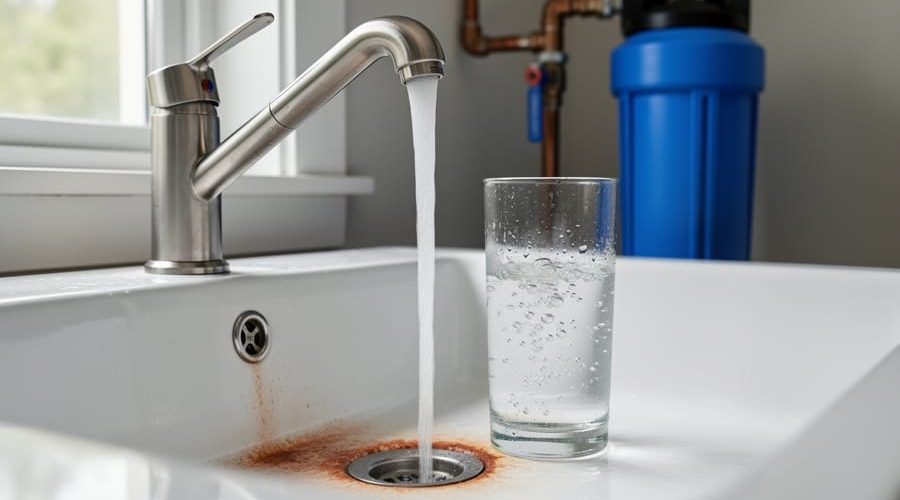
The most obvious indicator is discolored water. When you turn on your tap, the water might appear reddish-brown, yellow, or even black. Iron typically produces that rusty, orange-brown hue, while manganese creates darker, black or purple-tinted water. Sometimes the water looks clear initially but develops color after sitting in a glass for a few minutes as the minerals oxidize when exposed to air.
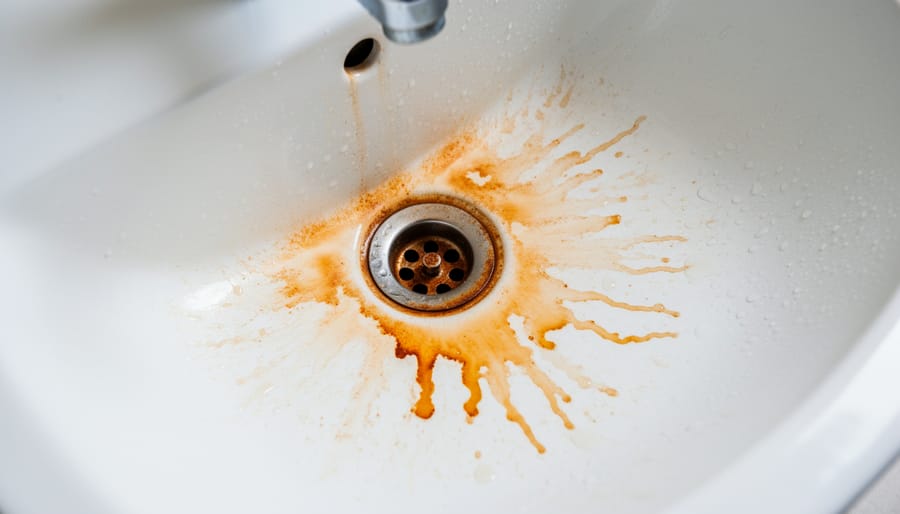
Staining is another telltale problem. Check your sinks, bathtubs, toilets, and laundry. Rust-colored stains around drains and fixtures point to iron, while black or dark brown stains usually indicate manganese. Your white laundry might come out of the wash with yellowish or brownish spots that seem impossible to remove.
Your senses can detect these contaminants too. A metallic or bitter taste in your drinking water suggests elevated mineral levels. Many homeowners also notice that distinctive rotten egg smell, though this sulfur odor actually comes from bacteria that thrive in iron-rich environments rather than the iron itself.
These symptoms often worsen over time as mineral deposits build up in your plumbing system. The good news is that recognizing these signs early allows you to address the issue before it causes extensive damage to your pipes, appliances, and fixtures.
How Iron and Manganese Removal Systems Actually Work
Oxidation and Filtration: The One-Two Punch
Think of iron and manganese in your water like invisible troublemakers. When dissolved in water, these minerals are completely clear and undetectable. However, once they encounter oxygen—whether from your faucet aerator, washing machine, or toilet tank—they transform into visible rust-colored (iron) or black (manganese) particles that stain everything they touch.
This transformation is exactly what modern water treatment systems harness, but in a controlled environment before the water reaches your home. The process works like a two-step dance: oxidation followed by filtration.
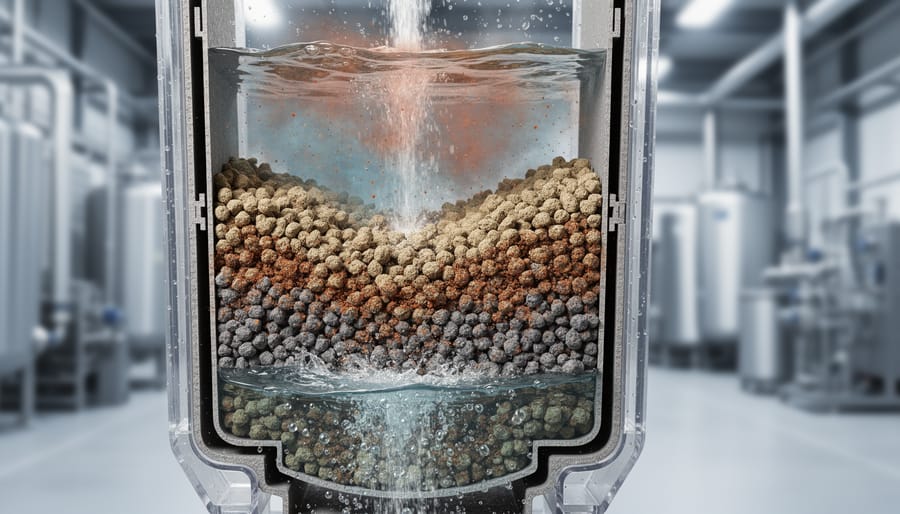
During oxidation, treatment systems deliberately expose dissolved iron and manganese to oxygen or other oxidizing agents. This forces these minerals to change from their dissolved, invisible form into solid particles—similar to how a cut apple turns brown when exposed to air. Various oxidation methods exist, from simple aeration (adding oxygen) to more advanced approaches using chlorine, ozone, or potassium permanganate. The choice depends on your water’s specific chemistry and contamination levels.
Once oxidized into solid particles, these minerals can no longer hide. That’s where filtration enters as the knockout punch. The water passes through specialized filter media—often made from manganese-coated materials or catalytic substances—that trap these newly-formed particles like a net catching fish. The result? Crystal-clear water flows through to your home while the iron and manganese stay behind in the filter.
This one-two combination has proven remarkably effective and environmentally friendly, as it relies on natural chemical reactions rather than harsh additives. Understanding this process helps homeowners appreciate why proper system maintenance matters—those trapped particles need regular removal through backwashing to keep your system performing optimally.
Different Treatment Methods for Different Water Problems
Choosing the right treatment method depends on your water’s specific iron and manganese levels, along with other factors like pH and dissolved oxygen. Understanding these approaches helps you make an informed decision that matches both your water chemistry and household needs.
Oxidizing filters offer a popular, eco-friendly solution for moderate contamination levels. These systems use natural media like manganese greensand or catalytic carbon to convert dissolved iron and manganese into solid particles that get trapped and flushed away during backwashing. They work best when iron levels stay below 10-15 parts per million (ppm) and manganese under 5 ppm. The beauty of oxidizing filters lies in their minimal chemical use, making them an environmentally conscious choice that requires only periodic backwashing to regenerate the media.
Aeration systems introduce oxygen into your water before filtration, transforming dissolved metals into particles that standard filters can remove. This chemical-free method excels for higher iron concentrations and provides the added benefit of removing hydrogen sulfide gas, which causes that unpleasant rotten egg smell. Aeration systems represent one of the most sustainable treatment options available, relying purely on natural oxidation processes.
Chemical feed systems inject oxidizing agents like chlorine, hydrogen peroxide, or potassium permanganate directly into your water supply. While effective for stubborn contamination or complex water chemistry, these systems require more hands-on maintenance and careful chemical handling. They’re typically reserved for situations where other methods fall short or when dealing with iron bacteria that need aggressive treatment.
Water softeners primarily target hard water minerals but can handle low iron levels (under 3 ppm) as a secondary benefit. However, they’re not designed as dedicated iron removal systems and shouldn’t be your primary solution if iron staining is your main concern. Combining a softener with an oxidizing filter often provides comprehensive treatment for homes dealing with both hardness and metal contamination, creating a well-rounded approach to water quality improvement.
Installing Your Iron and Manganese Removal System
Before You Buy: Testing Your Water
Before investing in a treatment system, understanding your water’s specific chemistry is essential. Professional water testing provides the roadmap for choosing the most effective and eco-friendly solution for your home.
Start by contacting a certified water testing laboratory or your local water utility. While home test kits offer basic insights, professional analysis delivers the accuracy needed for proper system selection. Request a comprehensive test that measures iron levels (both ferrous and ferric forms), manganese concentration, pH levels, water hardness, and the presence of sulfur compounds. These parameters work together like puzzle pieces, revealing the complete picture of your water quality challenges.
Iron levels above 0.3 parts per million typically cause staining and discoloration, while manganese becomes problematic at 0.05 parts per million or higher. Your water’s pH level matters tremendously because it affects how easily these metals can be removed. Acidic water (pH below 7) requires different treatment approaches than neutral or alkaline water. Hardness measurements indicate calcium and magnesium content, which influences system performance and maintenance needs. Sulfur testing identifies that distinctive rotten egg odor that sometimes accompanies iron and manganese problems.
Once you receive your test results, review them carefully with the testing facility or a water treatment professional. These numbers determine whether you need oxidation filtration, water softening, specialized media filters, or a combination approach. Understanding your baseline water chemistry prevents costly mistakes and ensures you select a system sized appropriately for your household’s needs, leading to cleaner water and a more sustainable home.
Choosing the Right Location and Setup
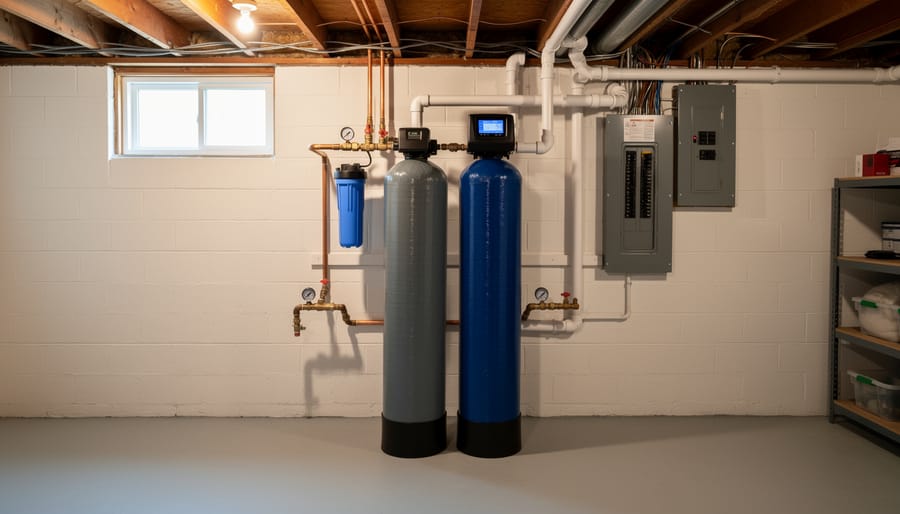
Installing your iron and manganese removal system correctly ensures optimal performance and years of reliable service. The best location is at your home’s point of entry, where water first enters from your well or main supply line. This strategic placement treats all water before it reaches fixtures, preventing staining throughout your entire home rather than addressing individual faucets.
Space considerations matter significantly. Most residential systems require a footprint of approximately 2-3 feet in diameter and 4-6 feet of vertical clearance. Choose an area that allows comfortable access for filter changes and maintenance tasks. Basements, utility rooms, and garages typically work well, though the space should maintain temperatures above freezing year-round.
Your chosen location needs three essential utilities. First, you’ll need a nearby drain or floor drain for backwash water discharge. Many modern systems recycle this water for outdoor irrigation, reducing waste and supporting sustainable practices. Second, access to a standard electrical outlet powers the system’s control valve and any oxidation pumps. Third, integration with existing plumbing requires cut-in points on both the incoming supply line and outgoing distribution pipes.
Consider future accessibility when finalizing your setup. Leave adequate room around the system for annual servicing and occasional component replacement. If your treatment system includes multiple stages like sediment filters or water softeners, arrange them in sequence with enough spacing between units. Professional installation often proves worthwhile for ensuring proper pressure settings, bypass valve configuration, and compliance with local plumbing codes.
The Installation Process: What to Expect
Installing an iron and manganese removal system might sound intimidating, but understanding the process helps you prepare and decide whether to tackle it yourself or hire a professional. Most installations follow similar steps regardless of the specific system type.
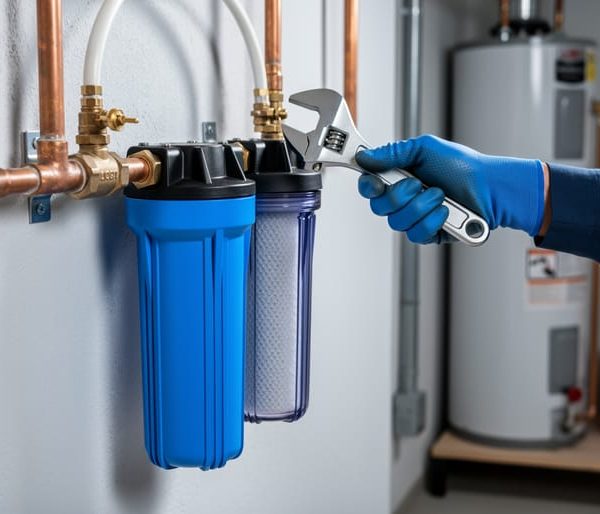
The process begins with shutting off your home’s main water supply and draining the pipes. You’ll need to identify the best installation point, typically where water enters your home before splitting to different fixtures. This ensures all your household water receives treatment. If you’ve previously handled a whole-house filtration installation, the location will likely be the same.
Next comes mounting the system tank and control valve. The tank should sit on a level, stable surface with adequate clearance for future maintenance. You’ll then connect the inlet and outlet plumbing using appropriately sized fittings. Many modern systems use push-fit connections that simplify this step considerably, though some require soldering or threading pipes.
The media bed setup involves adding the specialized filtration media to the tank according to manufacturer specifications. This step is crucial because incorrect media levels affect treatment efficiency. Some systems arrive pre-loaded, while others require you to carefully layer different media types.
Finally, you’ll program the control head with settings for backwash cycles, regeneration schedules, and water flow rates. This electronic brain tells your system when and how to clean itself, optimizing both performance and water conservation.
When should you call a professional? If you’re uncomfortable with plumbing modifications, lack the necessary tools, or your home has unusual pipe configurations, professional installation ensures proper setup and often includes warranty protection. Complex systems with advanced oxidation technology particularly benefit from expert installation to maximize their eco-friendly efficiency.
Caring for Your System: Maintenance That Keeps Water Clean
Regular Backwashing: Your System’s Most Important Task
Backwashing is the cleaning process that keeps your iron and manganese removal system working effectively. During backwashing, water flows in reverse through your filter media, lifting and loosening accumulated iron, manganese particles, and other trapped contaminants. This dirty water then flushes to drain, leaving your filter media refreshed and ready to continue removing minerals from your water supply.
Most residential systems automatically backwash every few days, typically 2-3 times per week, though your specific needs depend on your water’s iron and manganese levels. Higher concentrations mean more frequent backwashing. Your system’s control valve manages this schedule, usually running the cycle during nighttime hours when water demand is lowest.
Watch for these signs that your backwash frequency needs adjustment: orange or brown staining returns, water pressure drops noticeably, or you detect a metallic taste or reddish tint in your water. These indicators suggest your filter media is becoming overloaded between backwash cycles.
To monitor your automatic backwash cycle, check your control valve’s display screen monthly to confirm it’s running on schedule. Listen for the distinct sound of water flowing during the programmed backwash time. Many eco-conscious homeowners also track their water usage during backwashing, as each cycle uses approximately 50-100 gallons. If you notice the cycle isn’t completing properly or your system seems to backwash too frequently, consult your installation manual or contact a water treatment professional for optimization guidance.
When to Replace Filter Media and Components
Understanding when to replace your system’s filter media and components helps you maintain effective iron and manganese removal while avoiding unexpected breakdowns. Most filter media has a lifespan of 5 to 10 years under typical household use, though this varies based on your water chemistry and usage patterns.
Watch for these telltale signs that your filter media needs replacement: water staining returns despite regular backwashing, reduced water pressure throughout your home, or an increase in that metallic taste or reddish-brown discoloration you thought was solved. If your system requires more frequent backwashing cycles or you notice the media has physically broken down into fine particles, it’s time for fresh media.
Pre-filters typically need replacement every 3 to 6 months, depending on sediment levels in your water. These inexpensive components protect your main system from clogging and extend media life. Check them monthly and swap them out when they appear discolored or when water flow noticeably decreases.
Injectors and venturi assemblies deserve attention too. These hardworking components can become clogged with mineral buildup every 1 to 2 years. Clean them annually during routine maintenance, but keep replacement parts on hand since they’re relatively affordable and critical to system operation.
Control valves and seals generally last 10 to 15 years with proper care. However, inspect them during each maintenance session for signs of wear, leaks, or corrosion. Catching small issues early prevents costly emergency repairs and keeps your eco-friendly water treatment system running efficiently for years to come.
Troubleshooting Common Problems
Even well-maintained iron and manganese removal systems can encounter problems. Understanding how to identify and resolve these issues will save you time, money, and frustration.
If staining suddenly returns after months of clear water, you’re likely experiencing breakthrough. This happens when your filter media becomes exhausted or saturated beyond its capacity. Check when you last replaced the media—most systems need fresh media every 3-5 years depending on your water’s mineral content. Meanwhile, adjust your regeneration cycle to run more frequently, which can temporarily restore effectiveness.
Reduced water pressure often indicates that sediment has clogged your pre-filter or that mineral deposits have accumulated in the system. Start by replacing any sediment filters, which should be changed every few months. If pressure issues persist, your system may need professional backwashing or cleaning to clear internal buildup. This is normal maintenance, especially in areas with high mineral concentrations.
Strange odors resembling rotten eggs typically signal bacterial growth in your system, particularly iron bacteria that thrive in iron-rich environments. Shock your system with a hydrogen peroxide solution designed for water treatment—this eco-friendly approach effectively eliminates bacteria without harsh chemicals. Regular shocking every six months prevents recurrence.
System cycling problems, where your unit regenerates too often or not at all, usually stem from incorrect settings or faulty timers. Review your control panel settings against the manufacturer’s recommendations for your specific water conditions. If adjustments don’t help, the timer or control valve may need replacement—a straightforward repair that restores normal operation.
The Environmental and Health Impact of Removing Iron and Manganese
Addressing iron and manganese in your home water supply offers significant environmental and health advantages that align with sustainable living principles. When you invest in a whole-house treatment system, you’re making an eco-friendly choice that eliminates the need for bottled water. Consider this: the average family dealing with discolored tap water might purchase dozens of plastic bottles weekly, contributing to environmental waste and carbon emissions from manufacturing and transportation. A properly installed treatment system provides clean water at every tap while dramatically reducing your household’s plastic footprint.
From a health perspective, while small amounts of iron and manganese are actually essential minerals your body needs, excessive levels in drinking water can cause problems. High iron concentrations may lead to digestive discomfort, while elevated manganese has been linked to neurological concerns, particularly in children and infants. Removing these minerals to safe levels protects your family’s wellbeing without eliminating the trace amounts you naturally obtain from a balanced diet.
The environmental responsibility extends to proper backwash disposal. Treatment systems periodically flush accumulated minerals, creating iron and manganese-rich wastewater. The good news is that this backwash is generally safe for standard septic systems and municipal sewers, though you should verify local regulations. Some homeowners even redirect this nutrient-rich water to non-edible landscaping areas, as these minerals can benefit certain plants when properly diluted.
Modern treatment technologies continue advancing with energy-efficient designs and regeneration systems that minimize water waste. These innovations reflect the growing intersection between household water quality and environmental stewardship, proving that protecting your home and protecting the planet can go hand in hand. By choosing whole-house treatment, you’re investing in both immediate health benefits and long-term ecological responsibility.
Cost Considerations: Investment and Long-Term Savings
Understanding water treatment costs helps you make an informed decision about iron and manganese removal. Initial investments vary significantly by system type: basic sediment filters with cartridges start around $300-500, while whole-house oxidation systems typically range from $1,500-3,000. More advanced greensand or manganese dioxide filters can cost $2,000-4,000 installed, and sophisticated catalytic systems may reach $3,000-5,000.
Ongoing expenses include replacement filters ($50-150 annually for basic systems), regeneration chemicals for greensand units ($100-200 yearly), and occasional professional maintenance ($150-300 per service). However, these costs pale compared to living with contaminated water.
Without treatment, you’ll likely spend hundreds yearly on specialty cleaning products for rust stains, face shortened appliance lifespans (water heaters failing 3-5 years early costs $1,200+ in replacement), and potentially rely on bottled water for drinking ($500+ annually for a family). Stained fixtures, laundry, and dishes also degrade your home’s value and quality of life.
Most homeowners find their treatment system pays for itself within 3-5 years through avoided damage and replacement costs. Beyond financial savings, you’ll enjoy cleaner water, longer-lasting appliances, and reduced environmental impact from fewer cleaning chemicals and plastic bottles. The investment protects both your home’s infrastructure and your family’s daily comfort while supporting sustainable living practices.
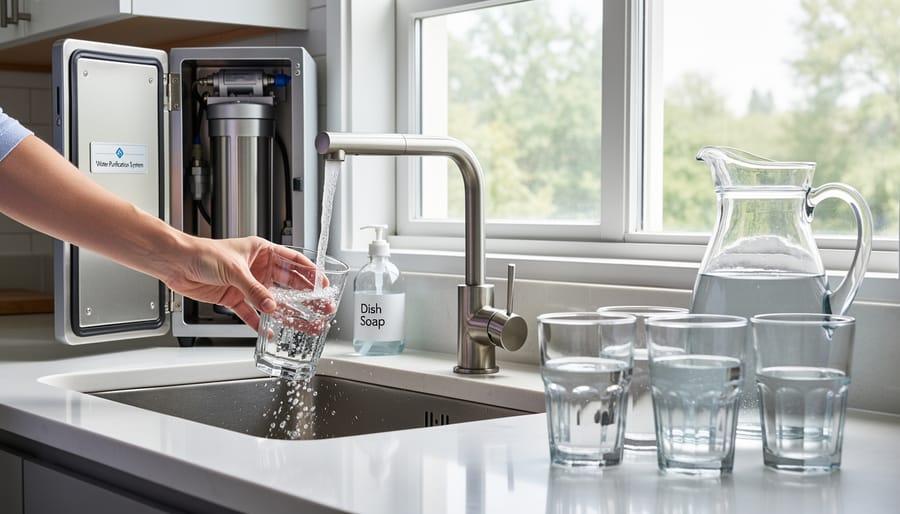
Addressing iron and manganese in your water supply isn’t just about fixing a technical problem—it’s about reclaiming your home’s comfort and protecting your investment. The difference is truly life-changing: no more rust-colored laundry, no stained fixtures that resist every scrubbing effort, and no metallic taste in your morning coffee. These improvements enhance your daily routine while reducing the need for harsh chemical cleaners and extending the lifespan of your appliances and plumbing.
The journey to clean, clear water begins with a simple step: testing your water. Understanding your specific iron and manganese levels, along with other water chemistry factors like pH and hardness, allows you to choose the most effective and eco-friendly treatment system for your situation. Many homeowners are pleasantly surprised to discover that modern treatment solutions are more accessible and environmentally responsible than they imagined.
Once you’ve installed the right system, consistent maintenance becomes your partner in long-term success. Regular filter changes, periodic system checks, and attention to manufacturer guidelines ensure your investment continues delivering pristine water for years to come. The effort required is minimal compared to the benefits gained.
Remember, clean water is foundational to healthy, sustainable living. By taking action today—starting with that crucial water test—you’re making a decision that protects your family’s health, preserves your home, and supports a more environmentally conscious lifestyle. The path to stain-free, high-quality water is clearer than you think.