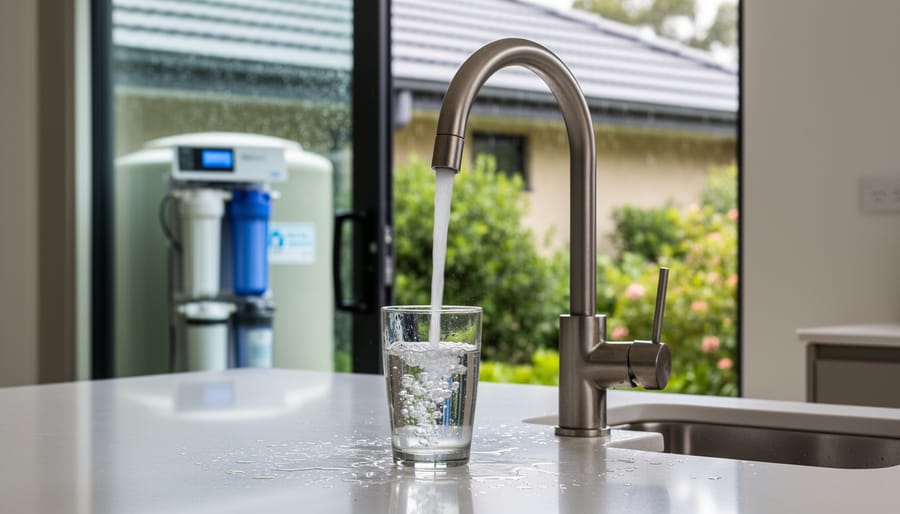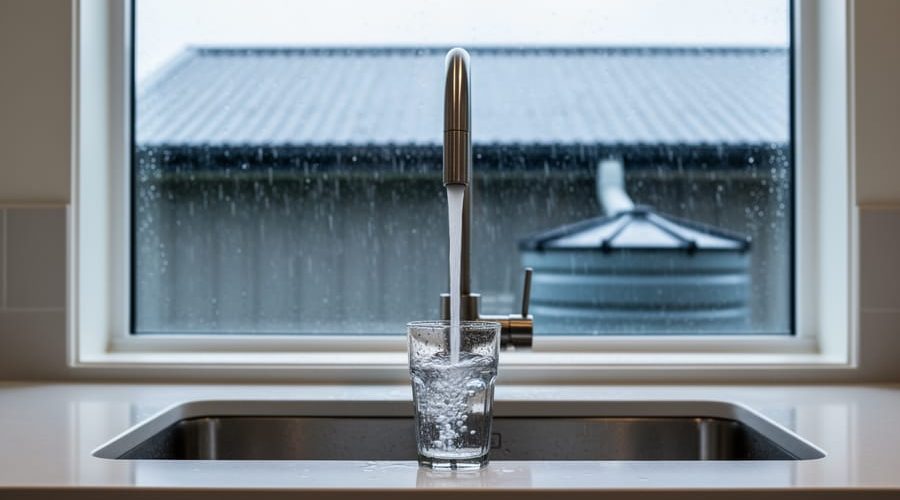
Rainwater falling on your roof can become safe drinking water with the right purification system—a solution that reduces municipal water dependence while providing emergency backup during shortages. Modern potable rainwater harvesting systems combine collection, filtration, and disinfection technologies to transform what runs off your roof into water that meets or exceeds drinking water standards.
Converting rainwater to potable quality requires multiple treatment barriers. First-flush diverters remove initial roof contaminants, followed by sediment filters that capture particles and debris. UV sterilization or ozone treatment then eliminates bacteria and pathogens, while activated carbon filtration addresses chemical contaminants and improves taste. The most advanced systems incorporate reverse osmosis for comprehensive purification, removing dissolved minerals and trace pollutants.
Safety demands regular testing and maintenance. Monthly inspections of gutters, filters, and storage tanks prevent contamination, while quarterly water quality testing verifies microbial safety and pH levels. Annual professional servicing ensures UV lamps maintain effective germicidal power and all system components function correctly.
The investment ranges from $8,000 for basic whole-house systems to $25,000 for sophisticated installations with automated monitoring. Your return includes reduced water bills, increased property resilience, and independence from drought restrictions. Success hinges on understanding local regulations, calculating realistic collection capacity based on rainfall patterns, and committing to consistent maintenance schedules that protect your household’s health.
Why Harvest Rainwater for Drinking (Not Just Gardens)
While basic rainwater harvesting for gardens has become increasingly popular, forward-thinking homeowners are now discovering the benefits of taking this sustainable practice to the next level—converting rainwater into safe, clean drinking water for their entire household.
Water independence stands as one of the most compelling reasons to consider a potable rainwater system. Rather than relying entirely on municipal supplies or well water, you’re essentially creating your own renewable water source right from your rooftop. This self-sufficiency becomes particularly valuable during drought restrictions, when outdoor watering bans don’t affect your harvested supply, or during emergencies when municipal systems may be compromised.
The financial benefits extend well beyond garden irrigation. Homeowners with potable systems can significantly reduce or even eliminate monthly water bills, depending on household size and rainfall patterns. While the upfront investment is notable, many users report the system paying for itself within several years through utility savings. Similar to greywater recycling, this represents a long-term investment in household efficiency.
Environmental consciousness drives many homeowners toward potable rainwater systems. Every gallon you harvest reduces demand on overtaxed municipal water treatment facilities and aquifers. You’re essentially closing the loop on your water consumption, working directly with nature’s water cycle rather than against it. This cutting-edge approach to water independence reduces energy consumption associated with water treatment and transportation.
Growing concerns about municipal water quality also motivate the switch. From aging infrastructure and chlorination byproducts to periodic contamination events, many people question what’s actually flowing from their taps. A properly designed potable rainwater system gives you direct control over your water quality through customized filtration and treatment.
Finally, emergency preparedness matters more than ever. Natural disasters, infrastructure failures, or contamination events can disrupt municipal supplies without warning. A potable rainwater system provides a reliable backup source, offering genuine peace of mind that your family has access to clean drinking water regardless of external circumstances.
What Makes Rainwater Safe to Drink
Rainwater begins its journey remarkably pure. High in the atmosphere, precipitation forms with minimal contamination—essentially distilled water. However, the moment rain starts falling, it encounters pollutants that compromise its safety for drinking.
As rainwater descends through the air, it acts like a natural scrubber, collecting airborne contaminants. Dust particles, pollen, vehicle emissions, and industrial pollutants attach themselves to raindrops during their fall. In urban areas especially, rain absorbs chemicals and particulates from the atmosphere, arriving on your roof already carrying unwanted passengers.
The real contamination challenge begins when rain hits your collection surface. Roofing materials can leach chemicals, particularly if you have asphalt shingles or treated wood. Bird droppings, leaves, insect debris, and animal waste accumulate on roofs between rain events, creating a concentrated mix of bacteria, parasites, and organic matter. When rain washes across these surfaces, it becomes a transport vehicle for harmful microorganisms like E. coli, Salmonella, and Giardia.
Your gutters add another layer of contamination. Decomposing leaves create breeding grounds for bacteria, while sediment and biofilm buildup in gutters introduce additional pathogens into your collected water. Even seemingly clean roofs harbor invisible microbial communities that rainwater picks up during collection.
Once stored, rainwater faces new threats. Standing water in tanks can develop algae growth if exposed to light. Bacteria multiply in warm conditions, and sediment settles at tank bottoms, creating sludge that harbors pathogens. Mosquitoes may breed in poorly sealed tanks, while small animals occasionally find their way into storage systems.
The good news? Understanding these contamination pathways helps you design effective treatment strategies. Modern potable rainwater harvesting systems address each contamination stage through a combination of smart collection practices, multi-barrier filtration, and disinfection technologies. By targeting specific contaminants at their source—whether airborne particles, surface debris, or storage-related issues—these innovative systems transform questionable rainwater into clean, safe drinking water that meets or exceeds municipal standards.
The Essential Components of a Potable Rainwater System
Catchment Surface and Roof Materials
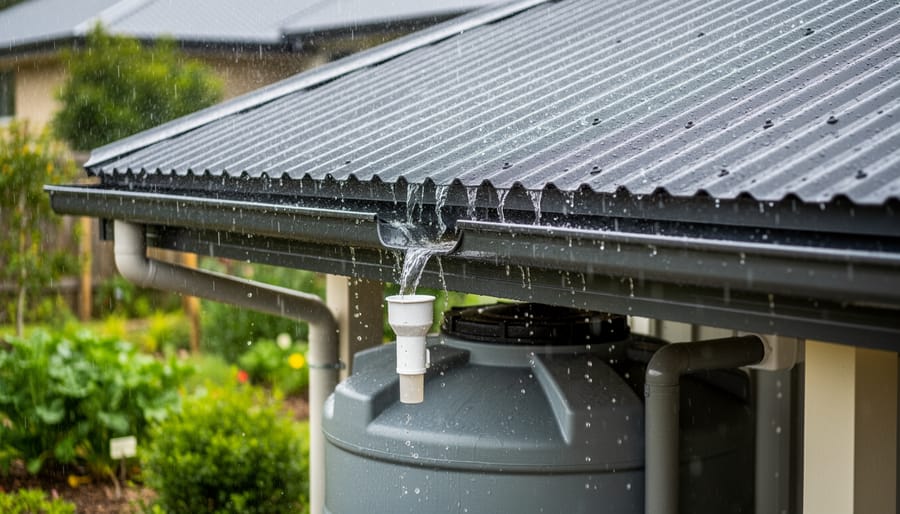
Not all roofs are created equal when it comes to collecting drinking water. The best surfaces for potable rainwater harvesting are metal roofs (such as steel, aluminum, or copper), ceramic tiles, and slate because they’re smooth, durable, and don’t leach harmful chemicals into the water. These materials make it easier to maintain clean collection surfaces and work seamlessly with gutter collection systems.
Avoid using asphalt shingles, treated wood shakes, or any roof with lead-based paint or toxic coatings, as these materials can contaminate your water supply with chemicals and heavy metals. The type of material directly impacts your water quality and the level of filtration needed downstream.
Keeping your catchment surface clean is essential for safe drinking water. Regularly remove leaves, bird droppings, and debris that can introduce bacteria and contaminants. Consider installing gutter guards to minimize organic matter buildup. A clean roof means less work for your filtration system and higher quality water entering your storage tank. Think of your roof as the first line of defense in producing safe, potable rainwater.
Pre-Filtration and First Flush Diverters
Before rainwater enters your storage tank, it needs to pass through critical defense systems that block the most harmful contaminants. Think of these as your system’s bouncers, keeping out unwanted guests before they can cause problems.
Pre-filtration systems typically use mesh screens or gutter guards to catch large debris like leaves, twigs, insects, and bird droppings. These simple barriers sit at collection points—usually in your gutters or at pipe entry points—and prevent organic matter from entering your system. Without them, you’d be storing a contaminated soup rather than clean water.
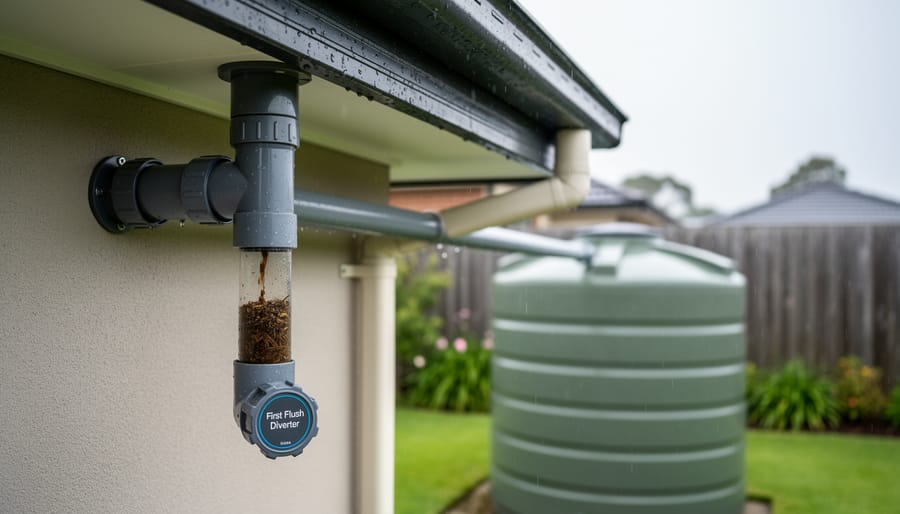
The first flush diverter is an ingenious yet straightforward device that tackles a different problem. During the initial minutes of rainfall, water washes across your roof, picking up accumulated dirt, dust, pollen, and animal waste. This “first flush” contains the highest concentration of pollutants. The diverter automatically redirects this dirtiest water away from your storage tank, typically the first 10-20 gallons depending on your roof size.
Once the diverter chamber fills, cleaner water flows into your storage system. Some modern diverters feature automatic drainage systems that slowly empty between rain events, resetting themselves for the next storm. Together, these pre-treatment components significantly reduce the workload on your filtration system and protect water quality from the start.
Storage Tanks That Keep Water Clean
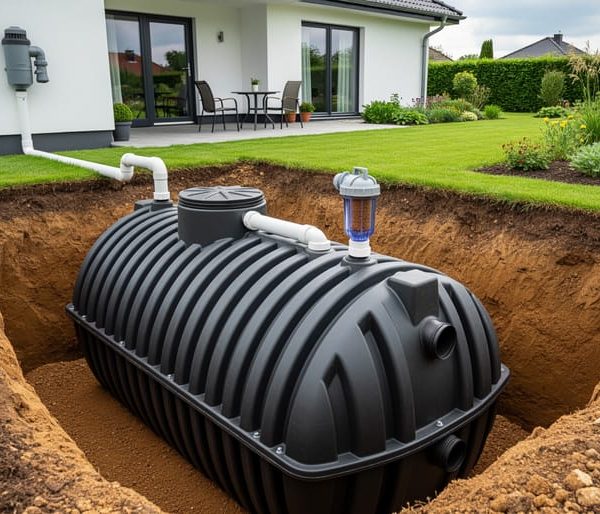
Your storage tank is the heart of your potable rainwater system, so choosing the right one matters. Food-grade tanks made from polyethylene, fiberglass, or stainless steel are your best options—these materials won’t leach chemicals into your drinking water. Always verify the tank is NSF-61 certified, meaning it meets strict safety standards for potable water contact.
Proper sealing is essential to keep contaminants out. Your tank needs a secure, watertight lid that prevents insects, debris, and sunlight from entering. Sunlight exposure encourages algae growth, which compromises water quality. Look for opaque tanks or install yours in shaded areas.
Sizing depends on your household water needs and local rainfall patterns. A typical family of four might need 1,000 to 3,000 gallons of storage, but calculate based on your daily consumption and how long you’ll rely on stored water between rain events.
Regular maintenance keeps water safe. Inspect your tank quarterly for cracks or sediment buildup. Clean it annually by draining completely and scrubbing interior surfaces with food-safe cleaners. Install an overflow outlet to prevent tank overfilling during heavy rains. Consider adding a first-flush diverter to automatically discard the initial, dirtiest runoff from your roof before it enters storage.
Filtration Systems That Remove What You Can’t See
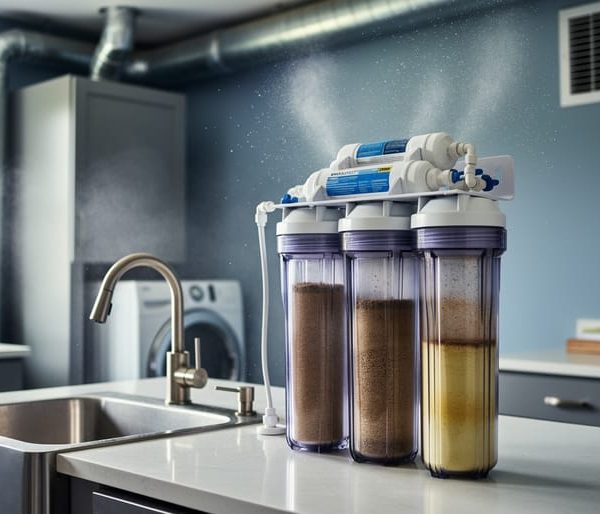
Making rainwater safe enough to drink requires removing contaminants you can’t see with the naked eye—bacteria, viruses, dissolved chemicals, and microscopic particles. This is where multi-stage filtration becomes your invisible guardian, working layer by layer to purify every drop.
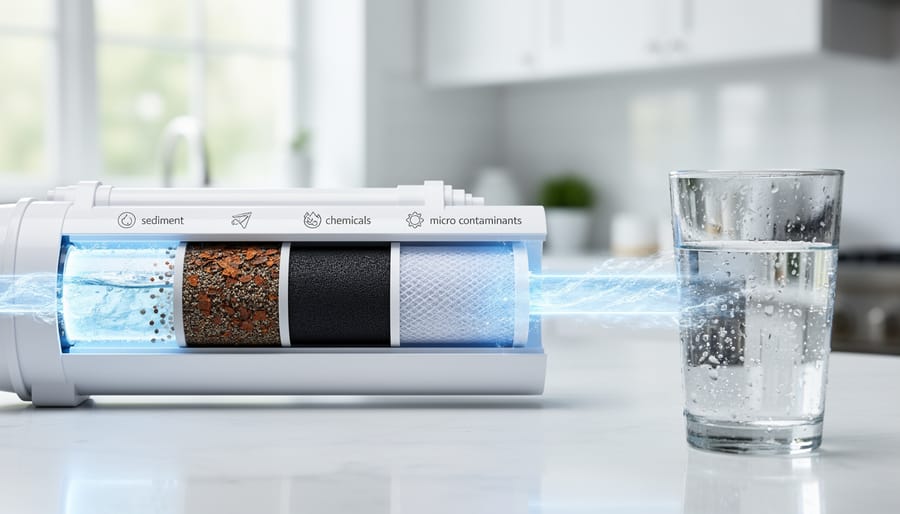
The first line of defense is sediment filtration, which captures particles like dust, pollen, and fine debris that slip past your roof washers and first-flush diverters. These filters typically range from 5 to 20 microns (a human hair is about 70 microns wide) and prevent larger contaminants from overwhelming the finer filtration stages ahead.
Next comes activated carbon filtration, the workhorse that tackles taste, odor, and dissolved chemicals. Carbon filters absorb chlorine, pesticides, herbicides, and volatile organic compounds that might wash off your roof or exist in atmospheric pollution. Think of carbon as a molecular sponge, trapping unwanted substances as water flows through.
The final barrier involves membrane filtration systems—either ultrafiltration or reverse osmosis. Ultrafiltration uses membranes with microscopic pores (0.01 to 0.1 microns) that physically block bacteria, protozoa, and some viruses while allowing beneficial minerals to pass through. Reverse osmosis goes even further, removing virtually everything including dissolved salts and the smallest viruses, though it requires more energy and produces some wastewater.
Together, these stages transform collected rainwater into reliably safe drinking water, giving you peace of mind that what flows from your tap meets or exceeds municipal water standards.
UV Disinfection and Final Treatment
UV disinfection serves as the final and most critical step in transforming collected rainwater into safe drinking water. This technology uses ultraviolet light at a specific wavelength (typically 254 nanometers) to destroy the DNA of bacteria, viruses, and parasites, making them unable to reproduce or cause illness. Think of it as a microscopic security system that neutralizes harmful organisms as water flows through the UV chamber.
The beauty of UV treatment lies in its chemical-free approach. Unlike traditional methods, it doesn’t alter your water’s taste, odor, or pH level, and it requires no storage of hazardous materials. The process is instantaneous as water passes by the UV lamp, making it ideal for point-of-use applications in home systems.
For potable rainwater systems, UV disinfection isn’t optional—it’s essential. Even with excellent filtration, microscopic pathogens can survive, and UV provides that final barrier of protection. Most residential units consume minimal electricity, roughly equivalent to a standard light bulb, making them an eco-friendly solution.
Alternative disinfection methods include chlorination, which effectively kills pathogens but requires careful dosing and contact time. Some homeowners combine both methods for added security. Ozone treatment represents another cutting-edge option, though it’s typically more expensive. Whatever method you choose, regular maintenance, including annual lamp replacement for UV systems, ensures continuous protection for your household.
Designing Your System: What to Consider Before You Build
Before investing in a potable rainwater harvesting system, thoughtful planning ensures you build a solution that meets your household’s needs while staying compliant with local requirements. Taking time to assess several key factors will help you design an efficient, cost-effective system.
Start by calculating your household water demand. Track your current water usage through utility bills or estimate consumption based on occupancy. The average person uses 80-100 gallons daily, though this varies significantly based on lifestyle and conservation habits. Determine whether you want rainwater as your primary drinking water source or a backup during shortages. This decision dramatically impacts system size and complexity.
Next, assess your local rainfall patterns and collection potential. Research historical precipitation data for your region to understand seasonal availability. Calculate your roof’s catchment area—a simple formula multiplies roof square footage by rainfall depth to estimate potential collection volume. A large rainwater harvesting system might collect thousands of gallons monthly during rainy seasons, but dry periods require adequate storage to maintain supply.
Understanding local regulations is absolutely critical before you begin. Many jurisdictions have specific requirements for potable rainwater systems, including mandatory filtration standards, testing protocols, and professional installation requirements. Contact your local health department and building authority to learn about permits, inspections, and approved system components. Some areas restrict or prohibit potable rainwater use entirely, while others actively encourage it through incentives.
Consider your budget realistically. Professional potable systems typically cost between 8,000 and 15,000 dollars for complete installation, including collection, filtration, UV treatment, and storage. Additional ongoing costs include filter replacements, water testing, and system maintenance.
Finally, evaluate your property’s suitability. You’ll need adequate space for storage tanks, appropriate roof materials for safe collection, and possibly backup power for pump operation. Properties with metal or tile roofs work best, while those with asphalt shingles may require additional filtration consideration. Matching system design to your specific circumstances ensures long-term satisfaction with your investment in sustainable water independence.
Installation Options: DIY or Professional
Deciding between DIY installation and hiring professionals depends on your technical skills, budget, and the complexity of your system. While basic rainwater collection components like gutters and storage tanks can be manageable DIY projects, potable systems require careful consideration due to safety implications.
For homeowners comfortable with basic plumbing and following detailed instructions, installing simpler components like first-flush diverters, sediment filters, and connecting storage tanks may be feasible. These tasks typically involve standard plumbing connections and don’t require specialized licenses. However, you’ll need to ensure all materials meet food-grade standards and follow local building codes precisely.
Professional installation becomes essential for several critical components. UV purification systems require proper electrical work, including dedicated circuits and ground fault protection—tasks that often legally require licensed electricians. Additionally, pressure pumps, backflow prevention devices, and integration with your home’s existing plumbing system demand expertise to ensure proper water pressure, prevent contamination of municipal supplies, and maintain system efficiency.
The cost difference can be significant. DIY installation might save 30-50 percent on labor costs, potentially reducing your total investment by several thousand dollars. However, mistakes can prove expensive, leading to system failures, water contamination risks, or code violations requiring costly corrections.
Consider hiring professionals for at least the technical portions of your installation. Many companies offer hybrid approaches where you handle basic prep work and simple installations while they manage specialized components. This strategy balances cost savings with safety assurance.
Most importantly, professional installation often includes system commissioning, water testing, and warranty protection. Professionals understand local regulations, obtain necessary permits, and ensure your system meets health department requirements—critical factors for producing safe drinking water. When your family’s health depends on water quality, professional expertise provides invaluable peace of mind.
Maintaining Your System for Long-Term Water Safety
A potable rainwater harvesting system requires consistent, scheduled maintenance to ensure the water remains safe for drinking. Unlike systems used solely for irrigation, there’s no room for shortcuts when your family’s health depends on water quality.
Start with monthly gutter inspections and cleaning, especially after storms or during fall when leaves accumulate. Clogged gutters introduce organic matter and debris that can overwhelm your filtration system and promote bacterial growth. Remove all leaves, twigs, and sediment to keep water flowing cleanly into your collection system.
Your pre-filtration components need attention every three to six months. First-flush diverters should be checked for proper operation, and mesh screens require cleaning or replacement. Sediment filters typically need changing quarterly, though heavily wooded areas may require monthly replacement. Keep spare filters on hand so you’re never tempted to delay this essential task.
Storage tanks demand annual inspection for sediment buildup, algae growth, and structural integrity. Drain and clean your tank completely at least once yearly, scrubbing interior surfaces and checking all seals and connections. Look for cracks, leaks, or signs of contamination. If your tank has an overflow system, verify it functions properly to prevent stagnant water issues.
UV sterilization systems require bulb replacement annually, even if they still illuminate. UV effectiveness diminishes over time, and a glowing bulb doesn’t guarantee proper disinfection. Mark your calendar with the installation date and order replacement bulbs in advance. Also clean the quartz sleeve surrounding the bulb every few months to remove mineral deposits that block UV rays.
Water quality testing shouldn’t stop after installation. Test for bacteria every six months minimum, and conduct comprehensive testing annually. Many homeowners establish relationships with local laboratories for consistent monitoring.
Document all maintenance activities in a logbook. This record helps you spot patterns, remember replacement schedules, and provides valuable information if water quality issues arise. Think of maintenance as an ongoing investment in your family’s health and your system’s longevity—because when it comes to drinking water, consistency truly matters.
Testing Your Water: How to Know It’s Actually Safe
Just because rainwater looks clear doesn’t mean it’s safe to drink. Regular testing is your safety net, ensuring your harvested rainwater meets drinking water standards. Think of it as a health checkup for your water system.
At minimum, you should test for four key parameters: bacteria like E. coli and total coliforms, which indicate harmful microorganisms; heavy metals such as lead, copper, and zinc that can leach from roofing materials or plumbing; pH levels to ensure your water isn’t too acidic or alkaline; and turbidity, which measures water clarity and can indicate filtration effectiveness. These tests reveal what your eyes can’t see and help you catch potential problems before they affect your health.
For testing frequency, plan on comprehensive lab testing at least twice yearly, ideally after seasonal changes when conditions shift. If you’re new to your system, test monthly for the first six months to establish a baseline and ensure everything works properly. Between professional tests, at-home test kits can provide peace of mind for basic parameters like pH and bacteria.
At-home test kits offer convenience and immediate results. You’ll find affordable options at hardware stores or online, typically ranging from fifteen to fifty dollars. They’re perfect for routine monitoring and spotting obvious problems quickly. However, they have limitations in accuracy and can’t detect the full spectrum of contaminants.
For comprehensive analysis, laboratory testing remains the gold standard. State-certified labs provide detailed reports covering dozens of parameters. Contact your local health department for recommended testing facilities, or search for EPA-certified labs in your area. Expect to pay between one hundred and three hundred dollars for thorough testing, but consider it an investment in your family’s health and your system’s performance.
Common Mistakes That Compromise Water Quality
Even well-intentioned homeowners can unknowingly compromise their rainwater system’s safety through common oversights. Understanding these pitfalls helps you avoid costly mistakes and protects your family’s health.
One of the most frequent errors is installing inadequate filtration. Many people assume a simple screen filter is enough, but potable systems require multiple stages of filtration to remove sediment, organic matter, and microbial contaminants. Skipping pre-filtration or using undersized filters quickly overwhelms your treatment system and allows harmful particles through.
Neglected maintenance ranks as another critical problem. Rainwater systems aren’t “set and forget” installations. Filters need regular cleaning or replacement, gutters require periodic inspection, and tanks must be checked for sediment buildup. Many homeowners discover contamination issues only after ignoring maintenance schedules for months or even years.
Improper tank placement creates unnecessary contamination risks. Positioning storage tanks near septic systems, compost piles, or areas with heavy pesticide use can introduce pollutants. Similarly, tanks exposed to direct sunlight encourage algae growth, while inadequate venting causes pressure problems and promotes bacterial development.
Cross-contamination with municipal water systems presents serious legal and health concerns. Some jurisdictions strictly prohibit direct connections between rainwater and city water supplies without proper backflow prevention devices. This protects both your household and the public water system.
Finally, cutting corners on disinfection is perhaps the most dangerous mistake. UV systems need annual bulb replacement, and water testing shouldn’t be optional. Some homeowners rely solely on first flush diverters or assume clear water is safe water. Without proper disinfection and regular testing protocols, invisible contaminants can persist despite water appearing clean. Investing in appropriate treatment technology and maintaining it consistently ensures your harvested rainwater remains truly potable.
The Real Costs: Investment and Payback
Installing a potable rainwater harvesting system requires a significant upfront investment, but understanding the true costs helps you make an informed decision. A complete system including catchment, filtration, UV sterilization, storage tanks, and distribution typically ranges from $8,000 to $25,000 for an average home. High-end systems with advanced purification technology can exceed $30,000. Your specific costs depend on factors like roof size, desired storage capacity, local installation rates, and whether you choose professional installation or tackle some components yourself.
Beyond initial installation, budget for ongoing expenses. Replacement filters typically cost $200-$500 annually, while UV bulbs need changing every 12-18 months at $150-$300 each. Annual water testing runs $150-$400 depending on comprehensiveness. System inspections and minor repairs might add another $200-$500 yearly. These maintenance costs are essential for safety and shouldn’t be skipped.
The financial payback period varies considerably based on your local water rates and household consumption. In areas with expensive municipal water, you might recoup costs in 10-15 years. However, in regions with inexpensive water, payback could take 20-30 years or longer. The cost savings from rainwater collection become more attractive during droughts or water restrictions.
Many homeowners find the environmental returns equally valuable. Reducing demand on municipal systems, decreasing stormwater runoff, and achieving water independence provide benefits that transcend dollars. Government rebates and tax incentives in some regions can significantly improve financial viability, so research local programs before finalizing your decision. Consider this system a long-term investment in sustainability rather than a quick money-saver.
Creating a potable rainwater harvesting system is an achievable goal for homeowners willing to invest in proper equipment and commit to consistent maintenance. While the initial investment may seem significant, the long-term benefits of water independence and reduced utility costs make it a worthwhile consideration for many households. By starting with thorough planning—assessing your local regulations, calculating your water needs, and understanding your roof’s collection potential—you set the foundation for a successful system that delivers safe, clean drinking water.
The dual benefits of gaining water independence while practicing environmental stewardship make this investment particularly meaningful. You’re not just securing your household’s water supply; you’re actively reducing the strain on municipal water systems and minimizing your environmental footprint. Thanks to cutting-edge water innovations in filtration and purification technology, modern systems are more accessible and effective than ever before. Multi-stage filtration, UV sterilization, and automated monitoring have transformed rainwater harvesting from a complex undertaking into a manageable home improvement project. With proper testing, maintenance, and attention to safety protocols, you can confidently transition to a sustainable water source that serves your family for years to come.