Calculate your household’s current water usage by checking your utility bills from the past year—most families use 300 gallons daily, costing $500-$1,000 annually, and switching to WaterSense-certified appliances typically cuts consumption by 20-30%. Replace your top three water-guzzling appliances first: toilets (using 27% of household water), washing machines (22%), and showerheads (17%), which delivers the fastest payback period of 2-4 years through reduced utility bills.
Search your zip code on EPA’s WaterSense Rebate Finder and your state’s energy office website to claim rebates averaging $50-$200 per appliance—these incentives often cover 25-50% of upgrade costs and expire annually, making timing crucial. Compare the total cost of ownership rather than just purchase price: a $400 high-efficiency washing machine saves approximately $150 yearly in water and energy costs compared to standard models, paying for itself in under three years while eliminating 5,000 gallons of wasted water.
Prioritize appliances with dual certifications—both WaterSense and Energy Star labels—since water heating accounts for nearly 20% of home energy use, maximizing your savings on both utility bills. The average household investing $1,500 in water-efficient upgrades receives $300-$400 in annual savings, achieves ROI within four years, and reduces environmental impact by preventing 30,000 gallons of unnecessary water consumption annually. These innovations align perfectly with sustainable living while putting money back in your pocket.
Understanding Water-Efficient Appliances
What Makes an Appliance Water-Efficient?
Water-efficient appliances earn their designation through rigorous certification programs that verify real-world water savings. The EPA’s WaterSense label is the gold standard for fixtures like toilets, faucets, and showerheads, guaranteeing products use at least 20% less water than conventional models while maintaining performance. For larger appliances, the ENERGY STAR certification includes water efficiency criteria alongside energy ratings.
Understanding water usage metrics helps you compare products effectively. Washing machines are measured in gallons per cycle, with efficient front-loaders using as little as 13 gallons compared to 23 gallons for traditional top-loaders. Dishwashers average 3-5 gallons per cycle for efficient models versus 10 gallons for older units. Toilets display gallons per flush ratings, with high-efficiency models using just 1.28 gallons compared to 3.5-7 gallons in older fixtures.
Key efficiency features include sensor technology that adjusts water levels based on load size, improved spray patterns that clean more effectively with less water, and innovative fill mechanisms that prevent unnecessary waste. Look for adjustable settings, soil sensors, and dual-flush options when shopping. These cutting-edge innovations ensure you’re not sacrificing cleaning power for conservation, delivering both environmental benefits and long-term cost savings.
The Technology Behind Water Savings
Modern water-efficient appliances achieve impressive savings through surprisingly simple yet ingenious innovations. Let’s explore how these technologies work in everyday terms.
Aerators are small mesh screens that attach to faucet tips, mixing air into the water stream. This creates the sensation of strong water pressure while actually using 30-50% less water. Think of it like whipping cream—adding air increases volume without adding more liquid.
Low-flow mechanisms in showerheads and toilets restrict water flow through precision-engineered valves and smaller openings. Advanced showerheads maintain comfortable pressure by adjusting spray patterns, while dual-flush toilets offer different flush volumes depending on waste type—typically 0.8 gallons for liquid waste versus 1.6 gallons for solid waste.
Sensor technology in faucets uses infrared detectors to activate water flow only when hands are present, eliminating waste from taps left running. These touchless systems are becoming increasingly affordable for home use.
Load-sensing features in dishwashers and washing machines represent cutting-edge innovation. Built-in sensors detect load size and soil level, then automatically adjust water volume and cycle length. A half-full washing machine might use 40% less water than a full load setting, optimizing efficiency for every use while maintaining cleaning performance.
The Real Costs: What You’ll Pay Upfront
Low-Flow Toilets and Fixtures
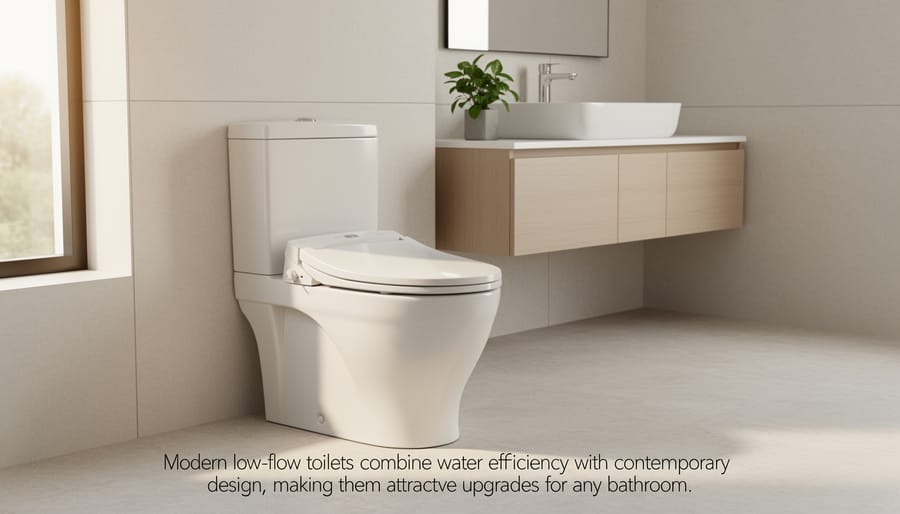
Low-flow toilets represent one of the most impactful water-saving upgrades you can make. WaterSense-labeled toilets use just 1.28 gallons per flush compared to older models that consume 3.5 to 7 gallons. Prices typically range from $150 to $400 for quality low-flow models, while conventional toilets cost $100 to $300. Though the upfront difference may be $50 to $100 more, a family of four can save approximately 16,000 gallons annually, translating to $90 to $170 in water bill reductions depending on your local rates.
Low-flow showerheads offer even faster payback periods. These fixtures cost between $15 and $75, comparable to standard showerheads priced at $10 to $60. Modern water-efficient versions deliver 2.0 gallons per minute or less while maintaining excellent pressure through innovative aerating technology. A household can save roughly 2,900 gallons yearly per person, reducing costs by $30 to $50 annually.
Faucet aerators provide the most affordable entry point to water conservation, costing just $5 to $15 compared to $3 to $10 for conventional models. These simple attachments reduce flow from 2.2 gallons per minute to 1.5 or less, saving about 700 gallons per person yearly. Many utilities offer these devices free through conservation programs.
Water-Efficient Washing Machines
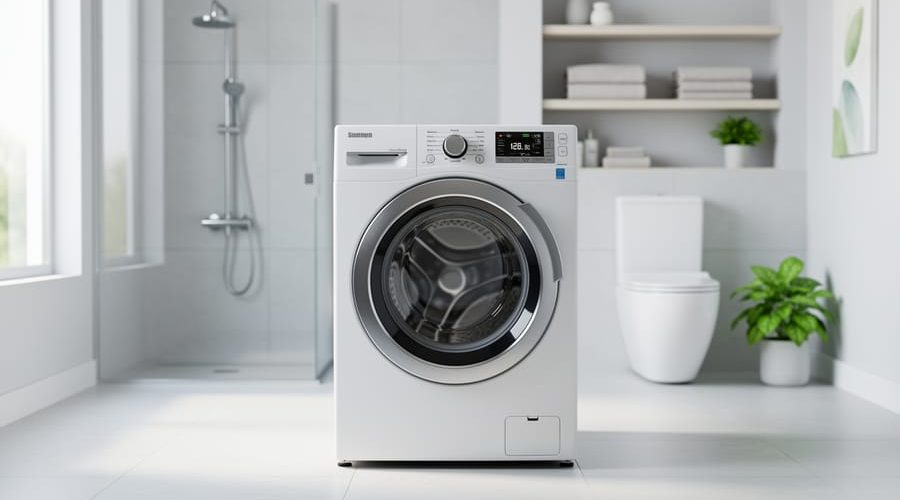
Washing machines represent one of the biggest opportunities for household water savings. Traditional top-load washers use approximately 40 gallons per load, while ENERGY STAR certified models dramatically reduce this consumption.
Front-load ENERGY STAR washers are the most efficient option, using just 13-15 gallons per load. These models typically cost between $800-1,200 upfront but can save families around $50 annually on water bills and $135 on energy costs. With an average lifespan of 11 years, you’re looking at total savings of $2,035 over the machine’s lifetime.
High-efficiency top-load washers offer a middle ground, using 20-25 gallons per load and costing $600-900. While slightly less efficient than front-loaders, they’re familiar to use and still save approximately $150 yearly compared to standard models.
Installation considerations matter too. Front-loaders require adequate space for door clearance and may need pedestal stands for comfortable access, adding $200-300 to your initial investment. However, many utilities offer rebates ranging from $50-150 for ENERGY STAR certified washers, helping offset these costs.
When calculating your return on investment, consider your household size and laundry frequency. Larger families doing 8-10 loads weekly will recoup their investment much faster than single-person households.
Dishwashers and Other Appliances
Water-efficient dishwashers typically range from $400 to $1,200, with Energy Star and WaterSense certified models often falling in the mid-range at $600-$900. Unlike older models that consume 10+ gallons per cycle, modern efficient dishwashers use as little as 3-4 gallons while delivering superior cleaning performance. Price variations depend on capacity, advanced features like soil sensors and efficient spray arms, and brand reputation.
Beyond dishwashers, other water-saving appliances deserve consideration. High-efficiency washing machines cost $600-$1,500 and use 40% less water than traditional top-loaders. Water-efficient garbage disposals with optimized flush systems run $150-$400. Even ice makers and refrigerators now come in water-conscious models, though these premium features can add $200-$500 to base prices.
When budgeting for multiple appliance upgrades, factor in potential rebates and compare total costs to larger home improvements like water softener costs. The good news: most water-efficient appliances pay for themselves within 3-7 years through combined water and energy savings, making them sound investments for both your wallet and the environment.
Calculate Your Water and Money Savings
How Much Water Can You Actually Save?
The water savings from efficient appliances can really add up, making a meaningful impact on both your utility bills and the environment. Let’s break down what you can expect from each appliance type.
High-efficiency washing machines are among the top water savers, using approximately 13 gallons per load compared to 23 gallons for standard models. That’s a savings of 10 gallons per load. For a household doing 300 loads annually, you’re looking at 3,000 gallons saved each year.
Water-efficient dishwashers have made impressive strides with cutting-edge water innovations. Modern ENERGY STAR certified models use just 3.5 gallons per cycle, while older units can consume 10 gallons or more. Running your dishwasher five times weekly translates to roughly 1,690 gallons saved annually.
Low-flow toilets deliver substantial savings since toilets account for nearly 30% of household water use. Replacing a 3.5-gallon-per-flush toilet with a WaterSense labeled model using 1.28 gallons per flush saves about 13,000 gallons per year for a family of four.
Efficient showerheads and faucets might seem like small changes, but they pack a punch. A WaterSense showerhead uses 2 gallons per minute versus the standard 2.5 gallons, saving a family approximately 2,900 gallons yearly. Similarly, efficient bathroom faucets can save around 700 gallons annually.
Combined, upgrading all these fixtures in an average household can reduce water consumption by over 20,000 gallons per year—that’s real conservation that benefits both your wallet and our planet’s precious water resources.
Converting Water Savings to Dollar Savings
Understanding how water-efficient appliances translate to real savings helps you make informed decisions about upgrading your home. Here’s a straightforward method to calculate your potential savings.
Start by finding your current water and wastewater rates on your utility bill. Most municipalities charge per 1,000 gallons or per cubic meter. Water rates typically range from $1.50 to $5.00 per 1,000 gallons, while wastewater treatment often costs an additional $2.00 to $6.00 per 1,000 gallons. Combined, you might pay $3.50 to $11.00 per 1,000 gallons.
Next, calculate your appliance’s water usage. A standard washing machine uses about 40 gallons per load, while an efficient model uses just 15 gallons. If you do 300 loads annually, that’s a savings of 7,500 gallons per year.
Now multiply the water saved by your combined utility rate. Using our washing machine example with a $5.00 per 1,000 gallons rate: 7,500 gallons divided by 1,000 equals 7.5, multiplied by $5.00 equals $37.50 in annual savings.
For a family of four, the combined savings from water-efficient appliances typically looks like this: high-efficiency washing machine saves $35-50 annually, dishwasher saves $25-40, and low-flow showerheads save $70-120. That’s $130-210 in total annual savings, meaning many appliances pay for themselves within 3-7 years while reducing your environmental footprint. Don’t forget to factor in available rebates, which can significantly shorten your payback period.
Payback Period: When You Break Even
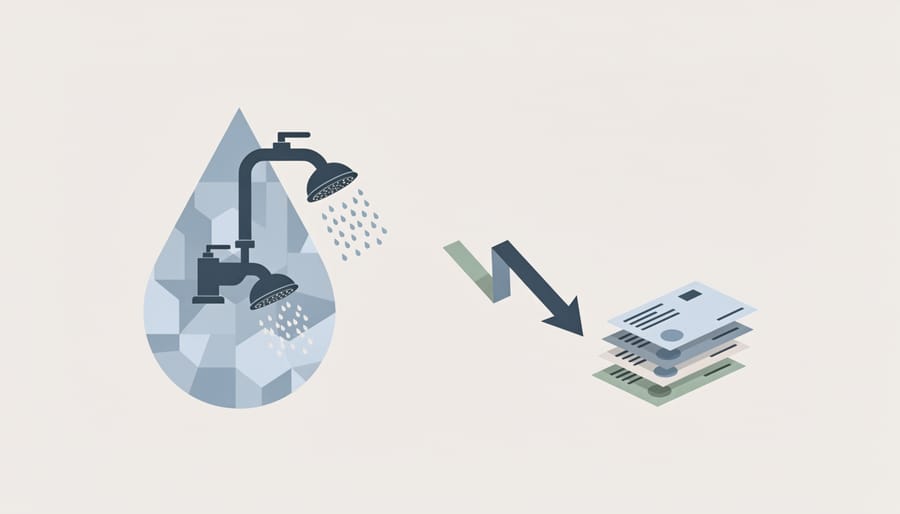
Understanding your payback timeline helps you make smarter investment decisions. Calculating payback periods is straightforward: divide the extra upfront cost by your annual savings. For example, a WaterSense toilet costs about $50 more but saves $140 yearly on water bills, breaking even in just 4-5 months. High-efficiency washing machines typically pay for themselves within 2-3 years through combined water and energy savings. Dishwashers usually reach breakeven around the 3-4 year mark. Low-flow showerheads offer the fastest return, often paying back their minimal cost within weeks. Keep in mind that rebates dramatically shorten these timelines, sometimes creating immediate savings that exceed the purchase price difference. Factor in your household size and local water rates for personalized calculations.
Finding and Claiming Water Efficiency Rebates
Where to Find Rebate Programs
Finding rebate programs for water-efficient appliances is easier than you might think, and the savings can significantly reduce your upfront costs. Start with your local water utility company, as many offer generous rebates for upgrading to WaterSense-labeled or ENERGY STAR certified appliances. Simply visit your utility’s website or call their customer service department to inquire about current programs. These local rebates can range from $50 to $500 or more, depending on the appliance type and your location.
State-level programs provide another excellent resource. Many states operate dedicated water conservation initiatives with rebate databases searchable by zip code. Check your state’s environmental protection or water resources department website for available programs. Some states also partner with regional water authorities to expand rebate offerings beyond individual utility territories.
Federal tax credits occasionally become available for water-efficient home improvements, though these programs change based on current legislation. The Database of State Incentives for Renewables and Efficiency (DSIRE) maintains updated information on federal opportunities alongside state programs, making it a valuable one-stop research tool.
Manufacturer rebates represent a fourth option worth exploring. Major appliance brands sometimes offer cash-back programs or promotional discounts when you purchase qualifying water-efficient models. Visit manufacturer websites directly or ask retailers about mail-in rebate forms at purchase time.
For streamlined searching, use the WaterSense Rebate Finder tool on the EPA’s website or the Alliance for Water Efficiency’s rebate database. These centralized platforms compile thousands of programs nationwide, allowing you to search by location and appliance type within minutes. Remember to check eligibility requirements and application deadlines before making your purchase.
Common Rebate Amounts by Appliance Type
Rebate amounts vary significantly depending on your location and utility provider, but understanding typical ranges helps you estimate potential savings. For high-efficiency toilets (HETs), rebates commonly range from $75 to $150 per toilet. Cities like Los Angeles offer $100 per toilet, while Denver provides up to $150 for qualifying WaterSense models that use just 1.28 gallons per flush or less.
Water-efficient washing machines typically qualify for rebates between $50 and $100. Seattle’s utilities offer $75 for ENERGY STAR certified washers, while some California districts provide up to $100 for models meeting specific water factor requirements. These front-loading or high-efficiency top-loading machines use approximately 13 gallons per load compared to 23 gallons for conventional models.
Dishwasher rebates are generally modest, ranging from $25 to $75, since they already use relatively little water. Phoenix and Austin offer around $50 for qualifying ENERGY STAR models that use less than 3.5 gallons per cycle.
For bathroom fixtures like showerheads and faucet aerators, rebates typically range from $10 to $40 per fixture. Many utilities in major metropolitan areas offer free installation kits or direct rebates to encourage these simple yet effective upgrades that reduce flow rates without sacrificing performance.
How to Qualify and Apply for Rebates
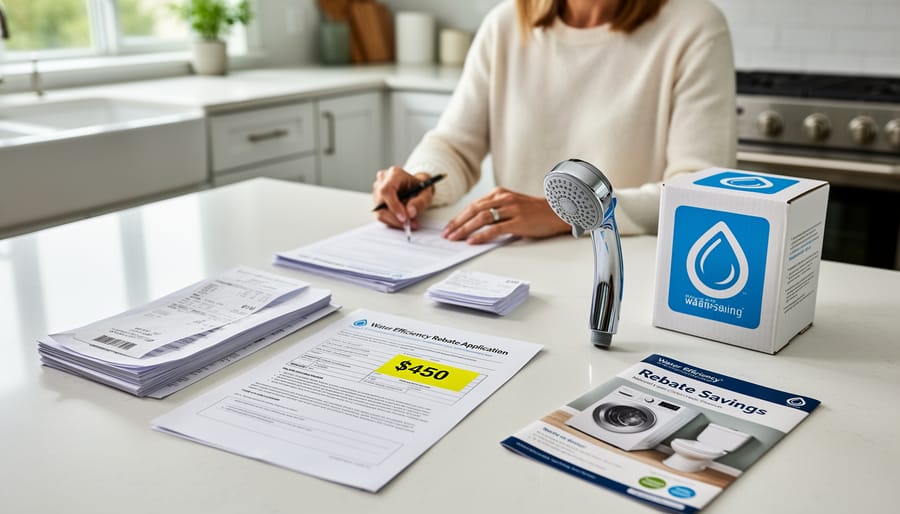
Claiming rebates for water-efficient appliances is simpler than you might think, and it can significantly reduce your upfront costs. Start by visiting your local water utility’s website or the EPA’s WaterSense rebate finder tool to identify available programs in your area. Many utilities, state agencies, and even manufacturers offer rebates for qualifying appliances like high-efficiency washing machines, dishwashers, and low-flow toilets.
To qualify, appliances typically must meet specific certification standards, such as WaterSense or ENERGY STAR labels. These certifications ensure your new appliance uses substantially less water than conventional models. Most programs require that you purchase qualifying products within a specific timeframe and from approved retailers.
When applying, gather essential documentation including your original purchase receipt showing the model number and purchase date, proof of residence such as a utility bill, and the product’s certification label or specification sheet. Some programs also require before-and-after photos of the installation or a completed inspection form from a licensed plumber.
Submit your application within the program’s deadline, which often ranges from 30 to 90 days after purchase. Complete all form fields accurately and double-check that your appliance’s model number appears on the approved products list.
Common reasons for rejection include missing receipts, purchasing non-certified models, or submitting applications after the deadline. To avoid disappointment, verify eligibility before buying, keep all documentation organized, and consider taking photos during installation. Most rebates arrive as checks or utility bill credits within six to eight weeks of approval.
Beyond the Bills: Environmental Impact
Your Water Footprint Reduction
The environmental impact of switching to water-efficient appliances is both significant and measurable. A typical household upgrading to WaterSense-certified fixtures and ENERGY STAR appliances can save approximately 13,000 gallons of water annually—that’s enough to fill a backyard swimming pool.
Consider the broader ripple effects. When you reduce water consumption, you’re also easing the burden on municipal water treatment facilities, which require substantial energy to purify and distribute water to homes. Additionally, using less hot water translates directly into energy savings since your water heater doesn’t work as hard. In fact, an efficient dishwasher alone can save about 3,870 gallons yearly compared to older models, while also cutting energy consumption by nearly 30 percent.
These savings compound across communities. If just one in ten American homes installed water-efficient fixtures, we’d collectively save 800 billion gallons annually. That’s water conservation at a meaningful scale, reducing strain on aquifers and reservoirs while decreasing the carbon footprint associated with water heating and treatment. Your individual choices contribute to this larger environmental benefit while putting money back in your pocket through reduced utility bills.
The Bigger Picture of Water Conservation
When you install water-efficient appliances in your home, you’re contributing to something much larger than just lowering your utility bills. Every gallon you save helps protect regional water supplies, especially in areas facing growing populations and climate-related water stress. During drought conditions, communities with widespread adoption of efficient appliances experience less severe water shortages and can often avoid mandatory restrictions that affect daily life.
Your household choices also support local ecosystems that depend on adequate water flow in rivers and streams. When communities collectively reduce water consumption, less groundwater extraction is needed, helping maintain wetlands and habitats for wildlife. Additionally, using less water means wastewater treatment plants process smaller volumes, reducing energy consumption and the environmental footprint of water infrastructure. These cutting-edge water innovations in appliance technology create a ripple effect—your individual investment strengthens community resilience while protecting natural resources for future generations.
Making the Switch: Practical Next Steps
Which Appliances to Replace First
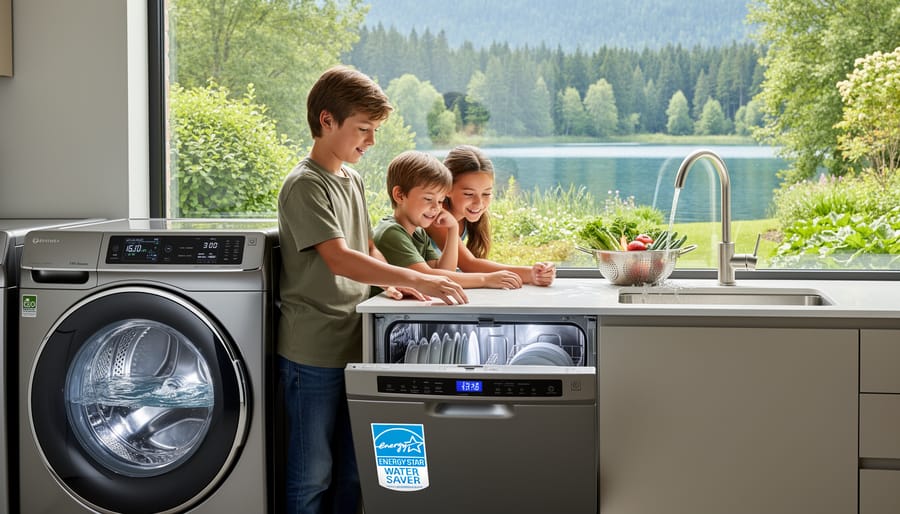
Start with your oldest, most frequently used appliances to maximize your water and cost savings. Toilets installed before 1994 are prime candidates—they use 3.5 to 7 gallons per flush compared to modern WaterSense models using just 1.28 gallons. Replacing an old toilet can save a family of four up to 16,000 gallons annually.
Next, prioritize washing machines older than 10 years. Traditional top-loaders consume about 40 gallons per load, while efficient front-loaders use only 15 gallons. With typical household usage, that’s roughly 7,000 gallons saved yearly.
Dishwashers rank third. Models built before 2013 use significantly more water than current Energy Star certified versions, which use as little as 3 gallons per cycle.
Check local utility rebate programs before purchasing—they often offer substantial incentives for specific models. Like other water-related appliance investments, timing your upgrades strategically around rebate availability can dramatically reduce upfront costs while accelerating your payback period.
Shopping Tips for Water-Efficient Appliances
When shopping for water-efficient appliances, start by looking for the WaterSense label, a certification backed by the EPA that guarantees products meet strict efficiency and performance standards. This label ensures you’re getting an appliance that truly saves water without sacrificing functionality. For washing machines and dishwashers, check for the ENERGY STAR certification as well, since these appliances often save both water and energy.
Pay close attention to the yellow EnergyGuide labels found on most appliances. While primarily focused on energy costs, these labels often include estimated annual water consumption, allowing you to compare models side-by-side. Look for gallons per cycle or gallons per year to understand real-world usage.
When speaking with retailers, ask specific questions: What is the actual water consumption per cycle? How does this model’s efficiency compare to standard versions? Are there any manufacturer rebates currently available? Request documentation about water savings claims rather than accepting verbal assurances.
To verify certifications and avoid greenwashing, visit official certification websites directly. You can search for specific models on WaterSense.gov or energystar.gov to confirm their listed status. Be wary of vague terms like eco-friendly or green without supporting certifications or concrete water consumption data.
Watch for misleading marketing that emphasizes minor features while ignoring overall water usage. Some manufacturers highlight one efficient setting while the standard cycles remain water-intensive. Always compare total water consumption figures rather than relying on promotional language. Request product specification sheets that detail water usage across all settings to make informed comparisons.
Investing in water-efficient appliances represents more than just an environmentally responsible choice—it’s a smart financial decision that delivers tangible returns year after year. The combination of reduced water consumption, lower energy bills, and available rebates means these upgrades often pay for themselves faster than many homeowners expect. Beyond the dollars saved, you’ll gain peace of mind knowing your household is contributing to water conservation efforts that benefit your entire community.
The path forward doesn’t require overhauling your entire home overnight. Start by identifying which appliances consume the most water in your household and prioritize replacements based on age, efficiency, and available incentives. Many local utilities offer free home water audits that can guide your decision-making process and reveal hidden opportunities for savings.
Take time to research rebate programs in your area before making purchases. Visit your water utility’s website, check state environmental agency resources, and explore federal tax credit opportunities. These programs change regularly, and new incentives frequently become available as municipalities recognize the importance of water conservation.
Remember that household water efficiency upgrades create lasting value for your home while reducing your environmental footprint. Whether you’re replacing a single fixture or planning comprehensive renovations, each step toward greater efficiency makes a difference. The technology exists, the financial incentives are available, and the environmental benefits are clear. The only question remaining is: when will you take that first step toward a more efficient, sustainable home?