Nitrate contamination in drinking water poses serious health risks, particularly for infants and pregnant women, yet millions of households unknowingly consume water exceeding safe levels. Understanding how to remove these invisible pollutants has become essential for protecting your family’s health and embracing sustainable home practices.
Modern water treatment technologies offer homeowners multiple pathways to eliminate nitrates effectively. Reverse osmosis systems force water through specialized membranes that block nitrate molecules while allowing pure water to pass through, achieving removal rates up to 90 percent. Ion exchange units swap harmful nitrate ions for harmless chloride ions using specially designed resin beads, making them highly effective for whole-house applications. Distillation systems heat water to create steam, leaving nitrates and other contaminants behind before condensing pure water for consumption.
Recent innovations have made these technologies more accessible and environmentally friendly than ever before. Next-generation biological filters use naturally occurring bacteria to convert nitrates into harmless nitrogen gas, eliminating the need for chemical additives or frequent filter replacements. Solar-powered electrodialysis systems now provide off-grid solutions for rural homeowners, while smart monitoring devices alert you to contamination levels in real-time through smartphone apps.
Choosing the right nitrate removal method depends on your water’s contamination levels, household size, and sustainability goals. This comprehensive guide explores established and emerging technologies, helping you make informed decisions about protecting your water supply while minimizing environmental impact.
Why Nitrates in Drinking Water Should Worry You
Nitrates are nitrogen-oxygen compounds that have become one of the most common contaminants in household water supplies across the country. While your tap water might look perfectly clear and taste fine, it could harbor elevated nitrate levels that pose serious health risks to your family.
Understanding where nitrates come from helps you grasp why they’ve become such a widespread concern. Agricultural runoff ranks as the primary culprit, with fertilizers from farms washing into groundwater during rain events. When farmers apply nitrogen-based fertilizers to crops, excess nutrients seep through soil layers and eventually reach underground aquifers that supply many private wells and municipal water systems. Livestock operations and manure storage also contribute significant amounts of nitrates to our water sources.
Closer to home, failing or poorly maintained septic systems can leak nitrates into your local groundwater. Even well-functioning septic tanks release some nitrogen compounds, but older systems or those servicing too many households create particularly problematic contamination.
The health impacts of nitrate-contaminated water are genuinely concerning. Infants under six months face the most severe risk from a condition called methemoglobinemia, commonly known as blue baby syndrome. This dangerous condition prevents blood from carrying oxygen properly throughout the body, causing a bluish skin tone and potentially life-threatening complications. Pregnant women should also avoid nitrate-contaminated water to protect their developing babies.
Recent studies suggest long-term nitrate exposure may increase risks of certain cancers and thyroid problems in adults, making water contaminant removal essential for protecting everyone in your household.
The EPA sets the maximum contaminant level for nitrates at 10 parts per million, but you cannot detect this contamination without testing. If you rely on well water or live near agricultural areas, annual testing becomes crucial. Many county health departments offer affordable testing services, or you can purchase certified laboratory test kits online. Municipal water customers can request recent water quality reports from their providers to check nitrate levels in their community supply.
The Latest Breakthrough Technologies Removing Nitrates
Ion Exchange Systems: The Proven Workhorse
Ion exchange systems have been the go-to solution for nitrate removal in homes for decades, earning their reputation as reliable workhorses in water treatment. These systems work on a straightforward principle: as contaminated water flows through a tank filled with special resin beads, the beads attract and capture nitrate molecules while releasing harmless chloride ions in exchange. Think of it like a trade system where pollutants get swapped out for safe substances.
Traditional ion exchange systems effectively remove 90-95% of nitrates from drinking water, making them a proven choice for homeowners dealing with contamination. The technology is particularly suitable for residential use because it requires minimal energy, operates quietly, and doesn’t produce wastewater during the treatment process itself. Most systems fit conveniently under a kitchen sink or in a utility room.
However, these systems do require regular maintenance to stay effective. The resin beads eventually become saturated with nitrates and need regeneration using a salt solution, typically every few weeks depending on your water usage and contamination levels. This regeneration process creates saltwater waste that must be properly disposed of, which is worth considering from an environmental perspective.
Recent innovations have introduced selective resins that specifically target nitrates while ignoring other harmless minerals in your water. These newer technologies reduce salt consumption during regeneration and extend the time between maintenance cycles. They’re also more eco-friendly because they produce less wastewater and preserve beneficial minerals that conventional systems might remove.
For homeowners seeking a time-tested, reliable solution with predictable operating costs, ion exchange remains an excellent choice. Just be prepared for the ongoing commitment to maintenance and salt replenishment to keep your system running optimally.
Reverse Osmosis: Your Under-Sink Solution
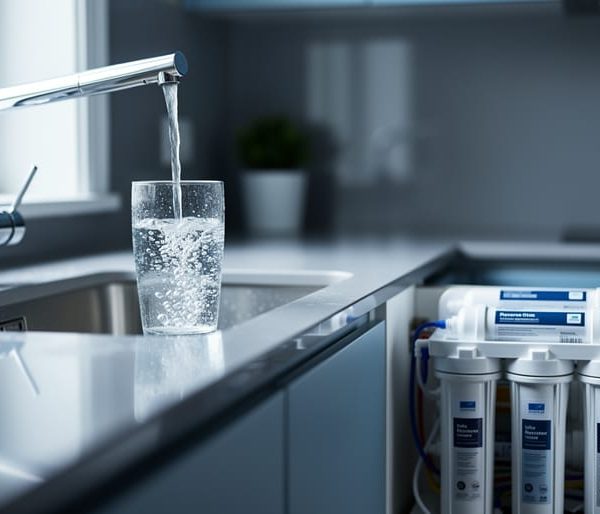
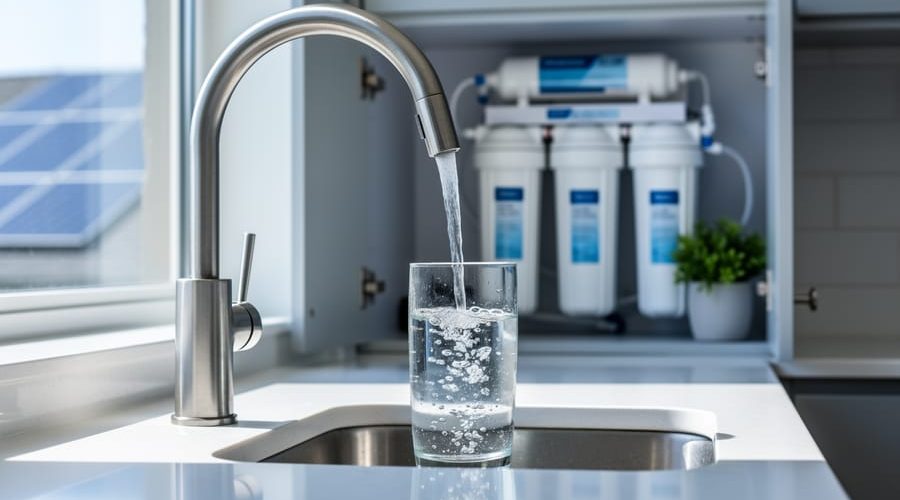
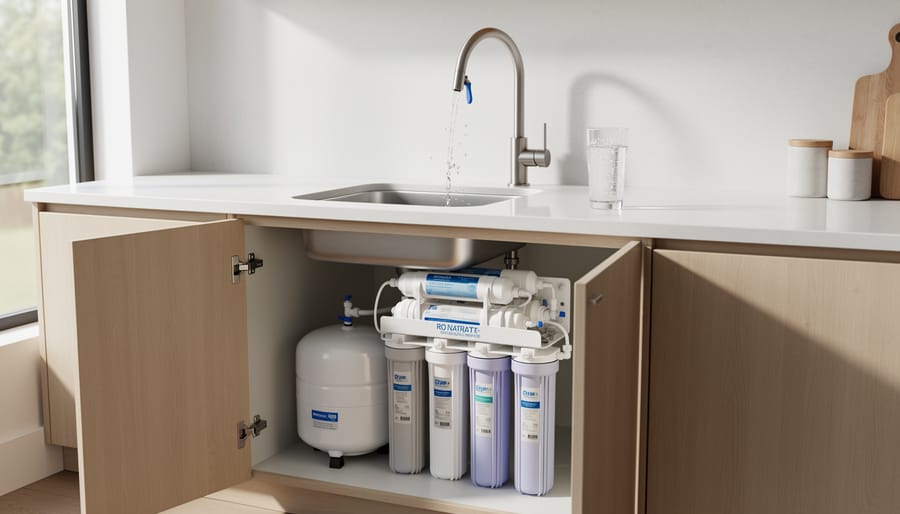
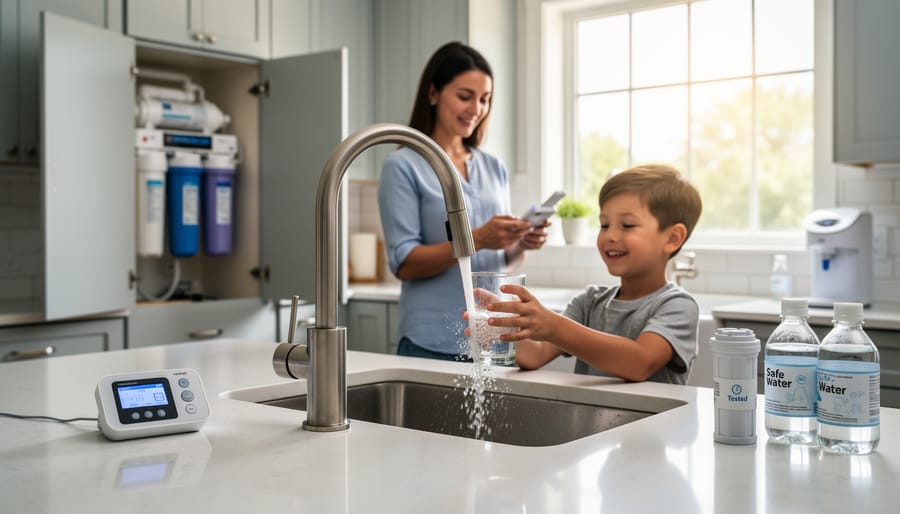
Reverse osmosis (RO) systems have become a popular under-sink solution for homeowners concerned about nitrate contamination. This proven technology works by forcing water through an ultra-fine semipermeable membrane that filters out nitrate molecules along with many other contaminants. The membrane’s tiny pores—typically around 0.0001 microns—are small enough to block nitrates while allowing pure water molecules to pass through.
One of the biggest advantages of RO systems is their impressive efficiency. These units typically remove 85-95% of nitrates from drinking water, making them highly effective for point-of-use treatment right at your kitchen sink. Unlike whole-house systems, RO units target the water you actually consume, making them a practical choice for most households. Similar to emerging filter technologies, RO systems represent a reliable way to ensure your family’s drinking water meets safety standards.
When considering installation, homeowners should expect upfront costs ranging from $200 to $500 for basic models, with professional installation adding another $100-300. Premium systems with mineralization features or larger storage tanks can cost more. The good news is that RO systems are relatively compact and fit neatly under most kitchen sinks without requiring major plumbing modifications.
Maintenance is straightforward but essential for optimal performance. Filters typically need replacement every 6-12 months, costing $50-150 annually, while the membrane itself lasts 2-3 years. Keep in mind that RO systems do produce wastewater—usually 3-4 gallons of reject water for every gallon purified—though newer models are improving this ratio. For eco-conscious homeowners, this trade-off ensures safe drinking water while managing environmental impact responsibly.
Biological Denitrification: Nature’s Answer
Nature has been removing nitrates from water for millions of years through a simple, elegant process called biological denitrification. Beneficial bacteria naturally convert harmful nitrates into harmless nitrogen gas that safely returns to the atmosphere. Think of it as recruiting tiny environmental helpers to clean your water supply.
Here’s how it works: specific bacteria thrive in low-oxygen environments where nitrates become their preferred food source. As they consume nitrates, they break them down through a natural metabolic process, releasing pure nitrogen gas as a byproduct. This is the same nitrogen that makes up about 78% of the air we breathe, making it completely safe.
Until recently, this technology was limited to large municipal water treatment facilities. However, exciting innovations have brought biological denitrification into the home. Compact bioreactor systems now allow homeowners to harness this natural process right at their point of use. These systems house colonies of denitrifying bacteria in specially designed chambers where conditions are optimized for nitrate removal.
The eco-friendly benefits are substantial. Unlike reverse osmosis systems that waste water, bioreactors operate without generating wastewater. They require minimal energy and use no chemicals. The bacteria are self-sustaining, requiring only occasional nutrient supplementation. For environmentally-conscious households seeking sustainable water treatment solutions, biological denitrification represents a promising frontier that works with nature rather than against it.
Electrodialysis Reversal: The Energy-Efficient Newcomer
Electrodialysis reversal represents an exciting breakthrough in home water treatment technology. Unlike traditional filters that trap contaminants, this innovative system uses electrical charges to literally pull nitrates and other dissolved minerals out of your water.
Here’s how it works in simple terms: the system sends a mild electrical current through your water between special membranes. These membranes act like selective doorways, allowing charged particles like nitrates to pass through while keeping clean water separate. The clever part is the “reversal” feature—the system periodically switches the electrical polarity, which automatically flushes out accumulated contaminants and keeps the membranes clean without chemicals or manual intervention.
What makes electrodialysis reversal particularly appealing for homeowners is its energy efficiency. It consumes significantly less electricity than reverse osmosis systems and wastes minimal water in the process. While traditional reverse osmosis can waste three to five gallons for every gallon of clean water produced, electrodialysis reversal operates with much less waste, making it an environmentally friendlier choice.
The technology is becoming increasingly affordable for residential applications, with several manufacturers now offering whole-house and under-sink models. It’s especially effective for well water with high nitrate levels, and because it selectively removes contaminants, it leaves beneficial minerals intact—something many homeowners appreciate for taste and health reasons.
While the initial investment may be higher than basic filtration, the long-term operational costs and minimal maintenance requirements make it an attractive option for sustainable water treatment.
What These Innovations Mean for Your Home
With innovative nitrate removal technologies now more accessible than ever, choosing the right system for your home starts with understanding your specific needs. The first step is water testing. Have your water professionally analyzed to determine your exact nitrate levels, as this will guide whether you need whole-house treatment or a simpler point-of-use system at your kitchen sink.
For households with moderate nitrate contamination, reverse osmosis systems remain the gold standard, removing up to 90-95% of nitrates while also filtering other contaminants. These systems work well for families of four or fewer who primarily need clean drinking and cooking water. However, they do produce wastewater, so consider newer high-efficiency models if water conservation aligns with your environmental values.
If you’re dealing with higher nitrate levels or prefer a whole-house solution, ion exchange systems offer robust performance. These are particularly suitable for larger households or homes in agricultural areas where nitrate exposure is consistent. Keep in mind that these systems require regular regeneration with salt, which adds to maintenance requirements.
Budget-conscious homeowners might explore emerging bioreactor technologies, which use natural bacteria to break down nitrates. While initially more expensive to install, these systems often have lower ongoing costs since they don’t require chemical regeneration or produce significant wastewater.
When evaluating options, factor in the total cost of ownership. This includes initial installation, replacement filters or media, electricity usage, water waste, and professional maintenance. A system with a higher upfront cost but minimal ongoing expenses may prove more economical over its 10-15 year lifespan.
Finally, verify that any system you choose is certified by NSF International or the Water Quality Association for nitrate reduction. This ensures the technology actually delivers on its promises, giving you peace of mind that your family’s drinking water is genuinely safe.
The Environmental Impact: Why Your Choice Matters
When choosing a nitrate removal system for your home, the environmental footprint matters as much as the technology’s effectiveness. Different treatment methods vary significantly in their sustainability profiles, and understanding these differences helps you make choices that protect both your family and the planet.
Reverse osmosis systems, while highly effective at removing nitrates, typically waste 3-4 gallons of water for every gallon of purified water they produce. This wastewater contains concentrated nitrates and other contaminants, which flows into sewage systems. For households in water-scarce regions, this inefficiency presents a real concern. Additionally, these systems require electricity to operate and generate waste brine that needs proper disposal.
Ion exchange systems face similar challenges with waste management. The regeneration process creates a concentrated salt solution containing removed nitrates, which must be discharged responsibly. Some communities restrict brine discharge into septic systems because it can harm beneficial bacteria and potentially contaminate groundwater.
Biological denitrification systems offer a more eco-friendly alternative. These innovative approaches use natural bacterial processes to convert nitrates into harmless nitrogen gas, producing minimal waste and requiring less energy than conventional methods. However, they need careful monitoring to maintain the bacterial cultures effectively.
To minimize your environmental impact while ensuring safe drinking water, consider these practical steps. Install a point-of-use system treating only drinking and cooking water rather than treating your entire household supply. This reduces water waste and energy consumption significantly. Look for systems with high recovery rates and energy-efficient designs. Regular maintenance keeps systems operating optimally, preventing unnecessary waste.
For the most sustainable approach, combine nitrate removal with preventive measures. Supporting local efforts to reduce agricultural runoff and choosing organic products helps address nitrate contamination at its source, benefiting your community’s water quality for generations to come.
What’s Coming Next in Nitrate Removal
The future of nitrate removal is looking brighter and more accessible than ever before. Researchers and water treatment companies are developing innovative solutions that could transform how homeowners protect their drinking water.
One of the most exciting developments involves smart monitoring systems that continuously track nitrate levels in real-time. These devices connect to your smartphone and alert you when nitrate concentrations rise, allowing you to take action before levels become concerning. This technology takes the guesswork out of water testing and helps you maintain optimal water quality effortlessly.
Hybrid treatment approaches are also gaining traction, combining multiple removal methods into single, compact units. These systems might pair ion exchange with biological filtration or integrate electrochemical methods with traditional filters, offering more thorough nitrate removal while reducing waste and maintenance requirements.
Scientists are also exploring nature-inspired solutions, including specialized bacteria and plant-based filtration systems that naturally break down nitrates. These biological approaches could provide eco-friendly alternatives that work continuously without electricity or chemical regeneration.
Perhaps most importantly, manufacturers are focusing on making these technologies more affordable and user-friendly. New modular designs allow homeowners to start with basic systems and expand as needed, while improved materials are extending filter lifespans and reducing replacement costs. These innovations mean effective nitrate removal is becoming a realistic option for more families, not just those with unlimited budgets.
Ensuring your family has access to clean, nitrate-free water is more achievable today than ever before, thanks to remarkable advances in water treatment technology. From proven methods like reverse osmosis and ion exchange to cutting-edge innovations such as biological denitrification and electrochemical systems, homeowners now have multiple effective options to protect their drinking water from harmful nitrate contamination.
The first step in safeguarding your household water quality is simple: get your water tested. Whether you rely on a private well or municipal supply, knowing your nitrate levels empowers you to make informed decisions about treatment solutions. As nitrate pollution continues to challenge communities worldwide, particularly in agricultural regions, staying informed about available technologies helps you choose the right system for your specific needs and budget.
Modern innovations are making water treatment more efficient, sustainable, and accessible for everyday homeowners. These advancements not only improve water safety but also support eco-friendly living by reducing waste and energy consumption. Remember, safe drinking water is fundamental to your family’s health and well-being, and with today’s treatment options, achieving consistently pure, nitrate-free water at home is well within reach.