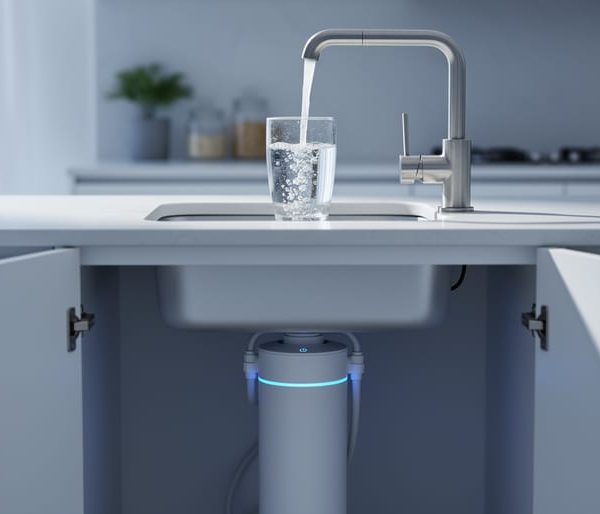
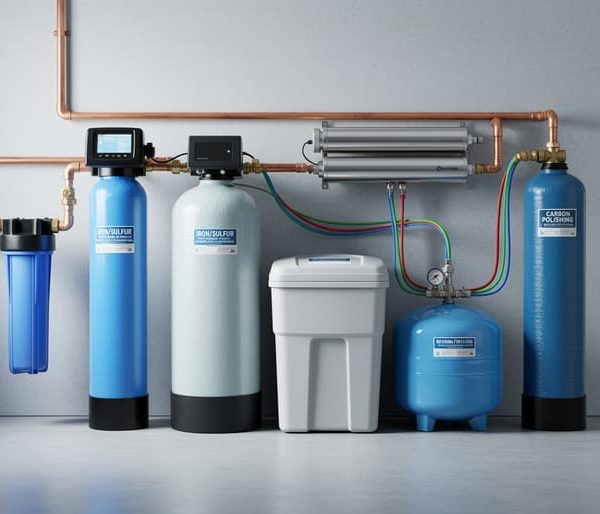
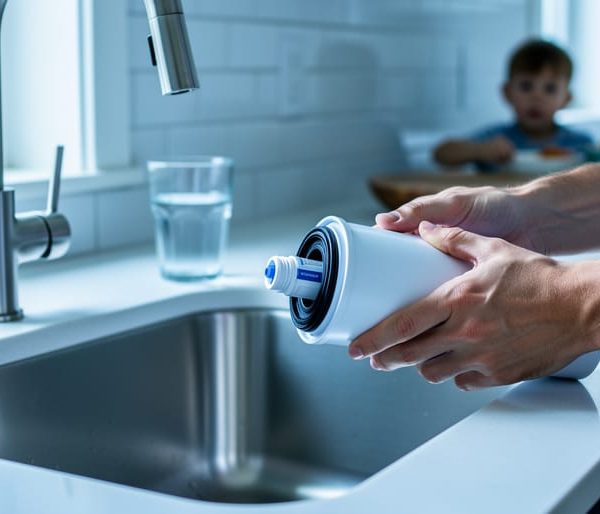
Verify NSF certification directly on the NSF website before purchasing any whole house water filtration system—manufacturers can claim certification without legitimate credentials, and independent verification protects you from misleading marketing. Look for the specific NSF/ANSI standard numbers (42, 53, 401, or P473) on both the product label and NSF’s public database, as each addresses different contaminants from chlorine taste to emerging chemicals like PFAS.
Test your water first through a certified laboratory to identify actual contaminants in your supply, then match those results to NSF standards that target your specific concerns. A system certified for chlorine reduction won’t help if your real problem is heavy metals or pharmaceuticals—knowing what’s in your water prevents expensive mistakes and ensures the filtration technology matches your household’s needs.
Calculate the true cost beyond the initial price tag by factoring in filter replacement frequency, annual maintenance, and water waste for systems with backwash cycles. NSF certification guarantees performance claims, but doesn’t address operational costs that can exceed $500 annually for some systems while others maintain efficiency for under $150.
Understand that NSF certification isn’t a one-size-fits-all stamp of approval—it’s a specific validation that a product does exactly what it claims for particular contaminants. This distinction matters because a certified system might excel at removing sediment and chlorine while completely ignoring the arsenic or nitrates actually threatening your water supply. The certification you need depends entirely on your water’s unique contamination profile.
What NSF Certification Really Means for Your Water

The Testing Process Behind the Badge
When a whole house filtration system earns NSF certification, it has survived a rigorous gauntlet of independent testing that goes far beyond what manufacturers test in their own labs. Understanding this process helps you see why that little badge carries so much weight.
NSF testing begins with materials safety evaluation. Every component that touches your water gets scrutinized to ensure it won’t leach harmful chemicals or contaminants back into your drinking supply. This matters because some uncertified filters actually introduce problems while claiming to solve them. The testing labs examine plastics, metals, and filter media under conditions that simulate years of real-world use.
Next comes structural integrity testing, where systems face pressure cycling, temperature variations, and stress tests that mimic decades of daily operation. A filter that falls apart after six months doesn’t help anyone, regardless of how well it performed initially.
The most critical phase evaluates actual contaminant reduction performance. NSF doesn’t just accept manufacturer data sheets. They introduce specific contaminants at challenging concentrations, then measure what comes out the other end. For NSF/ANSI 53 certification, systems must reduce lead by 99 percent and cysts by 99.95 percent, consistently, throughout the filter’s rated lifespan.
This independent verification matters because marketing promises are easy to make but hard to verify on your own. When you see genuine NSF certification, you’re seeing proof that an impartial laboratory confirmed those claims under controlled conditions. That transforms vague assurances into measurable accountability, giving you confidence that your investment will actually protect your family’s water quality.
NSF Standards That Apply to Whole House Systems
When shopping for a whole house water filtration system, you’ll encounter various NSF certifications. Understanding what these standards actually test helps you choose a system that addresses your specific water concerns.
NSF/ANSI Standard 42 focuses on aesthetic qualities like taste, odor, and chlorine reduction. If your municipal water smells like a swimming pool or has an unpleasant taste, systems certified to this standard can help. While this improves your drinking experience, it doesn’t address health-related contaminants.
NSF/ANSI Standard 53 is where health protection comes in. This certification verifies that a system reduces specific health-related contaminants including lead, certain pesticides, volatile organic compounds, and cysts like Cryptosporidium and Giardia. For whole house systems, this is arguably the most important certification to look for, as it ensures your water is safer throughout your entire home.
NSF/ANSI Standard 55 covers ultraviolet (UV) treatment systems that use light to deactivate harmful microorganisms like bacteria and viruses. If you have well water or live in an area with biological contamination concerns, UV components certified to this standard provide an extra layer of protection.
NSF/ANSI Standard 401 represents the cutting edge in water treatment, testing for emerging contaminants that weren’t on anyone’s radar until recently. This includes prescription medications, over-the-counter drugs, and certain herbicides that can enter water supplies. As research continues revealing how these substances affect human health and aquatic ecosystems, Standard 401 certification becomes increasingly valuable for environmentally-conscious homeowners.
Most comprehensive whole house systems carry multiple certifications. A system certified for Standards 42, 53, and 401 provides broad-spectrum protection, addressing everything from aesthetic issues to serious health concerns while tackling modern contaminants that standard municipal treatment may miss.
Contaminants NSF-Certified Systems Actually Remove
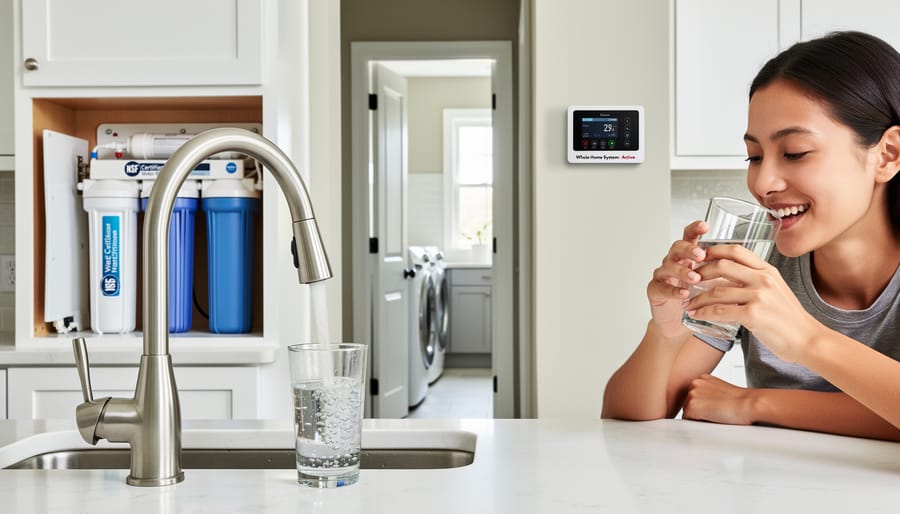
Heavy Metals and Industrial Chemicals
When it comes to protecting your home from toxic contaminants, understanding NSF standards for heavy metals and industrial chemicals is essential. NSF/ANSI Standard 53 specifically targets health-affecting contaminants like lead, mercury, arsenic, and chromium-6—substances that can cause serious health problems even at low concentrations.
Lead remains a major concern, especially in homes with older plumbing. Quality heavy metal water filters certified under NSF 53 must reduce lead by at least 99%, bringing levels well below EPA limits. Similarly, these systems tackle mercury from industrial discharge and arsenic found naturally in groundwater or from agricultural runoff.
NSF/ANSI Standard 401 addresses emerging contaminants that traditional standards don’t cover, including volatile organic compounds (VOCs) like benzene and toluene from industrial pollution. This relatively new certification also targets pharmaceutical residues and herbicides, reflecting our evolving understanding of water safety.
For homeowners, choosing systems certified for both standards ensures comprehensive protection against both established threats and newly identified contaminants—a forward-thinking approach that aligns with sustainable living practices and long-term health protection.
Chlorine, Taste, and Aesthetic Issues
NSF 42 certification focuses on the aesthetic qualities of your drinking water—the characteristics you can taste, smell, and see. This standard verifies that a filtration system effectively reduces chlorine, sediment, and particles that affect your water’s appearance and flavor. While these contaminants aren’t necessarily health hazards, they significantly impact your daily water experience.
Chlorine, commonly added to municipal water supplies for disinfection, often leaves an unpleasant taste and odor that can make drinking water unappealing. NSF 42 certified systems must demonstrate their ability to reduce chlorine taste and odor by at least 50 percent, though many high-quality systems achieve much higher reduction rates. Effective chlorine removal transforms your water from something you tolerate to something you actually enjoy drinking.
Beyond chlorine, NSF 42 addresses particulate matter like sediment, rust, and turbidity that cloud your water. These systems use mechanical filtration—typically carbon filters or sediment filters—to trap particles and improve water clarity. The result is clearer, better-tasting water from every tap in your home, encouraging healthier hydration habits while reducing reliance on bottled water.
Emerging Contaminants and Pharmaceuticals
Modern water supplies face a new generation of contaminants that traditional filtration wasn’t designed to handle. Prescription medications, hormones, herbicides, and pesticides increasingly find their way into municipal water systems, often passing through conventional treatment plants undetected. While these substances typically exist in trace amounts measured in parts per billion or trillion, their long-term health effects remain under investigation.
The NSF 401 standard specifically addresses these emerging contaminants, testing filtration systems against 15 challenging substances including ibuprofen, naproxen, estrone, bisphenol A (BPA), and common herbicides like 2,4-D. This certification represents cutting-edge water innovation, designed to meet modern concerns that weren’t on anyone’s radar when older standards were developed.
For eco-conscious homeowners, NSF 401 certification offers reassurance that your whole house system tackles contemporary pollutants beyond basic sediment and chlorine. Not all certified systems include NSF 401 testing, so specifically look for this designation when comparing options. Systems with this certification use advanced filtration media like activated carbon blocks or catalytic carbon designed to capture these complex chemical compounds, providing comprehensive protection for your household water supply.
How to Read NSF Certifications on Product Labels
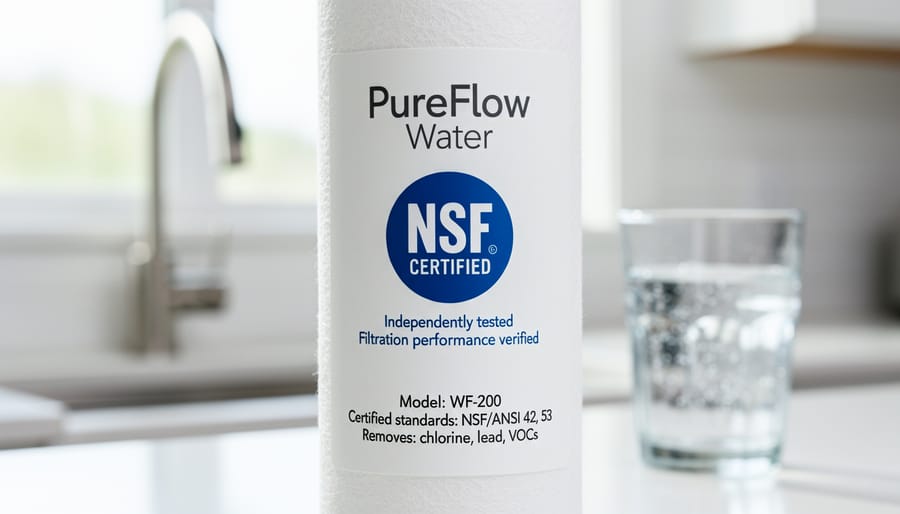
Verified vs. Tested vs. Certified: The Critical Differences
When shopping for whole house water filtration systems, you’ll encounter confusing language around NSF standards. Understanding these distinctions protects you from misleading marketing claims.
NSF certified means an independent third-party organization has rigorously tested the product and verified it meets specific performance standards. The manufacturer pays for ongoing testing and annual facility inspections. You can verify genuine certification by searching the NSF database using the product’s certification number.
Products labeled “tested to NSF standards” haven’t undergone official certification. Manufacturers may have conducted their own testing using NSF protocols, but without independent verification, these claims lack accountability. There’s no third-party oversight ensuring accuracy or ongoing compliance.
Similarly, phrases like “meets NSF specifications” or “designed to NSF standards” are red flags. These vague statements suggest the product might perform similarly to certified systems, but you have no guarantee.
The difference matters for your health and investment. Certified systems must consistently remove contaminants as advertised, while uncertified products may underperform without consequences. For eco-conscious homeowners committed to safe, sustainable water solutions, choosing genuinely NSF certified systems ensures you’re getting proven protection rather than empty promises. Always verify certification numbers directly through NSF’s official website before purchasing.
Top NSF-Certified Whole House Water Filtration Systems
Best for Municipal Water Treatment
If you receive water from a municipal source, you’re dealing with treated water that typically contains disinfectants like chlorine or chloramine. While these chemicals keep water safe during transport, they can affect taste, smell, and may form byproducts you’d rather not drink. The good news is that specific whole house systems target these exact concerns.
For city water, look for systems with NSF/ANSI Standard 42 certification, which confirms chlorine taste and odor reduction. If your municipality uses chloramine (a more stable disinfectant that’s harder to remove), you’ll need a system specifically certified for this purpose, often featuring catalytic carbon filters that break down chloramine effectively.
Many top-performing municipal water systems also carry NSF 53 certification for removing potential contaminants like lead, which can leach from aging pipes between the treatment plant and your home. Some advanced options include NSF 401 certification, addressing emerging contaminants like pharmaceuticals and herbicides that standard municipal treatment may not fully eliminate.
Carbon-based filtration is the workhorse technology for municipal water treatment, efficiently handling chlorine, volatile organic compounds, and improving overall water quality. Systems designed for city water typically require less frequent maintenance than those tackling well water, though you’ll still need to replace filters according to manufacturer specifications to maintain certification performance levels.
Best for Well Water Protection
Well water presents unique challenges that city water users rarely encounter—sediment, naturally occurring bacteria, iron, manganese, and sometimes even hydrogen sulfide that gives water that unpleasant rotten egg smell. The right whole house system for well water should combine multiple treatment stages with NSF 53 certification for contaminant reduction and NSF 55 for UV water purifier systems that tackle bacteria and viruses without chemicals.
Look for systems featuring sediment pre-filters (typically 5-20 microns) to protect subsequent filtration stages, activated carbon filters with NSF 53 certification for removing volatile organic compounds and heavy metals, and UV purification with NSF 55 certification for microbiological safety. Some advanced models include specialized media for iron and sulfur removal, which is especially important if you’ve noticed staining on fixtures or laundry.
The best well water systems are sized appropriately for your household’s flow rate demands—typically 10-15 gallons per minute for average homes. Since well water quality varies dramatically by location, consider having your water professionally tested before selecting a system. This ensures you’re addressing your specific contaminants rather than paying for unnecessary features, making your investment both effective and eco-friendly.
Best for Maximum Contaminant Removal
When you’re dealing with challenging water conditions or want the most comprehensive protection available, look for systems that hold multiple NSF certifications, particularly including NSF/ANSI 401. This newer standard addresses emerging contaminants that weren’t previously regulated, including prescription medications, over-the-counter pharmaceuticals, and certain herbicides that can slip through basic filtration.
High-performance whole house systems typically combine multiple filtration technologies to tackle the widest range of contaminants. These often feature a multi-stage approach with sediment pre-filters, activated carbon blocks, and sometimes catalytic carbon or specialized media. The best systems hold certifications across NSF 42, 53, 401, and potentially 372 for lead-free components.
What sets these systems apart is their ability to remove both common issues like chlorine and sediment alongside more concerning substances such as PFAS (forever chemicals), pesticides, and pharmaceutical residues. While they represent a higher initial investment, usually ranging from $2,000 to $5,000 installed, they provide the most thorough protection for families particularly concerned about vulnerable household members like children, elderly individuals, or those with compromised immune systems.
Always verify that the specific contaminants you’re concerned about appear on the system’s NSF certification documentation, not just marketing materials.
The True Cost of NSF-Certified Systems
Understanding the true cost of an NSF-certified whole house water filtration system helps you make a smart investment decision. Let’s break down what you’ll actually spend, both initially and over time.
Upfront costs for NSF-certified systems typically range from $1,500 to $5,000, depending on the certification levels and filtration technologies included. Systems certified for sediment and chlorine removal (NSF/ANSI 42) generally cost less than those also certified for lead, mercury, and other contaminants (NSF/ANSI 53 and 401). This initial price difference reflects the more sophisticated filtration media and rigorous testing required for broader contaminant removal.
Installation adds another $300 to $1,500 to your total investment. Professional installation ensures your system meets local plumbing codes and performs optimally, which is especially important given the complexity of whole house systems. Some straightforward models work for confident DIYers, but most homeowners benefit from professional expertise.
Non-certified systems may appear cheaper initially, often costing 30-50% less. However, this apparent savings comes with uncertainty. Without independent verification, you’re trusting manufacturer claims that may not reflect real-world performance. This gamble could mean paying for filtration that doesn’t actually deliver clean water.
Ongoing maintenance represents the long-term investment. NSF-certified systems require filter replacements every 6-12 months, costing approximately $200-$600 annually depending on your system and water usage. The certification documentation clearly states filter lifespan and replacement intervals, removing guesswork from maintenance schedules.
Non-certified systems might advertise lower filter costs, but without verified performance data, you can’t confirm whether those filters actually maintain effectiveness throughout their supposed lifespan.
The long-term value equation favors certified systems. You’re paying for independently verified performance, transparent maintenance requirements, and the peace of mind that your investment genuinely protects your household water quality. When you consider the potential health costs of inadequate filtration or the expense of replacing an ineffective system, NSF certification represents smart financial planning alongside environmental responsibility.
Installation and Maintenance Requirements
Installing an NSF-certified whole house water filtration system typically requires professional assistance, though the complexity varies by system type. Most installations involve connecting the filter to your main water line, usually near where water enters your home. You’ll need adequate space for the unit, proper drainage for backwashing systems, and sometimes electrical outlets for UV or electronic components. Professional installers ensure proper flow rates and pressure settings while maintaining your system’s NSF certification validity.
The installation process generally takes between two to six hours, depending on your home’s plumbing configuration and the system’s complexity. Many homeowners find that professional installation, while adding upfront costs, provides peace of mind and ensures warranty coverage remains intact.
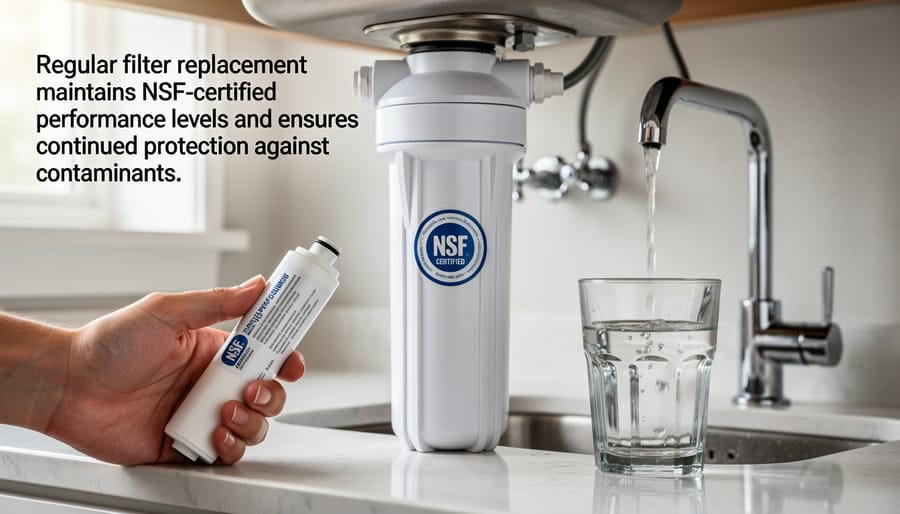
Maintenance requirements are straightforward but essential for keeping your NSF certification meaningful. The most critical task is following manufacturer-specified filter replacement schedules, which typically range from six months to two years depending on water quality and usage volume. Using non-certified replacement filters voids your system’s NSF certification, so always purchase filters bearing the same NSF standards as your original system.
Beyond filter changes, maintenance includes periodic system checks for leaks, monitoring water pressure, and cleaning pre-filters if equipped. Carbon-based systems may require annual media replacement, while reverse osmosis membranes can last three to five years with proper care. UV systems need annual bulb replacements to maintain disinfection effectiveness.
Document all maintenance activities and keep receipts for replacement components. This record proves you’ve maintained certification standards should questions arise about water quality or warranty claims. Many manufacturers offer maintenance reminders through apps or email, making it easier to stay on schedule and protect both your investment and your family’s water quality.
Environmental Impact: The Eco-Living Perspective
One of the most compelling reasons to install an NSF-certified whole house water filtration system is its positive environmental impact. By providing clean, filtered water from every tap in your home, these systems virtually eliminate the need for single-use plastic bottles. The average household can prevent hundreds of plastic bottles from entering landfills and oceans each year, making this a meaningful step toward sustainable living.
However, it’s important to take a balanced view of the environmental equation. While whole house systems dramatically reduce plastic waste, they do require periodic filter replacements. The frequency depends on your water quality and usage, typically ranging from six months to several years for different filter stages. When evaluating systems, consider both the lifespan of filter media and disposal options.
Different filter materials have varying environmental footprints. Activated carbon filters, commonly used in NSF-certified systems, are generally biodegradable and can sometimes be composted or repurposed for garden use after their filtration life ends. Ceramic filters offer exceptional longevity and can often be cleaned and reused multiple times before replacement. On the other hand, reverse osmosis membranes and certain specialty media require proper disposal, as they cannot be composted.
Many manufacturers now offer recycling programs for spent filters, recognizing the importance of closed-loop sustainability. When researching NSF-certified systems, ask about take-back programs and whether replacement filters come with prepaid shipping labels for responsible disposal.
The environmental benefits extend beyond waste reduction. These systems also decrease the carbon footprint associated with bottled water transportation and production. By choosing an NSF-certified system with long-lasting, recyclable filter media, you’re making a choice that benefits both your household and the planet while ensuring your water meets rigorous safety standards.
Investing in an NSF certified whole house water filtration system delivers genuine peace of mind that your family’s water meets rigorous, independently verified safety standards. Unlike unsubstantiated marketing promises, NSF certification provides transparent proof that a system removes the specific contaminants it claims to address. This verification is worth the investment when you consider the long-term health implications of daily exposure to untreated water.
Your selection process should begin with testing your water supply to identify exactly which contaminants you’re dealing with. Armed with this information, you can choose a system certified for the NSF standards that match your needs—whether that’s NSF/ANSI 53 for lead reduction, NSF/ANSI 42 for aesthetic improvements, or NSF P231 for microplastics removal. Always verify certification claims directly on the NSF database rather than relying solely on manufacturer websites.
As you evaluate options, prioritize verified performance data over compelling advertising. Look for the NSF certification mark, check which specific contaminants are certified for removal, and compare independent test results. This approach protects you from greenwashing and ensures your investment delivers real results.
Start today by testing your water, identifying your priorities, and researching certified systems that align with your household’s needs. Your commitment to verified quality creates a healthier home while supporting innovation in sustainable water treatment.