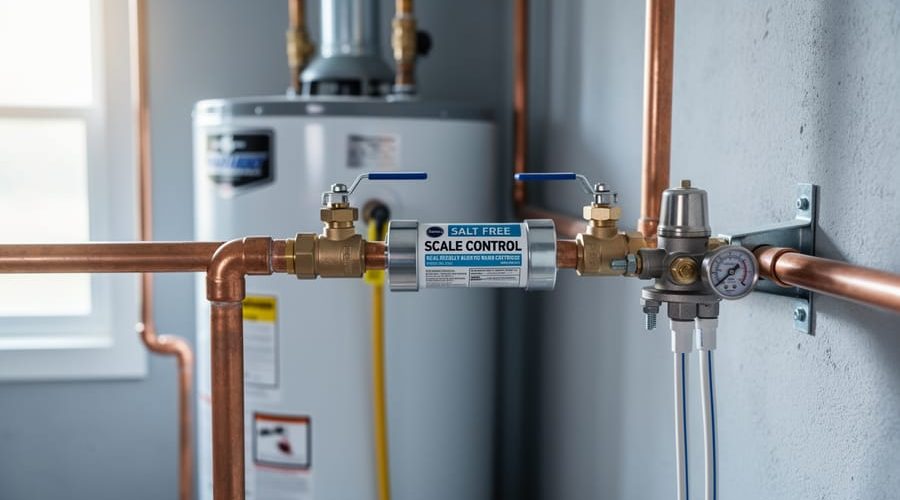
Install your salt-free scale control system on the main water line before any branches split off, positioning it after your pressure regulator and before your water heater to protect all fixtures and appliances throughout your home. Check your water hardness level first—these systems work best with hardness between 10-25 grains per gallon, and knowing your baseline helps you set realistic expectations for scale reduction rather than complete elimination.
Flush the system for five minutes during initial setup to clear manufacturing debris, then mark your calendar for quarterly filter checks and annual media replacement, which takes just 15 minutes and requires no special tools. Unlike water softeners that discharge salt brine, these eco-friendly systems use template-assisted crystallization technology to transform scale-forming minerals into harmless microscopic crystals that flow through your pipes instead of building up as crusty deposits.
Maintain proper water pressure between 40-80 PSI and temperature below 120°F at the system inlet, as extreme conditions reduce the media’s effectiveness and shorten its lifespan. Most homeowners notice reduced scale buildup within three weeks, though existing scale takes 3-6 months to gradually diminish—patience is essential since these systems prevent new scale formation rather than aggressively removing old deposits like chemical descalers.
What Makes Salt-Free Scale Control Different from Traditional Water Softeners
Many homeowners assume all water treatment systems work the same way, but salt-free scale control operates on an entirely different principle than traditional water softeners. Understanding this distinction helps you choose the right solution for your home.
Traditional water softeners remove hardness minerals like calcium and magnesium from your water through a process called ion exchange. They replace these minerals with sodium, which requires regular salt additions and produces wastewater during regeneration cycles. While effective at eliminating scale, this process fundamentally changes your water’s composition.
Salt-free systems take a different approach called conditioning rather than softening. The most common technology, Template Assisted Crystallization (TAC), doesn’t remove minerals from your water. Instead, it transforms them into harmless microscopic crystals that can’t stick to pipes, appliances, or fixtures. Think of it as neutralizing the minerals rather than eliminating them. Other salt-free technologies use electromagnetic fields or catalytic media to achieve similar results, but TAC remains the most widely adopted method.
This mineral-preserving approach offers significant environmental and health advantages. Since these systems don’t require salt, you eliminate the ongoing cost and hassle of purchasing and storing heavy bags. More importantly, you avoid discharging salty wastewater into septic systems or municipal treatment facilities, reducing your household’s environmental footprint.
From a health perspective, keeping beneficial minerals in your drinking water provides nutritional value that softened water lacks. Calcium and magnesium contribute to your daily mineral intake and many people prefer the taste of mineral-rich water. Salt-free systems also avoid adding sodium to your water supply, an important consideration for households monitoring salt intake for health reasons.
The trade-off is that conditioned water may still leave some spotting on dishes or glassware, though it prevents the damaging scale buildup that threatens plumbing and appliances. For eco-conscious homeowners prioritizing sustainability alongside scale prevention, this compromise often proves worthwhile.
How Salt-Free Systems Prevent Scale Buildup
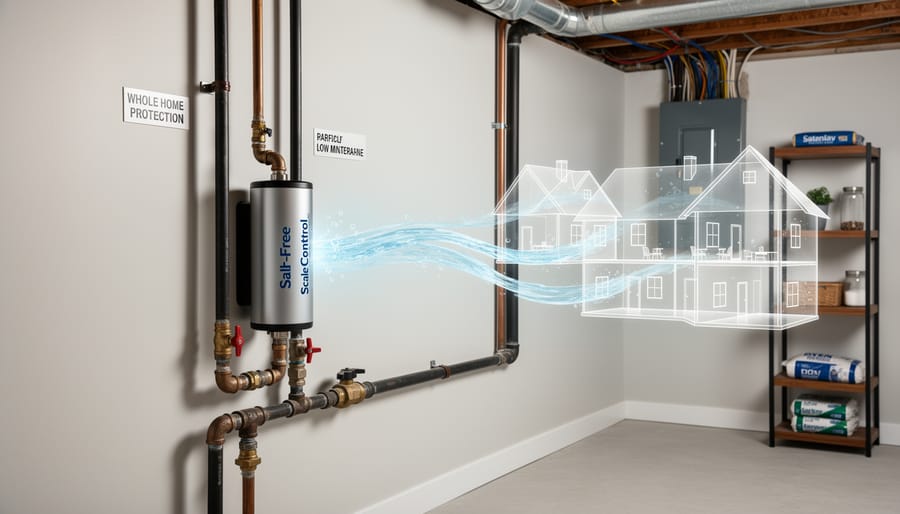
Understanding how salt-free systems prevent scale buildup doesn’t require a chemistry degree. Think of it this way: hard water contains dissolved minerals like calcium and magnesium floating invisibly in your water, much like sugar dissolved in tea. Without treatment, these minerals eventually come out of solution when water heats up or evaporates, forming that stubborn white crust on your faucets and inside your pipes.
Salt-free systems use a process called Template Assisted Crystallization, or TAC. Here’s where the magic happens: as water flows through the system’s special media, the dissolved minerals encounter tiny templates that act like seed crystals. These templates encourage the minerals to transform from their dissolved state into microscopic crystal particles right there in the water flow.
Think of it like making rock candy, but in reverse. Instead of sugar crystals slowly growing on a string, the minerals quickly form tiny crystals that stay suspended in the water. These crystal particles are so small they remain in suspension, flowing right through your plumbing without sticking to anything.
The beauty of this technology lies in what these crystals cannot do. Because they’ve already formed into stable structures, they’ve lost their ability to grab onto pipe walls, heating elements, or appliance surfaces. They simply travel through your plumbing system and exit through your drains, carrying the scale-forming minerals away harmlessly.
This eco-friendly approach means your water retains its beneficial minerals for drinking while protecting your plumbing and appliances from damaging buildup. No salt, no electricity, no waste water, just a clever physical transformation that keeps your home’s water system running smoothly.
Pre-Installation: What You Need to Know Before You Buy
Testing Your Water Hardness and Quality
Before installing a salt-free scale control system, testing your water is an essential first step that helps ensure the technology will work effectively for your home. You can purchase a simple test kit from most hardware stores or request a professional water analysis from your local utility or water treatment specialist.
Salt-free systems typically perform best with water hardness levels between 5 and 25 grains per gallon (GPG). While many systems can handle hardness up to 75 GPG, effectiveness may diminish at the higher end of this range. If your water tests above this threshold, you might need to explore additional treatment options or consider whether a salt-free approach is right for your situation.
It’s equally important to test for iron and manganese content. These minerals can interfere with the crystallization process that salt-free systems rely on to prevent scale. Generally, water with iron levels above 0.3 parts per million (ppm) or manganese above 0.05 ppm may require pre-treatment filtration before the scale control system. Understanding your water’s unique chemistry ensures you choose the right eco-friendly solution that will actually deliver results rather than disappointing performance down the road.
Sizing Your System Correctly
Choosing the right size for your salt-free scale control system ensures optimal performance and protects your entire home effectively. Think of it like selecting the right water heater—too small means insufficient coverage, while oversizing wastes money without added benefits.
Start by calculating your peak flow rate, which is the maximum amount of water your household uses simultaneously. A typical shower uses 2-2.5 gallons per minute, bathroom faucets about 1.5 gallons per minute, and toilets roughly 3 gallons per flush. For a family of four with two bathrooms, estimate what might run at once during your busiest morning routine. If two showers, one toilet, and a kitchen faucet could operate simultaneously, you’d need a system handling approximately 8-10 gallons per minute.
Most residential systems range from 10 to 20 gallons per minute capacity. A household with 2-3 bathrooms typically needs a 12-15 gallon per minute system, while larger homes with 4+ bathrooms should consider 18-20 gallon per minute models. Remember, these eco-friendly systems work best when properly sized—undersized units won’t treat all your water effectively, potentially allowing scale buildup in some fixtures. Consult your system’s specification sheet and consider your home’s fixture count rather than just square footage for accurate sizing.
Understanding Installation Location Requirements
Choosing the right location for your salt-free scale control system ensures optimal performance and easy upkeep. Install the unit on your main water line after the water meter but before any branching pipes, allowing it to treat all water entering your home—similar to positioning a whole-home water treatment system. This placement protects all your fixtures and appliances from scale buildup.
Temperature matters for these eco-friendly systems. Install in areas where water temperatures remain between 40-90°F, avoiding locations near water heaters or in unheated spaces that might freeze. Most basements, utility rooms, or garages work perfectly.
Leave adequate clearance around the unit—typically 12-18 inches on all sides—for filter cartridge changes and periodic inspections. Accessibility is key; you’ll need comfortable working space for quarterly or semi-annual maintenance tasks.
While most salt-free systems don’t require drainage like traditional softeners, check your specific model’s requirements. Some designs feature minimal backwash needs, so proximity to a floor drain provides added convenience without being essential for operation.
Step-by-Step Installation Process
Tools and Materials You’ll Need
Before beginning your installation, gather these essential items to ensure a smooth process. You’ll need an adjustable wrench and pipe cutter for connecting the system to your water line. Teflon tape or pipe thread sealant will create watertight seals at connection points. Have a bucket and towels handy to catch any residual water when cutting into existing plumbing.
The system itself typically includes the main treatment unit, mounting brackets, and inlet/outlet fittings. Most installations require standard copper or PEX pipe fittings that match your home’s plumbing diameter, usually half-inch or three-quarter-inch.
Optional items depend on your configuration: a bypass valve allows water flow during maintenance, while a pressure gauge helps monitor system performance. If installing outdoors or in unheated spaces, consider insulation sleeves to protect against freezing temperatures.
For whole-house installations, you may need additional piping sections to position the unit properly. Always verify compatibility with your existing plumbing materials before purchasing connectors. This eco-friendly water treatment solution requires minimal specialized tools, making it accessible for confident do-it-yourself homeowners.
Shutting Off Water and Preparing Your Plumbing
Before installing your salt-free scale control system, proper preparation ensures a smooth process and protects your home from water damage. Start by locating your main water shutoff valve, typically found near the water meter or where the supply line enters your home. Turn it clockwise until completely closed, then open a faucet at the lowest point in your house to drain residual water from the pipes. This pressure release is essential for safe work.
Next, open faucets on upper floors to help water drain completely from your plumbing lines. Allow 15-20 minutes for thorough drainage. Place towels and a bucket beneath your planned installation area, as some residual water will escape when you disconnect pipes.
Clear a comfortable workspace around your installation site, removing any stored items. Good lighting makes the DIY installation much easier, so consider adding a work lamp if needed.
To minimize household disruption, notify family members about the water shutoff timeline. Fill a few pitchers with drinking water beforehand, and plan the installation during a time when bathroom and kitchen access won’t be critically needed. Most installations take 2-4 hours for the average homeowner, making this an achievable weekend project.
Mounting and Connecting the System
Before mounting your scale-free system, shut off the main water supply and relieve pressure by opening the lowest faucet in your home. Choose an installation location on the main water line after the water meter but before any branch lines, ensuring adequate space for the unit and future filter cartridge changes.
Using a pipe cutter rather than a hacksaw provides cleaner cuts with less debris entering your plumbing. Measure twice before cutting to ensure your system fits properly between connection points. Most systems require removing a section of pipe equal to the unit’s length plus the compression fittings.
Install bypass valves on both sides of the system. These valves let you isolate the unit for maintenance without shutting off water to your entire home—a feature you’ll appreciate during filter changes. Many homeowners skip this step to save money, but it’s a decision they often regret later.
When making connections, avoid over-tightening fittings, which can crack plastic components or damage rubber seals. Hand-tighten compression fittings, then use a wrench for just one additional quarter turn. Apply plumber’s tape to threaded connections, wrapping clockwise when viewing the pipe end-on.
Before restoring full pressure, slowly open the main valve while checking all connections for leaks. Keep paper towels handy to spot even minor drips. Run water through the system for several minutes to flush manufacturing residues and check that flow rate meets your household needs.
Common mistakes include installing the unit backwards—most have directional flow arrows—and forgetting to note the installation date for future maintenance tracking.
System Activation and Initial Testing
Once your salt-free system is connected, open the main water supply slowly and check all connection points for leaks. Run cold water through several faucets for 5-10 minutes to flush out any installation debris and allow the media inside your system to fully saturate. This initial flushing is essential for optimal performance. Watch for steady water flow without unusual sounds or pressure drops. Most template-assisted media systems don’t require a traditional break-in period, but you may notice gradual improvement in scale prevention over the first few weeks as the conditioning media becomes fully activated. During this time, your system is establishing its scale-prevention properties throughout your plumbing. Check connections again after 24 hours of use to ensure everything remains secure.
Ongoing Care and Maintenance Requirements
When (and How) to Replace Media Cartridges
One of the most appealing aspects of scale-free systems is their minimal upkeep, with media cartridge replacement being the primary maintenance task you’ll face. The TAC (Template Assisted Crystallization) media inside your system typically lasts between 3 to 5 years, depending on your water quality and household usage. This lifespan makes these systems far less demanding than traditional water softeners that require monthly salt refills.
How do you know when it’s time for a replacement? Watch for visible scale buildup returning to your fixtures, reduced water flow through the system, or simply mark your calendar based on the manufacturer’s recommended replacement schedule. Some advanced models include indicator lights that alert you when the media is nearing the end of its effective life.
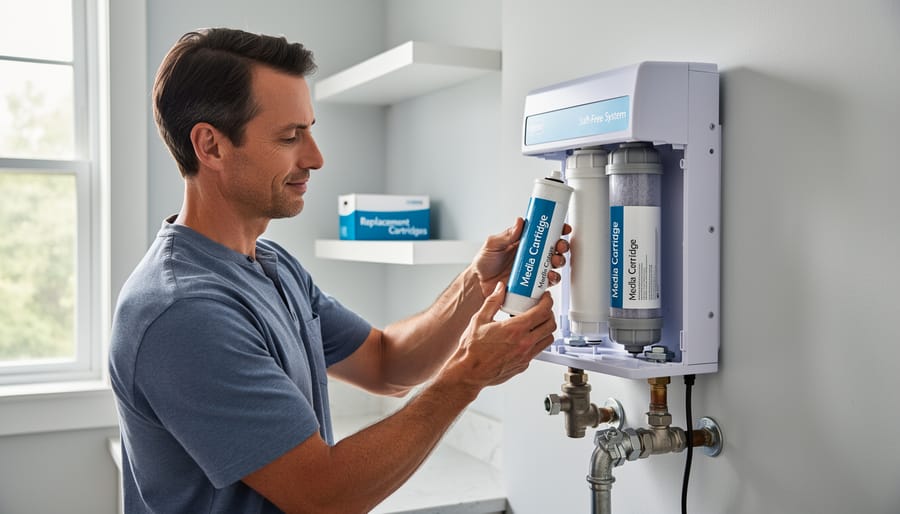
The replacement process itself is straightforward and can usually be completed in under an hour without professional help. You’ll shut off the water supply, relieve system pressure, unscrew the cartridge housing, remove the old media cartridge, and install the new one. Most manufacturers design their systems with user-friendly cartridge access, requiring only basic tools. This simple maintenance routine, performed once every few years, represents a significant time and effort savings compared to conventional water treatment systems.
Pre-Filter Maintenance
Sediment pre-filters serve as your scale-free system’s first line of defense, catching particles like sand, rust, and dirt before they reach the main conditioning unit. Think of them as a protective shield that extends your system’s lifespan and maintains its effectiveness. Without proper pre-filtration, sediment buildup can reduce water flow and compromise the scale prevention media inside your main unit.
How often you’ll need to check these pre-filters depends entirely on your incoming water quality. If you have well water or older plumbing with visible sediment, inspect your pre-filter monthly during the first few months to establish a baseline. Most homeowners with municipal water find that checking quarterly works well, though you might need replacement every three to six months. Notice a drop in water pressure at your faucets? That’s usually your pre-filter telling you it’s time for attention. Replacement filters are inexpensive and swapping them takes just minutes, making this simple maintenance task a smart investment in protecting your entire water treatment system.
Monitoring System Performance
Regular monitoring helps ensure your salt-free scale control system continues protecting your home effectively. Like other water treatment systems, simple routine checks can catch potential issues early.
Start with monthly visual inspections of your fixtures and appliances. Check faucet aerators, showerheads, and visible pipes for white, crusty buildup. While some minimal scale may appear over time, you shouldn’t see the thick, chalky deposits common in untreated hard water. If buildup increases noticeably, your system may need attention.
Monitor water flow consistency throughout your home. Reduced pressure at specific fixtures often indicates scale accumulation restricting flow. Compare flow rates between different taps to identify problem areas.
Examine the system unit itself during inspections. Look for any leaks, unusual sounds, or visible damage to housing and connections. If your system includes a media tank, check that water flows freely through the unit without backing up or bypassing.
Keep a simple log noting when you check the system and any observations. This record helps identify gradual changes that might otherwise go unnoticed and provides valuable information if professional service becomes necessary.
Troubleshooting Common Issues
Reduced Water Pressure
If your salt-free scale control system isn’t delivering adequate water pressure, several common culprits might be to blame. Clogged pre-filters are often the first issue to investigate—mineral buildup or sediment accumulation can restrict water flow over time. Check your pre-filter and clean or replace it according to manufacturer guidelines, typically every three to six months depending on your water quality.
An undersized system for your household’s water demand can also cause pressure drops. Review your system’s specifications to ensure it matches your home’s flow rate requirements, usually measured in gallons per minute. During installation, incorrect pipe sizing or too many bends in the plumbing can create unnecessary resistance.
Before calling a professional, try these quick fixes: inspect all connections for partial closures or debris, ensure bypass valves are fully open during normal operation, and verify that your home’s main water pressure meets the system’s minimum requirements (typically 25-30 PSI). Sometimes simple adjustments restore optimal performance without extensive repairs.
Scale Still Appearing on Fixtures
If you’re noticing white spots or light film on your faucets and showerheads after installing a salt-free system, don’t panic—this is often completely normal. Unlike traditional water softeners that remove minerals entirely, scale-free systems transform mineral structure to prevent hard scale buildup, but those minerals remain in your water. This means you may still see some spotting on fixtures, especially as water droplets evaporate.
The key difference is texture and ease of removal. Normal mineral spotting from a properly functioning system wipes away easily with a damp cloth or gentle cleaner. The problematic hard scale that required scraping or harsh chemicals before installation shouldn’t return. If you’re experiencing thick, crusty deposits that require significant effort to remove, this could indicate insufficient water contact time with your system’s media, improper sizing for your household’s water usage, or media that needs replacement. Check your system’s flow rate specifications and consider whether your water consumption patterns have changed significantly. Most quality systems last 3-5 years before media replacement becomes necessary, though extremely hard water may reduce this timeframe.
Leaks or Connection Problems
If you notice water pooling around your salt-free system, first check all connection points where pipes join the unit. Run your hand along these areas when the system is operating—moisture indicates where tightening may be needed. Most connection issues stem from fittings that weren’t fully secured during installation or have loosened over time due to water pressure changes.
For minor drips at compression fittings, carefully tighten the nut a quarter-turn at a time using an adjustable wrench. Avoid over-tightening, which can crack the fitting or damage the seal. If you have push-fit connections, ensure the pipe is fully inserted—markings on the fitting indicate proper depth.
Temporary solutions include shutting off the water supply to your system and placing a bucket beneath the leak until repairs can be made. However, persistent leaking, connections that won’t seal despite proper tightening, or leaks from the system housing itself require professional attention. A licensed plumber can assess whether components need replacement or if installation errors are causing the problem, ensuring your eco-friendly system continues operating efficiently without water waste.
Maximizing the Environmental Benefits of Your Salt-Free System
Choosing a salt-free system already puts you on an eco-friendly path, but proper installation and maintenance can significantly amplify these environmental benefits. Understanding how to maximize your system’s efficiency helps both your household and the planet.
One of the most compelling environmental advantages is the elimination of salt discharge. Unlike traditional softening systems that flush sodium-laden brine into wastewater treatment facilities and eventually natural waterways, salt-free systems keep your drainage clean. This protects aquatic ecosystems and reduces the burden on municipal water treatment plants.
Water conservation represents another major benefit. Salt-free systems don’t require regeneration cycles that waste hundreds of gallons annually. Every drop entering your system flows through to your taps, making these systems ideal for drought-prone regions or anyone committed to reducing their water footprint.
Energy consumption also drops considerably. Without the need for regeneration timers, electrical controls, or the energy-intensive process of dissolving and flushing salt, your system operates passively or with minimal power requirements. This translates to lower electricity bills and reduced carbon emissions from power generation.
Perhaps most importantly, these systems retain beneficial minerals like calcium and magnesium that your body needs. You’re not stripping away these naturally occurring nutrients, maintaining the healthful properties of your water supply.
To maximize these benefits, follow sustainable practices: schedule annual inspections to maintain peak efficiency, replace media cartridges according to manufacturer guidelines to prevent system strain, and monitor your water pressure to ensure optimal flow rates. Keep installation areas well-ventilated and accessible for easy maintenance, reducing the likelihood of premature replacement. By maintaining your system properly, you extend its lifespan, prevent unnecessary waste, and ensure it continues delivering maximum environmental benefits for years to come.
Salt-free scale control systems represent a smart, sustainable alternative to traditional water softeners, offering effective protection against limescale buildup without the ongoing costs and environmental impact of salt-based systems. By following proper installation guidelines and maintaining your system according to manufacturer recommendations, you’ll enjoy cleaner pipes, more efficient appliances, and better water quality throughout your home for years to come.
The beauty of these systems lies in their simplicity. Unlike conventional softeners that require regular salt refills and discharge wastewater, salt-free systems demand minimal attention once installed—typically just annual media replacement and periodic filter changes. This hands-off approach saves you time, money, and reduces your household’s environmental footprint.
Before making your final decision, assess your specific water quality needs through testing and consider factors like hardness levels, household size, and water usage patterns. Whether you choose a DIY installation or professional setup, investing in scale-free technology protects your plumbing infrastructure while supporting eco-conscious living. Take action today to safeguard your home’s water system and enjoy the long-term benefits of cleaner, scale-controlled water without the hassle of traditional maintenance requirements.