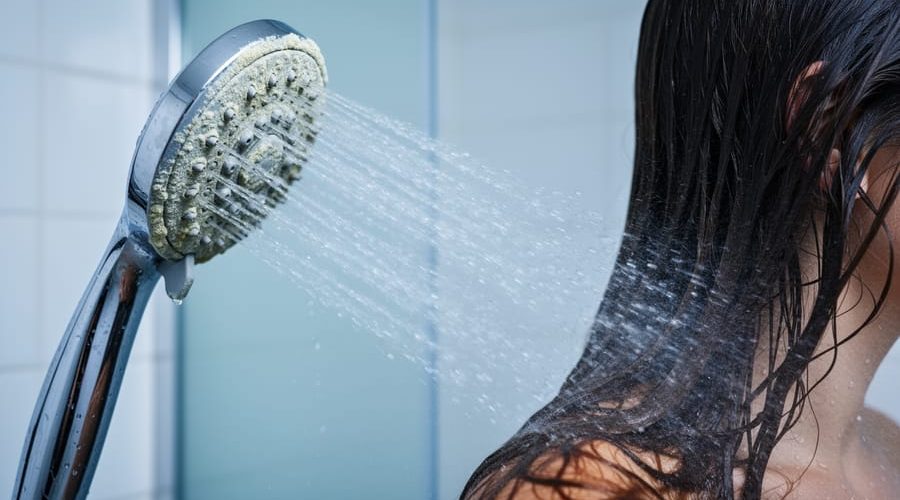
Check your showerhead for white mineral buildup and inspect your hair strands under light for a chalky residue—these are telltale signs that hard water minerals like calcium and magnesium are coating your hair shaft, blocking moisture and leaving it brittle, dull, and difficult to manage. Fill a clear bottle with your shower water and let it sit for 24 hours to see if sediment settles at the bottom, indicating contamination that could be stripping your hair’s natural oils and causing breakage. Run your wet hair between your fingers after shampooing—if it feels sticky or won’t rinse clean, chlorine and mineral deposits are likely creating a film that prevents your hair care products from working effectively.
Your daily shower might be the hidden culprit behind persistent hair problems that no amount of expensive conditioners can fix. Municipal water treatment adds chlorine to kill bacteria, but this same chemical strips protective oils from your scalp and oxidizes hair protein, leading to frizz and color fading. Hard water creates an invisible barrier on each strand, accumulating over time and causing progressive damage that most people mistake for aging hair or product failure. Heavy metals like copper and iron, common in older plumbing systems, can even alter hair color and texture permanently.
Understanding the science behind water quality’s impact on hair health empowers you to identify your specific water issues and implement targeted filtration solutions that restore your hair’s natural vitality without relying on harsh chemical treatments.
Why Your Shower Water Quality Matters for Hair Health
How Hard Water Affects Your Hair Wash Routine
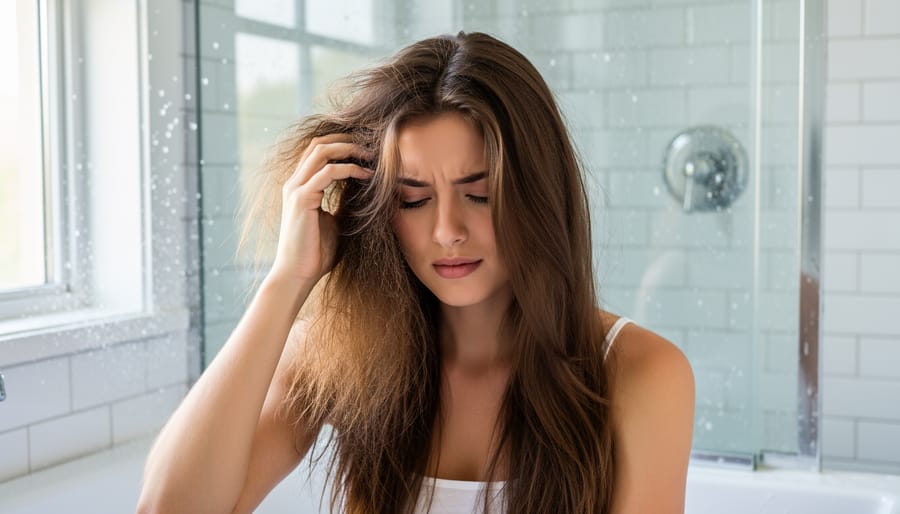
Hard water contains high concentrations of dissolved minerals, primarily calcium and magnesium, which can significantly disrupt your hair washing routine. When you lather up in the shower, these minerals interact with your shampoo and create an unwanted chemical reaction that affects your hair’s cleanliness and overall health.
The most noticeable problem is mineral buildup on your hair strands. As hard water rinses over your hair, minerals attach to each strand, creating a coating that makes hair feel rough, look dull, and become difficult to manage. Over time, this accumulation can weigh down your hair and block moisture from penetrating the hair shaft, leading to increased dryness and brittleness.
Hard water also prevents proper cleansing by forming soap scum. When minerals bind with the fatty acids in your shampoo, they create an insoluble residue that clings to your hair and scalp instead of washing away cleanly. This means you’re never truly getting a thorough clean, no matter how much product you use or how long you scrub. The soap scum acts as a barrier, trapping dirt, oils, and styling products against your scalp.
Conditioning becomes equally problematic in hard water. The mineral deposits create a film that prevents conditioners from effectively penetrating and moisturizing your hair. You might notice that your hair feels sticky or greasy even immediately after washing, or that it tangles more easily despite using quality hair care products. Understanding these challenges is the first step toward finding sustainable solutions for better hair health.
The Hidden Culprits: Chlorine, Heavy Metals, and Chemical Residue
Your shower water might be sabotaging your hair health without you even realizing it. While you’re lathering up with premium products, hidden contaminants in your water could be working against you.
Chlorine, the most common water disinfectant, is particularly harsh on hair. Municipal water treatment facilities add chlorine to kill bacteria, but this powerful chemical doesn’t stop working when it reaches your shower. It strips away your hair’s natural protective oils, leaving strands dry, brittle, and prone to breakage. Over time, chlorine exposure can weaken the protein structure in your hair, making it feel like straw even after conditioning.
Heavy metals present another serious concern. Copper, iron, and manganese can accumulate in your water supply from aging pipes or natural mineral deposits. These metals don’t just pass over your hair—they bind to it. Copper is notorious for causing green or brassy tints, especially in lighter hair colors. Iron leaves reddish or orange discoloration, while also making hair feel stiff and unmanageable. These minerals create a coating that prevents moisture from penetrating your hair shaft.
Other chemical residues, including pesticides, industrial pollutants, and pharmaceutical traces, further complicate matters. Just as water quality impacts health in numerous ways, these contaminants can trigger scalp irritation, exacerbate dandruff, and interfere with how your hair products actually work. Understanding these hidden culprits is the first step toward healthier, more vibrant hair.
Signs Your Shower Water Is Damaging Your Hair
Your shower water might be silently sabaging your hair health without you realizing it. Understanding the warning signs can help you identify whether water quality issues are affecting your locks and guide you toward effective solutions.
Start by examining your hair’s texture and feel. If your strands feel unusually dry, straw-like, or rough to the touch even after conditioning, this often indicates hard water mineral buildup or chlorine exposure. You might notice your hair seems impossible to moisturize, no matter how many hydrating products you apply. This persistent dryness occurs because mineral deposits create a barrier that prevents moisture from penetrating the hair shaft.
Color-treated hair owners should watch for premature fading. If your vibrant color turns brassy, dull, or washes out significantly faster than expected, chlorine and heavy minerals in your water are likely stripping away color molecules. This is especially noticeable with lighter shades and highlights.
Increased tangling and difficulty combing through wet hair signals potential water quality problems. When minerals coat your hair, the cuticle layer becomes rough and irregular, causing strands to catch and knot easily. You may also experience more breakage during detangling sessions.
Look for visible product buildup that appears as a waxy or filmy residue on your scalp and hair. This happens when minerals bind with your shampoo and conditioner, creating deposits that regular rinsing cannot remove. Your hair might feel heavy, look greasy shortly after washing, or lack its natural bounce.
Scalp irritation, including itchiness, flakiness, or redness, can result from chlorine and other chemical disinfectants in treated water. Some people develop contact dermatitis or experience worsening dandruff conditions.
Finally, if your hair has lost its natural volume and appears limp or lifeless despite using volumizing products, water contaminants may be weighing down your strands. The accumulation of minerals and chemicals creates a coating that flattens hair and reduces its natural body.
Recognizing these signs is the first step toward protecting your hair from water-related damage and exploring filtration options that can restore your hair’s health.
Testing Your Shower Water for Hair-Damaging Contaminants
Understanding what’s in your shower water is the first step toward healthier hair. When water quality matters for everything from your morning coffee to your hair care routine, identifying contaminants becomes essential.
Start with simple at-home observations. Notice white, crusty buildup on your showerhead or soap scum that won’t budge? That’s a telltale sign of hard water. Fill a clear bottle halfway with tap water, add a few drops of liquid soap, shake vigorously, and watch what happens. If you see abundant suds, your water is likely soft. Minimal bubbles with cloudy water indicate high mineral content.
For more detailed insights, affordable test strips are available at hardware stores for around 10 to 20 dollars. These strips measure pH levels, hardness, chlorine, and sometimes heavy metals. Simply dip the strip in shower water, wait the specified time, and compare the color changes to the provided chart. Most strips reveal results within 60 seconds.
If you’re experiencing persistent hair problems despite trying various products, testing your water professionally provides comprehensive analysis. Many municipal water suppliers offer free annual water quality reports online, showing contaminants detected in your area. For personalized testing, certified laboratories analyze samples you collect at home, typically costing between 50 and 200 dollars depending on the number of contaminants tested.
Professional tests screen for chlorine, chloramine, heavy metals like lead and copper, total dissolved solids, and specific minerals causing hardness. This detailed information helps you choose the right filtration solution rather than guessing. Some eco-conscious testing companies even use sustainable practices and provide digital reports to minimize environmental impact, aligning solutions with your values while protecting your hair.
Solutions: Filtration Systems That Protect Your Hair
Shower Head Filters: Budget-Friendly First Defense
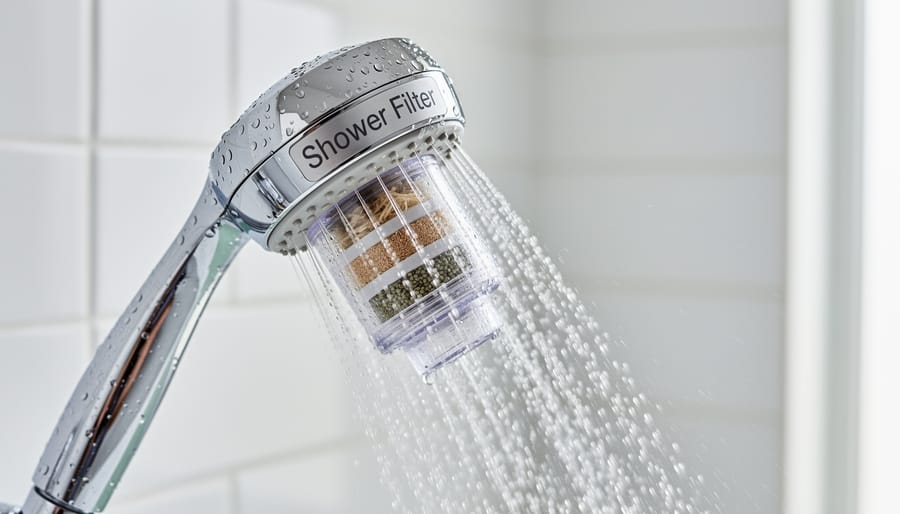
Shower head filters offer an accessible entry point into improving your water quality without breaking the bank or requiring professional installation. These compact devices attach directly between your existing shower arm and shower head, typically taking less than ten minutes to install with just a wrench or even by hand.
The technology is straightforward yet effective. Most shower filters use multiple filtration stages, commonly combining activated carbon, KDF (Kinetic Degradation Fluxion) media, and calcium sulfite. The activated carbon traps chlorine and organic compounds that cause odors, while KDF media removes heavy metals like lead and mercury through a chemical process. Calcium sulfite is particularly effective at neutralizing chlorine and chloramines, even in hot water conditions where other filtration methods struggle.
These filters primarily target chlorine, chloramines, heavy metals, and some volatile organic compounds—the main culprits behind dry, brittle hair and scalp irritation. However, they typically don’t address hard water minerals, which require different technology.
Maintenance remains minimal but essential. Most cartridges need replacement every six to twelve months depending on your water usage and local water quality. You’ll notice when replacement time approaches because the benefits of filtered water diminish—your hair may start feeling drier again or that chlorine smell returns.
The upfront cost ranges from twenty-five to seventy-five dollars, with replacement cartridges averaging fifteen to thirty dollars. This makes shower filters an economical first step toward healthier hair, especially for renters who need non-permanent solutions.
Whole House Water Softeners for Hard Water Problems
If you’re dealing with severe hard water throughout your home, a whole house water softener might be your most comprehensive solution. These systems treat water at the point where it enters your house, ensuring every faucet, shower, and appliance receives softened water.
A whole house system makes particular sense if you’re experiencing hard water problems beyond just hair issues. Signs include soap scum buildup on multiple surfaces, spotty dishes, reduced appliance efficiency, and dry skin affecting everyone in your household. When hard water impacts your entire home, treating it at the source becomes more cost-effective than installing individual filters at each outlet.
The benefits for your hair are substantial and consistent. You’ll experience softer, more manageable hair with better color retention and less frizz. Shampoos and conditioners will lather properly and rinse clean, reducing product buildup. Beyond hair health, you’ll notice softer skin, cleaner dishes, longer-lasting appliances, and reduced cleaning time since mineral deposits won’t form on surfaces.
Before investing, consider several factors. Professional installation typically costs between $1,000 and $3,000, depending on your home’s plumbing setup. These systems require regular salt refills and occasional maintenance. You’ll also need space for the softening tank, usually in a basement or utility room. Additionally, softened water isn’t ideal for drinking due to increased sodium content, so many homeowners install a bypass for their kitchen tap or add a reverse osmosis system for drinking water.
Testing your water hardness first helps determine if this investment makes sense for your specific situation.
Point-of-Entry Filtration Systems
For homeowners serious about protecting their hair and overall health, point-of-entry (POE) filtration offers the most comprehensive solution. These whole-house systems treat water right where your main line enters your home, ensuring every tap, shower, and appliance receives clean, filtered water.
Unlike point-of-use filters that only address individual fixtures, POE filtration systems tackle multiple contaminants simultaneously. They typically combine several filtration stages: sediment filters remove particulates, activated carbon reduces chlorine and organic compounds, and specialized media can address heavy metals, iron, and sulfur depending on your water chemistry.
The investment ranges from $1,000 to $5,000 including professional installation, but the benefits extend far beyond hair health. You’ll notice softer skin, longer-lasting appliances, better-tasting drinking water, and reduced soap and detergent usage throughout your home. Modern systems feature eco-friendly designs with long-lasting filters that minimize waste and maintenance requirements.
While the upfront cost is significant, POE systems represent a sustainable, set-it-and-forget-it approach to water quality. They’re particularly valuable if testing reveals multiple contaminants or if you want comprehensive protection for your entire household without managing individual filters at each fixture.
Adjusting Your Hair Wash Routine for Better Results
Once you understand how your water quality affects your hair, adjusting your wash routine can dramatically improve results without requiring expensive filtration systems right away.
Start by evaluating your current product lineup. If you have hard water with high mineral content, switch to chelating shampoos that contain ingredients like EDTA or citric acid. These formulations are specifically designed to bind with minerals and prevent buildup. For chlorinated water, look for products with added antioxidants like vitamin C or E that neutralize chlorine’s oxidizing effects. Those dealing with soft water should opt for lightweight, volumizing products since soft water requires less shampoo and can leave hair feeling limp if you use too much.
Washing frequency matters more than you might think. Hard water creates stubborn buildup, so you may need to wash more frequently to prevent accumulation. Conversely, soft water rinses cleaner, allowing you to extend time between washes and reduce water consumption. Pay attention to how your hair feels and adjust accordingly rather than sticking to a rigid schedule.
Incorporate clarifying treatments into your monthly routine to remove mineral deposits and product residue. A simple apple cider vinegar rinse, made with one tablespoon of vinegar per cup of water, offers an eco-friendly solution that restores pH balance and dissolves buildup naturally. Use this treatment once or twice monthly, or weekly if you have particularly hard water. Alternatively, baking soda mixed with your regular shampoo creates a gentle clarifying paste, though use this sparingly to avoid over-stripping natural oils.
Consider installing a basic shower filter as an intermediate solution. These affordable devices reduce chlorine and some heavy metals without the investment of whole-house systems. Many models simply screw onto your existing showerhead, making them renter-friendly and easy to maintain.
Finally, embrace water-saving techniques that benefit both your hair and the environment. Shorter rinses with lukewarm water preserve natural oils while conserving resources. Collecting shower water while it warms up provides chemical-free water for your final rinse or can be repurposed for household plants.
The Environmental Impact of Water Quality Solutions
Improving your shower water quality doesn’t just benefit your hair—it creates positive ripple effects for the environment. By understanding the connection between sustainable water solutions and eco-friendly living, you can make choices that support both personal wellness and planetary health.
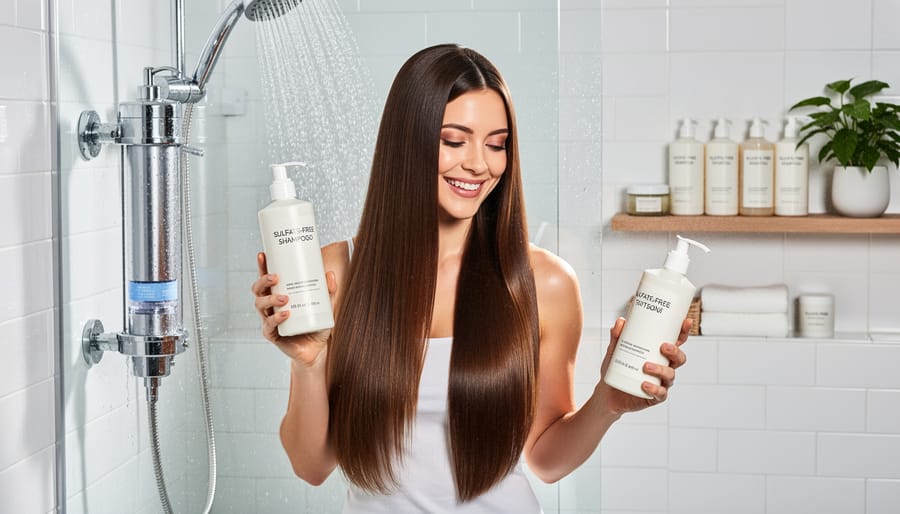
Installing a quality shower filter represents a significant step toward reducing plastic waste. When your tap water is properly filtered, you’ll likely find less need for expensive clarifying shampoos, deep conditioning treatments, and specialty hair products that come in disposable plastic bottles. Many people discover their hair requires fewer products overall when washing with clean, filtered water, directly cutting down on bathroom waste and the environmental burden of product manufacturing and transportation.
Modern sustainable filtration options have evolved considerably. Look for filters made from recyclable materials or those featuring replaceable cartridges rather than entire unit replacements. Some cutting-edge systems now use natural filtration media like coconut shell carbon, which provides effective contaminant removal while maintaining biodegradability. These eco-conscious options perform just as well as traditional filters while minimizing environmental impact.
Water conservation naturally pairs with filtration improvements. When your hair responds better to cleaner water, you may find you can extend time between washes, reducing overall water consumption. A typical shower uses 2.5 gallons per minute, so even washing hair one fewer time per week saves thousands of gallons annually per household.
Consider the bigger picture: municipal water treatment facilities use substantial energy and chemicals to process water. While home filtration doesn’t replace this necessary treatment, reducing your reliance on bottled water alternatives and excessive product use decreases demand on manufacturing and distribution systems. This holistic approach to water quality creates a sustainable cycle where healthier hair practices contribute to environmental stewardship, proving that personal care and planet care can work hand in hand.
Your shower water plays a more significant role in hair health than most people realize. If you’ve been struggling with dull, brittle, or unmanageable hair despite using quality products, the answer might literally be flowing through your showerhead. Hard water minerals, chlorine, and other contaminants can undermine even the best hair care routines, leading to frustration and unnecessary product expenses.
The good news is that taking control of your water quality is both achievable and worthwhile. Start by testing your water to identify specific issues, whether that’s excessive hardness, chlorine levels, or other concerning contaminants. Armed with this knowledge, you can select the right filtration solution for your home and budget, from simple showerhead filters to comprehensive whole-house systems.
Beyond the immediate benefits of healthier, more vibrant hair, improving your water quality represents a step toward sustainable living. By reducing reliance on harsh chemical treatments and excessive hair products to compensate for poor water, you’re making an environmentally responsible choice. Your hair will thank you, your wallet will benefit from fewer product purchases, and you’ll contribute to a more eco-conscious household. The path to better hair health starts with understanding what’s in your water and taking action today.