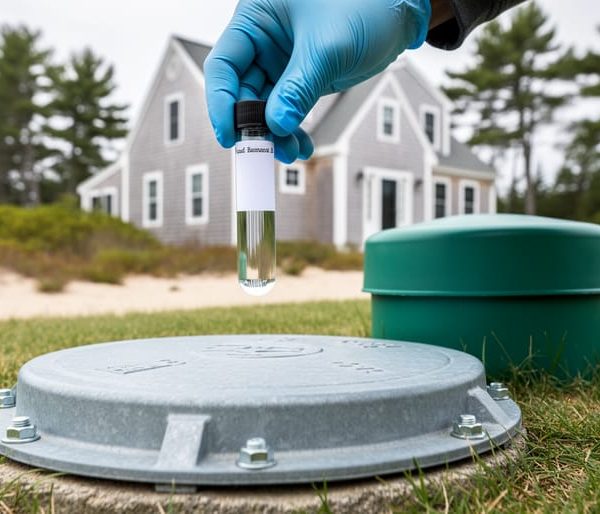
Test your well water at least annually for bacteria, nitrates, and pH levels—these baseline contaminants affect nearly one in five private wells across America. Unlike municipal water systems that face strict federal oversight, your private well operates entirely under your stewardship, making you responsible for every drop your family drinks, cooks with, and bathes in.
Private well water systems draw groundwater from aquifers through drilled or dug wells, bypassing the treatment facilities that city dwellers rely on. This independence offers freedom from water bills and chemical additives, but it also means naturally occurring minerals, agricultural runoff, industrial contaminants, and microbial threats can enter your water without warning. A crystal-clear glass of water reveals nothing about dissolved arsenic, lead leaching from old pipes, or harmful bacteria invisible to the naked eye.
Understanding your water’s unique chemical signature becomes essential. Geological formations surrounding your well determine which minerals dissolve into your supply—iron and manganese create rusty stains, while hard water minerals build scale in pipes and appliances. Nearby land use matters equally: fertilizers introduce nitrates, septic systems can leak bacteria, and aging infrastructure may contribute heavy metals.
The solution lies in strategic treatment matched to your specific water profile. Modern filtration technology has evolved beyond basic carbon filters to include reverse osmosis systems, UV sterilization, and targeted media filters that address everything from sediment to sophisticated chemical contaminants. Investing in proper testing and treatment protects your home’s most vital resource while supporting sustainable, self-sufficient living.
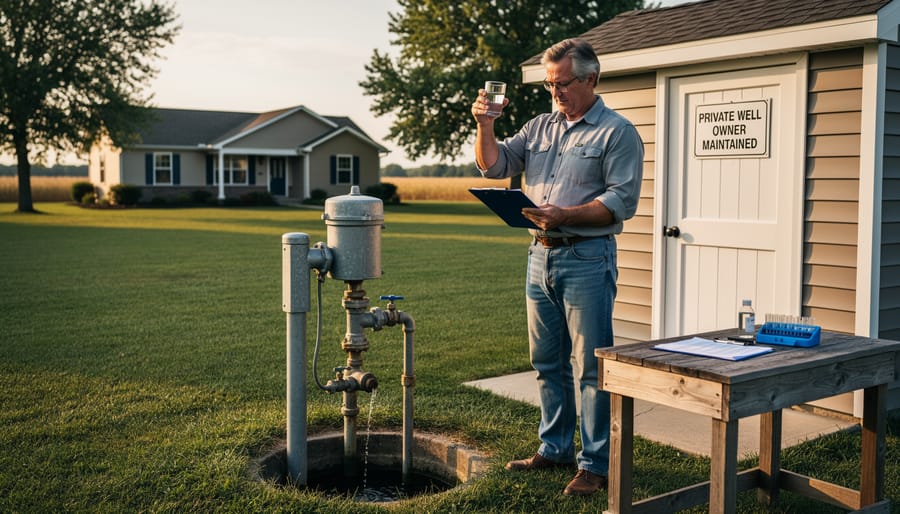
What Makes Private Well Water Different From Municipal Water
Understanding Your Well Water Source
Your private well draws water from underground aquifers, which are natural layers of water-bearing rock, sand, or gravel beneath the earth’s surface. Think of aquifers like underground reservoirs that have accumulated water over thousands of years through rainfall and snowmelt seeping down through soil and rock layers.
The water table represents the upper boundary of this saturated zone where groundwater begins. This level fluctuates seasonally based on precipitation, nearby water usage, and local geology. During dry periods, the water table drops, while heavy rainfall causes it to rise. Understanding your well’s relationship to the water table helps predict potential supply issues and contamination risks.
Well depth significantly influences water quality. Shallow wells, typically less than 50 feet deep, are more vulnerable to surface contamination from septic systems, agricultural runoff, or industrial activities. These wells draw from the upper aquifer layers where contaminants can infiltrate more easily. Deeper wells generally access older, more filtered water that has passed through multiple geological layers, though they may contain higher concentrations of naturally occurring minerals like iron, manganese, or硫ates.
Knowing your water source is essential for choosing effective treatment solutions. Surface-influenced shallow wells often require filtration for bacteria and nitrates, while deep aquifer wells might need systems addressing mineral content and hardness. The geological composition of your aquifer, whether limestone, sandstone, or granite, also determines which minerals dissolve into your water supply. This source knowledge empowers you to select targeted, efficient treatment rather than one-size-fits-all approaches.
Common Contaminants Found in Well Water
Understanding what lurks in your well water is the first step toward protecting your family’s health. Unlike municipal water systems that undergo continuous monitoring, private wells are your responsibility to test and maintain. Here are the most common contaminants that well owners encounter.
Bacteria and microorganisms top the list of concerns. Coliform bacteria, including E. coli, can enter wells through septic system contamination, surface runoff, or poorly sealed well casings. While not all coliform bacteria cause illness, their presence indicates that disease-causing organisms might be present. Symptoms from bacterial contamination range from mild stomach upset to serious gastrointestinal infections.
Nitrates represent another significant threat, particularly in agricultural areas. These compounds seep into groundwater from fertilizers, animal waste, and septic systems. Nitrates are especially dangerous for infants under six months, potentially causing blue baby syndrome, a condition that prevents blood from carrying oxygen properly. Adults generally tolerate higher levels, but long-term exposure raises concerns.
Heavy metals occur naturally in some geological formations or leach from old plumbing systems. Arsenic, found in bedrock across many regions, increases cancer risk with prolonged exposure. Lead, typically entering through corroded pipes and fixtures, affects brain development in children and causes cardiovascular problems in adults. Other metals like manganese and copper can affect taste and pose health risks at elevated levels.
Pesticides and herbicides from nearby farms or lawn treatments can migrate into aquifers. These synthetic chemicals accumulate over time and may disrupt hormone function or increase cancer risk.
Hardness minerals like calcium and magnesium, while not health hazards, create scale buildup and reduce appliance efficiency. Naturally occurring contaminants such as radon gas, uranium, and fluoride vary by location but can pose serious health risks.
Modern testing methods and eco-friendly treatment solutions make addressing these contaminants more accessible than ever, ensuring your well water remains safe and sustainable.
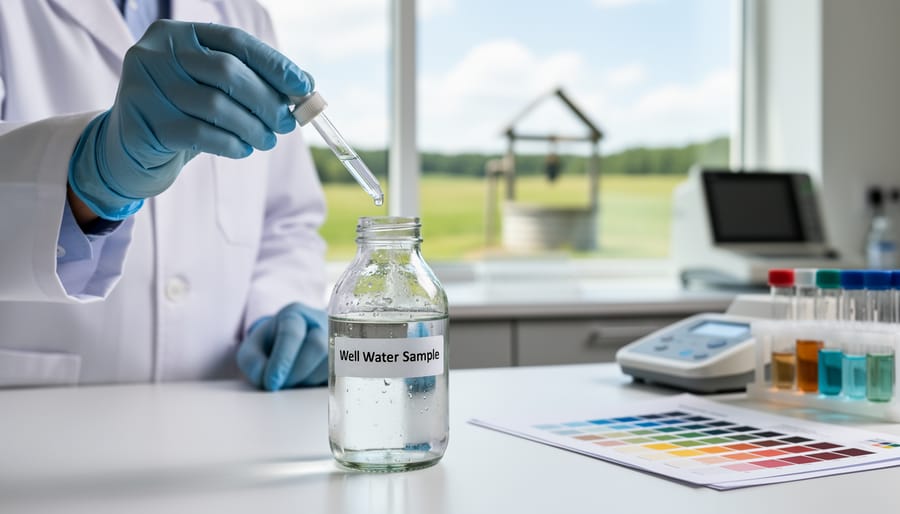
Testing Your Private Well Water: Where to Start
Essential Tests Every Well Owner Needs
Protecting your family’s health starts with understanding what’s actually in your well water. reliable water testing should include these five essential baselines that reveal potential risks lurking beneath the surface.
Coliform bacteria testing is your first line of defense against waterborne illness. These microorganisms indicate the presence of disease-causing pathogens from surface contamination or failing septic systems. If coliform bacteria appear in your results, immediate action is necessary to prevent gastrointestinal illness and other health complications.
Nitrate testing is especially critical for homes with infants and pregnant women. These compounds seep into groundwater from fertilizers, septic systems, and animal waste. High nitrate levels can cause serious health issues, particularly in young children, by interfering with oxygen transport in the bloodstream.
pH testing measures your water’s acidity or alkalinity on a scale from 0 to 14. Water outside the ideal range of 6.5 to 8.5 can corrode pipes, reduce treatment system effectiveness, and affect taste. Balanced pH protects both your plumbing investment and your water quality.
Hardness testing identifies calcium and magnesium levels that cause scale buildup in pipes and appliances. Beyond the frustration of soap scum and spotted dishes, hard water reduces the lifespan of water heaters and increases energy costs.
Total dissolved solids measurement reveals the concentration of minerals, salts, and metals in your water. Elevated levels affect taste, damage appliances, and may indicate contamination requiring further investigation.
When to Test for Specific Contaminants
Understanding when to test for specific contaminants helps you protect your family’s health while avoiding unnecessary expenses. Your well’s vulnerability depends on several environmental and situational factors that require targeted attention.
Start with testing based on location and surrounding land use. If you live near agricultural areas, test annually for nitrates and pesticides, especially in spring after fertilizer application. Wells within a half-mile of gas stations, dry cleaners, or industrial sites need regular testing for volatile organic compounds and petroleum products. Homes in mining regions should test for heavy metals like arsenic and lead.
Pay attention to your water’s warning signs. Changes in taste, odor, or color signal immediate testing needs. A metallic taste suggests excess iron or manganese, while a rotten egg smell indicates hydrogen sulfide bacteria. Cloudy or murky water warrants bacterial testing.
Health concerns in your household also dictate testing priorities. Recurring gastrointestinal issues among family members require bacterial contamination testing. If pregnant women or infants live in your home, prioritize nitrate testing since high levels pose serious developmental risks.
Seasonal considerations matter too. Test for bacteria in late spring when surface water runoff peaks after snowmelt. Drought conditions concentrate contaminants, making summer testing valuable. After flooding or septic system work, immediate bacterial testing ensures safety. New well installations require comprehensive baseline testing before regular use begins.
Water Treatment Systems for Private Wells: What Actually Works
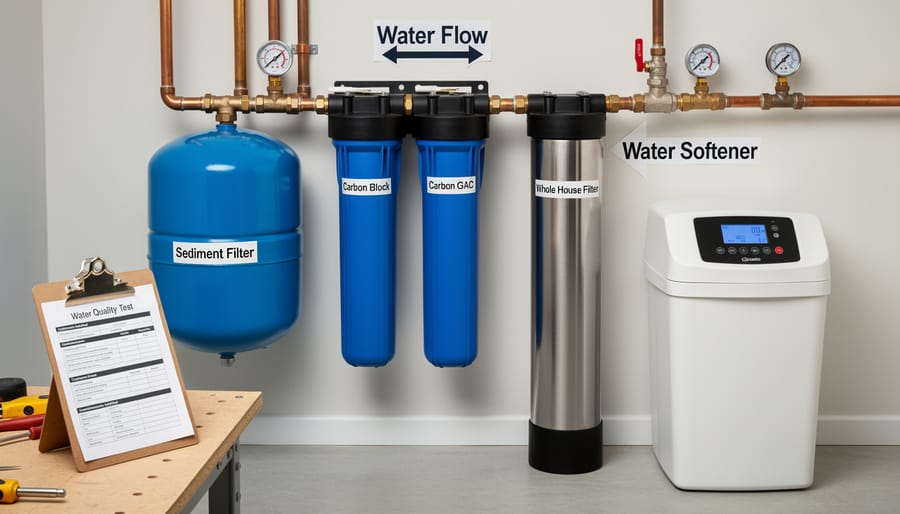
Point-of-Entry vs. Point-of-Use Systems
When selecting a water treatment system for your private well, you’ll encounter two main approaches: point-of-entry (POE) and point-of-use (POU) systems. Understanding the difference helps you choose the right solution for your home’s needs.
Point-of-entry systems, also called whole-house systems, treat all water entering your home at the main supply line. These comprehensive solutions ensure every tap, shower, and appliance receives filtered water. They’re ideal when contaminants affect your entire water supply or when you’re concerned about exposure through showering and washing. The advantages include consistent water quality throughout your home and protection for appliances from scale buildup and sediment damage. However, whole-house systems require larger upfront investments and more extensive installation.
Point-of-use systems target specific taps, typically in your kitchen for drinking and cooking water. These compact filters attach under sinks or directly to faucets, making them more affordable and easier to install. POU systems excel when you only need to address drinking water concerns or when specific contaminants are localized to certain fixtures. They’re also perfect for supplementing whole-house systems with additional filtration for premium drinking water quality.
Many homeowners adopt a hybrid approach, combining a basic whole-house sediment filter with advanced point-of-use reverse osmosis systems for drinking water. This strategy balances protection, performance, and cost-effectiveness. Consider your test results, budget, and household water usage patterns when deciding. If contaminants like bacteria, iron, or sulfur affect your entire water supply, prioritize point-of-entry treatment. For specific concerns about lead or nitrates in drinking water, point-of-use solutions provide targeted protection.
Sediment Filters: Your First Line of Defense
Sediment filters serve as the essential first barrier in your private well water treatment system, capturing visible particles before they reach your home’s plumbing or more sophisticated filtration equipment. These straightforward mechanical filters trap sand, silt, rust, clay, and other suspended solids that commonly find their way into well water through natural geological processes or aging well components.
The filtration process is refreshingly simple: water flows through a porous material—typically pleated polyester, spun polypropylene, or wound string—that physically blocks particles larger than the filter’s micron rating. Most homeowners find success with filters rated between 5 and 50 microns, depending on their specific sediment levels.
Proper sizing matters significantly for performance. Your filter should match your household’s peak water flow rate, typically measured in gallons per minute. An undersized filter creates pressure drops and frequent clogging, while correct sizing ensures consistent water pressure throughout your home.
Sediment filters strategically precede other treatment systems because they protect downstream equipment from premature wear and clogging. Carbon filters, UV purifiers, and water softeners all function more efficiently and last longer when sediment is removed first. This protective role makes sediment filtration not just beneficial but essential for maintaining your entire water treatment investment while supporting sustainable, low-maintenance home systems.
Water Softeners for Hard Water Problems
Hard water is one of the most common issues affecting private wells, caused by elevated levels of calcium and magnesium minerals. You’ll notice signs like soap scum on dishes, crusty buildup around faucets, dry skin after showering, and reduced appliance efficiency. While hard water isn’t a health hazard, it can significantly impact your home’s comfort and increase long-term costs.
Traditional ion-exchange water softeners work by swapping calcium and magnesium ions with sodium or potassium ions as water passes through a resin tank. This proven technology effectively eliminates scale buildup and extends the lifespan of water heaters, dishwashers, and plumbing systems. However, salt-based systems do require ongoing maintenance, including regular salt refills and periodic cleaning.
For environmentally-conscious homeowners, this presents a dilemma. Salt-based softeners discharge brine into septic systems or municipal wastewater, which can stress local ecosystems and complicate wastewater treatment. Some regions have even restricted their use due to environmental concerns.
Salt-free alternatives, technically called water conditioners, offer an eco-friendly option. These systems use template-assisted crystallization to change the structure of minerals so they don’t stick to surfaces, though they don’t actually remove hardness. While less effective for severe hard water, they require no electricity, produce no wastewater, and need minimal maintenance.
If you choose a traditional softener, consider using potassium chloride instead of sodium chloride as a greener alternative, and ensure proper system sizing to minimize salt usage and maximize efficiency.
Carbon Filtration for Chemical Contaminants
Activated carbon filtration stands as one of the most versatile solutions for private well water systems, effectively tackling chemical contaminants that affect both water safety and quality. This natural treatment method works through a process called adsorption, where contaminants stick to the surface of carbon particles like a magnet, removing them from your water supply.
Carbon filters excel at eliminating chlorine, volatile organic compounds (VOCs), pesticides, herbicides, and industrial solvents that can seep into groundwater. They’re particularly valuable for addressing taste and odor issues, transforming water that smells like sulfur or tastes metallic into fresh, clean-tasting drinking water. This makes carbon filtration an essential component of comprehensive well water treatment, especially in agricultural or industrial areas where chemical runoff poses greater risks.
You’ll encounter two main types of activated carbon filters. Granular activated carbon (GAC) contains loose carbon particles that allow faster water flow, making them ideal for whole-house systems. Carbon block filters compress carbon into a solid form, providing more thorough contact time between water and carbon for enhanced contaminant removal, though at slower flow rates better suited for point-of-use applications like kitchen faucets.
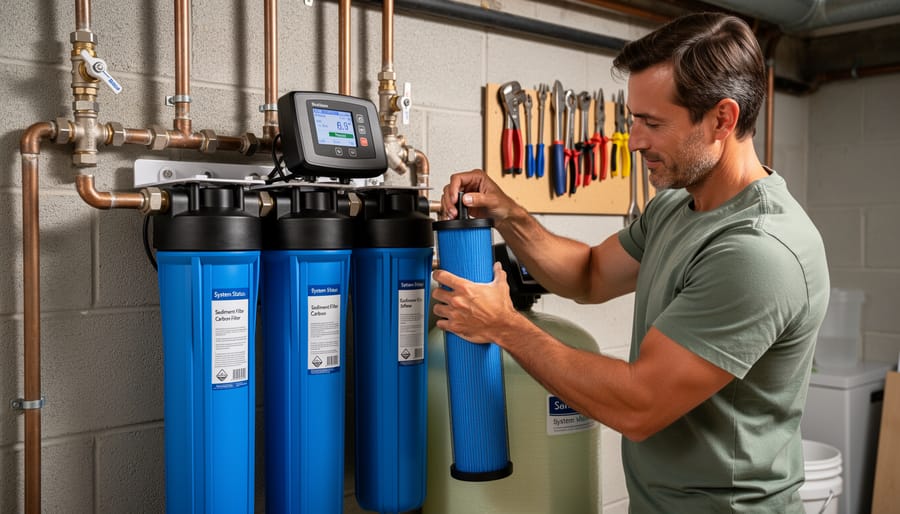
Replacement schedules depend on your water usage and contamination levels, but most residential systems require carbon filter changes every six to twelve months. Neglecting replacements reduces effectiveness and can allow contaminants to pass through untreated. Regular testing helps determine optimal replacement timing for your specific situation.
Modern carbon filtration technology continues advancing, with coconut shell-based carbons offering eco-friendly alternatives that provide superior adsorption capacity while supporting sustainable manufacturing practices.
Reverse Osmosis for Heavy Metal Removal
Reverse osmosis systems represent one of the most thorough filtration technologies available for private well owners dealing with heavy metal contamination. Think of RO as an ultra-fine screening process—water is forced through a semi-permeable membrane with microscopic pores that trap contaminants while allowing pure water molecules to pass through.
This technology excels at removing particularly concerning heavy metals including arsenic, lead, chromium-6, and even fluoride. The membrane’s tiny openings, typically just 0.0001 microns, effectively block these dissolved metals that many standard filters miss entirely. For well owners who’ve tested positive for arsenic levels above 10 parts per billion or any detectable lead, RO systems provide reliable protection.
However, RO technology comes with an important tradeoff: water waste. Traditional systems discard 3-4 gallons of water for every gallon of purified water produced. This rejected water carries away the concentrated contaminants, flushing them down the drain. Modern eco-conscious designs have improved these ratios significantly, with some efficient models achieving 1:1 waste-to-pure ratios, though they typically cost more upfront.
The key question is whether you actually need RO. If your well testing reveals heavy metal contamination, particularly arsenic or lead, RO becomes essential rather than optional. But for wells with only bacterial issues or sediment problems, simpler filtration methods work effectively without the water waste concern. Always let your specific test results guide your treatment choice—RO is powerful technology, but it’s only necessary when your water quality demands this level of protection.
UV Disinfection for Bacterial Contamination
UV disinfection offers an eco-friendly, chemical-free solution for eliminating harmful bacteria and viruses from your private well water. This innovative treatment method uses ultraviolet light to neutralize microorganisms at the DNA level, preventing them from reproducing and making them harmless to human health.
Here’s how it works: as water flows through a specialized chamber, a UV lamp emits light at a specific wavelength (typically 254 nanometers) that penetrates bacterial cells, viruses, and parasites. This process happens instantly, requiring no contact time or chemical additives, making it an attractive option for homeowners seeking natural water treatment solutions.
UV systems are particularly effective against common well water contaminants like E. coli, coliform bacteria, Giardia, and Cryptosporidium. They’re compact, easy to install inline with your existing plumbing, and operate continuously with minimal energy consumption—roughly equivalent to running a light bulb.
Maintenance is straightforward but essential. The UV lamp requires annual replacement to maintain effectiveness, and the protective quartz sleeve needs periodic cleaning to prevent mineral buildup that can block light transmission. Most systems include monitoring features that alert you when lamp replacement is due.
However, UV treatment has important limitations. It only addresses biological contaminants and doesn’t remove physical particles, sediments, minerals, or chemical pollutants. For this reason, UV systems work best as part of a comprehensive treatment approach, typically paired with sediment filters and other filtration methods that address your well water’s specific contamination profile.
Building Your Custom Well Water Treatment System
Matching Treatment to Your Water Test Results
Once you’ve received your test results, the next step is matching the right treatment system to your specific water quality issues. Think of this as creating a customized solution for your home’s unique water fingerprint.
If your test reveals high iron or manganese levels, causing rust-colored stains and metallic taste, an oxidizing filter or water softener typically resolves the issue. These systems work by converting dissolved metals into particles that can be filtered out before reaching your tap.
For bacterial contamination like coliform or E. coli, ultraviolet purification systems provide chemical-free disinfection by disrupting microorganisms at the cellular level. This eco-friendly approach requires no ongoing chemical additions and minimal maintenance.
Hard water problems, indicated by high calcium and magnesium levels, respond well to ion-exchange water softeners. These systems swap mineral ions for sodium or potassium, protecting your plumbing and appliances while improving soap efficiency.
When dealing with multiple contaminants, you’ll likely need a multi-stage approach. For example, a home with both bacterial concerns and sediment issues might combine a sediment pre-filter, UV purification, and activated carbon filtration. This layered strategy addresses each problem at the appropriate treatment stage.
Chemical contaminants like nitrates, arsenic, or volatile organic compounds require specialized technologies. Reverse osmosis systems excel at removing these dissolved substances, while activated carbon filters effectively capture chlorine, pesticides, and industrial chemicals. Understanding your specific contamination profile ensures you invest in treatment technology that actually solves your water quality challenges.
Maintaining Your Well Water System for Long-Term Safety
Reducing Environmental Impact While Treating Your Water
Treating your well water doesn’t have to come at the planet’s expense. Understanding the environmental footprint of different treatment methods helps you make choices that protect both your health and the environment.
Reverse osmosis systems are highly effective but can waste 3-5 gallons of water for every gallon purified. Consider adding a permeate pump to reduce waste by up to 80%, or use rejected water for gardening and outdoor cleaning rather than sending it down the drain.
Water softeners discharge salt-laden brine that can impact soil and groundwater. Opt for high-efficiency models that use up to 50% less salt, or explore salt-free alternatives like template-assisted crystallization systems that prevent scale without chemical discharge.
Filter disposal creates waste too. Choose brands offering recycling programs for used cartridges, or select longer-lasting filters that need replacement less frequently. Carbon block filters typically outlast granular options while maintaining effectiveness.
Energy consumption matters, especially for UV systems and pumps running continuously. Look for Energy Star certified equipment and LED-based UV sterilizers that use significantly less electricity than traditional mercury bulbs while providing the same disinfection power.
By selecting eco-conscious treatment technologies, you can enjoy clean, safe well water while minimizing your environmental footprint and supporting sustainable living practices.
Managing your private well water system doesn’t have to feel overwhelming. Armed with the right knowledge, you’re fully capable of ensuring your household has access to clean, safe water for years to come. The key is starting with what matters most: testing. Before investing in any treatment system, understand exactly what’s in your water. A comprehensive water test reveals the specific contaminants you’re dealing with, allowing you to choose solutions tailored to your actual needs rather than guessing.
Once you know what you’re working with, the path forward becomes clear. Whether you need a simple sediment filter or a multi-stage treatment system, the options available today combine effectiveness with sustainability. Modern filtration technologies are more efficient and eco-friendly than ever, reducing waste while protecting your health.
Taking proactive steps today prevents larger problems tomorrow. Regular testing, appropriate treatment, and consistent maintenance create a sustainable cycle that protects both your family and the environment. Start with that baseline water test, build your treatment plan around real data, and join the growing community of empowered homeowners who’ve taken control of their water quality. Your well water journey begins with a single, informed step forward.