Stop treating whole house water filtration systems and reverse osmosis as competing options—they solve fundamentally different problems in your home’s water supply. A whole house system guards every faucet, showerhead, and appliance by removing sediment, chlorine, and contaminants at your main water line, protecting your entire household infrastructure. Reverse osmosis works at a single point, typically under your kitchen sink, stripping away up to 99% of dissolved solids, heavy metals, and microscopic pollutants to deliver ultra-purified drinking water.
Most homeowners discover they need both systems working in tandem. Installing a whole house filter first removes large particles and chlorine that would otherwise clog and damage a reverse osmosis membrane, extending its lifespan by years while reducing maintenance costs. The whole house system handles bathing water, laundry, and dishwashing, while reverse osmosis tackles the molecular-level purification your drinking and cooking water demands.
The confusion stems from conflating filtration scope with filtration depth. Whole house systems excel at broad protection across high water volumes but cannot match the purification intensity of reverse osmosis. Conversely, reverse osmosis produces limited quantities of highly purified water, making it impractical for whole-home applications due to slow processing rates and significant water waste.
Your decision hinges on your specific water quality report and household priorities. Understanding each system’s distinct capabilities eliminates the false choice and reveals the smartest configuration for your home’s unique contamination profile and daily water consumption patterns.
What Whole House Water Filtration Systems Actually Do

Point-of-Entry Protection for Every Faucet
Whole house water filtration systems take a fundamentally different approach than point-of-use devices by installing directly at your home’s main water line, where municipal or well water first enters your property. Think of it as creating a protective shield at the gateway to your entire plumbing system.
This strategic placement means every drop of water flowing through your home passes through filtration before reaching any tap, showerhead, appliance, or water outlet. When you wash dishes, do laundry, water plants, or fill your pet’s bowl, you’re using filtered water. This comprehensive coverage offers benefits that extend far beyond drinking water quality.
The protection starts with your plumbing infrastructure itself. By removing sediment, chlorine, and other contaminants at the entry point, these systems help prevent pipe corrosion and extend the lifespan of your entire plumbing network. Your water heater, washing machine, dishwasher, and other water-using appliances also benefit from cleaner water, which reduces mineral buildup and maintenance issues.
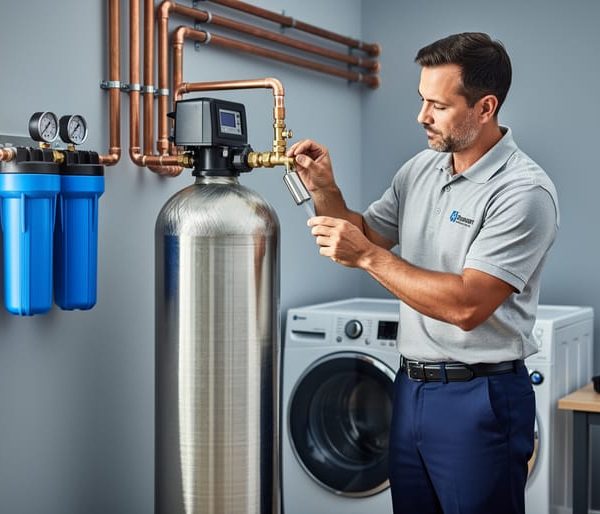
The best whole house water filter systems typically use multi-stage filtration combining sediment filters, carbon filters, and sometimes additional media to address specific water quality concerns like iron or sulfur. Installation requires professional plumbing work to integrate the system into your main water line, but once in place, it operates automatically with minimal maintenance beyond periodic filter changes, usually every six to twelve months depending on your water quality and household usage.
What These Systems Remove (and What They Don’t)
Whole house water filtration systems excel at tackling many common water quality issues that affect your entire home. These systems are particularly effective at removing physical particles like sediment, dirt, sand, and rust that can cloud your water and damage appliances. They’re also champions at eliminating chlorine, which not only improves taste and odor but also protects your skin and hair during showers.
These filters successfully reduce various chemicals including chloramines, volatile organic compounds (VOCs), and certain pesticides or herbicides that might be present in municipal water supplies. Some advanced carbon-based systems can also address industrial solvents and protect against disinfection byproducts that form when chlorine interacts with organic matter.
However, it’s important to understand what whole house filters typically don’t remove. Most standard systems struggle with dissolved solids like calcium, magnesium, sodium, and fluoride that remain molecularly bonded to water. These minerals contribute to hard water issues and can’t be filtered out through physical barriers or carbon absorption alone.
Whole house filters also have limitations with certain microscopic contaminants. While some high-end models can reduce bacteria and cysts, they generally aren’t designed to eliminate viruses or completely purify water at the molecular level. Heavy metals like lead and arsenic present another challenge, though specialized media can be added to target these specific concerns in affected areas.
Total dissolved solids (TDS), including salts and minerals that affect water hardness, typically pass right through standard whole house systems. Think of these filters as your home’s first line of defense, excellent for improving overall water quality and protecting your plumbing, but not necessarily removing everything at the molecular level.
How Reverse Osmosis Works Differently
Point-of-Use Deep Filtration
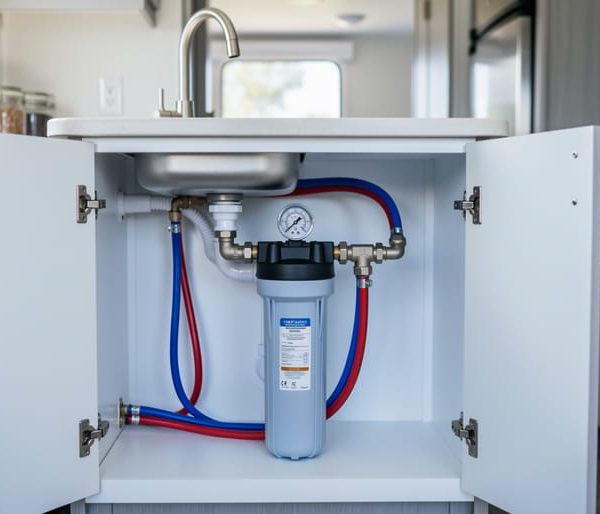
Reverse osmosis systems take a different approach by targeting specific taps where you need the purest water—typically under your kitchen sink. Think of it as precision filtration exactly where it matters most: for drinking, cooking, and making coffee or tea.
These compact systems work through multiple stages to deliver exceptional water quality. Water first passes through sediment and carbon pre-filters that remove larger particles and chlorine. Then comes the heart of the system—a semi-permeable membrane with microscopic pores that block contaminants as tiny as 0.0001 microns. This membrane filters out heavy metals, fluoride, nitrates, and even dissolved solids that other filtration methods miss.
The filtered water collects in a small storage tank under your sink, ready whenever you turn on the dedicated faucet. A final carbon post-filter polishes the taste before the water reaches your glass. The rejected contaminants wash down the drain during the filtration process.
This point-of-use design makes RO systems incredibly practical for renters and homeowners who want premium drinking water without filtering their entire home’s supply. You’re treating only the water you consume directly, which means the system works efficiently and replacement filters handle manageable volumes.
The trade-off is coverage—an under-sink RO system serves only one tap. If you want filtered water throughout your home for showers and laundry, you’ll need to consider how RO fits with your broader water quality goals. Many homeowners discover that combining both approaches delivers the comprehensive solution they’re seeking.
The Contaminants RO Excels at Removing
Reverse osmosis technology operates through a remarkably efficient yet straightforward process. Water is forced under pressure through a semi-permeable membrane with microscopic pores measuring just 0.0001 microns—imagine something so tiny that only water molecules can squeeze through while larger contaminant particles get blocked and flushed away.
This membrane filtration excels at removing dissolved solids that pass right through conventional whole house filters. While carbon filters and sediment screens capture larger particles and chemicals like chlorine, they simply cannot trap contaminants that have dissolved into the water itself. That’s where RO systems shine.
The best reverse osmosis systems effectively remove up to 99% of total dissolved solids (TDS), including minerals like calcium and magnesium that cause hardness. More importantly, they tackle concerning contaminants that many homeowners don’t realize are lurking in their drinking water.
Heavy metals pose serious health risks, yet they easily slip through standard filtration. RO membranes capture lead, arsenic, mercury, chromium, and cadmium with remarkable efficiency. Fluoride, which municipalities add to water supplies and whole house systems cannot remove, gets filtered out by reverse osmosis. Nitrates from agricultural runoff—particularly dangerous for infants—are also eliminated.
Additional contaminants RO removes include sodium, sulfates, pesticides, herbicides, and pharmaceutical residues. Even microscopic parasites like cryptosporidium and giardia get blocked by the tight membrane structure.
This thorough purification comes with a trade-off: the process also removes beneficial minerals and produces wastewater. However, for households concerned about specific contaminants in their drinking and cooking water, reverse osmosis provides unmatched protection that whole house systems simply cannot deliver. That’s why many homeowners choose both systems working together—whole house filtration for general protection throughout the home, and point-of-use RO for maximum purity at the kitchen tap.

The Real Comparison: Different Jobs, Different Locations
Coverage Area and Water Volume
Understanding where and how much water each system processes helps clarify why these technologies complement rather than compete with each other.
Whole house filtration systems are designed for high-volume coverage, processing water at impressive flow rates of 10-20 gallons per minute. This means every faucet, shower, appliance, and toilet in your home receives filtered water simultaneously without any noticeable pressure drop. When someone showers upstairs while the washing machine runs and dishes are being washed, the system handles it all effortlessly.
Reverse osmosis systems take a different approach entirely. They produce highly purified drinking water but at a much slower pace, typically 50-75 gallons per day. This output is stored in a small tank under your kitchen sink, providing purified water on demand from a dedicated faucet. While this might sound limited, it’s actually more than sufficient for drinking, cooking, and beverage preparation for most households.
The key distinction here is purpose rather than limitation. Whole house systems protect your entire home’s plumbing and provide general filtration, while RO systems focus exclusively on creating the highest quality drinking water at specific points of use. Think of it as broad protection versus precision purification, each excelling in its intended role.
Filtration Depth and Effectiveness
Think of whole house filtration as a protective shield at your home’s entry point—it catches sediment, chlorine, and larger contaminants before water reaches your faucets, appliances, and showers. This broad-scope approach protects your entire household plumbing system and improves water quality for everyday uses like bathing and laundry. However, these systems typically use single or dual-stage filters that aren’t designed to remove dissolved solids, heavy metals, or microscopic contaminants.
Reverse osmosis takes the opposite approach with intensive, multi-stage purification. RO systems force water through semi-permeable membranes with microscopic pores, removing up to 99% of contaminants including fluoride, arsenic, lead, and pharmaceutical residues. This thorough filtration process produces drinking water purity that whole house systems simply cannot match.
The key distinction lies in purpose: whole house systems provide good-quality water throughout your home for general use, while RO systems deliver exceptional purity specifically for drinking and cooking. Many households benefit from both—a whole house system protecting appliances and pipes, with an under-sink RO unit ensuring the cleanest possible drinking water at the kitchen tap.
Cost, Maintenance, and Environmental Impact
Understanding the financial and environmental implications of your water filtration choice helps you make a decision that aligns with both your budget and values.
Installation costs vary significantly between these systems. Whole house filtration typically requires a $1,000-$5,000 upfront investment, depending on whether you choose a basic system or a whole house water filter and softener combo. Point-of-use reverse osmosis units are more affordable initially, ranging from $200-$800, though professional installation adds to this cost.
Maintenance requirements differ considerably. Whole house systems need filter replacements every 6-12 months, costing $50-200 annually. Reverse osmosis systems require more frequent attention, with filters and membranes needing replacement every 6 months to 2 years, totaling $100-300 yearly.
The environmental impact deserves serious consideration. Reverse osmosis systems waste 3-20 gallons of water for every gallon purified, depending on efficiency. This wastewater concern makes RO less eco-friendly in drought-prone areas. However, newer models incorporate water-saving technology to minimize this issue. Whole house systems generate minimal water waste but require more frequent filter disposal.
Both systems reduce reliance on bottled water, which significantly decreases plastic waste. Consider your local water scarcity situation and choose accordingly. In water-abundant regions, RO waste may be acceptable. In drought-affected areas, whole house filtration offers a more sustainable primary solution.
Why Most Homes Benefit from Both Systems Working Together
The Layered Protection Approach
Understanding how whole house filtration works alongside reverse osmosis reveals why many homeowners actually benefit from using both systems together rather than choosing between them. Think of it as a two-tier defense strategy for your home’s water quality.
Whole house filtration acts as your first line of defense at the point where water enters your home. It removes sediment, chlorine, and larger contaminants from every tap and fixture throughout your house. This protects your water heater, dishwasher, and washing machine from sediment buildup while ensuring cleaner water for bathing and laundry. Your skin and hair benefit from reduced chlorine exposure, and your clothing lasts longer without harsh chemical exposure.
Reverse osmosis provides the second layer of protection, focusing specifically on drinking and cooking water. Installed under your kitchen sink, it removes microscopic contaminants that whole house systems typically miss, including dissolved solids, heavy metals, and pharmaceutical residues. This gives you ultra-pure water for consumption without requiring expensive treatment of water used for toilets, outdoor irrigation, or other non-consumable purposes.
Together, these systems create comprehensive coverage: whole house filtration handles the bulk water needs efficiently while reverse osmosis perfects your drinking water. This layered approach maximizes both protection and cost-effectiveness, ensuring every water use in your home receives appropriate treatment.

When You Might Choose Just One
Sometimes starting with just one system makes practical sense, especially when budget or immediate needs guide your decision.
If your municipal water report shows primarily aesthetic issues like chlorine taste, sediment, or slight hardness, a whole house filtration system alone might address your concerns effectively. This approach protects your entire plumbing system and appliances while improving water quality throughout your home. It’s particularly suitable for families who want better shower and laundry water without the complexity of point-of-use systems.
Conversely, if your water testing reveals concerning levels of dissolved contaminants like fluoride, nitrates, or heavy metals, but your budget is limited, installing a reverse osmosis system at your kitchen sink becomes the priority. This targeted approach ensures your drinking and cooking water meets the highest purity standards while you save for broader home protection later.
Budget-conscious homeowners often choose whole house filtration first because it delivers noticeable improvements across all water uses at a lower initial investment. You can always add RO later when finances allow. Renters or those planning to move soon might opt for an under-sink RO system since it’s portable and focuses investment where it matters most—drinking water.
Your decision should ultimately reflect your water quality test results and household priorities. If contaminants are minimal, one system may suffice indefinitely. However, most homes with moderate to significant water quality concerns benefit from eventually implementing both systems as complementary solutions rather than competing choices.
Making the Right Choice for Your Home
Start with Water Testing
Before investing in any filtration system, it’s essential to understand what contaminants exist in your water. Think of it like diagnosing a problem before prescribing treatment—you wouldn’t want to spend money on solutions that don’t address your actual water quality issues.
Start by requesting your local water quality report, also called a Consumer Confidence Report, from your municipal water supplier. These reports are legally required and available free of charge, typically accessible on your city’s website. They’ll show you what’s in your tap water, from chlorine levels to mineral content and potential contaminants.
For well water or a more detailed analysis, consider a professional home water test. Many companies offer affordable testing kits that check for common issues like hard water minerals, heavy metals, bacteria, and chemicals. You can also purchase DIY test strips at hardware stores for basic screening.
Understanding your water’s specific challenges will guide you toward the right filtration approach. For instance, if your report shows high chlorine and sediment but safe mineral levels, a whole house system might suffice. However, discovering concerning levels of arsenic or lead would make reverse osmosis a crucial consideration for your drinking water.

Prioritizing Based on Your Concerns
Choosing between these systems starts with understanding your water source and specific concerns. If you have municipal water, your primary issues likely involve chlorine taste, sediment, and general contaminants affecting your entire home. A whole house filtration system addresses these effectively, providing cleaner water for showering, laundry, and protecting your appliances from scale buildup.
For well water users, the equation changes significantly. Well water often contains higher levels of sediment, iron, sulfur, bacteria, and minerals that require robust whole house filtration as your first line of defense. This ensures your entire plumbing system receives treated water.
Reverse osmosis becomes essential when you’re concerned about drinking water purity specifically. If your water tests reveal heavy metals, nitrates, fluoride, or dissolved solids that whole house systems can’t remove, RO provides that advanced purification at your kitchen tap.
Many homeowners discover they actually need both systems working together. The whole house system handles bulk contaminants and protects your home infrastructure, while RO focuses on delivering ultra-pure drinking and cooking water. Consider getting a water quality test to identify your specific contaminants before investing. This practical approach ensures you’re addressing your actual water challenges rather than guessing at solutions.
Budget-Friendly Implementation Strategies
Start by prioritizing your most pressing water quality concerns. If your primary issue is chlorine taste or sediment, begin with a basic whole house filter before considering reverse osmosis for drinking water. This phased approach spreads costs over time while immediately addressing critical needs.
Consider installing a reverse osmosis system under just one kitchen sink initially, rather than multiple points of use. This provides purified drinking and cooking water at a fraction of whole-home RO costs. As budget allows, expand filtration to other areas.
Look for systems with lower maintenance requirements and longer-lasting filters to reduce ongoing expenses. Cartridge-based whole house filters often prove more economical than complex multi-stage systems for average households.
Choose eco-conscious options like zero-waste RO systems that recycle drain water for gardens, or whole house filters using sustainable materials. Many newer models balance effectiveness with water conservation, reducing both environmental impact and utility bills while delivering clean, safe water throughout your home.
Here’s the truth: whole house water filtration and reverse osmosis aren’t competitors—they’re teammates in your home’s water quality defense system. Think of whole house filtration as your first line of protection, safeguarding pipes, appliances, and every faucet from sediment, chlorine, and larger contaminants. Reverse osmosis steps in where it matters most—at your kitchen sink—removing the microscopic impurities you definitely don’t want in your drinking water.
Rather than choosing between them, consider your home’s complete water story. The most effective approach starts with testing your water to understand what you’re actually dealing with. You might discover that a whole house system alone meets your needs, or that pairing it with a point-of-use reverse osmosis unit gives you comprehensive coverage without unnecessary expense.
Remember, clean water isn’t just about taste—it’s an investment in your family’s health and your home’s longevity. Modern water filtration technology continues evolving, offering more efficient, sustainable solutions that reduce bottled water waste while delivering superior quality right from your tap.
The decision doesn’t have to be overwhelming. Start with professional water testing, identify your specific contaminants, and build a filtration strategy that addresses your actual needs rather than imagined ones. Whether you choose one system or both, you’re taking an important step toward healthier living and environmental responsibility. Your home deserves water you can trust, and with the right information, that goal is completely achievable.