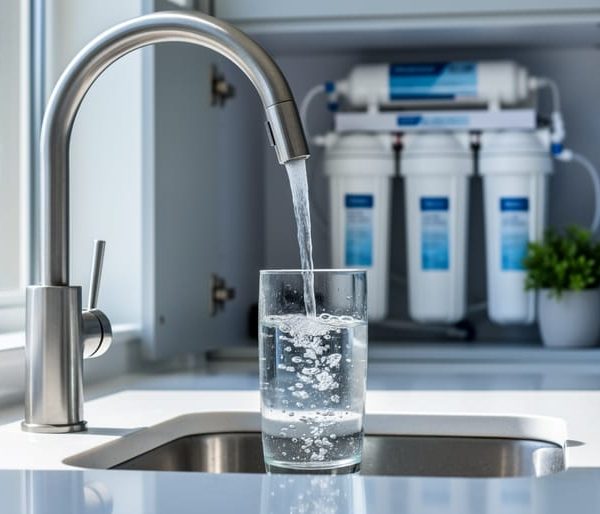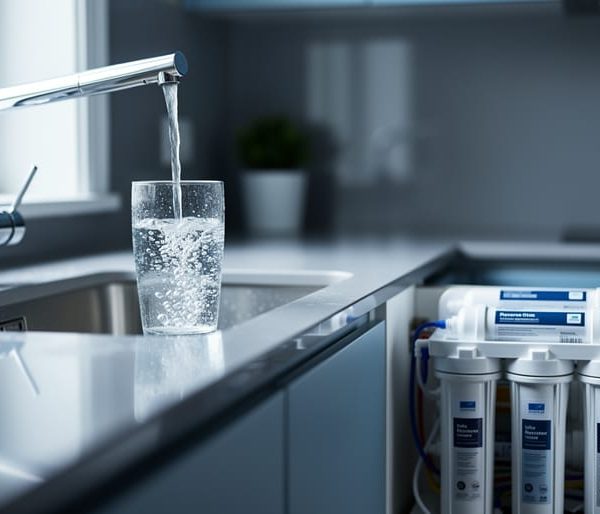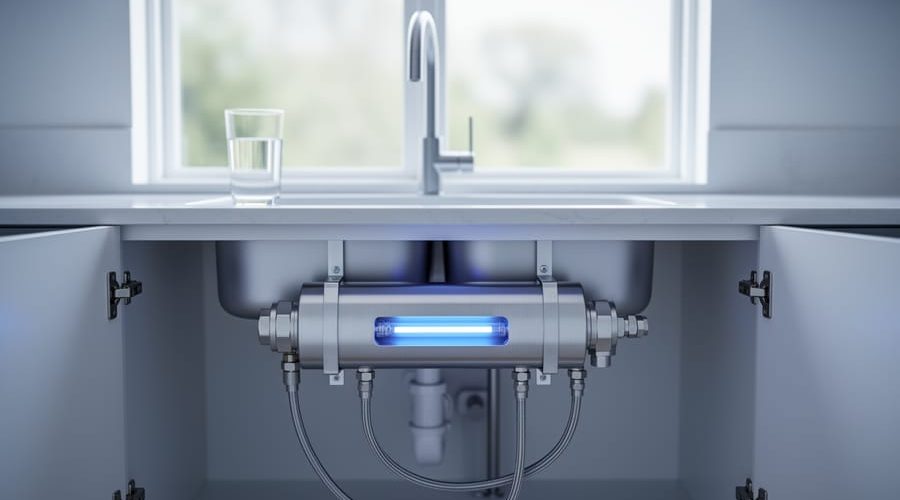
Consider UV water disinfection if you want chemical-free purification that eliminates 99.9% of harmful bacteria, viruses, and parasites without altering your water’s taste or adding byproducts. Install a UV system at your home’s main water line to treat all incoming water, or place point-of-use units under specific sinks for targeted protection. Verify your water clarity first, since UV light only works effectively in clear water—sediment and minerals block the rays, so pair UV treatment with pre-filtration if needed. Replace UV bulbs annually even if they still glow, as their disinfection power diminishes over time while remaining visibly lit.
UV water disinfection represents a major advancement in smart water technology, offering an eco-friendly alternative to chlorine treatment that’s gaining traction among sustainability-minded homeowners. The latest UV-C LED systems last up to five times longer than traditional mercury bulbs while using significantly less energy, making them an increasingly affordable choice for residential applications. Understanding how this technology fits your specific water quality situation helps you make an informed decision about whether UV disinfection addresses your household’s unique needs and complements your existing filtration setup.
Understanding UV Water Disinfection: The Basics Made Simple
UV water disinfection is a chemical-free way to make your drinking water safer by using ultraviolet light to eliminate harmful microorganisms. Think of it as sunlight’s protective power, concentrated and directed at waterborne pathogens in your home’s water supply.
Here’s how it works: Water flows through a chamber containing a UV lamp. As the water passes by, the lamp emits a specific wavelength of ultraviolet light called UV-C. This invisible light penetrates bacteria, viruses, and other microscopic organisms, disrupting their DNA and rendering them unable to reproduce or cause illness. The entire process happens in seconds without altering your water’s taste, smell, or chemical composition.
What makes UV disinfection particularly appealing for eco-conscious homeowners is its simplicity. Unlike chlorine or other chemical treatments, UV systems add nothing to your water and create no harmful byproducts. The pathogens remain in the water but become completely harmless since they can no longer function or multiply.
Traditionally, UV water systems relied on mercury-based lamps, which have been the industry standard for decades. These lamps are effective but contain mercury, require warm-up time, and need regular replacement every 9-12 months regardless of whether they’ve burned out.
The exciting development in water treatment technology is the emergence of UV-C LED systems. These cutting-edge alternatives use light-emitting diodes instead of mercury bulbs. LED systems turn on instantly, contain no hazardous materials, last significantly longer (often 10,000+ hours), and consume less energy. While currently more expensive upfront, they represent the future of sustainable home water disinfection, combining effectiveness with environmental responsibility.
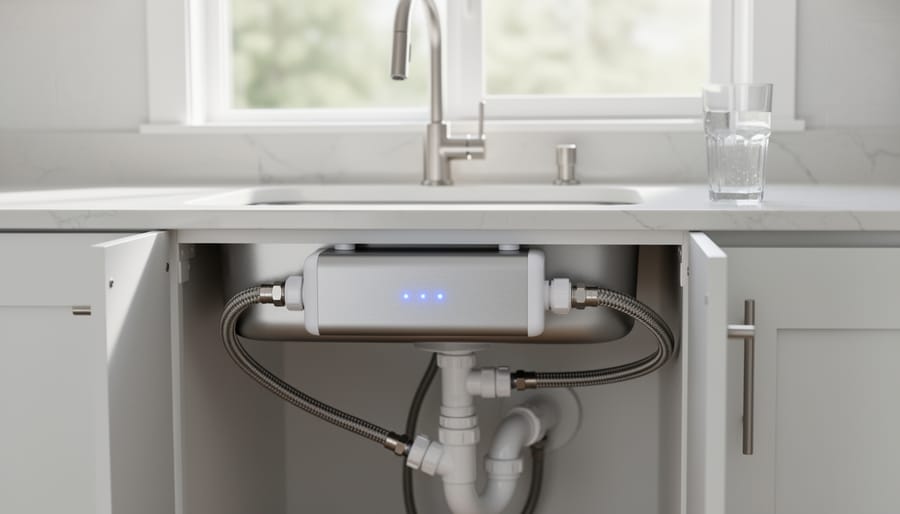
The UV-C LED Breakthrough: What’s Changed and Why It Matters
Mercury Lamps vs. UV-C LEDs: A Clear Winner for Homes
When choosing a UV water disinfection system for your home, understanding the difference between traditional mercury lamps and modern UV-C LEDs can help you make the best decision for your family and the environment.
Traditional mercury lamps have been the industry standard for decades, but they come with significant drawbacks. These bulbs contain toxic mercury that poses disposal challenges and environmental risks if they break. They also require warm-up time before reaching full disinfection capacity and lose effectiveness gradually throughout their lifespan, typically needing replacement every 9-12 months.
UV-C LED technology represents a major leap forward in water treatment innovation. These cutting-edge systems offer several compelling advantages that make them ideal for modern homes. First, their lifespan is dramatically longer, lasting up to 10,000 hours or more—that’s several years of continuous operation compared to mercury lamps. This translates to fewer replacements and lower long-term maintenance costs.
The instant on/off capability of LEDs means they achieve full disinfection power immediately without any waiting period, ensuring your water is safe the moment you turn on the tap. Their compact, durable design also allows for more flexible installation options in tight spaces.
Perhaps most importantly for environmentally-conscious homeowners, UV-C LEDs contain no mercury or other toxic materials, making them safer to handle and easier to dispose of responsibly. They also consume less energy, reducing your carbon footprint while protecting your family’s water supply. For those committed to sustainable living, UV-C LED systems clearly emerge as the winner.
Energy Efficiency That Actually Saves You Money
UV water disinfection systems offer impressive energy efficiency that translates into genuine savings on your utility bills. Traditional UV mercury lamps typically consume between 30 to 90 watts continuously, running 24/7 to maintain water treatment readiness. In contrast, modern UV-C LED systems use approximately 10 to 20 watts, representing up to 80% less energy consumption.
Let’s break down what this means for your wallet. A conventional UV lamp system running at 60 watts costs roughly $50 to $70 annually in electricity, depending on your local rates. A UV-C LED system at 15 watts drops that cost to just $12 to $18 per year. Over the typical 10-year lifespan of LED technology, you’re looking at savings of $400 to $500 in energy costs alone.
Beyond electricity savings, UV-C LEDs eliminate the need for frequent bulb replacements that mercury lamp systems require every 9 to 12 months, with replacement bulbs costing $80 to $150 each. This maintenance-free advantage adds another $800 to $1,500 in savings over a decade, making the switch to UV-C LED technology a financially smart choice for eco-conscious homeowners.
How UV-C LED Systems Protect Your Family’s Health
UV-C LED water disinfection systems offer powerful protection against a wide range of waterborne threats that could compromise your family’s health. These innovative systems use ultraviolet light to neutralize harmful microorganisms at the cellular level, providing a chemical-free barrier between contaminated water and your household.
The technology is remarkably effective against biological contaminants. UV-C light destroys bacteria like E. coli, Salmonella, and Legionella by damaging their DNA, preventing them from reproducing and causing illness. It’s equally powerful against viruses, including norovirus, hepatitis A, and rotavirus, which can survive in water and cause serious health problems. Perhaps most impressively, UV disinfection eliminates parasites such as Giardia and Cryptosporidium, microscopic organisms that are notoriously resistant to chlorine treatment and can cause severe gastrointestinal distress.
For families with young children, elderly members, or anyone with compromised immune systems, this protection is particularly valuable. These groups are most vulnerable to waterborne pathogens that healthy adults might fight off more easily.
However, it’s important to understand what UV systems don’t remove. Unlike filtration methods, UV light doesn’t eliminate chemical contaminants, heavy metals, sediment, or dissolved minerals. The water remains chemically unchanged after UV treatment. This means substances like lead, pesticides, chlorine, or excess calcium won’t be addressed by UV alone.
For comprehensive water protection, many homeowners combine UV disinfection with filtration systems that target chemical and physical contaminants. This multi-barrier approach ensures both microbiological safety and chemical purity. Think of UV as your specialized defense against living organisms, working best as part of a complete water treatment strategy that addresses your home’s specific water quality challenges.
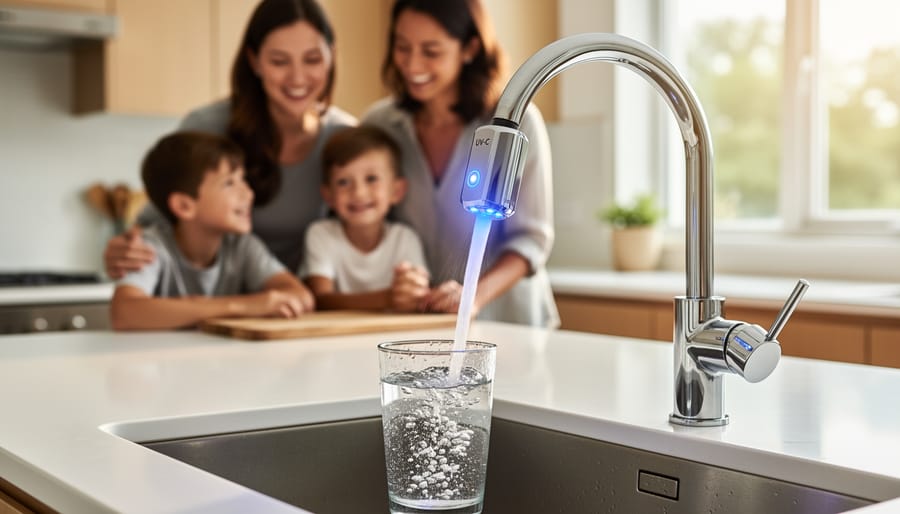
Is a UV-C LED System Right for Your Home?
When You Absolutely Need UV Disinfection
While UV disinfection offers valuable protection for many households, certain situations make it not just beneficial, but essential for safeguarding your family’s health.
If your home relies on well water, UV systems provide crucial defense against bacteria, viruses, and parasites that can contaminate private water sources. Unlike municipal water that undergoes regular testing and treatment, well owners are responsible for their own water safety—making UV disinfection a smart, proactive choice.
Communities experiencing boil-water advisories need immediate protection from waterborne pathogens. A UV system provides reliable backup when municipal treatment falters or infrastructure problems arise, giving you peace of mind during these critical periods.
Households with immunocompromised family members—including cancer patients, transplant recipients, or those with chronic illnesses—absolutely require advanced water protection. Even low levels of pathogens that healthy individuals can tolerate may pose serious risks to vulnerable residents.
Finally, if you live in areas with aging water infrastructure, UV disinfection acts as your home’s last line of defense. Crumbling pipes and outdated treatment facilities can allow contaminants to slip through, but a point-of-entry UV system catches these threats before they reach your tap. This eco-friendly technology delivers chemical-free protection exactly when and where you need it most.
Where UV Systems Work Best in Your Water Treatment Setup
Proper placement of your UV system directly impacts its effectiveness. UV works best as the final disinfection step after sediment filtration removes particles, debris, and cloudiness from your water. Why does this sequence matter? Suspended particles create shadows that shield microorganisms from UV light, reducing disinfection efficiency. Think of it like trying to sterilize something through muddy water versus clear water. Your UV system should follow any mechanical filters, carbon filters, or water softeners in your treatment chain. This ensures the clearest possible water reaches the UV chamber, allowing maximum light penetration. For homeowners seeking comprehensive water treatment, position UV as your final guardian before water reaches your taps, eliminating any bacteria or viruses that survived earlier treatment stages while maintaining the eco-friendly, chemical-free approach that makes UV technology so appealing for sustainable households.
What to Look for When Shopping for UV-C LED Systems
Flow Rate, Dosage, and Other Numbers That Actually Matter
When shopping for a UV water disinfection system, understanding the numbers on the spec sheet makes all the difference between buying the right unit and wasting money on inadequate treatment.
Flow rate, measured in gallons per minute (GPM), tells you how much water the system can treat while you’re actually using it. A typical household needs 10-15 GPM to handle simultaneous water use like running the dishwasher while someone showers. Too low, and water rushes past the UV light without proper exposure time for disinfection.
UV dose, expressed in millijoules per square centimeter (mJ/cm²), measures disinfection strength. The EPA recommends at least 40 mJ/cm² for effective pathogen elimination in residential systems. Higher doses mean better protection, especially if your water has slight cloudiness.
Lamp wattage directly impacts operating costs. Traditional mercury lamps use 30-90 watts, while newer UV-C LED systems can achieve the same results with just 15-40 watts, reducing your energy footprint significantly. This eco-friendly innovation means lower electricity bills and less environmental impact.
Finally, check the lamp lifespan. Most mercury bulbs need replacement every 9-12 months regardless of whether they still glow, while LED systems can last 3-5 years, reducing maintenance hassles and long-term costs.
Certifications You Can Trust
When shopping for a UV water disinfection system, look for products certified by reputable organizations that verify performance and safety claims. The most important certification is NSF/ANSI 55, which specifically tests UV systems for their ability to kill bacteria, viruses, and other microorganisms. This certification confirms that a system actually delivers the ultraviolet dose needed to disinfect water effectively, not just that it contains a UV lamp.
The Environmental Protection Agency also maintains guidelines for UV disinfection systems, particularly for public water systems, though residential units aren’t federally regulated the same way. Still, manufacturers who follow EPA protocols demonstrate commitment to quality standards.
Third-party testing matters because not all UV systems perform equally. A certified system has been independently verified to meet specific disinfection benchmarks, giving you confidence that your investment will protect your family’s health. When comparing products, ask vendors about their certifications and request documentation. Reputable manufacturers proudly display their certifications and can explain exactly what testing their systems underwent.
Installation and Maintenance: Easier Than You Think
One of the most appealing aspects of modern UV water disinfection systems is their straightforward setup and minimal upkeep requirements. If you’re handy with basic plumbing, you might be surprised at how manageable installation can be.
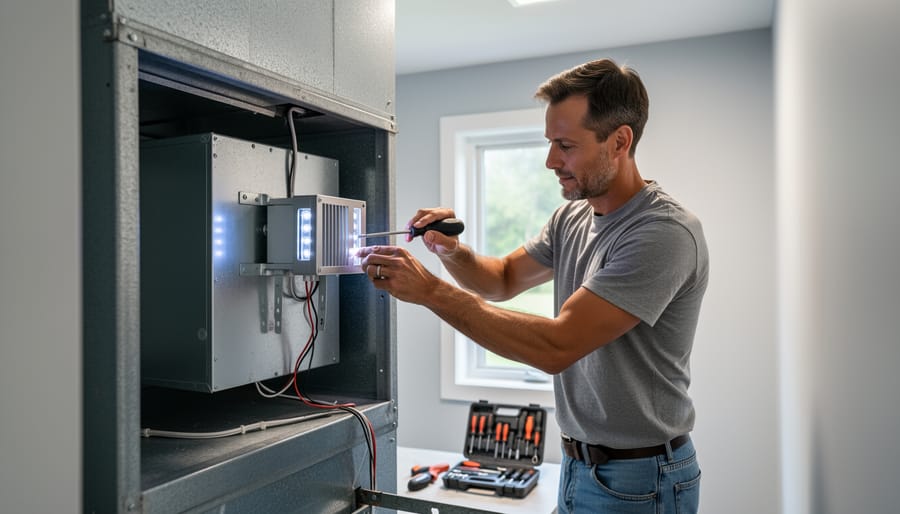
Most UV systems mount directly onto your main water line, typically in the basement or utility room where your water enters the home. The process involves cutting into the pipe, installing shutoff valves, and connecting the UV unit between them. While this sounds intimidating, many homeowners with some DIY experience can tackle it in a few hours using standard tools. That said, if you’re uncomfortable working with plumbing or your local codes require it, hiring a licensed plumber ensures everything meets regulations and functions properly from day one.
The real game-changer comes with maintenance, especially if you choose a system with LED technology. Traditional UV bulbs needed annual replacement regardless of whether they burned out, adding ongoing costs and hassle. LED-based systems can run for years without bulb changes, sometimes lasting the entire lifespan of the unit. Your main maintenance task becomes cleaning the quartz sleeve that protects the lamp, usually just once or twice yearly depending on your water quality. This simple process takes minutes and requires no special skills.
You’ll also want to monitor the system’s indicator light, which alerts you if the UV output drops below effective levels. Most modern units make this foolproof with clear visual displays. For homes with particularly hard water or sediment issues, installing a pre-filter upstream protects your UV system and extends its life even further.
The Environmental Win: Why Eco-Conscious Homeowners Love UV-C LEDs
If you’re committed to reducing your environmental footprint, UV-C LED water disinfection systems represent one of the most eco-friendly choices available today. Unlike traditional water treatment methods that rely on chlorine or other chemical disinfectants, UV technology keeps harsh chemicals out of your wastewater entirely. This means fewer pollutants entering local waterways and a cleaner aquatic ecosystem downstream from your home.
The shift from mercury-based UV lamps to UV-C LEDs marks another significant environmental leap forward. Traditional UV systems contained mercury bulbs that required special disposal procedures and posed contamination risks if broken. UV-C LEDs eliminate this hazard completely, containing no toxic materials and generating less electronic waste over their extended lifespan.
Energy efficiency adds another layer to the sustainability story. UV-C LED systems consume substantially less electricity than their mercury lamp predecessors, sometimes using up to 50 percent less power while delivering comparable or superior disinfection performance. For households powered by solar panels or those simply trying to reduce their carbon footprint, this translates to meaningful energy savings year after year.
These advantages align perfectly with broader water innovation trends emphasizing conservation and resource efficiency. As communities face increasing water quality challenges and environmental pressures, home-level solutions that purify water without environmental trade-offs become increasingly valuable. UV-C LED technology demonstrates that protecting your family’s health and protecting the planet aren’t competing priorities but complementary goals that modern innovation can achieve simultaneously.
UV-C LED disinfection systems represent a significant leap forward in household water safety, offering modern homeowners an effective, chemical-free solution that aligns with sustainable living values. These innovative systems eliminate up to 99.9% of harmful microorganisms while maintaining the natural taste and mineral content of your water. Unlike traditional treatment methods, UV-C LED technology requires minimal maintenance, consumes less energy, and produces no harmful byproducts, making it an environmentally responsible choice for eco-conscious households.
As you consider upgrading your home’s water treatment approach, take time to evaluate their water quality through professional testing to understand your specific needs. UV disinfection works best as part of a comprehensive water safety strategy, particularly when combined with appropriate filtration for sediment, chemicals, or heavy metals. By investing in this cutting-edge technology, you’re not only protecting your family’s health but also contributing to a more sustainable future by reducing reliance on chemical treatments and single-use plastic bottles. The combination of proven effectiveness, environmental benefits, and long-term cost savings makes UV-C LED systems a smart choice for forward-thinking homeowners.