Every time you turn on your tap, chlorine flows through your pipes—a chemical municipalities add to kill waterborne pathogens, yet one that transforms your home’s water into something far less than pure. While chlorine serves its purpose in public water treatment, it continues working long after leaving the treatment plant, affecting everything from your morning shower to your drinking water, your skin health to your home’s plumbing.
The solution lies in catching chlorine before it enters your household plumbing system. Installing a whole house water filter systems at your main water line removes chlorine at the point of entry, protecting every faucet, showerhead, and appliance throughout your home. Unlike countertop pitchers or under-sink filters that address single locations, whole-house filtration tackles the root of the problem where water first enters your property.
Modern chlorine filtration technology centers on two proven methods: catalytic carbon filters and KDF media systems. Catalytic carbon excels at chlorine and chloramine removal through enhanced adsorption, while KDF media uses a redox reaction to neutralize chlorine molecules. Understanding these technologies empowers you to select a system matching your water chemistry, household size, and budget.
This comprehensive guide demystifies whole-house chlorine filtration, from understanding why chlorine matters to your health, through selecting the right technology, to practical installation and maintenance steps. You’ll discover how to transform every water source in your home into clean, chlorine-free water that protects your family and the environment.
What Chlorine Actually Does to Your Water (and Your Body)

The Daily Chlorine Exposure You Don’t See
Most people think chlorine exposure only happens when drinking tap water, but the reality is far more extensive. Your daily household routines expose you to chlorine in ways you probably haven’t considered.
Take your morning shower, for instance. A typical 10-minute hot shower exposes you to more chlorine than drinking eight glasses of unfiltered tap water. When water heats up, chlorine converts to gas, which you inhale directly into your lungs. Simultaneously, your skin absorbs chlorine through open pores, with some studies suggesting absorption rates increase significantly in warm water.
In the kitchen, chlorine exposure continues throughout the day. When you boil water for pasta or steam vegetables, chlorine vaporizes into your cooking space. Washing produce under chlorinated tap water means you’re rinsing fruits and vegetables with the same chemical used to sanitize pools. Even that refreshing glass of water at dinner contributes to your daily intake.
Beyond direct contact, your washing machine uses dozens of gallons of chlorinated water per load, releasing chlorine vapors into your laundry room and onto your clothes and linens. These fabrics then rest against your skin for hours.
Add up all these touchpoints—showering, cooking, cleaning, drinking—and the average household member encounters chlorinated water hundreds of times daily. This cumulative exposure explains why many homeowners seek comprehensive filtration solutions rather than addressing individual faucets. Understanding this complete picture helps you make informed decisions about protecting your household’s water quality.
Disinfection Byproducts: The Hidden Problem
When chlorine interacts with organic matter in water—such as decaying leaves, soil runoff, or naturally occurring compounds—it creates chemical byproducts called disinfection byproducts (DBPs). The most common group is trihalomethanes, or THMs, which include chloroform and other compounds that weren’t intentionally added to your water supply but formed during the treatment process.
These byproducts develop because chlorine is highly reactive. While that reactivity makes it effective at killing harmful bacteria, it also means chlorine bonds with organic materials present in source water. The result is a mix of new chemical compounds that persist through the distribution system and flow from your tap.
Research from the Environmental Protection Agency and various health organizations has established connections between long-term exposure to elevated DBP levels and certain health concerns. Studies have examined potential links to bladder and colorectal issues, reproductive health effects, and developmental concerns during pregnancy. The EPA has set maximum contaminant levels for total THMs at 80 parts per billion, though some researchers advocate for lower limits.
It’s important to note that municipal water systems regularly monitor these levels and typically maintain compliance with safety standards. However, DBP concentrations can vary seasonally—often peaking during warmer months when organic matter is more abundant—and some homeowners prefer reducing their exposure beyond regulatory minimums. Understanding these byproducts helps explain why many people seek comprehensive filtration solutions that address not just chlorine itself, but also what it creates in treated water.
How Whole House Chlorine Filtration Actually Works

Activated Carbon: The Workhorse of Chlorine Removal
When it comes to removing chlorine from your entire home’s water supply, activated carbon stands as the gold standard filtration technology. This remarkable material works through a process called adsorption, where chlorine molecules stick to the surface of the carbon like magnets, effectively trapping them before the water flows through your taps.
Think of activated carbon as an incredibly porous sponge at the microscopic level. Through a special heating process, manufacturers create millions of tiny pores within the carbon structure, resulting in an enormous surface area. Just one pound of activated carbon can have a surface area equivalent to several football fields, giving chlorine molecules countless places to attach and be removed from your water.
There are two primary types of carbon media used in whole house systems: Granular Activated Carbon (GAC) and carbon block filters. GAC consists of loose carbon granules that allow water to flow through quickly, making it ideal for treating high volumes of water throughout your home. These systems efficiently remove chlorine while maintaining good water pressure. Carbon block filters, on the other hand, compress carbon into a solid block, offering more thorough filtration but potentially slower flow rates.
Both types excel at eliminating chlorine and its associated taste and odor issues. They also capture chloramines, a chlorine alternative some municipalities use, though this requires slightly longer contact time. Beyond chlorine removal, activated carbon filters simultaneously reduce volatile organic compounds (VOCs) and certain pesticides, providing an eco-friendly, chemical-free purification method.
The beauty of carbon filtration lies in its simplicity and effectiveness. No electricity required, no wastewater produced, and no complex mechanisms to maintain—just natural adsorption working quietly to deliver cleaner, better-tasting water throughout your home.
KDF Media and Catalytic Carbon: Advanced Options
While activated carbon excels at chlorine removal, some homeowners benefit from enhanced filtration media that tackle additional water quality challenges. Two innovative options worth considering are KDF (Kinetic Degradation Fluxion) media and catalytic carbon, which offer unique advantages for comprehensive water treatment.
KDF media uses a copper-zinc formulation that creates an electrochemical reaction to neutralize contaminants. This technology particularly shines in situations where water contains chlorine alongside other concerns like hydrogen sulfide or iron. The media also inhibits bacterial growth within your filtration system, extending the overall lifespan of your carbon filters. Homeowners with well water or older municipal systems often find KDF media especially valuable for its multi-tasking capabilities.
Catalytic carbon represents an upgraded version of standard activated carbon, manufactured through specialized processing that creates a more reactive surface. This enhanced material removes chloramines more effectively than regular carbon while maintaining excellent chlorine removal performance. Many municipalities now use chloramines instead of chlorine for disinfection, making catalytic carbon increasingly relevant for modern water treatment needs.
Both options excel at heavy metal reduction, addressing lead, mercury, and other metallic contaminants that standard carbon may miss. The extended media life of these alternatives also reduces replacement frequency, lowering long-term maintenance costs and environmental waste.
Consider these advanced media when your water testing reveals multiple contaminants beyond chlorine, or when you want maximum protection for your household’s water quality investment.
Choosing the Right System Size and Type for Your Home
Flow Rate and Tank Size: Getting the Math Right
Getting the right flow rate for your whole house chlorine filtration system ensures every faucet and shower delivers clean water without frustrating pressure drops. Here’s how to calculate what you need without getting lost in complicated formulas.
Flow rate, measured in gallons per minute (GPM), determines how much filtered water your system can deliver simultaneously to multiple fixtures. Start by counting how many fixtures might run at the same time during peak usage—think morning routines when showers, toilets, and kitchen sinks compete for water.
As a general guideline, most households need systems rated between 10-20 GPM. A smaller home with 1-2 bathrooms typically requires 10-15 GPM, while larger homes with 3-4 bathrooms should target 15-20 GPM. If you frequently run multiple showers, washing machines, and dishwashers simultaneously, lean toward the higher end.
Here’s a simple calculation: add up the flow rates of fixtures you’d use together. Standard showers use about 2.5 GPM, toilets need 3 GPM when flushing, and kitchen faucets draw roughly 2 GPM. If two showers and one toilet might run simultaneously, that’s 8 GPM minimum—but adding a 25-30% buffer ensures comfortable pressure.
Tank size matters too, especially with carbon-based systems. Larger tanks contain more filtration media, which means longer contact time with chlorine and better removal efficiency. For most households, a 10-inch diameter tank works well for smaller homes, while 12-13 inch tanks suit larger properties with higher water demands.
Testing Your Chlorine Levels First
Before investing in a whole house water filtration system, understanding your current chlorine levels is essential. This baseline helps you select the right system capacity and ensures you’re not over-investing in unnecessary filtration power.
You’ll want to measure two types of chlorine: free chlorine (the active disinfectant your municipality adds) and total chlorine (which includes both free chlorine and combined chlorine compounds). Simple at-home test strips, available at hardware stores for around $15-20, provide quick results within minutes. For more precise readings, digital meters offer laboratory-grade accuracy, though they cost between $50-150.
Testing is straightforward. Collect water from a cold tap that hasn’t been run for several hours, ideally first thing in the morning. Follow the kit’s instructions carefully, typically involving dipping a strip or adding reagent drops. Most municipal water contains 0.5-2.0 parts per million (ppm) of chlorine, though levels can spike seasonally when treatment plants increase disinfection.
Professional laboratory testing becomes worthwhile if you notice strong chemical odors, taste issues, or have health sensitivities. Labs can detect chlorine byproducts like trihalomethanes and provide comprehensive water quality profiles for $50-200. This detailed analysis helps when selecting between basic carbon systems and more advanced catalytic filters.
Your test results directly inform system selection. Higher chlorine levels (above 2 ppm) may require larger carbon tanks or more frequent filter changes, while lower levels might allow for smaller, more economical units. Document your results and share them with filtration system specialists to ensure proper sizing for your household’s needs.

Installation Realities: What to Expect
Installing a whole house chlorine filtration system is more straightforward than many homeowners expect, though it does require careful planning. Understanding the installation process upfront helps you budget appropriately and avoid surprises.
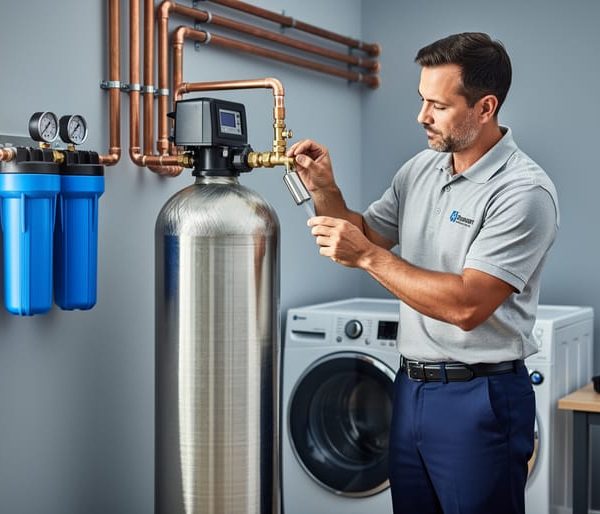
Most homeowners choose professional installation, and for good reason. A qualified plumber typically completes the job in 3-6 hours, depending on your home’s plumbing configuration. Professional installation costs generally range from $500 to $1,500 on top of the system price, but this investment ensures proper integration with your existing water lines and maintains your home warranty. Professionals can also identify the optimal installation point, usually where the main water line enters your home, before it branches to different fixtures.
DIY installation is possible if you’re comfortable with basic plumbing tasks like cutting pipes, soldering copper connections, or working with PEX tubing. You’ll need standard plumbing tools, Teflon tape, and a few hours of uninterrupted time. However, consider that mistakes can lead to leaks or reduced system effectiveness, potentially costing more in repairs than professional installation would have.
Space requirements are modest but important. Most whole house systems need approximately 2-4 feet of vertical or horizontal clearance, typically installed in basements, utility rooms, or garages. The location must remain accessible for future filter changes, which you’ll perform every 6-12 months depending on your water usage and chlorine levels.
Plumbing modifications are usually minimal. Your installer may need to add a bypass valve, which allows water flow during maintenance, and potentially adjust existing pipes to accommodate the filter housing. Homes with older galvanized pipes might require additional work.
Budget for the complete project, including the system itself ($300-$2,500), installation labor, any necessary plumbing updates, and replacement filters ($50-$150 annually). While the upfront investment requires planning, the long-term benefits of chlorine-free water throughout your entire home make it a worthwhile upgrade for most households.
Maintenance You Can’t Skip (But It’s Easier Than You Think)
Keeping your whole house water filtration system running smoothly isn’t as daunting as it might sound. Most homeowners find that with a simple routine, maintenance becomes second nature and takes minimal effort.
The cornerstone of system maintenance is following proper filter replacement schedules. Carbon filters typically need changing every 6-12 months, depending on your household water usage and chlorine levels. Think of it like changing the oil in your car—regular replacement ensures optimal performance. Many modern systems include indicator lights or digital displays that alert you when it’s time for a change, removing the guesswork entirely.
Beyond filter changes, quarterly system checks take just minutes. Look for any visible leaks, check that pressure gauges read within normal ranges, and ensure connections remain secure. These quick inspections catch potential issues before they become problems.
Monitoring your water quality provides peace of mind that your system is working effectively. Simple test strips available at hardware stores can verify chlorine removal in seconds. Test your water every few months, or if you notice any changes in taste or smell. This proactive approach confirms your investment continues protecting your family.
Here’s a practical tip for staying on schedule: set recurring reminders on your smartphone calendar with alerts three months, one month, and one week before filter changes are due. This graduated reminder system ensures you’re never caught off guard. Some eco-conscious homeowners even subscribe to automatic filter delivery services, eliminating the hassle of remembering to order replacements.
The bottom line? Fifteen minutes every few months and annual filter replacements keep your system running efficiently for years. That’s a small investment for continuous, chlorine-free water throughout your entire home.

The Environmental Impact of Your Choice
Installing a whole house water filtration system for chlorine removal delivers meaningful environmental benefits that extend far beyond your property line. Perhaps the most immediate impact is the dramatic reduction in plastic bottle waste. The average household that relies on bottled water generates hundreds of plastic bottles annually, many of which end up in landfills or oceans. By providing clean, chlorine-free water from every tap, a whole house system eliminates the perceived need for bottled water, keeping countless plastic bottles out of the waste stream.
Unlike point-of-use filters that require frequent cartridge replacements for multiple locations, whole house systems consolidate filtration into a single point. This means fewer filter cartridges to manufacture, package, ship, and eventually dispose of throughout the year. While you will still need to replace filter media periodically, the overall waste footprint is significantly smaller compared to maintaining pitcher filters, faucet-mounted units, and refrigerator filters throughout your home.
The sustainability of your system depends largely on the filter media you choose. Activated carbon filters, particularly those made from coconut shells, represent a renewable resource option. These filters effectively remove chlorine while maintaining a lower environmental footprint than coal-based alternatives. When selecting your system, inquire about the source and sustainability credentials of the filter media.
Water waste is an important consideration. Traditional reverse osmosis systems can waste several gallons for every gallon filtered, but chlorine removal systems typically operate without this drawback. Carbon-based and KDF filters work through contact filtration rather than rejection, meaning virtually no water goes to waste during the purification process.
Energy efficiency also factors into your environmental footprint. Most chlorine filtration systems operate without electricity, relying solely on your existing water pressure. This passive operation means zero ongoing energy consumption, making these systems remarkably eco-friendly from an operational standpoint. By choosing a whole house chlorine filtration system, you are making a decision that benefits both your household and the planet.
Beyond Chlorine: What These Systems Don’t Remove
While whole house chlorine filtration systems excel at their primary job, it’s important to understand their limitations. These systems are specifically designed to remove chlorine and chloramine, but they typically won’t address other common water quality concerns that might affect your home.
Chlorine-focused filters generally don’t remove fluoride, which requires specialized media like activated alumina or reverse osmosis technology. Heavy metals such as lead, mercury, and arsenic also pass through standard carbon filters unchanged. If your water contains these contaminants, you’ll need additional filtration stages specifically designed to capture them.
Hard water minerals like calcium and magnesium also remain untouched by chlorine removal systems. If you’re dealing with scale buildup on fixtures, dry skin, or spotty dishes, a chlorine filter alone won’t solve these problems. Many homeowners find that a filter and softener combo provides the most comprehensive solution, addressing both chlorine and hardness simultaneously.
Bacteria, viruses, and other microorganisms require ultraviolet sterilization or specialized filtration media. Standard activated carbon filters remove chlorine’s disinfecting properties, potentially creating conditions where bacteria can grow if the filter isn’t properly maintained.
Understanding these limitations helps you make informed decisions about your water treatment needs. Start by testing your water to identify all contaminants present, not just chlorine. This knowledge allows you to build a filtration system that truly addresses your household’s unique water quality challenges. Many modern whole house systems offer modular designs, letting you add treatment stages as needed without replacing your entire setup.
Investing in a whole house water filtration system for chlorine removal is more than just an upgrade to your home—it’s a meaningful investment in your family’s health, comfort, and quality of life. The benefits extend far beyond simply improving taste and odor. By removing chlorine and its byproducts throughout your entire home, you’re reducing your household’s exposure to potentially harmful chemicals while protecting your skin, hair, and respiratory system from daily irritation.
The environmental advantages shouldn’t be overlooked either. By eliminating the need for bottled water and reducing plastic waste, you’re making a tangible contribution to sustainable living. Your appliances will last longer, your clothes will stay vibrant, and your plumbing will thank you for years to come. These systems represent cutting-edge water innovation that works silently in the background, delivering clean water to every faucet, shower, and appliance without hassle.
The most empowering step you can take right now is to test your water. Understanding what’s actually in your water supply gives you the knowledge to make informed decisions about your family’s wellbeing. Whether your water comes from a municipal source or a private well, knowing your baseline chlorine levels helps you choose the right filtration solution for your specific needs.
Remember, every glass of water, every shower, and every load of laundry is an opportunity to experience the difference that truly clean water makes. Your family deserves water that supports health rather than compromises it. Take that first step today—test your water and discover how a whole house chlorine filtration system can transform your daily life.