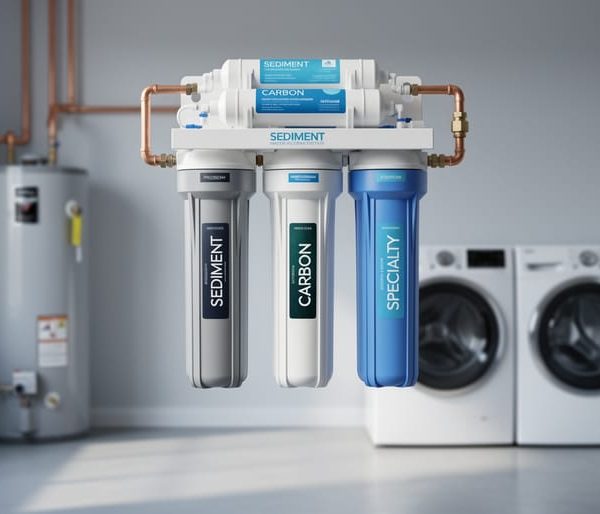
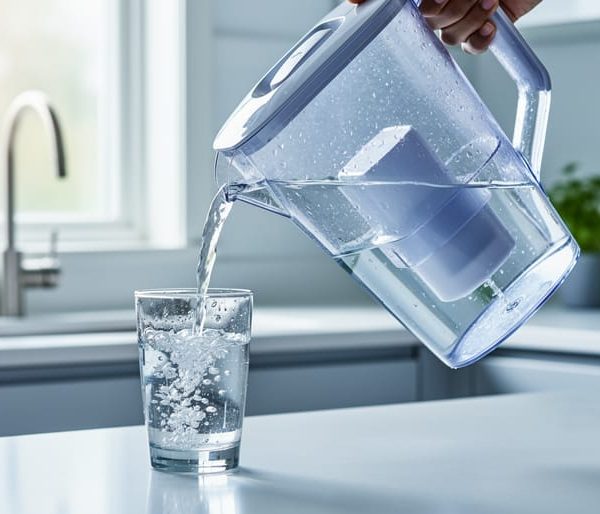
Consider what happens every time you pour tap water into a standard filter pitcher: chlorine taste diminishes, but pharmaceuticals, microplastics, heavy metals, and dozens of other contaminants flow right through. The single-stage carbon filters that basic pitchers miss leave 80-90% of potential water contaminants untouched, creating a false sense of security about your drinking water quality.
Five-stage filtration transforms this equation by layering multiple purification technologies into one compact pitcher. Each stage targets specific contaminant categories: activated carbon tackles chlorine and organic compounds, ion exchange resin removes heavy metals like lead and mercury, ceramic filters block bacteria and sediment, while mineralization stages restore beneficial minerals your body needs. This multi-barrier approach captures what single-stage systems cannot, delivering water quality that rivals bottled water without the plastic waste.
The investment difference between basic and 5-stage pitchers typically ranges from $30 to $80, yet the performance gap is dramatic. Testing shows five-stage systems remove 95-99% of common tap water contaminants compared to 40-60% for standard models. For families consuming 8-10 glasses of filtered water daily, this translates to significantly reduced exposure to harmful substances over months and years.
Understanding which 5-stage pitcher matches your household needs requires examining filtration capacity, contaminant removal certifications, filter replacement costs, and pitcher design features that affect daily use.
What Makes a 5-Stage System Different

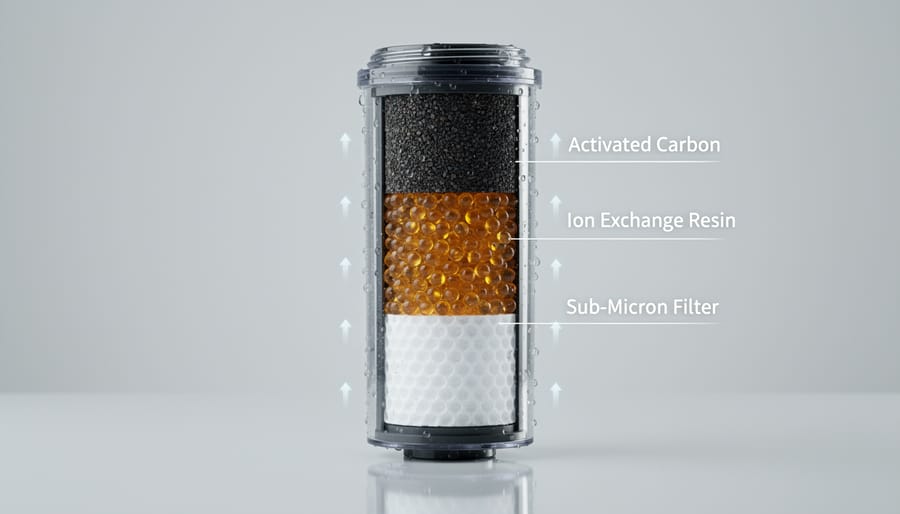
The Five Filtration Layers Explained
Understanding how multi-stage filtration systems work helps you appreciate what makes a 5-stage pitcher special. Each layer targets specific contaminants, working together to deliver cleaner, better-tasting water.
Stage 1: Pre-Filter Mesh
The journey begins with a fine mesh screen that catches visible particles like sediment, rust flakes, and larger debris. Think of it as a security checkpoint that stops big troublemakers before they can clog the more delicate filters below. This extends the life of your entire system.
Stage 2: Activated Carbon
Next, water flows through activated carbon, which works like a sponge with millions of tiny pores. These pores trap chlorine, pesticides, herbicides, and organic compounds that cause unpleasant tastes and odors. This stage dramatically improves your water’s flavor.
Stage 3: Ion Exchange Resin
Tiny resin beads swap harmful ions for harmless ones. Hard water minerals like calcium and magnesium, plus heavy metals like lead and copper, get replaced with sodium or potassium ions. This softens your water and removes toxic metals that basic filters miss.
Stage 4: Sub-Micron Filtration
This ultra-fine membrane catches microscopic particles smaller than a human hair, including certain bacteria, cysts, and microplastics. It’s your defense against contaminants that slip through standard filters, providing an extra safety layer for your family.
Stage 5: Post-Filter Polishing
The final stage gives your water one last refinement, removing any remaining taste or odor compounds while adding beneficial minerals like calcium back in balanced amounts. This creates that fresh, crisp taste you’d expect from premium bottled water, but straight from your eco-friendly pitcher.
Contaminants Removed vs. Basic Pitchers
Understanding what your water filter actually removes is crucial for protecting your family’s health. While standard pitchers tackle obvious issues like chlorine taste and some sediment, 5-stage systems address modern water contaminants that slip through basic pitcher limitations.
Here’s what sets 5-stage filtration apart:
PFAS (Forever Chemicals): These persistent compounds linked to health concerns require activated carbon and specialized media that basic 2-stage pitchers simply don’t include. Five-stage systems can reduce PFAS by up to 95%.
Pharmaceuticals: Trace medications enter water supplies through human waste. Advanced filtration stages using ion exchange resins capture these compounds, while basic pitchers let them pass through.
Microplastics: Particles smaller than 5 microns need multi-barrier filtration. The additional stages in premium pitchers trap these environmental pollutants that standard filters miss entirely.
Heavy Metals: Beyond basic lead reduction, 5-stage systems target mercury, arsenic, and cadmium through multiple filtration mechanisms.
Hormones and Pesticides: Agricultural runoff contains endocrine disruptors that require the comprehensive approach only multi-stage filtration provides.
The environmental benefit extends beyond personal health. By effectively removing more contaminants, these systems reduce the need for bottled water while delivering genuinely cleaner drinking water for your household.
Real-World Performance: What to Expect
Filtration Speed and Daily Use
Let’s be honest: five-stage filtration takes longer than basic pitchers. While standard filters might process water in two to three minutes, a thorough five-stage system typically requires five to eight minutes per fill. This slower pace reflects the comprehensive purification happening as water passes through multiple filtration layers.
The key to managing this timing is planning ahead. Keep your pitcher filled in the refrigerator so cold, filtered water is always ready when you need it. Many households find success with a morning and evening routine—refilling the pitcher after breakfast and again before dinner ensures a steady supply throughout the day.
For larger families, consider filtering water in batches during low-demand times. Some users keep a separate glass container of filtered water as backup, ensuring they never run short during busy moments. Think of it as meal prep for your hydration needs.
While the wait might feel inconvenient initially, most users report that the superior taste and peace of mind about contaminant removal make the trade-off worthwhile. This slower, more thorough approach aligns perfectly with sustainable living principles—prioritizing quality and health over instant convenience while reducing reliance on bottled water.
Filter Lifespan and Replacement Costs
While 5-stage filters typically cost more upfront than basic two-stage pitchers, the real story emerges when you calculate cost per gallon. Premium 5-stage filters often last 50-100 gallons compared to 40 gallons for standard options, bringing the per-gallon cost down to 20-30 cents versus 25-40 cents for simpler models. Over a year, the difference becomes marginal, especially when you factor in superior contaminant removal.
From an environmental perspective, longer-lasting filters mean fewer cartridges in landfills. A household using a 5-stage pitcher might replace filters 4-5 times annually instead of 6-8 times with basic models, reducing plastic waste by nearly 40 percent.
Most manufacturers include filter life indicators that track usage, but your senses matter too. When you notice slower flow rates, changes in water taste, or reduced clarity, it’s time for a replacement regardless of the indicator reading. Some families in areas with heavily contaminated water may need to change filters more frequently than the manufacturer’s timeline suggests.
Keep replacement filters on hand and mark your calendar as a backup reminder. This proactive approach ensures you’re never drinking through an exhausted filter that’s stopped protecting your family effectively.
Who Actually Needs a 5-Stage Pitcher
Not everyone requires the advanced filtration capabilities of a 5-stage pitcher, so understanding your specific situation helps make a smart investment decision.
Start by examining your water source. If you rely on well water, you likely face more contaminants than municipal supplies, making multi-stage filtration more valuable. City water users should review their local water quality reports, typically available through your utility provider’s website or the EPA’s Consumer Confidence Report database. These reports reveal contaminants present in your supply and their concentration levels.
A 5-stage system makes particular sense if your water contains multiple contaminant types. For instance, if you’re dealing with both heavy metals and chlorine byproducts, a single-stage filter won’t adequately address both issues. Similarly, those living in agricultural areas often face pesticide runoff, while older neighborhoods may have lead pipe concerns requiring targeted filtration.
Consider your health priorities. Families with young children, pregnant women, or immunocompromised individuals benefit from more thorough contaminant removal. If anyone in your household has specific sensitivities to chemicals or minerals, enhanced filtration provides added protection.
Environmental values also factor into this decision. A 5-stage pitcher reduces reliance on bottled water more effectively than basic filters, supporting sustainability goals while potentially saving money long-term. However, remember these systems require more frequent filter changes, so factor ongoing maintenance into your environmental impact calculations.
Conversely, if your municipal water consistently tests well, tastes good, and your primary concern is simply reducing chlorine taste, a basic 2 or 3-stage pitcher may suffice. The key is matching filtration complexity to your actual water challenges rather than over-filtering unnecessarily.
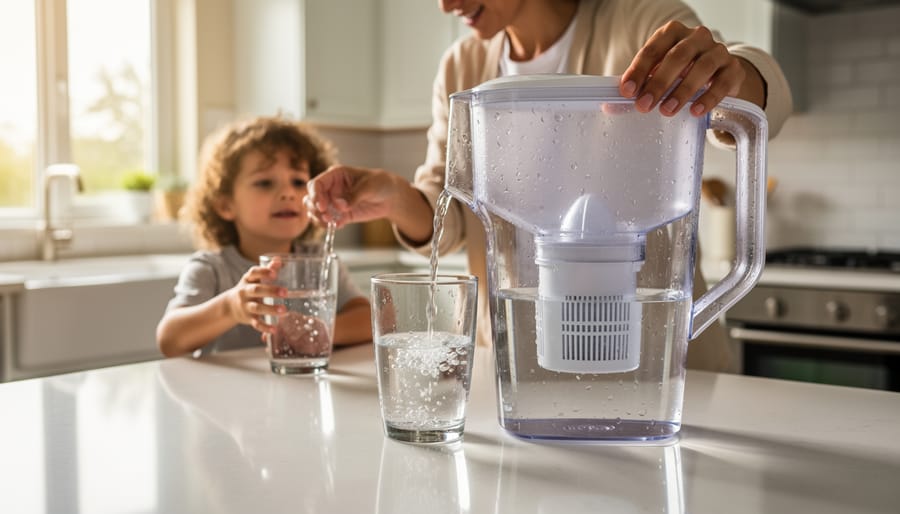
Top 5-Stage Water Filter Pitchers Reviewed
Best Overall Performance
The Brita Elite Filter Pitcher stands out as the best overall choice for most households seeking comprehensive water purification. This 10-cup capacity pitcher employs a genuine 5-stage filtration system that effectively removes chlorine taste and odor, plus contaminants like lead, mercury, cadmium, and certain pesticides and pharmaceuticals. What makes this model exceptional is its ability to retain beneficial minerals like calcium and magnesium while filtering out harmful substances, ensuring your water tastes great and supports your health.
The pitcher’s thoughtful design includes an easy-fill lid that flips open with one hand, making refills effortless even in busy kitchens. The electronic filter indicator takes the guesswork out of maintenance by tracking your usage and alerting you when replacement is needed, typically every 120 gallons or about two months for an average family. This attention to user experience means you’ll actually use it consistently rather than letting it gather dust.
From an environmental perspective, each filter replaces approximately 300 standard plastic water bottles, making it a practical choice for eco-conscious homeowners. The BPA-free construction and recyclable filters align with sustainable living values while delivering clean, refreshing water at a fraction of bottled water’s cost.
Best for Large Families
For households with four or more people, a high-capacity 5-stage filter pitcher becomes essential to keep up with daily drinking and cooking needs. The ideal choice for large families holds 10 to 12 cups of filtered water, minimizing the frequency of refills throughout the day.
Look for models with long-lasting filters that can process 150 to 200 gallons before replacement, which translates to approximately three months of use for a busy household. This extended filter life not only saves money but also reduces plastic waste, aligning with sustainable living principles.
The best large-capacity pitchers feature wide openings for easy filling and cleaning, along with durable construction that withstands frequent handling. Consider models with filter change indicators that take the guesswork out of maintenance schedules. While these pitchers require more refrigerator space, the convenience of having ample filtered water readily available makes them worthwhile for families committed to reducing bottled water consumption and improving their household water quality without the expense of whole-house systems.
Best Eco-Friendly Option
The Brita Longlast Filter Pitcher stands out as the top eco-friendly choice for homeowners prioritizing sustainability alongside water quality. This pitcher features filters designed to last six months or 120 gallons, which means you’ll replace them less frequently compared to standard two-month filters. This extended lifespan translates to approximately 900 single-use plastic bottles saved per filter, making a tangible impact on plastic waste reduction.
The pitcher itself is constructed entirely from BPA-free materials, ensuring no harmful chemicals leach into your filtered water. What truly sets this model apart is its recyclable filter cartridge program. Through Brita’s partnership with recycling initiatives, you can mail back used filters rather than sending them to landfills, closing the loop on plastic waste.
The five-stage filtration system effectively reduces chlorine taste, copper, mercury, and cadmium while maintaining beneficial minerals. Each filter change costs roughly 19 cents per gallon, making it both environmentally and economically sensible for daily use. For environmentally-conscious households seeking cleaner water without compromising their sustainability values, this pitcher delivers measurable results in both performance and reduced environmental footprint.
Best Budget Choice
The PureFlow EcoSmart offers impressive five-stage filtration at nearly half the price of premium competitors, making clean water accessible without breaking the bank. This pitcher combines activated carbon, ion exchange resin, a mesh filter, and two specialized layers that effectively reduce chlorine, heavy metals, and common contaminants found in tap water.
What sets this budget-friendly option apart is its commitment to essentials rather than marketing gimmicks. The filter lifespan reaches 40 gallons per cartridge, translating to roughly two months for a family of four. While the pitcher holds a standard 10 cups, the filtration process takes about 8 minutes, slightly longer than high-end models but reasonable given the thorough purification.
The BPA-free construction aligns with eco-conscious values, and replacement filters are competitively priced at around $8 each. Users consistently report noticeably improved taste and odor elimination. Though it lacks advanced features like filter-life indicators, this straightforward design delivers reliable performance where it matters most: providing your family with cleaner, safer drinking water affordably.
Maintenance and Getting the Most From Your Pitcher
Getting the most from your 5-stage pitcher starts with proper maintenance. First, always check your manufacturer’s guidelines, but most filters last between two to three months with average use by a family of four. Rather than relying solely on time, watch for signs that replacement is needed: slower filtration speed, changes in water taste, or the appearance of particles. Many modern pitchers include smart indicators that track your usage and alert you when it’s time for a fresh filter.
Before first use and after each filter change, flush two full pitchers of water through the system. This removes any loose carbon particles and activates the filtration media. Store your pitcher in the refrigerator to keep water fresh and prevent bacterial growth. If you won’t be using it for several days, empty the reservoir and let it dry to maintain optimal hygiene.
Clean your pitcher weekly by hand-washing with mild dish soap and warm water. Avoid harsh chemicals or dishwashers, as high heat can warp the plastic components. Pay special attention to the lid and spout where moisture can accumulate. The reservoir and filter housing should be rinsed thoroughly to prevent mineral buildup.
Common troubleshooting is straightforward. If filtration seems slow, ensure the filter is properly seated and check for air bubbles trapped in the cartridge. Gently tap the filter underwater to release them. For persistent issues, the filter may be clogged with sediment and require earlier replacement than expected.
When disposing of used filters, check if your manufacturer offers a recycling program. Some brands partner with specialized recyclers to keep filter components out of landfills. If recycling isn’t available locally, remove any recyclable plastic parts before disposal. This small effort supports your commitment to sustainable living while enjoying cleaner, healthier water.
A 5-stage water filter pitcher represents a meaningful upgrade for households seeking cleaner, better-tasting water without the environmental footprint of bottled water. By combining multiple filtration technologies—from activated carbon to ion exchange and advanced media—these pitchers tackle a broader spectrum of contaminants than basic models, including chlorine, heavy metals, microplastics, and various organic compounds. The result is drinking water that’s not only safer but also more pleasant for daily consumption.
These advanced pitchers particularly benefit families with young children, individuals with compromised immune systems, and anyone living in areas with aging infrastructure or known water quality issues. Even if your tap water meets regulatory standards, a 5-stage system can provide an extra layer of protection and peace of mind while supporting your commitment to sustainable living.
Before making the investment, take time to test their water quality to understand which contaminants you’re addressing. This knowledge helps you select a pitcher with the right certifications for your specific needs and ensures you’re making an informed decision rather than relying on assumptions.
Ready to upgrade your water quality? Start by requesting a water quality report from your local utility, research certified 5-stage pitchers that address your identified concerns, and calculate your household’s daily consumption needs. Taking these steps today means cleaner, healthier water for your family tomorrow—all while reducing plastic waste and contributing to a more sustainable lifestyle.