Contact a state-certified laboratory that specifically tests for PFAS compounds—not all water testing facilities have the specialized equipment needed to detect these “forever chemicals” at the parts-per-trillion levels where they pose health risks. Request a comprehensive PFAS panel that screens for multiple compounds, including PFOA, PFOS, and newer variants like GenX, since manufacturers have shifted to alternative formulations that may still contaminate your water supply.
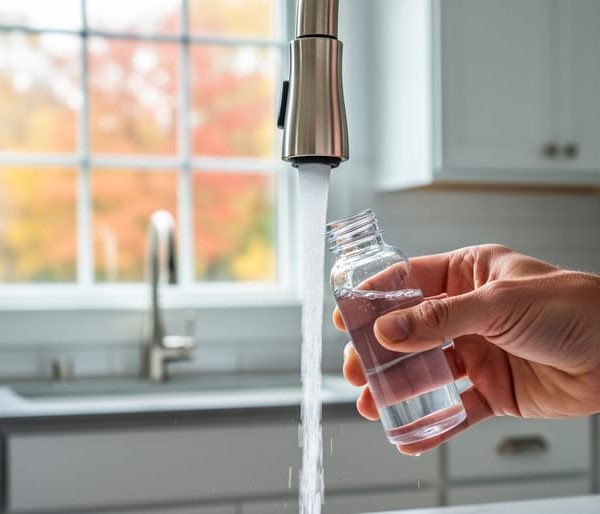
Collect your water sample during a period of normal household use rather than after extended non-use, as stagnant water can produce misleading results. Most labs provide sampling kits with sterile bottles and detailed instructions, but the key is to let your tap run for several minutes before collecting to ensure you’re testing water representative of daily consumption. Ship samples promptly using the provided cooler packs, as temperature fluctuations can affect accuracy.
Expect testing costs between $300-$600 depending on how many PFAS compounds the lab screens for—comprehensive panels examining 40+ chemicals cost more but provide clearer answers about your water safety. PFAS contamination testing results typically arrive within 2-4 weeks and should clearly indicate whether detected levels exceed EPA health advisories of 4 parts per trillion for PFOA and PFOS combined.
Compare your results against both federal guidelines and your state’s regulations, as some states have established stricter limits. If contamination is confirmed, document everything—these test results become essential for insurance claims, property disclosures, and accessing state remediation programs or legal remedies against nearby industrial polluters.
Understanding your well water’s PFAS levels isn’t just about protecting your family’s health today; it’s about making informed decisions regarding filtration systems, alternative water sources, and your property’s long-term value.
What Makes PFAS So Dangerous in Well Water
PFAS, short for per- and polyfluoroalkyl substances, represent a family of over 12,000 synthetic chemicals that have earned the unsettling nickname “forever chemicals.” This name reflects their most troubling characteristic: they don’t break down naturally in the environment or in your body. Unlike other well water contaminants that eventually degrade, PFAS compounds contain incredibly strong carbon-fluorine bonds that resist decomposition, persisting for decades or even centuries.
These chemicals entered widespread use in the 1940s because of their unique ability to repel water and grease. Today, they’re found in everything from non-stick cookware and water-resistant clothing to food packaging and cosmetics. While this versatility made PFAS popular in manufacturing, it also created numerous pathways for these chemicals to contaminate drinking water sources.
Well water contamination typically occurs through several routes. Industrial facilities that manufacture or use PFAS-containing products often release these chemicals into surrounding soil and groundwater. Military bases and airports present particular risks due to decades of using aqueous film-forming foam (AFFF) for firefighting training and emergency response. This foam contains high concentrations of PFAS that seep into the ground and migrate toward residential wells. Agricultural operations also contribute when biosolids or contaminated irrigation water introduce PFAS into farmland, eventually reaching underground water supplies.
The health implications of PFAS exposure are deeply concerning. Research links these chemicals to various serious conditions, including certain cancers, thyroid disease, weakened immune response, and developmental issues in children. Pregnant women face particular risks, as PFAS can affect fetal development and reduce vaccine effectiveness in infants. Even low-level, long-term exposure raises health concerns because these chemicals accumulate in your bloodstream over time rather than being eliminated naturally.
What makes PFAS especially problematic for well owners is the lack of routine monitoring. Unlike municipal water systems that must test for PFAS under certain regulations, private well testing remains entirely the homeowner’s responsibility. This means you could be unknowingly consuming contaminated water for years, allowing these forever chemicals to build up in your system without any warning signs or taste differences.
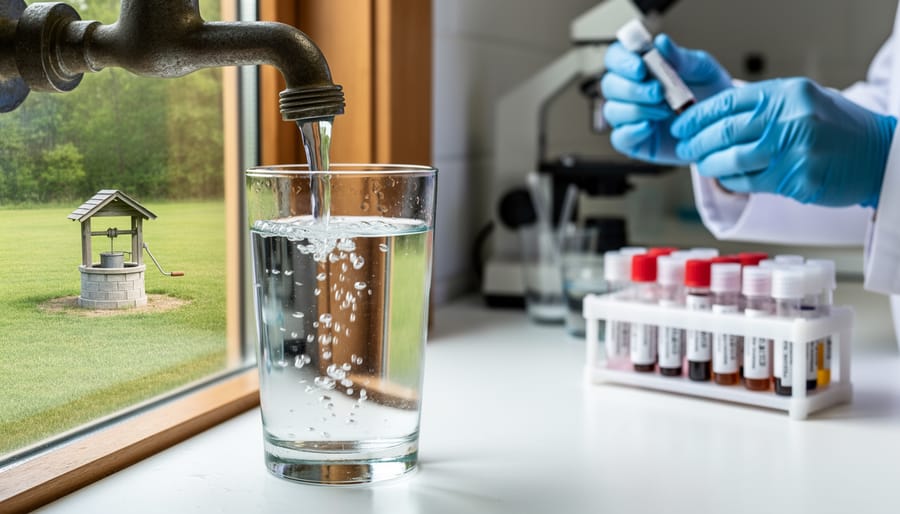
Warning Signs Your Well Might Be Contaminated
Recognizing potential PFAS contamination in your well water can be challenging since these chemicals are typically invisible, odorless, and tasteless. However, certain warning signs and circumstances should prompt you to test your water supply.
Location is one of the most significant risk factors. If your well sits within a mile of airports, military bases, firefighting training facilities, or industrial sites, you’re in a higher-risk zone. These locations historically used PFAS-containing firefighting foam, which can seep into groundwater over time. Similarly, wells near manufacturing plants that produce or use PFAS in textiles, non-stick coatings, or waterproofing materials warrant immediate testing.
Pay attention to your local environment and news. Check if your state or county has issued advisories about PFAS detection in nearby municipal water systems or private wells. Many states now maintain public databases of known contamination sites, which can help you assess your risk level. Contact your local health department to inquire about regional testing data and contamination patterns.
While PFAS typically doesn’t affect water’s appearance, any sudden changes in your water’s taste, smell, or color deserve investigation. Although these changes might indicate other contaminants rather than PFAS specifically, they signal that something in your water quality has shifted and comprehensive testing is warranted.
Consider your well’s age and construction. Older wells or those with compromised casings may be more vulnerable to surface contamination reaching the water supply. If you’ve noticed foam or film on your water’s surface, this could indicate various contaminants, though PFAS won’t necessarily create visible effects.
The most important thing to understand is that PFAS contamination simply cannot be detected through observation alone. Regular testing is the only reliable way to know if these persistent chemicals are present in your drinking water. If any of these warning signs apply to your situation, professional testing should be your next step.
Three Ways to Test Your Well Water for PFAS
Certified Laboratory Testing
For the most reliable and comprehensive PFAS analysis, professional laboratory testing remains the gold standard. Unlike home test kits that may only detect broader categories of contaminants, certified laboratory testing services can identify specific PFAS compounds and measure concentrations at extremely low levels, often in parts per trillion.
The testing process begins with ordering a sample collection kit from an EPA-certified laboratory. Many state health departments maintain lists of approved facilities that meet federal standards for PFAS testing. When the kit arrives, you’ll receive sterile bottles, detailed instructions, and prepaid shipping materials. Proper sample collection is critical: run your cold water tap for several minutes to clear the pipes, then fill the bottles without touching the inside of the caps or containers. Most labs require samples to be shipped within 24-48 hours of collection.
Testing costs typically range from $200 to $600, depending on how many PFAS compounds the lab screens for and your location. Basic panels test for the most common “forever chemicals” like PFOA and PFOS, while comprehensive analyses can detect 40 or more PFAS variants. Some state environmental agencies offer discounted or free testing for private well owners, particularly in areas near known contamination sources like military bases, airports, or industrial facilities.
Turnaround time averages two to four weeks from when the lab receives your sample. You’ll receive a detailed report showing concentration levels for each PFAS compound tested, along with comparison to EPA health advisories. The current EPA maximum contaminant levels are 4 parts per trillion for both PFOA and PFOS individually.
To locate certified labs in your area, contact your state’s department of environmental protection or health department. They can provide recommendations and inform you about any state-funded testing programs available to residents. This investment in professional testing gives you the most accurate picture of your water quality and helps guide appropriate treatment decisions.
State and Local Health Department Programs
Many homeowners don’t realize that state and local health departments often provide free or low-cost PFAS testing programs for private well owners. These government-sponsored initiatives emerged as PFAS contamination became a recognized public health concern, making water quality testing more accessible to communities that need it most.
State environmental agencies across the country have developed specialized programs to help residents understand their water quality. Eligibility typically depends on several factors, including your proximity to known contamination sources like military bases, airports, industrial facilities, or firefighting training sites. Some states prioritize testing for wells in designated high-risk areas, while others offer programs to any private well owner who requests assistance.
To access these resources, start by contacting your state’s Department of Environmental Protection or Department of Health. Their websites usually feature dedicated sections about private well testing programs, including application forms and eligibility criteria. Many states also maintain hotlines where you can speak directly with water quality specialists who can guide you through the process.
Local health departments sometimes run complementary programs with different coverage areas or funding sources. Your county or municipal health office may offer testing even if state programs have waitlists or limited availability. Some communities have established partnerships with universities or nonprofit organizations to expand testing capacity.
Application processes vary but generally require basic information about your well’s location, age, and household size. Some programs involve site visits from environmental health professionals who can assess potential contamination risks and collect samples properly. Processing times range from several weeks to a few months depending on laboratory capacity and demand.
Keep in mind that subsidized programs may test for a limited panel of PFAS compounds rather than comprehensive analysis, but they provide valuable baseline information about your water quality at minimal or no cost.
At-Home Testing Kits
For homeowners considering a budget-friendly first step, at-home testing kits offer a convenient option to screen for PFAS contamination. These consumer home water test kits typically work through a mail-in process where you collect a water sample following specific instructions, then send it to a laboratory for analysis.
The appeal of these kits lies in their accessibility and lower upfront costs, usually ranging from $150 to $300 per test. You can order them online, collect samples at your convenience, and receive results within two to three weeks without scheduling an appointment or inviting technicians into your home.
However, understanding their limitations is essential before relying solely on these results. Many at-home kits test for a limited number of PFAS compounds rather than the full spectrum of potential contaminants. Some may only detect PFOA and PFOS, the two most studied PFAS chemicals, while overlooking newer replacement compounds that could be present in your water. Additionally, accuracy depends heavily on proper sample collection. Contamination from containers, timing errors, or incorrect storage can skew results significantly.
These kits work best as preliminary screening tools rather than definitive tests. If results indicate potential PFAS presence, you should follow up with certified laboratory testing for comprehensive analysis. Think of at-home kits as an affordable way to determine whether deeper investigation is warranted, particularly helpful if you live near known contamination sources like military bases, airports, or industrial facilities.
For the most reliable results, choose kits from EPA-certified laboratories and carefully follow all sample collection protocols. While they cannot replace professional testing, they provide an accessible starting point for concerned homeowners monitoring their water quality.
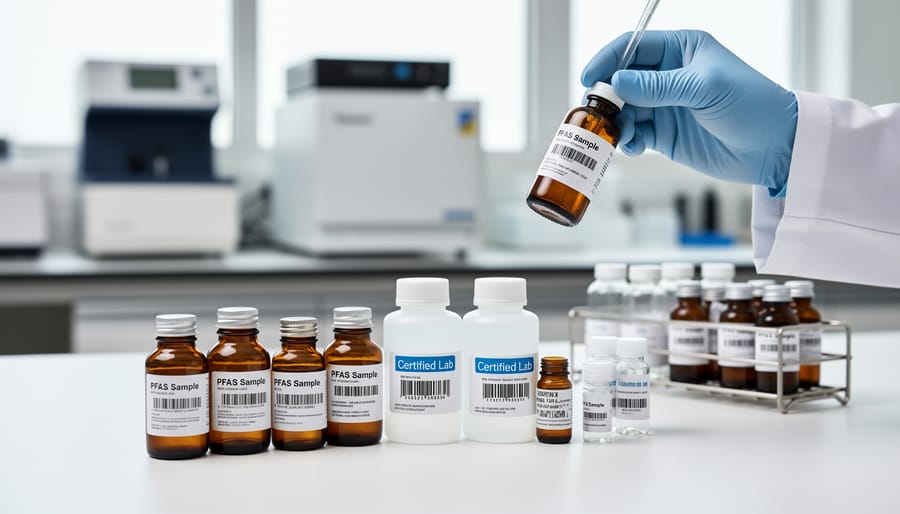
Step-by-Step: How to Collect a Water Sample for PFAS Testing
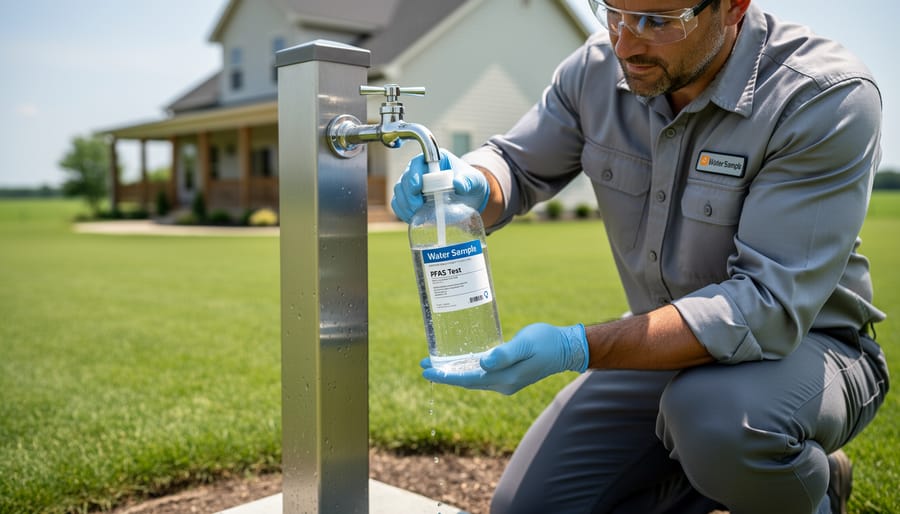
Collecting a proper water sample is crucial for accurate PFAS testing results. These “forever chemicals” are everywhere in modern life, so avoiding contamination during collection requires careful attention to detail. Here’s how to gather your sample correctly.
Before you begin, contact your chosen laboratory to request their specific sampling kit and instructions. Most labs provide specialized bottles made from PFAS-free materials, typically high-density polyethylene or polypropylene. Never use containers that previously held other substances, as contamination can skew your results.
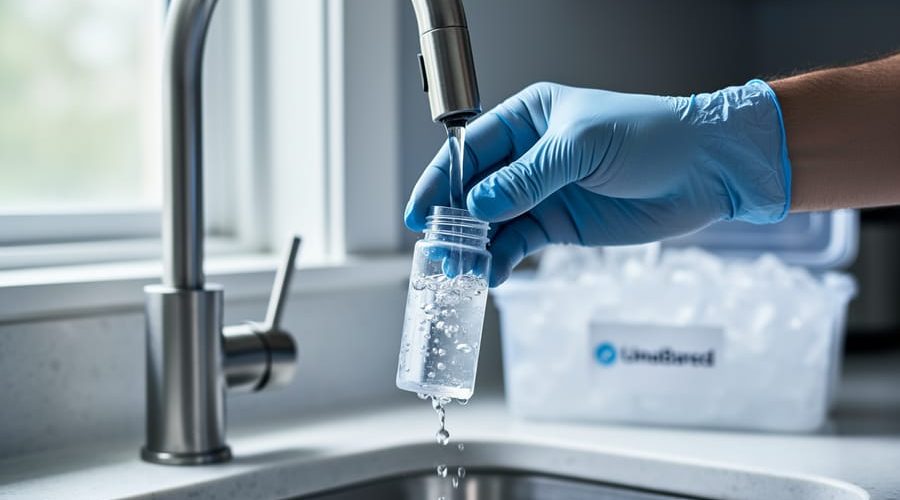
Preparation is key to success. On sampling day, avoid wearing water-resistant clothing, stain-resistant fabrics, or cosmetics, as these products often contain PFAS compounds. Don’t use hand sanitizer, lotion, or soap immediately before collecting your sample. Wear clean, preferably older cotton clothing and nitrile gloves if your lab recommends them.
Choose your sampling location wisely. Select a cold water tap that’s directly connected to your well system, preferably before any treatment devices like water softeners or filters. Kitchen faucets typically work well. Remove any aerator screens or attachments from the faucet, as these can harbor contaminants.
Let the water run for at least five minutes to clear the lines and ensure you’re sampling water directly from your well, not water that’s been sitting in your pipes. This step ensures a representative sample of your actual water supply.
When you’re ready to fill the bottle, handle it carefully. Open the lab-provided container just before filling, touching only the outside. Hold the bottle near the bottom and avoid touching the inside or the rim. Fill it according to the lab’s specifications, usually leaving a small air space at the top. Some labs require filling to a specific line marked on the bottle.
Immediately cap the bottle tightly and label it with the required information. Most labs need details including your name, address, sampling date and time, and the source location. Use only the labels and markers provided by the lab to avoid introducing contaminants.
Temperature control matters for sample integrity. Place your sample in the cooler with ice packs provided by the lab, keeping it between 32 and 40 degrees Fahrenheit during transport. Ship the sample on the same day you collect it, or within the timeframe specified by your laboratory. Use overnight shipping when possible to maintain sample quality.
Following these protocols carefully ensures your test results accurately reflect the PFAS levels in your well water, giving you reliable information to make informed decisions about your water quality and any necessary treatment steps.
Understanding Your Test Results
When your PFAS test results arrive, you’ll typically receive a detailed report listing individual PFAS compounds detected in your well water, measured in parts per trillion (ppt). Don’t let the technical terminology intimidate you—understanding these results is simpler than it appears.
The EPA’s current health advisory level for PFOA and PFOS, the two most studied PFAS compounds, is 0.004 ppt for PFOA and 0.02 ppt for PFOS individually. For mixtures of PFAS compounds, a hazard index calculation applies. These extremely low thresholds reflect updated scientific understanding about long-term health risks. Previously, the EPA’s 2016 advisory set a combined limit of 70 ppt for PFOA and PFOS, but research has since shown harmful effects occur at much lower concentrations.
Your test report will likely show results for multiple PFAS compounds—sometimes testing for 20 to 40 different varieties. Common ones include PFOA (perfluorooctanoic acid), PFOS (perfluorooctane sulfonate), PFNA, PFHxS, and GenX chemicals. Each compound appears with its concentration level, and many reports include a total PFAS measurement combining all detected compounds.
Understanding what these numbers mean for your health requires context. Any detectable level of PFAS warrants attention since these chemicals accumulate in your body over time and don’t break down naturally. If your results show concentrations above the EPA health advisory levels, taking action becomes a priority—particularly for households with children, pregnant women, or individuals with compromised immune systems.
Results below detection limits are positive news, though “non-detect” doesn’t guarantee complete absence—it simply means concentrations fell below the laboratory’s measurement capabilities. Regular monitoring with water quality testing tools remains important since PFAS contamination can change over time due to nearby industrial activities or environmental factors.
If your results show concerning levels, don’t panic. Many effective treatment solutions exist, from point-of-use filters to whole-house systems. The key is acting promptly to minimize ongoing exposure while exploring remediation options. Consider sharing your results with your healthcare provider, especially if concentrations significantly exceed advisory levels, as they may recommend biomonitoring to assess your actual exposure levels.
What to Do If PFAS Is Found in Your Well
Discovering PFAS in your well water can feel overwhelming, but taking prompt, informed action will help protect your family’s health. Here’s a clear roadmap to guide you through the next steps.
First, contact your local health department or state environmental agency to report your findings. They can provide region-specific guidance, connect you with resources, and may investigate potential contamination sources in your area. This documentation also creates an official record that could prove valuable if pursuing compensation later.
For immediate drinking water needs, switch to bottled water or use alternate sources while you establish a long-term solution. Boiling water won’t remove PFAS, so don’t rely on this method. If you’re on a tight budget, prioritize using alternative water for drinking and cooking, as these represent your primary exposure routes.
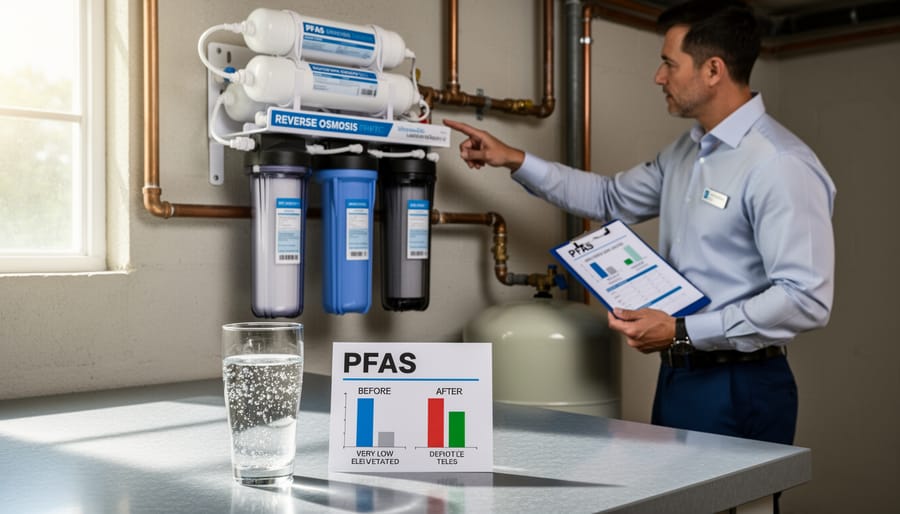
Regarding filtration solutions, two proven technologies effectively remove PFAS from drinking water. Reverse osmosis systems are considered the gold standard, removing 90-99% of PFAS compounds by forcing water through a semi-permeable membrane that blocks these persistent chemicals. These under-sink or whole-house systems require professional installation but offer comprehensive protection.
Activated carbon filters, particularly those using granular activated carbon or carbon block technology, also demonstrate strong PFAS reduction capabilities. These are generally more affordable and easier to install than reverse osmosis systems. However, effectiveness varies depending on the specific PFAS compounds present and their concentrations. Look for filters certified to NSF/ANSI Standard 53 or specifically tested for PFAS removal.
For whole-house protection, consider a point-of-entry system that treats all water entering your home. This prevents exposure through showering and household use, though drinking water treatment remains the priority.
Beyond immediate filtration, explore long-term water sources. Depending on your location and circumstances, connecting to municipal water supplies, drilling a deeper well in uncontaminated aquifers, or installing rainwater harvesting systems might offer permanent solutions.
Document everything, including test results, communications with authorities, and remediation expenses. If contamination originated from industrial sources, military installations, or other identifiable polluters, you may have grounds for legal action. Many communities affected by PFAS contamination have successfully pursued class-action lawsuits or settlements. Consult with environmental attorneys who specialize in water contamination cases to understand your options.
Remember, addressing PFAS contamination is an investment in your family’s long-term health. While the situation requires action, effective solutions exist to restore your water quality and peace of mind.
Understanding whether PFAS chemicals are present in your well water isn’t something you can determine by sight, smell, or taste alone. Testing is the only definitive way to know if these persistent contaminants have made their way into your drinking water supply. As a well water user, taking a proactive approach to testing puts you in control of your household’s water quality and gives you the peace of mind that comes with knowing exactly what you’re drinking.
The testing methods we’ve explored—from EPA-certified laboratory analysis to emerging technologies—each offer valuable pathways to detection. While professional laboratory testing remains the gold standard for accuracy and comprehensive results, understanding your options helps you make informed decisions that fit your budget and timeline. Remember that certification standards, proper sampling techniques, and choosing qualified laboratories all play crucial roles in getting reliable results.
If your tests reveal PFAS contamination, you’re not without options. Modern filtration technologies, particularly activated carbon and reverse osmosis systems, have proven effective at reducing these chemicals to safer levels. The key is acting on the information your tests provide rather than hoping contamination isn’t an issue.
Your commitment to testing represents more than just a single water quality check—it’s an investment in your family’s long-term health and an important step toward creating a safer, more sustainable home environment. Don’t wait for symptoms or health concerns to prompt action. Test today and take the first step toward truly clean water.