Shock your pool with a quadruple dose of chlorine to kill algae instantly—aim for 30 ppm if your water resembles a swamp. Run your filtration system continuously for 24-48 hours while manually brushing all pool surfaces every few hours to break up algae colonies clinging to walls and floors. Test and balance your pH to 7.2-7.6 before shocking, as improper chemistry renders chlorine nearly useless and wastes your effort.
Green pool water signals an algae bloom triggered by inadequate sanitization, poor circulation, or imbalanced chemistry—the same water quality issues that affect household plumbing. While conventional treatments rely heavily on harsh chemicals, understanding the underlying causes empowers you to restore crystal-clear water efficiently and prevent future outbreaks through sustainable practices.
Vacuum debris from the pool floor after the water begins clearing, switching your filter to waste mode to avoid recirculating dead algae. Backwash or clean your filter thoroughly once the water turns cloudy-blue, then maintain chlorine levels at 3 ppm and run your pump 8-12 hours daily. Consider enzyme-based algae preventatives as an eco-friendly supplement to reduce chemical dependency while maintaining pristine water quality.
The transformation from murky green to sparkling blue typically takes 2-5 days depending on algae severity and your pool’s circulation capacity. This guide walks you through diagnostic steps, emergency treatment protocols, and long-term prevention strategies that protect both your investment and the environment.
Why Pool Water Turns Green (And What It Means)
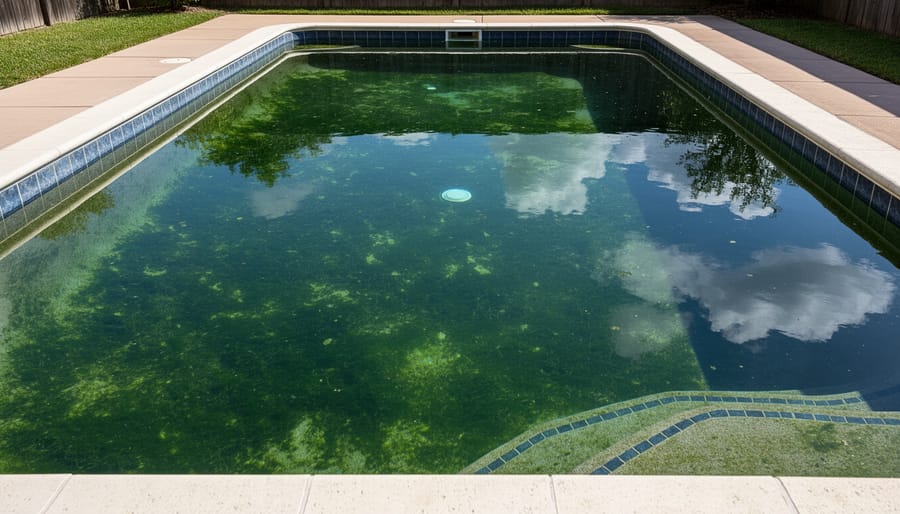
The Algae Takeover: What’s Really Happening
Think of your pool’s chlorine as a security guard protecting against unwanted guests. When chlorine levels drop—whether from hot weather, heavy use, or inconsistent maintenance—algae sees an opportunity to move in and multiply. These microscopic organisms are always present in pool water, just waiting for the right conditions.
Algae blooms happen when three factors align: low sanitizer levels, warm temperatures, and accumulated nutrients like phosphates from leaves, debris, and even swimmer waste. It’s similar to leaving food on your kitchen counter in summer—bacteria and mold grow rapidly when conditions are favorable. In your pool, a single algae cell can multiply into millions within 24 hours, transforming crystal-clear water into a green swamp.
The process accelerates quickly because algae feeds on sunlight through photosynthesis, creating more nutrients that support even faster growth. Once established, these microscopic plants form protective layers that make them increasingly difficult to eliminate. Understanding this cycle is your first step toward taking back control of your pool water and preventing future invasions.
Copper and Minerals: The Blue-Green Connection
While algae is the most common culprit behind green pool water, copper and other minerals dissolved in your water can also create a surprisingly similar blue-green tint. This connection matters because the same minerals causing issues in your pool might be affecting your household plumbing and fixtures too.
Copper enters pool water through several pathways: corroded pipes, certain algaecides, or source water naturally high in minerals. When copper levels exceed 0.2 parts per million and the water becomes alkaline, it oxidizes and creates that telltale greenish hue. Unlike algae, which appears cloudy and forms on surfaces, copper-induced green water remains relatively clear but evenly tinted.
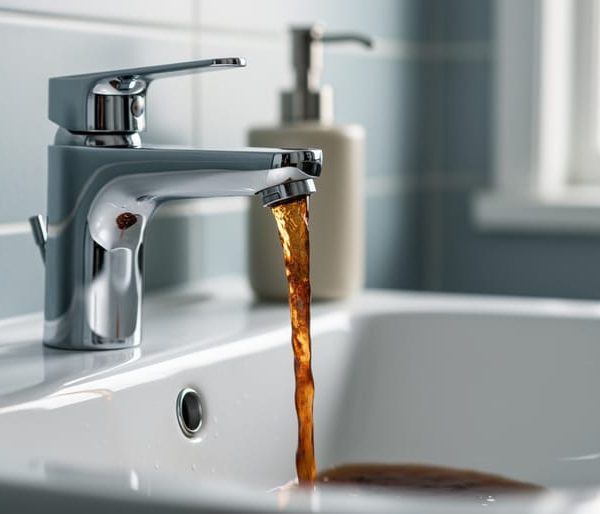
This phenomenon mirrors water discoloration problems throughout your home. The same copper causing blue-green stains on bathroom fixtures, sinks, and tubs can turn your pool water an unnatural shade. Testing your pool water’s copper content with a specialized metal test kit helps distinguish between algae growth and mineral issues.
If copper is the problem, metal sequestrants bind the minerals and prevent staining while filtration removes them. Consider installing a whole-house water filtration system to address the root cause, protecting both your pool and household plumbing from excessive mineral content while reducing chemical dependence for a more sustainable approach.
Testing Your Pool Water: Know What You’re Fighting
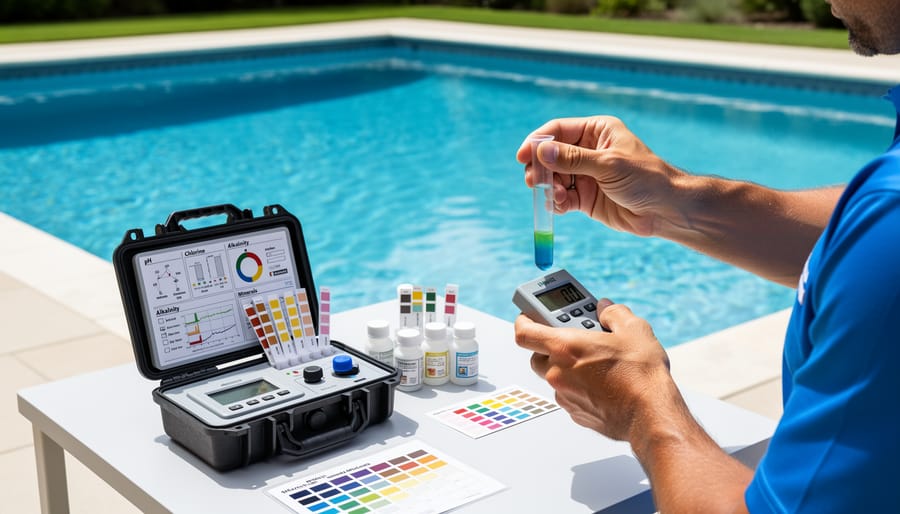
Essential Water Tests You Need to Run
Before treating your green pool, you need to understand what’s causing the problem. Running these four essential water tests will give you the roadmap to crystal-clear water.
Start by testing pH levels, which should fall between 7.4 and 7.6. When pH drifts too high or low, chlorine becomes less effective at killing algae, allowing that green tint to flourish. Use test strips or a liquid test kit for accurate readings.
Next, check your chlorine levels. Free chlorine should measure between 1-3 parts per million (ppm) for maintenance, but you’ll need much higher levels—around 10-20 ppm—to shock a green pool back to health. Low chlorine is often the primary culprit behind algae blooms.
Total alkalinity acts as a buffer for pH, keeping your water chemistry stable. Aim for 80-120 ppm. When alkalinity is off, your pH will swing wildly, making it nearly impossible to maintain proper sanitizer levels.
Finally, test for metals like copper and iron. These can enter your pool through well water or corroded equipment, creating green or blue-green staining. If metals exceed 0.2 ppm, you’ll need a metal sequestrant before shocking to prevent permanent discoloration.
Reading Your Results: What the Numbers Tell You
Your test strips or kit reveal important clues about your pool’s condition. Green water typically indicates chlorine levels below 1 ppm—the minimum needed to kill algae. If your reading shows zero free chlorine, algae has completely overwhelmed your sanitizer.
Check your pH next. Readings above 7.8 make chlorine sluggish and ineffective, even if present. This creates perfect conditions for algae blooms and other water chemistry issues.
High phosphate levels (above 500 ppb) act like fertilizer for algae, while low alkalinity (below 80 ppm) causes pH swings that further reduce chlorine effectiveness. Combined chlorine readings exceeding 0.5 ppm signal chlorine lock—where your sanitizer can’t work properly.
If all parameters seem normal except color, you likely need shock treatment and improved circulation rather than chemical adjustments.
The Step-by-Step Green Pool Recovery Plan
Step 1: Remove Debris and Assess Circulation
Before tackling your green pool’s chemistry, you need a clean slate. Start by skimming all visible debris from the surface using a pool net, including leaves, insects, and any floating matter. Next, vacuum the pool floor and brush the walls to dislodge algae clinging to surfaces. This debris can interfere with chemical treatments and harbor additional algae spores.
Now assess your circulation system, which is essential for distributing chemicals and filtering contaminants. Check that your pump is running smoothly and inspect the filter for clogs or damage. A poorly functioning system wastes water and energy while failing to clear your pool effectively. Clean or backwash your filter according to manufacturer instructions, and ensure all return jets are positioned to create proper water flow throughout the pool. Your pump should run continuously during the treatment process, typically 24 hours initially, to maximize filtration and chemical distribution. This foundation ensures your subsequent treatment steps work efficiently.
Step 2: Balance Your Water Chemistry
Before adding any chemicals to shock your green pool, you need to create the right chemical foundation. Think of pH and alkalinity as the base layer that allows other treatments to work effectively—without proper balance, you’re wasting money and effort.
Start by testing your water’s pH level, which should fall between 7.4 and 7.6. When pH is too high or low, chlorine becomes significantly less effective at killing algae, no matter how much you add. Use pH decreaser (muriatic acid or sodium bisulfate) if levels exceed 7.6, or pH increaser (sodium carbonate) if they drop below 7.4.
Next, adjust total alkalinity to between 80-120 parts per million. Alkalinity acts as a buffer, preventing wild pH swings that can undermine your treatment efforts. Add alkalinity increaser (sodium bicarbonate) if needed, waiting at least four hours between adjustments to get accurate readings.
This crucial step ensures your pool water can effectively receive and maintain the shock treatment coming next. It’s also an environmentally responsible approach—properly balanced water requires fewer chemicals overall, reducing your environmental impact while protecting your pool equipment from corrosive damage caused by improper chemistry.
Step 3: Shock Treatment (The Right Way)
Shock treatment means adding a concentrated dose of chlorine to eliminate algae and bacteria quickly. Think of it as giving your pool an intensive reset. For green pools, you’ll need a higher dose than regular maintenance—typically 2-3 pounds of calcium hypochlorite shock per 10,000 gallons of water, though severely green pools may require double this amount.
Here’s how to do it safely: First, test your water’s current chlorine level. Calculate the shock needed based on your pool size and current readings. For best results, shock your pool at dusk or evening since sunlight breaks down chlorine, reducing its effectiveness. This timing also gives the treatment overnight to work its magic.
Safety comes first. Always add shock to water, never water to shock, to prevent dangerous reactions. Wear protective gloves and eyewear, and store chemicals in a cool, dry place away from children and pets. Avoid mixing different chemical types together.
After adding shock, run your filter continuously for at least 8-12 hours. The water will appear cloudy at first—this is normal as dead algae circulates through your system. Keep everyone out of the pool until chlorine levels drop back to safe swimming range (1-3 ppm), which typically takes 24 hours.
For an eco-friendlier approach, consider mineral-based shock treatments that use fewer harsh chemicals while still effectively eliminating contaminants.
Step 4: Brush, Filter, and Wait
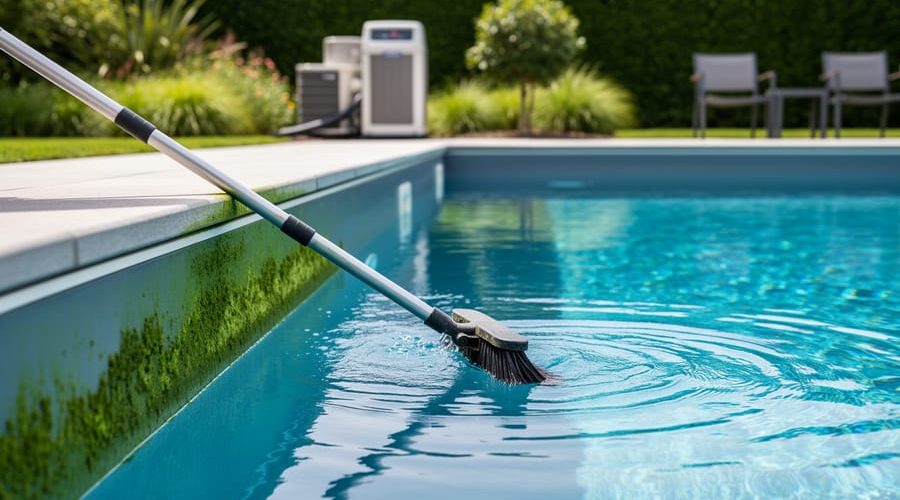
Now it’s time to get hands-on with your pool surfaces. Using a pool brush, thoroughly scrub the walls, floor, steps, and any corners where algae tend to hide. This crucial step breaks up algae colonies that chemicals alone can’t reach, allowing your sanitizer and algaecide to work more effectively. Pay special attention to shaded areas and spots with poor water circulation, as these are algae hotspots.
After brushing, set your filtration system to run continuously for the next 24 to 48 hours. Yes, this means your pump stays on day and night. Continuous filtration captures dead algae and debris loosened by brushing while distributing chemicals evenly throughout your pool. While this requires more electricity, it’s essential for rapid recovery and actually more energy-efficient than prolonged treatment cycles.
During this waiting period, check your filter regularly and backwash or clean it when pressure rises. You’ll likely need to do this multiple times as your filter captures algae particles. Test your water chemistry every 12 hours and adjust chlorine levels as needed to maintain shock levels. You should notice the water transitioning from green to cloudy white or gray, then gradually clearing.
Step 5: Clarify and Fine-Tune
After shocking and filtering, your water may still look cloudy from dead algae particles suspended in the water. This is where clarifiers come in handy. Pool clarifiers work by clumping tiny particles together, making them large enough for your filter to capture. Add the clarifier according to package directions and run your filter continuously for 24-48 hours.
For heavily clouded pools, consider using a flocculant instead. This eco-friendly option causes debris to settle on the pool floor, where you can vacuum it directly to waste rather than through your filter. This method saves filter wear and speeds up the clearing process.
Once the water clears, vacuum thoroughly to remove all settled debris. Test your water chemistry again and make final adjustments to pH, alkalinity, and calcium hardness. Your chlorine levels should now stabilize between 1-3 ppm. Regular testing and maintenance moving forward will prevent future algae blooms while minimizing chemical use, supporting both crystal-clear water and environmental responsibility.
Eco-Friendly Alternatives for Green Pool Treatment
Natural Enzyme Treatments
Natural enzyme treatments offer an eco-friendly complement to traditional pool chemicals when tackling green water. These biological products work by breaking down organic contaminants like dead algae, body oils, sunscreen residue, and other debris that contribute to cloudy, discolored water. Unlike harsh chemicals, enzymes target specific organic compounds through natural processes, essentially “digesting” the waste materials into simpler, harmless substances.
When you’re recovering from a green pool situation, enzyme products won’t kill algae directly, but they enhance your primary treatment by reducing the organic load in your water. This means your chlorine and other sanitizers can work more efficiently rather than getting overwhelmed by decomposing matter. Many homeowners appreciate that enzyme treatments reduce chemical dependency over time, leading to gentler water that’s easier on skin and swimwear.
For best results, add enzyme products after shocking your pool and throughout the recovery process. These treatments work gradually, typically requiring 24-48 hours to show noticeable improvements. While they’re particularly effective for prevention and maintenance, they’re valuable partners in your green pool rescue toolkit, supporting a more sustainable approach to water care.
Mineral Sanitizers and Ionization Systems
Mineral sanitizers and ionization systems offer an eco-friendly approach to preventing green pool water by reducing your reliance on traditional chlorine treatments. These innovative systems release controlled amounts of copper and silver ions into your pool water, creating an inhospitable environment for algae and bacteria. Copper acts as an algaecide, while silver provides antibacterial protection, working together to maintain crystal-clear water naturally.
The beauty of these systems is that they allow you to use up to 50% less chlorine than conventional methods, making them gentler on skin and eyes while reducing chemical exposure. Popular options include floating mineral purifiers and automatic ionization units that attach to your filtration system. While these systems excel at prevention, they work best as part of a comprehensive maintenance routine rather than a standalone solution for already-green water.
When installing a mineral system, monitor copper levels carefully to prevent blue-green staining on pool surfaces, particularly if your water is naturally acidic or soft. Most systems cost between 100 to 800 dollars depending on pool size and features, offering long-term savings through reduced chemical purchases and improved water quality.
UV and Ozone Systems: Cutting-Edge Solutions
For environmentally-conscious pool owners looking to prevent future green water episodes while reducing chemical dependence, UV and ozone systems offer innovative alternatives. These advanced technologies work alongside traditional filtration to destroy algae, bacteria, and other contaminants without adding harsh chemicals to your water.
UV systems use ultraviolet light to neutralize microorganisms as water passes through a chamber, essentially sterilizing the pool water naturally. Ozone generators create O3 molecules that oxidize organic matter and kill pathogens on contact. Both methods significantly reduce your reliance on chlorine and other sanitizers, typically cutting chemical usage by 60-90%.
While these systems require an upfront investment, they provide long-term benefits including softer water, fewer chemical odors, and reduced environmental impact. They’re particularly effective when combined with proper circulation and basic chlorine maintenance, creating a balanced approach that keeps your pool crystal clear while supporting sustainable living practices.
Preventing Green Pool Water: Maintenance That Works
Weekly Water Quality Checks
Establishing a simple weekly testing routine takes just five minutes but prevents costly green pool disasters. Test your water every seven days using reliable test strips or a liquid test kit, checking three key parameters: chlorine levels (should be 1-3 ppm), pH balance (ideal range 7.2-7.6), and alkalinity (80-120 ppm).
Create a testing log on your phone or notebook to track trends over time. This helps you spot gradual changes before they become problems. For example, if your pH creeps upward each week, you’ll know to adjust before algae blooms occur.
Make adjustments immediately when readings fall outside ideal ranges. Small, frequent corrections are more effective and eco-friendly than drastic chemical additions later. If chlorine drops below 1 ppm, add your sanitizer right away. When pH rises above 7.6, use a pH reducer to bring it down gently.
Consider investing in a digital water tester for more accurate readings, especially if you’ve struggled with green water before. These devices eliminate guesswork and help you maintain optimal conditions using minimal chemicals, supporting both crystal-clear water and sustainable pool care practices.
Filtration and Circulation Best Practices
Proper filtration and circulation are essential to clearing green pool water and preventing future algae growth. Your filter should run continuously during the initial treatment phase—typically 24 hours per day until the water clears. Once resolved, maintain a daily runtime of 8-12 hours depending on your pool size: smaller pools (under 15,000 gallons) can manage with 8 hours, while larger pools benefit from 10-12 hours of circulation.
Check and clean your filter daily during treatment. Backwash sand and DE filters when pressure rises 8-10 PSI above normal, and rinse or replace cartridge filters every 2-3 days until water clarity returns. A clogged filter cannot effectively remove dead algae particles, slowing your recovery process.
Ensure all areas receive adequate water flow by directing return jets downward at a 45-degree angle, creating a circular current. Dead spots where water stagnates become algae breeding grounds. For eco-conscious pool owners, consider upgrading to variable-speed pumps, which use up to 80% less energy than single-speed models while providing superior circulation. These pumps pay for themselves through reduced electricity costs while supporting your sustainable living goals, making them an investment in both water quality and environmental responsibility.
Green pool water may seem overwhelming at first glance, but it’s entirely fixable with the right knowledge and systematic approach. By understanding the underlying chemistry, testing your water properly, and following proven treatment steps, you can restore your pool to sparkling clarity. The key is consistent action and patience as you balance sanitizer levels, pH, and filtration.
Remember that pool maintenance is part of your broader household water quality management. The same attention to water purity that prevents blue-green stains on fixtures applies to maintaining healthy pool water. Both require regular monitoring, understanding chemical balance, and preventive care rather than reactive fixes.
Moving forward, establish a routine testing schedule and maintain proper circulation. Consider eco-friendly alternatives like mineral systems or saltwater options that reduce chemical use while keeping water pristine. By viewing pool care as an extension of sustainable household practices, you protect both your investment and the environment. Clear water isn’t just about aesthetics—it reflects your commitment to quality, safety, and responsible stewardship of this valuable resource.