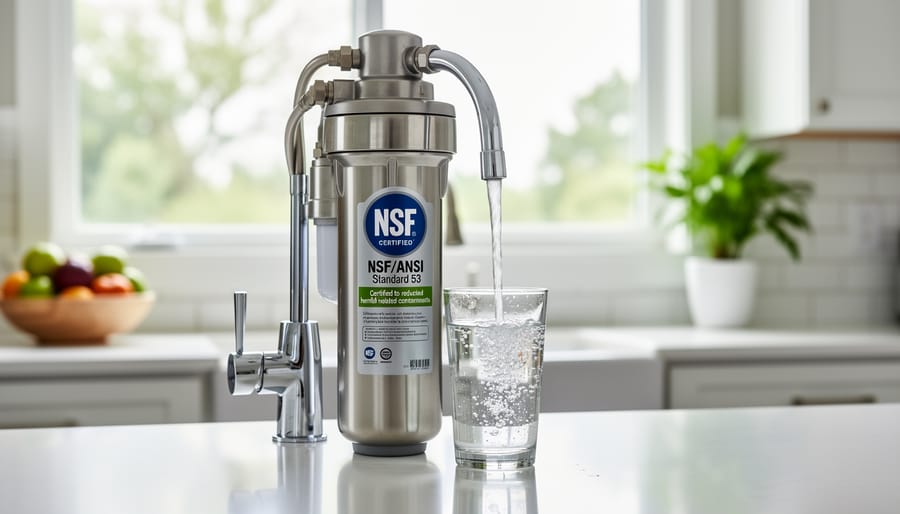
Look for the NSF/ANSI Standard 53 certification mark on water filters before purchasing to ensure your system removes serious health contaminants like lead, mercury, and certain chemicals from your drinking water. This certification, independently tested and verified by NSF International, confirms a filter reduces specific health-related pollutants to safe levels set by the Environmental Protection Agency. Verify which exact contaminants your chosen filter targets by checking the manufacturer’s performance data sheet, since Standard 53 covers multiple categories and not all certified filters remove the same substances.
Standard 53 specifically addresses health effects—the dangerous stuff you can’t see, taste, or smell. While protecting your water supply from contamination is essential, Standard 53 certification gives you scientific proof that a filter actually works as promised. This matters because unregulated filters can make bold claims without backup testing, potentially leaving harmful contaminants in your family’s drinking water.
Understanding this standard empowers you to cut through marketing hype and choose filtration that genuinely protects your household. The certification process involves rigorous laboratory testing where filters must prove they reduce specific contaminants by exact percentages under real-world conditions. Products must also pass structural integrity tests to ensure they won’t leak or fail during normal use. Whether you’re concerned about aging pipes leaching lead, industrial runoff affecting your well water, or municipal treatment gaps, knowing how Standard 53 works helps you select the right protection for your specific water quality challenges.
What NSF/ANSI Standard 53 Actually Tests For
When you’re shopping for a water filter, you’ll encounter different NSF/ANSI standards, each targeting specific water quality concerns. Standard 53 stands apart as the certification specifically designed to protect your health by removing contaminants that can cause serious medical problems.
Think of water quality issues in two categories: those that affect how water tastes or looks, and those that threaten your wellbeing. Standard 53 addresses the second category—health-related contaminants that you often can’t see, taste, or smell but can pose real risks to you and your family.
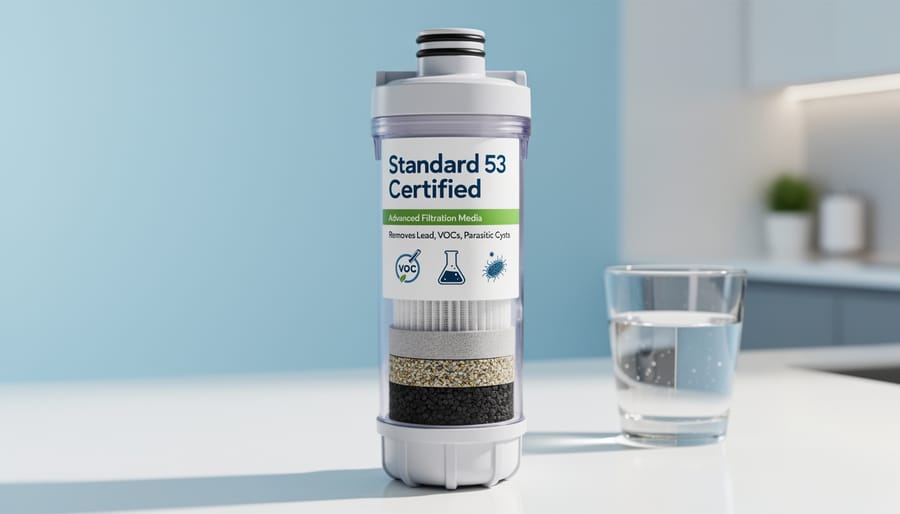
This certification verifies that a water filter can effectively reduce dangerous substances including lead, which damages the nervous system especially in children; cysts like Cryptosporidium and Giardia that cause severe gastrointestinal illness; volatile organic compounds (VOCs) such as pesticides and herbicides; and other harmful chemicals like mercury, asbestos, and certain pharmaceuticals.
The testing process is rigorous. Filters must demonstrate they can reduce specific contaminants to levels below the health-based limits set by the EPA and other health agencies. Independent laboratories conduct these tests using actual contaminated water to simulate real-world conditions, not just ideal laboratory scenarios.
This differs significantly from NSF/ANSI Standard 42, which focuses on aesthetic improvements like reducing chlorine taste and odor or filtering out sediment that makes water cloudy. While those improvements make water more pleasant to drink, they don’t address health threats. Many quality filters carry both certifications, tackling taste issues and health hazards simultaneously.
Understanding this distinction empowers you to make informed choices. If your primary concern is protecting your family from harmful contaminants rather than simply improving taste, look for that Standard 53 certification mark. It’s your assurance that the filter has been independently verified to remove health-threatening substances from your drinking water.
The Contaminants Standard 53 Protects You From
Lead and Heavy Metals
Lead contamination in drinking water remains a serious concern for households across America. While aging infrastructure and corroded pipes can allow lead to leach into tap water, communities from coast to coast have experienced water quality crises that exposed families to dangerous levels of this toxic metal. Even low concentrations of lead pose significant health risks, particularly for children and pregnant women, potentially causing developmental delays, learning difficulties, and neurological damage.
NSF/ANSI Standard 53 certified filters are specifically tested to reduce lead contamination to safe levels. These filters use advanced technologies like activated carbon blocks and specialized media that trap lead particles as water passes through. The certification requires filters to reduce lead from 150 parts per billion down to 10 ppb or lower—well within EPA safety guidelines.
Beyond lead, Standard 53 also addresses other heavy metals including mercury and certain pesticides. The testing process ensures these filters maintain their effectiveness over their rated lifespan, not just when brand new. For homeowners concerned about aging plumbing or municipal water quality, a Standard 53 certified filter provides measurable protection against these invisible but potentially harmful contaminants. This certification represents a practical, sustainable solution that puts control of your water quality directly in your hands.
Volatile Organic Compounds (VOCs)
Volatile Organic Compounds, or VOCs, are carbon-based chemicals that easily evaporate into the air or dissolve in water. Think of them as unwanted chemical hitchhikers that can end up in your drinking water supply. These compounds include substances like benzene, toluene, and various pesticides that you definitely don’t want in your glass of water.
VOCs typically enter our water systems through industrial pollution, where manufacturing facilities discharge chemical byproducts, and agricultural runoff containing pesticides and herbicides. Gas stations, dry cleaners, and even landfills can contribute VOCs to groundwater sources. Urban areas often see higher VOC concentrations due to increased industrial activity and chemical usage.
The health concerns surrounding VOCs are significant. Long-term exposure to certain VOCs has been linked to liver and kidney damage, nervous system problems, and increased cancer risk. Some VOCs can affect reproductive health and child development. Because these compounds are invisible and odorless in many cases, you can’t rely on your senses to detect them, making certified filtration especially important for protecting your family’s health and maintaining an eco-conscious home.
Cysts and Microbiological Contaminants
Waterborne parasites like Cryptosporidium and Giardia are microscopic organisms that pose serious health risks, causing severe gastrointestinal illness with symptoms including diarrhea, cramps, and dehydration. These parasites form protective shells called cysts that allow them to survive in water for extended periods, making them particularly dangerous contaminants.
These organisms typically enter drinking water supplies through agricultural runoff, sewage overflows, or wildlife contamination near water sources. What makes them especially concerning is their resistance to chlorine disinfection, the primary treatment method most municipal water systems use. Standard chlorination levels that effectively kill bacteria often fail to eliminate these hardy parasites.
This is where NSF/ANSI Standard 53 certified filters become essential for protecting your family’s health. These filters use mechanical filtration technology with extremely fine pore sizes, physically trapping and removing cysts from your water. Think of it like an ultra-fine sieve that catches these microscopic threats before they reach your glass. For immunocompromised individuals, children, and elderly family members, this protection is particularly critical, as these groups face higher risks from parasitic infections.
PFAS and Emerging Contaminants
Modern water contamination challenges have pushed Standard 53 to evolve beyond traditional contaminants. PFAS, commonly called “forever chemicals,” have emerged as a serious concern in drinking water across the country. These synthetic compounds, used in everything from nonstick cookware to firefighting foam, don’t break down naturally and can accumulate in your body over time.
While Standard 53 originally focused on contaminants like lead and mercury, NSF International has developed supplementary protocols specifically for PFAS removal. When shopping for filters, look for products that explicitly list PFAS reduction claims with NSF testing verification—not all Standard 53 filters address these newer pollutants.
The certification process now includes testing for additional emerging contaminants like pharmaceuticals and microplastics. This adaptive approach ensures your water filter keeps pace with evolving environmental challenges. As scientists identify new threats to water quality, Standard 53 continues updating its testing requirements, giving you confidence that certified filters protect against both yesterday’s and today’s contaminants.
How the Certification Process Actually Works
Independent Testing Requirements
NSF International stands as an independent, third-party organization that rigorously tests and certifies water filters to ensure they meet strict safety and performance standards. Unlike manufacturer claims that can sometimes be self-reported, NSF certification requires products to undergo comprehensive laboratory testing by unbiased scientists who have no financial stake in whether a filter passes or fails.
The independent testing process is thorough and demanding. Filters must demonstrate they can consistently remove specific contaminants over their entire rated lifespan, not just during initial use. Testing facilities examine the filter materials, review manufacturing processes, and conduct extensive performance trials that simulate real-world conditions. Products face rigorous challenge testing where they’re exposed to high concentrations of contaminants to verify their reduction capabilities.
This third-party verification matters enormously for your peace of mind as a consumer. When you see the NSF/ANSI Standard 53 mark on a water filter, you’re getting an objective guarantee that independent experts have validated the manufacturer’s claims. It eliminates guesswork and protects you from misleading marketing. For environmentally-conscious homeowners, this certification also supports sustainable living by ensuring your investment in clean water technology actually delivers the promised results, reducing waste from ineffective products.
Performance Standards and Reduction Claims
To earn NSF/ANSI Standard 53 certification, water filters must demonstrate they can reduce specific contaminants by significant percentages. Most health-related contaminants require at least 50% reduction, though many certified filters exceed this minimum. For example, lead must be reduced from 150 parts per billion down to 10 ppb or less, which represents over 93% removal efficiency.
Testing occurs under rigorous conditions designed to mimic real-world use in your home. Filters are subjected to the manufacturer’s rated capacity while maintaining consistent flow rates and pressure levels. Laboratory technicians introduce contaminants at challenging concentrations, and the filter must continue performing throughout its entire stated lifespan—not just when it’s brand new.
When you see performance claims on packaging, those percentages reflect tested results at the filter’s end of life, giving you confidence the product will protect your family’s health consistently. A filter claiming “99% lead reduction” has proven this capability across hundreds of gallons, not just during initial use.
This standardized testing approach empowers you to compare products fairly and make informed decisions. Rather than relying on vague marketing promises, you can trust that certified filters have undergone independent verification, supporting both your household’s wellbeing and environmentally-conscious choices by ensuring you’re investing in genuinely effective water treatment solutions.
Ongoing Compliance and Re-certification
Earning NSF/ANSI Standard 53 certification isn’t a one-and-done achievement. Manufacturers must commit to ongoing compliance through regular audits and unannounced product testing to keep their certification active. This means the filter you purchase today continues to meet the same rigorous standards throughout its production lifecycle.
NSF International conducts annual facility inspections and regularly pulls products from store shelves for independent testing. If a filter fails to meet performance standards during these checks, the manufacturer loses certification until they resolve the issues. This continuous oversight protects you from quality drift that can happen when companies cut corners after initial certification.
When shopping for a certified water filter, look for products with current certification dates and verify their status on NSF’s online database. This system ensures you’re investing in a filtration solution that maintains peak performance, giving you confidence that your family’s drinking water stays clean and safe year after year.
Standard 53 vs. Other NSF/ANSI Water Treatment Standards
Standard 42: Aesthetic Effects
While Standard 53 tackles health-threatening contaminants, Standard 42 addresses aesthetic concerns that affect your water’s appeal rather than your safety. This certification focuses on improving taste, odor, and chlorine reduction—making your water more pleasant to drink without necessarily removing harmful substances.
Think of Standard 42 as the “nice-to-have” certification that enhances your daily water experience. If your tap water tastes like a swimming pool or has an unpleasant smell, a Standard 42 filter can transform it into something you’ll actually want to drink. This encourages better hydration habits and reduces reliance on bottled water—a win for both your household and the environment.
However, it’s important to understand what Standard 42 doesn’t do. Unlike Standard 53, it doesn’t certify removal of lead, mercury, or other dangerous contaminants. Similar to how NSF/ANSI Standard 61 ensures materials don’t leach harmful substances, each standard serves a specific purpose in water safety.
For comprehensive protection, many homeowners choose filters certified for both standards, combining health safety with improved taste.
Standard 58: Reverse Osmosis Systems
While Standard 53 targets specific health contaminants, NSF/ANSI Standard 58 covers reverse osmosis (RO) systems—a comprehensive filtration technology that many homeowners consider for whole-home or under-sink applications. RO systems use a semipermeable membrane to remove a broader range of contaminants than standard carbon filters, including dissolved solids, fluoride, and certain pharmaceuticals.
Here’s what makes Standard 58 relevant: many RO systems incorporate Standard 53-certified components as part of their multi-stage filtration process. You’ll often find carbon pre-filters and post-filters within RO units that carry Standard 53 certification for specific contaminants like lead and VOCs, while the RO membrane itself handles what carbon cannot.
If you’re considering an RO system, look for dual certifications. A system certified to both Standard 53 and Standard 58 offers the combined benefits of mechanical filtration and targeted contaminant reduction. This pairing represents one of the most effective eco-friendly approaches to achieving comprehensive home water purification, reducing your reliance on bottled water while addressing multiple water quality concerns simultaneously.
Standard 401: Emerging Contaminants
As water quality concerns evolve, so do filtration standards. NSF/ANSI Standard 401 represents the cutting edge of water treatment certification, specifically designed to address emerging contaminants that weren’t on anyone’s radar when Standard 53 was first developed.
This newer standard tests for 15 different contaminants commonly found in modern water supplies, including prescription and over-the-counter pharmaceuticals, herbicides like glyphosate, and chemicals from personal care products. These substances often pass through municipal water treatment facilities undetected because traditional systems weren’t designed to remove them.
Standard 401 works alongside Standard 53 rather than replacing it. Think of Standard 53 as your foundation for removing traditional health hazards like lead and mercury, while Standard 401 tackles the modern challenges posed by pharmaceutical runoff and agricultural chemicals. Many advanced water filters now carry both certifications, offering comprehensive protection against both established and emerging threats.
For environmentally-conscious homeowners, choosing filters certified under both standards means you’re addressing the full spectrum of water quality concerns. This dual certification approach reflects how water filtration technology continues advancing to meet contemporary environmental challenges, ensuring your family’s drinking water stays safe as new contaminants enter our water cycle.
Choosing a Standard 53 Filter for Your Home
Understanding Your Water Quality First
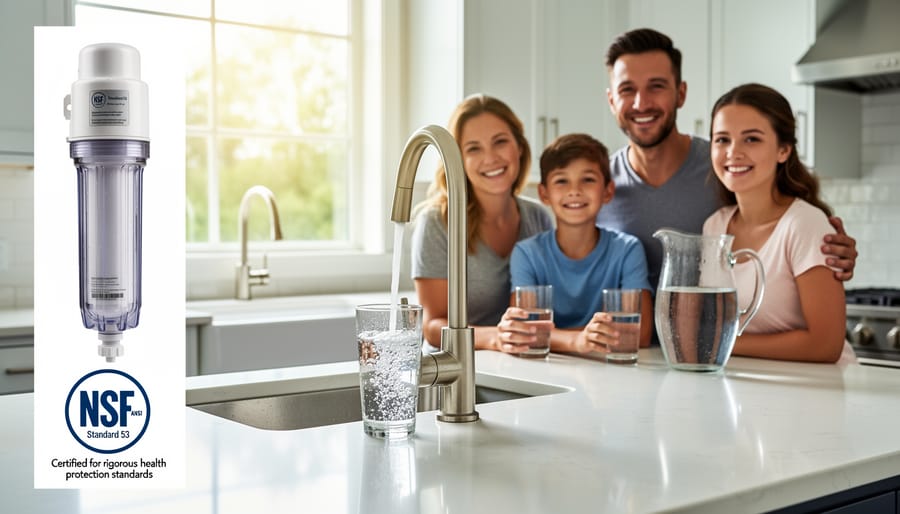
Before investing in an NSF/ANSI Standard 53 certified filter, it’s essential to understand what’s actually in your water. While these filters excel at removing specific health-related contaminants like lead, mercury, and certain pesticides, your water may have different issues altogether.
Start by requesting a water quality report from your municipal supplier, or consider an independent water test if you rely on well water. These tests reveal which contaminants are present and at what levels, helping you determine if a Standard 53 filter is your best solution or if you need different treatment methods.
Testing first prevents overspending on unnecessary filtration and ensures you’re addressing actual water quality concerns. Some homes may need Standard 53 protection against heavy metals, while others might benefit more from filters targeting different contaminants. This personalized approach to water filtration aligns with sustainable living by avoiding wasteful purchases and focusing resources where they truly matter for your family’s health.
Types of Standard 53 Certified Systems
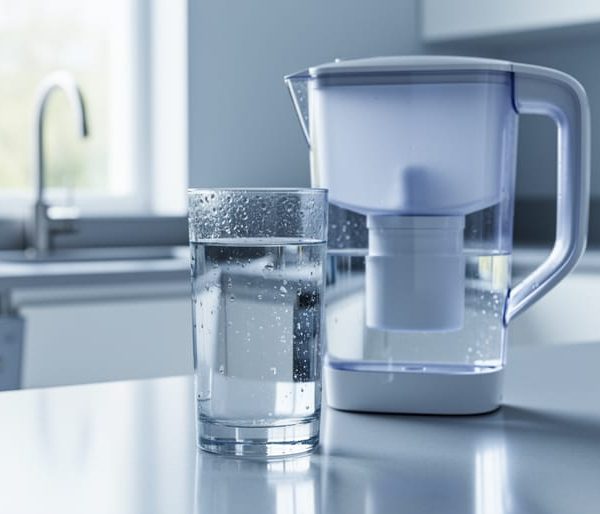
Standard 53 certification applies to various filter formats, each suited to different household needs and budgets. Pitcher filters offer the most affordable entry point, perfect for renters or those wanting to test filtration without installation. These portable units typically remove chlorine taste and certified contaminants, though they require frequent cartridge replacements and work best for drinking water only.
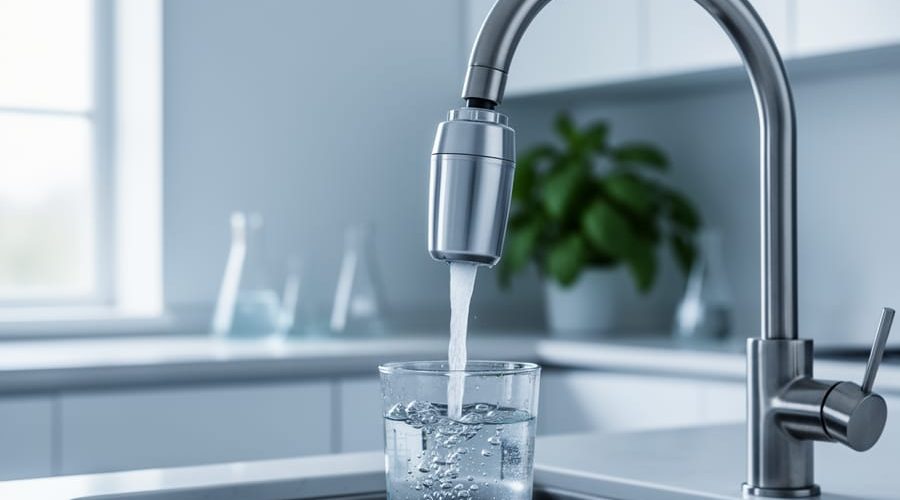
Faucet-mount filters attach directly to your kitchen tap, providing filtered water on demand while maintaining the option for unfiltered water when needed. They’re easy to install without tools and cost less than under-sink models, but may not fit all faucet styles and can slow water flow.
Under-sink systems integrate with your existing home water system components, offering higher capacity filtration through a dedicated tap. These systems last longer between filter changes and don’t occupy counter space, making them ideal for families prioritizing convenience and consistent water quality. Installation requires basic plumbing skills or professional help.
Whole-house filters treat water at the point of entry, protecting every tap and appliance from contaminants. While they represent the most comprehensive solution and reduce scale buildup in pipes, they require significant upfront investment and professional installation. This option suits homeowners committed to long-term water quality throughout their entire home.
Reading Certification Labels Correctly
When shopping for certified water systems, look for the official NSF mark directly on the product label or packaging. Legitimate certification includes the NSF logo, the specific standard number (53), and lists which contaminants the filter removes. You can verify claims by visiting NSF.org and searching their database using the manufacturer’s name or model number.
Red flags include vague claims like “NSF-tested” without listing the actual standard, missing certification numbers, or promises to remove contaminants not covered by Standard 53. Reputable manufacturers provide clear documentation and make verification easy. Always check that the certification matches your specific water concerns before purchasing.
The Environmental Impact of Your Filter Choice
Choosing an NSF/ANSI Standard 53 certified water filter isn’t just about protecting your health—it’s also a meaningful step toward sustainable living. When you install a quality filtration system in your home, you’re making an environmental choice that extends far beyond your kitchen faucet.
The most immediate environmental benefit is the dramatic reduction in bottled water consumption. The average American uses approximately 167 plastic bottles annually, and many of these end up in landfills or oceans rather than recycling facilities. By switching to filtered tap water, a family of four can eliminate hundreds of single-use plastic bottles each year. This shift significantly reduces your carbon footprint, as bottled water production requires substantial energy and resources—from manufacturing the plastic containers to transporting heavy water loads across long distances.
However, responsible filter ownership also means considering the lifecycle of your filtration system. Certified filters do require periodic replacement, typically every 3-6 months depending on your water usage and contamination levels. The good news is that many manufacturers now offer recycling programs specifically for used filter cartridges. Some companies provide prepaid return labels, making it easy to send back old filters for proper recycling or repurposing rather than tossing them in the trash.
When selecting your NSF/ANSI Standard 53 filter, look for products made with recyclable materials and companies committed to sustainability initiatives. Some cutting-edge innovations include filters with longer lifespans, reducing replacement frequency, and biodegradable filter components.
By choosing certified filtration, you’re investing in both your family’s health and environmental stewardship—proof that personal wellness and planetary care can work hand in hand.
Your family’s health deserves more than guesswork when it comes to drinking water. NSF/ANSI Standard 53 certification isn’t just another label on a filter—it’s your assurance that contaminants like lead, mercury, and harmful parasites are being effectively removed from every glass of water you drink. In a world where water quality can’t be judged by appearance or taste alone, this certification serves as your non-negotiable benchmark for protection.
Making an informed decision about your home’s water filtration doesn’t have to be overwhelming. Now that you understand what Standard 53 certification means and why it matters, you’re equipped to evaluate whether your current setup truly protects your household. Look beyond marketing claims and always verify that products carry genuine NSF certification marks—your family’s well-being depends on it.
Take action today by examining your existing water filter. Does it display NSF/ANSI Standard 53 certification? If you’re uncertain about your tap water quality, consider getting it professionally tested to identify which contaminants you need to address. This simple step can reveal whether you need Standard 53 protection or additional certifications for comprehensive coverage. Remember, investing in certified filtration isn’t just about better-tasting water—it’s about safeguarding your family’s health for years to come. Don’t wait for a contamination crisis to prioritize what matters most: clean, safe drinking water flowing through your home.