Calculate your total investment by adding the upfront system cost ($400-$6,000 depending on type and capacity), professional installation ($150-$500), and ongoing expenses like salt ($5-$10 monthly) and water usage increases. A typical household spends $1,000-$2,500 initially, with annual operating costs around $150-$300.
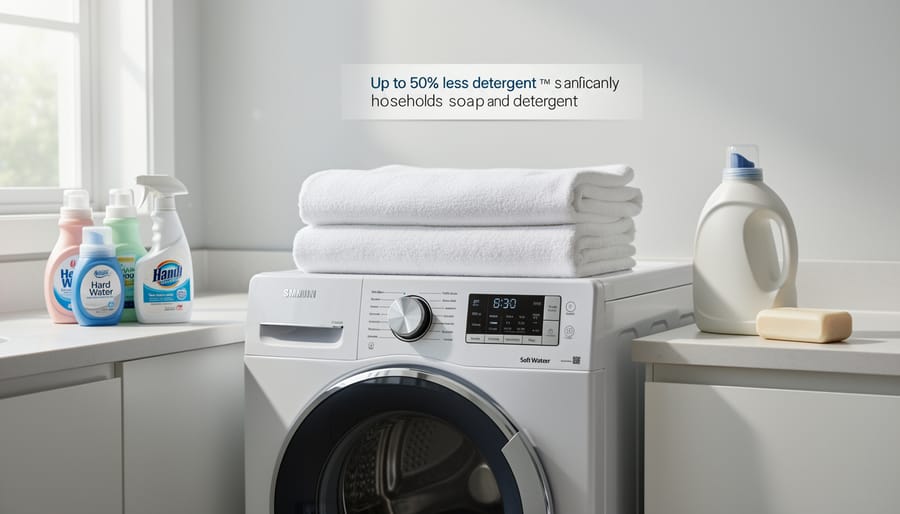
Track your potential savings to determine payback period. Water softeners reduce soap and detergent use by up to 50%, extend appliance lifespans by 30-50%, and prevent scale buildup that decreases water heater efficiency by 22-30%. Most homeowners recoup costs within 3-7 years through lower energy bills, reduced maintenance, and fewer product purchases.
Compare system types strategically before buying. Salt-based ion exchange systems ($400-$2,700) offer the most effective softening for severe hardness but require ongoing salt purchases. Salt-free conditioners ($1,000-$4,000) need minimal maintenance and suit moderate hardness levels. Dual-tank systems ($1,500-$6,000) provide continuous soft water for large households but carry higher initial costs.
Factor in your water hardness level and household size when evaluating return on investment. Homes with extremely hard water (over 10 grains per gallon) and families using 80+ gallons daily see faster payback through greater soap savings and appliance protection. Smaller households with moderately hard water may need 8-10 years to break even, making rental or salt-free options more economical.
Understanding these financial dynamics helps you make an informed decision that balances upfront investment against long-term savings while supporting your household efficiency and environmental goals.
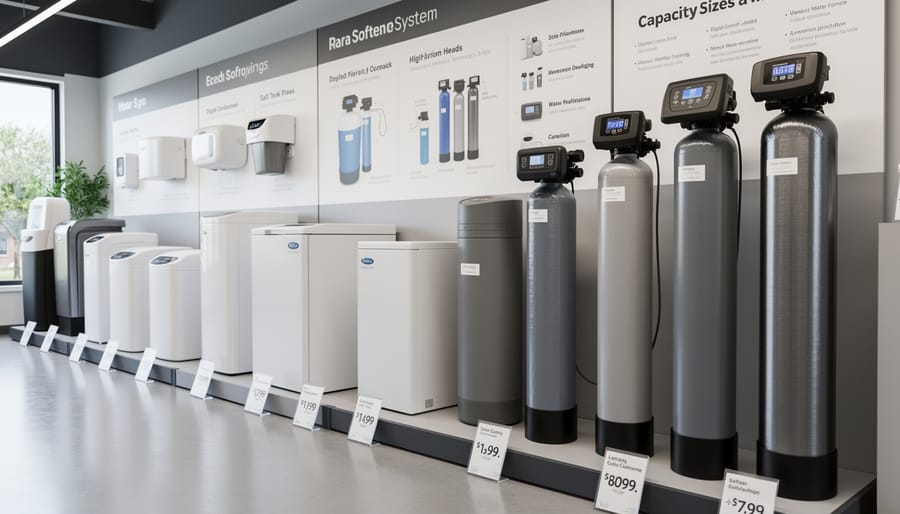
Breaking Down Water Softener Costs: What You’ll Actually Spend
Initial Purchase Price by System Type
Understanding the upfront investment for different types of water softeners helps you make an informed decision that aligns with both your budget and household needs.
Salt-based ion exchange systems remain the most common choice, with prices ranging from $400 to $2,500 for the unit itself. Basic single-tank models typically cost between $400 and $1,000, while high-efficiency models with advanced features can reach $2,500 or more. Professional installation adds another $200 to $500, bringing total initial costs to roughly $600 to $3,000. These systems effectively remove hardness minerals through a proven chemical process, making them reliable for households with severe hard water issues.
Salt-free water conditioners, which don’t actually remove minerals but instead prevent scale buildup, generally cost between $500 and $3,000 for the unit. These eco-friendly alternatives require less maintenance and no ongoing salt purchases, appealing to environmentally-conscious homeowners. Installation costs are similar to salt-based systems.
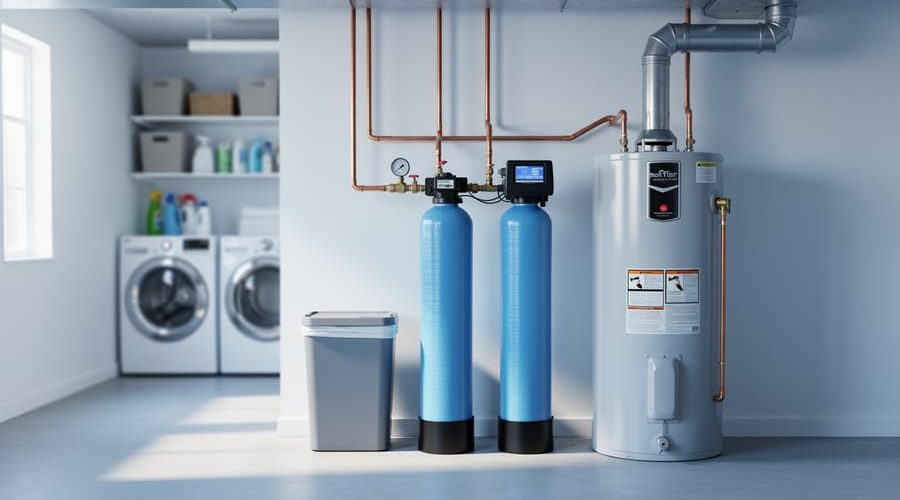
Dual-tank systems cater to larger households or those requiring continuous soft water availability. Expect to invest $1,000 to $2,500 for the equipment, plus $500 to $1,000 for installation, totaling $1,500 to $3,500. While pricier upfront, these systems ensure you never experience downtime during regeneration cycles.
Magnetic or electronic descalers represent the budget-friendly option at $50 to $800, with simple DIY installation. However, their effectiveness remains debated within the water treatment industry, and they work best for mild hardness issues.
Several factors influence these price variations, including water hardness levels in your area, household size, flow rate requirements, brand reputation, warranty coverage, and additional features like digital controls or smart technology integration.
Installation Costs: DIY vs. Professional
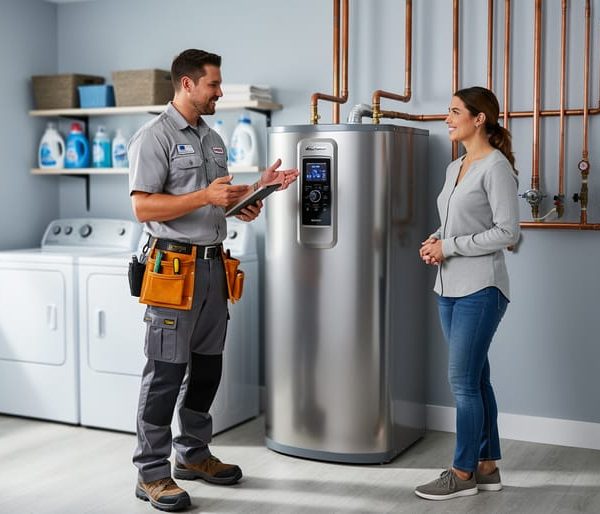
Professional water softener installation typically ranges from $200 to $500, depending on your location, system complexity, and existing plumbing configuration. Licensed plumbers charge $45 to $150 per hour, with most installations requiring two to four hours of labor. Additional costs may arise if your home needs updated plumbing connections, electrical work for salt-free systems, or modifications to accommodate larger units.
Several factors influence professional installation fees. Homes with difficult-to-access plumbing, outdated pipe materials requiring replacement, or systems needing drain line extensions will see higher costs. Installation complexity increases when connecting to multiple water lines or integrating with existing filtration systems. Urban areas generally command premium rates compared to rural regions.
DIY installation presents an attractive cost-saving opportunity for handy homeowners, potentially reducing total project expenses by $200 to $500. Most whole-house water softeners arrive with comprehensive instructions, and our DIY installation guide walks you through each step. Basic plumbing skills, including cutting and soldering copper pipes or working with PEX connections, are essential. You’ll need standard tools like pipe cutters, wrenches, and possibly a drill.
However, DIY isn’t always advisable. Consider professional installation if local codes require licensed plumbers for water system modifications, you lack plumbing experience, or your setup involves complex configurations. Improper installation can void manufacturer warranties, cause water damage, or create inefficient operation that negates long-term savings. For environmentally-conscious homeowners, professional installation ensures optimal efficiency from day one, maximizing water and salt conservation while protecting your investment.
Ongoing Operating Expenses
While the upfront investment gets most of the attention, understanding your water softener’s operating expenses is essential for calculating true long-term costs and payback periods. These recurring expenses are relatively modest but deserve consideration in your budget planning.
Salt or potassium chloride represents your largest ongoing expense. Most traditional ion-exchange systems use 40-pound bags of softening salt, costing between $5 and $15 each depending on quality and type. An average household typically uses two to three bags monthly, translating to $120-$450 annually. If you prefer the eco-friendlier potassium chloride alternative, expect costs 2-3 times higher, though this option eliminates sodium discharge into wastewater systems.
Water usage during the regeneration cycle adds another consideration. Each regeneration uses 25-65 gallons of water, occurring every few days depending on your water hardness and household size. This translates to approximately 1,500-3,000 gallons annually, adding $15-$40 to your water bill in most areas.
Electricity consumption remains minimal since most modern systems draw power only during regeneration cycles. Expect around $2-$5 annually for electric models, while mechanical timer-based units may require no electricity at all.
Maintenance supplies like resin cleaner and occasional system sanitizers typically cost $20-$50 yearly. Some homeowners also budget $100-$150 for an annual professional inspection, though this isn’t always necessary with proper DIY maintenance.
Combined, realistic monthly operating costs range from $15-$55, with most households averaging around $25-$35 monthly once you account for all these factors.
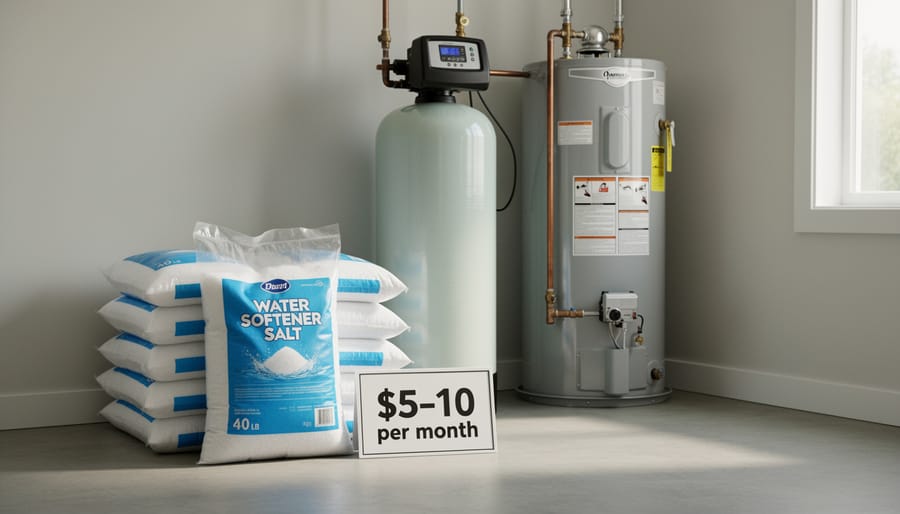
The Hidden Costs of Not Having a Water Softener
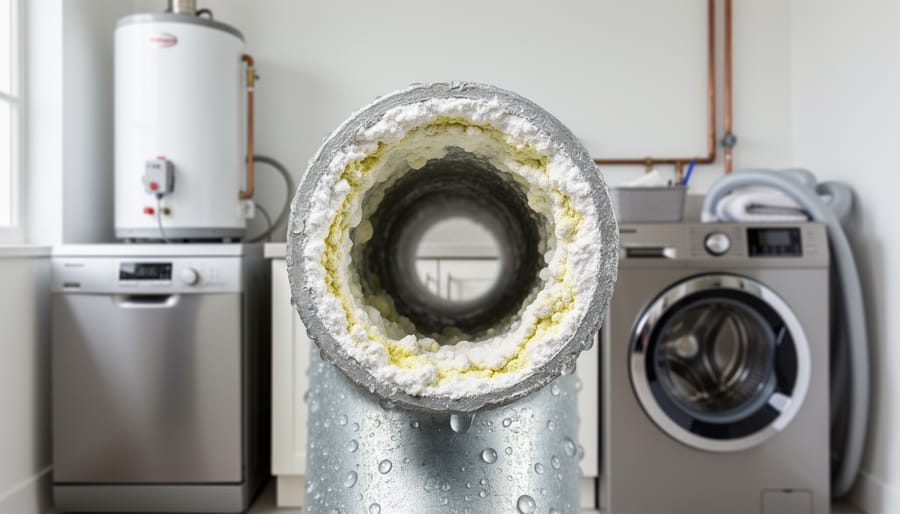
Appliance Replacement and Repair Costs
Hard water creates a hidden financial burden by significantly reducing the lifespan of household appliances and plumbing systems. Understanding these costs helps homeowners see the bigger picture when considering a water softener investment.
Water heaters face the most dramatic impact from hard water damage. Mineral buildup inside the tank forces the heating element to work harder, reducing efficiency by up to 48% and cutting lifespan from 13 years down to 8-10 years. Replacing a standard water heater costs between $1,200 and $3,500, meaning hard water could force you into an early replacement costing thousands of dollars.
Dishwashers and washing machines also suffer considerably. Hard water minerals clog spray arms, valves, and hoses, reducing a dishwasher’s typical 10-year lifespan to just 7 years. Replacement costs range from $400 to $1,500. Washing machines experience similar degradation, with replacement costs between $500 and $2,000. These appliances may also require more frequent repairs, adding $150 to $400 per service call.
Plumbing fixtures face constant mineral accumulation that restricts water flow and damages internal components. Faucets that should last 15-20 years may need replacement after 10 years, costing $150 to $350 per fixture. Showerheads clog faster, requiring replacement every 2-3 years instead of 5-8 years.
When you calculate the combined replacement costs over a 15-year period, homeowners can expect to spend $3,000 to $8,000 more without water softening protection.
Increased Energy and Household Product Expenses
Hard water’s hidden costs extend far beyond visible mineral deposits, significantly impacting your monthly utility bills and household budget. When scale accumulates inside water heaters, it creates an insulating barrier that forces your system to work harder and longer to heat water. Studies show that just one-eighth inch of scale buildup can reduce heating efficiency by up to 20%, potentially adding $15-25 to your monthly energy bill or $180-300 annually for a typical household.
The financial drain continues at your sink and laundry room. Hard water prevents soap and detergents from lathering effectively, requiring you to use 50-75% more product to achieve the same cleaning results. For an average family, this translates to approximately $10-15 extra per month on laundry detergent, dish soap, shampoo, and body wash, totaling $120-180 yearly. Additionally, you’ll purchase more specialized cleaning products to combat stubborn hard water stains on fixtures, glassware, and surfaces, adding another $50-100 annually.
Combined, these increased energy and household product expenses can cost families between $350-580 each year. When calculating water softener payback periods, these ongoing costs represent substantial savings potential. Over a typical 15-year water softener lifespan, homeowners could save $5,250-8,700 on energy and cleaning products alone. These figures make the environmental and economic case for water softening systems particularly compelling, especially when considering the reduced chemical usage benefits eco-conscious households value.
The Environmental Toll of Hard Water
Hard water doesn’t just damage your home—it harms the environment too. When appliances work harder against mineral buildup, they consume more energy and wear out faster, leading to premature disposal and increased landfill waste. A water heater clogged with scale can use up to 30% more energy, significantly increasing your carbon footprint. Household cleaning becomes a chemical-heavy endeavor as homeowners use excessive detergents, soaps, and specialized cleaners to combat hard water stains and soap scum. These extra chemicals wash into water systems, affecting local ecosystems. Additionally, the constant replacement of damaged appliances, clogged showerheads, and deteriorated plumbing fixtures creates unnecessary waste. By investing in a water softener, you’re not just protecting your wallet—you’re making an eco-conscious choice that reduces energy consumption, minimizes chemical usage, and extends the lifespan of household items, keeping them out of landfills longer.
Understanding Your Savings: The Payback Period Explained
How the Payback Calculator Works
Understanding how a water softener payback calculator works helps you make an informed decision about this household investment. The calculator weighs three main factors to determine when your system pays for itself.
First, you’ll input your initial costs, which include the water softener unit itself, professional installation, and any necessary plumbing modifications. These upfront expenses typically range from $500 for basic salt-based systems to $3,000 or more for advanced eco-friendly models. Don’t forget to factor in permits if your local area requires them.
Next, the calculator considers ongoing operating expenses. These include monthly costs for salt or potassium chloride (averaging $5-10), water and electricity for regeneration cycles, and periodic maintenance like resin bed replacement every 10-15 years. Salt-free systems generally have lower operating costs but may require filter changes.
The final component is your projected savings, where the real value becomes clear. Hard water causes scale buildup that damages water heaters, reducing their efficiency by up to 25 percent and shortening their lifespan. You’ll also use significantly less soap, shampoo, and detergent with softened water since these products lather more effectively. Additionally, clothing and appliances last longer without hard water mineral deposits wearing them down.
The calculator subtracts your annual operating costs from your annual savings to determine net yearly benefit, then divides your initial investment by this number. Most homeowners see payback periods between 2-5 years, making water softeners a financially sound choice for sustainable living.
Real-World Payback Examples
Let’s look at three real households to see how water softener payback varies based on your specific situation.
Scenario 1: Small Household, Moderate Hardness (10 grains per gallon)
Meet Sarah, who lives alone in a 1,200 square foot home. Her water hardness measures 10 grains per gallon, which is moderately hard. She invested $1,500 in a basic salt-based softener and spends about $60 annually on salt. Before installing her system, Sarah spent roughly $200 yearly replacing corroded faucets and showerheads, plus $180 on extra detergent and soaps. With her softener, she’s saving approximately $320 annually while extending her water heater’s lifespan. Sarah’s payback period is around 4.5 years, after which she’ll enjoy ongoing savings that make her household budget more predictable and eco-friendly.
Scenario 2: Large Family, Very Hard Water (18 grains per gallon)
The Martinez family of five faced severe hard water issues at 18 grains per gallon. They invested $2,800 in a high-capacity system and spend $150 yearly on salt. Previously, they replaced their water heater every 8 years instead of 12, costing them an extra $100 annually. Their soap and detergent bills dropped by $400 per year, and plumbing repairs decreased significantly, saving another $250. With total annual savings of $750, their payback period is just under 4 years. The environmental benefit of reduced chemical usage aligns perfectly with their values.
Scenario 3: Average Home, Hard Water (14 grains per gallon)
The Johnson household represents typical conditions with 14 grains per gallon hardness. Their $2,200 system investment yields approximately $450 in annual savings through reduced appliance repairs, lower energy bills, and decreased cleaning product purchases. Salt costs run $100 yearly. Their payback timeline sits at roughly 5 years, delivering long-term financial and environmental advantages.
Maximizing Your Water Softener Investment
Choosing the Right-Sized System
Selecting the right capacity water softener can significantly impact your upfront costs and long-term savings. An oversized system wastes money on unnecessary capacity and uses more salt and water during regeneration cycles, increasing your operating expenses and environmental footprint. Conversely, an undersized unit struggles to keep up with demand, leading to hard water breakthrough and premature system wear.
Proper system sizing depends on two key factors: your household’s daily water consumption and water hardness level. Most households use 80-100 gallons per person daily, but this varies based on lifestyle habits. Multiply your daily usage by hardness level (measured in grains per gallon) to determine required capacity.
For example, a four-person household with moderately hard water (10 grains per gallon) needs a 32,000-grain system, typically costing $400-$800. Oversizing to 48,000 grains adds $200-$400 upfront and roughly $50-$100 annually in unnecessary salt and water waste. This eco-conscious approach ensures you invest appropriately while minimizing resource consumption, making your water softener both financially sound and environmentally responsible from day one.
Efficiency Features That Lower Operating Costs
Modern water softeners incorporate efficiency features that significantly reduce operating costs over their lifespan. Smart regeneration systems use sensors to monitor actual water usage and hardness levels, triggering the cleaning cycle only when necessary rather than on a fixed schedule. This intelligent approach can cut salt consumption by up to 50% and reduce water waste during regeneration by thousands of gallons annually.
High-efficiency models feature demand-initiated regeneration that calculates the precise amount of salt and water needed based on your household’s consumption patterns. Some systems include look-ahead technology that schedules regeneration during off-peak hours, optimizing water pressure and availability for your family.
Water-saving innovations like countercurrent regeneration direct brine flow opposite to the service flow, requiring less water to clean the resin beads effectively. This process can reduce water usage during each cycle from 65 gallons down to just 25 gallons.
Advanced metering systems provide real-time data about your water usage and salt levels through smartphone apps, helping you track savings and schedule maintenance efficiently. These eco-friendly features not only lower your monthly utility bills but also minimize environmental impact, making them worthwhile considerations when calculating long-term payback on your investment.
Maintenance Tips to Extend System Lifespan
Protecting your water softener investment starts with simple, consistent care that prevents expensive breakdowns. Following a regular maintenance schedule can extend your system’s lifespan from the typical 10-15 years to 20 years or more, maximizing your return on investment.
Check salt levels monthly and refill when the tank is about one-quarter full. Use high-quality softener salt to prevent buildup and maintain efficiency. Clean the brine tank annually by removing sediment and checking for salt bridges that can interrupt the regeneration cycle.
Inspect resin beads every few years, as they’re the heart of your softening system. While designed to last decades, hard water contaminated with iron or chlorine can shorten their life. Consider an annual professional inspection to catch minor issues before they become costly repairs.
Keep your system’s control valve clean and verify settings remain accurate. Environmental factors like power surges can reset timers, causing unnecessary regeneration cycles that waste water and salt while increasing operating costs.
Is a Water Softener Worth the Investment for Your Home?
When the Payback Makes Sense
Water softeners deliver the most compelling payback when your water hardness exceeds 10 grains per gallon (gpg). At this level, mineral buildup significantly shortens the lifespan of water heaters, dishwashers, and washing machines while requiring more detergent and cleaning products. For a family of four dealing with very hard water (15+ gpg), the combined savings on appliance repairs, replacements, and household products typically offset the softener investment within 3-5 years.
Larger households see faster payback since they consume more water and purchase cleaning products more frequently. If you’re already facing premature water heater failure, experiencing persistent plumbing issues, or spending heavily on bottled water and specialty cleaning solutions, a softener becomes financially justified much sooner.
The investment makes particular sense if you plan to stay in your home long-term and your municipal water consistently tests above moderate hardness levels. Conversely, if your water measures below 7 gpg or you’re renting short-term, the payback timeline extends beyond practical consideration. Consider getting a professional water test to establish your baseline hardness level before making this investment decision. This data-driven approach ensures you’re choosing a solution that aligns with both your environmental values and household budget.
Alternative Solutions for Budget-Conscious Homeowners
If a whole-house water softener stretches your budget or you’re dealing with mild hardness levels, several cost-effective alternatives deserve consideration. Point-of-use softeners target specific faucets or appliances, typically costing $100-$400 for shower or faucet models. These compact units protect what matters most while eliminating the $500-$2,000 investment of whole-house systems.
Electronic descaling devices offer another budget-friendly option at $200-$600. These maintenance-free systems use electromagnetic waves to prevent mineral buildup without removing hardness minerals or requiring salt. While they don’t technically soften water, they protect pipes and appliances from scale accumulation, making them ideal for moderate hardness issues.
For environmentally-conscious homeowners with minimal hardness concerns, catalytic media filters ($300-$800) condition water without salt or electricity. These eco-friendly systems reduce scale while maintaining beneficial minerals, aligning with sustainable living practices.
DIY water testing kits ($15-$30) help you determine whether you truly need softening or if simpler solutions suffice. Many households discover their hardness levels don’t justify expensive systems, saving thousands in unnecessary equipment and operating costs. Start small, test your actual needs, and scale up only if necessary—your wallet and the environment will benefit from this measured approach.
Understanding the true cost of a water softener goes far beyond the initial price tag. As we’ve explored throughout this guide, the investment encompasses upfront equipment and installation costs, ongoing maintenance expenses, and the often-overlooked operational costs of salt and water usage. However, these expenses must be weighed against substantial long-term savings on soap and cleaning products, reduced energy bills from more efficient appliances, extended lifespan of plumbing systems and water-using appliances, and improved household water quality.
The payback period for a water softener typically ranges from three to seven years, depending on your water hardness level, household size, and local utility rates. For many homeowners, this investment pays dividends not only in dollars saved but also in convenience, reduced environmental impact from fewer harsh chemicals, and the peace of mind that comes with protecting expensive home infrastructure.
To make the most informed decision for your situation, use the calculator above with your specific household data. Input your actual water hardness levels, the number of people in your home, and your local costs to see personalized projections. Remember that while financial savings matter, the environmental benefits of using less detergent, extending appliance lifespans, and reducing plastic bottle waste from store-bought water contribute to more sustainable living practices. Your choice to install a water softener represents an investment in both your home’s efficiency and our planet’s future.