Calculate your actual annual spending on bottled water or pitcher filter replacements—most households discover they’re spending $300-600 yearly on inferior filtration methods. Under-sink systems typically cost $200-400 upfront with annual filter replacements around $60-100, meaning you’ll break even within 12-18 months while gaining superior contaminant removal and unlimited filtered water at every turn of your tap.
Examine your municipal water report for specific contaminants like lead, chlorine, or PFAS before investing. Under-sink filters excel at removing these pollutants through multi-stage filtration, but they’re unnecessary if your water already tests clean. Request a free water quality report from your local utility or purchase a $25 home testing kit to identify what you’re actually filtering.
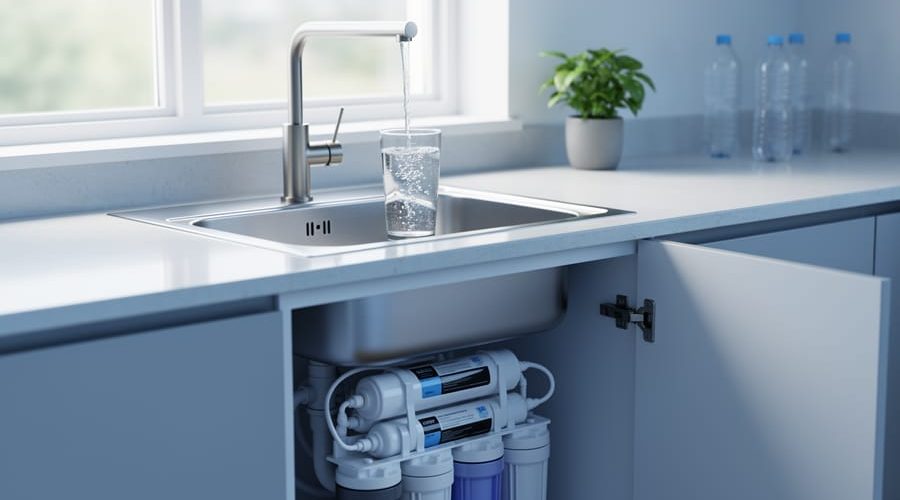
Consider your household’s daily water consumption and available cabinet space beneath your sink. Families using more than five gallons of filtered water daily will find under-sink systems far more practical than constantly refilling pitchers, while the compact installation fits most standard cabinetry without requiring permanent modifications to your plumbing.
Evaluate the environmental impact of your current water solution. A single under-sink filter cartridge replaces approximately 300 plastic bottles or 2-3 months of pitcher filters, dramatically reducing plastic waste while providing cleaner water. For eco-conscious homeowners, this represents meaningful progress toward sustainable living without sacrificing convenience.
The real question isn’t whether under-sink filters work—they demonstrably outperform alternatives in filtration capacity and cost-efficiency. What matters is whether your specific water quality issues, consumption patterns, and budget align with this investment, making it the right solution for your household’s unique needs.
What Under-Sink Water Filters Actually Do (And Don’t Do)
The Science Made Simple
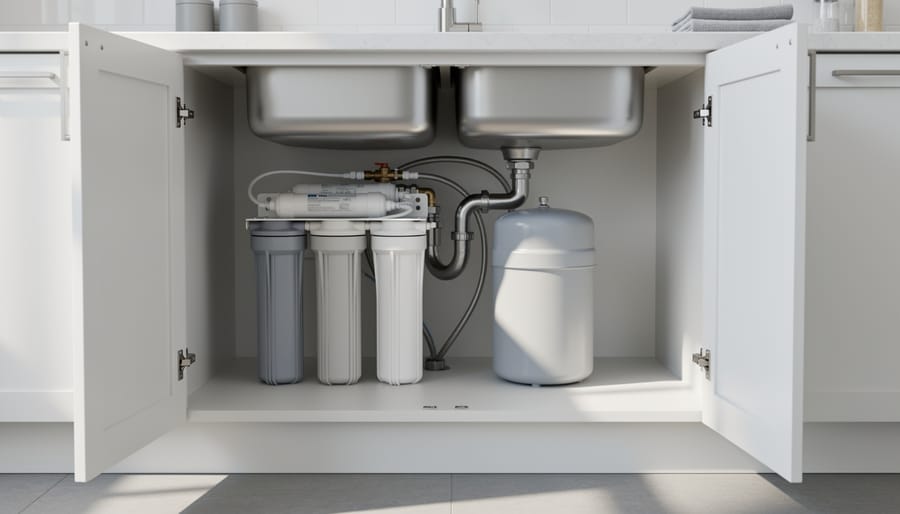
Understanding how under-sink water filters work doesn’t require a chemistry degree. These systems use two main approaches to clean your water: mechanical filtration and chemical filtration.
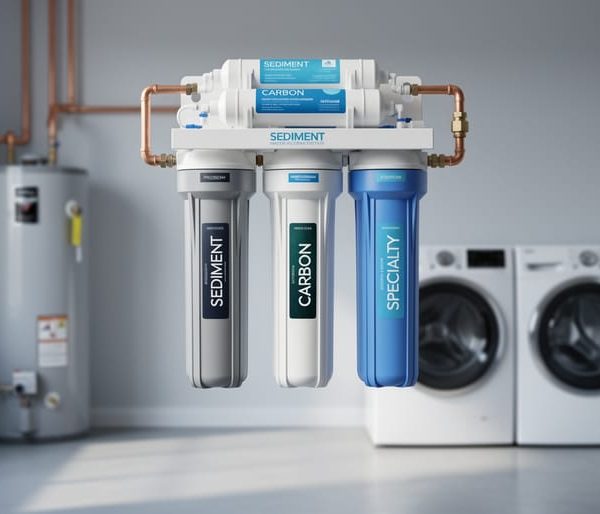
Mechanical filtration works like a super-fine strainer. Water passes through physical barriers with tiny pores that trap contaminants based on size. Sediment filters catch rust, dirt, and larger particles, while ceramic or carbon block filters capture even smaller impurities. Think of it as pushing water through increasingly finer mesh screens.
Chemical filtration, on the other hand, uses special materials that attract and bind contaminants through a process called adsorption. Activated carbon is the most common example, working like a magnet for chlorine, pesticides, and compounds that cause bad taste and odor. The contaminants stick to the carbon’s surface as water flows through.
Many under-sink systems, including reverse osmosis systems, combine both methods for comprehensive protection. By using multiple filtration stages, these filters tackle different contaminants simultaneously, ensuring cleaner, safer drinking water for your household.
What Gets Filtered Out (And What Stays)
Under-sink filters excel at removing common contaminants, but they’re not magic solutions. Understanding their capabilities helps you make an informed decision.
Most quality under-sink systems effectively remove chlorine, which improves taste and odor dramatically. They also tackle sediment like rust and sand, plus reduce heavy metals including lead, mercury, and copper. If you’ve tested your water and found elevated lead levels, these filters genuinely shine. They’re also excellent at removing volatile organic compounds (VOCs) and many pesticides that occasionally appear in municipal water supplies.
Carbon-based filters handle most everyday concerns beautifully. They’ll clear out chloramine (increasingly used by water utilities), pharmaceutical traces, and various industrial chemicals that might sneak into your tap water.
However, these systems have limitations worth knowing upfront. Standard carbon filters don’t remove dissolved minerals like calcium and magnesium, so your water hardness remains unchanged. They also can’t eliminate fluoride, which matters if that’s a concern for your household. Most won’t catch certain bacteria or viruses unless specifically designed with additional treatment stages.
For specialized issues like arsenic, nitrates, or total dissolved solids, you’ll need reverse osmosis systems rather than basic carbon filters. Think of standard under-sink filters as comprehensive everyday cleaners, not specialized treatment plants.
The practical takeaway? Check your local water quality report or get an independent water test. This reveals exactly what you’re dealing with and whether an under-sink filter addresses your specific contaminants. Matching your water’s actual problems to the filter’s capabilities ensures you’re investing in a solution that actually works for your situation.
The Real Financial Picture: Upfront and Long-Term Costs
Initial Investment Breakdown
Understanding the upfront costs helps you make an informed decision about whether an under-sink water filter fits your budget. The initial investment typically breaks down into three main categories.
The filter unit itself ranges from $50 to $500, depending on the technology you choose. Basic carbon filters start around $50-$150, while advanced multi-stage systems with reverse osmosis capabilities can cost $200-$500. These higher-end models often include additional filtration stages that remove more contaminants, making them a worthwhile consideration for areas with poor water quality.
Installation costs vary significantly between DIY and professional approaches. If you’re handy with basic plumbing, many units are designed for straightforward installation within 1-2 hours, costing you nothing beyond your time. However, professional installation typically runs $100-$300, which can be valuable for ensuring proper setup and avoiding potential leaks or installation errors.
Plumbing modifications may add to your costs. Most modern homes need minimal adjustments, but older systems might require upgrading valves, adding a faucet hole for dedicated filtered water taps, or adjusting pipe configurations. These modifications generally cost $50-$200 depending on complexity. Consider having a plumber assess your setup beforehand to avoid unexpected expenses.
The Ongoing Expenses Nobody Talks About
The upfront cost is just the beginning. Most under-sink filters require replacement cartridges every 6-12 months, depending on your water quality and household usage. A typical two-stage system costs between $50-$150 annually for filters, while advanced reverse osmosis systems can run $100-$300 per year when you factor in membrane replacements every 2-3 years.
Beyond filters, you’ll want to budget for occasional maintenance. O-rings and housing connections may need replacing every few years, adding $20-$40 to your expenses. If you’re not handy with basic plumbing, professional maintenance visits typically cost $75-$150.
Here’s a realistic annual budget to expect: basic carbon filters run about $60-$100 yearly, multi-stage systems average $120-$200, and reverse osmosis units can reach $150-$350 annually. These costs remain relatively stable and predictable, making them easier to plan for than unexpected bottled water runs.
The good news? These ongoing expenses still typically cost less than purchasing bottled water for a family, while dramatically reducing plastic waste. Setting calendar reminders for filter changes helps you stay on schedule and avoid decreased filtration performance.
How They Stack Up Against Alternatives
Let’s break down the real costs. Under-sink filters typically run $200-400 upfront with annual filter replacements around $50-100, averaging 5-10 cents per gallon. Pitcher filters cost less initially ($20-40) but need frequent replacements, totaling $120-200 yearly at 15-20 cents per gallon. Faucet-mounted filters fall in between at 10-15 cents per gallon. Bottled water is the priciest option, costing $300-600 annually at 30-50 cents per gallon for a typical household.
Beyond dollars, consider environmental impact. Under-sink systems eliminate thousands of plastic bottles from landfills yearly and require fewer filter changes than pitchers. While bottled water generates significant waste and transportation emissions, under-sink filters minimize both. For families using over 10 gallons weekly, under-sink systems typically pay for themselves within 1-2 years while dramatically reducing your environmental footprint.
When Under-Sink Filters Make Perfect Sense
Your Water Quality Matters Most
Before investing hundreds of dollars in an under-sink system, it’s essential to understand what’s actually in your water. The best first step is to test your water using a certified lab test or EPA-approved home testing kit. These tests typically cost between $20-$150 and reveal specific contaminants like lead, chlorine, bacteria, pesticides, and heavy metals.
Your municipal water report, available free online, provides a helpful baseline but only shows what leaves the treatment plant, not what accumulates in your home’s pipes. If your test reveals contaminants above EPA safety levels, or you have older plumbing that may leach lead, an under-sink filter becomes a health investment rather than just a preference.
Common indicators that warrant filtration include persistent chlorine taste or odor, visible sediment, metallic taste, or living in areas with known water quality issues like agricultural runoff or industrial contamination. Homes built before 1986 with original plumbing face higher lead risks, making filtration particularly worthwhile. Testing removes the guesswork and helps you choose a filter certified to address your specific water concerns.
Household Size and Usage Patterns
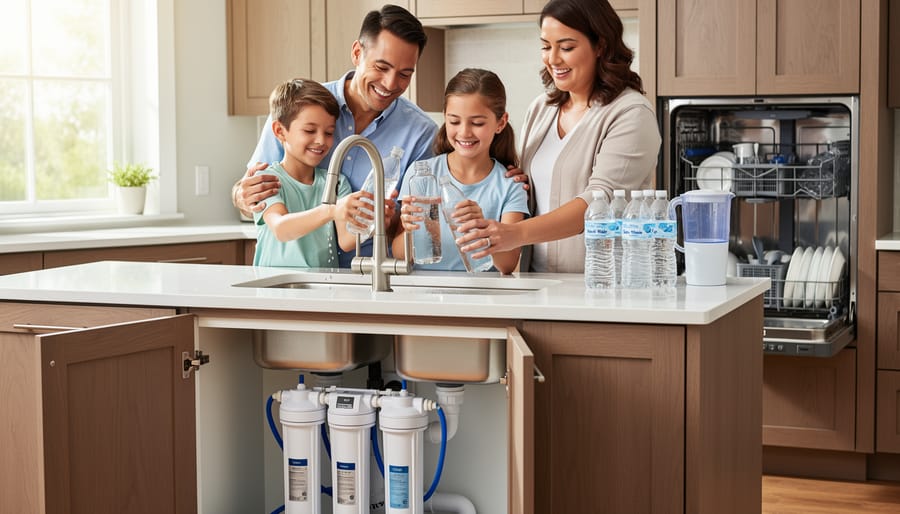
Under-sink water filters become increasingly cost-effective as household size grows. For a single person, pitcher filters or faucet attachments might suffice. However, families of four or more reach a financial tipping point where under-sink systems shine. These households typically consume 12-20 gallons of filtered water daily for drinking, cooking, and beverage preparation.
The math is compelling: a family of four using pitcher filters replaces cartridges every 4-6 weeks at approximately $15-20 each, totaling $150-200 annually. Meanwhile, an under-sink system’s annual filter replacement costs around $80-120 while providing unlimited filtered water on demand. This eliminates the constant refilling hassle that frustrates larger households.
Heavy water users—including home cooks, coffee enthusiasts, and families with young children—benefit most from the convenience and capacity. If you’re regularly purchasing bottled water or replacing pitcher filters monthly, an under-sink system typically pays for itself within 18-24 months while reducing plastic waste substantially.
The Environmental Equation
Beyond cost savings, under-sink filters deliver impressive environmental benefits. A single household using an under-sink system instead of bottled water can eliminate approximately 1,500 plastic bottles annually from landfills and oceans. That’s roughly 30 pounds of plastic waste prevented each year.
Compared to pitcher filters, under-sink systems shine even brighter. Pitcher filters require replacement every two months, generating six cartridges per year. Under-sink filters typically need changing just once or twice annually, reducing plastic waste by up to 75%. The longer filter lifespan also means fewer manufacturing cycles and reduced transportation emissions.
When you factor in the carbon footprint of producing, shipping, and recycling plastic bottles, an under-sink filter can reduce your household’s water-related carbon emissions by an estimated 300-500 pounds of CO2 annually. For environmentally-conscious homeowners, this environmental return on investment often outweighs the initial installation cost, making under-sink filters a powerful tool for sustainable living.
When You Should Look Elsewhere
Renters and Temporary Living Situations
If you’re renting or living in temporary housing, under-sink water filters may not be your best investment. These systems require drilling into cabinets and connecting to plumbing, which most landlords prohibit without permission. Even if allowed, you’ll likely need to remove the filter when you move, potentially forfeiting your initial investment or facing the hassle of uninstalling and reinstalling at your next place.
For renters, portable solutions like pitcher filters or countertop systems offer much better value. They move with you effortlessly, require no installation, and won’t risk your security deposit. While under-sink filters excel in permanent homes, their lack of portability makes them impractical for temporary living situations. Consider your housing timeline carefully—if you plan to move within a few years, the cost per use diminishes significantly, making smaller, transportable filtration options the smarter environmental and financial choice for your circumstances.
When Simpler Solutions Work Better
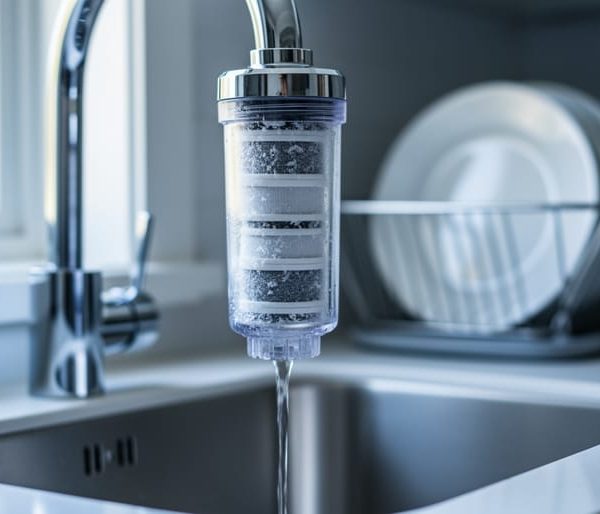
For many households, pitcher filters or faucet-mount systems offer perfectly adequate water purification without the expense and installation complexity of under-sink units. If your main concerns are improving taste and reducing chlorine, these simpler solutions typically cost between $20-$60 upfront with replacement filters running $30-$80 annually, making them significantly more budget-friendly.
Renters particularly benefit from portable filtration options that move with them. Faucet-mount filters provide convenient point-of-use filtration without modifying plumbing, while modern pitcher filters now feature advanced multi-stage technology that removes common contaminants effectively. For households with modest water consumption or those wanting to test filtered water before committing to permanent installations, these accessible alternatives deliver real value. They’re also ideal for addressing minor water quality issues in areas with already-decent municipal water supplies, where comprehensive under-sink filtration would be overkill for your actual needs.
Budget Realities
Let’s be honest—under-sink filters aren’t for everyone’s budget. With initial costs ranging from $150 to $600 plus professional installation fees, they represent a significant investment that some households simply can’t accommodate right now.
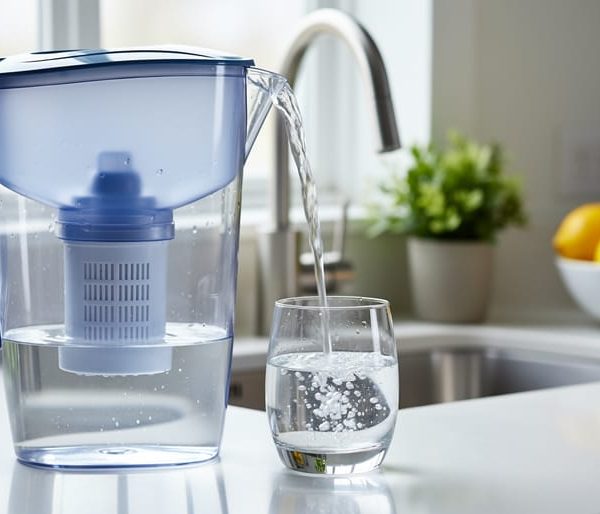
If the upfront expense feels prohibitive, you have alternatives. Quality countertop filters offer similar filtration technology at $50-150 without installation costs, though they’ll occupy counter space. Pitcher filters remain the most budget-friendly option at $20-40 initially, perfect for renters or those testing filtered water before committing.
Consider your timeline too. If you’re planning to move within a year, a portable solution makes more financial sense. However, if budget is your only hesitation and you’re staying put, remember that under-sink systems typically pay for themselves within 12-18 months compared to bottled water costs. Sometimes waiting a few months to save up delivers better long-term value than choosing a temporary fix that costs more over time.
Hidden Benefits Most People Don’t Consider
Beyond the obvious benefits of cleaner drinking water, under-sink filters offer several overlooked advantages that can significantly enhance your daily life and home value.
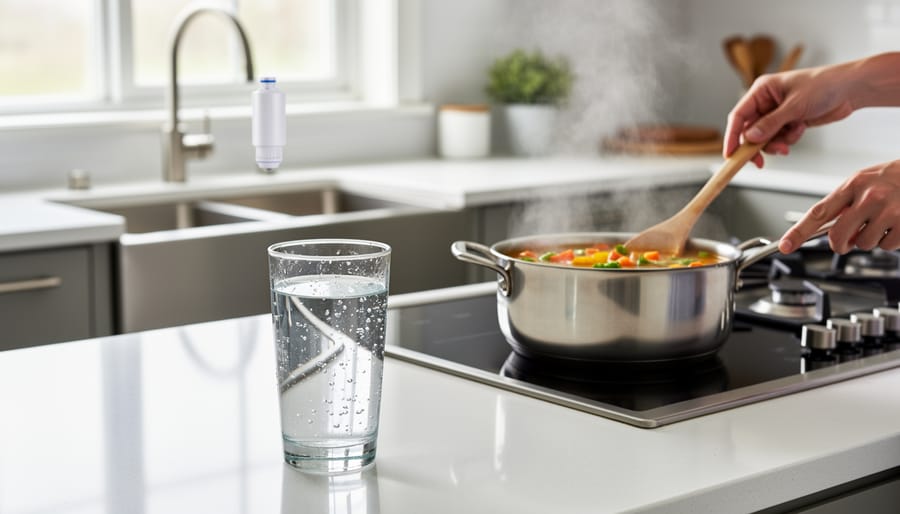
One of the most noticeable improvements is in your cooking. When you use filtered water for pasta, rice, coffee, or tea, you’ll discover flavors you never knew existed. Chlorine and other contaminants can mask the natural taste of ingredients, so removing them allows your food and beverages to taste as they should. Home chefs often report that their soups, broths, and even ice cubes taste noticeably better after switching to filtered water.
The space-saving aspect deserves attention too. Unlike bulky pitcher filters that occupy valuable refrigerator real estate, under-sink systems hide completely out of sight. You’ll reclaim that shelf space while enjoying unlimited filtered water on demand, rather than waiting for a pitcher to refill or running out at inconvenient moments.
Convenience extends beyond space savings. With an under-sink filter, you’ll never again need to remember monthly filter replacements. Most systems only require new filters every six to twelve months, freeing up mental energy for more important matters.
From a property perspective, real estate professionals note that updated water filtration systems can be a selling point for health-conscious buyers. While you shouldn’t expect a dollar-for-dollar return, it’s a quality-of-life upgrade that demonstrates home maintenance attention.
Perhaps most importantly for environmental health, these systems dramatically reduce your exposure to microplastics. Recent research shows tap water contains microscopic plastic particles, but quality under-sink filters with activated carbon technology can capture many of these contaminants. This cutting-edge benefit protects your long-term health while reducing dependency on bottled water, which introduces additional microplastics into your body.
The Potential Drawbacks You Need to Know
While under-sink water filters offer numerous benefits, it’s important to understand the potential challenges before making your investment. Being aware of these drawbacks will help you make a realistic decision about whether this solution fits your lifestyle.
Installation can be more involved than you might expect. Unlike countertop filters that simply attach to your faucet, under-sink systems require connecting to your cold water line and sometimes drilling holes in your countertop or sink for a dedicated faucet. If you’re not comfortable with basic plumbing tasks, you’ll need to factor in professional installation costs, which typically range from $150 to $300.
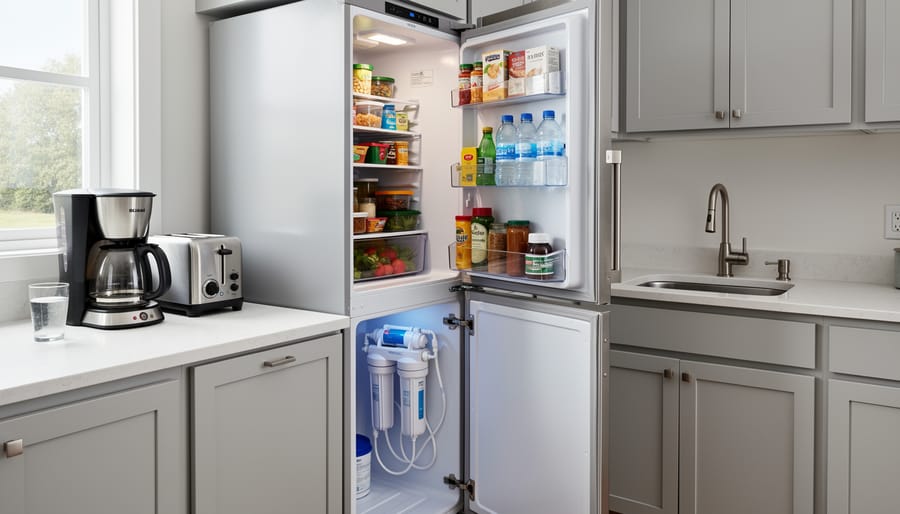
Space constraints present another real consideration. Under-sink cabinets often house cleaning supplies, trash bins, or other essentials. A filter system and its accompanying storage tank (especially for reverse osmosis models) can consume significant cabinet real estate. Before purchasing, measure your available space and consider what you might need to relocate.
If you’re considering a reverse osmosis system, water waste is an environmental factor to understand. These systems can discharge 3 to 5 gallons of wastewater for every gallon of purified water produced. While newer models have improved efficiency, this wastewater represents both an environmental and financial cost on your water bill.
Water pressure reduction sometimes occurs, particularly with multi-stage filtration systems. While usually minor, some households notice slower flow rates from their filtered water tap, which can be frustrating when filling large pots or pitchers.
The maintenance commitment requires ongoing attention. Filter cartridges need regular replacement every 6 to 12 months depending on usage and water quality. Missing these replacement schedules can compromise water quality and potentially damage your system, turning your initial investment into a less effective solution.
Making Your Decision: A Practical Framework
Start With Your Water Quality
Before investing in any filtration system, understanding what’s actually in your water is essential. Start by requesting your local water utility’s annual Consumer Confidence Report, which is free and available to all customers. This report reveals contaminant levels in your municipal supply, though it only shows water quality at the treatment plant, not what comes out of your tap.
For a complete picture, consider testing your water at home. You have two main options: affordable test strips that check for common issues like chlorine, lead, and hardness (typically $15-30), or comprehensive laboratory testing ($100-300) that analyzes dozens of contaminants including bacteria, heavy metals, and volatile organic compounds. Laboratory tests provide the most accurate results and are especially worthwhile if you suspect specific problems or live in an older home with potential pipe contamination.
Once you receive your results, compare the contaminant levels against EPA standards. If your water shows elevated lead, chlorine, or specific chemicals, you can match those findings with appropriate water treatment systems designed to remove those exact contaminants. This targeted approach ensures you invest in filtration that addresses your actual needs rather than generic solutions that may miss the mark.
Calculate Your Personal Break-Even
Understanding when your under-sink filter becomes cost-effective is straightforward with this simple calculation. Start by adding your initial system cost (typically $150-$400) to your annual filter replacement expenses (usually $50-$150). This gives you your total first-year investment.
Next, calculate your annual bottled water spending. If your household purchases two cases weekly at $6 each, that’s $624 yearly. Alternatively, if you’re currently using pitcher filters, factor in those cartridge costs, which often run $120-$180 annually.
Divide your total filter investment by your annual savings to find your break-even point in years. For example, a $300 system with $75 annual maintenance costs ($375 total) compared to $624 in bottled water spending yields a savings of $249 annually. You’ll break even in just 1.5 years.
Beyond this point, you’re saving money while reducing plastic waste. Most quality under-sink filters last 5-10 years, meaning substantial long-term savings. Households with higher water consumption or those in areas with expensive bottled water will reach their break-even point even faster. Remember to include any professional installation costs in your initial calculation for the most accurate timeline.
So, are under-sink water filters worth it? The answer isn’t a simple yes or no. For your household, the decision hinges on three key factors: your current water quality, your budget, and your lifestyle priorities.
If you’re dealing with specific contaminants, spending money on bottled water regularly, or committed to reducing plastic waste, an under-sink filter becomes a smart investment. The upfront cost typically pays for itself within a year compared to bottled water expenses, while delivering cleaner, better-tasting water straight from your tap. For families concerned about lead, chlorine, or other common pollutants, these systems offer peace of mind that pitcher filters simply can’t match.
However, if your municipal water already meets high quality standards and you’re satisfied with its taste, a simpler filtration solution might serve you just as well. Similarly, renters or those on tight budgets may find that other filtration options better suit their circumstances.
The environmental benefits are undeniable. By eliminating hundreds of plastic bottles annually, you’re making a tangible contribution to sustainable living while enjoying the convenience of purified water on demand.
Your next step is clear: test your water quality. Contact your local water utility for a quality report or invest in an independent water test. Understanding what’s actually in your water transforms this decision from guesswork into an informed choice. Armed with that knowledge, you’ll know exactly whether an under-sink filter deserves a place in your home.