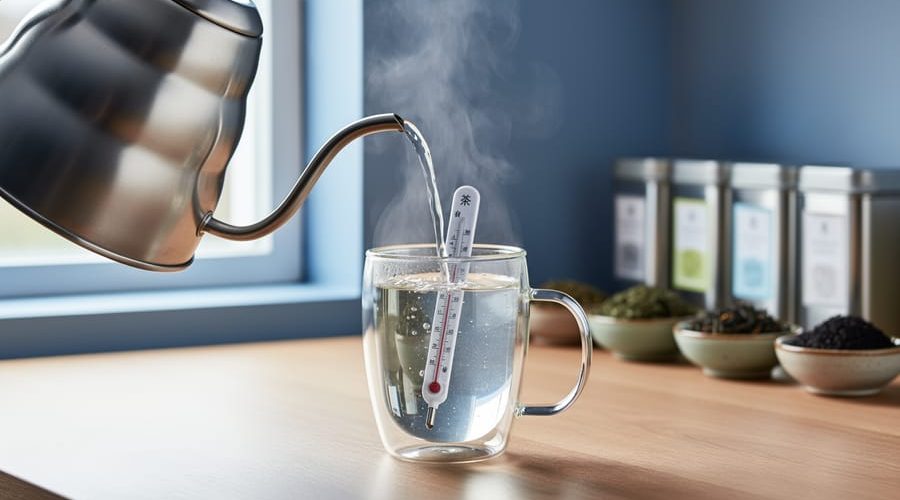
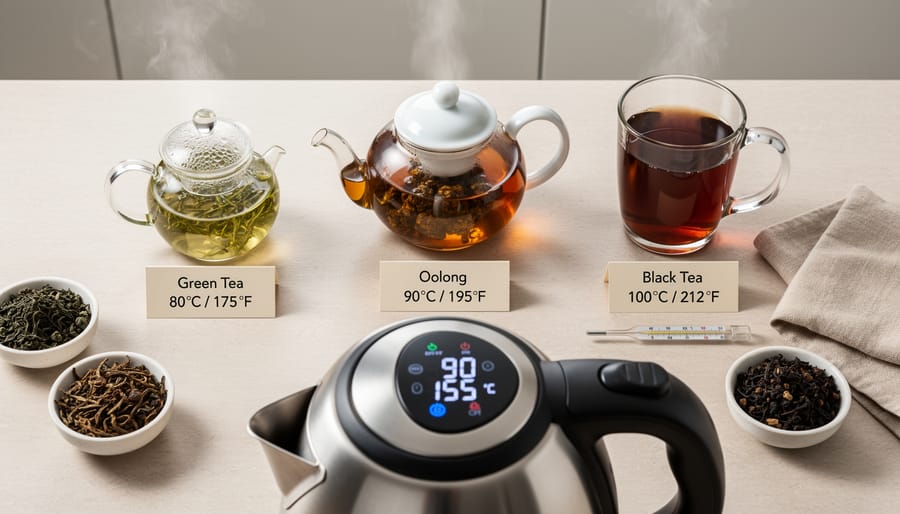
Heat water to 160-175°F for green and white teas, 185-195°F for oolong, and a full rolling boil at 212°F for black teas and herbal infusions. This temperature precision prevents the bitter, astringent flavors that result from overheated delicate tea leaves while ensuring robust varieties extract their full complexity and caffeine content.
Test your kettle’s temperature accuracy using an instant-read thermometer in the poured water, not the kettle itself, since metals conduct heat differently than liquids. Most electric kettles with preset temperature controls maintain accuracy within 5°F, but traditional stovetop kettles require visual cues: tiny bubbles forming at the bottom signal 160-180°F, steady streams of bubbles indicate 190-200°F, and large, vigorous bubbles mean you’ve reached a full boil.
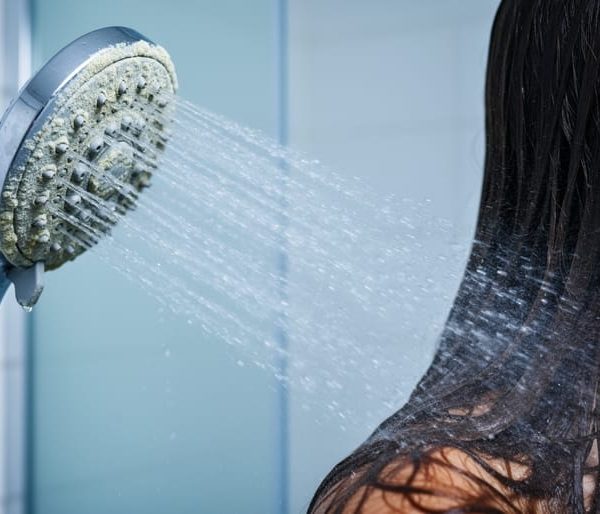
The quality of your source water matters as much as its temperature. Minerals, chlorine, and other dissolved solids in tap water can mask delicate tea flavors or create off-tastes even at perfect brewing temperatures. Understanding your home’s water composition helps you make informed decisions about filtration needs before heating.
Mastering water temperature transforms your daily tea ritual from guesswork into a repeatable science. Whether you’re brewing a morning green tea or an afternoon Earl Grey, matching water temperature to leaf type unlocks flavors you’ve been missing while reducing waste from discarded bitter brews. The right temperature isn’t just about taste—it’s about respecting the craft of tea-making and maximizing the value of quality leaves you bring into your home.
The Science Behind Water Temperature and Tea Extraction
Why Boiling Water Isn’t Always Best
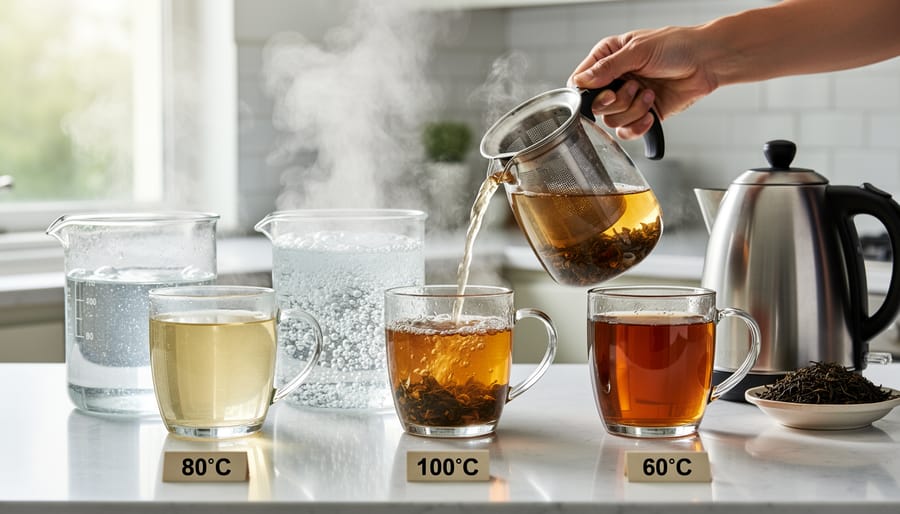
Many tea lovers make the mistake of pouring fully boiling water over every type of tea, not realizing that excessive heat can actually ruin your brew. When water reaches 212°F (100°C), it can destroy the delicate flavor compounds and beneficial antioxidants found in certain teas, particularly green and white varieties.
Think of it like cooking vegetables—too much heat breaks down their nutritional value and texture. The same principle applies to tea leaves. Boiling water scorches delicate leaves, releasing an excess of tannins that create harsh, bitter, and astringent flavors that overwhelm the subtle, nuanced tastes you’re meant to enjoy.
Green teas, for example, contain catechins and amino acids that contribute to their sweet, grassy, or vegetal notes. When exposed to boiling water, these compounds break down rapidly, leaving you with a disappointing cup that tastes more like bitter grass clippings than the smooth, refreshing beverage it should be. White teas, the most delicate of all, suffer even more dramatically from excessive heat, losing their signature floral sweetness and developing unpleasant harsh notes instead. By understanding the right temperature for each tea type, you’ll unlock better flavor, preserve health benefits, and reduce waste from dumping undrinkable bitter brews.
The Mineral Connection: How Water Quality Affects Temperature
The water you use in your tea kettle contains dissolved minerals like calcium, magnesium, and various trace elements that can subtly affect how it heats and boils. Hard water, which has higher mineral content, actually has a slightly higher boiling point than soft or distilled water—though the difference is minimal, typically just a fraction of a degree. What matters more for your tea experience is how these minerals interact with the tea compounds themselves.
When water quality matters most is in how minerals affect flavor extraction and heat retention. Hard water can create a film on your tea’s surface and alter its taste, while also leaving scale buildup inside your kettle that reduces heating efficiency over time. This scale acts as insulation, forcing your kettle to work harder and potentially affecting temperature consistency.
For optimal results, consider using filtered water that removes excess minerals and impurities without stripping away everything—some mineral content actually enhances tea flavor. If you notice significant scale buildup, regular descaling with vinegar keeps your kettle heating efficiently and maintaining accurate temperatures, ensuring your water reaches the precise heat needed for that perfect cup.
Optimal Temperature Ranges for Different Tea Types
Delicate Teas: White and Green (160-180°F)
White and green teas are the most delicate varieties, requiring cooler water to preserve their subtle flavors and health-promoting compounds. Heat your kettle to 160-180°F, which feels warm but not hot to the touch. Higher temperatures actually destroy the tea’s delicate antioxidants and create bitter, astringent flavors that mask the natural sweetness these teas are known for.
For white tea, aim for the lower end at 160-170°F and steep for 4-5 minutes. Green tea performs best at 170-180°F with a 2-3 minute steeping time. If you don’t have a temperature-controlled kettle, bring water to a boil and let it cool for about 5-7 minutes before pouring.
Quality matters here too. Clean, filtered water without chlorine or mineral buildup allows these gentle teas to shine, letting you taste the nuanced vegetal and floral notes that make them special. This approach not only creates better tea but also uses less energy by avoiding unnecessary boiling, supporting more sustainable kitchen practices.
Medium Range: Oolong and Yellow (180-195°F)
Oolong and yellow teas shine brightest when brewed between 180-195°F, a sweet spot that preserves their delicate complexity while coaxing out their characteristic floral and honey notes. These semi-oxidized teas contain compounds that turn astringent if water’s too hot, yet remain locked away if it’s too cool.
To hit this temperature range without a thermometer, bring water to a full boil, then let it rest for 3-4 minutes. You’ll notice the water has stopped producing steam clouds but still shows gentle movement. For consistent results, consider an electric kettle with preset temperature controls—an eco-friendly choice since it heats only what you need, reducing energy waste compared to stovetop methods.
If you’re using a traditional kettle, the “tiny bubbles” stage works perfectly: watch for small bubbles forming at the bottom before they stream upward. This visual cue typically indicates you’ve reached the ideal range. Remember that water quality matters too—mineral content affects how efficiently water conducts heat and influences the final flavor profile of your tea.
High Heat: Black and Herbal (200-212°F)
Near-boiling and boiling water, ranging from 200-212°F, works best for robust, fully oxidized teas like black varieties and many herbal infusions. These teas have tough, tightly rolled leaves that require maximum heat to fully release their complex flavors and beneficial compounds. Black tea needs this high temperature to extract its bold, malty notes without bitterness—contrary to popular belief, scorching isn’t the issue; over-steeping is. Similarly, herbal blends containing roots, bark, or dried fruit benefit from boiling water’s extraction power. Rooibos, peppermint, ginger, and chamomile all thrive at these temperatures. For practical brewing at home, bringing your kettle to a full boil and using the water immediately works perfectly. One eco-friendly tip: boil only the amount you need to conserve energy and reduce your household’s environmental footprint. If your water has mineral buildup or off-flavors, remember that even proper temperature won’t fix underlying water quality issues affecting your tea’s taste.
Coffee Brewing Temperature Considerations
While tea enthusiasts focus on precise temperatures for different varieties, coffee lovers have their own specific needs. The ideal coffee brewing temperature falls between 195-205°F, slightly cooler than boiling water. This range extracts coffee’s complex flavors and oils without creating bitterness or burning the grounds. A temperature-controlled kettle serves both tea and coffee drinkers beautifully, eliminating guesswork and ensuring optimal results for each beverage. For households where family members enjoy different drinks, this versatility makes a controllable kettle a sustainable investment. Instead of multiple appliances or repeated boiling cycles that waste energy, one quality kettle handles everything from delicate white teas at 160°F to robust French press coffee at 200°F, supporting both your morning routine and eco-conscious lifestyle.
How to Measure and Control Your Kettle Water Temperature
Manual Methods: Timing and Thermometers
You don’t need fancy equipment to achieve the right water temperature for your tea. After bringing water to a full boil in your kettle, simply let it cool for the appropriate time. For delicate white and green teas requiring 160-180°F, wait about 7-10 minutes after boiling. Black teas needing 200-212°F are ready after just 2-3 minutes of cooling. These times work well for standard electric and stovetop kettles in typical room temperature conditions.
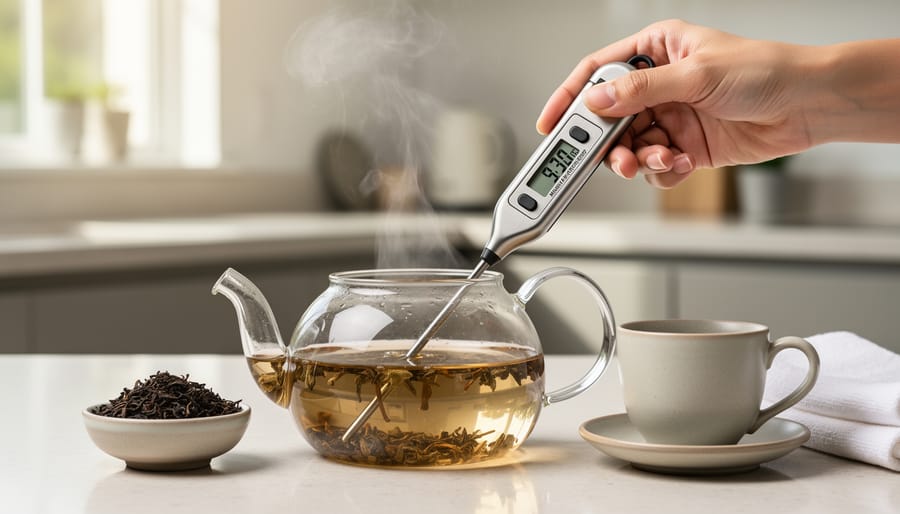
For more precision, an instant-read thermometer offers an affordable, reliable solution. Digital food thermometers available at most home stores provide accurate readings within seconds. Simply insert the probe into your kettle’s water after boiling and wait for your target temperature.
You can also learn to read visual cues in the water itself. Around 160-170°F, you’ll notice small bubbles forming at the bottom. At 180-190°F, strings of bubbles rise steadily. A rolling boil indicates 212°F. While this method requires practice, it’s surprisingly effective once you develop the skill.
These manual approaches work wonderfully for homeowners seeking better-tasting tea without investing in specialized equipment. They’re sustainable, waste-free solutions that put you in control of your brewing process while helping you understand the relationship between water temperature and flavor extraction.
Variable Temperature Electric Kettles
Modern electric kettles with variable temperature controls have revolutionized home beverage preparation, making it simple to heat water to precise temperatures for optimal tea brewing. These innovative appliances typically offer preset options ranging from 140°F for delicate white teas to 212°F for boiling, eliminating the guesswork that often leads to bitter or weak tea.
Most quality variable temperature kettles maintain accuracy within 2-5 degrees Fahrenheit, using built-in thermostats to monitor and regulate heating. Look for models with digital displays that show real-time temperature readings, giving you complete control over your brewing process. Many units also feature a hold function that maintains your selected temperature for 20-30 minutes, perfect for multiple cups throughout the morning.
From an eco-conscious perspective, these kettles offer significant advantages over stovetop options. They’re generally more energy-efficient because they heat only the water you need and shut off automatically at the target temperature. Choose kettles with double-wall insulation to reduce heat loss and energy consumption. Stainless steel interior construction is preferable to plastic, as it eliminates potential chemical leaching while lasting longer and reducing waste. Some advanced models even calculate energy usage, helping environmentally-minded homeowners track their consumption and make sustainable choices in their daily routines.
Stovetop Techniques for Traditional Kettles
Traditional stovetop kettles offer an eco-friendly, energy-efficient way to heat water without electricity, though they require a bit more attention to achieve precise temperatures. The good news is that with practice, you can master temperature control using simple observational techniques.
The sound-based approach relies on listening to your kettle as it heats. Small bubbles forming at the bottom create a gentle rattling sound around 160-180°F, perfect for delicate green and white teas. As temperature increases to 180-190°F, you’ll hear a low rumbling as steam begins forming. The vigorous rolling boil at 212°F produces the familiar whistling or loud bubbling most people recognize.
Heat adjustment timing is equally important. For lower temperatures, bring water to a boil first, then remove the kettle from heat and let it cool for specific intervals: 30 seconds yields approximately 200°F, while 2-3 minutes drops it to around 170-180°F. Alternatively, watch for visual cues like “shrimp eyes” (tiny bubbles) or “fish eyes” (slightly larger bubbles) before a full boil begins.
This traditional method reduces your environmental footprint while giving you hands-on control over your brewing process, making it ideal for homeowners seeking sustainable kitchen practices.
Water Quality’s Impact on Temperature Stability and Taste
How Impurities Affect Heat Transfer and Flavor
Water impurities create a double challenge for tea enthusiasts: they disrupt accurate temperature measurement and compromise flavor. Chlorine, commonly added to municipal water supplies for disinfection, can evaporate at different rates during heating, creating inconsistent thermal properties that affect how quickly water reaches target temperatures. Heavy metals like lead and copper alter water’s heat capacity, meaning your kettle may indicate the correct temperature while the water actually sits slightly cooler or hotter than intended.
Sediment and mineral deposits are equally problematic. As they accumulate inside your kettle, they create insulating layers that slow heat transfer, forcing your appliance to work harder and longer. This buildup doesn’t just waste energy—it creates hot spots and temperature variations throughout the water.
Beyond the technical issues, these impurities dramatically impact taste. Chlorine imparts chemical notes that overpower delicate tea flavors, while heavy metals contribute metallic bitterness that’s especially noticeable in lighter teas like white or green varieties. Minerals can cause cloudiness and affect how flavor compounds extract at specific temperatures.
The solution is straightforward: using filtered water removes these interfering substances, ensuring more precise heating and cleaner-tasting beverages. A simple carbon filter effectively eliminates chlorine and reduces heavy metals, letting you achieve the exact temperatures your tea requires while protecting your kettle from damaging buildup.
Filtered vs. Tap Water: Temperature and Taste Tests
The quality of your water matters just as much as the temperature you heat it to. When you’re brewing tea at home, starting with the right water source can dramatically improve your results, even when you’ve nailed the perfect temperature.
Tap water often contains chlorine, minerals, and other compounds that can interfere with tea’s delicate flavor profile. These impurities become more noticeable in lighter teas like green or white varieties, where subtle notes can be masked by metallic or chemical tastes. Even when heated to the ideal 160-175°F for green tea, chlorinated tap water can produce a flat, slightly bitter brew.
Filtered water removes these interfering elements while maintaining beneficial minerals that contribute to tea’s body and mouthfeel. A simple water filtration system can transform your tea experience by providing a clean canvas for flavor development.
To conduct your own comparison, brew identical teas side-by-side using filtered and tap water heated to the same temperature. You’ll likely notice that filtered water allows the tea’s natural characteristics to shine through more clearly, with brighter aromatics and cleaner finish notes.
For the eco-conscious homeowner, investing in quality filtration reduces reliance on bottled water while ensuring consistently excellent brewing results. This sustainable approach means every cup showcases both your careful temperature control and the pure, clean water that lets premium teas express their true character. The combination of proper temperature and water quality represents the foundation of exceptional home brewing.
Common Temperature Mistakes That Ruin Your Tea
Overheating Delicate Teas
The most common mistake home tea brewers make is using boiling water for all tea types, which destroys the delicate flavor compounds in white, green, and oolong teas. When water exceeding 185°F hits these sensitive leaves, it releases excessive tannins, creating that unpleasant bitter, astringent taste that overpowers the tea’s natural sweetness and complexity.
The fix is surprisingly simple: after your kettle boils, let it rest. White teas shine at 160-175°F, green teas prefer 170-180°F, and oolongs work best around 185-195°F. If you don’t have a temperature-controlled kettle, wait approximately 5-7 minutes after boiling for white teas, 3-5 minutes for green teas, and 2-3 minutes for oolongs. This small pause makes the difference between harsh, disappointing tea and a smooth, flavorful cup that showcases why quality loose-leaf varieties cost more than grocery store bags.
Inconsistent Temperature Between Brews
Getting the same water temperature every time you brew can be surprisingly tricky, even when using the same kettle. Several factors create unwanted variation that affects your tea’s flavor and consistency.
The starting temperature of your water plays a significant role. Cold tap water in winter will take longer to heat than lukewarm summer water, and if you’re relying on automatic shut-off features or timing your heating, you’ll get different results. The amount of water in your kettle also matters—a full kettle requires more energy and time to reach temperature than a half-full one, creating inconsistencies if you’re not measuring carefully.
Your surrounding environment influences heating patterns too. Drafty kitchens, ambient room temperature, and even altitude affect how quickly water heats and cools. Additionally, mineral buildup inside your kettle from hard water creates insulating layers that change heating efficiency over time, making your kettle gradually less predictable.
To achieve consistency, always start with water at the same temperature, measure the same volume each time, and use a thermometer rather than guessing. Regular descaling maintains your kettle’s performance, ensuring the heating element works efficiently. For serious tea enthusiasts, electric kettles with built-in thermostats eliminate guesswork entirely, heating water to your exact specification every time—a worthwhile investment for perfect, repeatable brews that also conserves energy by preventing overheating.
Sustainable Temperature Control: Energy and Environmental Considerations
Boiling Only What You Need
One of the simplest ways to save energy while enjoying your perfect cup of tea is to boil only the amount of water you actually need. Many people fill their kettles to the maximum line out of habit, then reheat the same water multiple times throughout the day. This practice wastes significant energy and can actually affect your tea’s flavor as oxygen levels in repeatedly boiled water decrease.
Start by measuring your water before heating. A standard mug holds about 8-10 ounces, so if you’re making tea for two people, fill your kettle with roughly 20 ounces rather than the full capacity. Most modern kettles include measurement markings on the side to help with this. If yours doesn’t, consider using a measuring cup until you develop an eye for the right amount.
Besides reducing your electricity or gas consumption, heating less water means it reaches the desired temperature faster, saving you time each morning. Over a year, this small adjustment can reduce your household energy usage by dozens of kilowatt-hours. As an added benefit, you’ll avoid the flat taste that comes from water that’s been boiled multiple times, ensuring each cup tastes fresh and properly extracts your tea’s intended flavor profile.
Eco-Friendly Kettle Features to Look For
When choosing a temperature-controlled kettle with sustainability in mind, several eco-friendly features deserve your attention. Look for kettles with energy efficiency ratings or certifications like Energy Star, which indicate lower electricity consumption. Models with automatic shut-off functions prevent unnecessary energy waste by turning off immediately after water reaches your desired temperature.
Material selection matters significantly for both environmental impact and your health. Stainless steel kettles offer exceptional durability, lasting years longer than plastic alternatives while being fully recyclable at end of life. Glass kettles provide a chemical-free option that won’t leach substances into your water, making them ideal for health-conscious households. Avoid kettles with plastic interiors, as they may degrade over time and contribute to microplastic concerns.
Consider kettles with precise temperature controls that heat water only to your needed temperature rather than boiling unnecessarily. This targeted approach reduces energy consumption, especially for delicate teas requiring lower temperatures around 160-180°F. Insulated double-wall designs maintain water temperature longer, eliminating the need for reheating and further conserving energy throughout your day. By selecting kettles built to last with sustainable materials and smart energy features, you’ll reduce your environmental footprint while enjoying perfectly heated water for years to come.
Mastering water temperature is the single most transformative step you can take to elevate your home tea brewing experience. By matching the right temperature to each tea type—from delicate 160-175°F whites and greens to robust 200-212°F blacks and herbals—you’ll unlock the full flavor potential in every cup while avoiding the bitterness and flatness that plague improperly brewed tea.
Remember that temperature and water quality work hand in hand. Even perfectly heated water won’t deliver exceptional results if it contains chlorine, heavy minerals, or contaminants that interfere with flavor extraction. Consider investing in a quality filtration system alongside a temperature-controlled kettle to address both factors simultaneously—an eco-friendly approach that reduces bottled water consumption while improving your daily beverage ritual.
Start experimenting today with the temperature guidelines you’ve learned. Pay attention to how your favorite teas respond at different heat levels, and don’t hesitate to adjust within the recommended ranges to suit your personal taste preferences. With practice and the right tools, you’ll consistently brew café-quality tea at home, transforming an everyday routine into a mindful, sustainable practice that honors both the craft of tea making and your commitment to quality living.