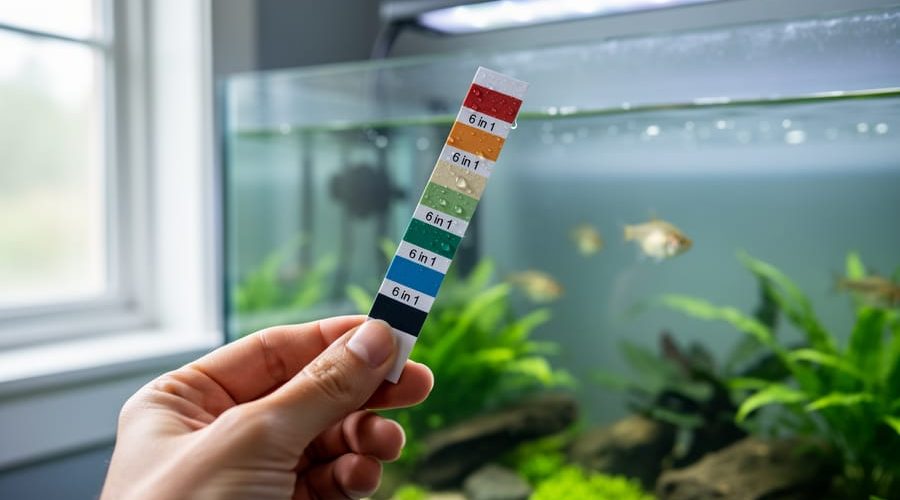
Hold your test strip against the color chart exactly 60 seconds after dipping it in your aquarium water—timing matters because readings continue to develop and can give false results if checked too early or late. Match each colored pad on your strip from left to right with the corresponding row on your chart, checking one parameter at a time rather than trying to assess all six simultaneously, which prevents confusion and misreading. Compare the colors in natural daylight or bright white light, as yellow-tinted bulbs or dim conditions will distort the hues and lead you to incorrect conclusions about your water quality.
These 6-in-1 strips typically measure pH, hardness (GH and KH), nitrite, and nitrate—the fundamental indicators that tell you whether your fish are living in safe conditions or slowly being poisoned by invisible chemical imbalances. Understanding what each color means goes beyond simply matching shades; it reveals whether your tank’s biological filtration is working, if your water changes are frequent enough, and when dangerous ammonia spikes might be developing. The same testing principles that keep your aquarium inhabitants healthy can alert you to water quality issues throughout your home, making these strips a gateway to broader water awareness. Reading your results accurately the first time prevents unnecessary treatments, saves money on corrective products, and most importantly, keeps your aquatic ecosystem thriving instead of just surviving.
What 6-in-1 Aquarium Test Strips Actually Measure
These convenient test strips measure six key water quality indicators in a single dip, giving you a comprehensive snapshot of your aquarium’s health in just minutes. Understanding what each parameter represents helps you create a thriving environment for your fish while developing broader awareness about water quality in your home.
pH measures how acidic or alkaline your water is on a scale from 0 to 14, with 7 being neutral. Most freshwater fish thrive between 6.5 and 7.5, though some species have specific preferences. Think of pH like the temperature of your water—too far in either direction creates stress for your aquatic pets. Sudden pH swings are particularly dangerous, much like extreme temperature changes would affect you.
General hardness, or GH, indicates the concentration of dissolved minerals like calcium and magnesium in your water. These minerals are essential for fish bone development and overall health. Soft water has fewer minerals, while hard water contains more. Different fish species evolved in waters with varying mineral content, so matching their natural environment keeps them comfortable.
Carbonate hardness, known as KH or alkalinity, measures your water’s ability to resist pH changes. It acts as a buffer, stabilizing your aquarium environment. Higher KH means your pH stays more consistent, protecting fish from harmful fluctuations that can occur from biological processes in the tank.
Nitrite is a toxic compound that appears during the nitrogen cycle as beneficial bacteria break down fish waste. Even small amounts stress fish by interfering with their ability to absorb oxygen. In a healthy, established aquarium, nitrite should always read zero.
Nitrate is the final product of the nitrogen cycle, less toxic than nitrite but still harmful in high concentrations. Regular water changes keep nitrate levels safe, typically below 20-40 parts per million for most freshwater fish.
Chlorine detection helps you verify that tap water is safe before adding it to your aquarium. Municipal water often contains chlorine for disinfection, which is harmful to fish and beneficial bacteria alike.
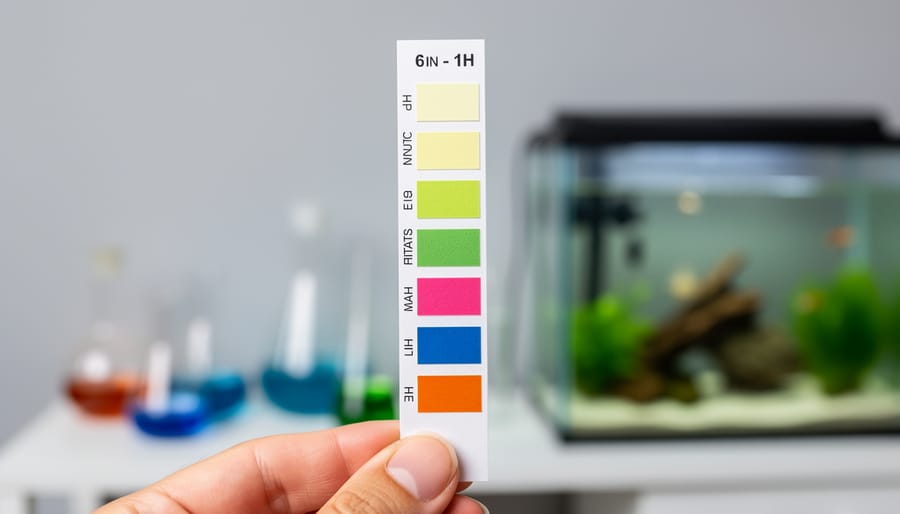
Reading Your Test Strip Chart: The Step-by-Step Method
The Timing Problem Most People Miss
One of the most common mistakes when using 6-in-1 aquarium test strips is ignoring the timing instructions printed on the bottle. Most test strips require you to wait exactly 60 seconds after dipping before reading the results. This specific window exists because the chemical reactions on each test pad develop at carefully calibrated rates.
Reading your strip too early means the colors haven’t fully developed yet, which typically makes problems appear less severe than they actually are. For instance, a dangerous nitrite level might look safe if you check at 30 seconds instead of 60. On the flip side, waiting too long allows the pads to continue reacting or start drying out, which darkens the colors and can falsely indicate water quality issues that don’t exist.
Think of it like baking cookies—checking five minutes early gives you raw dough, while leaving them in too long burns them. Neither tells you if your recipe worked correctly. Set a timer on your phone the moment you dip the strip, and compare it to the chart immediately when the timer sounds. This simple habit ensures the accuracy that keeps your aquatic environment healthy and eliminates unnecessary worry or overlooked problems.
How Lighting Tricks Your Eyes
Getting accurate readings from your test strips depends heavily on lighting conditions. Natural daylight provides the most reliable illumination for color matching, so position yourself near a window when reading your results. If you’re testing during evening hours, use bright white LED bulbs rather than yellow incandescent lighting, which can distort the color appearance and lead to misinterpretation.
Hold the strip at eye level about 12 inches away from the chart, avoiding shadows cast by your hands or body. The colors on wet test strips can appear darker or lighter depending on the angle and light source, so consistent positioning matters. Direct overhead lighting works best, as side lighting creates shadows that make color comparison difficult.
Avoid reading strips in dim conditions or under colored lights, which can shift how you perceive the test pad colors. If results seem unclear, try moving to a different location with better lighting before making treatment decisions. Remember that accurate readings directly impact your aquarium’s health and your broader understanding of water quality in your home environment.
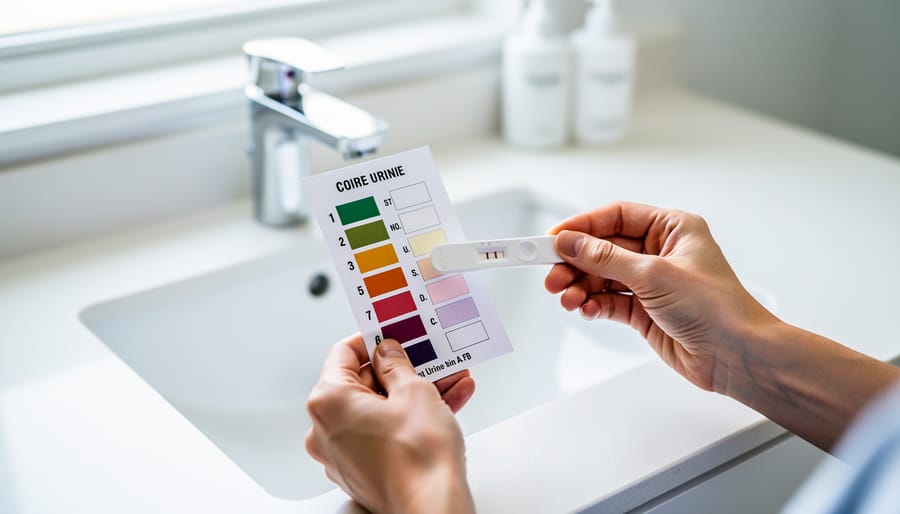
When Colors Fall Between Chart Values
Real-world test strip readings rarely match chart colors perfectly. When your strip falls between two color blocks, you’re dealing with an intermediate value. The good news? You can estimate with reasonable accuracy.
Start by identifying which two chart colors bracket your result. If your nitrate reading sits between 20 ppm and 40 ppm, your actual value is likely around 30 ppm. This estimation works fine for aquarium management since you’re looking for general ranges rather than laboratory precision.
Keep lighting consistent when comparing colors. Natural daylight near a window provides the most accurate reading conditions. Artificial lighting, especially warm-toned bulbs, can shift color perception and make interpretation trickier.
When in doubt, lean toward the higher value for safety. If you think your ammonia is between 0 ppm and 0.25 ppm, treat it as 0.25 ppm and take appropriate action. This conservative approach protects your fish while you work to improve water conditions.
Remember that test strips serve as screening tools for household water monitoring. They excel at spotting problems quickly and tracking trends over time, which makes them perfect for eco-conscious homeowners managing sustainable aquarium systems without excess waste or complicated equipment.
Understanding Your Numbers: What Each Result Means
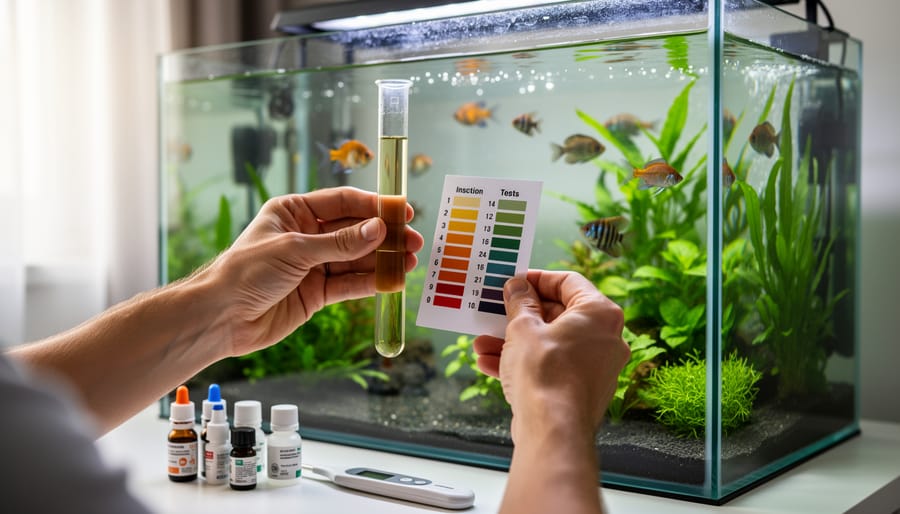
pH Levels: Finding Your Fish’s Sweet Spot
Different fish species thrive at different pH levels, making it essential to know your aquarium inhabitants’ preferences. Most freshwater community fish do well in a pH range of 6.5 to 7.5, which mimics their natural habitats. African cichlids prefer more alkaline conditions (7.8 to 8.5), while South American species like tetras and angelfish favor slightly acidic water (6.0 to 7.0).
When your test strip reveals pH levels outside your fish’s ideal range, don’t panic or make sudden changes. Rapid pH swings stress fish more than a stable, slightly imperfect pH. To lower pH naturally, add driftwood or almond leaves to your tank. To raise it, consider using crushed coral in your filter or partial water changes with pre-treated water.
Test pH weekly and always after water changes, as tap water pH can differ significantly from your aquarium’s established balance. If you’re using municipal water, let it sit for 24 hours before testing, as dissolved gases affect readings. Consistent monitoring helps you catch gradual shifts before they become problematic, keeping your aquatic ecosystem thriving.
Hardness Numbers: The Water Quality Indicator Nobody Talks About
Your 6-in-1 test strips measure two types of hardness that work together like partners in your aquarium’s health. GH (General Hardness) tells you about dissolved minerals like calcium and magnesium in the water, while KH (Carbonate Hardness) measures the water’s ability to resist pH changes. Think of GH as the mineral content your fish need for strong bones and bodily functions, and KH as the stabilizer that keeps their environment from sudden, stressful shifts.
These numbers matter because different fish species evolved in waters with specific hardness levels. Tropical fish from soft-water rivers struggle in hard water, while African cichlids from mineral-rich lakes need higher levels to thrive. When GH is too low, fish can’t absorb essential minerals. When KH drops below 3-4 dH, your pH becomes unstable, creating a roller coaster environment that weakens fish immunity.
Testing both together gives you the complete picture. You might have perfect pH readings today, but low KH means that stability won’t last, potentially causing health issues before your next test.
Nitrite and Nitrate: Your Tank’s Hidden Danger Signals
Your aquarium’s nitrogen cycle is nature’s built-in filtration system, but it requires careful monitoring to keep your fish healthy. When fish waste and uneaten food break down, they produce ammonia, which beneficial bacteria convert first into nitrite, then into the less harmful nitrate. This process, called the nitrogen cycle, is essential for any thriving aquarium.
Safe nitrite levels should always read 0 ppm—even small amounts are toxic to fish. Nitrate is more forgiving, with safe levels typically between 0-40 ppm, though lower is always better. If your test strip shows elevated nitrite readings, take immediate action by performing a 25-50% water change and temporarily stopping feeding. High nitrate levels above 40 ppm signal it’s time for routine maintenance through partial water changes.
Understanding these danger signals helps you maintain a balanced ecosystem in your tank. Think of it as similar to monitoring air quality in your home—small, regular checks prevent major problems. By keeping nitrite at zero and nitrate below 40 ppm, you’re creating a sustainable, healthy environment for your aquatic pets while practicing responsible environmental stewardship.
Chlorine Detection: The Tap Water Safety Check
Chlorine keeps municipal water safe for human consumption, but it’s toxic to aquatic life, even in small amounts. Your 6-in-1 test strip includes chlorine detection specifically because it poses immediate danger to fish during water changes—when fresh tap water enters your aquarium. Most strips change from yellow (no chlorine) through varying shades of green and blue (dangerous levels present).
Test your water immediately before adding it to your tank and again 24 hours after treatment. If chlorine registers on your strip, don’t add that water to your aquarium. Instead, use a dechlorinator product or let tap water sit uncovered for 24-48 hours, allowing chlorine to naturally evaporate. Some municipal systems use chloramine, a more stable compound that won’t evaporate and requires chemical treatment.
This same awareness extends beyond your aquarium. Understanding chlorine levels in your household water helps you make informed decisions about drinking water safety and whether additional filtration might benefit your family’s health and environmental footprint.
When Test Strips Fail You: Accuracy Limitations and Alternatives
While 6-in-1 test strips offer convenient water quality monitoring, understanding their limitations helps you maintain the healthiest aquarium environment possible. These strips work best for routine checks and general trends, but they’re not perfect tools for every situation.
The most significant limitation involves accuracy. Test strips typically measure parameters in broad ranges rather than precise values. For instance, if you’re treating a specific pH problem and need to know if your water is 6.8 or 7.2, strips might only tell you it falls somewhere between 6.5 and 7.5. This imprecision matters when dealing with sensitive fish species or addressing specific water chemistry issues.
Environmental factors also affect strip reliability. Humidity can compromise test strips even before you open the bottle. Once exposed to air, the reactive pads degrade over time, making expired strips produce inaccurate results. Temperature extremes during shipping or storage further reduce accuracy. Even the technique you use—how long you dip the strip, whether you shake off excess water, and the lighting conditions when reading results—can skew your readings.
For critical situations, liquid test kits offer superior precision. These aquarium water test kits involve adding drops of reagent to water samples and comparing color changes. Though they require more time and effort, they deliver the accuracy needed for diagnosing diseases, breeding delicate species, or managing planted tank chemistry.
Serious aquarists often use a hybrid approach: test strips for weekly monitoring and liquid kits when precision matters. Additionally, TDS meters provide digital accuracy for measuring dissolved solids, complementing your testing toolkit.
From an eco-conscious perspective, consider that disposable test strips generate ongoing waste. Investing in reusable testing equipment reduces environmental impact while improving long-term accuracy. Think of water quality monitoring as part of your broader commitment to sustainable living—precision testing means fewer chemical corrections and healthier aquatic ecosystems.
Building Your Testing Routine: How Often Should You Actually Test?
Your testing schedule should adapt as your aquarium matures. For new tanks during the critical cycling phase (first 4-8 weeks), test every other day to monitor ammonia and nitrite spikes. This frequent testing helps you catch problems before they harm your fish. Once your tank establishes beneficial bacteria colonies, you can reduce testing to once weekly for the first three months, then transition to bi-weekly or monthly checks for mature, stable aquariums.
Established tanks still need attention, though. Test immediately if you notice warning signs like cloudy water, fish gasping at the surface, unusual lethargy, or algae blooms. These symptoms often indicate parameter shifts that require quick intervention. After adding new fish, changing filtration systems, or treating diseases with medication, resume more frequent testing until conditions stabilize.
Making your testing routine more sustainable helps reduce waste while maintaining proper water testing standards. Store your test strips in a cool, dry place with the lid tightly sealed to prevent moisture damage and extend their usable life. Consider testing multiple parameters only when needed rather than running all six tests each time—established tanks might only need pH and nitrate checks during routine maintenance.
Keep a simple log of your results to identify patterns and anticipate problems. This practice helps you understand your tank’s unique rhythm and reduces unnecessary testing. When strips expire, check if your local waste facility accepts them for proper disposal rather than adding them to regular trash. Some aquarium communities organize test strip swaps, allowing hobbyists to share partially used bottles and minimize waste while maintaining healthy aquatic environments.
Quick Action Chart: What to Do When Results Are Wrong
When your test strip reveals concerning results, quick action can prevent bigger problems. Here’s your straightforward reference guide for correcting common aquarium water issues using household-friendly solutions.
High pH (above 8.0): Perform a 25% water change with dechlorinated tap water as your immediate fix. For long-term management, add driftwood or Indian almond leaves to naturally lower pH levels. Avoid sudden drastic changes, as fish adapt better to stable conditions than rapid fluctuations.
Low pH (below 6.5): Test your tap water first to ensure you’re not introducing acidic water during changes. Add crushed coral or limestone rocks to your filter media, which slowly release minerals that buffer pH upward. This eco-friendly approach provides steady improvement over several days.
High Nitrates (above 40 ppm): Replace 30-50% of water immediately to dilute toxin levels. Moving forward, reduce feeding amounts and remove uneaten food within two minutes. Consider adding live plants like pothos or water sprite, which naturally consume nitrates as nutrients, creating a sustainable filtration system.
High Nitrites (above 0.5 ppm): Add aquarium salt at one tablespoon per five gallons to reduce toxicity temporarily. Increase aeration and reduce feeding to half portions. This indicates incomplete biological filtration, so avoid cleaning your filter media too thoroughly—beneficial bacteria need time to establish.
Soft Water (low GH/KH below 3): Add crushed coral, cuttlebone, or wonder shells to increase mineral content gradually. These natural calcium sources dissolve slowly, preventing shock to your aquatic environment.
Hard Water (GH/KH above 12): Blend your tap water with distilled or reverse osmosis water during changes. Rainwater collection offers a sustainable alternative, though ensure proper filtration before use.
High Chlorine: Always treat tap water with dechlorinator before adding to tanks. Keep conditioner readily available as your first defense against chlorinated municipal water.
Remember, consistent small adjustments beat dramatic corrections. Retest after 24 hours to monitor progress, and maintain a testing schedule to catch problems before they escalate into emergencies.
Maintaining a thriving aquarium starts with understanding your water chemistry, and 6-in-1 test strips make this essential task accessible for everyone. By checking your parameters regularly—ideally weekly for established tanks and more frequently for new setups—you’re taking proactive steps to prevent problems before they affect your fish. This simple habit of testing and responding to changes transforms fishkeeping from guesswork into informed care.
The skills you develop reading aquarium test strips naturally extend beyond your tank. Many homeowners discover that monitoring their aquarium raises awareness about water quality throughout their living space. Just as you wouldn’t want your fish swimming in contaminated water, the same principles apply to the water your family uses daily. Exploring home water quality testing options can complement your aquarium maintenance routine and contribute to a healthier household overall.
Responsible fishkeeping means committing to regular monitoring and swift action when readings fall outside ideal ranges. Your test strip chart isn’t just a reference guide—it’s your roadmap to creating a sustainable aquatic environment where fish can flourish for years to come.