Calculate your home’s water hardness level by requesting a free water quality report from your municipal supplier or purchasing a test kit from any hardware store—this single number determines whether you need a water softener and what capacity to buy. Hard water containing excessive calcium and magnesium minerals leaves chalky residue on faucets, reduces soap effectiveness, and decreases appliance lifespan by up to 30%, costing the average household hundreds in premature replacements and increased energy bills.
Identify which softener technology matches your household needs and environmental values. Traditional salt-based ion exchange systems remain the most effective for severely hard water but require ongoing sodium purchases and produce brine discharge. Salt-free conditioners don’t actually remove hardness minerals but prevent scale buildup through crystallization, making them ideal for moderate hardness levels and eco-conscious buyers concerned about wastewater impact. Dual-tank systems provide continuous soft water for larger families, while single-tank models suit smaller households willing to accommodate brief regeneration cycles.
Size your system correctly by multiplying your daily water usage (typically 75 gallons per person) by hardness level in grains per gallon, then by three days to determine required grain capacity. An undersized unit regenerates too frequently, wasting water and salt, while oversized systems cost more upfront without performance benefits.
Evaluate total ownership costs beyond the initial purchase price. Budget for professional installation ranging from $300 to $500, annual salt expenses averaging $50 to $150, and periodic maintenance. Consider efficiency ratings and regeneration methods—demand-initiated systems use 35% less salt than timer-based models, reducing both environmental impact and operating expenses over the system’s 15-year lifespan.
Understanding Hard Water and Why It Matters
Hard water contains elevated levels of dissolved minerals, primarily calcium and magnesium, that accumulate as water travels through soil and rock. While not harmful to drink, these minerals create a cascade of problems throughout your home that can significantly impact your wallet and daily comfort.
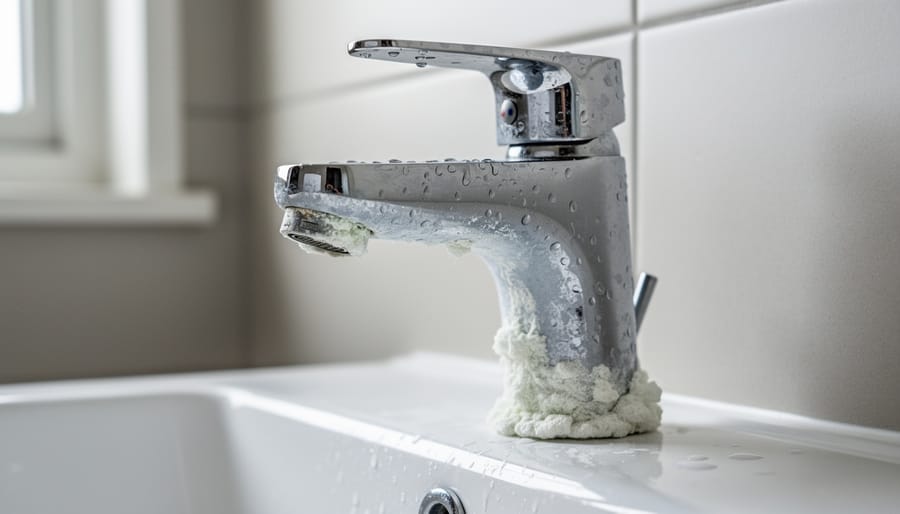
Recognizing hard water is often straightforward once you know what to look for. White, chalky deposits around faucets and showerheads are telltale signs, as are soap scum buildup in bathtubs and cloudy spots on dishes and glassware. Your skin might feel dry and itchy after showering, and clothes may appear dingy despite regular washing. These minerals prevent soap from lathering properly, meaning you’re using more cleaning products with less effective results.
The hidden costs of ignoring hard water extend far beyond inconvenience. Mineral buildup inside pipes gradually restricts water flow, increasing pressure on your plumbing system and potentially leading to costly repairs. Appliances bear the brunt of this damage, with water heaters, dishwashers, and washing machines experiencing reduced efficiency and shortened lifespans. The U.S. Department of Energy reports that sediment buildup in water heaters can increase energy consumption by up to 25 percent, directly inflating your utility bills month after month.
Your appliances work harder to heat mineral-laden water, consuming more electricity or gas while delivering diminished performance. This inefficiency contradicts sustainable living principles, wasting both energy and the resources needed to manufacture replacement appliances prematurely.
Before investing in solutions like well water treatment systems, determining your water’s hardness level is essential. Simple water testing kits available at hardware stores or professional laboratory analysis measure mineral concentration in grains per gallon or parts per million. Water exceeding 7 grains per gallon is considered hard, with levels above 10.5 grains classified as very hard, requiring intervention to protect your home’s infrastructure and reduce environmental impact.
Types of Water Softeners: Finding Your Match
Salt-Based Ion Exchange Systems
Salt-based ion exchange systems are the most common and time-tested water softening technology available today. These systems work through a straightforward chemical process: hard water flows through a resin tank filled with tiny plastic beads that carry a negative charge. These beads attract and capture positively charged minerals like calcium and magnesium, exchanging them for sodium ions. The result is softened water that protects your pipes, appliances, and fixtures from damaging scale buildup.
In terms of effectiveness, salt-based softeners excel at their job. They typically remove 95-99% of hardness minerals, making them the gold standard for households dealing with moderate to severe hard water problems. You’ll notice the difference immediately through softer skin, cleaner dishes, and reduced soap usage.
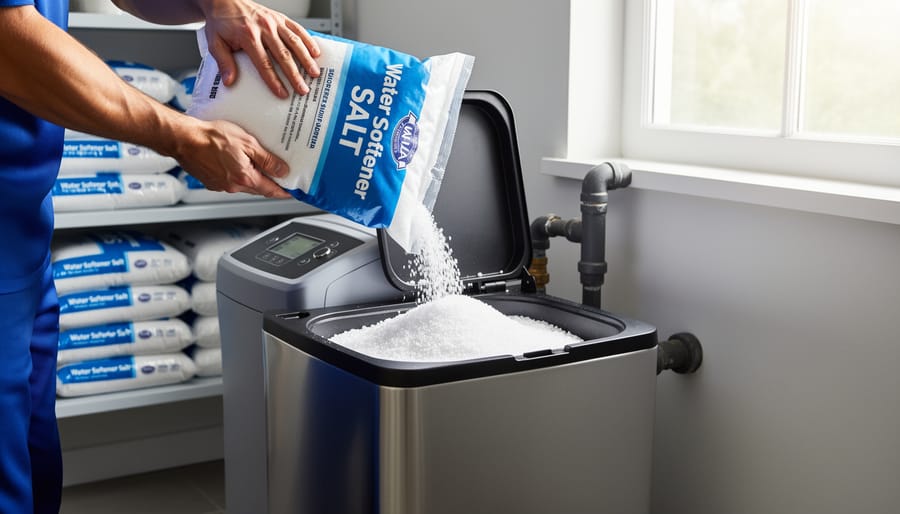
However, these systems do require regular maintenance. You’ll need to refill the brine tank with salt pellets every 4-8 weeks, depending on your water usage and hardness levels. The system also requires periodic cleaning to prevent salt bridging and maintain optimal performance.
Environmental considerations deserve attention when choosing this option. During the regeneration cycle, salt-based softeners discharge brine wastewater into your septic system or municipal sewer. Some communities with water scarcity concerns have restricted or banned these systems due to the sodium content affecting local water supplies and ecosystems. If environmental impact is a priority for your household, you’ll want to weigh these factors carefully or explore alternative water treatment technologies that don’t rely on salt discharge.
Salt-Free Water Conditioners
If you’re seeking an eco-friendly alternative to traditional water softeners, salt-free water conditioners offer an innovative solution worth considering. These systems use template-assisted crystallization (TAC) technology, which fundamentally differs from conventional ion exchange softening.
Rather than removing minerals from your water, TAC systems transform the structure of calcium and magnesium molecules into microscopic crystal particles. These crystals remain suspended in the water but lose their ability to cling to pipes, appliances, and fixtures. Think of it as neutralizing the minerals’ sticky properties without extracting them from your water supply.
It’s important to understand that salt-free conditioners aren’t true water softeners—they don’t reduce water hardness or create that slippery feel traditional softeners produce. However, they effectively prevent scale buildup, which addresses the primary concern for most homeowners.
These systems shine in several scenarios. They’re ideal for households seeking low-maintenance solutions, as they require no salt, electricity, or backwashing. Environmentally-conscious homeowners appreciate that conditioners don’t discharge brine into wastewater systems and preserve beneficial minerals in drinking water. They’re also perfect for areas with salt-based softener restrictions.
The eco-friendly benefits extend beyond waste reduction. By eliminating salt and electrical requirements, these systems minimize your environmental footprint while protecting your plumbing infrastructure. They’re particularly suitable for moderately hard water situations where preventing scale matters more than achieving completely soft water for cleaning purposes.
Consider your specific needs carefully—if you require genuinely soft water for soap performance or skin sensitivity issues, traditional softeners remain the better choice.
Dual-Tank and Alternative Systems
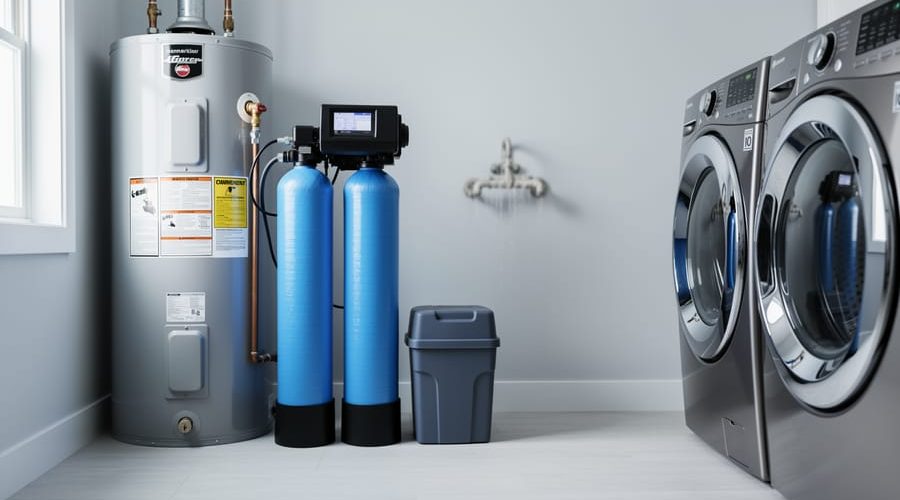
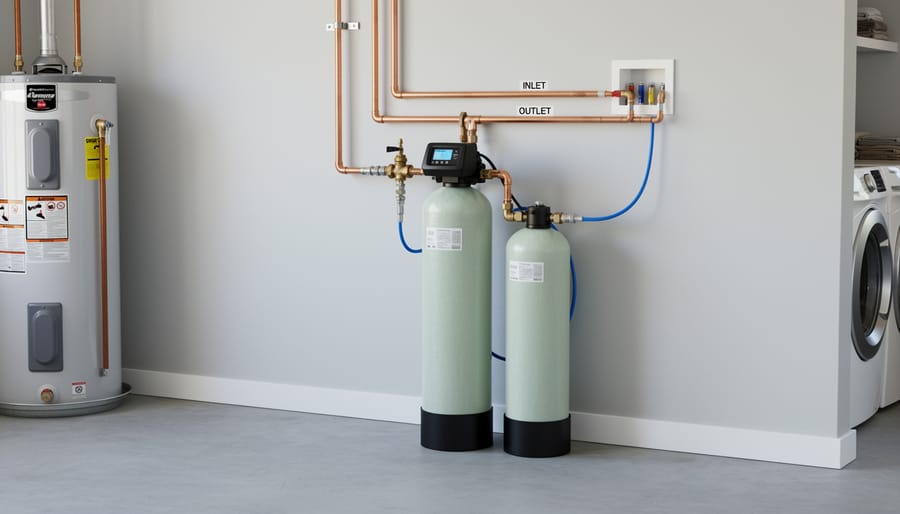
For households requiring uninterrupted soft water supply, dual-tank systems offer a practical solution. These units feature two resin tanks working in tandem—while one tank regenerates, the other continues softening water. This configuration ensures 24/7 soft water availability, making them ideal for large families or homes with high water consumption. Though pricier than single-tank models, dual-tank systems eliminate the inconvenience of waiting for regeneration cycles.
Beyond traditional ion-exchange softeners, several alternatives address water quality concerns differently. Reverse osmosis options excel at removing contaminants but don’t technically soften water throughout your entire home—they’re typically point-of-use systems installed under sinks. However, pairing RO with a whole-house softener provides comprehensive water treatment for drinking and household use.
Magnetic and electronic descalers deserve honest consideration. These salt-free devices claim to alter mineral structure, preventing scale buildup without removing hardness. While manufacturers tout eco-friendly benefits and lower maintenance, independent scientific evidence supporting their effectiveness remains limited. Many homeowners report mixed results—some experience reduced scaling, while others notice no difference.
If environmental impact concerns you, these alternatives avoid salt discharge but may not deliver the same results as proven ion-exchange technology. Consider your priorities: continuous soft water availability, complete mineral removal, or experimental low-maintenance options. Understanding each system’s genuine capabilities helps you invest wisely rather than relying on marketing promises alone.
Key Features That Actually Matter
Sizing: Grain Capacity and Flow Rate
Choosing the right size water softener matters both for your wallet and the environment—an oversized system wastes salt and water during regeneration, while an undersized one won’t adequately soften your water.
Grain capacity refers to how many grains of hardness minerals (calcium and magnesium) a softener can remove before it needs to regenerate. Think of it as the system’s holding tank for hard water minerals. Most residential softeners range from 24,000 to 64,000 grains.
To calculate your household needs, start with your water hardness level, measured in grains per gallon. You can get this from your water utility or an inexpensive test kit. Multiply your hardness level by your daily water usage. The average person uses about 75 gallons daily, so a family of four uses roughly 300 gallons. If your water tests at 10 grains per gallon, you’d need to remove 3,000 grains daily (10 x 300).
Most experts recommend choosing a system that handles 3-4 days of capacity between regenerations. For our example family, that’s 9,000-12,000 grains, meaning a 32,000-grain system would work efficiently.
Flow rate is equally important—it measures how many gallons per minute the softener can process. A typical household needs 7-10 gallons per minute to handle simultaneous water use, like running the dishwasher while someone showers. Check your home’s peak usage times to ensure adequate flow, preventing frustrating pressure drops that affect daily comfort.
Regeneration Cycles and Efficiency
Understanding how your water softener regenerates—the process of cleaning mineral buildup from the resin beads—directly impacts both your wallet and the environment. Modern systems offer two primary regeneration approaches, each with distinct efficiency profiles.
Timer-based regeneration systems operate on a preset schedule, typically regenerating every few days regardless of actual water usage. While straightforward, this approach often wastes salt and water during periods of low consumption. If you’re away for a weekend, your system still regenerates on schedule, using resources unnecessarily.
Demand-initiated regeneration (also called metered regeneration) represents the more sustainable choice. These systems monitor your actual water consumption and regenerate only when the resin bed reaches capacity. This smart approach can reduce salt usage by 25-50% and water consumption during regeneration by similar amounts. For environmentally-conscious homeowners, this translates to fewer resources consumed and lower monthly operating costs.
When comparing models, look for efficiency ratings that indicate gallons softened per pound of salt. High-efficiency systems achieve 4,000-5,000 gallons per pound, while less efficient models may only deliver 2,000-3,000 gallons. This difference compounds over years of operation.
Environmental impact extends beyond salt consumption. More efficient regeneration means less brine discharge entering wastewater systems, reducing the strain on municipal treatment facilities and local ecosystems. While upfront costs for demand-initiated systems run slightly higher, the combination of resource conservation and reduced operating expenses typically delivers payback within the first year of ownership.
Smart Features Worth Considering
Modern water softeners increasingly feature digital controls and smart technology, but not every innovation adds practical value. Digital displays that show salt levels, water usage, and regeneration schedules are genuinely helpful, allowing you to optimize efficiency and catch maintenance issues early. These straightforward monitoring features typically add minimal cost while preventing salt runouts and system failures.
Smartphone apps that track water consumption patterns can support eco-conscious households in reducing waste, making them worthwhile for environmentally-focused users. Some systems offer leak detection alerts, which provide valuable protection against costly water damage and unnecessary resource waste.
However, exercise caution with overly complex features. Voice-activated controls or elaborate connectivity options often create unnecessary complications without improving performance. The most reliable smart features enhance monitoring and maintenance without overwhelming users with technical complexity.
Prioritize systems with intuitive interfaces and proven reliability over cutting-edge gadgets. Look for features that solve real problems: low-salt warnings, usage tracking, and automatic regeneration adjustments based on actual consumption. These practical innovations deliver genuine value by extending system lifespan, conserving resources, and simplifying maintenance. Remember that simpler technology typically means fewer points of failure and easier troubleshooting when issues arise.
Installation and Space Requirements
Before purchasing a water softener, understanding installation requirements helps you budget accurately and choose the right location in your home. These systems need specific conditions to function properly, and knowing what to expect prevents costly surprises down the road.
Water softeners typically require installation near your main water line, allowing treated water to flow throughout your home. Most units need a space approximately 2 feet wide by 4 feet tall, though compact models are available for tight areas. You’ll also need access to three essential utilities: a cold water line, a drain connection for the regeneration cycle, and a standard electrical outlet for the control valve.
The drainage requirement is particularly important for eco-conscious homeowners. During regeneration, your softener flushes brine solution through the system, sending it down a drain. This discharge should connect to a floor drain, utility sink, or standpipe, positioned within 10-20 feet of the unit. Some municipalities have specific regulations about this wastewater, so check local codes before installation. Consider how this fits with your overall water treatment system if you have additional filtration equipment.
Regarding installation approach, professional setup typically costs between $200 and $500, depending on your plumbing configuration. While experienced DIYers can handle basic installations, hiring a licensed plumber ensures proper connections and often includes warranty protection. Professional installation becomes especially valuable if you need modifications to existing plumbing or if local codes require permitted work.
For those prioritizing sustainability, discuss drainage options with your installer. Some innovative systems allow you to redirect softener discharge to specific outdoor areas away from sensitive plants, reducing environmental impact. Additionally, positioning your unit in a temperature-controlled space, like a basement or utility room, improves efficiency and extends equipment lifespan. Avoid unheated garages or areas prone to freezing, as cold temperatures can damage the resin bed and control mechanisms.
The True Cost of Ownership
Upfront Investment
Understanding the upfront costs helps you budget appropriately for your water softener investment. Salt-based systems typically range from $400 to $2,500 for the unit itself, depending on capacity and features. Salt-free conditioners generally cost between $500 and $3,000, while reverse osmosis systems can reach $1,500 to $5,000 for whole-house applications.
Installation expenses vary significantly based on your home’s plumbing configuration. Professional installation usually adds $200 to $500 for straightforward setups where existing plumbing connections are accessible. However, if your home requires additional plumbing modifications—such as adding new drain lines, electrical outlets, or relocating pipes—costs can climb to $1,000 or more.
Consider these potential additional expenses: a separate bypass valve ($50-$150), pre-filtration systems to protect your softener ($100-$300), and any necessary electrical work if your chosen system requires power. Homes with particularly hard water may benefit from upgrading existing pipes before installation, which represents another cost consideration.
While these initial investments may seem substantial, remember that modern water softeners are designed for longevity, often lasting 15-20 years with proper maintenance. Many manufacturers now offer eco-friendly models that use less salt and water during regeneration cycles, reducing both environmental impact and ongoing operational costs.
Operating and Maintenance Costs
Beyond the initial purchase price, water softeners require ongoing maintenance that affects your household budget. Understanding these costs helps you calculate the true lifetime expense of your system.
Salt remains the primary recurring cost, with most households spending $50 to $150 annually depending on water hardness levels and family size. Traditional salt-based systems use approximately one 40-pound bag monthly. If you’re environmentally conscious, consider that salt-free conditioners eliminate this expense entirely while reducing sodium discharge into wastewater systems.
Water usage during regeneration cycles adds to your utility bills. Conventional softeners use 25 to 65 gallons per regeneration cycle, which typically occurs every few days. Newer, high-efficiency models feature smart regeneration technology that monitors actual water usage, reducing waste by up to 50 percent compared to timer-based systems.
Electricity costs remain minimal, averaging $2 to $10 yearly for standard residential units. However, advanced systems with digital controls and monitoring capabilities may consume slightly more power.
Budget for occasional filter replacements if your system includes pre-filters or sediment screens, typically costing $20 to $100 annually. Professional maintenance visits, recommended every few years for system checks and resin bed inspection, range from $100 to $300. Many homeowners perform basic maintenance themselves, reducing this expense considerably.
Long-Term Savings and Payback
Investing in a water softener delivers measurable long-term savings that typically offset the initial purchase within three to five years. Soft water extends appliance lifespans by preventing scale buildup in water heaters, dishwashers, and washing machines—potentially adding years to equipment that would otherwise require costly replacement. Water heaters operate up to 29% more efficiently without mineral deposits, directly reducing energy bills.
You’ll also slash soap and detergent expenses by 50-75% since soft water requires less product to achieve the same cleaning results. A typical family spends $300-500 annually on cleaning products, meaning potential savings of $150-375 per year. When combined with reduced plumbing maintenance costs and lower energy consumption, the average household recovers their $600-2,500 system investment through accumulated savings. This payback calculation doesn’t include intangible benefits like softer laundry, cleaner dishes, and improved skin comfort—making water softeners both an economically sound and quality-of-life enhancing choice for eco-conscious homeowners.
Environmental Impact and Eco-Friendly Options
While water softeners deliver significant benefits for your home, it’s important to understand their environmental footprint before making a purchase. Traditional salt-based systems present two primary concerns: sodium chloride discharge into wastewater and water consumption during the regeneration cycle.
During regeneration, conventional softeners flush brine solution down the drain, introducing salt into local water systems. Depending on your water hardness and system size, this can mean 40-80 pounds of salt monthly entering the environment. Some municipalities have even restricted salt-based softeners due to concerns about aquatic ecosystems and water treatment challenges. Additionally, regeneration cycles can waste 25-65 gallons of water per cycle, occurring weekly or more frequently in hard water areas.
For environmentally-conscious buyers, several sustainable alternatives exist. Salt-free water conditioners use template-assisted crystallization to alter mineral structure without removing them, eliminating salt discharge entirely and requiring no wastewater. These systems work well for moderate hardness levels and need virtually no maintenance. Electronic or magnetic descalers offer another zero-waste option, though their effectiveness remains debated among water treatment professionals.
If you prefer traditional softening, look for high-efficiency models with demand-initiated regeneration rather than timer-based cycles. These systems regenerate only when needed based on actual water usage, reducing both salt consumption and water waste by up to 50 percent. Some innovative models even capture and reuse rinse water for the next regeneration cycle.
Another eco-friendly practice involves potassium chloride as a salt alternative. While more expensive, potassium chloride provides the same softening benefits without environmental concerns, and the discharged potassium actually serves as a beneficial nutrient for plants and soil.
Consider your broader water needs too—combining softening with comprehensive water treatment solutions can maximize efficiency while minimizing environmental impact. Ultimately, choosing the right system means balancing performance, household needs, and ecological responsibility to find the most sustainable option for your situation.
What to Look for in Reviews and Warranties
When shopping for a water softener, customer reviews and warranty coverage offer valuable insights into product reliability and long-term performance. Start by reading reviews across multiple platforms rather than relying solely on manufacturer websites. Look for patterns in feedback—if several customers mention the same issue, such as frequent breakdowns or difficult installation, that’s a significant red flag worth noting.
Be cautious of reviews that seem overly promotional or suspiciously negative without specific details. Genuine reviews typically include both pros and cons, describe actual usage experiences, and mention how long the reviewer has owned the system. Pay special attention to feedback about customer service responsiveness, as you’ll likely need support during installation or maintenance.
Regarding warranties, comprehensive coverage should include at least a 5-10 year warranty on tanks and control valves, with 1-3 years on electronic components. Quality manufacturers stand behind their products with clear warranty terms that cover both parts and labor. Read the fine print carefully—some warranties become void if you don’t use specific salt types or follow maintenance schedules exactly.
Red flags include vague warranty language, extremely short coverage periods, or warranties that only cover replacement parts but not labor costs. These often indicate lower quality construction or manufacturers who expect frequent failures.
Research the manufacturer’s reputation by checking how long they’ve been in business and whether they’re certified by organizations like the Water Quality Association. Companies committed to sustainability often provide transparent information about their manufacturing processes and product efficiency ratings.
Finally, confirm that the manufacturer offers accessible customer service channels—phone, email, and online resources. Responsive support can make the difference between a minor inconvenience and a costly emergency when issues arise. A reputable company views warranty service as an investment in customer satisfaction, not an unwanted expense.
Before You Buy: Your Pre-Purchase Checklist
Before investing in a water softener, completing a thorough pre-purchase checklist will save you time, money, and potential headaches down the road.
Start with professional water testing to identify exactly what contaminants you’re dealing with. A comprehensive lab analysis measuring hardness levels, iron content, and pH will determine whether you need a standard softener or additional treatment components. Many water softener companies offer free testing, but independent lab testing provides unbiased results.
Next, measure your installation space carefully. Water softeners require adequate clearance for the tank, brine container, and drain access. Note ceiling height and nearby electrical outlets. Most systems need 2-3 feet of width and similar depth, but compact models exist for tight spaces.
Check your local regulations before purchasing. Some communities, particularly in water-scarce regions like California and parts of Texas, have restricted or banned salt-based water softeners due to environmental concerns about chloride discharge. Your municipal water authority can clarify local rules and may suggest approved alternatives like salt-free conditioners or potassium-based systems.
Calculate your household’s daily water usage to determine proper sizing. Multiply the number of occupants by 75 gallons per person. Undersized units won’t adequately soften your water, while oversized systems waste salt and water during regeneration cycles.
When consulting retailers or installers, ask these critical questions: What’s the system’s grain capacity? How often will it regenerate? What are the annual operating costs including salt and water? Does installation include permits and warranties? Can the system accommodate future household growth? What smart features help reduce water and salt consumption?
Finally, request references from recent customers and verify the installer’s licensing and insurance. A reputable professional should readily provide documentation and answer questions about eco-friendly operation options that minimize environmental impact while effectively treating your water.
Choosing the right water softener is more than just a purchase—it’s an investment in your home’s future and your family’s wellbeing. With softer water flowing through your pipes, you’ll extend the lifespan of your appliances, reduce cleaning time, and enjoy healthier skin and hair. The money you save on repairs, detergent, and energy costs often pays back the initial investment within a few years.
Remember that the best water softener for your home depends on your specific water hardness, household size, and environmental values. Whether you opt for a traditional salt-based system, an eco-friendly salt-free conditioner, or a cutting-edge dual-tank model, you’re taking a meaningful step toward better water quality. By considering efficiency ratings, regeneration cycles, and certifications from trusted organizations, you can find a solution that aligns with sustainable living principles without compromising performance.
Trust the research you’ve done, ask questions during installation, and maintain your system according to manufacturer guidelines. You now have the knowledge to make an informed decision that protects your home, supports your health, and reflects your commitment to thoughtful consumption. Your investment today creates lasting benefits for years to come.