Capture every drop of Utah’s precious precipitation legally by understanding that rainwater harvesting is not only permitted but actively encouraged in the state, with residents allowed to collect runoff from rooftops using up to two containers totaling no more than 2,500 gallons combined capacity without registration. Design your system around Utah’s unique climate pattern where most precipitation falls between October and May as snow and spring rain, requiring storage solutions that can handle seasonal variability and potential freeze-thaw cycles in higher elevations.
Start with rainwater harvesting basics by installing a simple 55-gallon barrel system connected to your downspout, which captures approximately 600 gallons annually from just 1,000 square feet of roof area based on Utah’s average 15 inches of precipitation. Scale up strategically by connecting multiple barrels or upgrading to a 500-1,000 gallon cistern positioned on a stable foundation, incorporating first-flush diverters to eliminate initial roof contaminants and fine mesh screens to prevent debris accumulation.
Utah’s ongoing water crisis makes harvesting particularly valuable for outdoor irrigation during summer months when demand peaks but natural precipitation drops dramatically. Your collected rainwater reduces strain on overtaxed municipal systems while providing chlorine-free water that gardens and landscaping prefer. Even modest systems offset 30-40% of outdoor water usage during growing season, translating to measurable utility savings and meaningful conservation impact in a state where water security grows increasingly critical each year.
Understanding Utah’s Rainwater Harvesting Laws
What the Law Actually Says
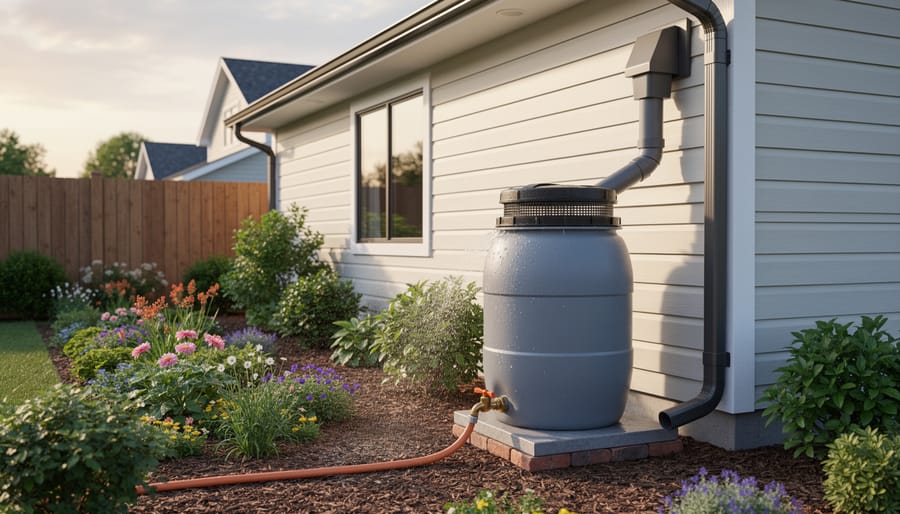
Utah law welcomes rainwater harvesting with surprisingly clear guidelines under Utah Code Ann. § 73-3-1.5. The statute allows homeowners to collect rainwater without permits or registration, provided you follow two straightforward rules.
First, you can use up to two covered containers on your property for collection. These containers must have lids to prevent mosquito breeding and maintain water quality. Second, your total storage capacity cannot exceed 2,500 gallons combined. This generous limit accommodates most residential needs, from garden irrigation to landscape maintenance.
The covered container requirement serves an important public health purpose in Utah’s climate. Open water sources attract insects and can become breeding grounds for pests, so the lid mandate protects both your household and the broader community.
If you want to exceed these limits or develop a larger system, you’ll need to register with the state Division of Water Rights. However, for typical homeowner applications like watering gardens or supplementing outdoor water use, the unregistered option provides ample capacity. Utah’s framework strikes a practical balance, encouraging water conservation without creating bureaucratic barriers for residents pursuing sustainable household practices.
When You Need to Register Your System
Utah law keeps registration requirements remarkably straightforward for residential rainwater harvesting. If you’re collecting rainwater from a rooftop on your primary or secondary residence and using it solely on your property, you generally don’t need formal permission from the state. However, if your system will store more than 2,500 gallons, you’re required to register it with the Utah Division of Water Rights.
The registration process is simple and free. You’ll submit basic information about your system’s storage capacity and intended use to the State Engineer’s office. This can typically be completed online through the Division of Water Rights website in just a few minutes. The state doesn’t charge fees for residential rainwater collection registration, making compliance easy and accessible.
Registration helps Utah track water conservation efforts across the state while ensuring collected rainwater stays on your property and doesn’t interfere with existing water rights. Even if your system falls below the 2,500-gallon threshold, keeping records of your setup is smart practice. This documentation proves helpful if you ever expand your system or need to demonstrate compliance with local ordinances.
Why Rainwater Harvesting Makes Sense in Utah’s Desert Climate
Utah’s Water Scarcity Reality
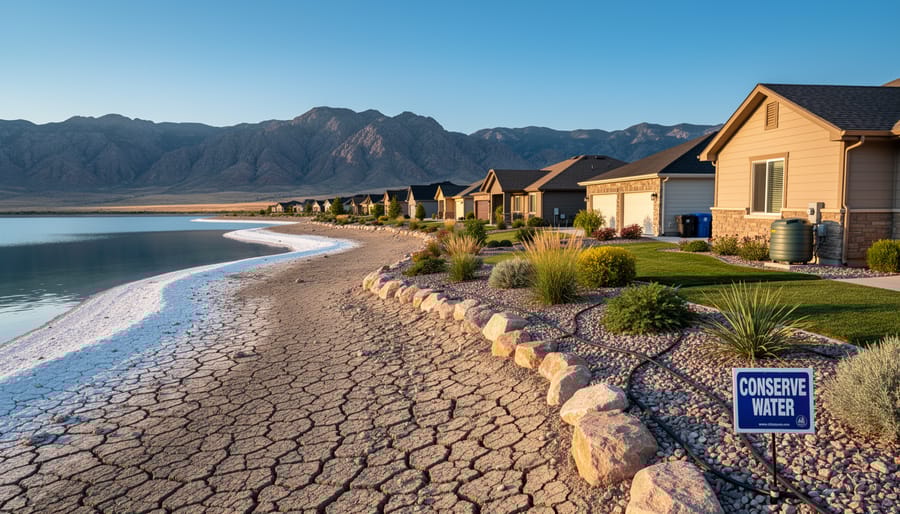
Utah holds the challenging distinction of being the second-driest state in the nation, receiving an average of just 12 inches of precipitation annually. This arid reality is colliding with rapid population growth—the state’s population has surged by over 18% in the past decade—creating mounting pressure on already-limited water resources.
The Great Salt Lake crisis exemplifies Utah’s water emergency. The lake has shrunk to historic lows, losing nearly two-thirds of its water volume since the 1980s. This isn’t just an environmental concern; it threatens air quality, wildlife habitat, and the state’s economy. For Utah homeowners, these challenges underscore the importance of water conservation and self-sufficiency strategies.
Understanding desert climate rainwater collection becomes essential in this context. Every gallon captured during Utah’s sporadic but sometimes intense rainfall events reduces demand on municipal water systems and aquifers. With average household water use exceeding 240 gallons daily, even modest rainwater harvesting can significantly supplement traditional water sources while helping address the broader water scarcity crisis facing the state.
The Financial Case for Collection
For Utah homeowners, understanding the financial benefits of rainwater collection starts with examining your water bills. The average Utah household uses approximately 60% of its water for outdoor irrigation during peak summer months. With municipal water rates ranging from $1.50 to $3.00 per 1,000 gallons across different cities, a typical family spending $80-120 monthly on water during irrigation season can reduce those costs by 30-50% through rainwater harvesting.
For a modest 1,000-square-foot catchment area (your roof), Utah’s average annual precipitation of 12-16 inches can yield roughly 7,500-10,000 gallons per year. Using this collected water for gardens, lawns, and landscaping translates to annual savings of $200-400 for most households. If you expand usage to include toilet flushing or laundry with proper filtration, savings can climb to $500-700 yearly.
Initial investment varies considerably based on system complexity. A basic rain barrel setup costs $100-300 and pays for itself within one to two years. Mid-range systems with multiple storage tanks and basic filtration run $1,500-3,000, offering a three to six-year return on investment. Larger whole-house systems starting at $5,000-8,000 typically achieve payback in eight to twelve years while adding property value and drought resilience. Given Utah’s ongoing water scarcity challenges and likely rate increases, these timelines may shorten considerably, making rainwater harvesting an increasingly smart financial decision.
Designing Your Utah Rainwater Harvesting System
Calculating Your Collection Potential
Understanding your collection potential helps determine whether rainwater harvesting makes sense for your home. The calculation is straightforward: multiply your roof’s catchment area by the rainfall amount and a conversion factor.
For every inch of rain that falls on 1,000 square feet of roof, you can collect approximately 600 gallons of water. Here’s the simple formula: roof square footage divided by 1,000, multiplied by rainfall in inches, multiplied by 600.
Let’s look at a practical example. If you have a 2,000 square-foot roof in Salt Lake City, which receives about 16 inches of annual rainfall, your calculation would be: (2,000 ÷ 1,000) × 16 × 600 = 19,200 gallons per year.
Keep in mind that Utah’s rainfall varies dramatically by region. Mountain communities like Park City may receive 40 inches annually, while southern areas like St. George average only 8 inches. Your local rainfall data significantly impacts whether rainwater harvesting provides enough water for your intended uses, whether that’s landscape irrigation, garden watering, or supplementing household needs during Utah’s dry summer months.
Essential System Components
A successful rainwater harvesting system in Utah starts with understanding its key components and how they work together. Whether you’re planning a basic setup or a more sophisticated system, these elements form the foundation of effective water collection.
Your collection surface, typically your roof, is where the process begins. Metal roofs work exceptionally well for rainwater harvesting because they’re smooth, durable, and don’t absorb water. Asphalt shingles also work but may introduce more particulates into your water.
From there, gutter collection systems channel water from your roof into downspouts. Properly sized gutters and screens prevent leaves and debris from entering your system, which is particularly important during Utah’s spring runoff and occasional summer storms.
First-flush diverters are often overlooked but essential components. These devices automatically discard the first gallons of water from each rainfall event, which typically contains dust, bird droppings, and pollutants accumulated on your roof. This simple addition significantly improves water quality.
Storage tanks are your system’s heart. Options range from basic 55-gallon rain barrels for garden watering to large cisterns holding thousands of gallons for more substantial household uses. Utah’s dry climate makes larger storage capacity valuable for capturing water during brief rainy periods.
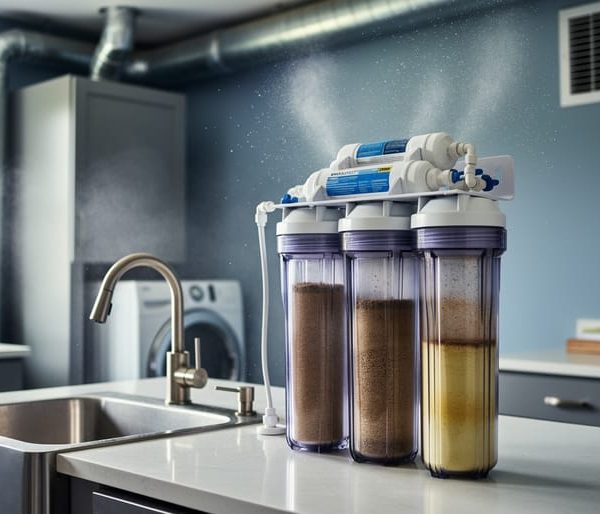
Filtration requirements depend on intended use. Basic mesh filters suit outdoor irrigation, while multi-stage filtration systems with sediment filters and UV treatment enable safe household applications. Consider your water goals when selecting filtration components to balance cost with functionality.
Choosing the Right Storage Solution
Selecting the right storage tank is crucial for Utah’s extreme temperature swings, where winter freezes and summer heat can stress your system. Most homeowners choose between polyethylene, fiberglass, or galvanized steel tanks, each offering different advantages. Polyethylene tanks are affordable and naturally resist corrosion, making them popular for residential use. For Utah’s climate, insulated or double-walled tanks provide essential freeze protection during harsh winters.
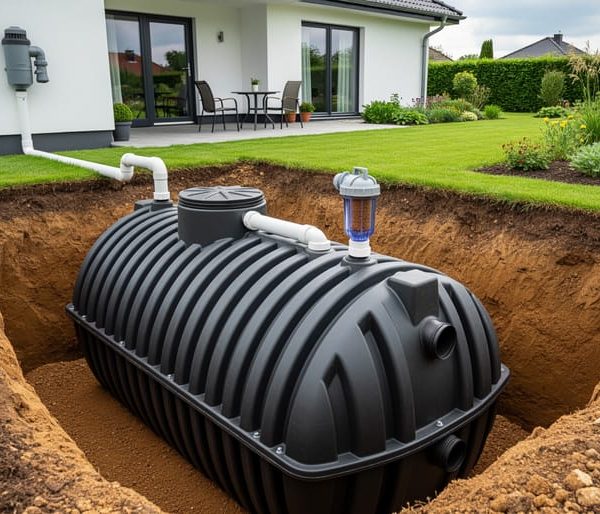
Location matters significantly. Underground tanks naturally maintain stable temperatures year-round, reducing freeze risk and keeping water cooler in summer. Above-ground tanks require winterization strategies like insulation wraps, heating cables, or draining before freezing temperatures arrive. Consider tanks with dark colors to minimize algae growth in Utah’s intense sunlight.
Size your tank based on your roof’s catchment area and typical precipitation patterns. Utah receives most rainfall during spring, so calculate storage needs around capturing those critical months. A 500-1,000 gallon tank suits most residential properties for garden irrigation, while larger systems supporting household use may require 2,500 gallons or more. Always ensure your chosen tank includes proper overflow mechanisms and screened inlets to keep debris out.
Water Quality and Treatment Considerations
What’s Actually in Your Collected Rainwater
Let’s be honest about what lands in your collection barrel. Rainwater isn’t pristine H2O falling from the clouds. As it travels through Utah’s atmosphere and across your roof, it picks up various materials along the way.
Your roofing material plays a significant role. Asphalt shingles can leach petroleum-based compounds, while metal roofs may release trace amounts of zinc or copper. Cedar shingles add organic tannins to the mix. In Utah’s intense UV environment, these materials break down faster than in cloudier climates, potentially increasing contamination.
Atmospheric particles are another consideration. Utah’s notorious inversions trap pollutants, particularly along the Wasatch Front, and dust from our desert surroundings settles on everything. The first rainfall after a dry spell—common in our climate—washes concentrated debris into your system.
Then there’s wildlife. Bird droppings, nesting materials, and deceased insects accumulate on roofs between storms. These organic materials harbor bacteria like E. coli and parasites such as Giardia.
The good news? Proper filtration and treatment make collected rainwater safe for most household uses. First-flush diverters discard the initial contaminated runoff, while UV sterilization or chlorination handles biological concerns. Understanding these contaminants helps you design an effective system suited to Utah’s unique environmental challenges.
Treatment Options for Different Uses
The level of water treatment you’ll need depends entirely on how you plan to use your harvested rainwater. Understanding these different filtration tiers helps you invest appropriately without over-engineering your system.
For outdoor irrigation and garden watering, treatment requirements are minimal. A basic first-flush diverter removes the initial debris-laden water from your roof, while simple mesh screens prevent leaves and large particles from entering your storage tank. This basic setup works perfectly for lawns, vegetable gardens, and ornamental plants in Utah’s landscape.
If you’re considering toilet flushing or laundry use indoors, you’ll need intermediate treatment. This typically includes sediment filters to remove fine particles, along with carbon filtration to address any odors or discoloration. While Utah law currently restricts indoor rainwater use to registered systems, these non-potable applications can significantly reduce your culinary water consumption during the state’s growing water scarcity challenges.
For any application where humans might have incidental contact with the water, such as car washing or pressure washing outdoor surfaces, adding UV sterilization provides an extra safety layer by neutralizing bacteria and pathogens without chemicals. This represents a middle-ground investment that offers peace of mind.
It’s worth noting that converting rainwater to drinking-quality water requires extensive treatment including multi-stage filtration, UV treatment, and potentially reverse osmosis. Given Utah’s excellent municipal water quality and the complexity involved, most homeowners find this unnecessary. Focus your treatment strategy on matching your primary intended uses while staying compliant with state regulations.
Best Uses for Harvested Rainwater in Utah
Landscape and Garden Irrigation
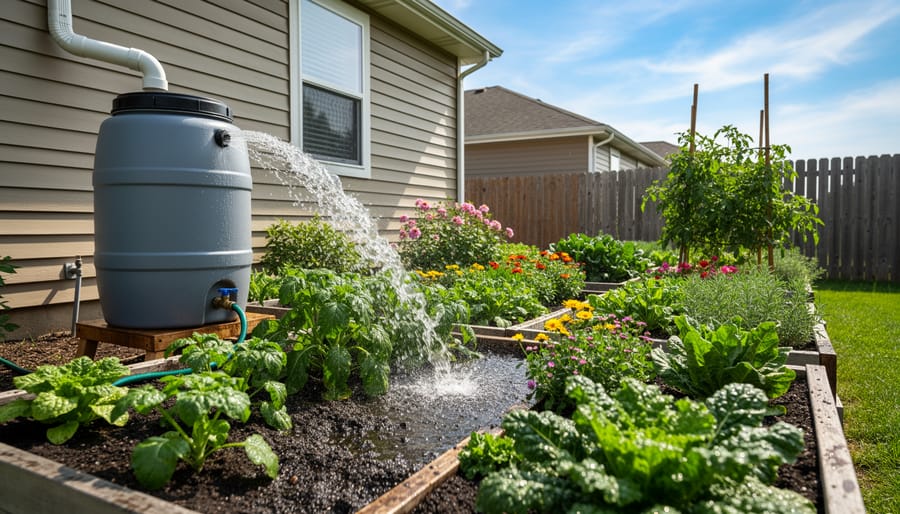
Collected rainwater offers distinct advantages for Utah landscapes compared to treated municipal water. Unlike tap water, rainwater contains no chlorine or added minerals, making it gentler on plant roots and beneficial soil microorganisms. This naturally soft water helps plants absorb nutrients more efficiently, promoting healthier growth in both traditional gardens and xeriscape designs.
For Utah homeowners embracing xeriscaping, rainwater harvesting creates a sustainable maintenance solution. Even drought-tolerant native plants benefit from occasional deep watering during establishment periods and extended dry spells. Stored rainwater allows you to support these plantings without guilt during water restrictions, as you’re using resources you’ve collected rather than drawing from strained municipal supplies.
The absence of salts and treatment chemicals in harvested rainwater prevents soil buildup issues common with hard tap water, particularly important in Utah’s alkaline soils. This keeps your garden beds healthier long-term while reducing your outdoor water costs and environmental footprint simultaneously.
Other Household Applications
Beyond watering gardens and flushing toilets, harvested rainwater serves many practical household purposes that further reduce your municipal water consumption. Car washing becomes an eco-friendly activity when using rainwater, saving 80-140 gallons per wash while keeping soap and chemicals out of the stormwater system. The soft, mineral-free nature of rainwater actually leaves vehicles with fewer spots than hard tap water.
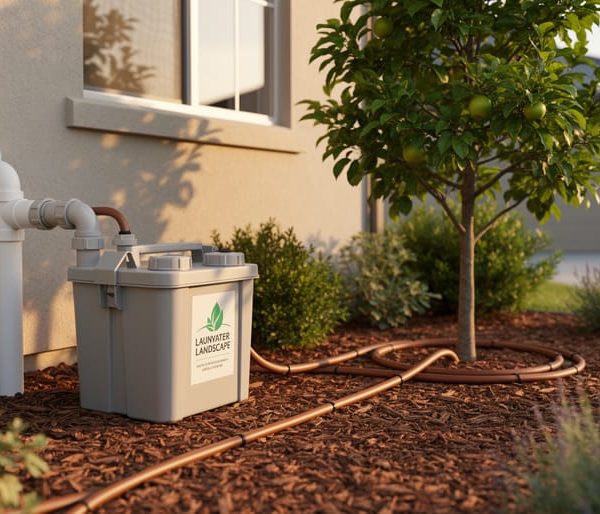
Outdoor cleaning tasks like washing patios, driveways, windows, and siding are perfect applications for harvested rainwater. For Utah homeowners already implementing greywater recycling, combining both systems maximizes water conservation efforts throughout your property.
Emergency preparedness is another crucial consideration in Utah’s drought-prone climate. A properly maintained rainwater storage system provides a backup water supply during service interruptions or natural disasters. While stored rainwater requires filtration and treatment before drinking, having hundreds of gallons available offers peace of mind. Just remember to regularly clean your storage tanks and rotate water supplies to maintain freshness. This redundancy proves especially valuable in rural areas where water delivery takes longer during emergencies, making your rainwater system both an environmental choice and a practical resilience strategy.
Getting Started: Your First Rain Barrel Setup
Starting your rainwater harvesting journey in Utah doesn’t require a massive investment or complex engineering. A simple rain barrel system offers an excellent entry point for beginners, typically costing between $100-$300 for a complete setup.
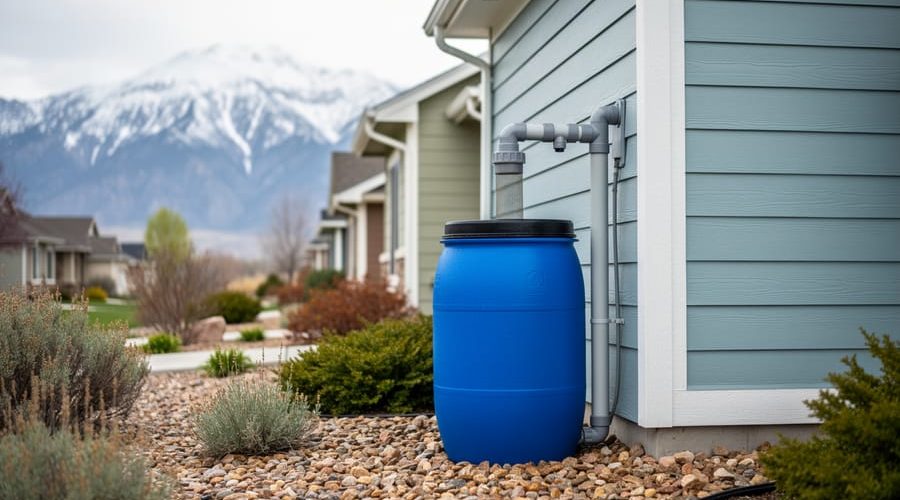
For the DIY route, you’ll need a food-grade barrel (55-75 gallons), a spigot, downspout diverter kit, overflow hose, and a screen to keep debris and mosquitoes out. Many Utah hardware stores carry rain barrel kits that include all necessary components. Position your barrel on a stable platform near a downspout, ideally elevated 12-18 inches to create water pressure for easier access. Cut your existing downspout and install the diverter to channel water into the barrel. The entire process typically takes 2-3 hours and requires only basic tools.
Professional installation costs range from $300-$600 and ensures proper placement, secure connections, and compliance with local codes. This option makes sense if you’re uncomfortable with ladder work or want to install multiple barrels simultaneously.
Budget expectations break down as follows: a basic DIY single-barrel setup runs $100-$150, a mid-range system with two connected barrels costs $250-$400, while professional installation with premium materials reaches $500-$800.
Utah’s climate considerations are important. Since winters can freeze water lines, plan to drain and disconnect your system before temperatures drop consistently below freezing, typically by late October. Reconnect in early spring when precipitation returns and temperatures stabilize above freezing.
Start by calculating your roof’s collection potential. A 1,000 square foot roof yields approximately 600 gallons from one inch of rainfall. Even Utah’s modest annual precipitation of 12-16 inches in most populated areas can generate significant water for gardens and landscaping.
Remember that collected rainwater is best used for outdoor purposes like watering plants, washing cars, or filling fountains. This beginner setup provides immediate water savings while you explore whether larger-scale rainwater harvesting suits your property and goals.
Rainwater harvesting offers Utah homeowners a practical and impactful solution to address the region’s ongoing water challenges. With clear legal guidelines now in place and Utah’s critical need for water conservation, there’s never been a better time to start collecting rainwater for your property. Whether you begin with a simple rain barrel capturing 50 gallons or invest in a comprehensive system storing thousands of gallons, every drop you harvest reduces strain on municipal supplies and groundwater reserves.
The beauty of rainwater harvesting lies in its scalability. Start small to understand your property’s collection potential, then expand as you gain confidence and see results. Even modest systems can significantly reduce your outdoor water bills during Utah’s dry summers while providing chemical-free water for gardens and landscaping.
Beyond personal benefits, your participation contributes to a larger environmental mission. In a state where water scarcity affects agriculture, wildlife habitats, and community resources, individual conservation efforts create collective impact. By harvesting rainwater, you’re not just saving money—you’re becoming part of Utah’s water conservation solution, helping ensure sustainable water availability for future generations while embracing innovative, eco-friendly living practices that benefit your home and the broader ecosystem.