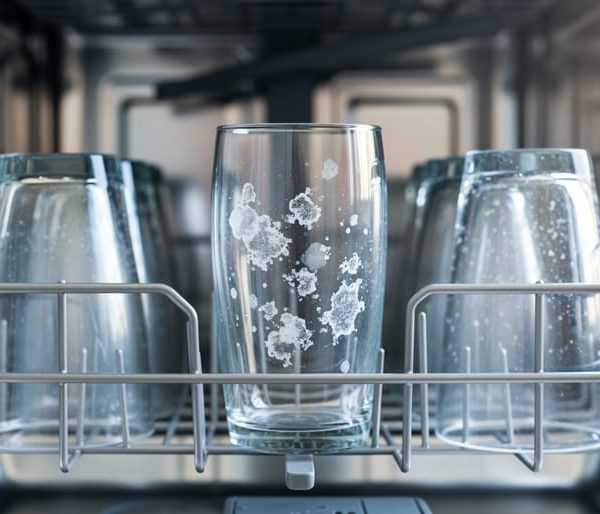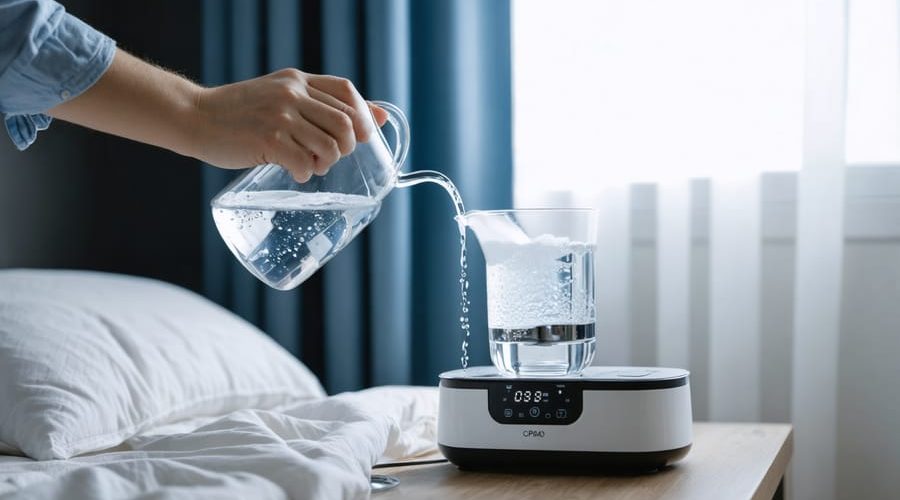
Use only distilled or demineralized water in your BiPAP humidifier chamber to prevent mineral buildup that can damage your equipment and compromise your therapy. Tap water contains minerals, bacteria, and chemical additives that create white dust deposits inside the chamber, reduce heating efficiency, and potentially introduce contaminants into your airway during sleep therapy.
Empty your humidifier chamber every morning and rinse it with distilled water to prevent bacterial growth, then allow it to air dry completely before the next use. Replace the chamber every six months regardless of visible wear, as microscopic cracks and mineral deposits accumulate over time even with proper cleaning.
Consider installing a home water filtration system to produce medical-grade water for your BiPAP humidifier rather than purchasing single-use plastic bottles of distilled water weekly. Modern reverse osmosis systems remove 99% of dissolved solids, creating water quality comparable to commercially distilled options while eliminating ongoing plastic waste and reducing your annual therapy costs by hundreds of dollars.
Monitor your humidifier settings seasonally, as dry winter air requires higher humidity levels while summer moisture may allow lower settings. Starting at level 3 on most BiPAP machines provides a baseline, but adjust based on whether you wake with dry mouth, nasal congestion, or water condensation in your tubing. The right humidity level prevents airway irritation without creating rainout that interrupts your sleep therapy and potentially introduces moisture into the machine’s internal components.
How BiPAP Humidifiers Actually Work
BiPAP machines work by delivering pressurized air to help you breathe during sleep, but this constant flow of air can dry out your airways and cause discomfort. That’s where the humidifier comes in as an essential companion to your therapy.
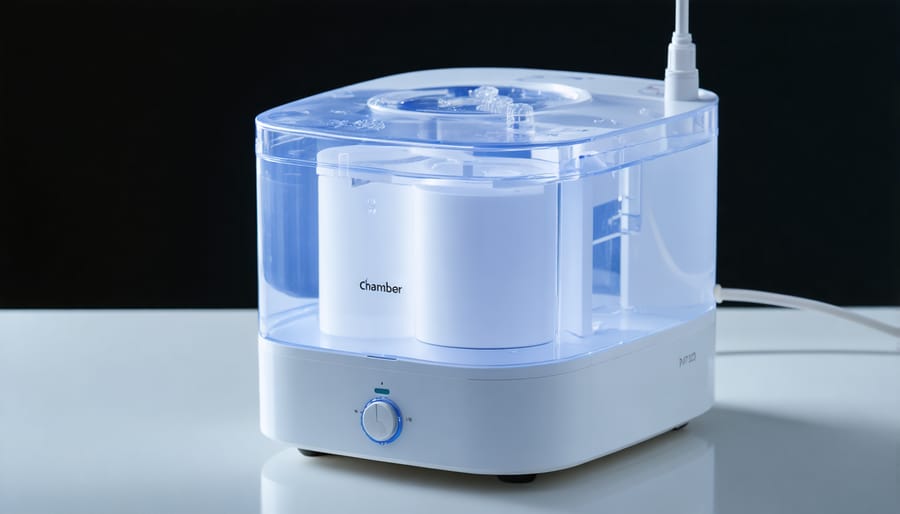
The humidification system consists of a water chamber that attaches directly to your BiPAP machine. Inside this chamber, a heating plate warms the water to create moisture-rich air. As pressurized air from your BiPAP flows over or through this heated water, it picks up moisture before traveling through your tubing and mask. Think of it like a tiny, controlled steam system working alongside your breathing therapy.
The heating mechanism is remarkably precise. Most modern BiPAP humidifiers use adjustable temperature controls, allowing you to customize moisture levels based on your comfort needs and environmental conditions. During colder months or in dry climates, you might increase the heat setting, while summer humidity might require less supplemental moisture.
Here’s where water quality becomes crucial. The water you pour into that chamber doesn’t just sit there – it gets heated and transformed into vapor that you’ll breathe directly into your lungs throughout the night. Any minerals, chemicals, or contaminants in the water become part of that vapor. Hard water minerals can leave deposits on the heating plate, reducing efficiency and requiring frequent cleaning. Chlorine and other treatment chemicals found in tap water can irritate your airways when inhaled as vapor.
Additionally, bacteria and other microorganisms can multiply in standing water, especially in the warm, humid environment of a humidifier chamber. This makes water purity not just a matter of equipment maintenance, but a genuine health consideration for anyone using BiPAP therapy regularly.
The Hidden Dangers Lurking in Your Tap Water
Mineral Deposits and White Dust
When you use tap water instead of distilled water in your BiPAP humidifier, minerals naturally present in your household water supply can create visible white dust or chalky buildup on your equipment. This occurs because hard water contains dissolved minerals like calcium and magnesium that become concentrated as water evaporates in the humidifier chamber. These minerals don’t disappear—they transform into fine particles that can settle on your machine, tubing, and mask.
More concerning than equipment buildup is what happens when these mineral particles become airborne. As you breathe through your BiPAP, microscopic mineral deposits can travel directly into your airways, potentially causing irritation, inflammation, or respiratory discomfort. For people with existing breathing conditions, this additional irritant is particularly problematic.
The severity of mineral buildup depends entirely on your local water quality. Homes with very hard water will notice crusty white deposits forming quickly, sometimes within just a few uses. This residue is difficult to clean and can shorten your equipment’s lifespan by clogging valves and damaging sensitive components. Understanding your household water hardness levels helps you make informed decisions about the best water source for your BiPAP therapy, protecting both your health and your investment in medical equipment.
Microorganisms and Biofilm Buildup
When water sits in your BiPAP humidifier chamber, it creates an ideal breeding ground for unwanted guests like bacteria, mold, and fungi. These microorganisms thrive in warm, moist environments and can multiply rapidly, especially when tap water is used. Tap water contains minerals and organic matter that provide nutrients for microbial growth, while its lack of sterility means these organisms are already present from the start.
As these microorganisms multiply, they form biofilm, a slimy layer that clings to the inside of your humidifier chamber and can be difficult to remove. This biofilm not only affects your equipment’s performance but can also break apart and become aerosolized, meaning you could breathe these particles directly into your airways during therapy. This poses serious health risks, particularly for individuals with compromised immune systems or respiratory conditions.
The consequences range from respiratory infections and allergic reactions to more severe lung inflammation. Using distilled or properly filtered water significantly reduces these risks by removing the contaminants that support microbial growth. Regular cleaning of your humidifier chamber is essential, but preventing contamination at the source through proper water selection provides the most effective protection for your health and therapy equipment.
What Water Should You Actually Use in Your BiPAP?
Distilled Water: The Gold Standard
Distilled water stands as the medical community’s top recommendation for BiPAP humidifiers, and for good reason. Through a process that boils water and captures the resulting steam, distillation removes minerals, bacteria, and other contaminants that could harm your respiratory therapy equipment or, more importantly, your health. This pure water prevents mineral buildup in your humidifier chamber, extending your equipment’s lifespan and ensuring your therapy remains effective.
The primary benefit of distilled water lies in what it lacks: dissolved solids that can create a breeding ground for bacteria or leave crusty deposits in your machine. When you breathe in humidified air during therapy, you want absolute confidence that you’re not inhaling harmful particles or microorganisms.
However, relying on store-bought distilled water does present an environmental concern. Those single-use plastic jugs contribute to landfill waste and require energy-intensive production and transportation. For environmentally-conscious BiPAP users, this creates a dilemma between following medical guidelines and reducing plastic consumption. While distilled water remains the gold standard for safety and equipment protection, many users are exploring home water filtration alternatives that can deliver comparable purity without the environmental footprint of disposable containers.
Home Water Filtration Alternatives
For BiPAP users seeking a sustainable long-term solution, home water filtration systems offer an economical and environmentally friendly alternative to purchasing bottled distilled water. Several filtration methods can produce water that meets the quality standards required for BiPAP humidifier chambers.
Reverse osmosis systems are among the most popular home filtration options. These systems push water through a semi-permeable membrane that removes up to 99% of dissolved minerals, contaminants, and impurities. While reverse osmosis water isn’t technically distilled, it’s clean enough for most BiPAP humidifiers and significantly reduces mineral buildup. The initial investment typically ranges from $200 to $500 for under-sink units, which can produce several gallons of purified water daily.
Deionization filters work by exchanging mineral ions in water with hydrogen and hydroxide ions, effectively removing dissolved solids. These systems are particularly effective at eliminating the minerals that cause white dust and scale buildup in humidifier chambers. Deionization cartridges require periodic replacement but offer convenience for BiPAP users.
Countertop water distillers provide true distilled water at home by mimicking the commercial distillation process. These compact units typically cost between $100 and $300 and can produce about one gallon every few hours, making them ideal for BiPAP therapy needs.
The environmental benefits of home filtration systems are substantial. By eliminating the need for single-use plastic distilled water bottles, BiPAP users can prevent hundreds of plastic containers from entering landfills annually while reducing their carbon footprint from transportation and manufacturing.
The Real Cost of Using the Wrong Water
Using the wrong water in your BiPAP humidifier isn’t just a minor oversight—it can hit your wallet hard and potentially affect your health. Let’s break down what’s really at stake.
When you use tap water instead of distilled water, mineral deposits accumulate inside your humidifier chamber and tubing. This white, crusty buildup, known as scale, doesn’t just look unsightly. Over time, it reduces your equipment’s effectiveness and can lead to premature failure. A replacement humidifier chamber typically costs between $30 and $80, while a new water chamber and tubing set can run upward of $100. If mineral buildup damages the heating element or other internal components, you might face repair bills exceeding $200 or need to replace the entire unit, which can cost several hundred dollars.
The health implications are equally concerning. Tap water contains minerals and potential contaminants that, when heated and converted to vapor, can be inhaled directly into your lungs throughout the night. This mineral-laden moisture can irritate your respiratory system, potentially causing inflammation or exacerbating existing conditions like asthma. Some users report experiencing congestion, coughing, or chest discomfort when using improper water.
There’s also the bacterial risk. Tap water may harbor microorganisms that thrive in the warm, moist environment of your humidifier. Without proper water quality, you’re essentially creating a breeding ground for bacteria that gets delivered straight to your airways.
For eco-conscious users, constantly purchasing single-use plastic bottles of distilled water creates unnecessary waste. The good news? Sustainable solutions exist that protect both your equipment and your health while reducing environmental impact. Understanding these costs helps you make informed decisions about maintaining your BiPAP therapy safely and economically.
Setting Up a Sustainable BiPAP Water System at Home
Choosing the Right Water Filtration System
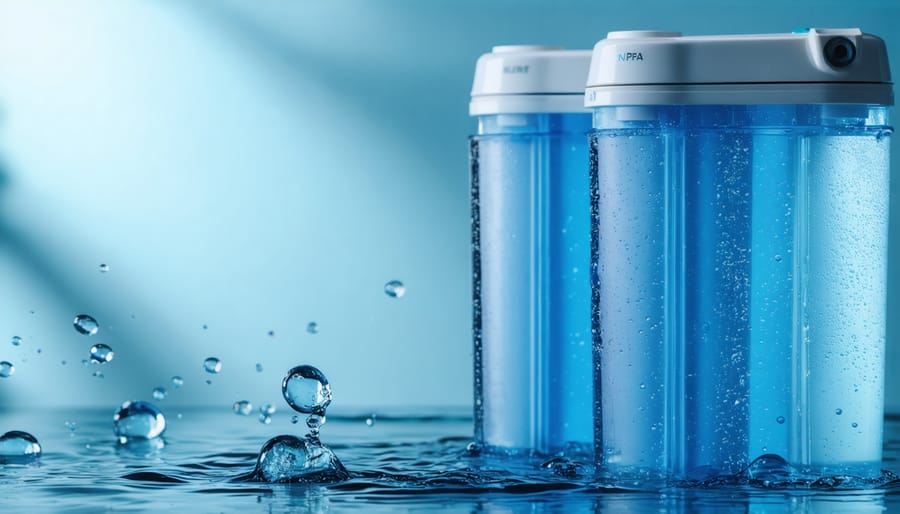
Selecting the right water filtration system for your BiPAP humidifier involves balancing medical-grade water purity with practical household needs. The ideal solution removes minerals, bacteria, and chemical contaminants that could damage your equipment or compromise your respiratory health.
For BiPAP users, reverse osmosis systems offer the most comprehensive filtration, producing water quality comparable to distilled water. These systems remove 95-99% of dissolved solids, including minerals that cause white dust buildup in humidifier chambers. While traditional distillation remains the gold standard, a well-maintained reverse osmosis unit provides a sustainable alternative that eliminates plastic bottle waste.
If reverse osmosis feels too involved, consider pairing a basic carbon filter with periodic distilled water purchases. Carbon filters effectively remove chlorine and improve taste but won’t eliminate minerals completely. This hybrid approach reduces environmental impact while maintaining therapy safety.
When evaluating filtration systems, verify the total dissolved solids (TDS) level in your output water. BiPAP humidifiers function best with water containing fewer than 10 parts per million TDS. Many modern systems include TDS meters for easy monitoring, giving you peace of mind that your water meets medical device standards while supporting your commitment to eco-conscious living.
Daily Water Management and Storage
Proper water storage is essential for maintaining the purity needed for your BiPAP humidifier. Once you’ve prepared filtered or distilled water, store it in clean, BPA-free containers with tight-sealing lids to prevent airborne contaminants from entering. Glass or food-grade plastic bottles work best, and they should be thoroughly washed before first use.
Always label containers with the date you filled them, as even purified water has a shelf life. Use stored water within three to five days when kept at room temperature, or up to seven days if refrigerated. This timeframe helps prevent bacterial growth that can occur even in treated water.
Store your water containers away from direct sunlight and heat sources, as warmth accelerates bacterial multiplication. Keep them in a cool, dry cabinet or pantry. Before filling your BiPAP chamber each night, inspect the water for any cloudiness or unusual odor, which signals contamination.
Never reuse water from your humidifier chamber, even if it looks clean. Each evening, empty any remaining water, rinse the chamber with fresh filtered water, and allow it to air dry during the day. This daily routine prevents biofilm buildup and keeps your therapy both effective and safe.
Cleaning and Maintenance: Your Water Quality Insurance
Maintaining a clean BiPAP humidifier chamber is your best defense against bacteria growth, mineral buildup, and equipment malfunctions. Think of it as regular insurance for both your therapy effectiveness and your health. The quality of water you use directly impacts how often you’ll need to deep clean and how efficiently your equipment operates.
Start your daily routine by emptying any remaining water from the chamber each morning. Rinse it thoroughly with warm water and allow it to air dry on a clean towel. Never reuse yesterday’s water, as standing water becomes a breeding ground for microorganisms within hours.
Weekly deep cleaning is essential regardless of your water source. Disassemble the humidifier chamber according to your manufacturer’s instructions. Wash all components with warm water and mild dish soap, using a soft cloth or sponge to gently remove any residue. For stubborn mineral deposits from tap water use, create a solution of equal parts white vinegar and water, soak the chamber for 20 minutes, then rinse thoroughly. This natural descaling method is both effective and eco-friendly.
The type of water you use significantly affects cleaning frequency. Distilled water leaves minimal residue, requiring deep cleaning only once weekly. Tap water, however, deposits minerals that accumulate rapidly, potentially necessitating cleaning every few days. These white, crusty buildups don’t just look unsightly; they reduce heating efficiency and can harbor bacteria in their porous surfaces.
Home water filtration systems offer a sustainable middle ground, reducing mineral content while eliminating the environmental waste of single-use distilled water bottles. If you choose filtered water, monitor your chamber closely during the first few weeks to establish the right cleaning schedule for your specific water quality.
Always ensure components are completely dry before reassembling to prevent mold growth. Replace your humidifier chamber every six months or as recommended by your equipment manufacturer, as microscopic wear creates hiding spots for contaminants that regular cleaning cannot eliminate.
Choosing the right water for your BiPAP humidifier isn’t just about protecting your equipment—it’s a decision that affects your health, your wallet, and the environment. Every night of therapy represents an opportunity to make choices that benefit both you and the planet.
The connection between water quality and BiPAP therapy might seem straightforward, but it extends far beyond the humidifier chamber. When you invest in household water filtration systems, you’re creating a sustainable solution that serves multiple purposes. The same purified water that keeps your BiPAP running smoothly can improve your drinking water, cooking, and overall home water quality. This multi-use approach makes filtration systems remarkably cost-effective over time.
Consider the environmental impact of purchasing distilled water in plastic bottles week after week, year after year. A typical BiPAP user might go through dozens of plastic gallons annually, contributing to waste that persists in landfills for centuries. Home filtration systems dramatically reduce this plastic footprint while ensuring you always have safe, clean water available for therapy.
Now is the time to evaluate your current water situation. Take a moment to assess what you’re spending on bottled distilled water, consider the convenience of having purified water on demand, and think about the long-term benefits for your health and home. Whether you choose a countertop distiller, reverse osmosis system, or deionization setup, you’re making an investment in sustainable wellness that pays dividends every single night.